AUTHORITARIAN
MEDIA
By: Nauman Khan
Assigned by: Sir Ramazan Azhar
Authoritarianism:
 It’s a principle of blind submission to authority, as opposed to
individual freedom of thought and action.
 It’s a way of management in which orders are issued with threats
of punishment for disobedience, and is based on the belief that
status and power differences in an organization are appropriate and
must be maintained.
How does it work?
 Single leader/small group of leaders with ultimate
political authority.
 Supremacy of the authority.
 Leader make all important decisions.
 This system commonly emerge in times of political,
economic and social instability.
 During the initial period, authoritarian systems may have
public support.
 Allow some freedom (mostly economic).
 Leader prefer a population that is apathetic about
politics.
 They use the fear of disorder to justify their rules.
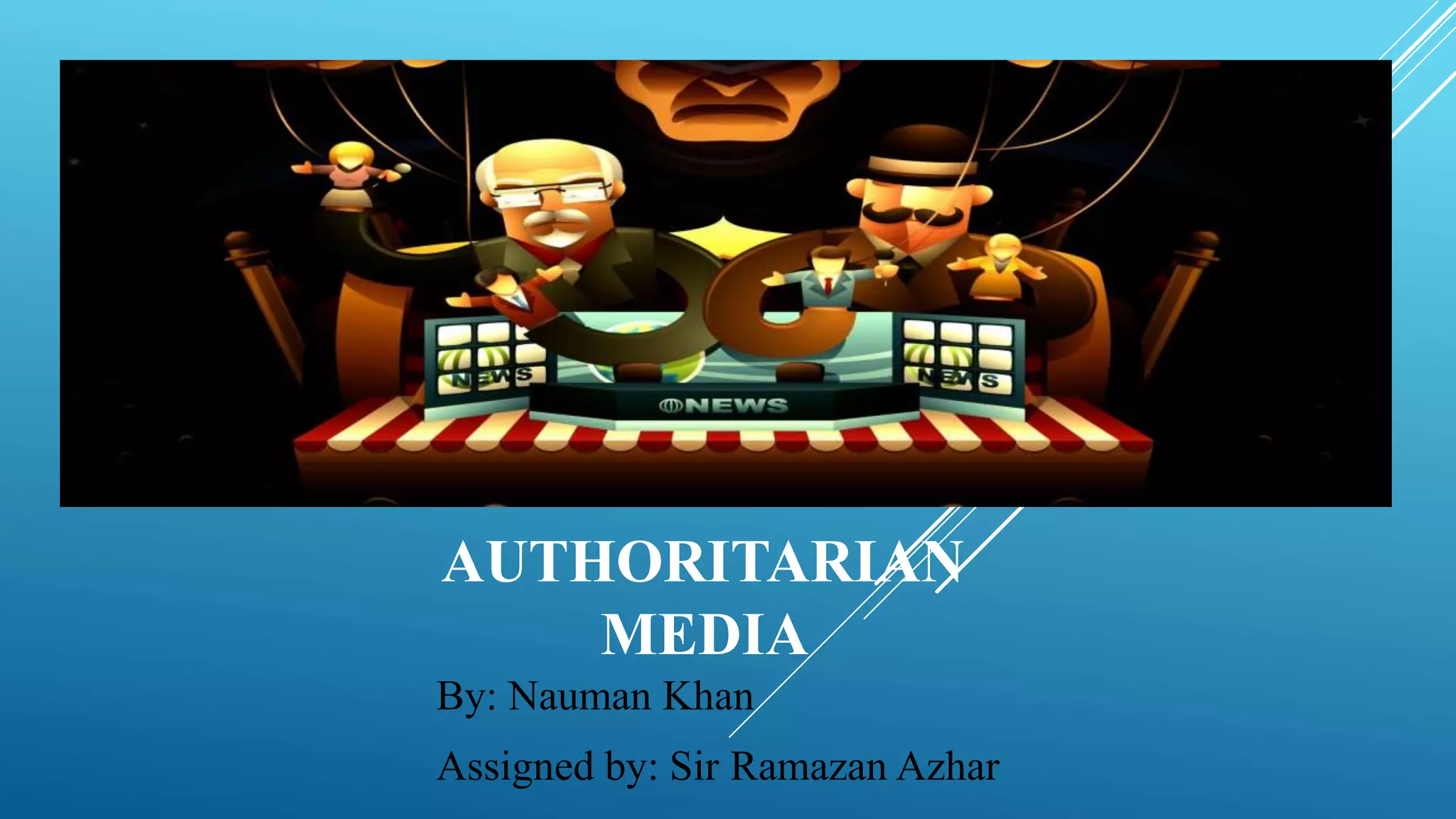
 Full state control of the media.
Authoritarian Theory of Media:
 Authoritarian theory describe that all forms of communications
are under the control of the governing elite or authorities or
influential bureaucrats.
 Authorities justified their power as a mean of protecting and
preserving the social order.
 The control rest in the hands of a king, who in turn grants royal
charters or licenses to Media practitioner.
Authoritarian Theory of Media:
 There is strict control of content by state. (Balochistan).
 Lack of freedom for the public to criticize state policies.
 Owner ship of media can be both (private and public).
 The bottom line is that people are supposed to listen to the
government no matter what they disagree with.
 Media is an instrument or tool which spread the propaganda of
state or government.
Historical Background
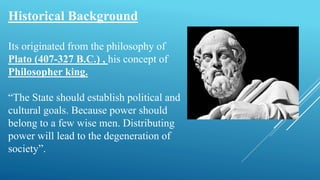
Its originated from the philosophy of
Plato (407-327 B.C.) , his concept of
Philosopher king.
“The State should establish political and
cultural goals. Because power should
belong to a few wise men. Distributing
power will lead to the degeneration of
society”.
Historical Background
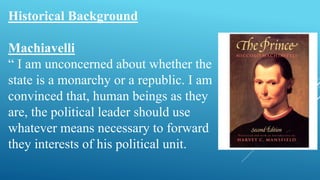
Machiavelli
“ I am unconcerned about whether the
state is a monarchy or a republic. I am
convinced that, human beings as they
are, the political leader should use
whatever means necessary to forward
they interests of his political unit.
Historical Background
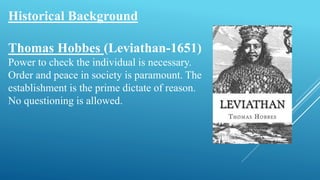
Thomas Hobbes (Leviathan-1651)
Power to check the individual is necessary.
Order and peace in society is paramount. The
establishment is the prime dictate of reason.
No questioning is allowed.
Historical Background
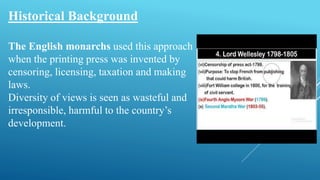
The English monarchs used this approach
when the printing press was invented by
censoring, licensing, taxation and making
laws.
Diversity of views is seen as wasteful and
irresponsible, harmful to the country’s
development.
Historical Background
Dr Samuel Johnson: 18th Century:
He gives a reason for this,
“Every society has a right to preserve public peace
and order, and therefore a good right to prohibit the
propagation of opinions which have a dangerous
tendency.
How it works:
According to this theory, media are controlled
through:
Govt Patents or Licensing,
Censorship,
Regulatory authorities.
Sometimes we can apply “Gate Keeping theory”.
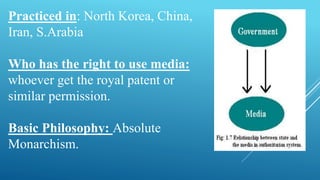
Practiced in: North Korea, China,
Iran, S.Arabia
Who has the right to use media:
whoever get the royal patent or
similar permission.
Basic Philosophy: Absolute
Monarchism.
AUTHORITARIAN VS SOVIET COMMUNIST
Authoritarian theory allows
for both public and private
ownership of media.
Its established and followed
to maintain status quo.
Soviet communist theory
allows only public
ownership.
Its established for the
purpose of bringing about
change in society.
Criticism:
 Common people are considered to be less intelligent
class than the ruling authority. Knowledge gap.
 The ruling class uses the media for its own selfish
reasons.
 The freedom of expression of the people and their right
to information is attacked.
Steven Levitski: (Comparative Political Scientist)
[Competitive authoritarianism]
He argues,
that many contemporary regimes are hybrid regimes.
They are neither democracies nor full time authoritarian
regimes. These are combined with democratic rules and
authoritarian government.
This hybrid regime is “Competitive Authoritarianism”.
Competitive Authoritarianism:
 In which formal democratic institutions are widely
viewed as the principal means of obtaining and
exercising political authority.
 Elections are held, but not free and fair.
 Media is controlled by state.
 Opposition parties are given less coverage.
Competitive Authoritarianism:
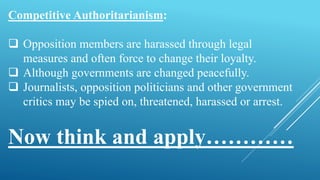
 Opposition members are harassed through legal
measures and often force to change their loyalty.
 Although governments are changed peacefully.
 Journalists, opposition politicians and other government
critics may be spied on, threatened, harassed or arrest.
Now think and apply…………
Any Question?
Thank you.

Authoritarian Media

  • 1.
  • 2.
    Authoritarianism:  It’s aprinciple of blind submission to authority, as opposed to individual freedom of thought and action.  It’s a way of management in which orders are issued with threats of punishment for disobedience, and is based on the belief that status and power differences in an organization are appropriate and must be maintained.
  • 3.
    How does itwork?  Single leader/small group of leaders with ultimate political authority.  Supremacy of the authority.  Leader make all important decisions.  This system commonly emerge in times of political, economic and social instability.  During the initial period, authoritarian systems may have public support.  Allow some freedom (mostly economic).  Leader prefer a population that is apathetic about politics.  They use the fear of disorder to justify their rules.  Full state control of the media.
  • 4.
    Authoritarian Theory ofMedia:  Authoritarian theory describe that all forms of communications are under the control of the governing elite or authorities or influential bureaucrats.  Authorities justified their power as a mean of protecting and preserving the social order.  The control rest in the hands of a king, who in turn grants royal charters or licenses to Media practitioner.
  • 5.
    Authoritarian Theory ofMedia:  There is strict control of content by state. (Balochistan).  Lack of freedom for the public to criticize state policies.  Owner ship of media can be both (private and public).  The bottom line is that people are supposed to listen to the government no matter what they disagree with.  Media is an instrument or tool which spread the propaganda of state or government.
  • 6.
    Historical Background Its originatedfrom the philosophy of Plato (407-327 B.C.) , his concept of Philosopher king. “The State should establish political and cultural goals. Because power should belong to a few wise men. Distributing power will lead to the degeneration of society”.
  • 7.
    Historical Background Machiavelli “ Iam unconcerned about whether the state is a monarchy or a republic. I am convinced that, human beings as they are, the political leader should use whatever means necessary to forward they interests of his political unit.
  • 8.
    Historical Background Thomas Hobbes(Leviathan-1651) Power to check the individual is necessary. Order and peace in society is paramount. The establishment is the prime dictate of reason. No questioning is allowed.
  • 9.
    Historical Background The Englishmonarchs used this approach when the printing press was invented by censoring, licensing, taxation and making laws. Diversity of views is seen as wasteful and irresponsible, harmful to the country’s development.
  • 10.
    Historical Background Dr SamuelJohnson: 18th Century: He gives a reason for this, “Every society has a right to preserve public peace and order, and therefore a good right to prohibit the propagation of opinions which have a dangerous tendency.
  • 11.
    How it works: Accordingto this theory, media are controlled through: Govt Patents or Licensing, Censorship, Regulatory authorities. Sometimes we can apply “Gate Keeping theory”.
  • 12.
    Practiced in: NorthKorea, China, Iran, S.Arabia Who has the right to use media: whoever get the royal patent or similar permission. Basic Philosophy: Absolute Monarchism.
  • 13.
    AUTHORITARIAN VS SOVIETCOMMUNIST Authoritarian theory allows for both public and private ownership of media. Its established and followed to maintain status quo. Soviet communist theory allows only public ownership. Its established for the purpose of bringing about change in society.
  • 14.
    Criticism:  Common peopleare considered to be less intelligent class than the ruling authority. Knowledge gap.  The ruling class uses the media for its own selfish reasons.  The freedom of expression of the people and their right to information is attacked.
  • 15.
    Steven Levitski: (ComparativePolitical Scientist) [Competitive authoritarianism] He argues, that many contemporary regimes are hybrid regimes. They are neither democracies nor full time authoritarian regimes. These are combined with democratic rules and authoritarian government. This hybrid regime is “Competitive Authoritarianism”.
  • 16.
    Competitive Authoritarianism:  Inwhich formal democratic institutions are widely viewed as the principal means of obtaining and exercising political authority.  Elections are held, but not free and fair.  Media is controlled by state.  Opposition parties are given less coverage.
  • 17.
    Competitive Authoritarianism:  Oppositionmembers are harassed through legal measures and often force to change their loyalty.  Although governments are changed peacefully.  Journalists, opposition politicians and other government critics may be spied on, threatened, harassed or arrest. Now think and apply…………
  • 18.
  • 19.