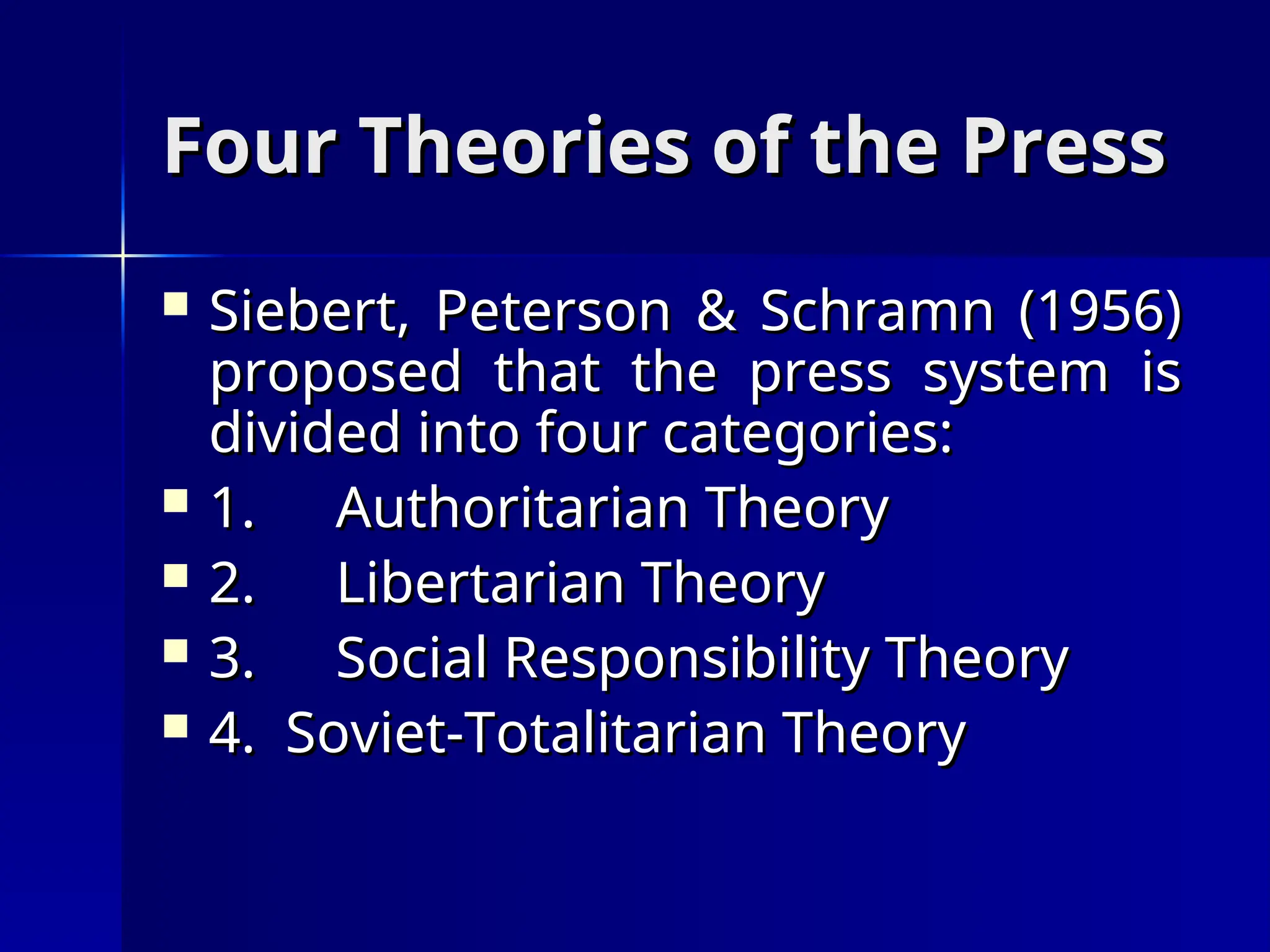
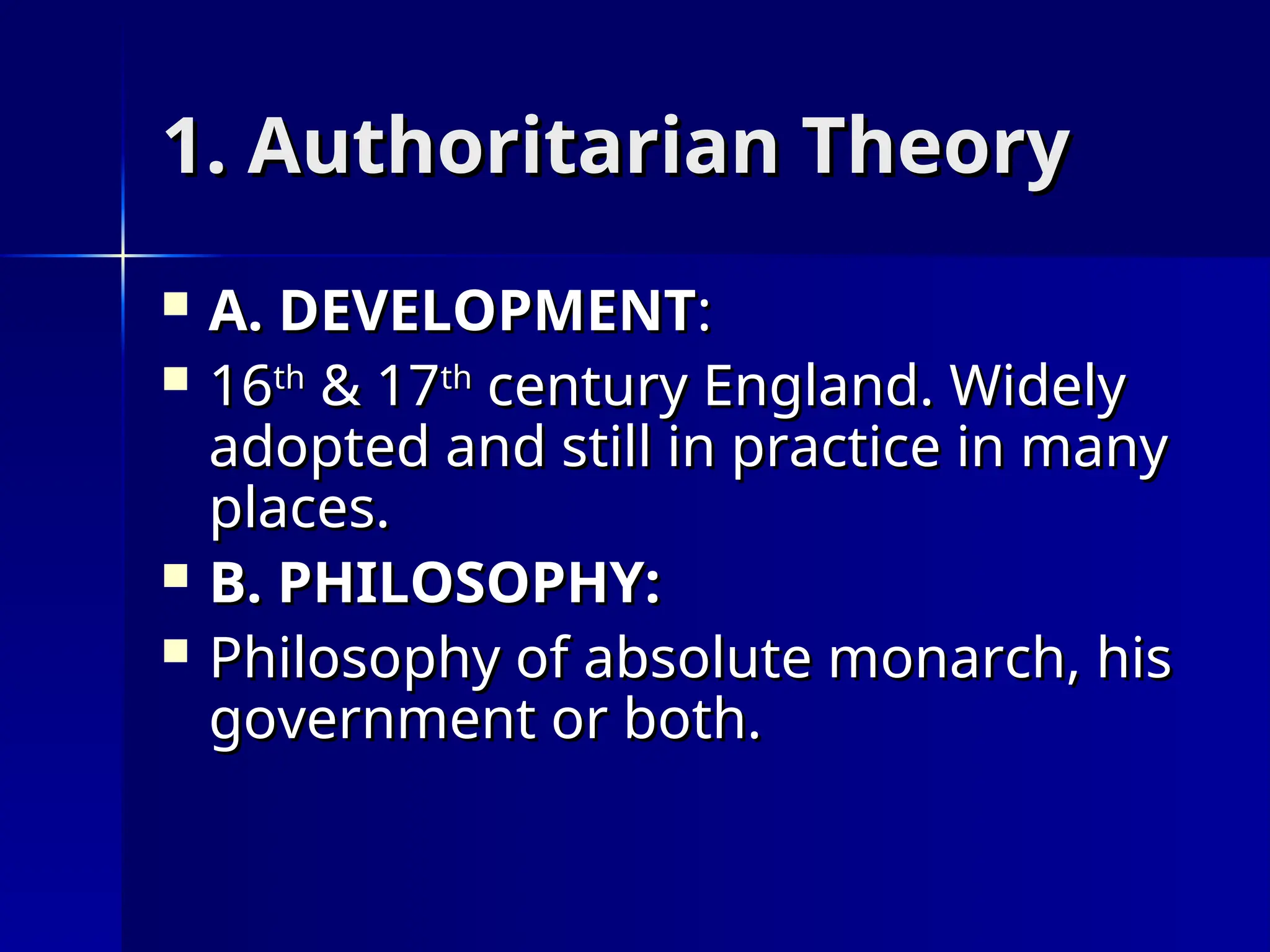
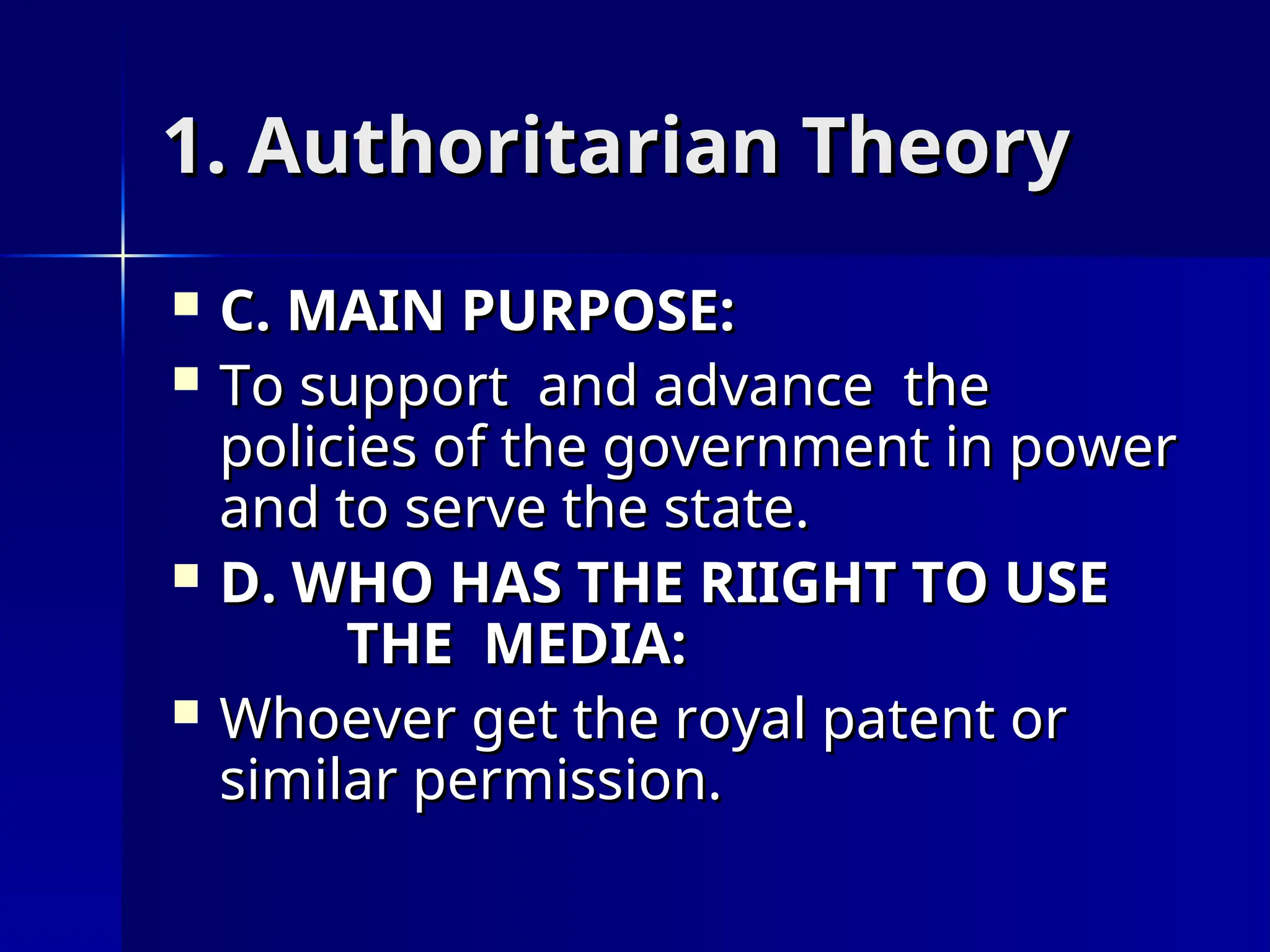
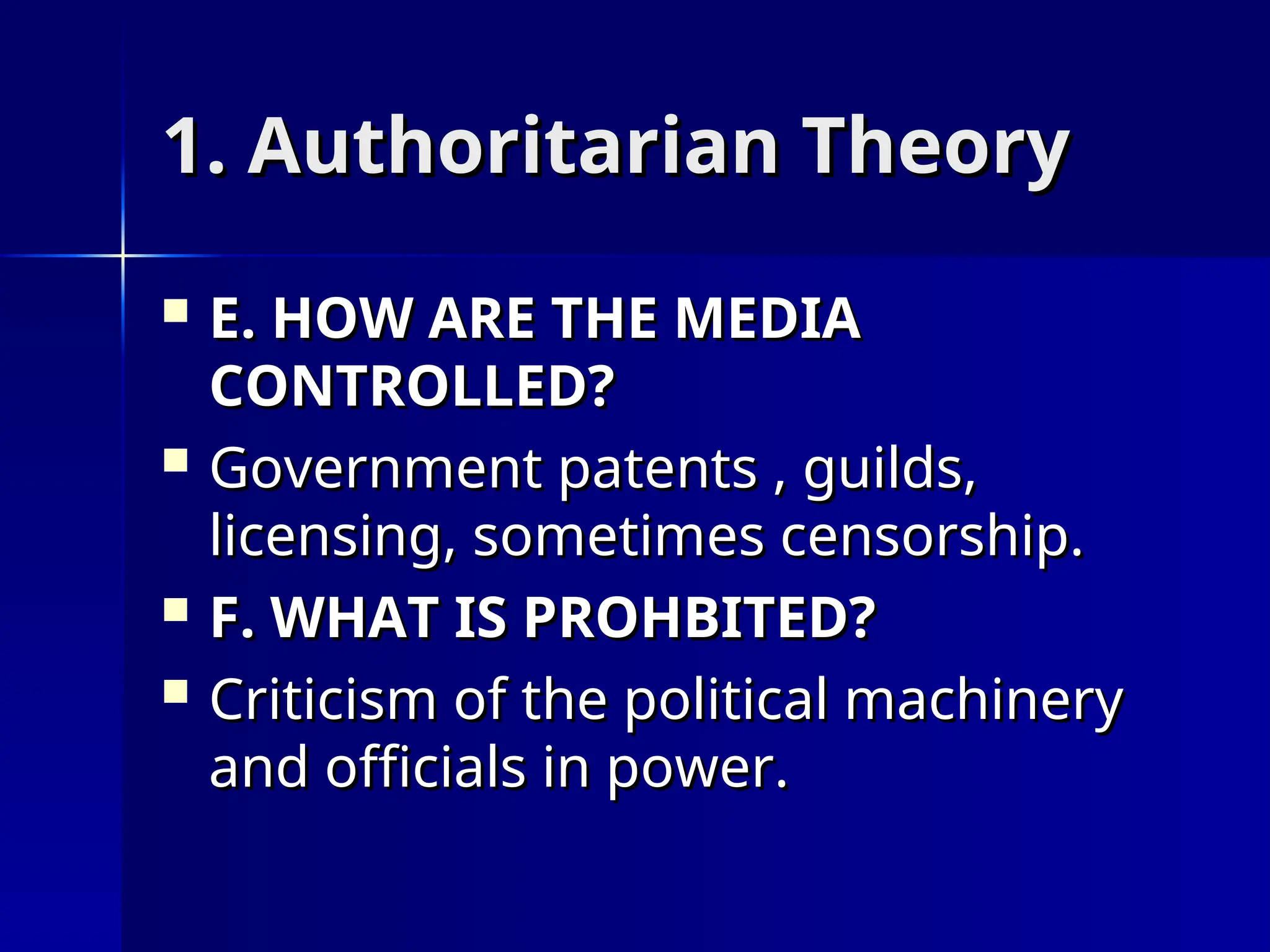
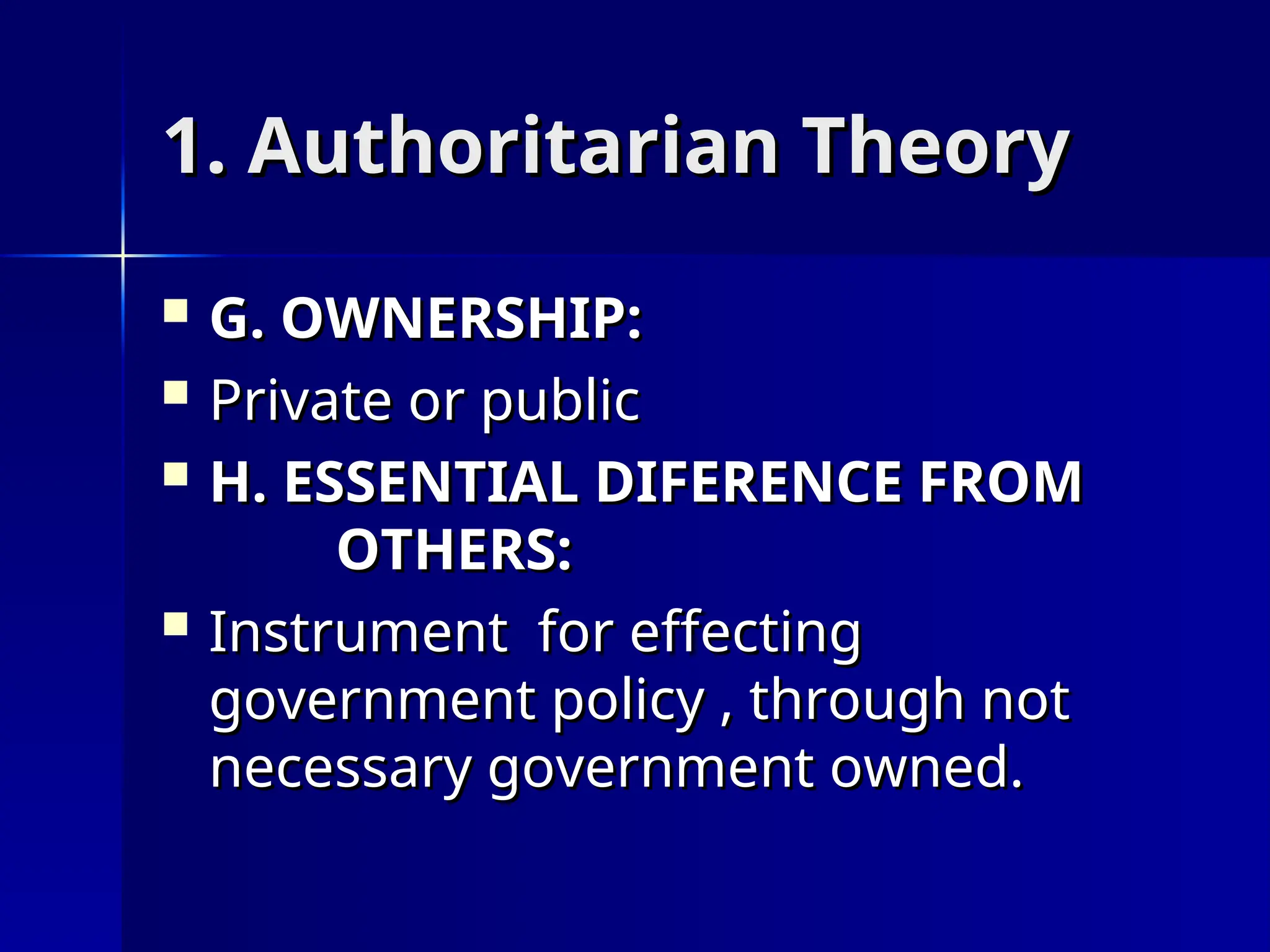
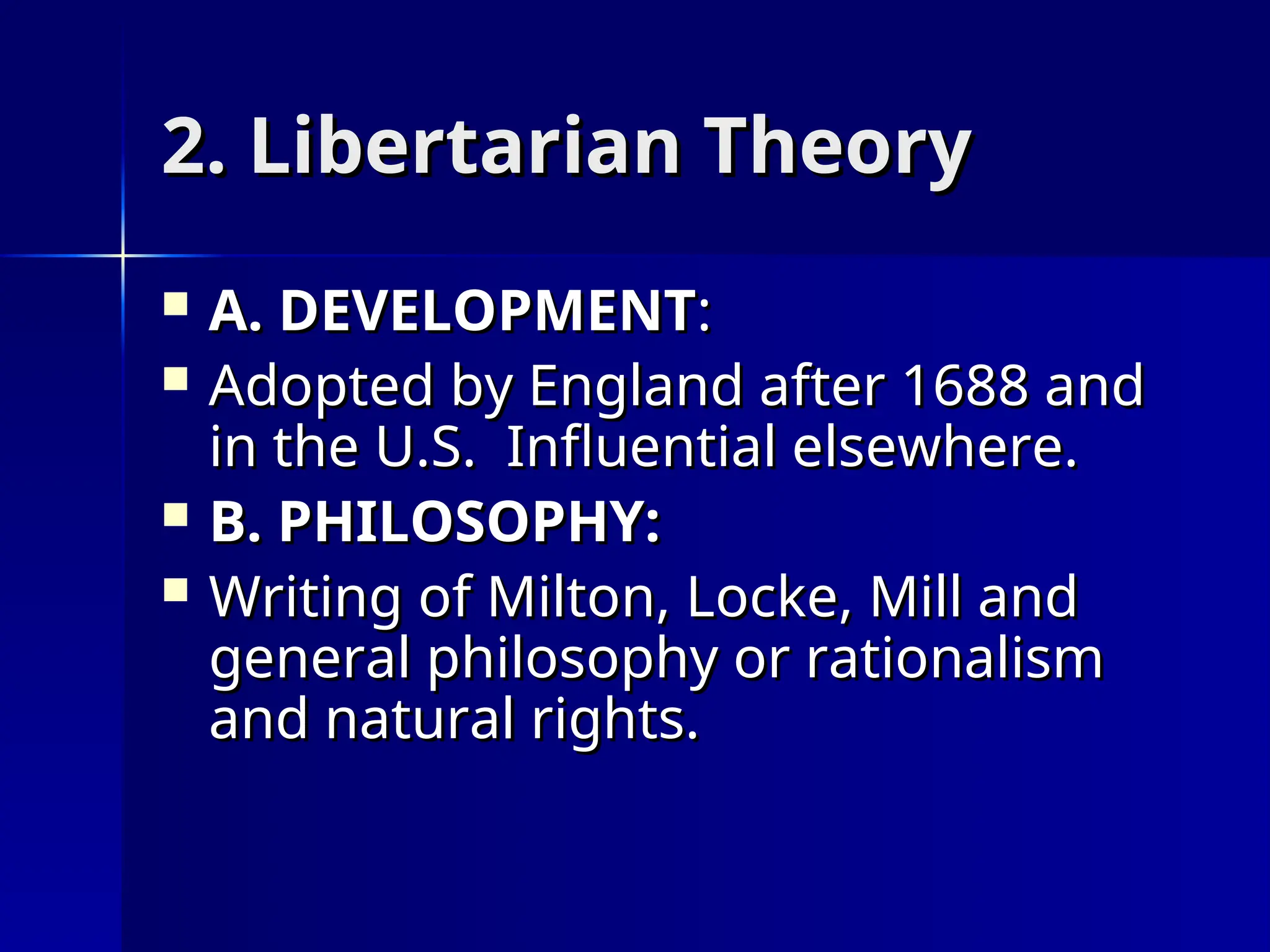
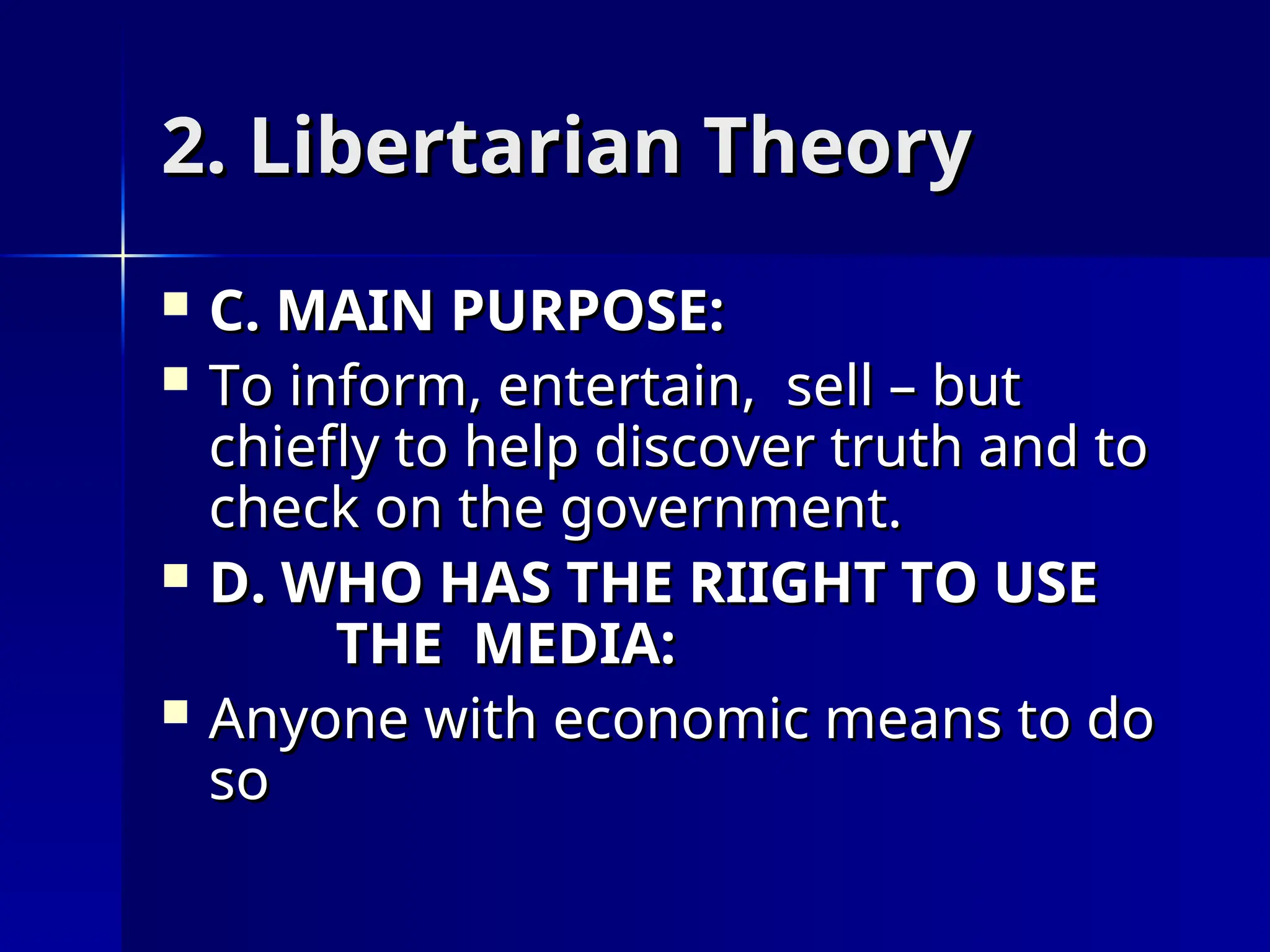
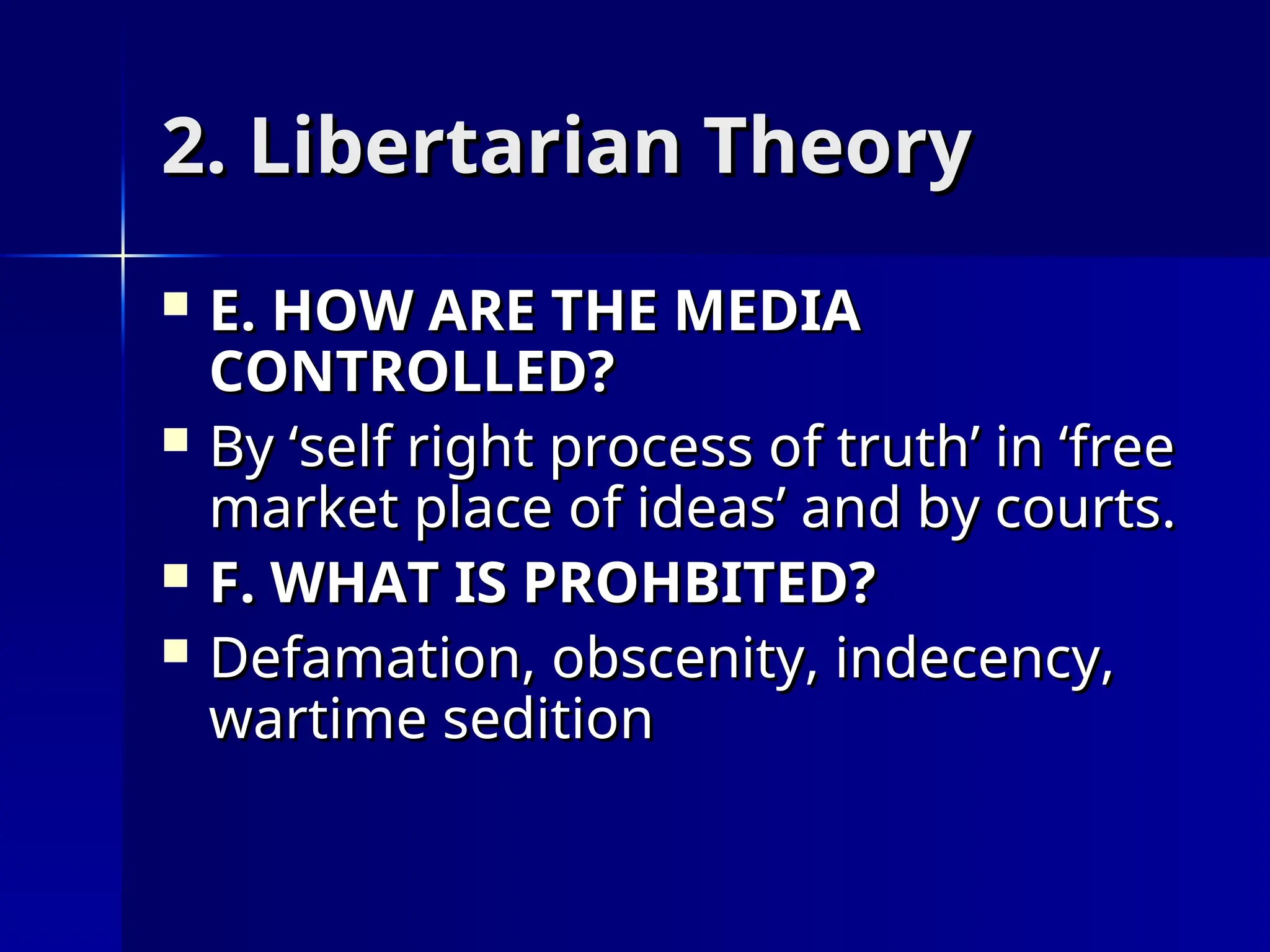
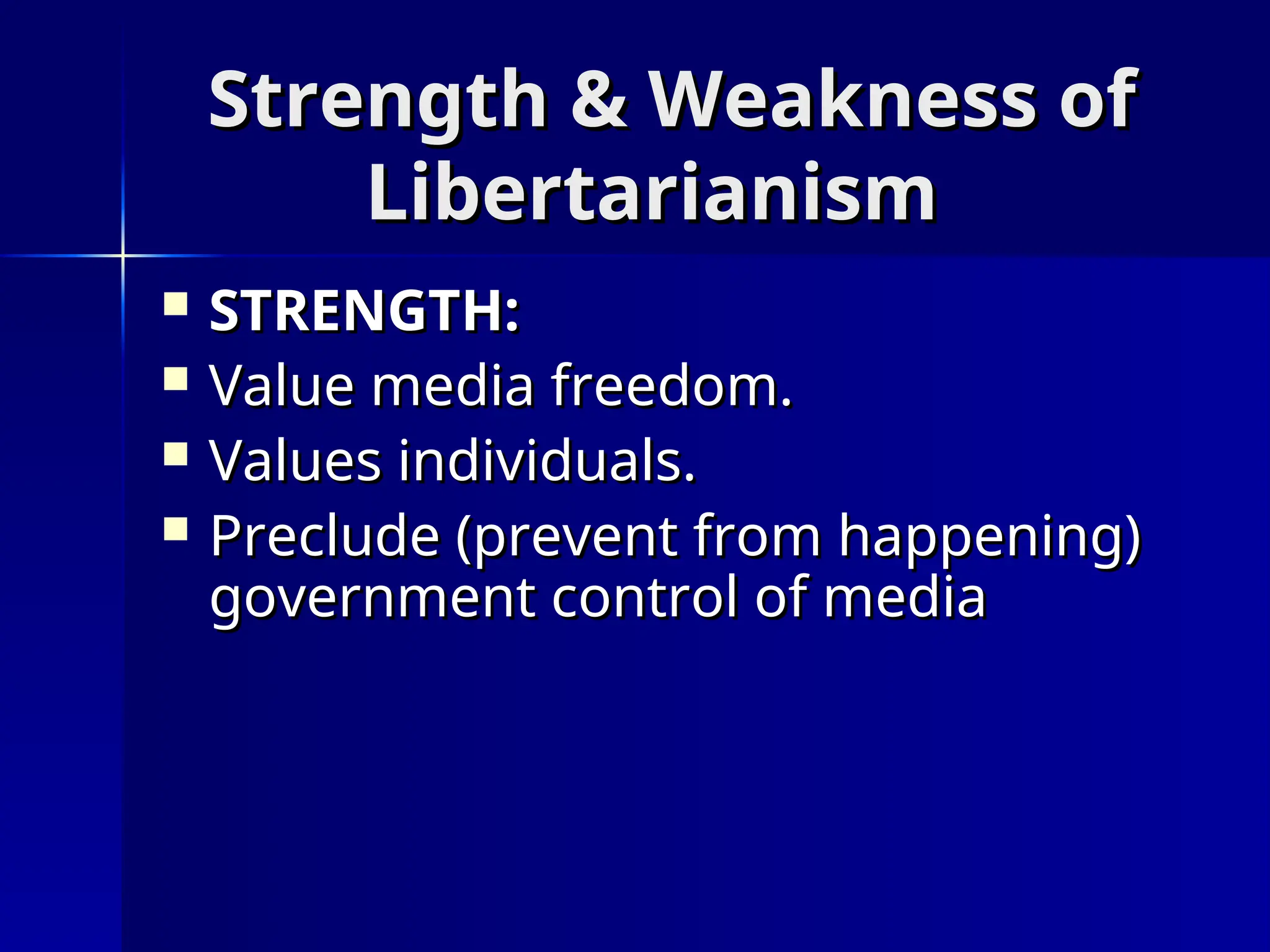
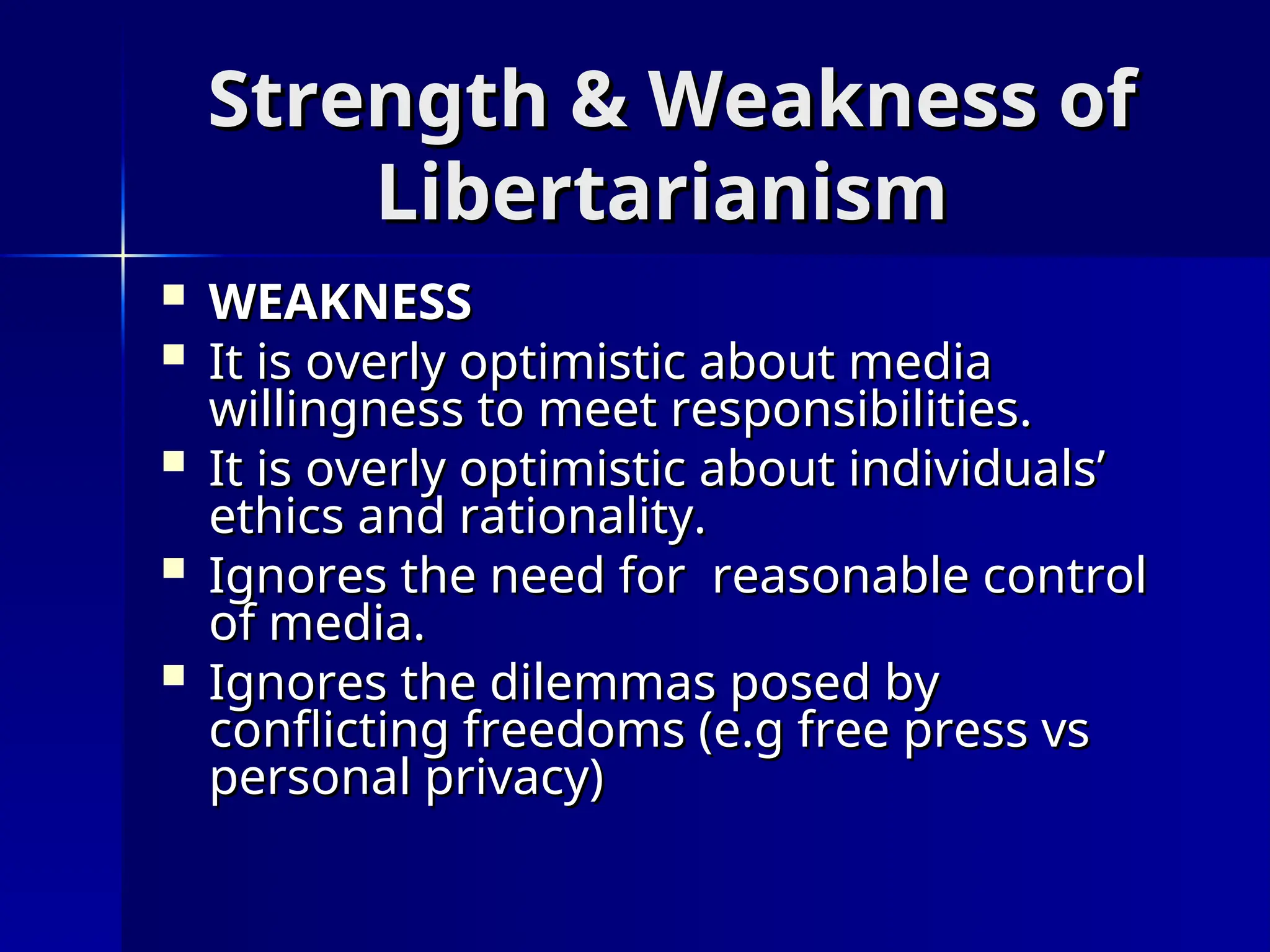
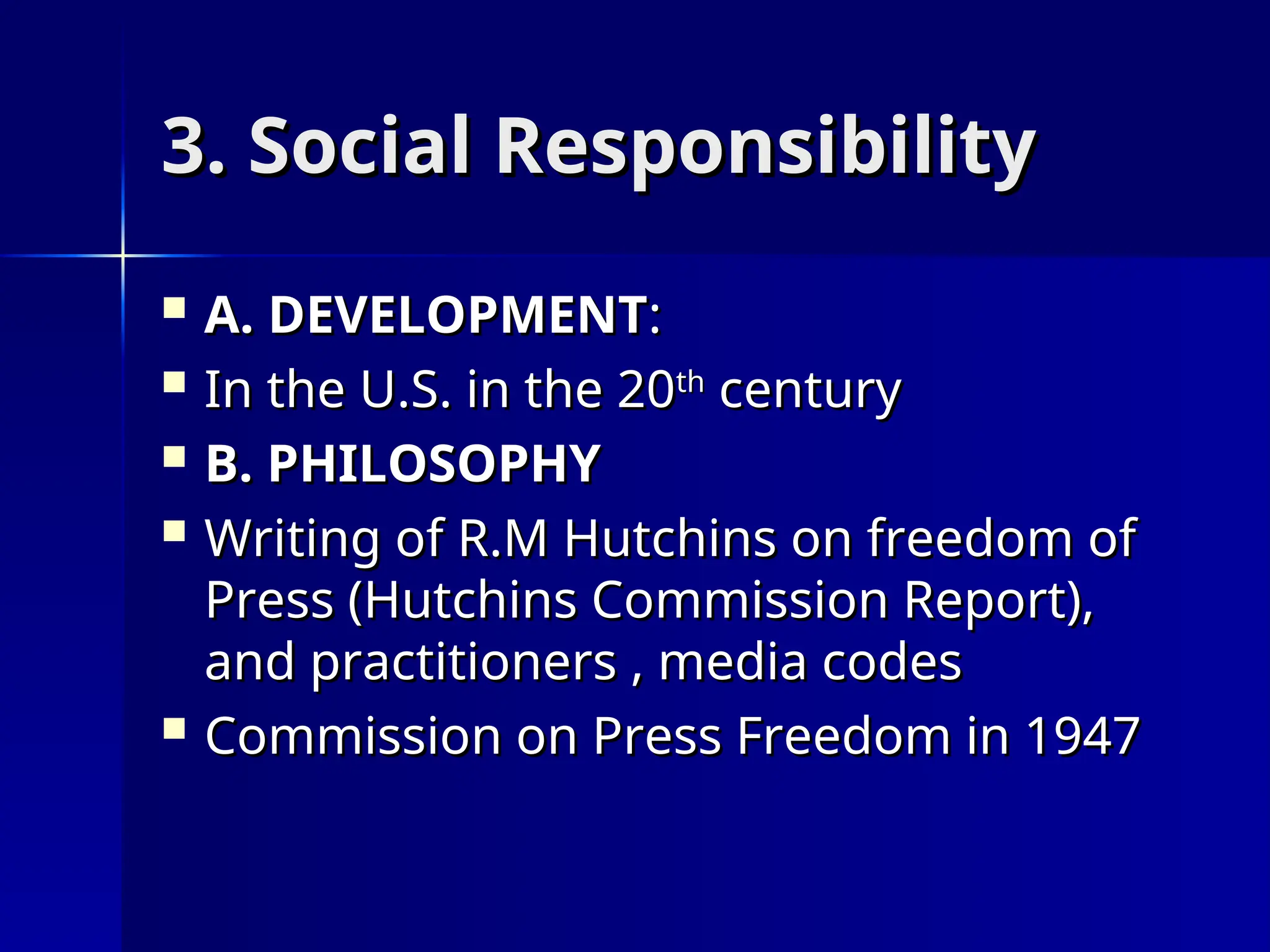
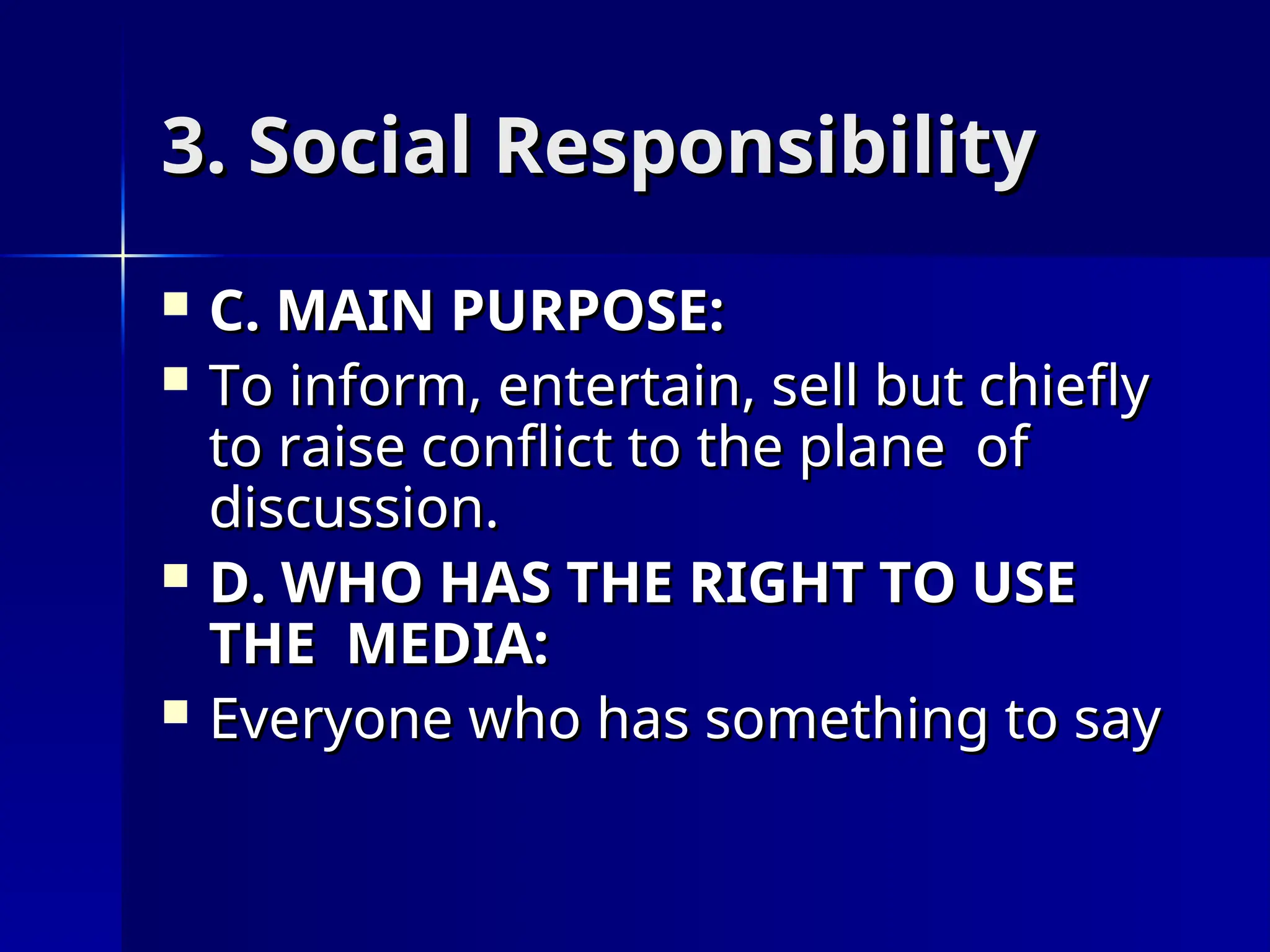
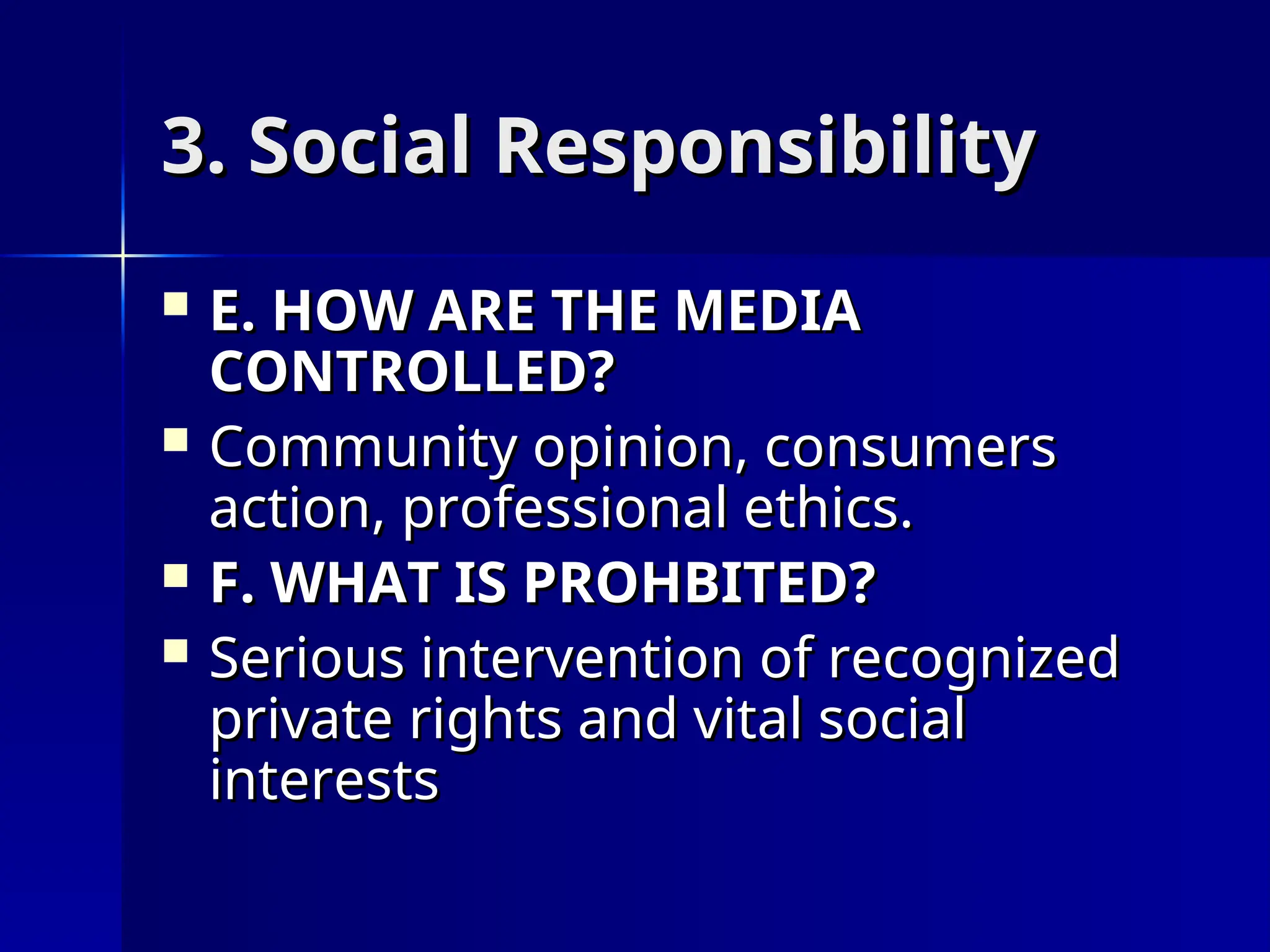
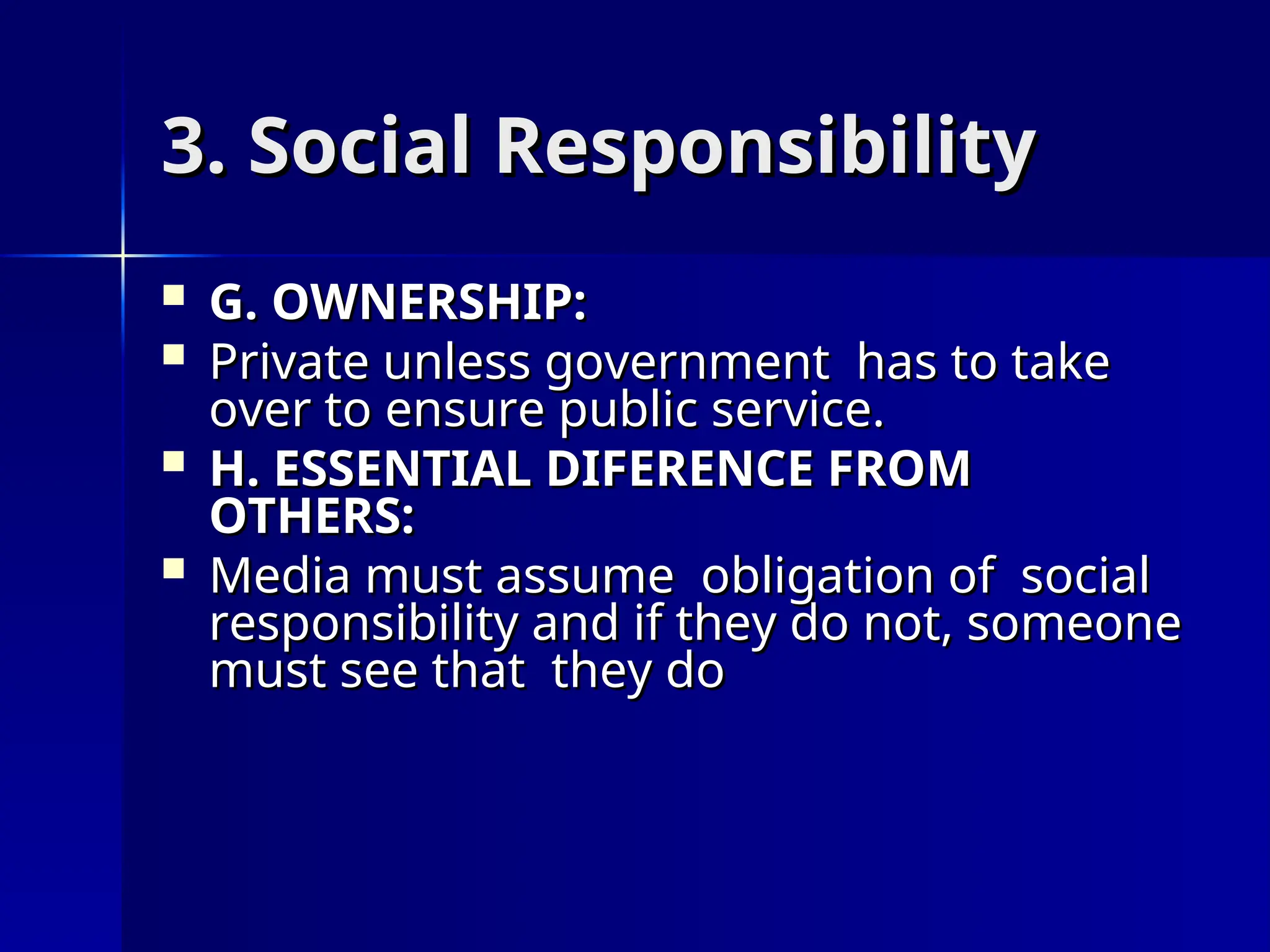
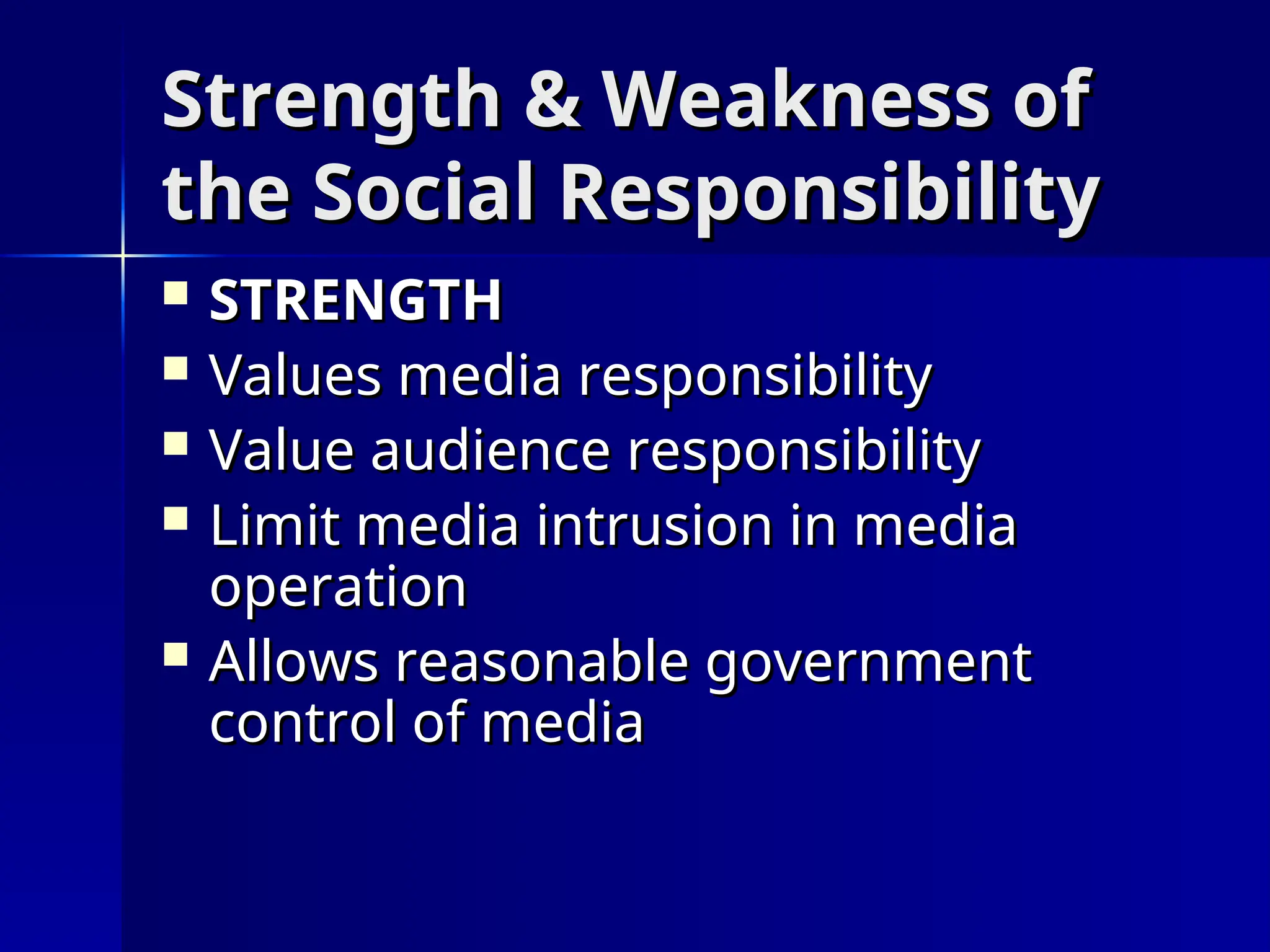
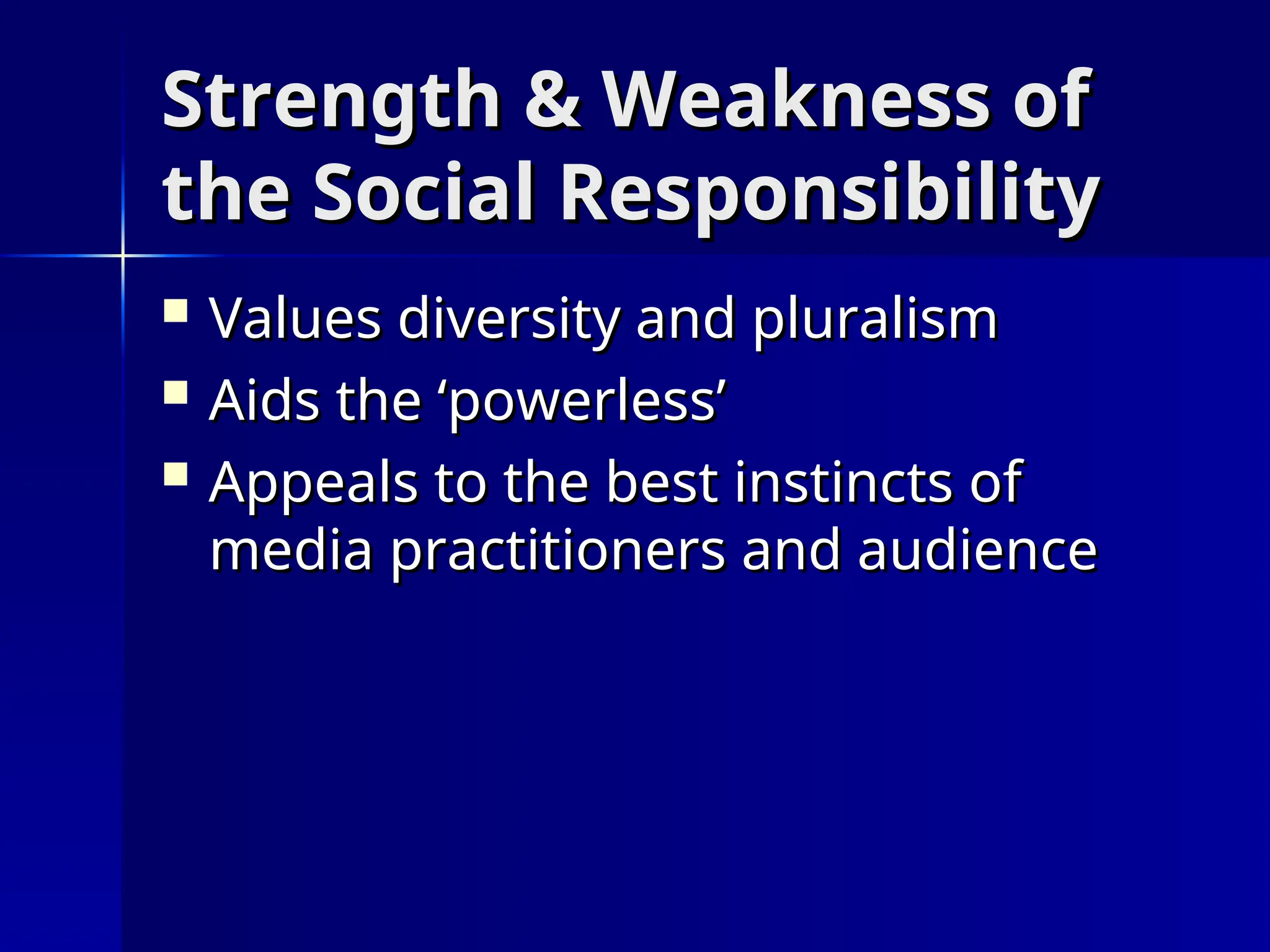
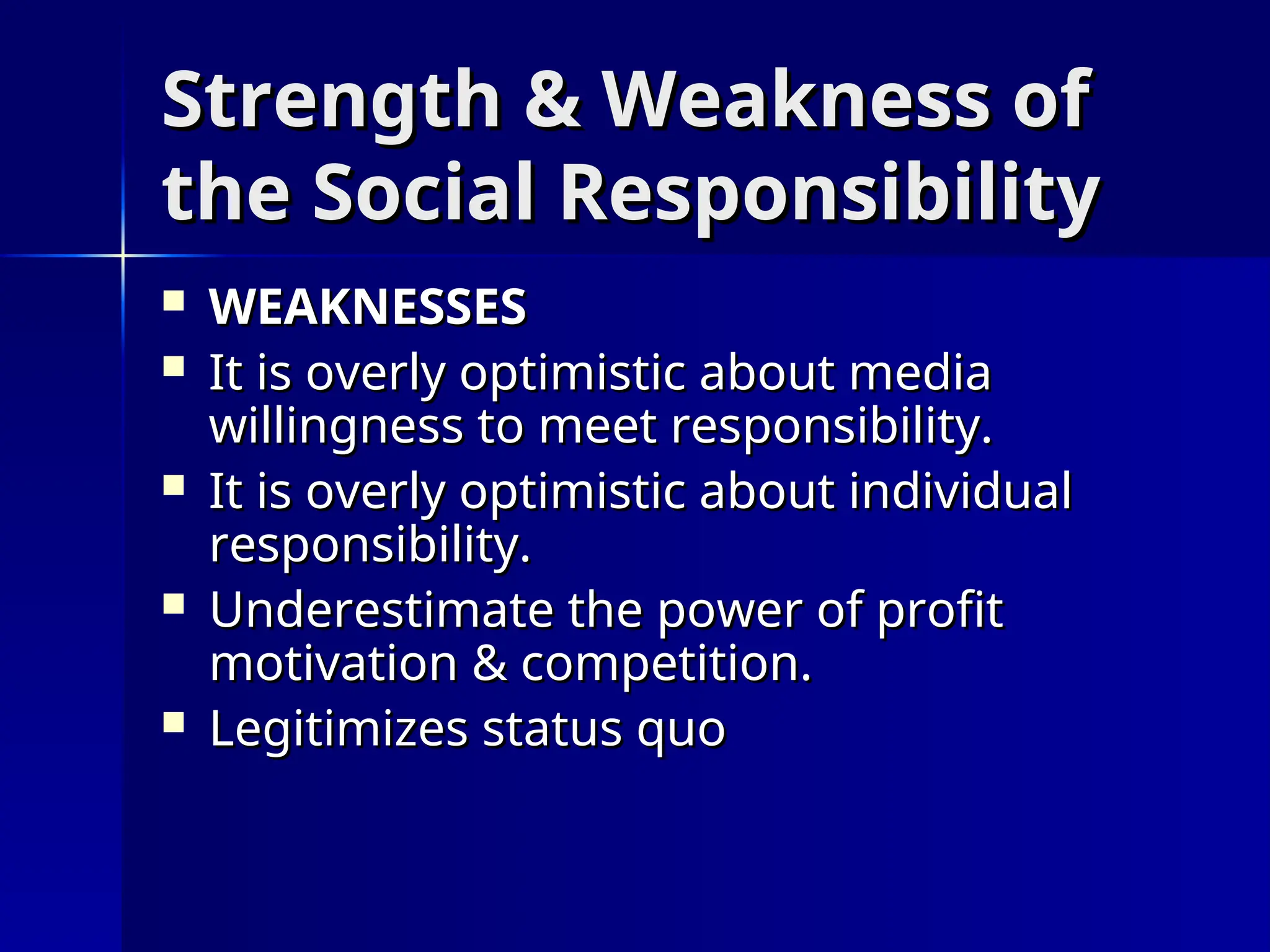
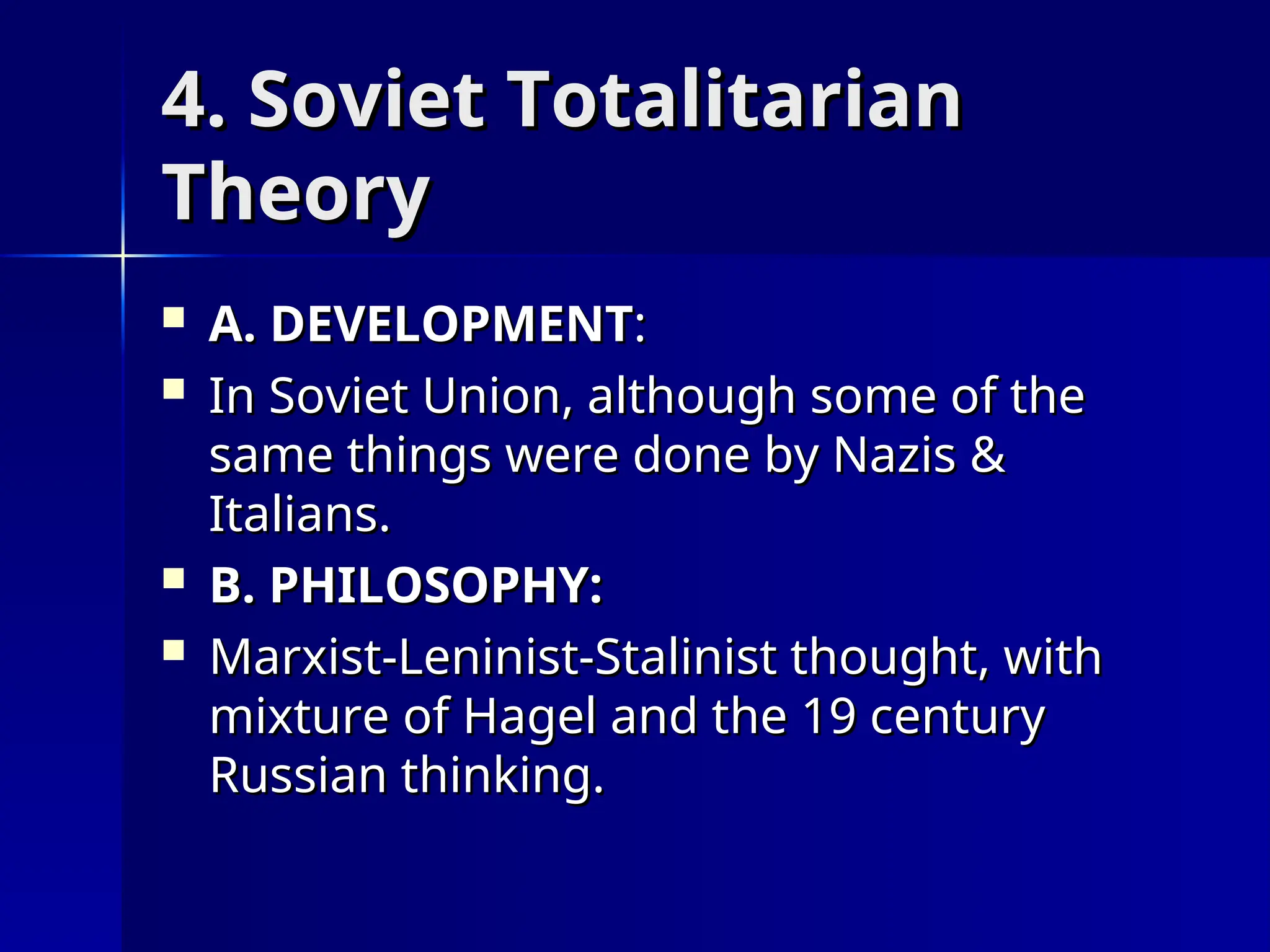
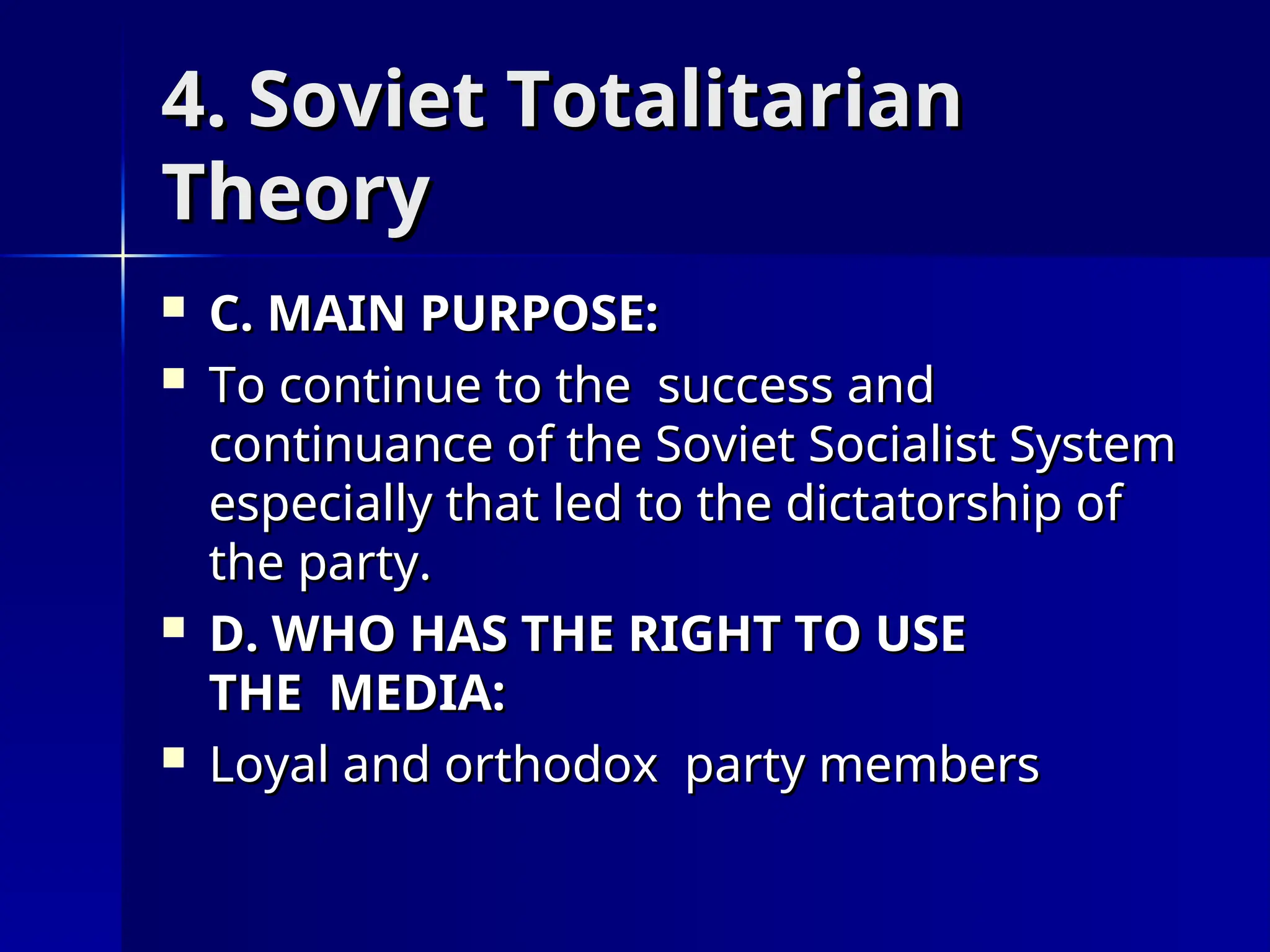
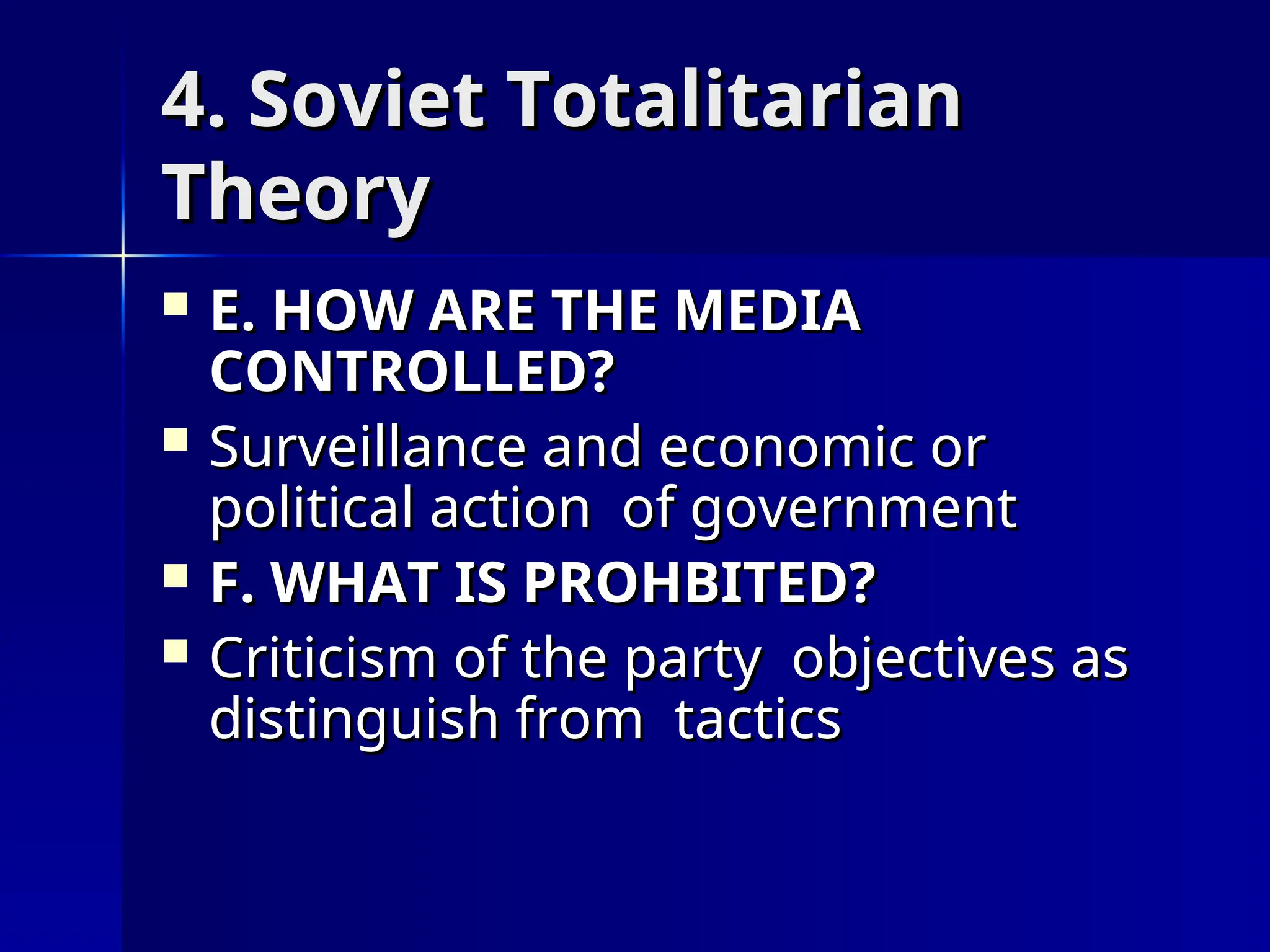
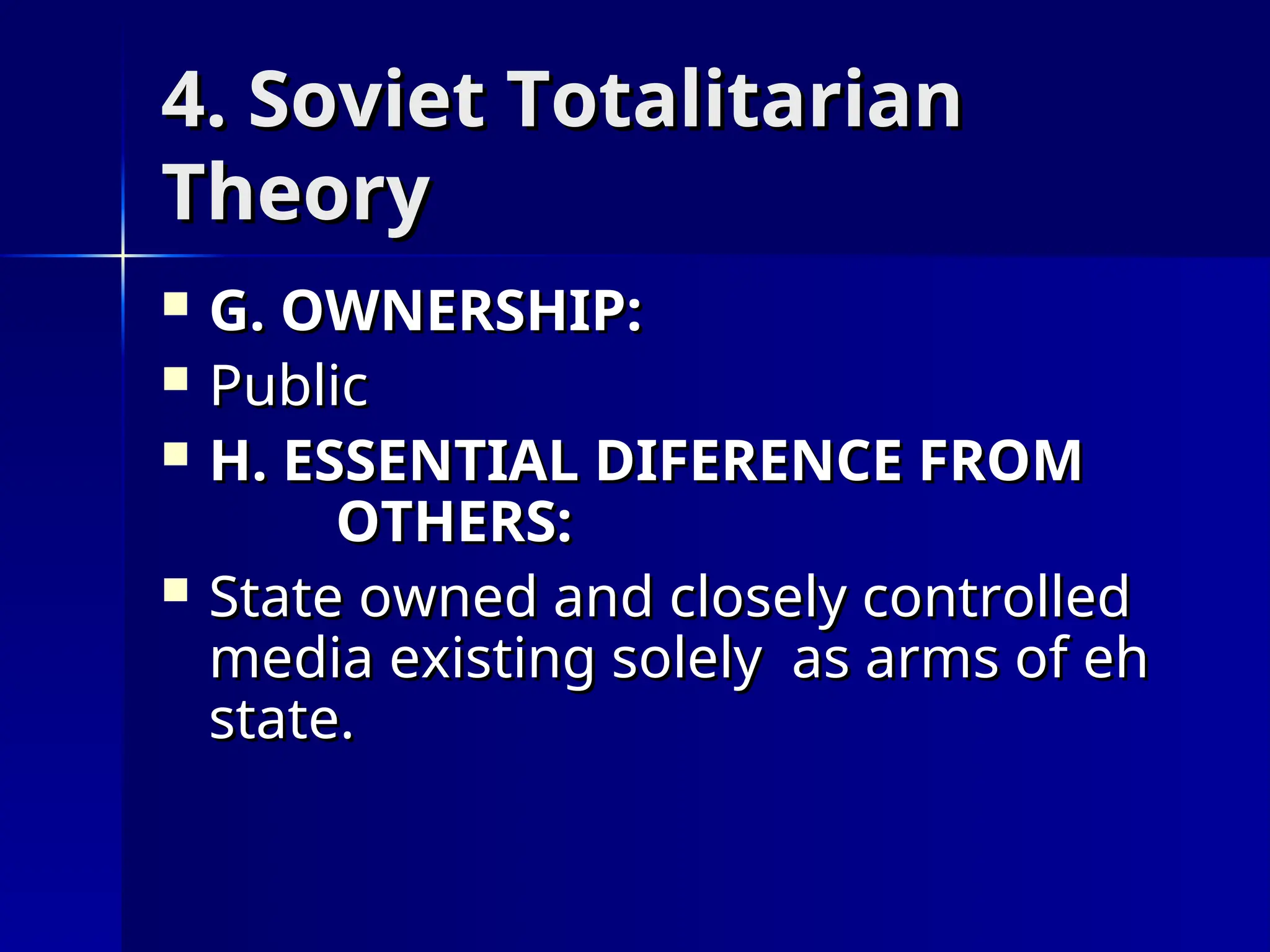
Normative theories of mass communication describe ideal media structures and operations aligned with societal values, categorizing the press into four main theories: authoritarian, libertarian, social responsibility, and soviet-totalitarian. These theories provide frameworks for understanding the role of media within society, their control mechanisms, and ownership types. Additionally, democratic-participant and development media theories emerge as reactions to previous theories, emphasizing pluralism, decentralization, and the media's role in national development.




![Globalization[1]](https://cdn.slidesharecdn.com/ss_thumbnails/globalization1-141116104336-conversion-gate02-thumbnail.jpg?width=640&height=640&fit=bounds)


