Downloaded 17 times

![10-1-2017
Augmented reality sandbox - Dr. Nico Rutten
“The overall findings
suggest that simulations
can be as effective,
and in many ways
more effective,
than traditional […]
instructional practices
in promoting…
science content
knowledge,
developing process
skills,
and facilitating
conceptual change.”
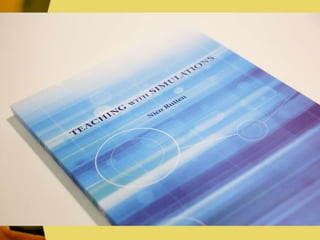
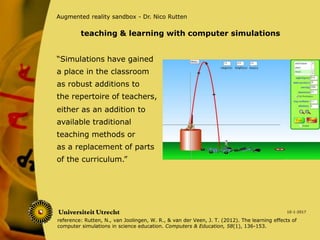
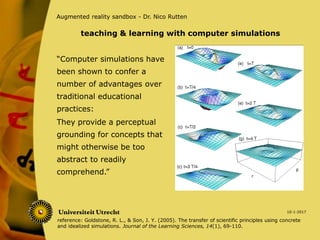
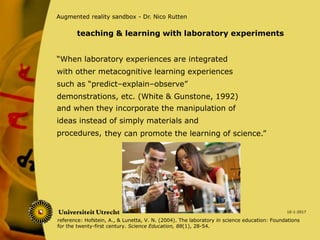
teaching & learning with computer simulations
reference: Smetana, L. K., & Bell, R. L. (2012). Computer simulations to support science
instruction and learning: A critical review of the literature. International Journal of Science
Education, 34(9), 1337-1370.](https://image.slidesharecdn.com/nicorutten-augmentedrealitysandbox-170110095447/85/Augmented-reality-sandbox-9-320.jpg)
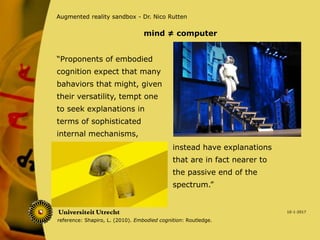
![“Embodied cognition […]
resists the idea that
cognition is solipsistic,
10-1-2017
Augmented reality sandbox - Dr. Nico Rutten
and so rejects the idea that
subjects are passive
receivers of stimulation.”
mind ≠ computer
reference: Shapiro, L. (2010). Embodied cognition: Routledge.](https://image.slidesharecdn.com/nicorutten-augmentedrealitysandbox-170110095447/85/Augmented-reality-sandbox-18-320.jpg)
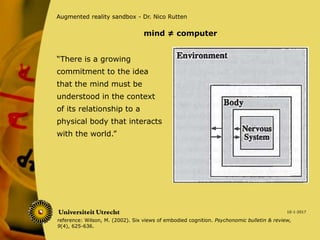
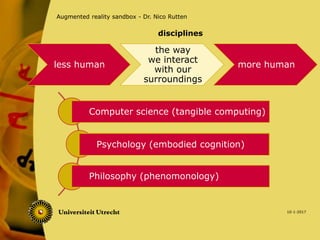
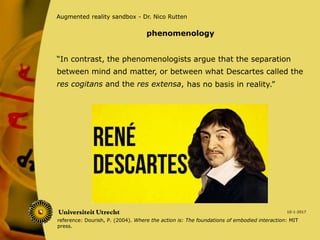
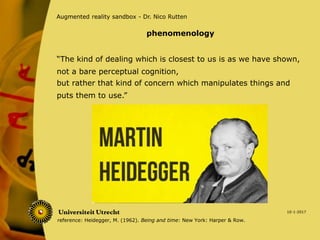
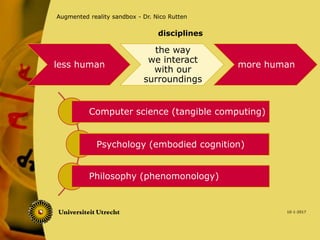
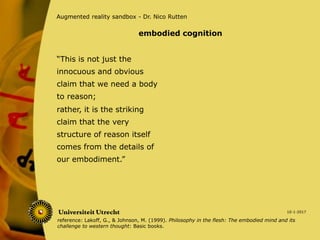
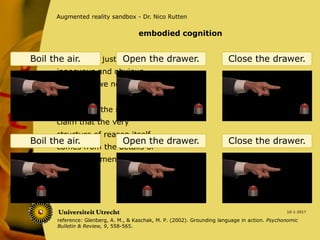
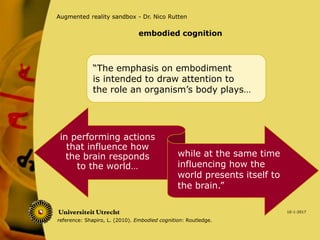
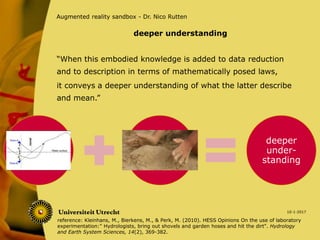
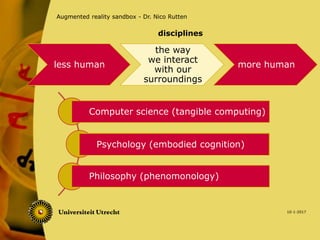
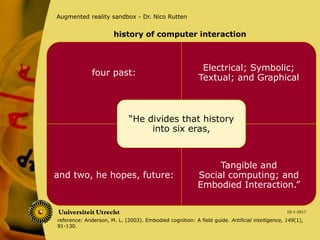

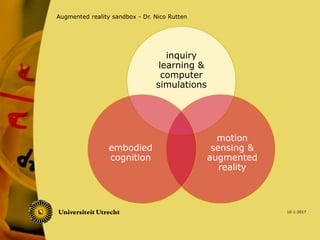
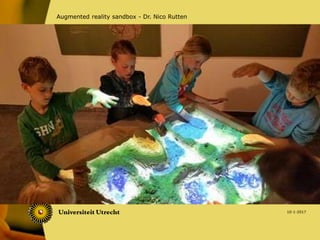
The document discusses the use of augmented reality and computer simulations in education, emphasizing their effectiveness in enhancing science content knowledge and promoting inquiry-based learning. It critiques traditional instructional methods and advocates for embodied cognition, highlighting the importance of integrating physical interaction with learning. The text also references various research studies that support the adoption of these technologies in classroom settings to foster collaboration and critical thinking skills.


