Downloaded 468 times
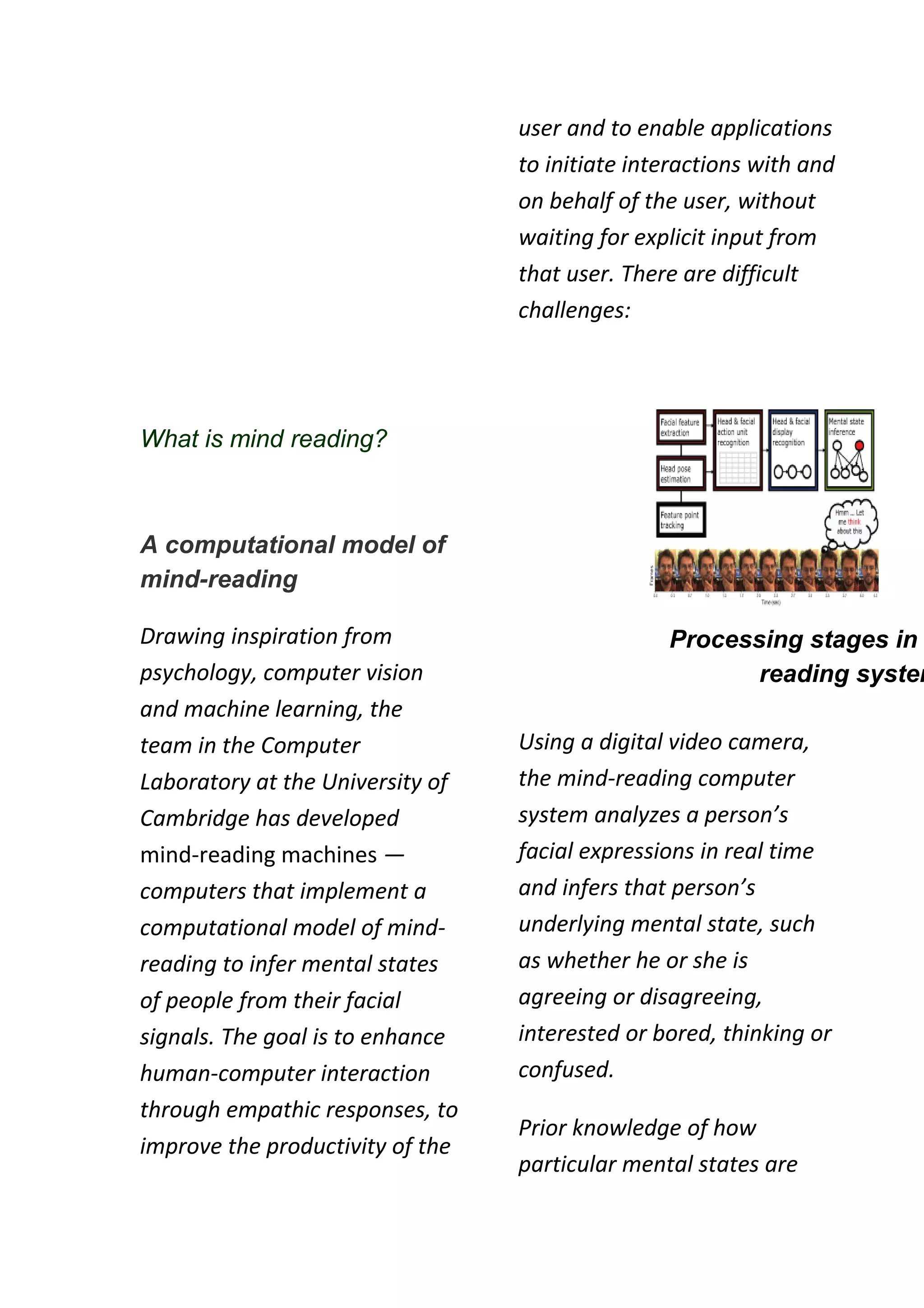
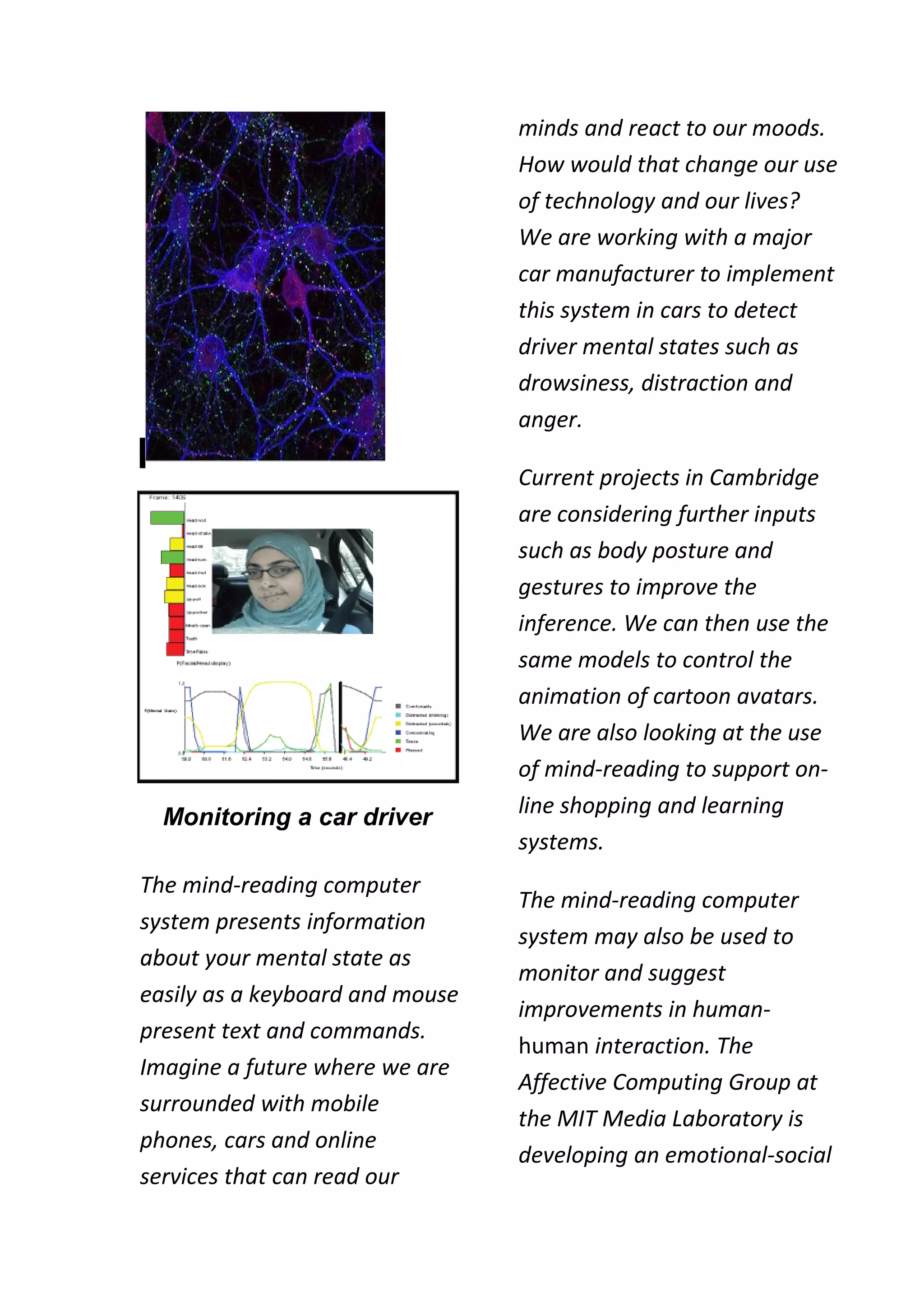

The document discusses recent research into developing "mind-reading" computers that can infer a person's mental states from analyzing their facial expressions and brain activity in real time using sensors. Such technology could allow more natural human-computer interaction and adapt interfaces based on the user's inferred mental workload, emotions, and intentions. However, accurately reading complex mental states from biological signals remains challenging. While the technology holds promise, issues around privacy, ethics, and the limitations of mind-reading need further consideration before real-world applications.


