Downloaded 213 times


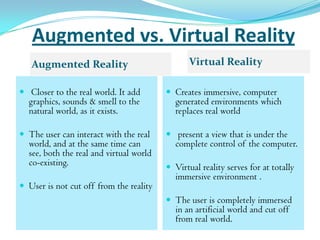
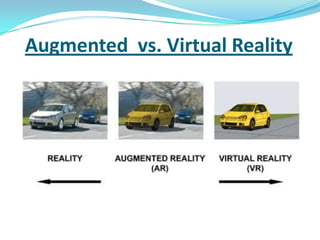


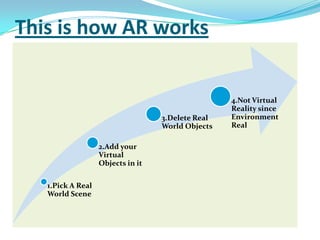


Augmented reality (AR) combines real and virtual objects that interact in real-time. AR enhances one's current perception of reality, whereas virtual reality replaces reality entirely. AR uses devices like head-mounted displays and mobile screens to overlay digital content onto the real world. Examples of AR applications include using phones or glasses to get navigation help, visualize products in the home, or assist with medical training or repair work. The future of AR may include ubiquitous information overlays accessible through everyday objects and environments that seamlessly blend the digital and physical worlds.


