Downloaded 76 times



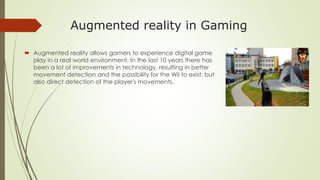


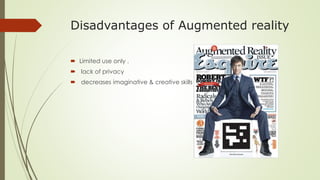


Augmented reality (AR) enhances one's current perception of reality by supplementing real-world elements with computer-generated sensory input like sound, video, graphics or GPS data. Unlike virtual reality which replaces the real world, AR augments it. Applications of AR include gaming, education, medicine, navigation, sports/entertainment, research and marketing. In education, AR provides contextual learning through interactive simulations. In medicine, it allows overlaying patient scans and vital signs onto a real-world view. AR also enhances navigation, architecture/interior design, engineering and presentations. While it engages users, AR may decrease creativity and lacks privacy.


