Dr. Anand S. Rao
Partner, Innovation Lead, PwC Data & Analytics
Augmented Intelligence: The art of making
complex business decisions
05.23.16
www.pwc.com/digitalandtech
PwC 2
PwC
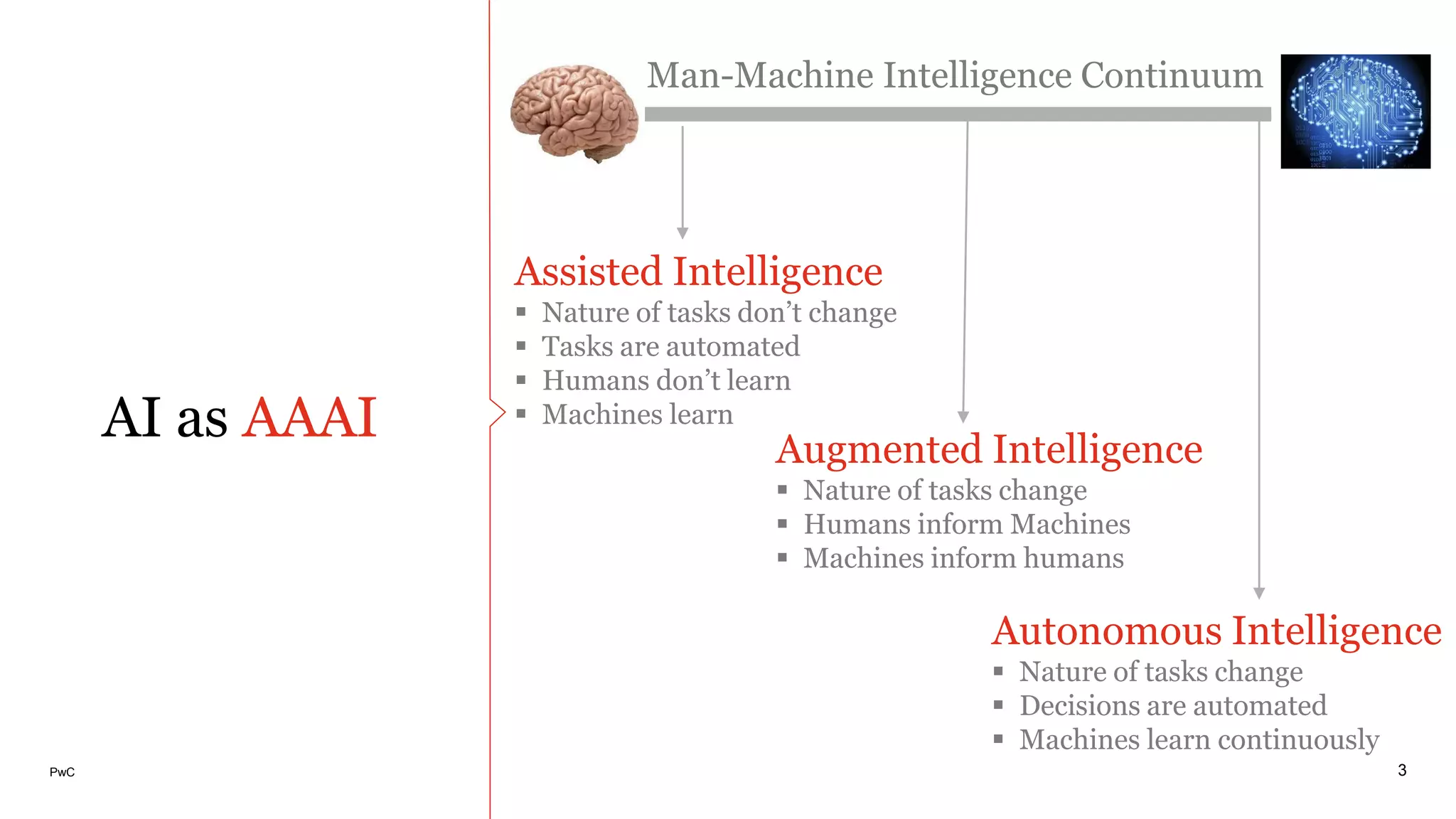
AI as AAAI
3
Assisted Intelligence
 Nature of tasks don’t change
 Tasks are automated
 Humans don’t learn
 Machines learn
Augmented Intelligence
 Nature of tasks change
 Humans inform Machines
 Machines inform humans
Autonomous Intelligence
 Nature of tasks change
 Decisions are automated
 Machines learn continuously
Man-Machine Intelligence Continuum
PwC
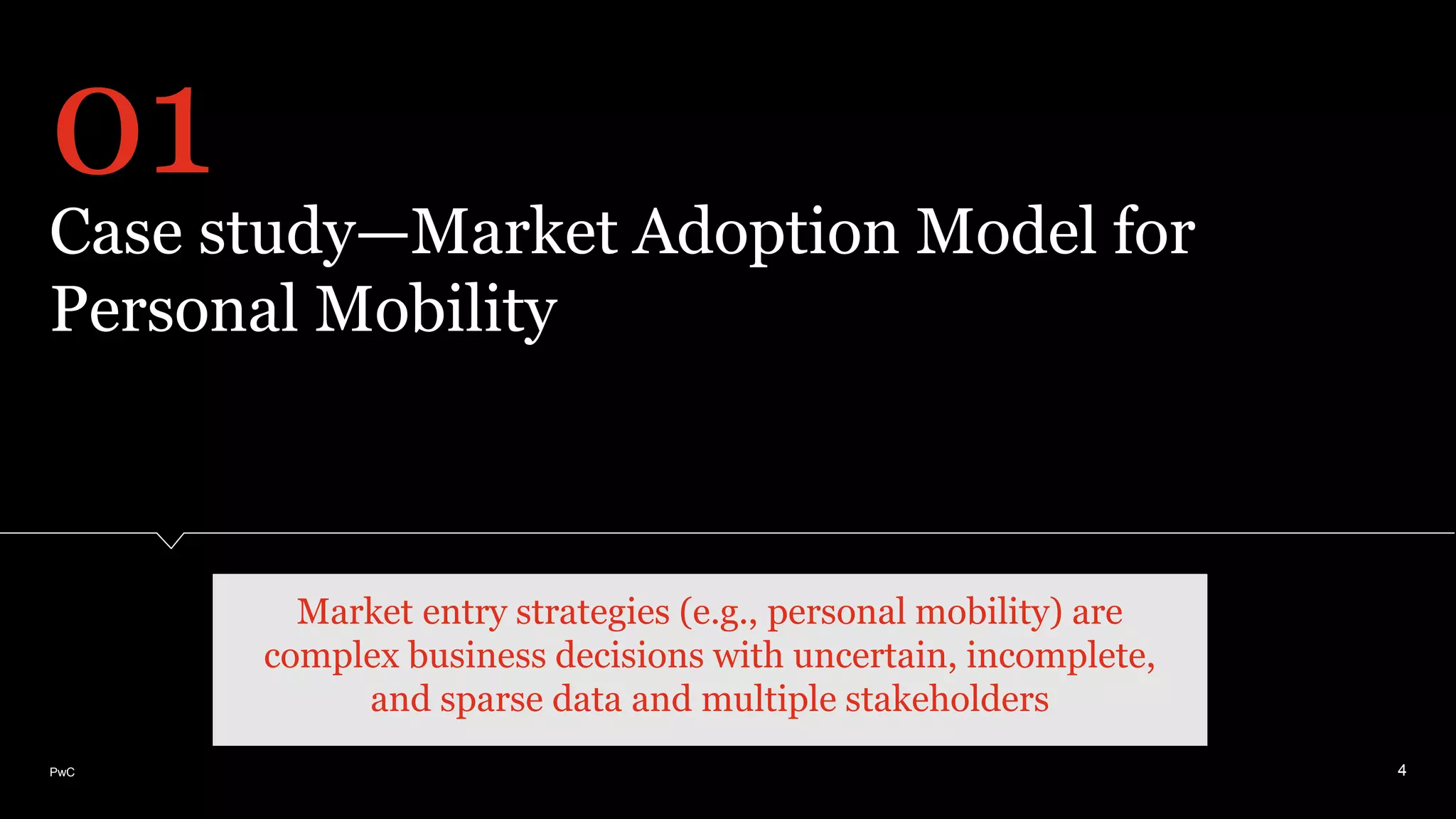
Case study—Market Adoption Model for
Personal Mobility
4
01
Market entry strategies (e.g., personal mobility) are
complex business decisions with uncertain, incomplete,
and sparse data and multiple stakeholders
PwC
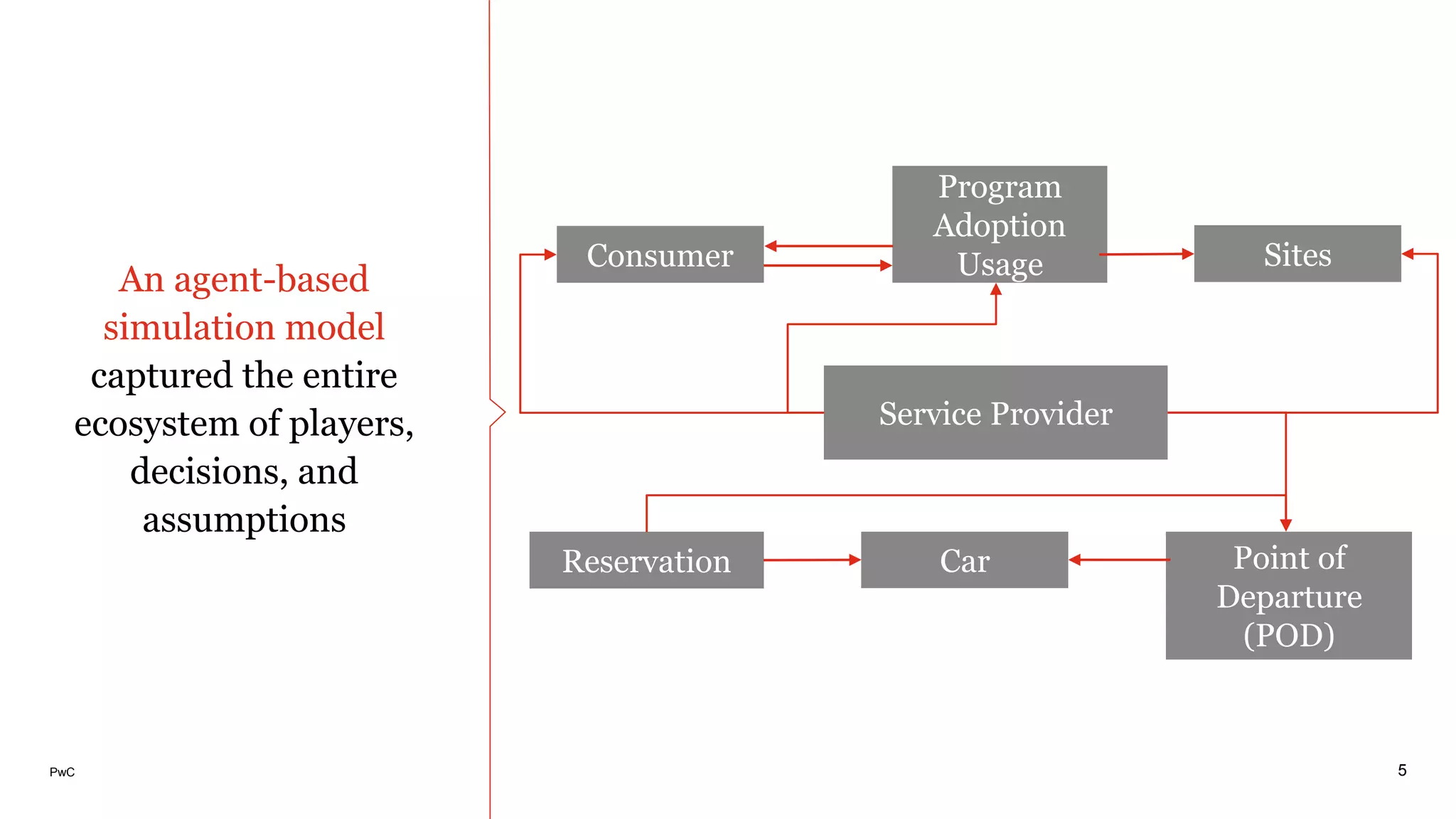
An agent-based
simulation model
captured the entire
ecosystem of players,
decisions, and
assumptions
5
Consumer Sites
Point of
Departure
(POD)
Program
Adoption
Usage
Reservation Car
Service Provider
PwC
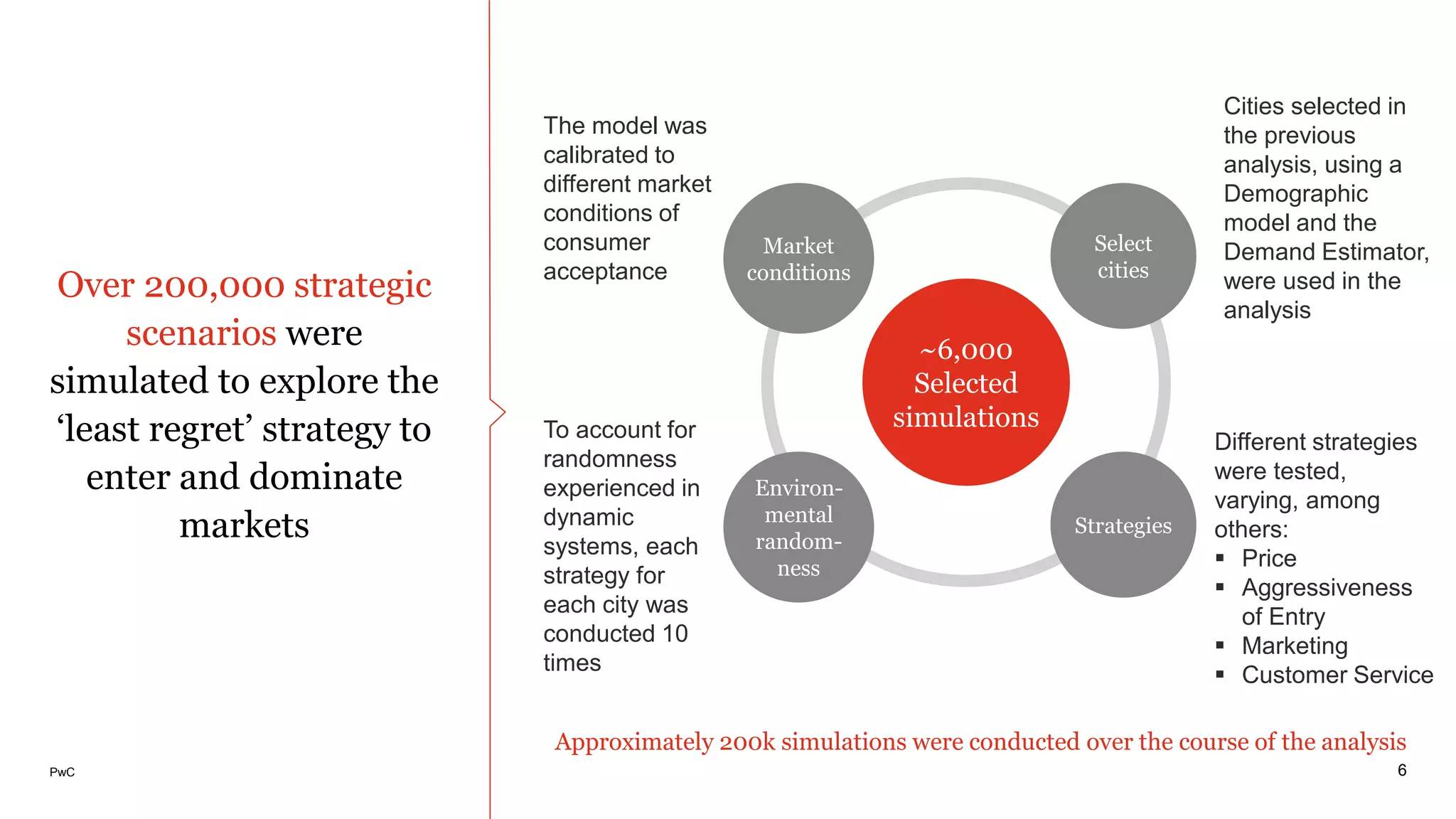
The model was
calibrated to
different market
conditions of
consumer
acceptance
To account for
randomness
experienced in
dynamic
systems, each
strategy for
each city was
conducted 10
times
Over 200,000 strategic
scenarios were
simulated to explore the
‘least regret’ strategy to
enter and dominate
markets
6
Approximately 200k simulations were conducted over the course of the analysis
~6,000
Selected
simulations
Select
cities
Strategies
Market
conditions
Environ-
mental
random-
ness
Cities selected in
the previous
analysis, using a
Demographic
model and the
Demand Estimator,
were used in the
analysis
Different strategies
were tested,
varying, among
others:
 Price
 Aggressiveness
of Entry
 Marketing
 Customer Service
PwC
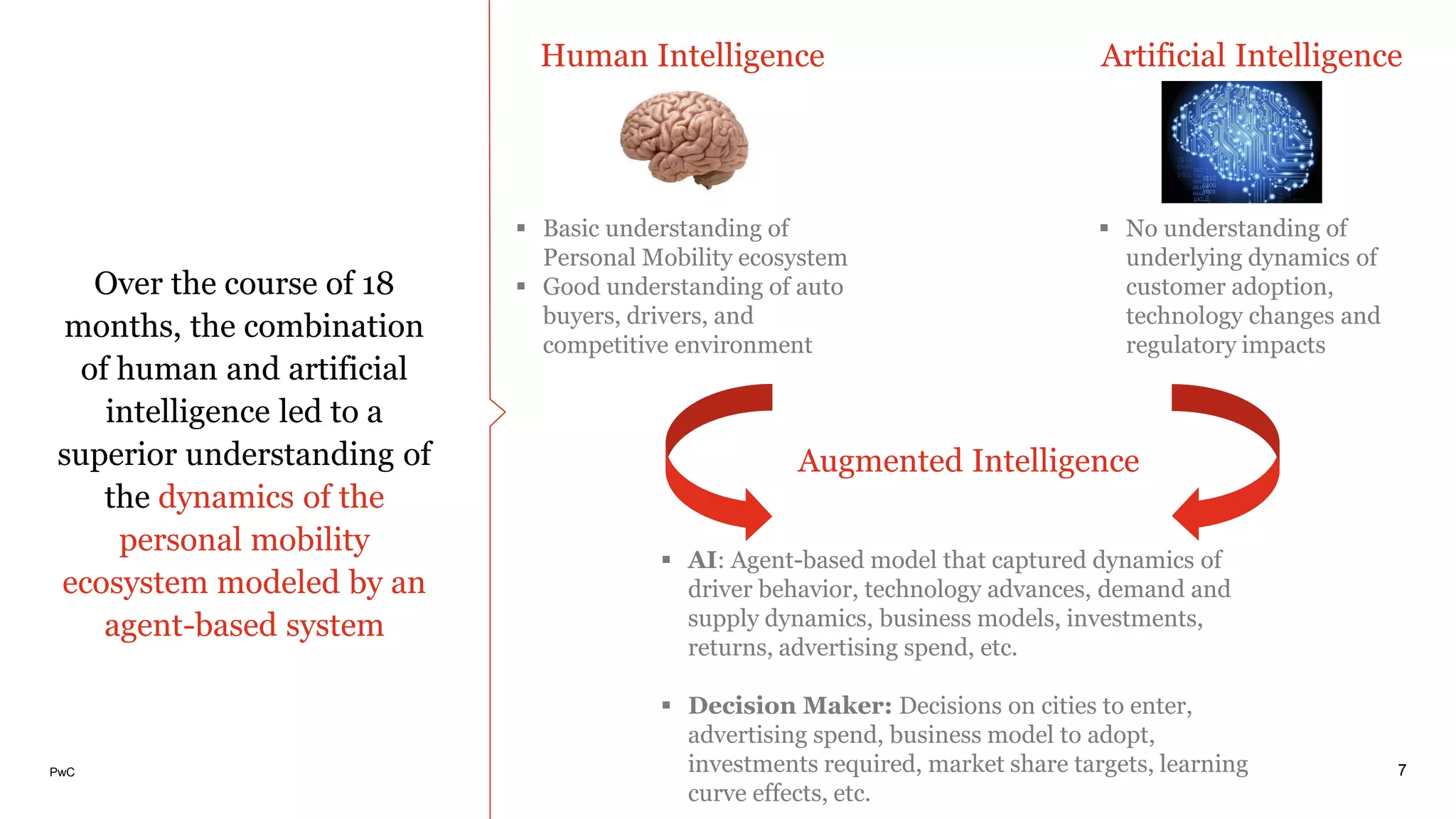
Over the course of 18
months, the combination
of human and artificial
intelligence led to a
superior understanding of
the dynamics of the
personal mobility
ecosystem modeled by an
agent-based system
7
 AI: Agent-based model that captured dynamics of
driver behavior, technology advances, demand and
supply dynamics, business models, investments,
returns, advertising spend, etc.
 Decision Maker: Decisions on cities to enter,
advertising spend, business model to adopt,
investments required, market share targets, learning
curve effects, etc.
Augmented Intelligence
 Basic understanding of
Personal Mobility ecosystem
 Good understanding of auto
buyers, drivers, and
competitive environment
Human Intelligence
 No understanding of
underlying dynamics of
customer adoption,
technology changes and
regulatory impacts
Artificial Intelligence
PwC
Case study—Digital Advice Models
8
02
Financial Services firms are moving along the spectrum
of AAAI in developing financial advice and portfolio
management solutions
PwC
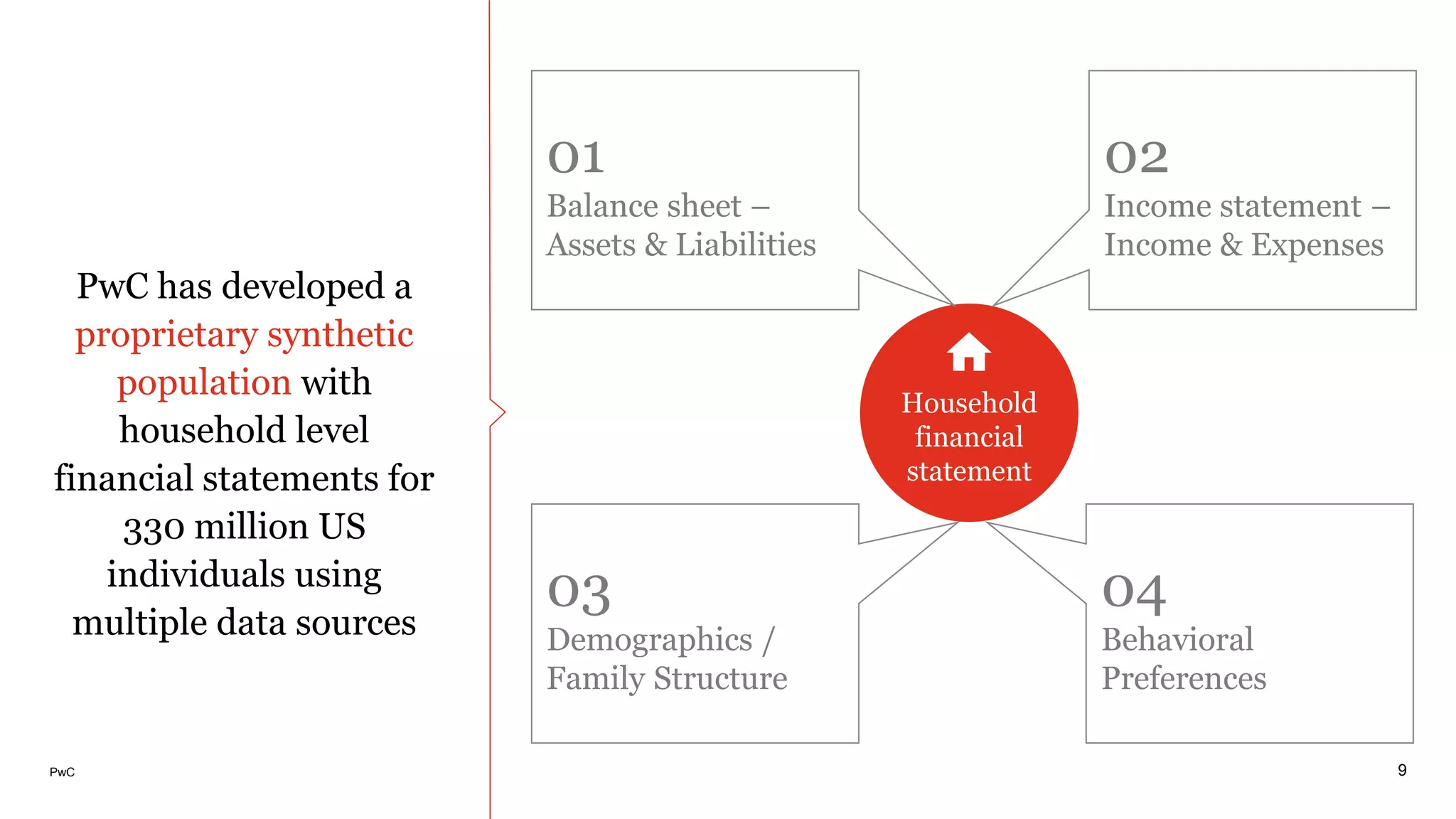
PwC has developed a
proprietary synthetic
population with
household level
financial statements for
330 million US
individuals using
multiple data sources
9
Household
financial
statement
01
Balance sheet –
Assets & Liabilities
02
Income statement –
Income & Expenses
03
Demographics /
Family Structure
04
Behavioral
Preferences
PwC
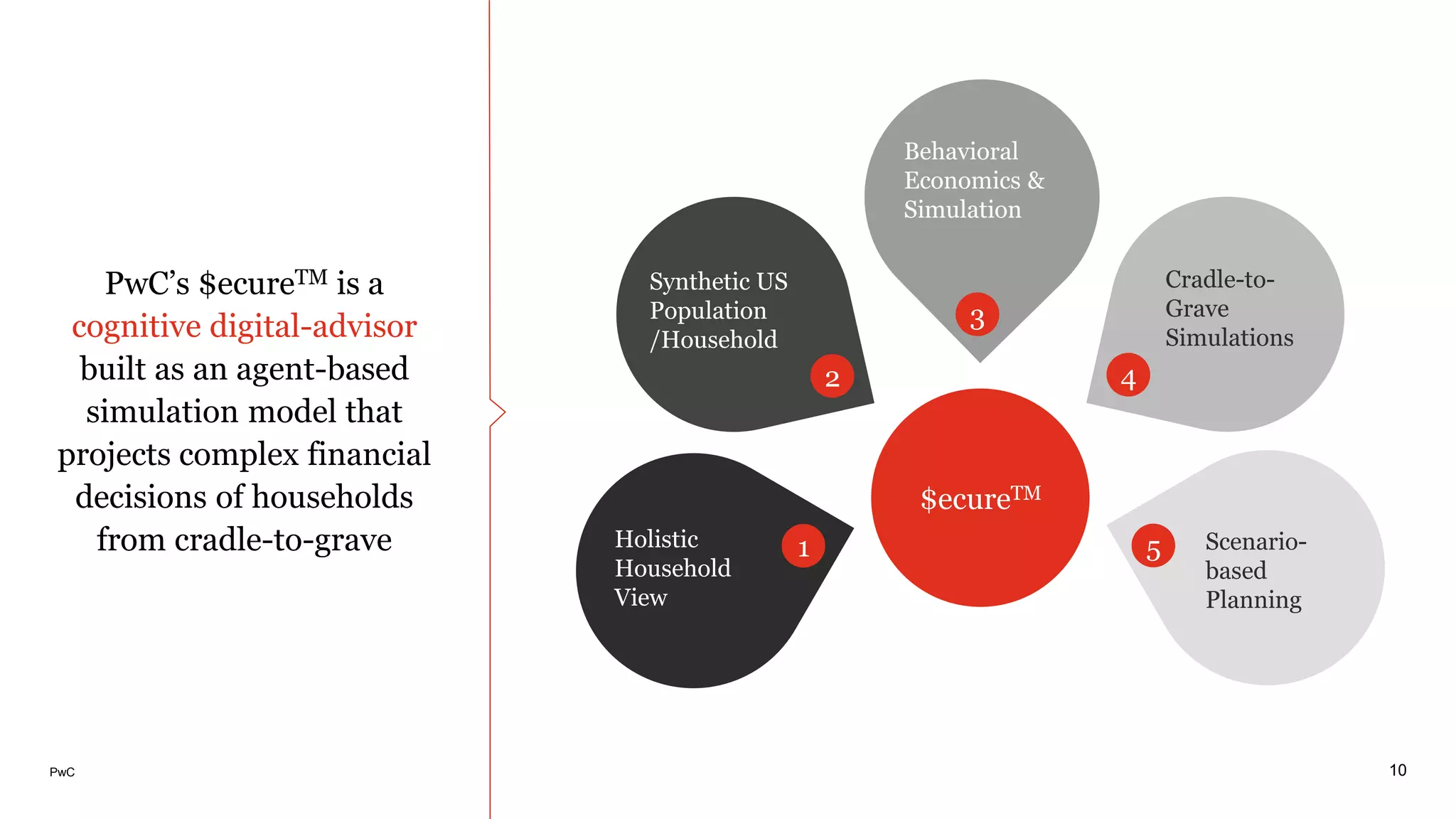
Cradle-to-
Grave
Simulations
Scenario-
based
Planning
PwC’s $ecureTM is a
cognitive digital-advisor
built as an agent-based
simulation model that
projects complex financial
decisions of households
from cradle-to-grave
10
Behavioral
Economics &
Simulation
3
4
5
$ecureTM
Synthetic US
Population
/Household
Holistic
Household
View
2
1
PwC
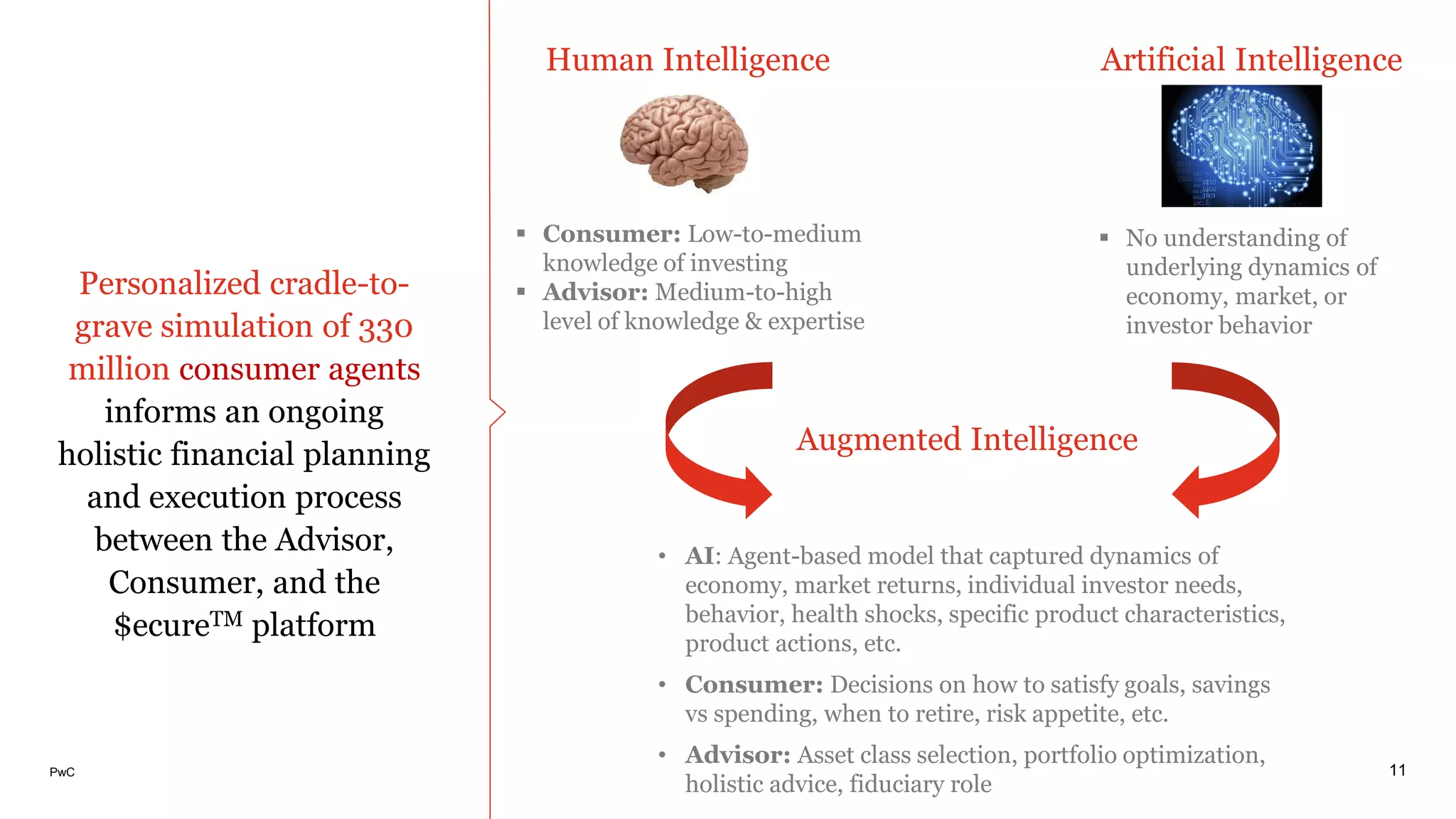
Personalized cradle-to-
grave simulation of 330
million consumer agents
informs an ongoing
holistic financial planning
and execution process
between the Advisor,
Consumer, and the
$ecureTM platform
11
• AI: Agent-based model that captured dynamics of
economy, market returns, individual investor needs,
behavior, health shocks, specific product characteristics,
product actions, etc.
• Consumer: Decisions on how to satisfy goals, savings
vs spending, when to retire, risk appetite, etc.
• Advisor: Asset class selection, portfolio optimization,
holistic advice, fiduciary role
Augmented Intelligence
 Consumer: Low-to-medium
knowledge of investing
 Advisor: Medium-to-high
level of knowledge & expertise
Human Intelligence
 No understanding of
underlying dynamics of
economy, market, or
investor behavior
Artificial Intelligence
PwC’s Digital Services
Augmented Intelligence
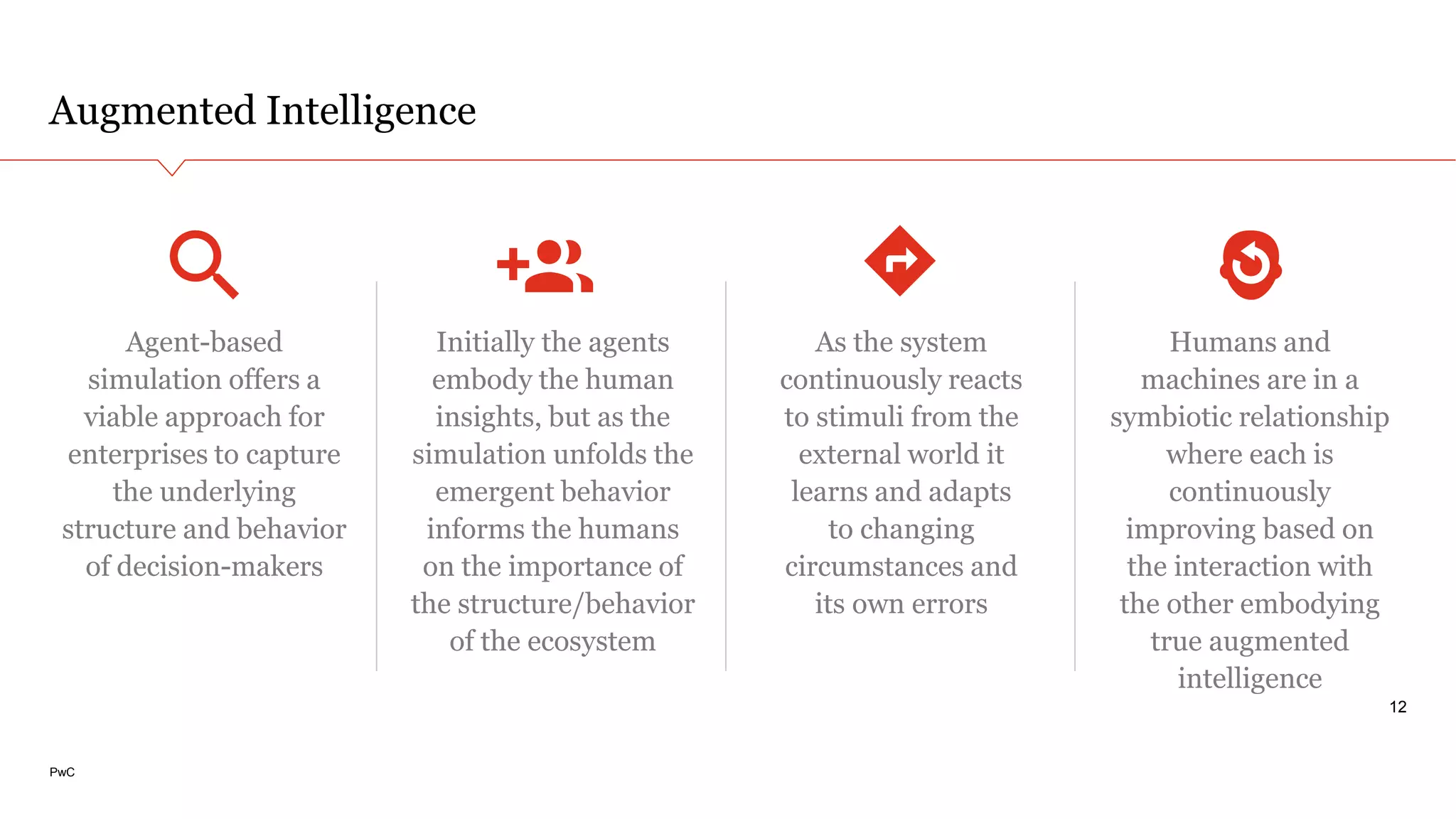
Agent-based
simulation offers a
viable approach for
enterprises to capture
the underlying
structure and behavior
of decision-makers
Initially the agents
embody the human
insights, but as the
simulation unfolds the
emergent behavior
informs the humans
on the importance of
the structure/behavior
of the ecosystem
As the system
continuously reacts
to stimuli from the
external world it
learns and adapts
to changing
circumstances and
its own errors
Humans and
machines are in a
symbiotic relationship
where each is
continuously
improving based on
the interaction with
the other embodying
true augmented
intelligence
12
PwC
For More Information Contact:
Dr. Anand S. Rao
anand.s.rao@pwc.com
Twitter: @AnandSRao
LinkedIn: www.linkedin.com/in/anandsrao
To stay connected on PwC's latest emerging technology insights, please subscribe at:
http://pwc.to/ETinsights
13
© 2016 PwC. All rights reserved. PwC refers to the US member firm or one of its subsidiaries or affiliates, and may sometimes refer to the PwC network.
Each member firm is a separate legal entity. Please see www.pwc.com/structure for further details.

Augmented Intelligence for EmTech May 2016 (Anand-final-Without Video) Presentation

  • 1.
    Dr. Anand S.Rao Partner, Innovation Lead, PwC Data & Analytics Augmented Intelligence: The art of making complex business decisions 05.23.16 www.pwc.com/digitalandtech
  • 2.
  • 3.
    PwC AI as AAAI 3 AssistedIntelligence  Nature of tasks don’t change  Tasks are automated  Humans don’t learn  Machines learn Augmented Intelligence  Nature of tasks change  Humans inform Machines  Machines inform humans Autonomous Intelligence  Nature of tasks change  Decisions are automated  Machines learn continuously Man-Machine Intelligence Continuum
  • 4.
    PwC Case study—Market AdoptionModel for Personal Mobility 4 01 Market entry strategies (e.g., personal mobility) are complex business decisions with uncertain, incomplete, and sparse data and multiple stakeholders
  • 5.
    PwC An agent-based simulation model capturedthe entire ecosystem of players, decisions, and assumptions 5 Consumer Sites Point of Departure (POD) Program Adoption Usage Reservation Car Service Provider
  • 6.
    PwC The model was calibratedto different market conditions of consumer acceptance To account for randomness experienced in dynamic systems, each strategy for each city was conducted 10 times Over 200,000 strategic scenarios were simulated to explore the ‘least regret’ strategy to enter and dominate markets 6 Approximately 200k simulations were conducted over the course of the analysis ~6,000 Selected simulations Select cities Strategies Market conditions Environ- mental random- ness Cities selected in the previous analysis, using a Demographic model and the Demand Estimator, were used in the analysis Different strategies were tested, varying, among others:  Price  Aggressiveness of Entry  Marketing  Customer Service
  • 7.
    PwC Over the courseof 18 months, the combination of human and artificial intelligence led to a superior understanding of the dynamics of the personal mobility ecosystem modeled by an agent-based system 7  AI: Agent-based model that captured dynamics of driver behavior, technology advances, demand and supply dynamics, business models, investments, returns, advertising spend, etc.  Decision Maker: Decisions on cities to enter, advertising spend, business model to adopt, investments required, market share targets, learning curve effects, etc. Augmented Intelligence  Basic understanding of Personal Mobility ecosystem  Good understanding of auto buyers, drivers, and competitive environment Human Intelligence  No understanding of underlying dynamics of customer adoption, technology changes and regulatory impacts Artificial Intelligence
  • 8.
    PwC Case study—Digital AdviceModels 8 02 Financial Services firms are moving along the spectrum of AAAI in developing financial advice and portfolio management solutions
  • 9.
    PwC PwC has developeda proprietary synthetic population with household level financial statements for 330 million US individuals using multiple data sources 9 Household financial statement 01 Balance sheet – Assets & Liabilities 02 Income statement – Income & Expenses 03 Demographics / Family Structure 04 Behavioral Preferences
  • 10.
    PwC Cradle-to- Grave Simulations Scenario- based Planning PwC’s $ecureTM isa cognitive digital-advisor built as an agent-based simulation model that projects complex financial decisions of households from cradle-to-grave 10 Behavioral Economics & Simulation 3 4 5 $ecureTM Synthetic US Population /Household Holistic Household View 2 1
  • 11.
    PwC Personalized cradle-to- grave simulationof 330 million consumer agents informs an ongoing holistic financial planning and execution process between the Advisor, Consumer, and the $ecureTM platform 11 • AI: Agent-based model that captured dynamics of economy, market returns, individual investor needs, behavior, health shocks, specific product characteristics, product actions, etc. • Consumer: Decisions on how to satisfy goals, savings vs spending, when to retire, risk appetite, etc. • Advisor: Asset class selection, portfolio optimization, holistic advice, fiduciary role Augmented Intelligence  Consumer: Low-to-medium knowledge of investing  Advisor: Medium-to-high level of knowledge & expertise Human Intelligence  No understanding of underlying dynamics of economy, market, or investor behavior Artificial Intelligence
  • 12.
    PwC’s Digital Services AugmentedIntelligence Agent-based simulation offers a viable approach for enterprises to capture the underlying structure and behavior of decision-makers Initially the agents embody the human insights, but as the simulation unfolds the emergent behavior informs the humans on the importance of the structure/behavior of the ecosystem As the system continuously reacts to stimuli from the external world it learns and adapts to changing circumstances and its own errors Humans and machines are in a symbiotic relationship where each is continuously improving based on the interaction with the other embodying true augmented intelligence 12
  • 13.
    PwC For More InformationContact: Dr. Anand S. Rao anand.s.rao@pwc.com Twitter: @AnandSRao LinkedIn: www.linkedin.com/in/anandsrao To stay connected on PwC's latest emerging technology insights, please subscribe at: http://pwc.to/ETinsights 13 © 2016 PwC. All rights reserved. PwC refers to the US member firm or one of its subsidiaries or affiliates, and may sometimes refer to the PwC network. Each member firm is a separate legal entity. Please see www.pwc.com/structure for further details.