attention
INTRODUCTION
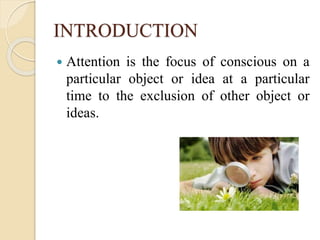
 Attention is the focus of conscious on a
particular object or idea at a particular
time to the exclusion of other object or
ideas.
Definition
 Attention is defined as a process which
compels the individual to select a
particular stimulus according to his
interest and attitude out of the multiple
stimuli of the environment
Sharma RN (1967)
Characteristics of attention
 It is a selective mental activity
 It constantly shifts from one object to
another or from one aspect to another.
 Attention is focus on the consciousness on
one particular object
 Attention is the state of preparedness or
alertness of
 Attention requires some motor and
sensory adjustments on the part of the
person being attentive
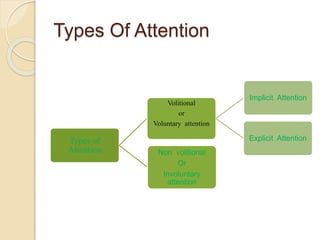
Types Of Attention
Types of
Attention
Volitional
or
Voluntary attention
Implicit Attention
Explicit Attention
Non volitional
Or
Involuntary
attention
Volitional or voluntary
Attention
 Requires conscious effort on the part
of the person.
Eg: problem solving, answering the
examination.
Further types
Implicit volitional attention
Explicit volitional attention
Implicit volitional attention
 A single act of will is responsible for
arousing attention
Eg: home work given by teacher and
the fear of punishment make arouse
attention in the student to complete
the given tasks.
Explicit volitional attention
 Attention is obtained by repeated acts
or will.
 One has to struggle hard for keeping
oneself attentive. It requires strong will
power and motivation to keep the
attention focused.
 Eg: during the preparatory days of the
examination.
Involuntary or non volitional
attention
 This type of attention is aroused
without the conscious effort.
 Eg: bright lights, loud noise, and
strong odors.
 This type of attention can be aroused
by instincts called enforced non
volitional attention.
Factors related to attention
 Attention depends upon several
factors these factors may be two
types.
External factors
Internal factors
External factors
 The external factors are concerned with the
Environment. These are also called objective
factors.
 Size
 Intensity
 Change in intensity
 Movement
 Contrast
 Novelty
 Repetition
 Definite shape
 Duration
Size
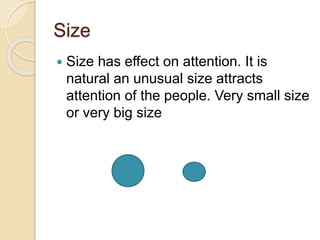
 Size has effect on attention. It is
natural an unusual size attracts
attention of the people. Very small size
or very big size
intensity
 Loud sounds, strong smells and deep
colors are attractive in nature. If a
sound is intense it would affect our
attention.
 Eg: the thunder is louder than a car
sound. so, our attention is drawn on
thunder.
Change
 Change drawn attention easily.
 Eg: in the midst of continuous noise a
slight moment of silence draws our
attention
Movements
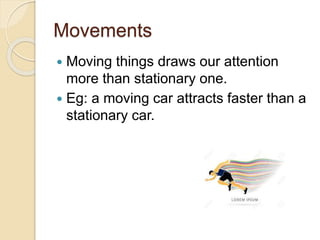
 Moving things draws our attention
more than stationary one.
 Eg: a moving car attracts faster than a
stationary car.
Contrast
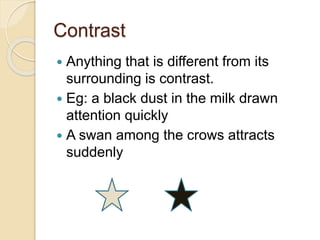
 Anything that is different from its
surrounding is contrast.
 Eg: a black dust in the milk drawn
attention quickly
 A swan among the crows attracts
suddenly
Novelty
 Newness attracts quickly than
traditional one.
 Eg: a new teacher attracts the children
very much in the school.
Repetition
 If a ting or person or event is repeated
several times, then our attention
drawn to it.
 Eg: when an advertisement is
repeated in the wall drawn attention.
Definite shape
 Attending figure more than backgroud.
Duration
 Attention is drawn to things that lasts
longer.
 Eg: a salesperson drawn attention by
lengthening his voice.
Internal factors or subjective
factors
 Internal factors are concerned with
individual. So, these re called
subjective factors.
 Interest
 Habits and attitude
 Motives and organic states
 Emotions
 Past experiences
 Value and purpose of stimuli
Cont………
 Interest:
purpose and taste of person. It
changes according to age, sex Eg:
dress, automobile preference.
Habit and attitude:
Personal habits, occupation, profession
affect the attention Eg: a sports
person observes sports on news
paper
Cont….
 Motives and organic states:
Drives and physical / psychological status.
Eg: hungry child cry at the bottle avoiding
favorite toys.
Emotions:
A sleepy mother is not disturbed by a sound at
home but faint cry of the child wakes her up.
Past experiences:
It also affect attention.
Eg checking the expiry date of the product due
our past experiences.
Cont….
 Value and purpose of stimuli:
Prevent forgetfulness by keeping costly
products.
Thank you

attention.pptx

  • 1.
  • 2.
    INTRODUCTION  Attention isthe focus of conscious on a particular object or idea at a particular time to the exclusion of other object or ideas.
  • 3.
    Definition  Attention isdefined as a process which compels the individual to select a particular stimulus according to his interest and attitude out of the multiple stimuli of the environment Sharma RN (1967)
  • 4.
    Characteristics of attention It is a selective mental activity  It constantly shifts from one object to another or from one aspect to another.  Attention is focus on the consciousness on one particular object  Attention is the state of preparedness or alertness of  Attention requires some motor and sensory adjustments on the part of the person being attentive
  • 5.
    Types Of Attention Typesof Attention Volitional or Voluntary attention Implicit Attention Explicit Attention Non volitional Or Involuntary attention
  • 6.
    Volitional or voluntary Attention Requires conscious effort on the part of the person. Eg: problem solving, answering the examination. Further types Implicit volitional attention Explicit volitional attention
  • 7.
    Implicit volitional attention A single act of will is responsible for arousing attention Eg: home work given by teacher and the fear of punishment make arouse attention in the student to complete the given tasks.
  • 8.
    Explicit volitional attention Attention is obtained by repeated acts or will.  One has to struggle hard for keeping oneself attentive. It requires strong will power and motivation to keep the attention focused.  Eg: during the preparatory days of the examination.
  • 9.
    Involuntary or nonvolitional attention  This type of attention is aroused without the conscious effort.  Eg: bright lights, loud noise, and strong odors.  This type of attention can be aroused by instincts called enforced non volitional attention.
  • 10.
    Factors related toattention  Attention depends upon several factors these factors may be two types. External factors Internal factors
  • 11.
    External factors  Theexternal factors are concerned with the Environment. These are also called objective factors.  Size  Intensity  Change in intensity  Movement  Contrast  Novelty  Repetition  Definite shape  Duration
  • 12.
    Size  Size haseffect on attention. It is natural an unusual size attracts attention of the people. Very small size or very big size
  • 13.
    intensity  Loud sounds,strong smells and deep colors are attractive in nature. If a sound is intense it would affect our attention.  Eg: the thunder is louder than a car sound. so, our attention is drawn on thunder.
  • 14.
    Change  Change drawnattention easily.  Eg: in the midst of continuous noise a slight moment of silence draws our attention
  • 15.
    Movements  Moving thingsdraws our attention more than stationary one.  Eg: a moving car attracts faster than a stationary car.
  • 16.
    Contrast  Anything thatis different from its surrounding is contrast.  Eg: a black dust in the milk drawn attention quickly  A swan among the crows attracts suddenly
  • 17.
    Novelty  Newness attractsquickly than traditional one.  Eg: a new teacher attracts the children very much in the school.
  • 18.
    Repetition  If ating or person or event is repeated several times, then our attention drawn to it.  Eg: when an advertisement is repeated in the wall drawn attention.
  • 19.
    Definite shape  Attendingfigure more than backgroud.
  • 20.
    Duration  Attention isdrawn to things that lasts longer.  Eg: a salesperson drawn attention by lengthening his voice.
  • 21.
    Internal factors orsubjective factors  Internal factors are concerned with individual. So, these re called subjective factors.  Interest  Habits and attitude  Motives and organic states  Emotions  Past experiences  Value and purpose of stimuli
  • 22.
    Cont………  Interest: purpose andtaste of person. It changes according to age, sex Eg: dress, automobile preference. Habit and attitude: Personal habits, occupation, profession affect the attention Eg: a sports person observes sports on news paper
  • 23.
    Cont….  Motives andorganic states: Drives and physical / psychological status. Eg: hungry child cry at the bottle avoiding favorite toys. Emotions: A sleepy mother is not disturbed by a sound at home but faint cry of the child wakes her up. Past experiences: It also affect attention. Eg checking the expiry date of the product due our past experiences.
  • 24.
    Cont….  Value andpurpose of stimuli: Prevent forgetfulness by keeping costly products.
  • 25.