METEOROLOGY CHAPTERS:
Atmosphere
Pressure
Density
Humidity
Temperature
Optical Phenomena
Winds
Rain/precipitation
Clouds
Visibility & Fog
Thunderstorm
Jet Streams
Clear Air Turbulence
Cyclones
Indian Climatology
CONTENTS :
INTRO TO THE ATMOSPHERE
COMPOSITION OF THE AIR
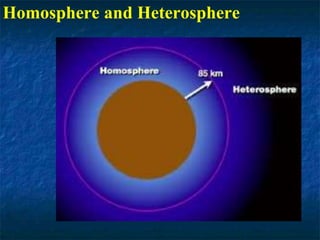
HOMOSPHERE & HETEROSPHERE
DRY AIR & SATURATED AIR
GREEN HOUSE EFFECTS
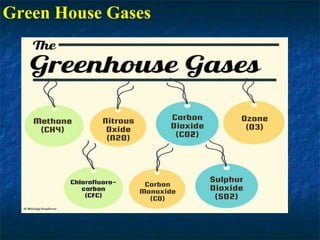
GREEN HOUSE GASES
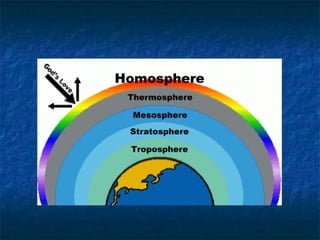
LAYERS OF THE ATMOSPHERE
INTERNATIONAL STANDARD ATMOSPHERE
MULTI CHOICE QUESTIONS
•Atmosphere of the earth is an envelope of
homogenous mixture of gases called Air.
Air is a mixture of gases.
The atmosphere is the blanket of air that
surrounds the Earth.
Atmosphere has no upper limits.
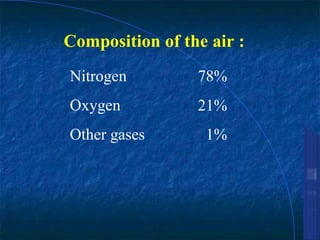
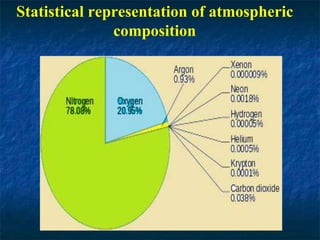
Composition of the air :
Nitrogen
Oxygen
78%
21%
Other gases 1%
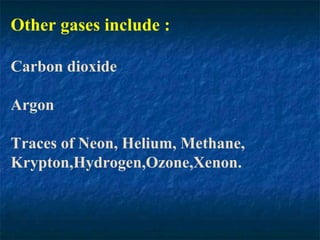
Other gases include :
Carbon dioxide
Argon
Traces of Neon, Helium, Methane,
Krypton,Hydrogen,Ozone,Xenon.
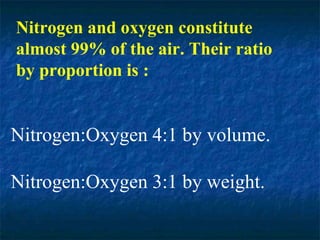
Nitrogen and oxygen constitute
almost 99% of the air. Their ratio
by proportion is :
Nitrogen:Oxygen 4:1 by volume.
Nitrogen:Oxygen 3:1 by weight.
Statistical representation of atmospheric
composition
Homosphere and Heterosphere
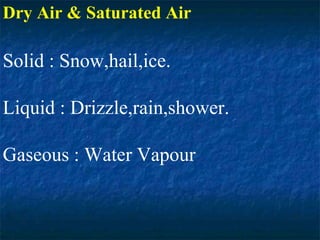
Dry Air & Saturated Air
Solid : Snow,hail,ice.
Liquid : Drizzle,rain,shower.
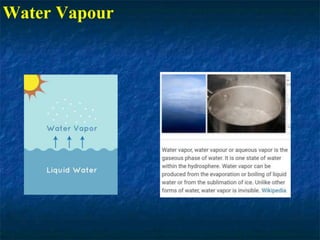
Gaseous : Water Vapour
Water Vapour
What is heavier ?
Cold Air or Hot Air
&
WHY
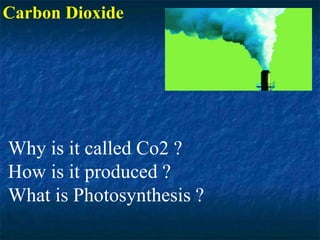
Carbon Dioxide
Why is it called Co2 ?
How is it produced ?
What is Photosynthesis ?
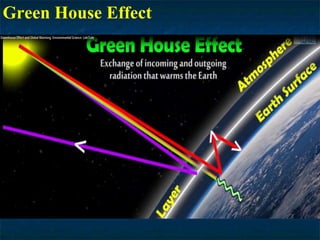
Green House Effect
Green House Gases
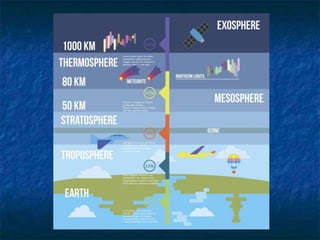
LAYERS OF THE ATMOSPHERE
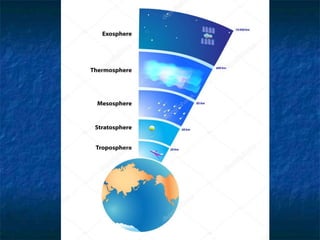
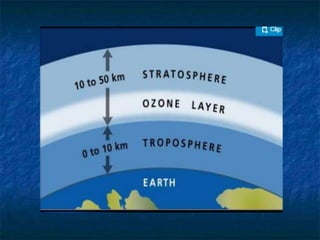
The atmosphere is divided
into five layers. It is thickest
near the surface and thins out
with height until it eventually
merges with space.
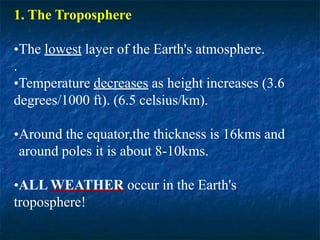
1. The Troposphere
•The lowest layer of the Earth's atmosphere.
.
•Temperature decreases as height increases (3.6
degrees/1000 ft). (6.5 celsius/km).
•Around the equator,the thickness is 16kms and
around poles it is about 8-10kms.
•ALL WEATHER occur in the Earth's
troposphere!
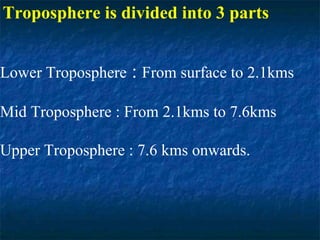
Troposphere is divided into 3 parts
Lower Troposphere : From surface to 2.1kms
Mid Troposphere : From 2.1kms to 7.6kms
Upper Troposphere : 7.6 kms onwards.
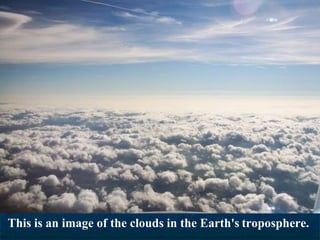
This is an image of the clouds in the Earth's troposphere.
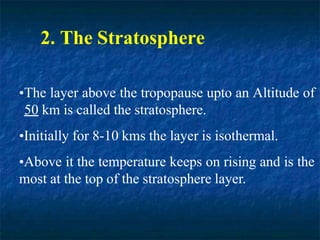
2. The Stratosphere
•The layer above the tropopause upto an Altitude of
50 km is called the stratosphere.
•Initially for 8-10 kms the layer is isothermal.
•Above it the temperature keeps on rising and is the
most at the top of the stratosphere layer.
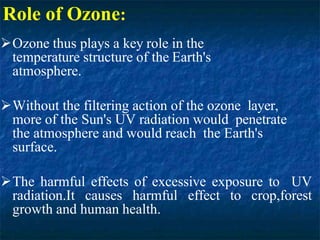
Role of Ozone:
Ozone thus plays a key role in the
temperature structure of the Earth's
atmosphere.
Without the filtering action of the ozone layer,
more of the Sun's UV radiation would penetrate
the atmosphere and would reach the Earth's
surface.
The harmful effects of excessive exposure to UV
radiation.It causes harmful effect to crop,forest
growth and human health.
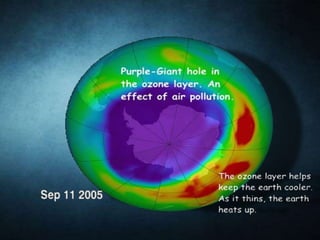
If ozone is decreased, it can
cause:
Skin cancer
Eye cataracts
Sun burning
Suppression of the human immune
system.
Adverse impact on crops and animals dueto
the increase of UV radiation
3. The Mesosphere
•Temperature decreases with altitude. (30 – 55 miles)
•The atmosphere reaches its coldest temperature of
around -100°C in the mesosphere.
•Air pressure decreases.
•Does not have a lot of oxygen (at this level our
brain would be oxygen-starved called hypoxia.
•This is also the layer in which a lot of meteors burn
up while entering the Earth's atmosphere.
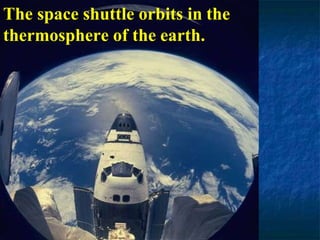
The space shuttle orbits in the
thermosphere of the earth.
5. The Exosphere
•Very high up, the Earth's atmosphere
becomes very thin. The region where
atoms and molecules escape into space is
referred to as the exosphere.
•The exosphere is upper part of the
thermosphere.
•Extends about 550 km above the
surface.
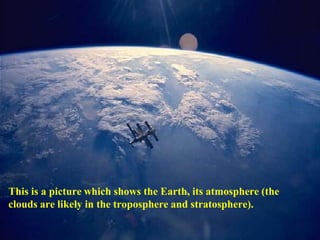
This is a picture which shows the Earth, its atmosphere (the
clouds are likely in the troposphere and stratosphere).
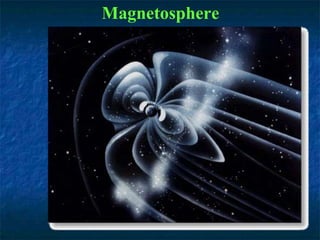
Magnetosphere
International Standard Atmosphere
A standard average atmosphere has been
specified for various purposes like the
design and testing of aircraft, evaluation
of aircraft performance, calibration of
altimeters.
The most widely used atmosphere is the one
defined by the ICAO, known as the
International Standard Atmosphere (ISA). Its
specifications are;
Temperature at Mean Sea Level: 15 degree celsius.
Pressure at Mean Sea Level : 1013.25 hPa
Density at Mean Sea Level : 1225g/cubic metre.
Acceleration due to Gravity: 980.665cm
Lapse rate upto 11kms : 6.5 degree/km
MCQs
1. Lowest layer of atmosphere is
called:
Troposhere Stratosphere
2. Stratosphere extends from
Tropopause to :
50 KMS 60KMS 80KMS
3. By volume, approximate ratio
of N2 to O2 in the atmosphere is :
4:1 3:1 5:1
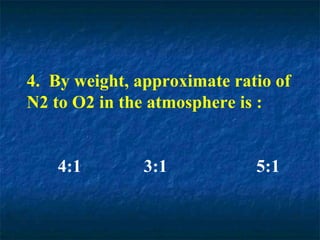
4. By weight, approximate ratio of
N2 to O2 in the atmosphere is :
4:1 3:1 5:1
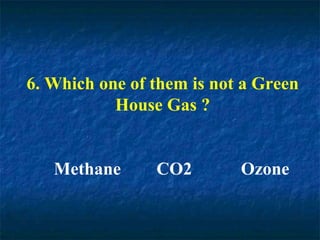
6. Which one of them is not a Green
House Gas ?
Methane CO2 Ozone
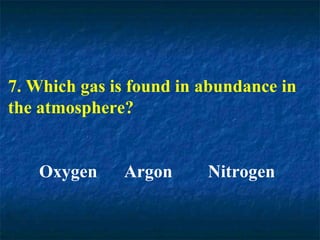
7. Which gas is found in abundance in
the atmosphere?
Oxygen Argon Nitrogen
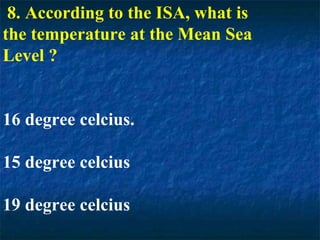
8. According to the ISA, what is
the temperature at the Mean Sea
Level ?
16 degree celcius.
15 degree celcius
19 degree celcius
9. What is the pressure at Mean Sea
Level?
1013.25 hPa 1011 hPa 2000 hPa
10. Ozone is found in which layer?
Stratosphere
Exosphere
Mesosphere
THE END

Atmosphere Chapter 1 from METEOROLOGY

  • 2.
  • 3.
    CONTENTS : INTRO TOTHE ATMOSPHERE COMPOSITION OF THE AIR HOMOSPHERE & HETEROSPHERE DRY AIR & SATURATED AIR GREEN HOUSE EFFECTS GREEN HOUSE GASES LAYERS OF THE ATMOSPHERE INTERNATIONAL STANDARD ATMOSPHERE MULTI CHOICE QUESTIONS
  • 4.
    •Atmosphere of theearth is an envelope of homogenous mixture of gases called Air. Air is a mixture of gases. The atmosphere is the blanket of air that surrounds the Earth. Atmosphere has no upper limits.
  • 6.
    Composition of theair : Nitrogen Oxygen 78% 21% Other gases 1%
  • 7.
    Other gases include: Carbon dioxide Argon Traces of Neon, Helium, Methane, Krypton,Hydrogen,Ozone,Xenon.
  • 8.
    Nitrogen and oxygenconstitute almost 99% of the air. Their ratio by proportion is : Nitrogen:Oxygen 4:1 by volume. Nitrogen:Oxygen 3:1 by weight.
  • 9.
    Statistical representation ofatmospheric composition
  • 10.
  • 12.
    Dry Air &Saturated Air Solid : Snow,hail,ice. Liquid : Drizzle,rain,shower. Gaseous : Water Vapour
  • 13.
  • 14.
    What is heavier? Cold Air or Hot Air & WHY
  • 15.
    Carbon Dioxide Why isit called Co2 ? How is it produced ? What is Photosynthesis ?
  • 16.
  • 17.
  • 19.
    LAYERS OF THEATMOSPHERE
  • 20.
    The atmosphere isdivided into five layers. It is thickest near the surface and thins out with height until it eventually merges with space.
  • 23.
    1. The Troposphere •Thelowest layer of the Earth's atmosphere. . •Temperature decreases as height increases (3.6 degrees/1000 ft). (6.5 celsius/km). •Around the equator,the thickness is 16kms and around poles it is about 8-10kms. •ALL WEATHER occur in the Earth's troposphere!
  • 24.
    Troposphere is dividedinto 3 parts Lower Troposphere : From surface to 2.1kms Mid Troposphere : From 2.1kms to 7.6kms Upper Troposphere : 7.6 kms onwards.
  • 25.
    This is animage of the clouds in the Earth's troposphere.
  • 26.
    2. The Stratosphere •Thelayer above the tropopause upto an Altitude of 50 km is called the stratosphere. •Initially for 8-10 kms the layer is isothermal. •Above it the temperature keeps on rising and is the most at the top of the stratosphere layer.
  • 28.
    Role of Ozone: Ozonethus plays a key role in the temperature structure of the Earth's atmosphere. Without the filtering action of the ozone layer, more of the Sun's UV radiation would penetrate the atmosphere and would reach the Earth's surface. The harmful effects of excessive exposure to UV radiation.It causes harmful effect to crop,forest growth and human health.
  • 30.
    If ozone isdecreased, it can cause: Skin cancer Eye cataracts Sun burning Suppression of the human immune system. Adverse impact on crops and animals dueto the increase of UV radiation
  • 31.
    3. The Mesosphere •Temperaturedecreases with altitude. (30 – 55 miles) •The atmosphere reaches its coldest temperature of around -100°C in the mesosphere. •Air pressure decreases. •Does not have a lot of oxygen (at this level our brain would be oxygen-starved called hypoxia. •This is also the layer in which a lot of meteors burn up while entering the Earth's atmosphere.
  • 32.
    The space shuttleorbits in the thermosphere of the earth.
  • 33.
    5. The Exosphere •Veryhigh up, the Earth's atmosphere becomes very thin. The region where atoms and molecules escape into space is referred to as the exosphere. •The exosphere is upper part of the thermosphere. •Extends about 550 km above the surface.
  • 34.
    This is apicture which shows the Earth, its atmosphere (the clouds are likely in the troposphere and stratosphere).
  • 35.
  • 36.
    International Standard Atmosphere Astandard average atmosphere has been specified for various purposes like the design and testing of aircraft, evaluation of aircraft performance, calibration of altimeters.
  • 37.
    The most widelyused atmosphere is the one defined by the ICAO, known as the International Standard Atmosphere (ISA). Its specifications are; Temperature at Mean Sea Level: 15 degree celsius. Pressure at Mean Sea Level : 1013.25 hPa Density at Mean Sea Level : 1225g/cubic metre.
  • 38.
    Acceleration due toGravity: 980.665cm Lapse rate upto 11kms : 6.5 degree/km
  • 39.
  • 40.
    1. Lowest layerof atmosphere is called: Troposhere Stratosphere
  • 41.
    2. Stratosphere extendsfrom Tropopause to : 50 KMS 60KMS 80KMS
  • 42.
    3. By volume,approximate ratio of N2 to O2 in the atmosphere is : 4:1 3:1 5:1
  • 43.
    4. By weight,approximate ratio of N2 to O2 in the atmosphere is : 4:1 3:1 5:1
  • 44.
    6. Which oneof them is not a Green House Gas ? Methane CO2 Ozone
  • 45.
    7. Which gasis found in abundance in the atmosphere? Oxygen Argon Nitrogen
  • 46.
    8. According tothe ISA, what is the temperature at the Mean Sea Level ? 16 degree celcius. 15 degree celcius 19 degree celcius
  • 47.
    9. What isthe pressure at Mean Sea Level? 1013.25 hPa 1011 hPa 2000 hPa
  • 48.
    10. Ozone isfound in which layer? Stratosphere Exosphere Mesosphere
  • 49.