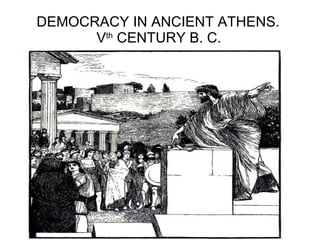
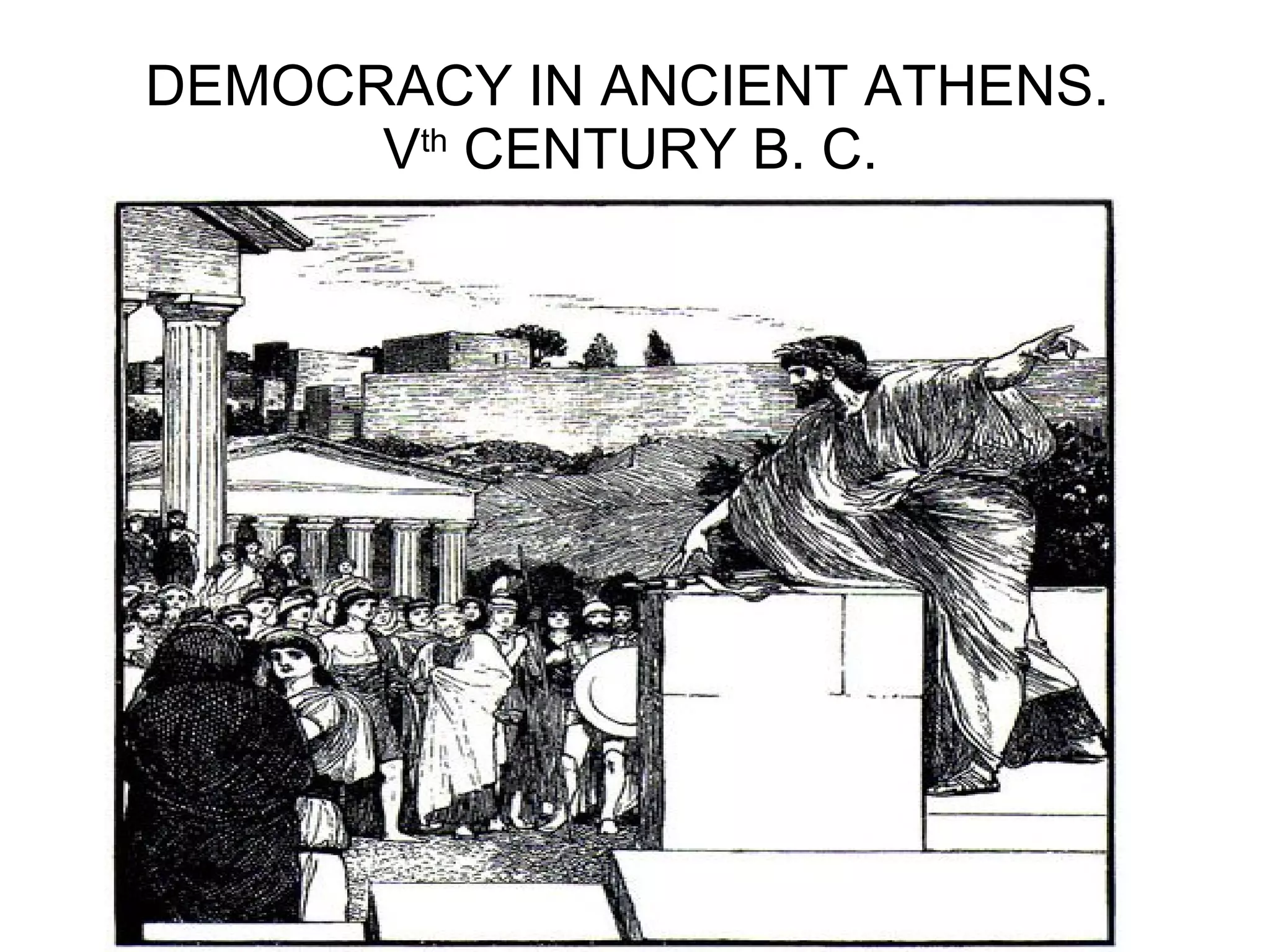
DEMOCRACY IN ANCIENT ATHENS.  V th  CENTURY B. C.
 
THE  POLIS It’s formed by quite a small territory which includes a central city and the rural space in the city’s surroundings.  It’s the principal institution of sociopolitical organisation in Ancient Greece. The most prominent examples: Sparta and Athens.
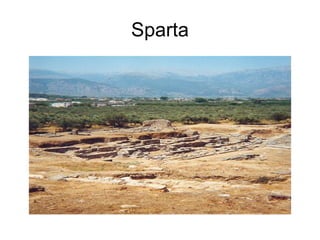
Sparta
Social organization in Sparta A privileged and militarized class: the  homoioi . The  apella , the  gerousia , the ephors and the two kings. Farmers, craftsmen and merchants: the  perioeci . The slaves: the helots.
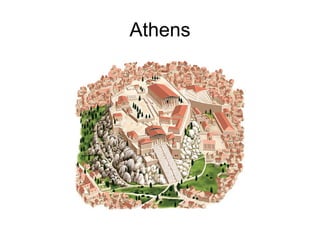
Athens
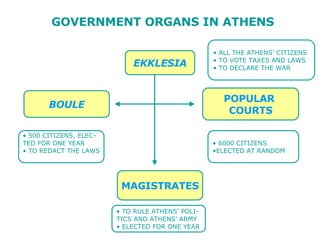
EKKLESIA BOULE POPULAR  COURTS MAGISTRATES GOVERNMENT ORGANS IN ATHENS ALL THE ATHENS’ CITIZENS TO VOTE TAXES AND LAWS TO DECLARE THE WAR 500 CITIZENS, ELEC- TED FOR ONE YEAR TO REDACT THE LAWS 6000 CITIZENS  ELECTED AT RANDOM TO RULE ATHENS’ POLI- TICS AND ATHENS’ ARMY ELECTED FOR ONE YEAR
PRINCIPAL CHARACTERISTICS OF ATHENS’ DEMOCRACY All the citizens have the same rights ( isonomia ) All the citizens are allowed and encouraged to speak in the  Ekklesia  ( isogoria ) All the citizens have the same chances to hold a political post ( isocracia ) Take for granted that women, foreign people and slaves are excluded of Athens’ citizenship.
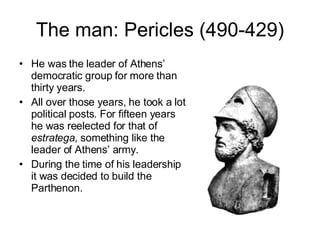
The man: Pericles (490-429) He was the leader of Athens’ democratic group for more than thirty years. All over those years, he took a lot political posts. For fifteen years he was reelected for that of  estratega , something like the leader of Athens’ army. During the time of his leadership it was decided to build the Parthenon.
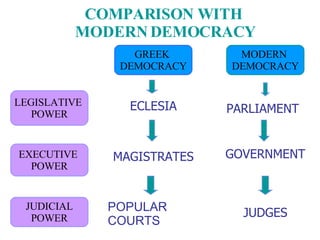
LEGISLATIVE  POWER EXECUTIVE  POWER JUDICIAL POWER GREEK  DEMOCRACY MODERN  DEMOCRACY COMPARISON WITH  MODERN DEMOCRACY ECLESIA PARLIAMENT GOVERNMENT MAGISTRATES JUDGES POPULAR COURTS

Athens Democracy

  • 1.
    DEMOCRACY IN ANCIENTATHENS. V th CENTURY B. C.
  • 2.
  • 3.
    THE POLISIt’s formed by quite a small territory which includes a central city and the rural space in the city’s surroundings. It’s the principal institution of sociopolitical organisation in Ancient Greece. The most prominent examples: Sparta and Athens.
  • 4.
  • 5.
    Social organization inSparta A privileged and militarized class: the homoioi . The apella , the gerousia , the ephors and the two kings. Farmers, craftsmen and merchants: the perioeci . The slaves: the helots.
  • 6.
  • 7.
    EKKLESIA BOULE POPULAR COURTS MAGISTRATES GOVERNMENT ORGANS IN ATHENS ALL THE ATHENS’ CITIZENS TO VOTE TAXES AND LAWS TO DECLARE THE WAR 500 CITIZENS, ELEC- TED FOR ONE YEAR TO REDACT THE LAWS 6000 CITIZENS ELECTED AT RANDOM TO RULE ATHENS’ POLI- TICS AND ATHENS’ ARMY ELECTED FOR ONE YEAR
  • 8.
    PRINCIPAL CHARACTERISTICS OFATHENS’ DEMOCRACY All the citizens have the same rights ( isonomia ) All the citizens are allowed and encouraged to speak in the Ekklesia ( isogoria ) All the citizens have the same chances to hold a political post ( isocracia ) Take for granted that women, foreign people and slaves are excluded of Athens’ citizenship.
  • 9.
    The man: Pericles(490-429) He was the leader of Athens’ democratic group for more than thirty years. All over those years, he took a lot political posts. For fifteen years he was reelected for that of estratega , something like the leader of Athens’ army. During the time of his leadership it was decided to build the Parthenon.
  • 10.
    LEGISLATIVE POWEREXECUTIVE POWER JUDICIAL POWER GREEK DEMOCRACY MODERN DEMOCRACY COMPARISON WITH MODERN DEMOCRACY ECLESIA PARLIAMENT GOVERNMENT MAGISTRATES JUDGES POPULAR COURTS