Ancient Greece
      Part ii
 session i - Golden Age
Ancient Greece
      Part ii
 session i - Golden Age
course outline

i - Golden Age

ii - Second Military Revolution

iii - Hellenism

iv -Justice & Power

v - Plato

vi -Aristotle

vii -Machiavelli

viii -Hobbes
Major Points in last Spring’s last class
Kagan compared 5th century Greek leagues to the Cold War

when Athens crushed Thasos the Delian League was viewed as
a tyrannical empire

the struggle for hegemony sowed the seeds of war

Thucydides explained the outbreak of the Peloponnesian War
as the result of Sparta’s fear of the Athenian empire

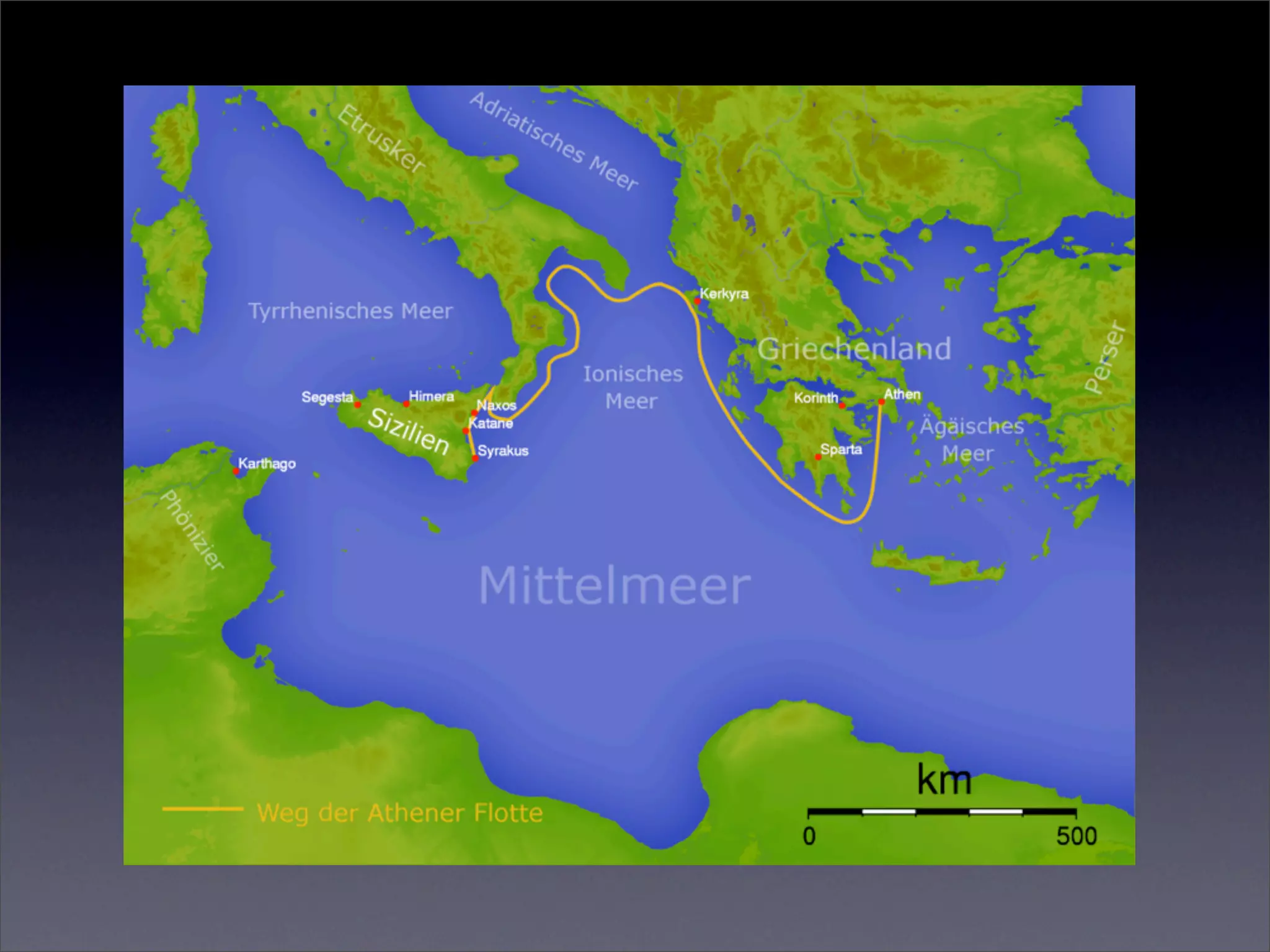
the Sicilian expedition was a tremendous blow to Athens

Athens managed to stay in the war after 413 because of her
navy

she finally lost because of Persian gold which financed a
Spartan navy which could destroy her sea power
Questions to answer in this session

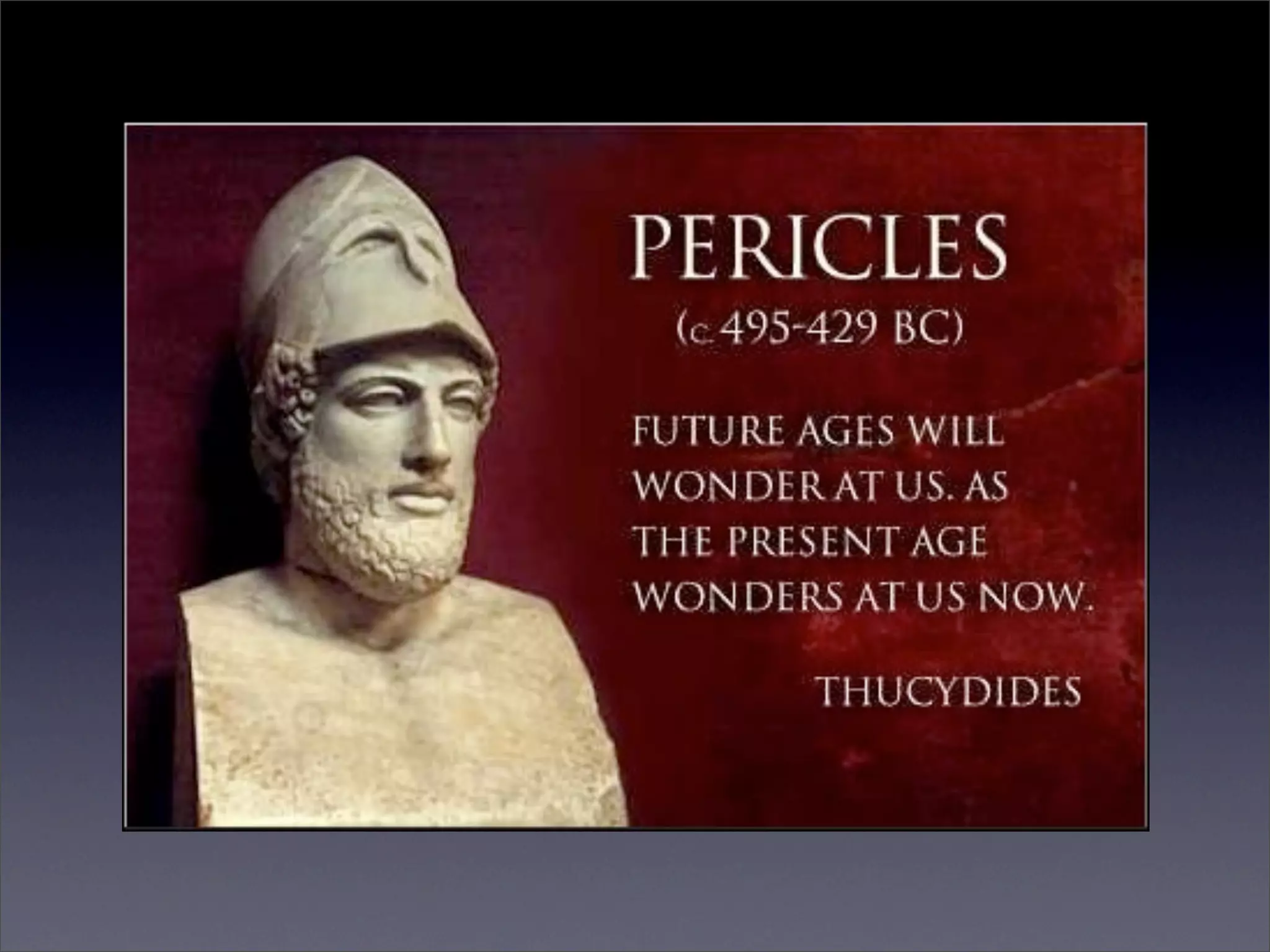
why is the Golden Age often called the Age of Pericles?

what are the various forms of art which this age produced?

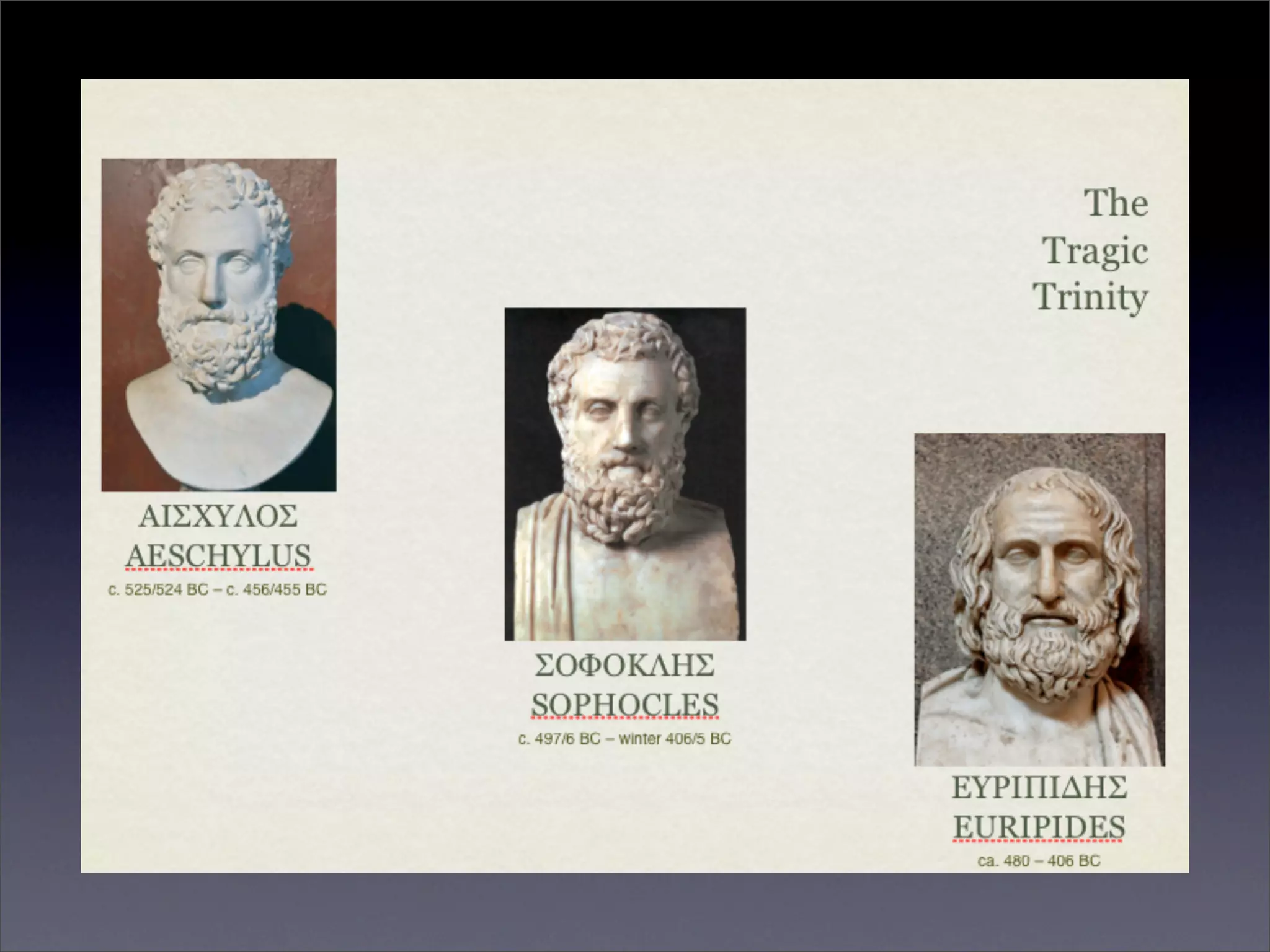
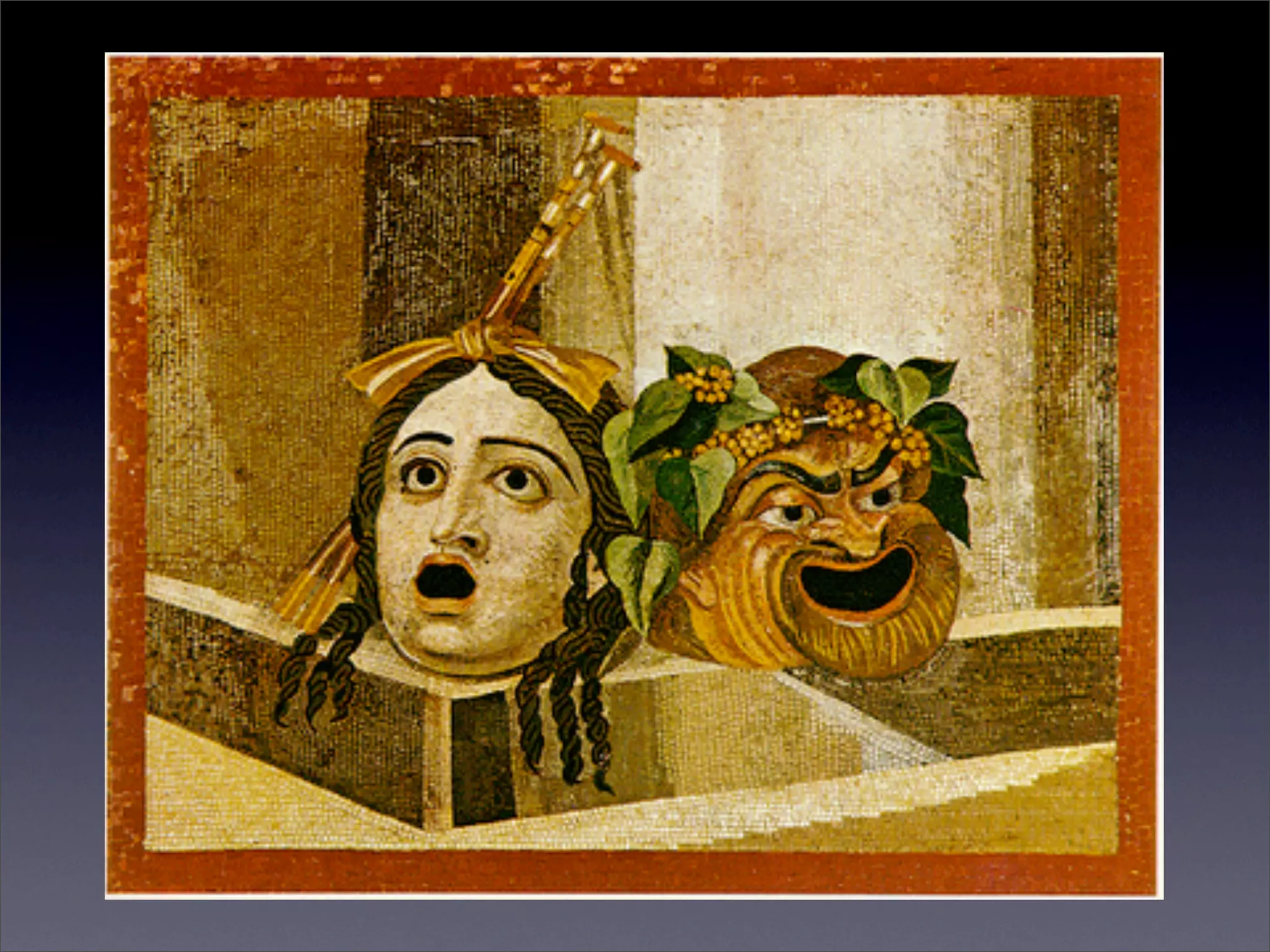
how did Greek playwrights give birth to the tragedy?

how did science and philosophy come to replace myth and
religion as the educational foundation for the upper class?

what is the Socratic method?

what is Plato’s theory of Forms?

how did the discipline of history begin?

what explains the stature of Thucydides as one of the greatest,
perhaps the greatest, historians?
review of last Spring’s
       sessions
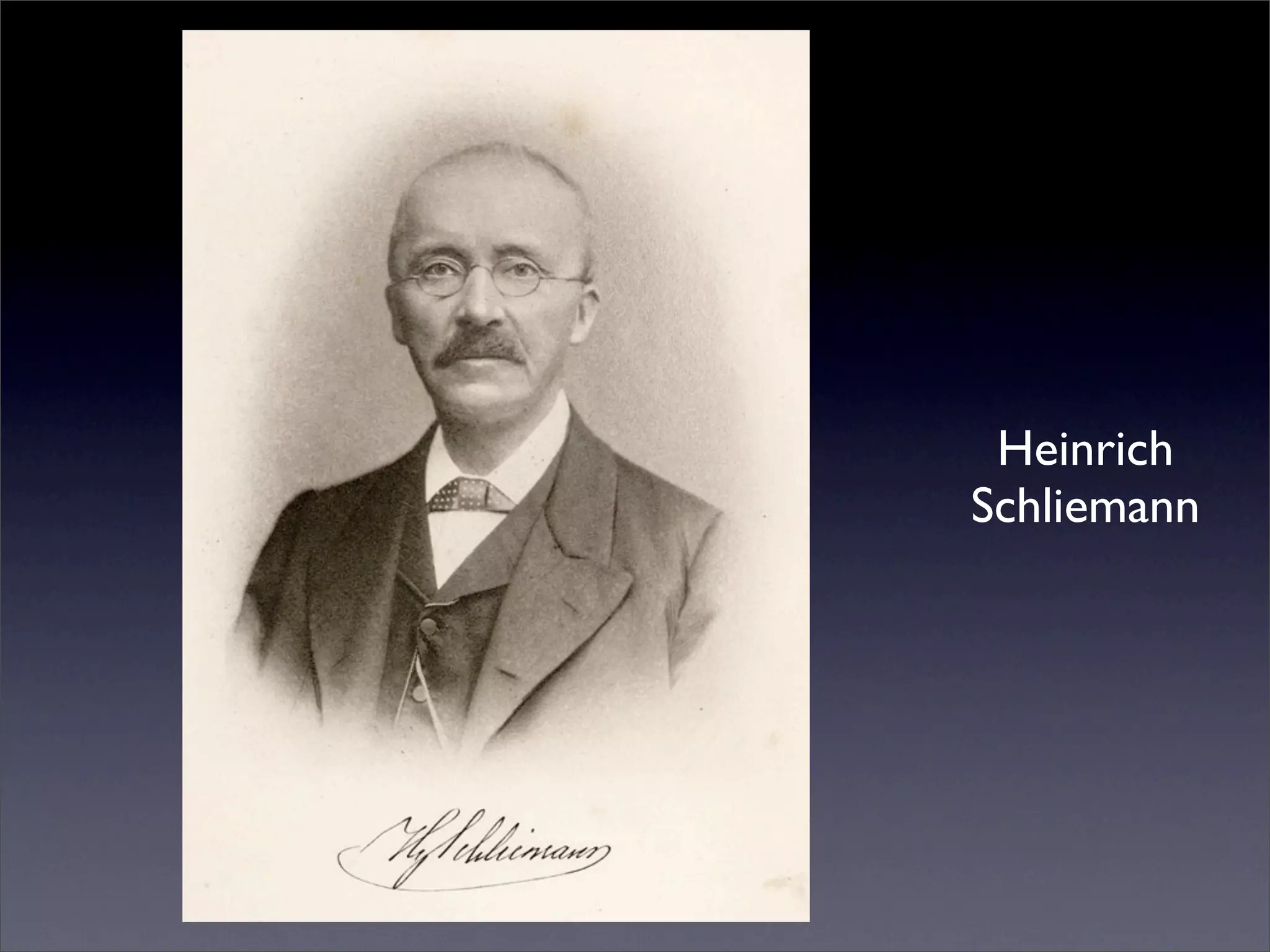
Heinrich
Schliemann
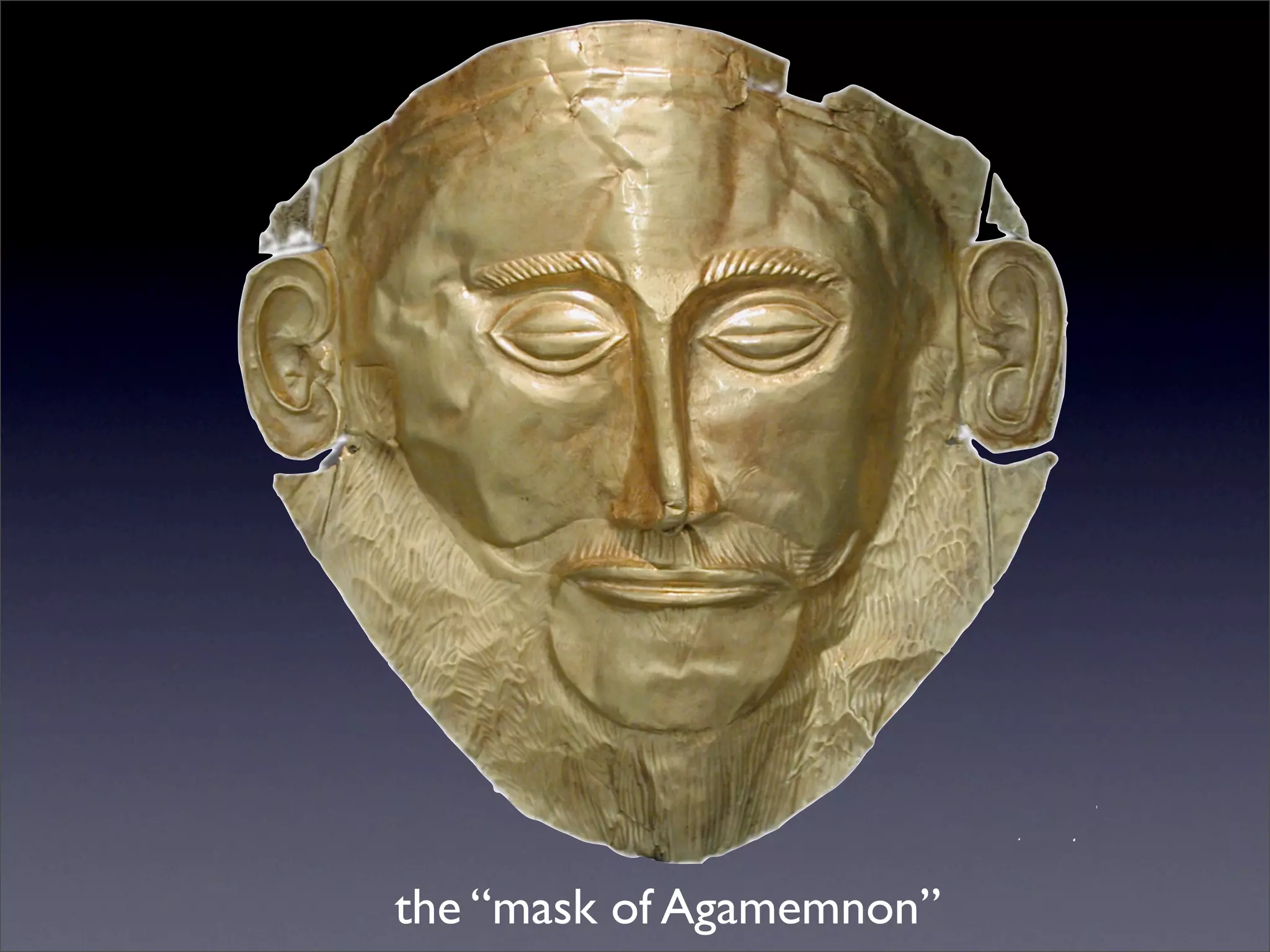
the “mask of Agamemnon”
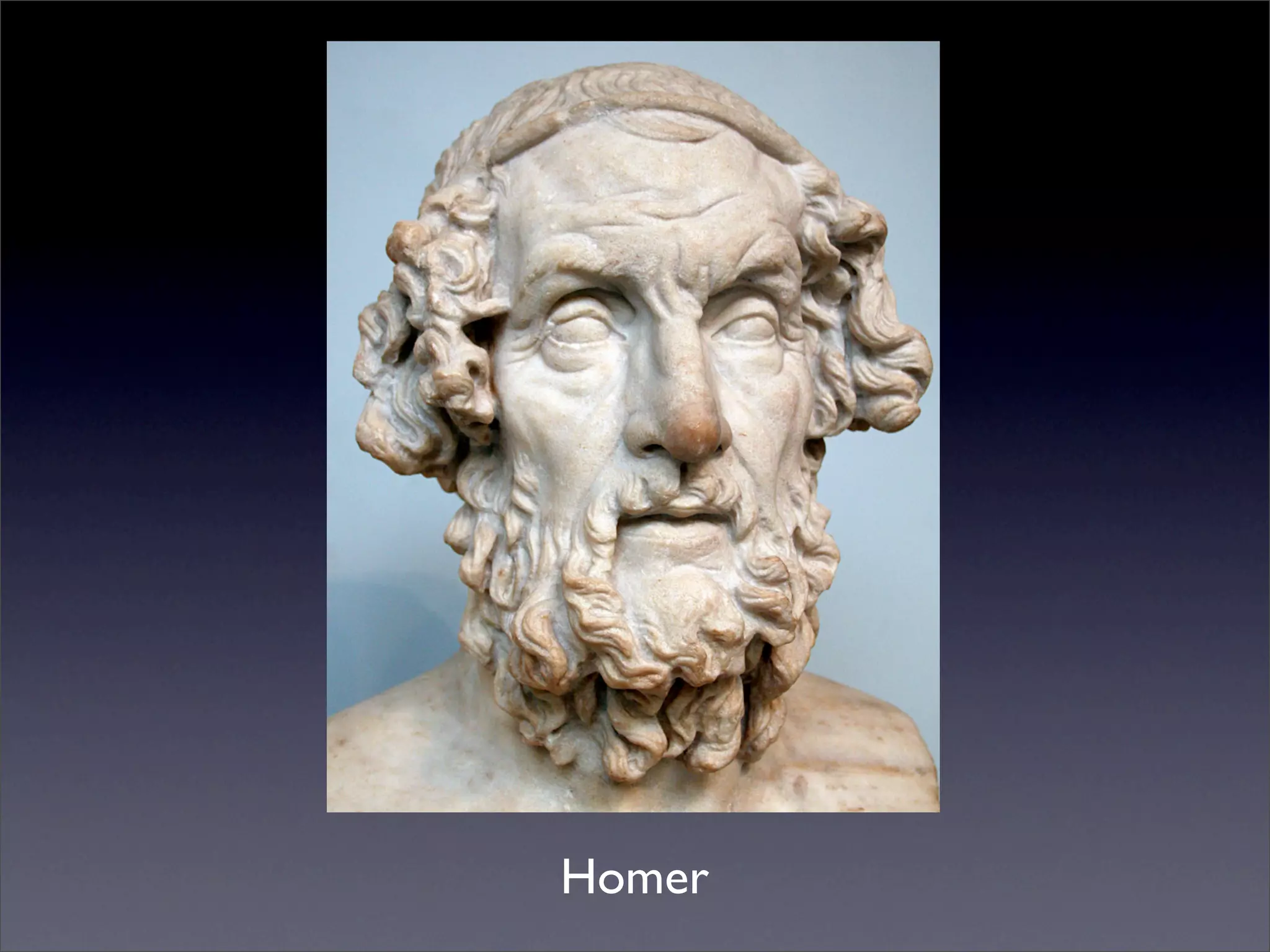
Homer
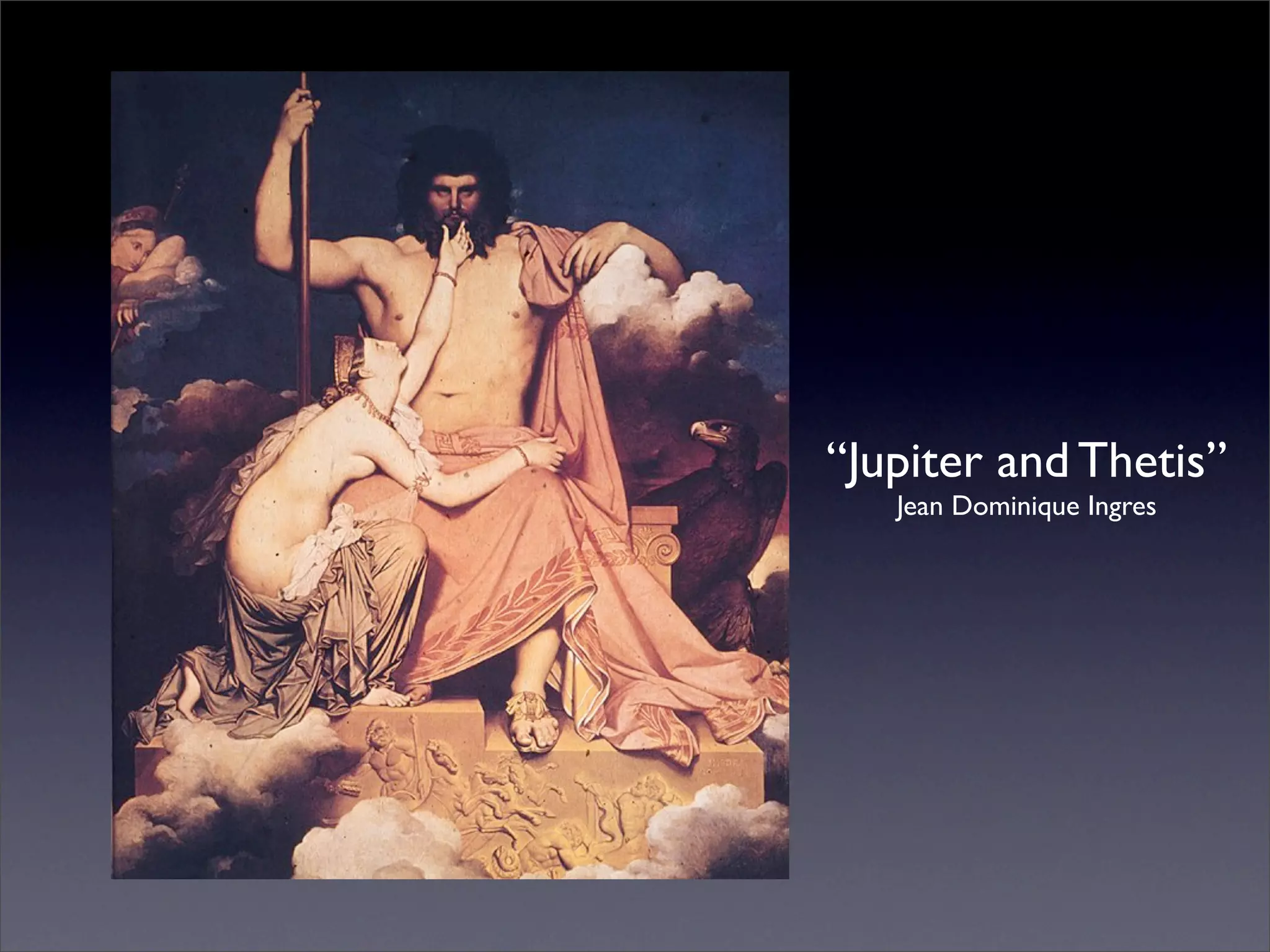
“Jupiter and Thetis”
   Jean Dominique Ingres
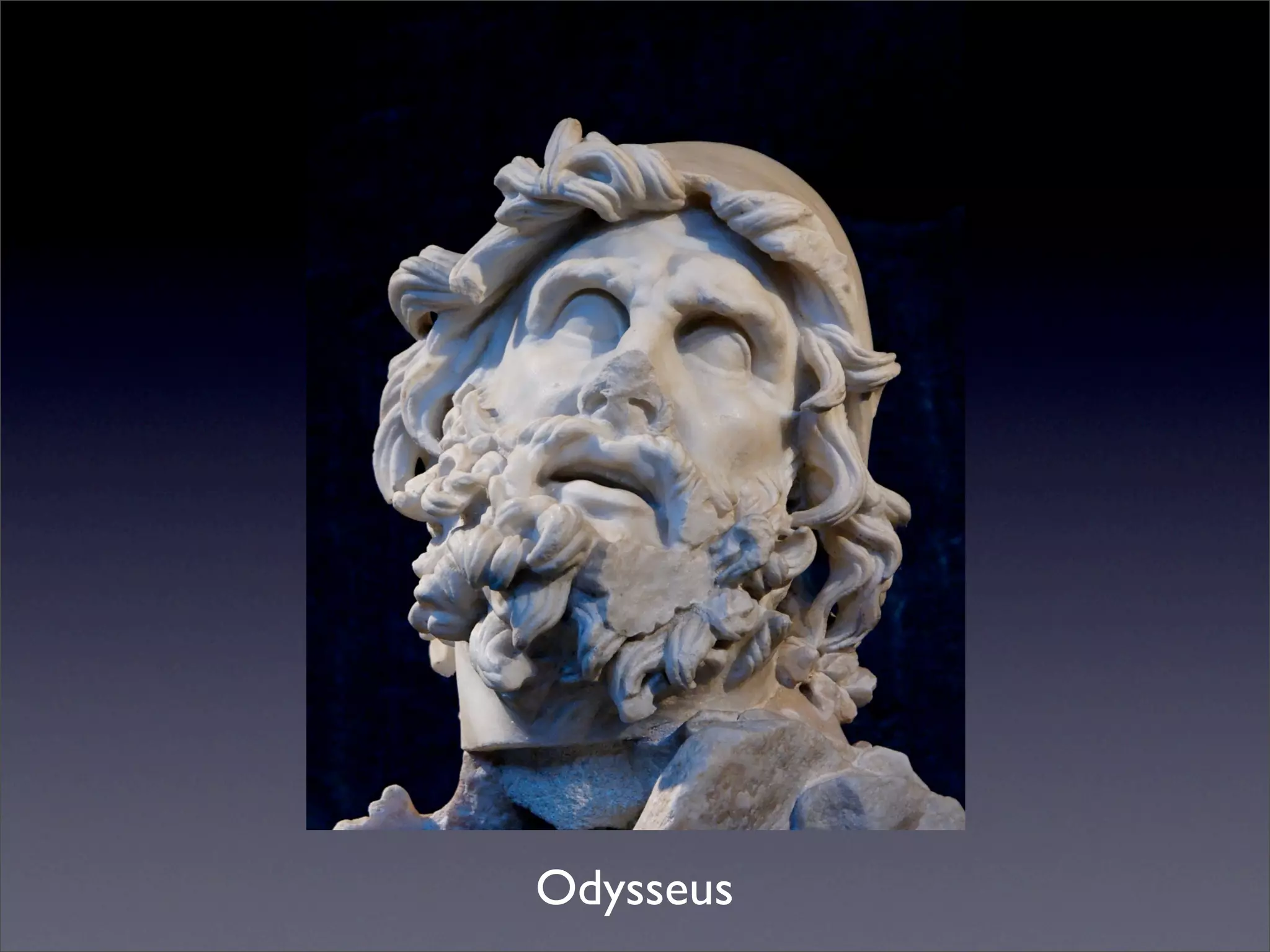
Odysseus
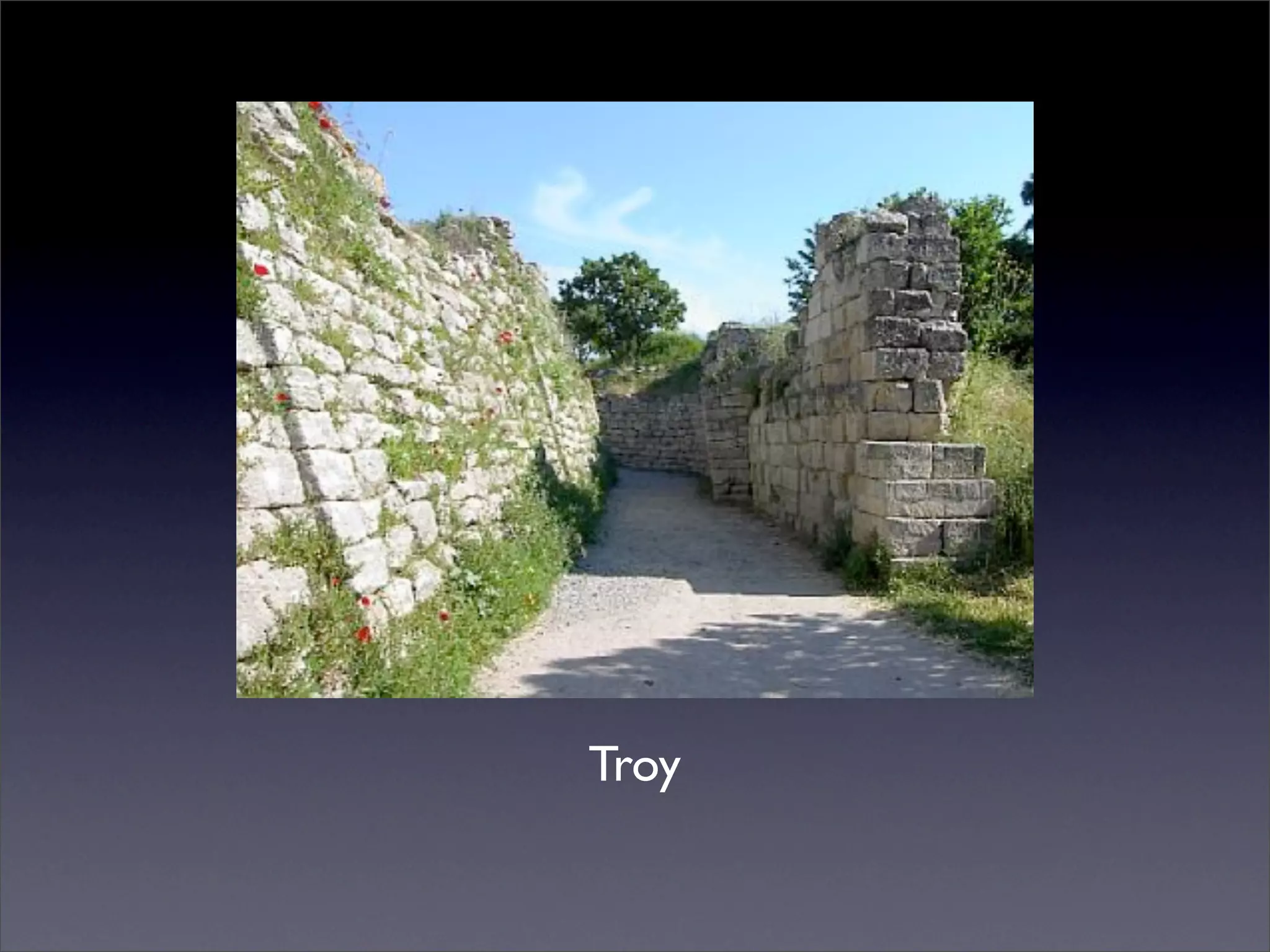
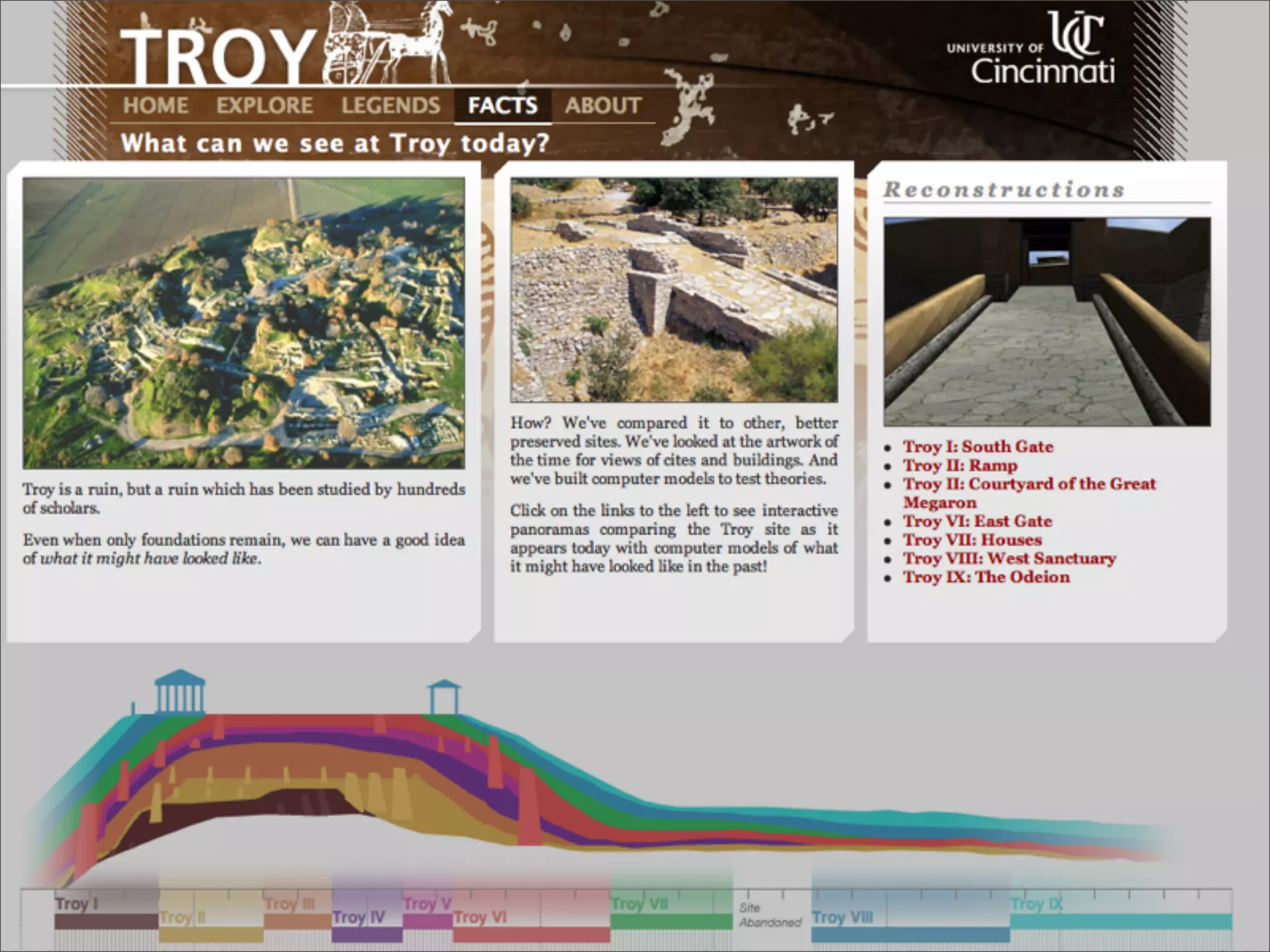
Troy
Η Δικαιοσὖνη
   Τό τί;

“[the] Justice.
“What [is] it?”
  Plato, Republic
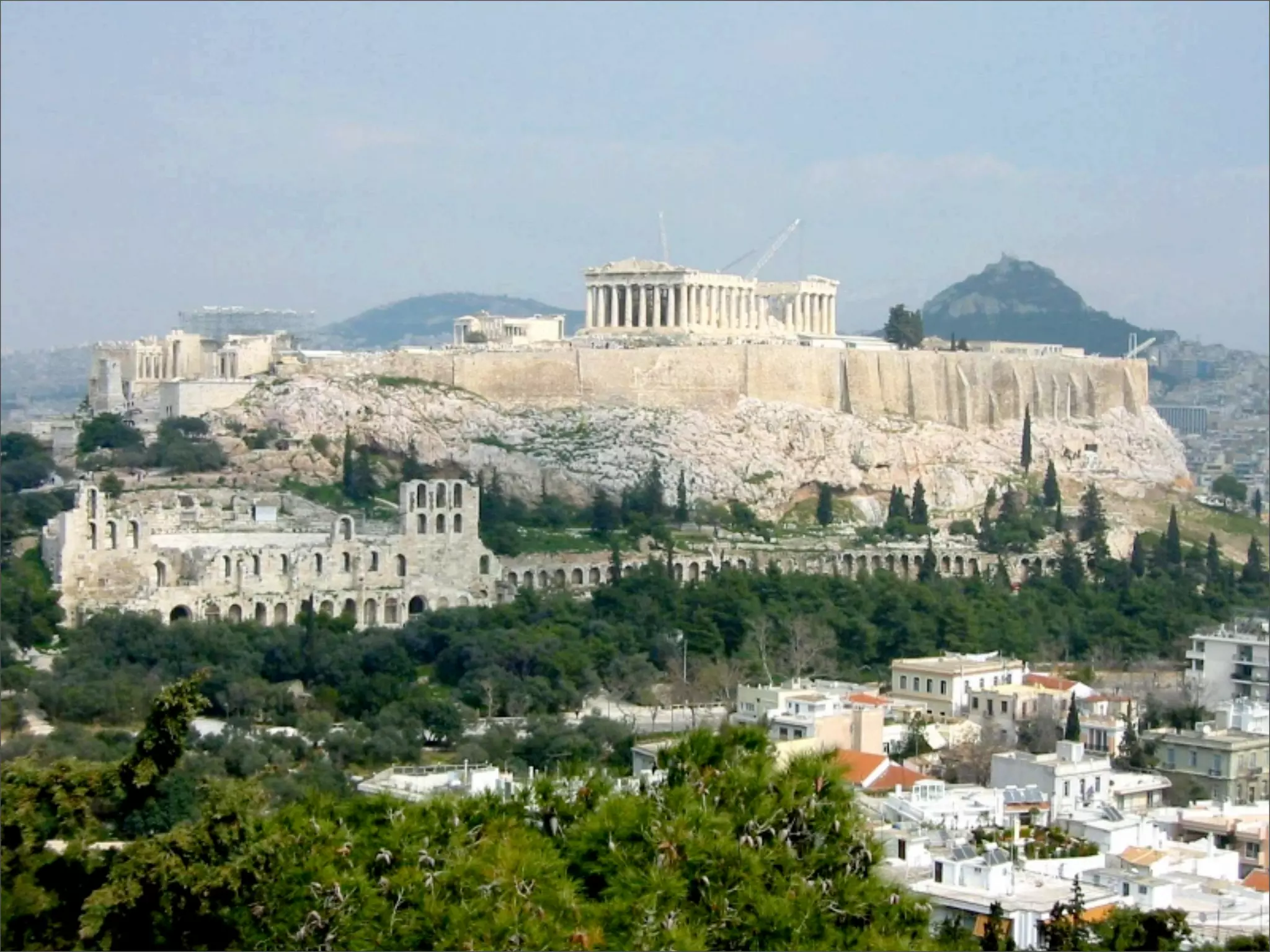
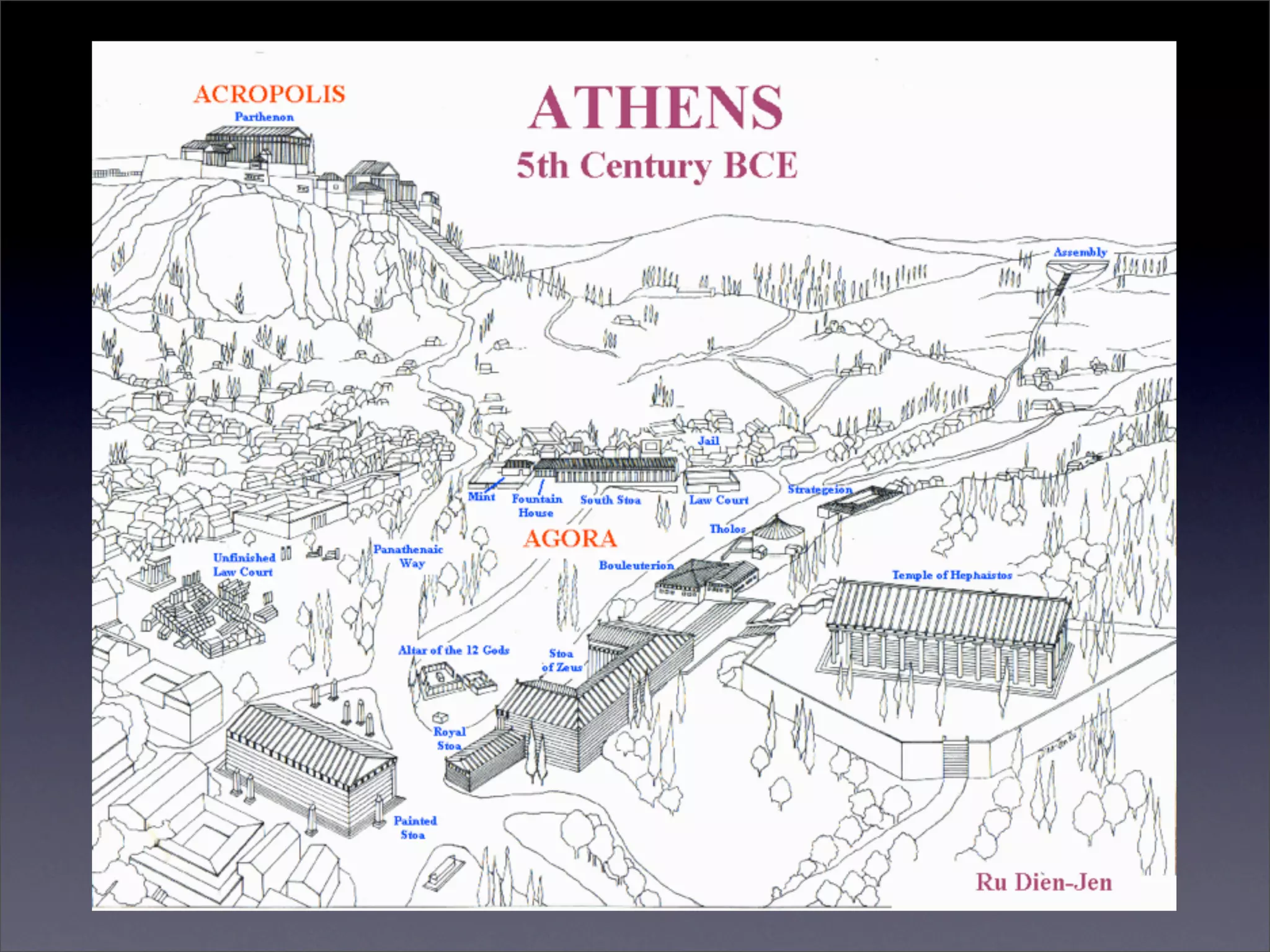
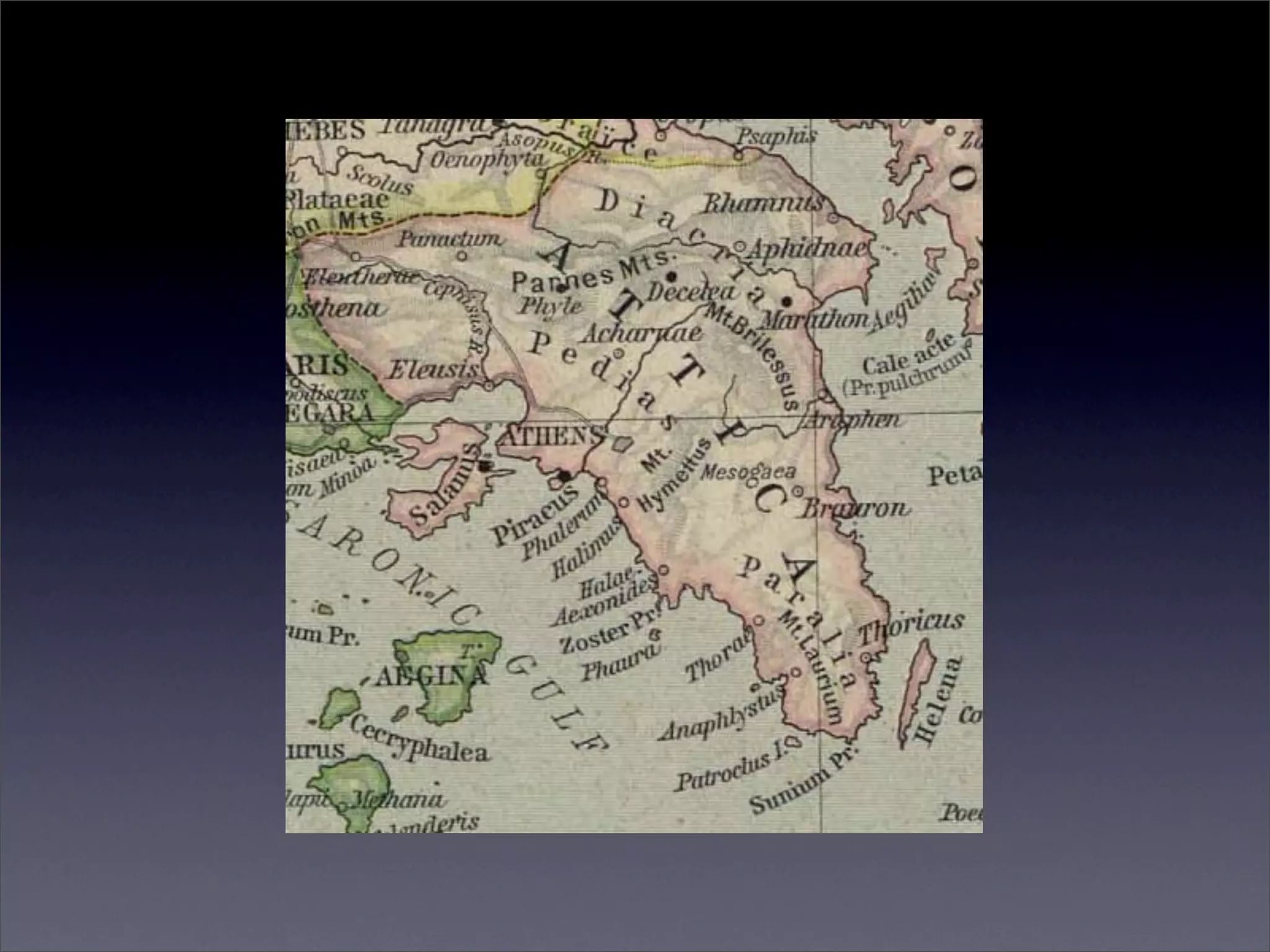
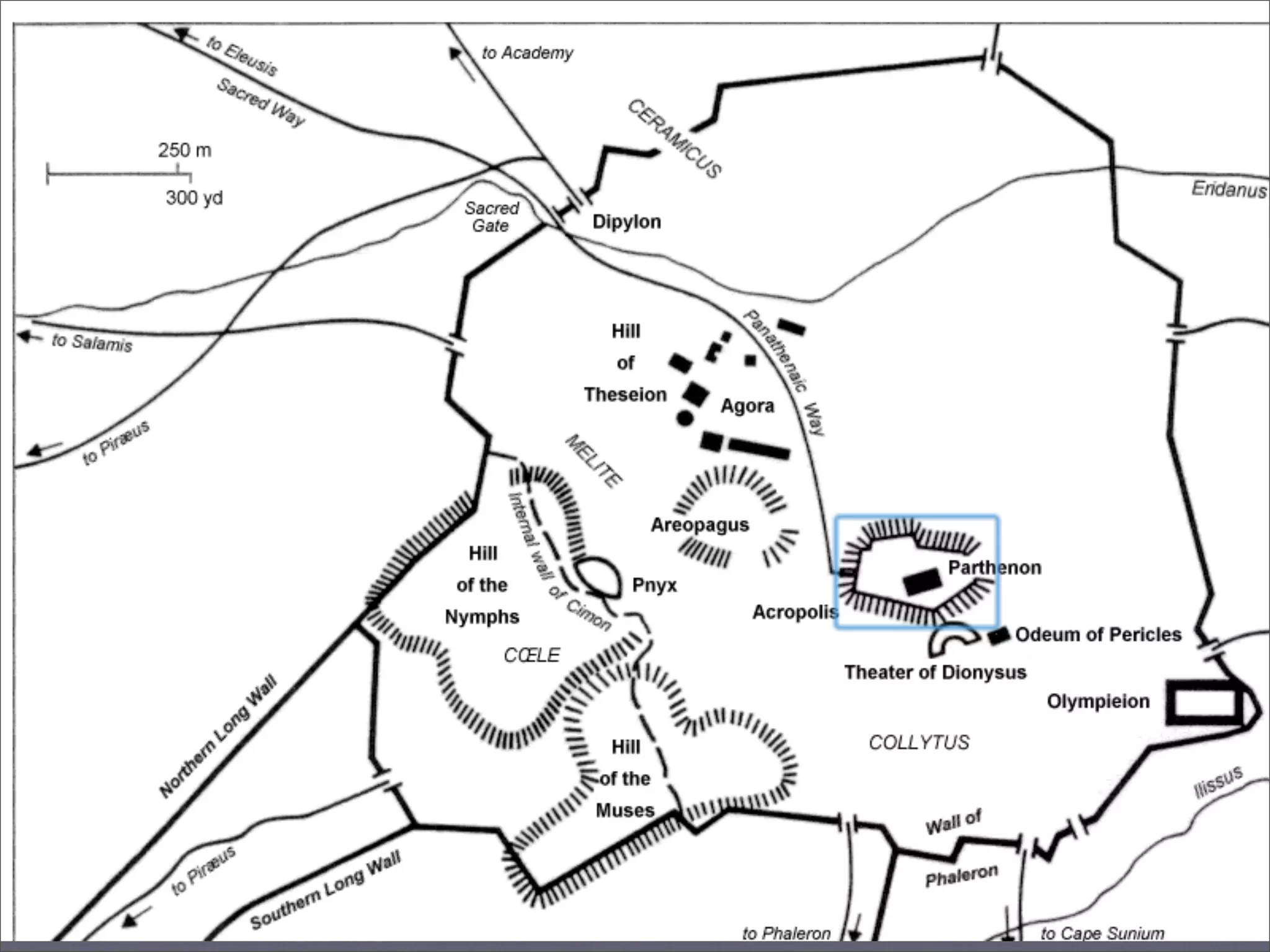
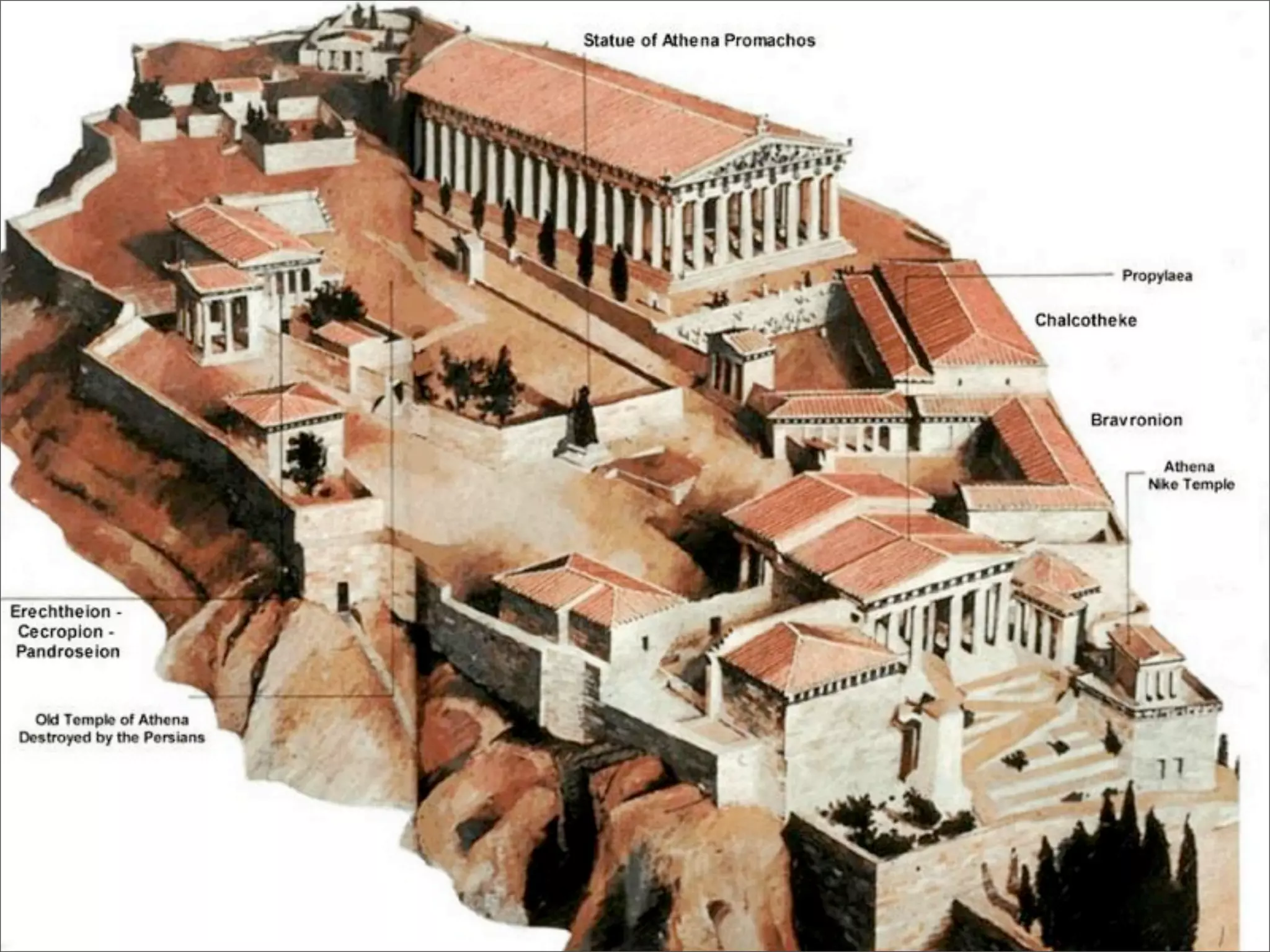
[The Athenian] Acropolis, Leo von Klenze
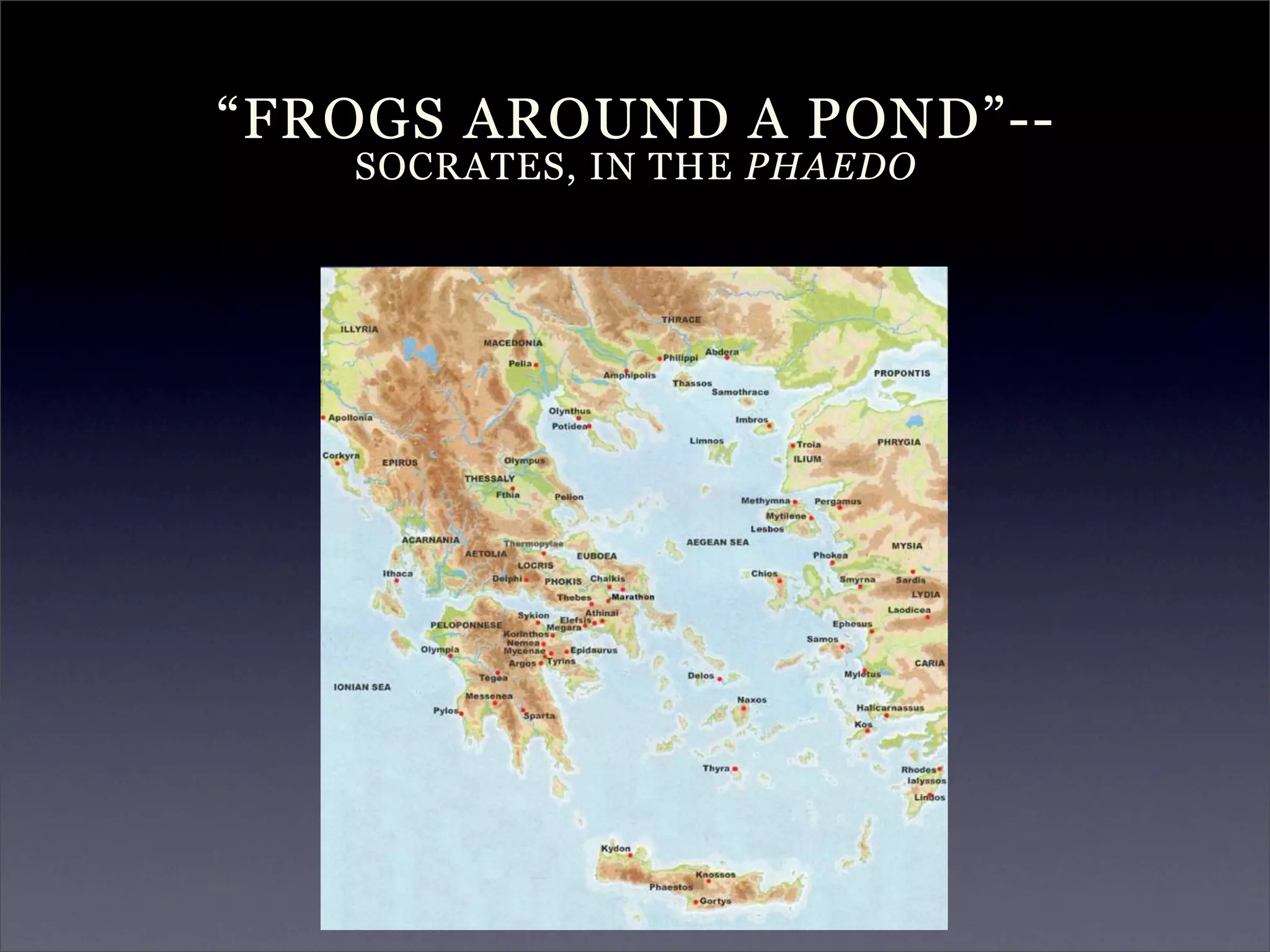
“FROGS AROUND A POND”--
   SOCRATES, IN THE PHAEDO
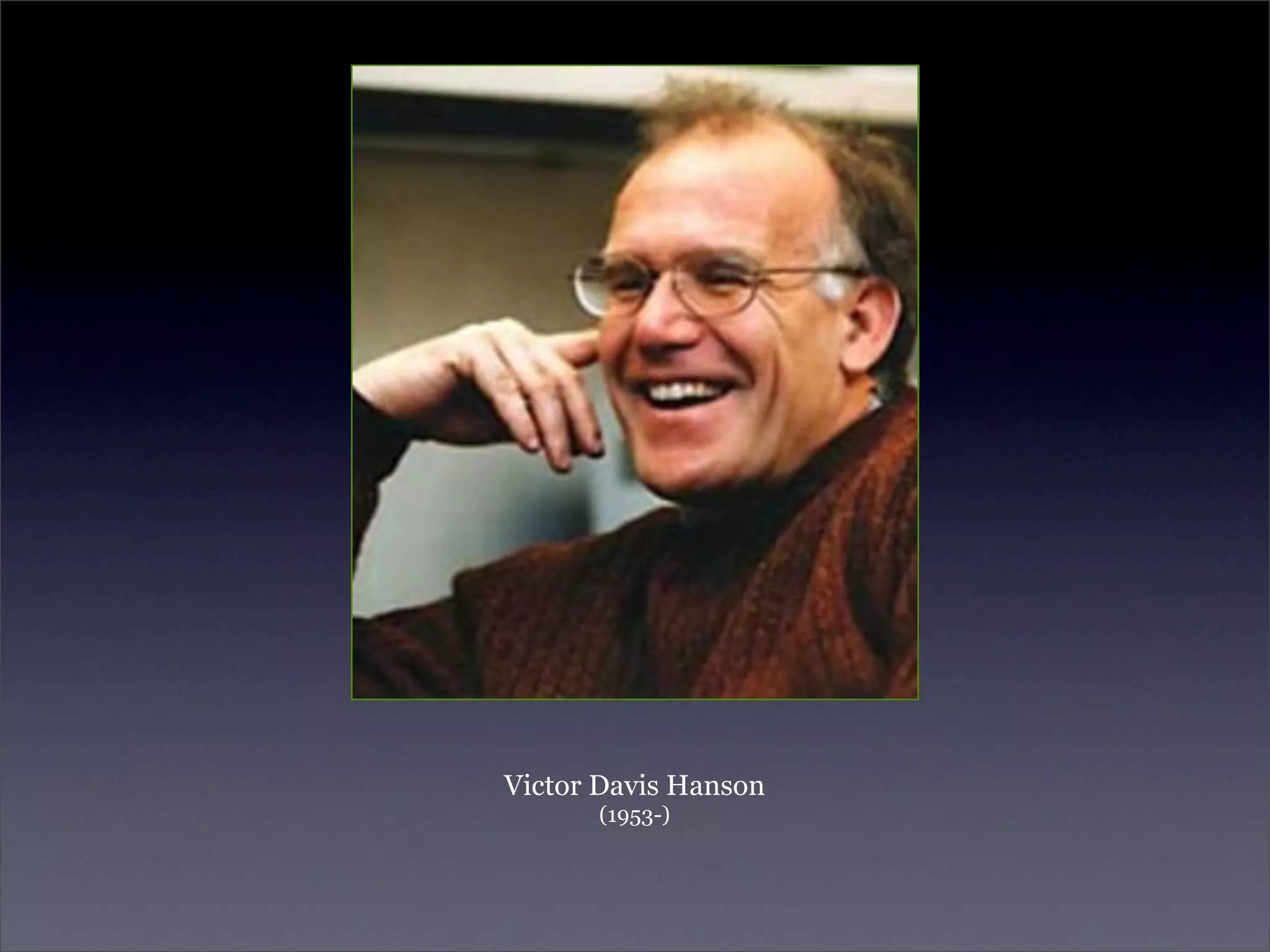
Victor Davis Hanson
      (1953-)
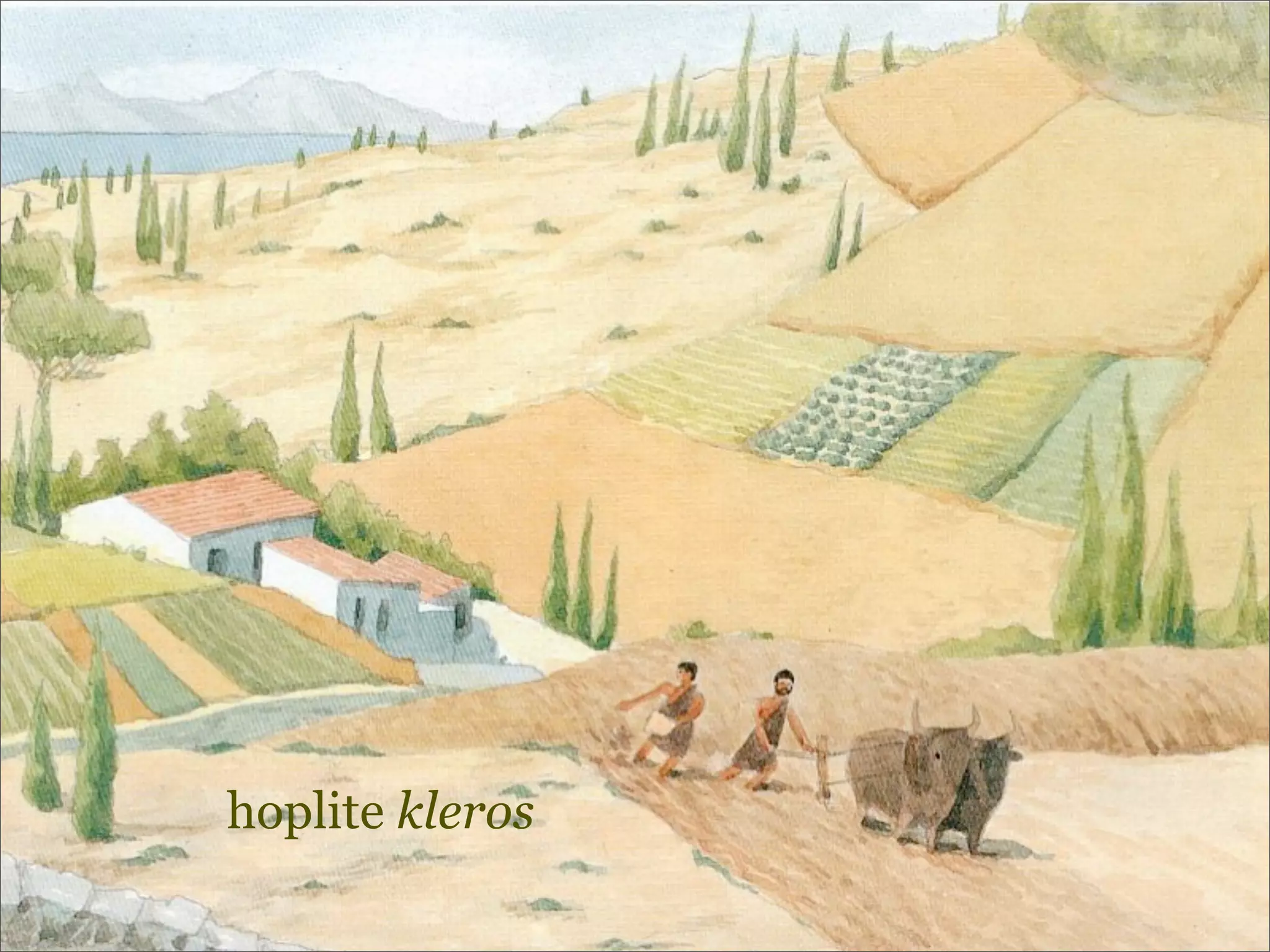
hoplite kleros
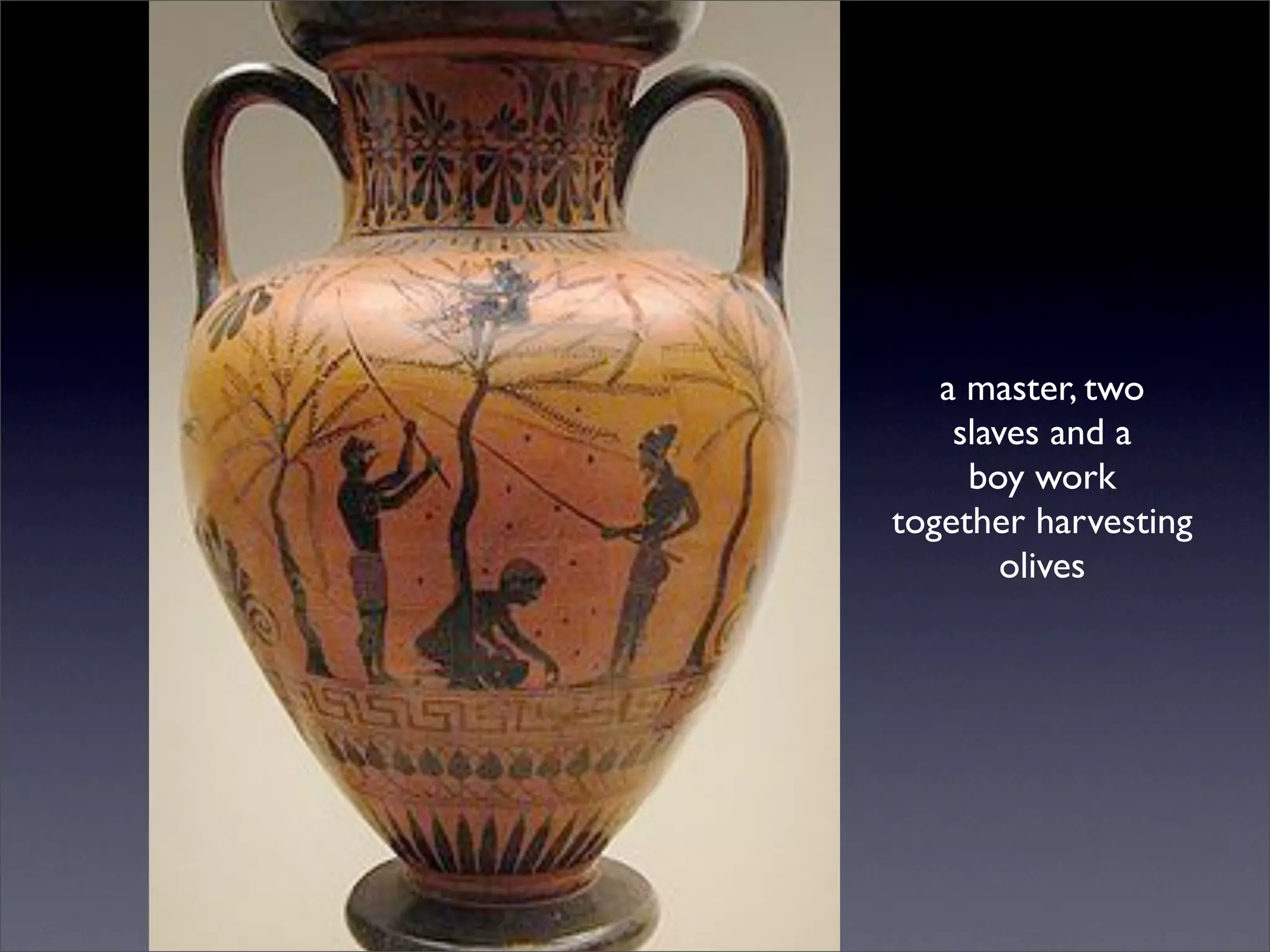
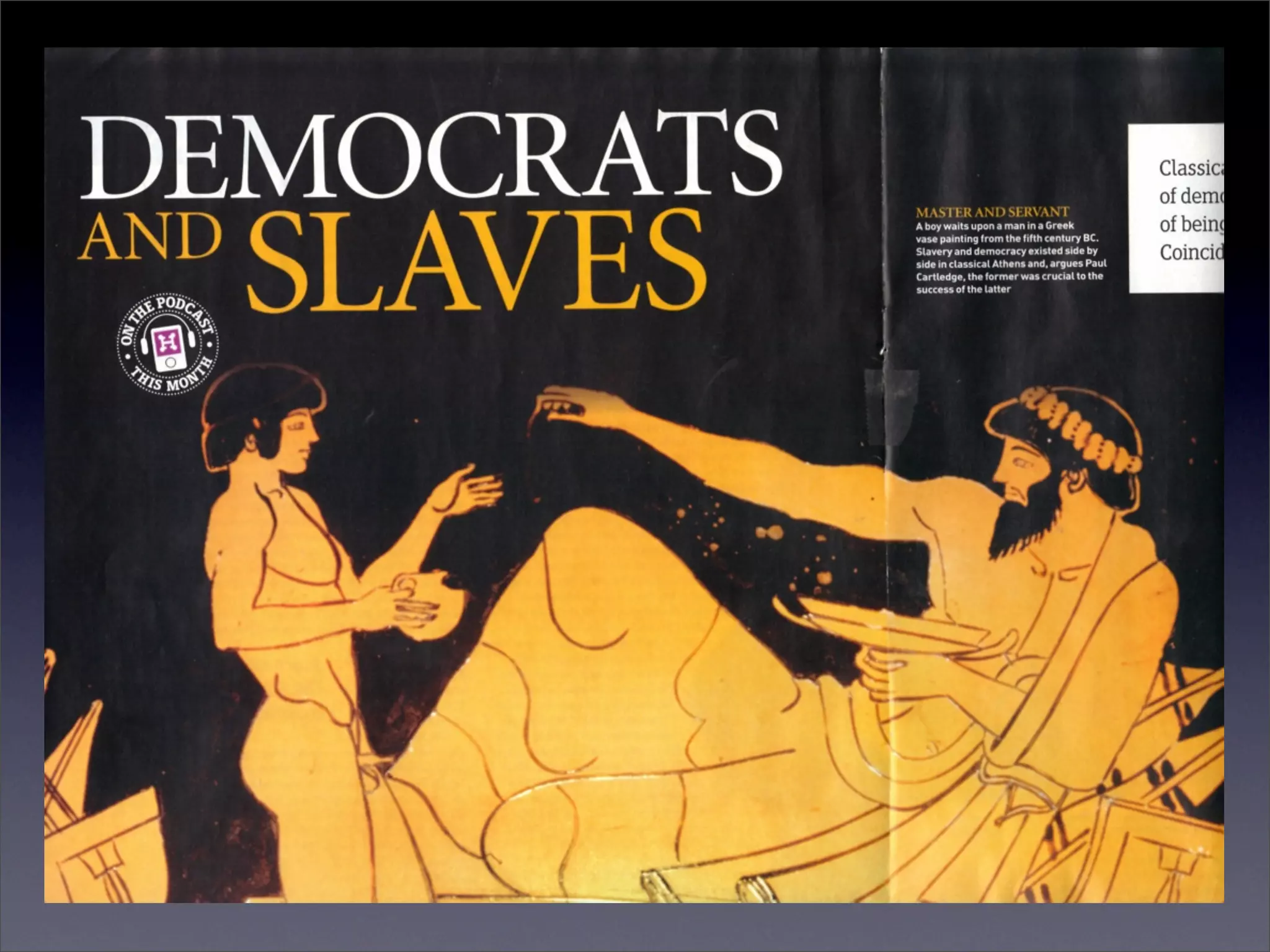
a master, two
    slaves and a
     boy work
together harvesting
        olives
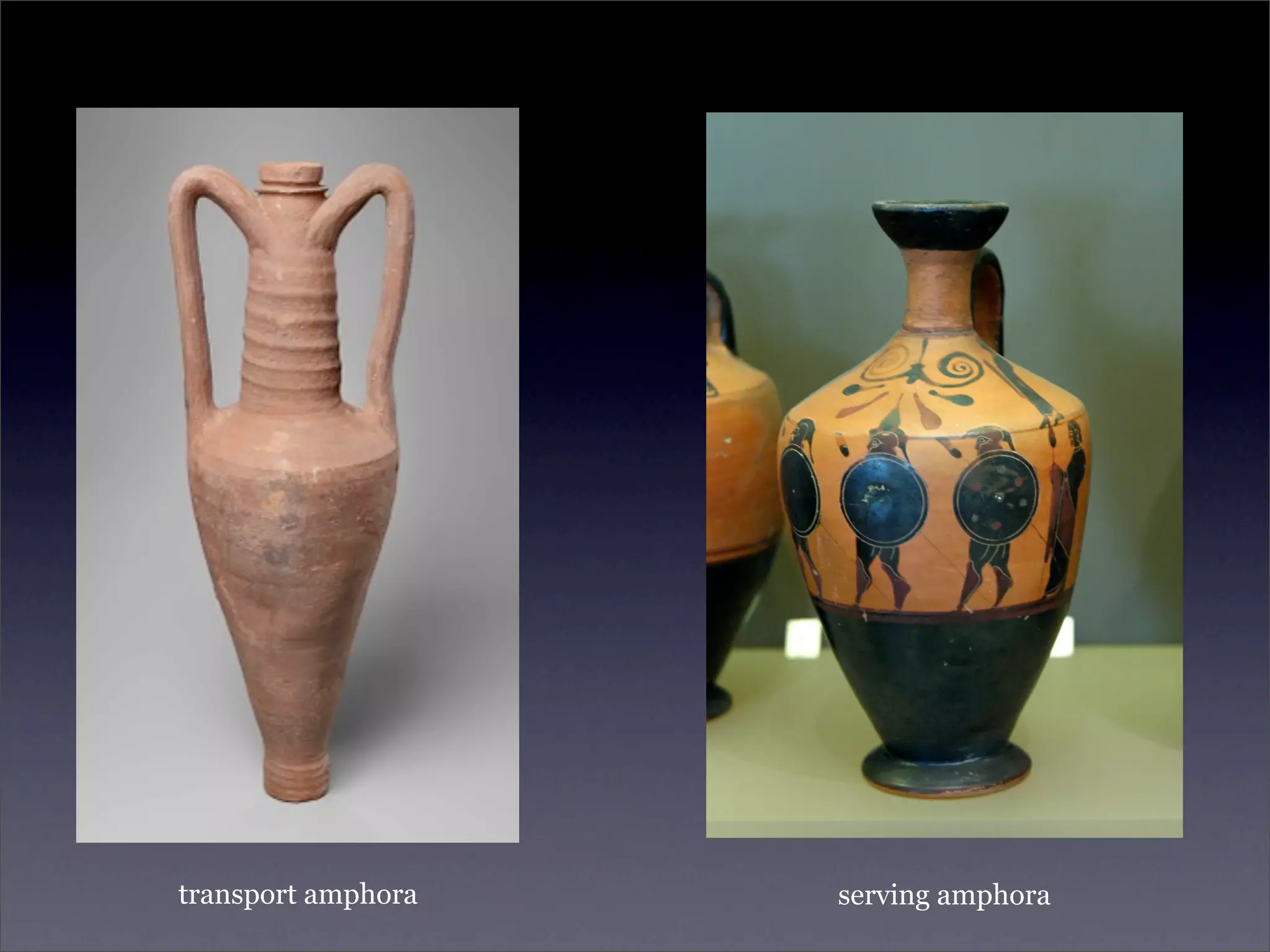
transport amphora   serving amphora
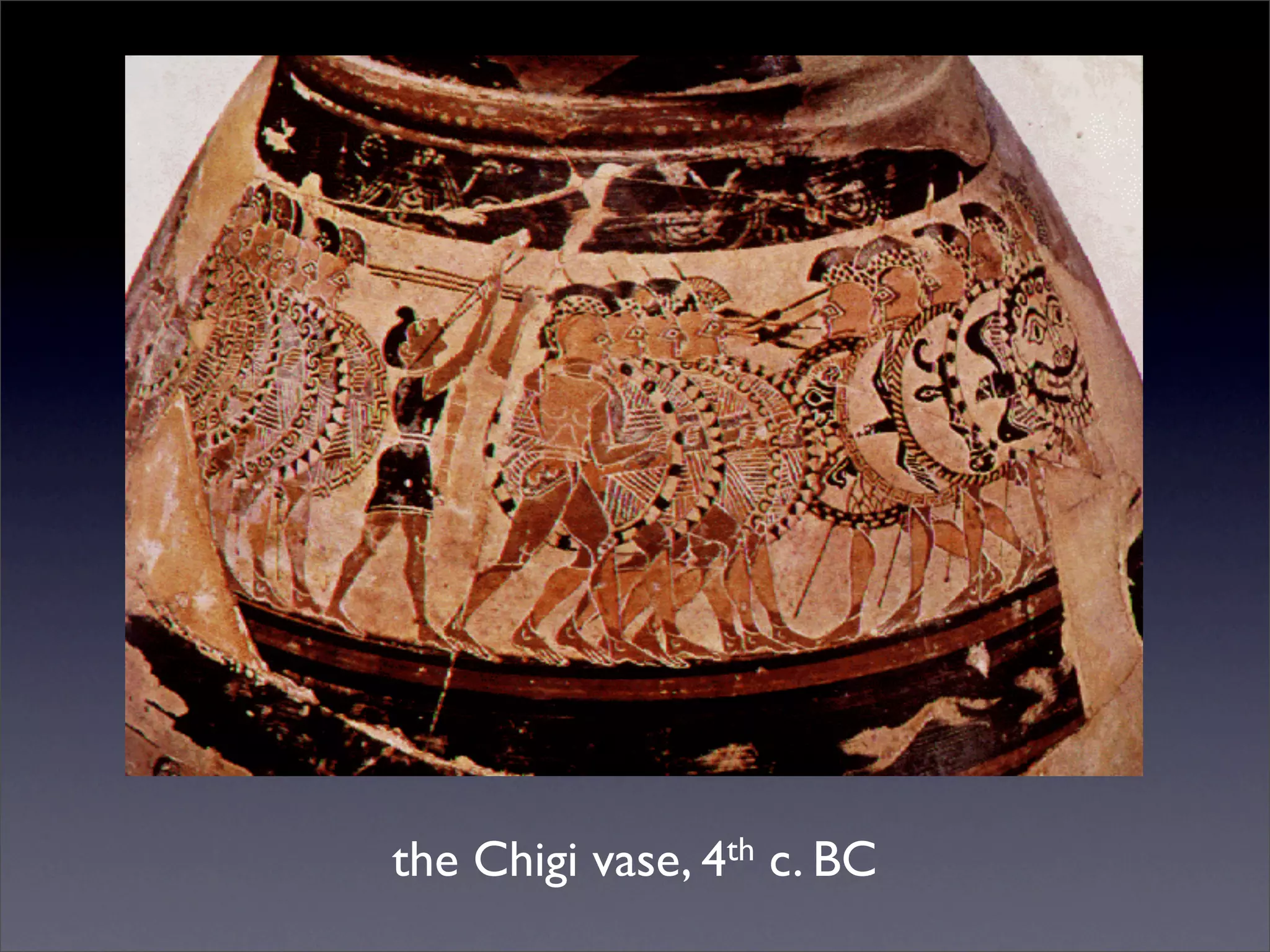
the Chigi vase, 4th c. BC
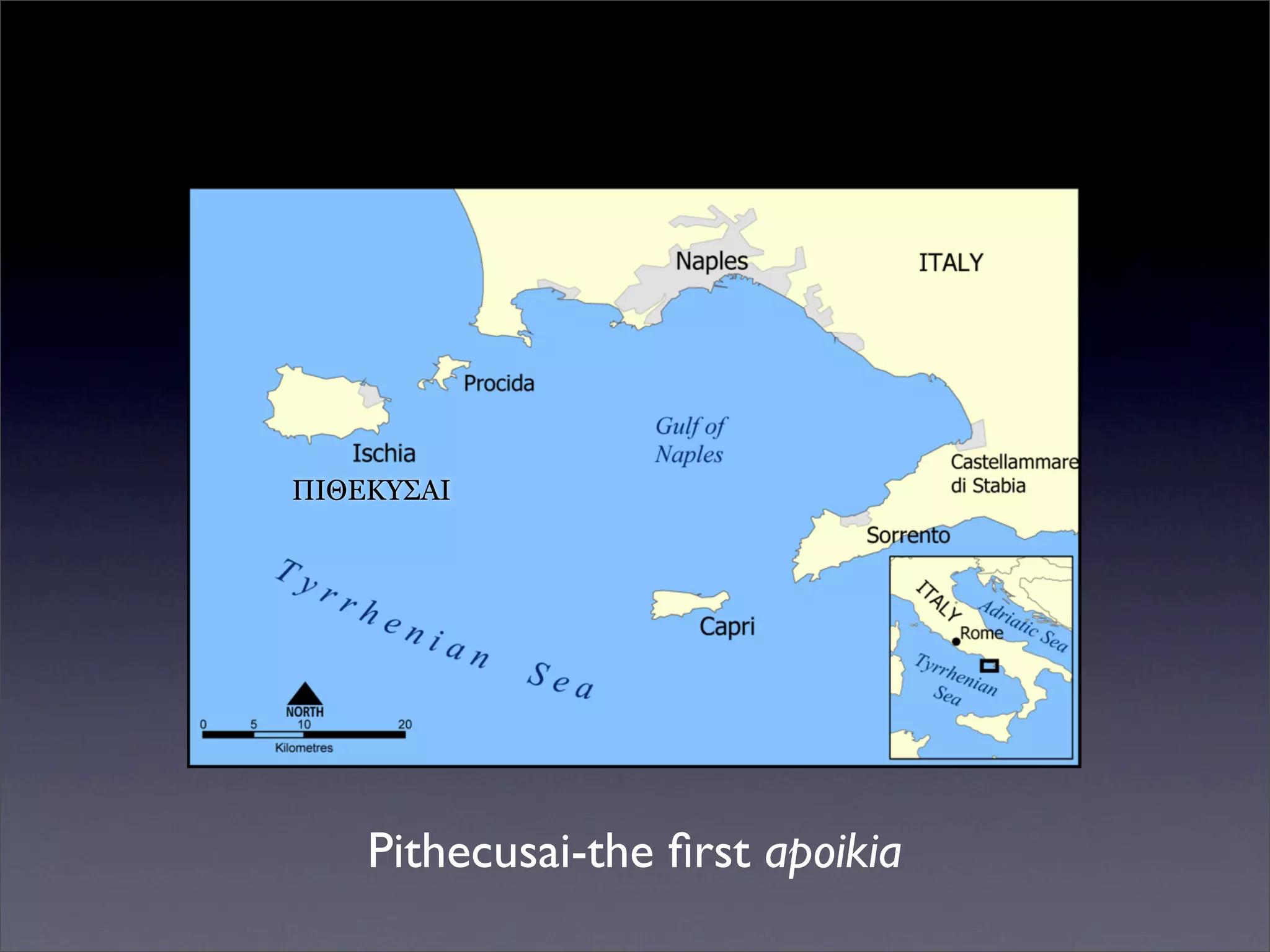
ΠΙΘΕΚΥΣΑΙ


    Pithecusai-the first apoikia
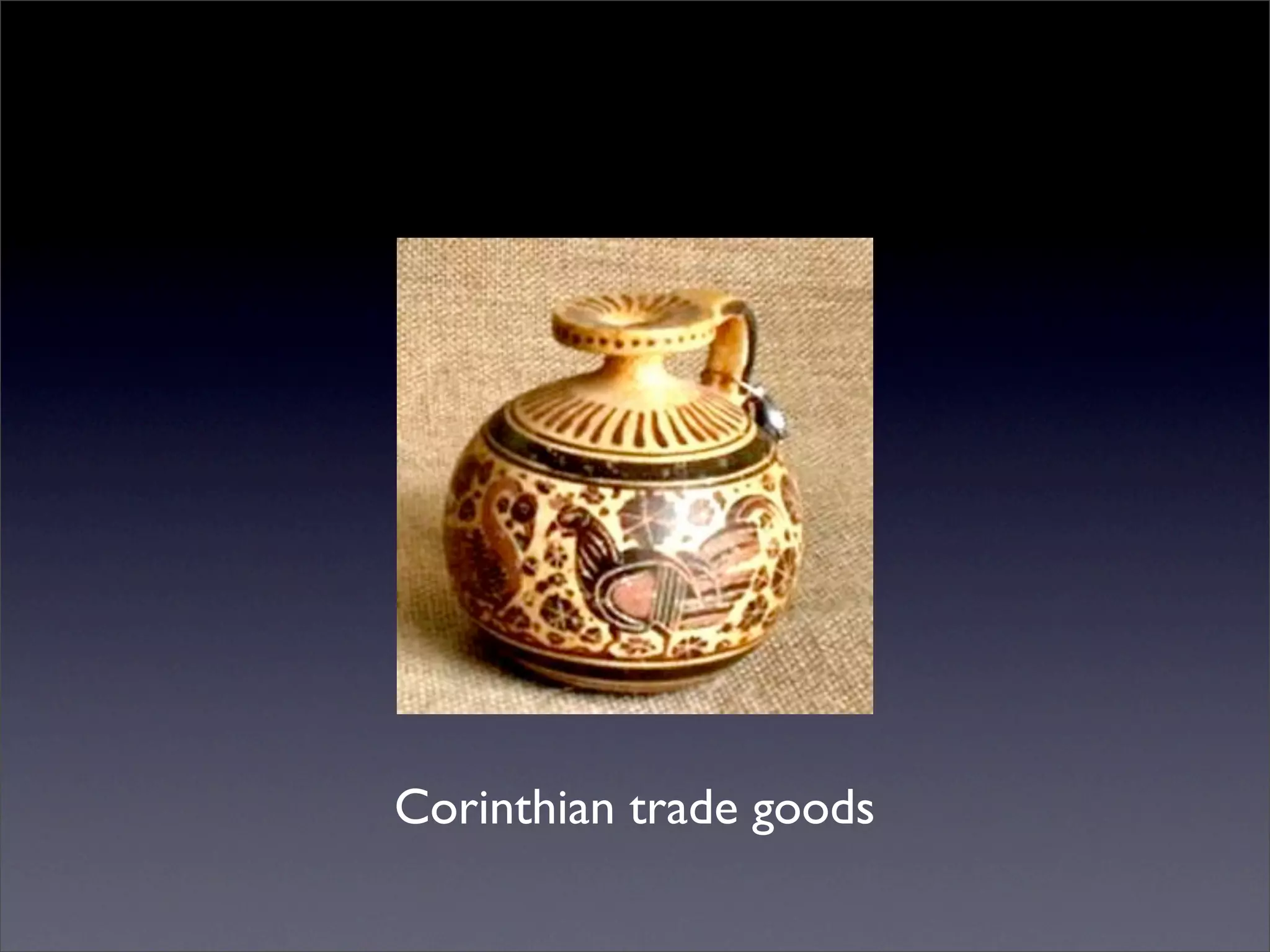
Corinthian trade goods
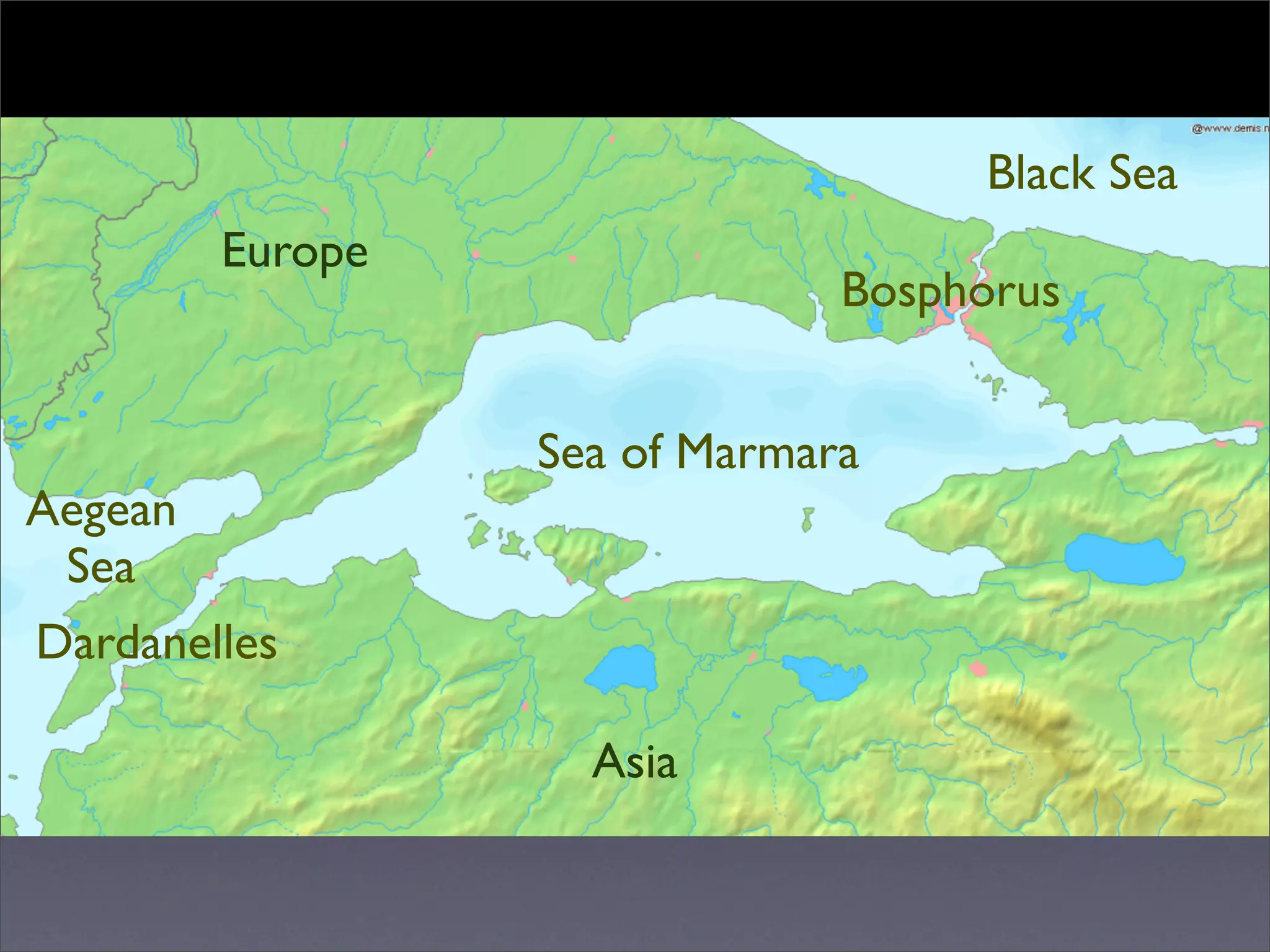
Black Sea
        Europe
                              Bosphorus


                 Sea of Marmara
Aegean
 Sea
Dardanelles

                   Asia
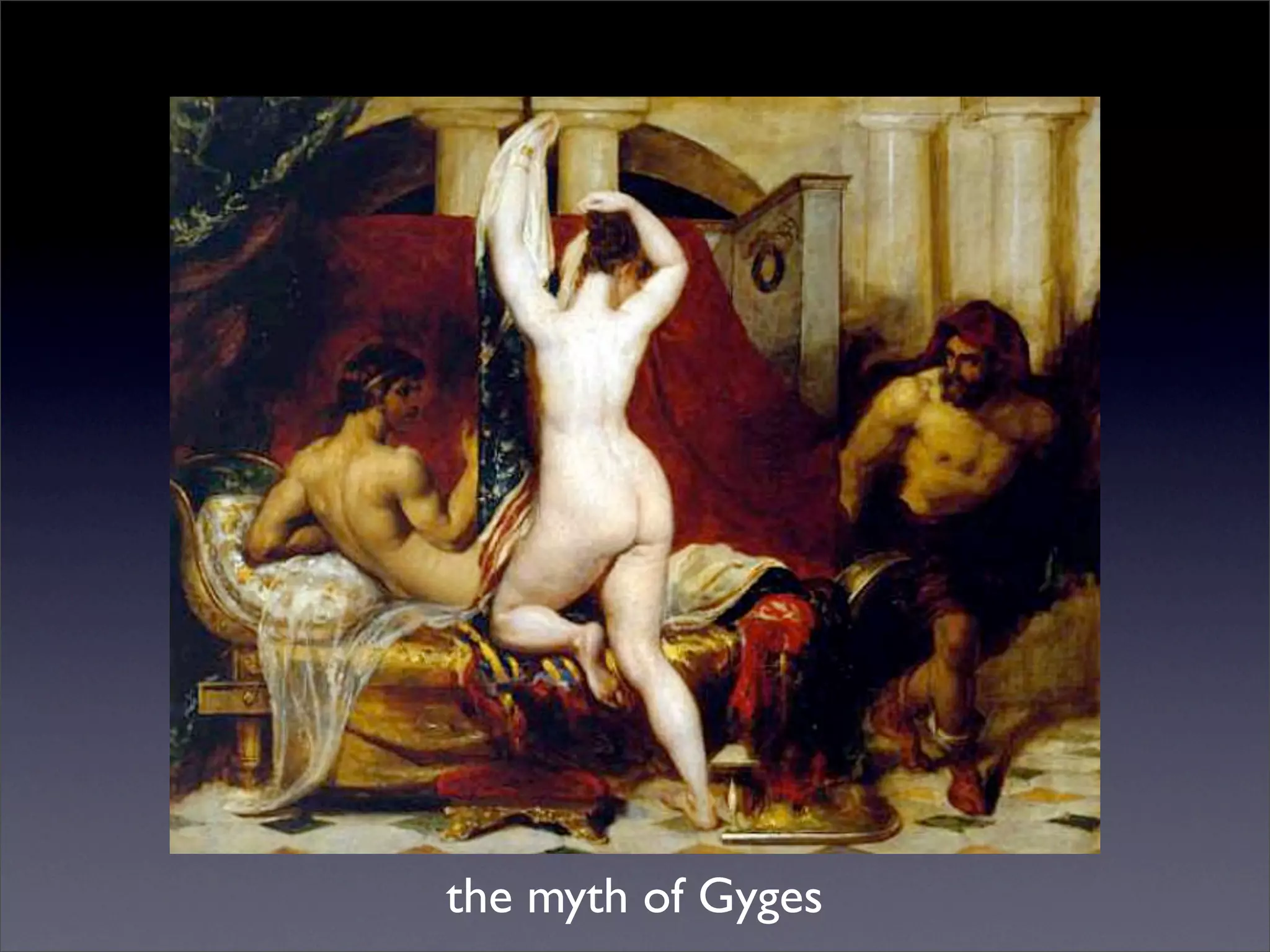
the myth of Gyges
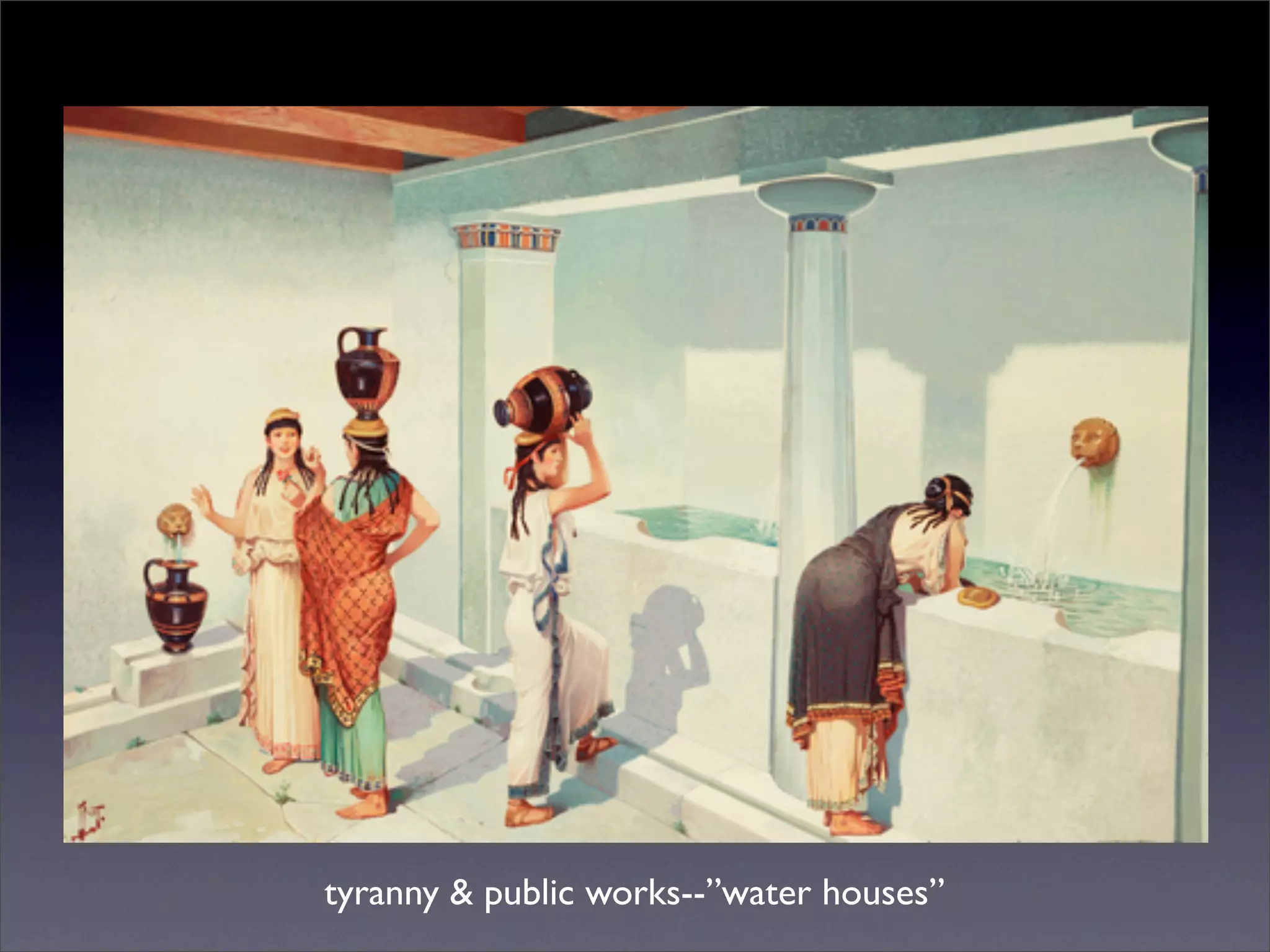
tyranny & public works--”water houses”
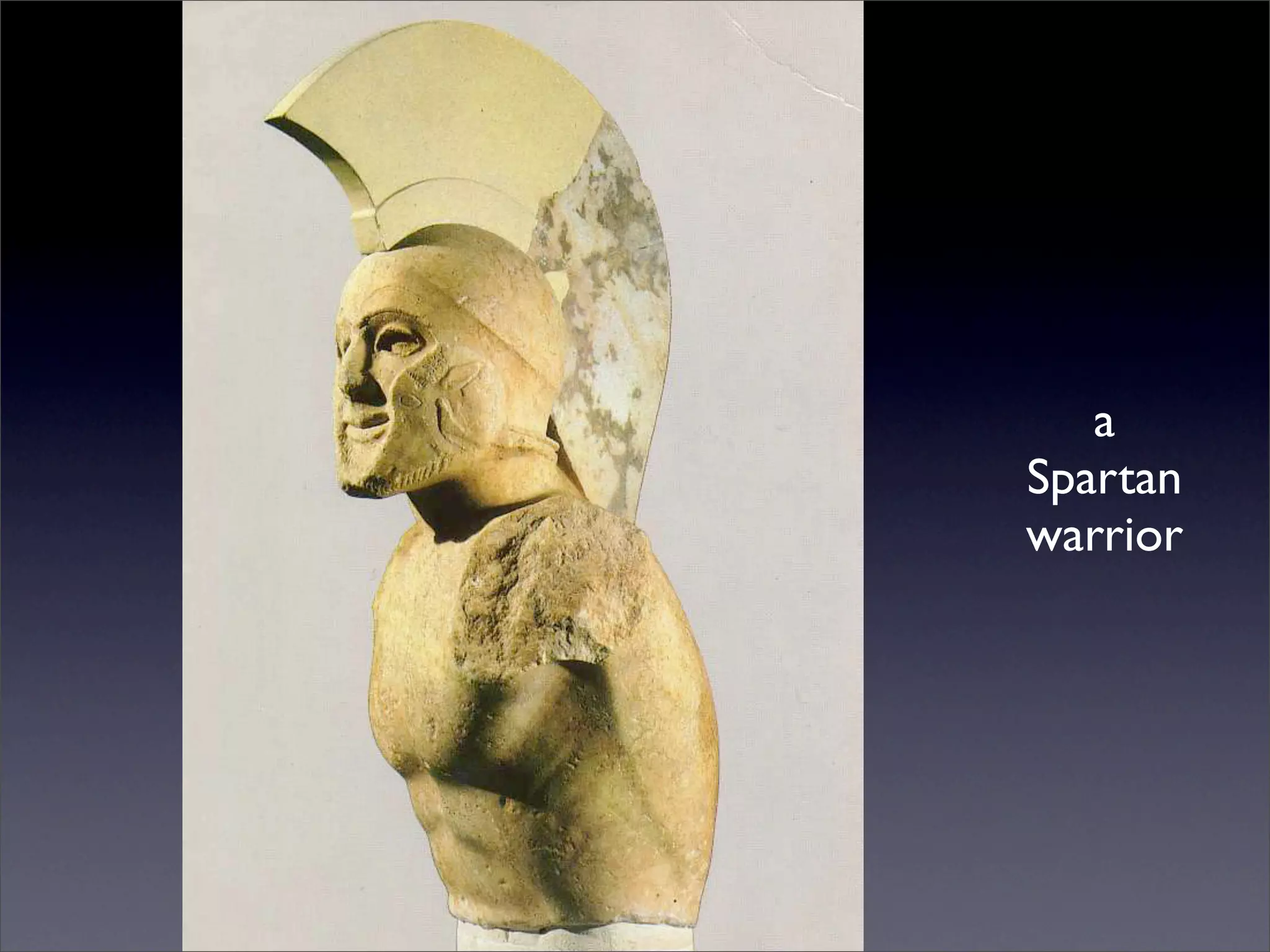
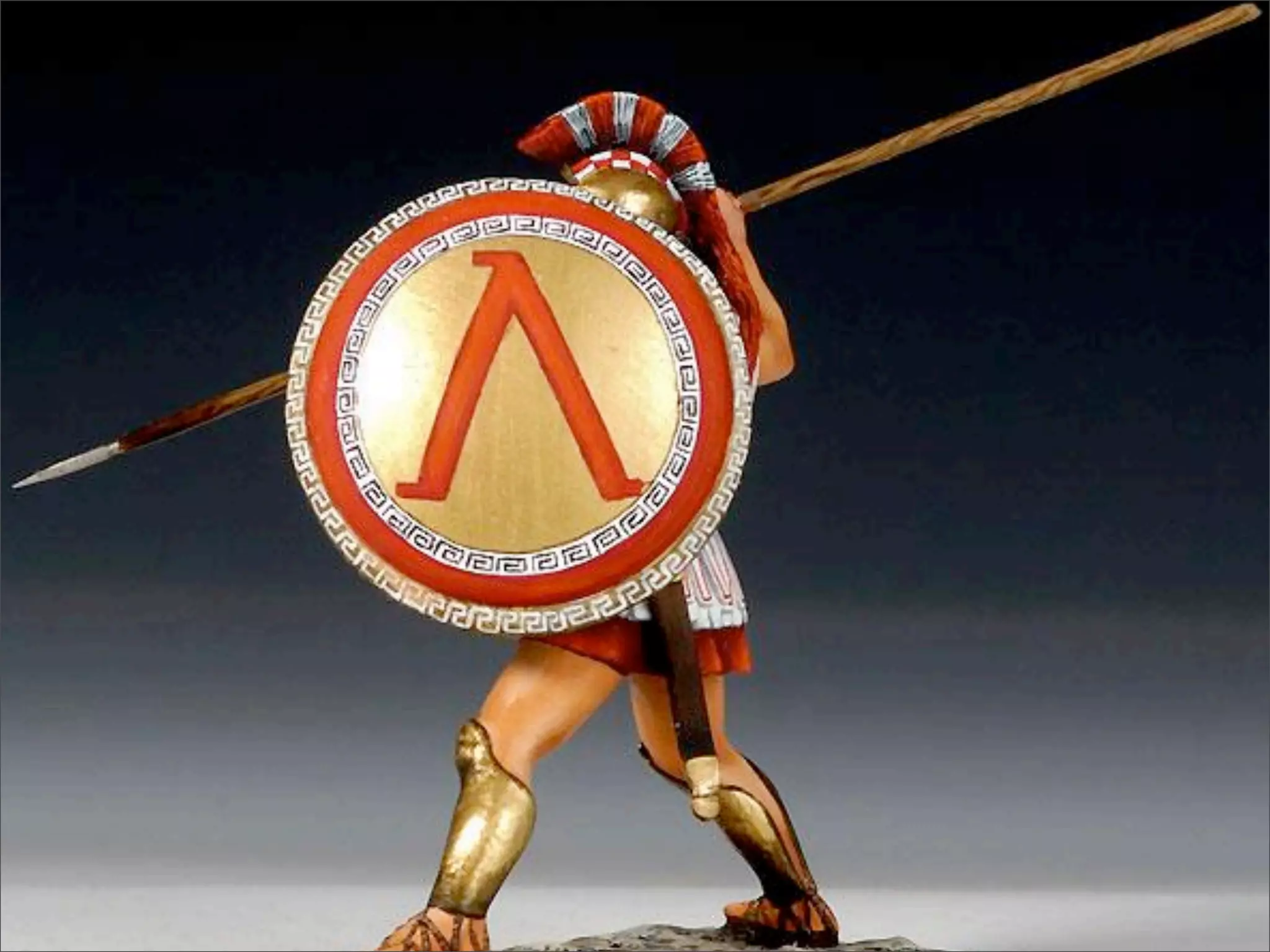
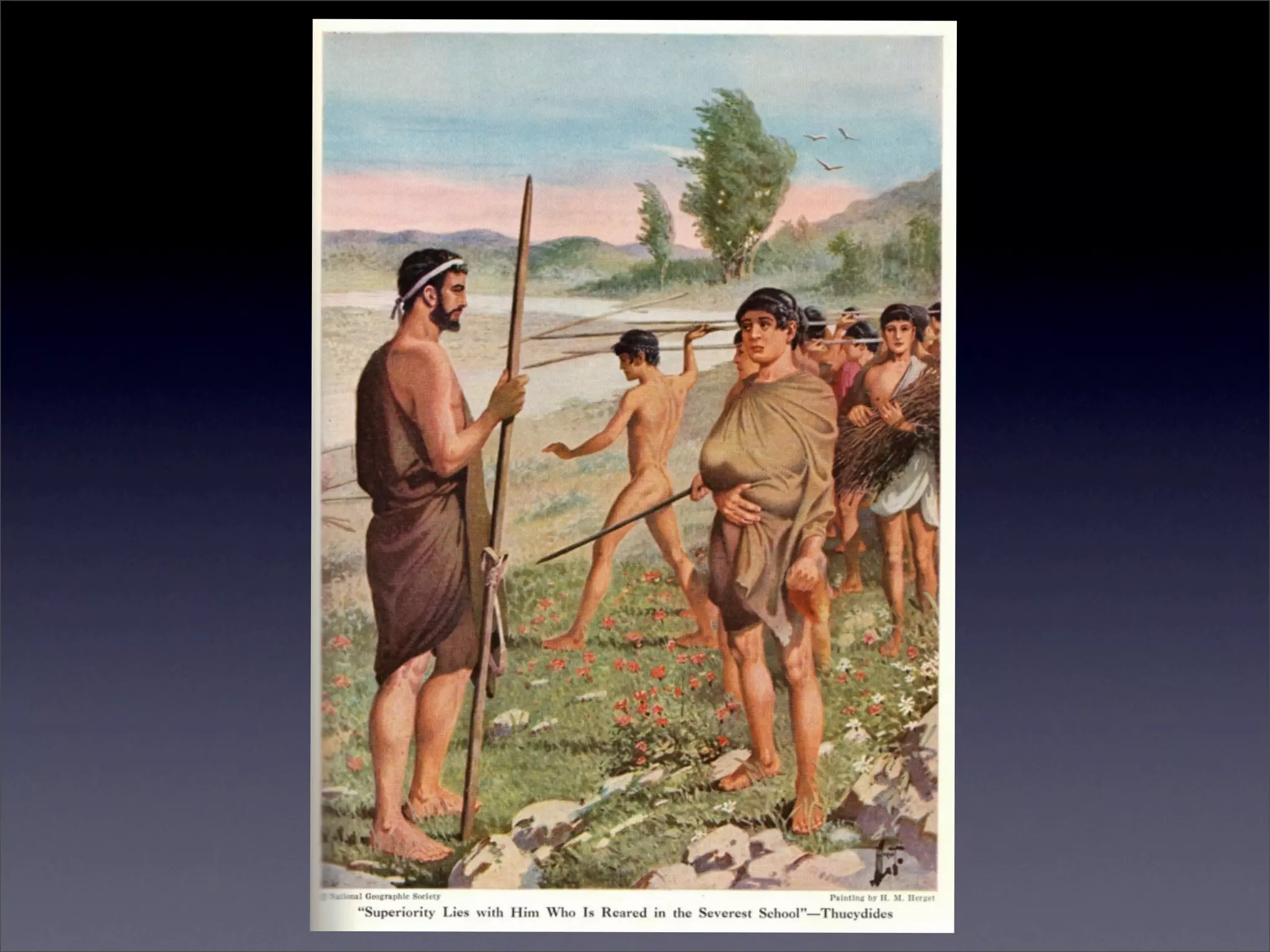
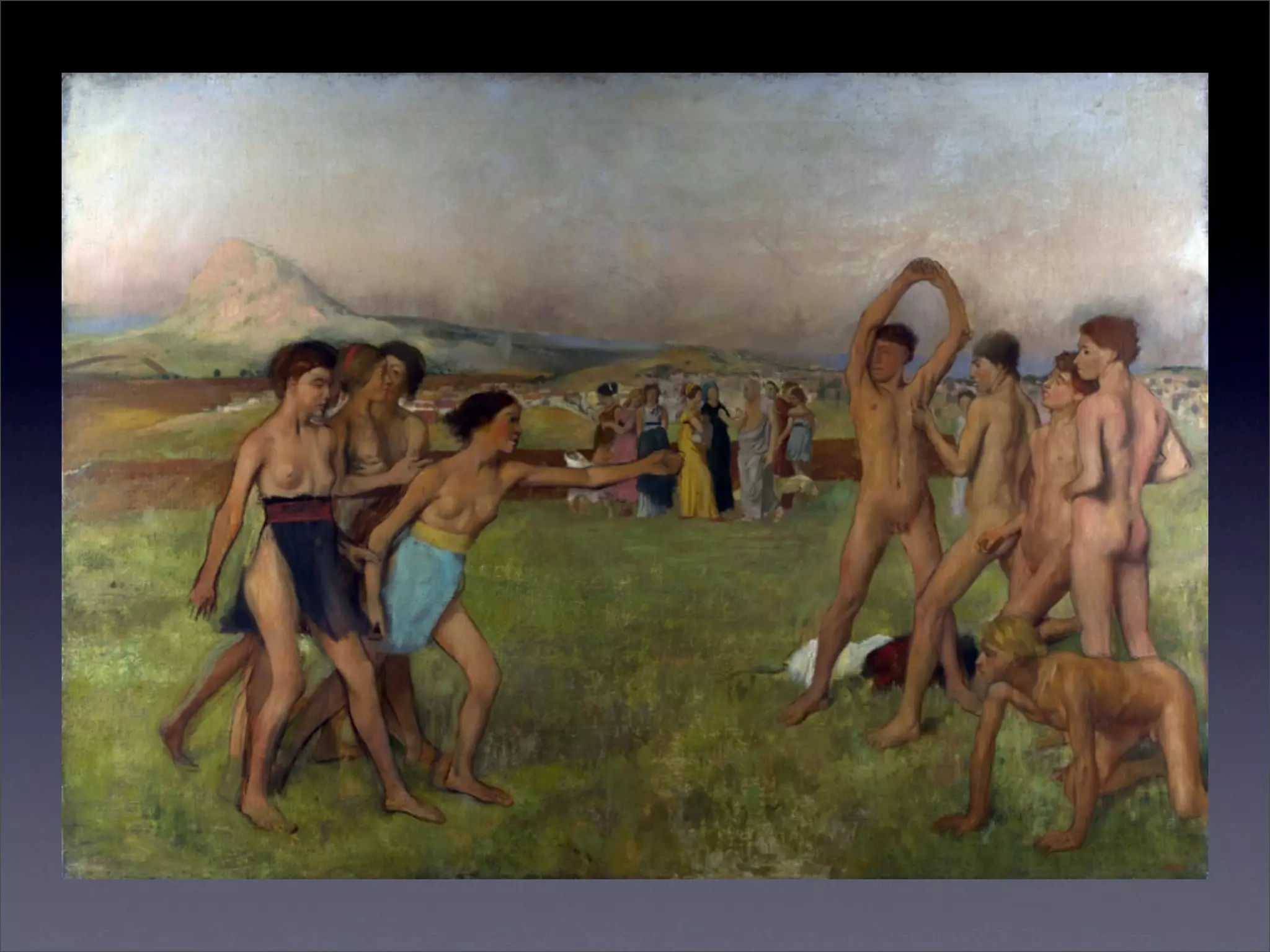
a
Spartan
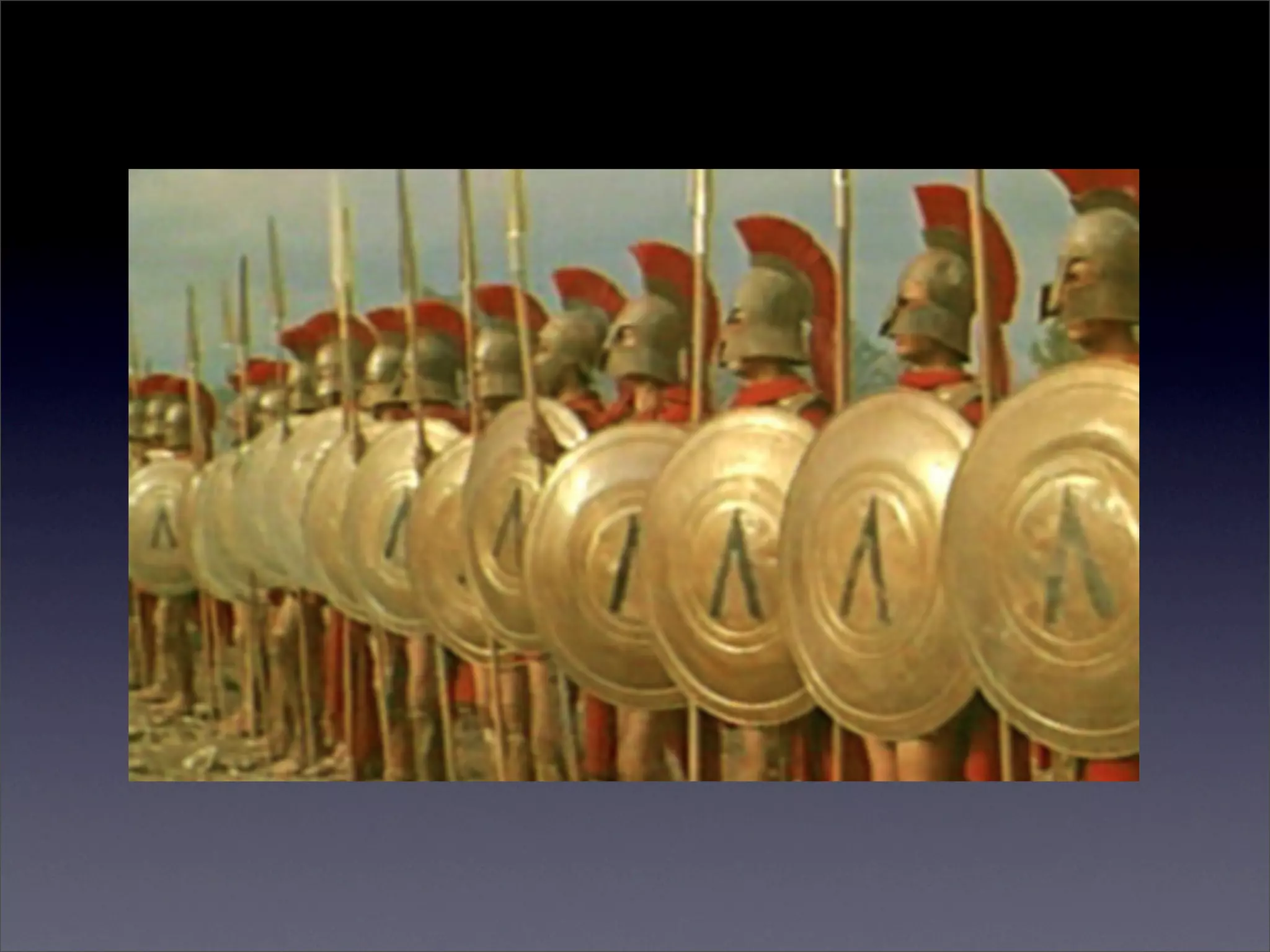
warrior
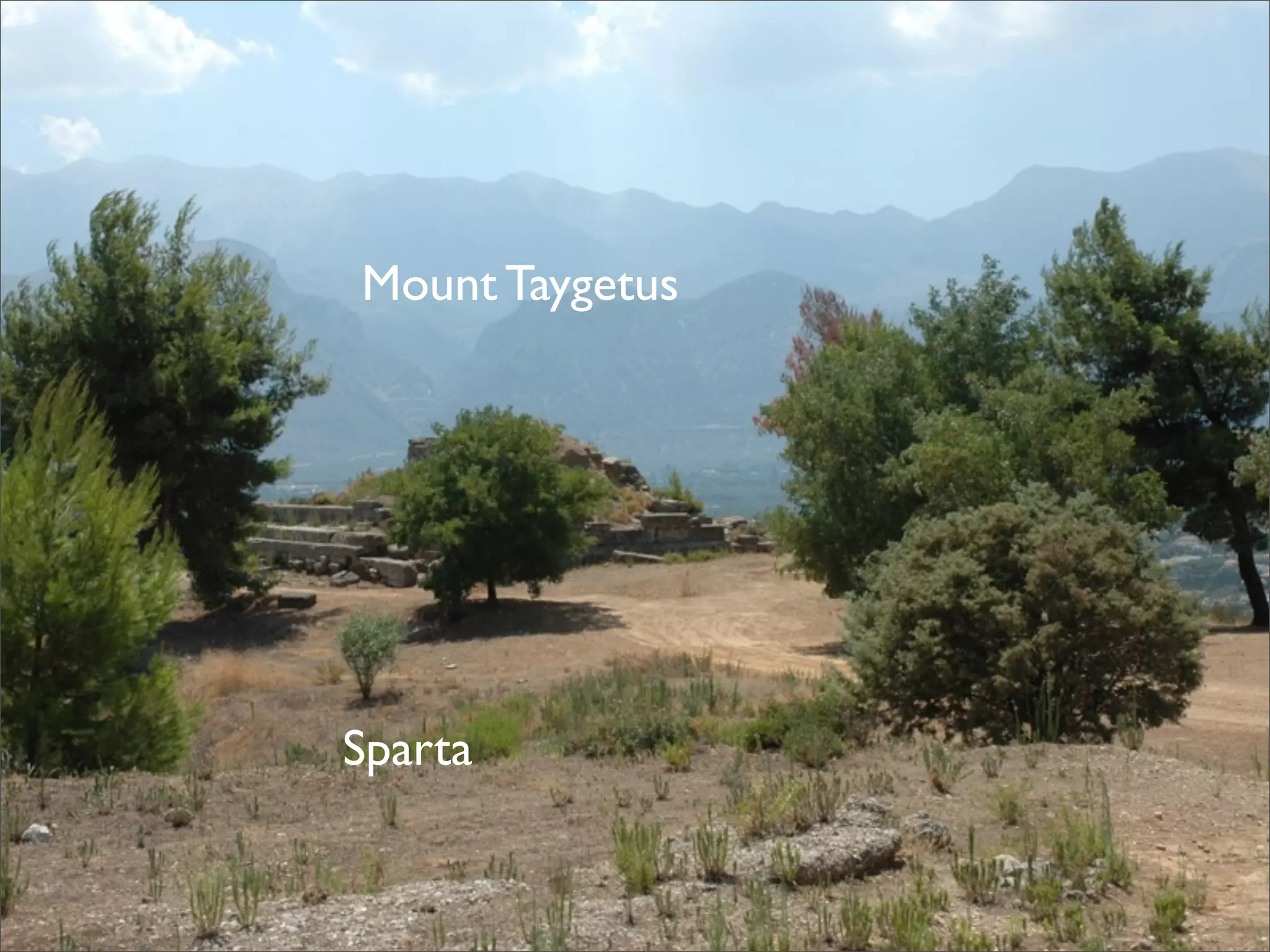
Mount Taygetus


Sparta
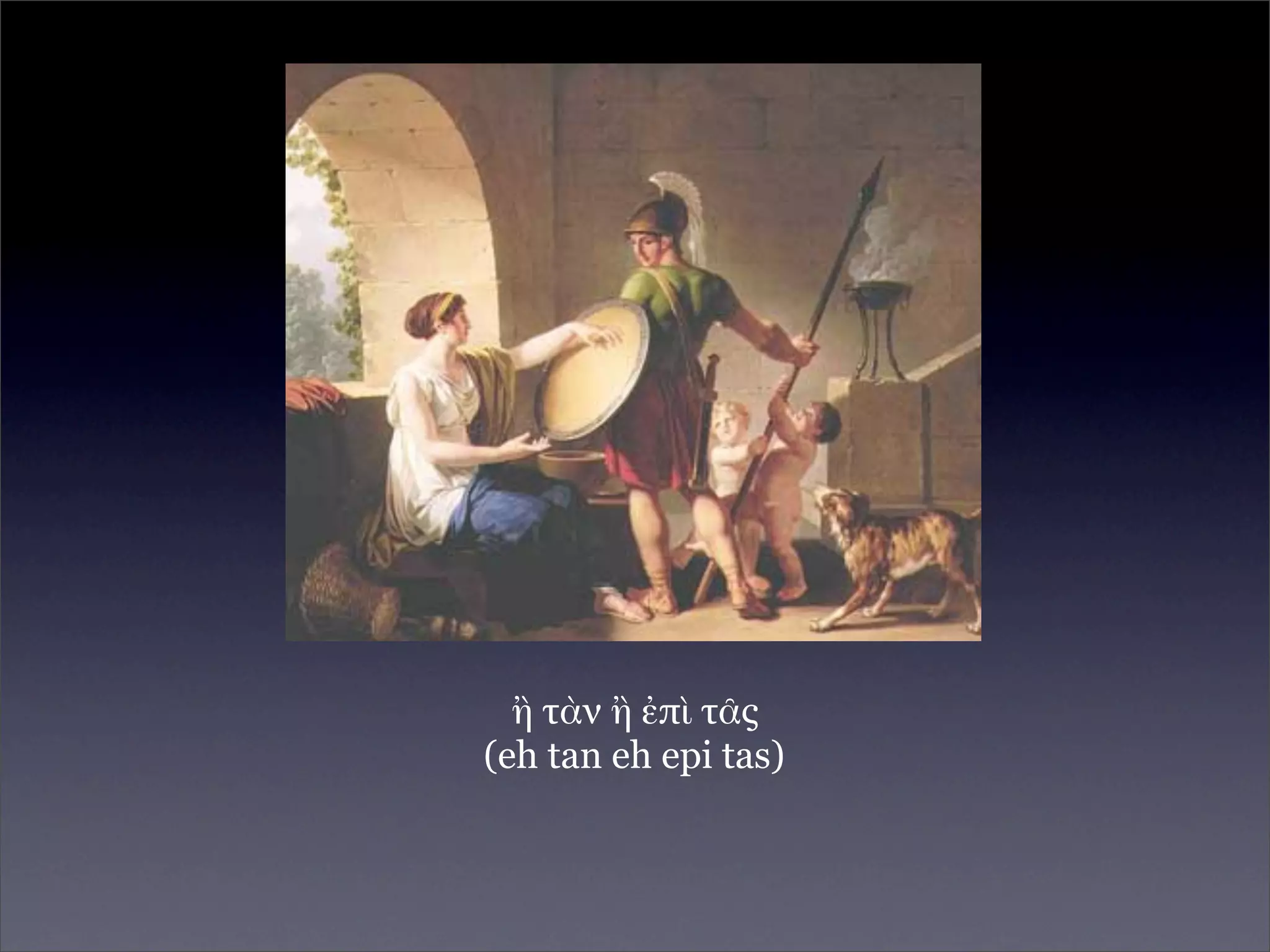
ἢ τὰν ἢ ἐπὶ τᾶς
(eh tan eh epi tas)
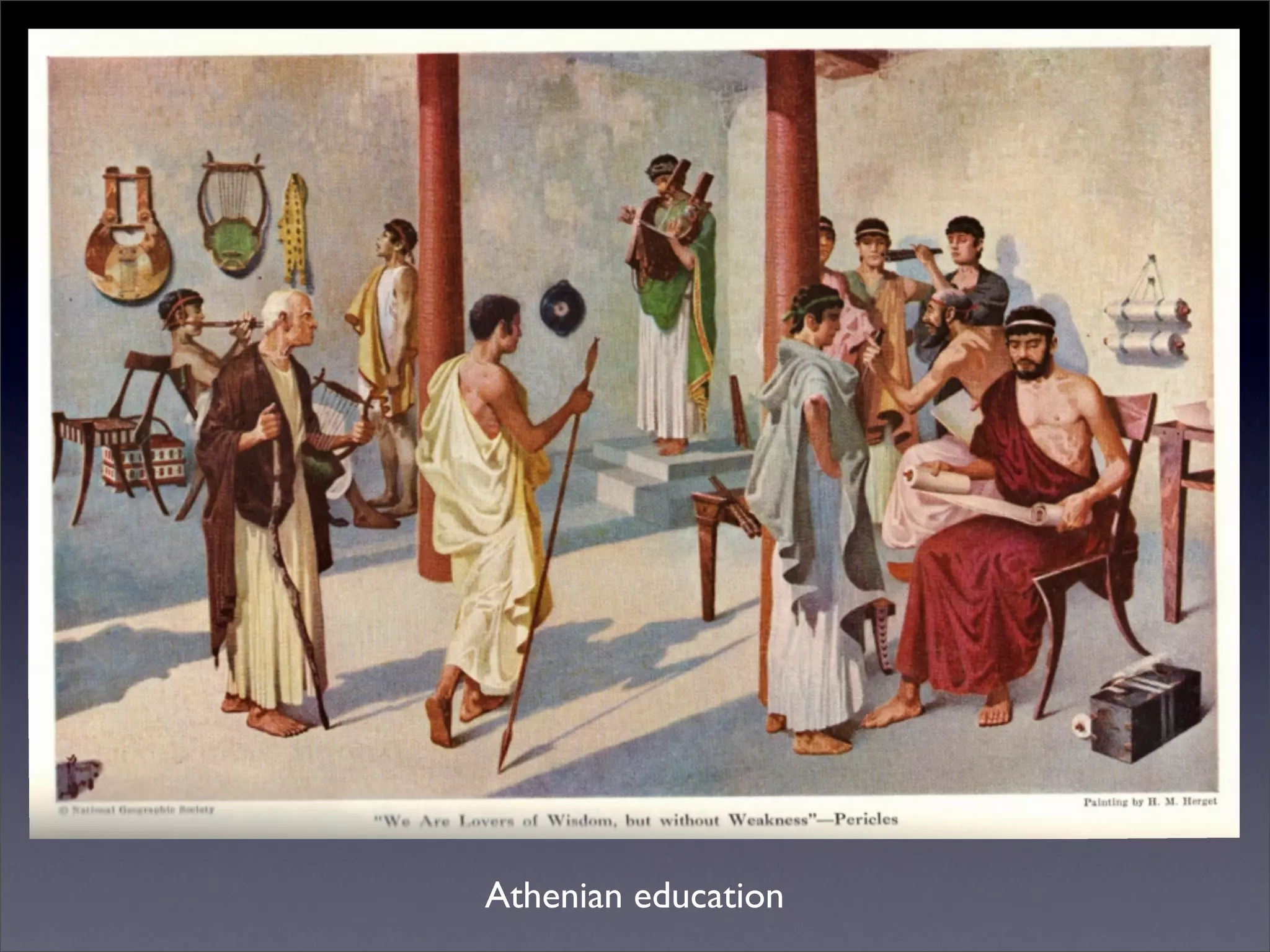
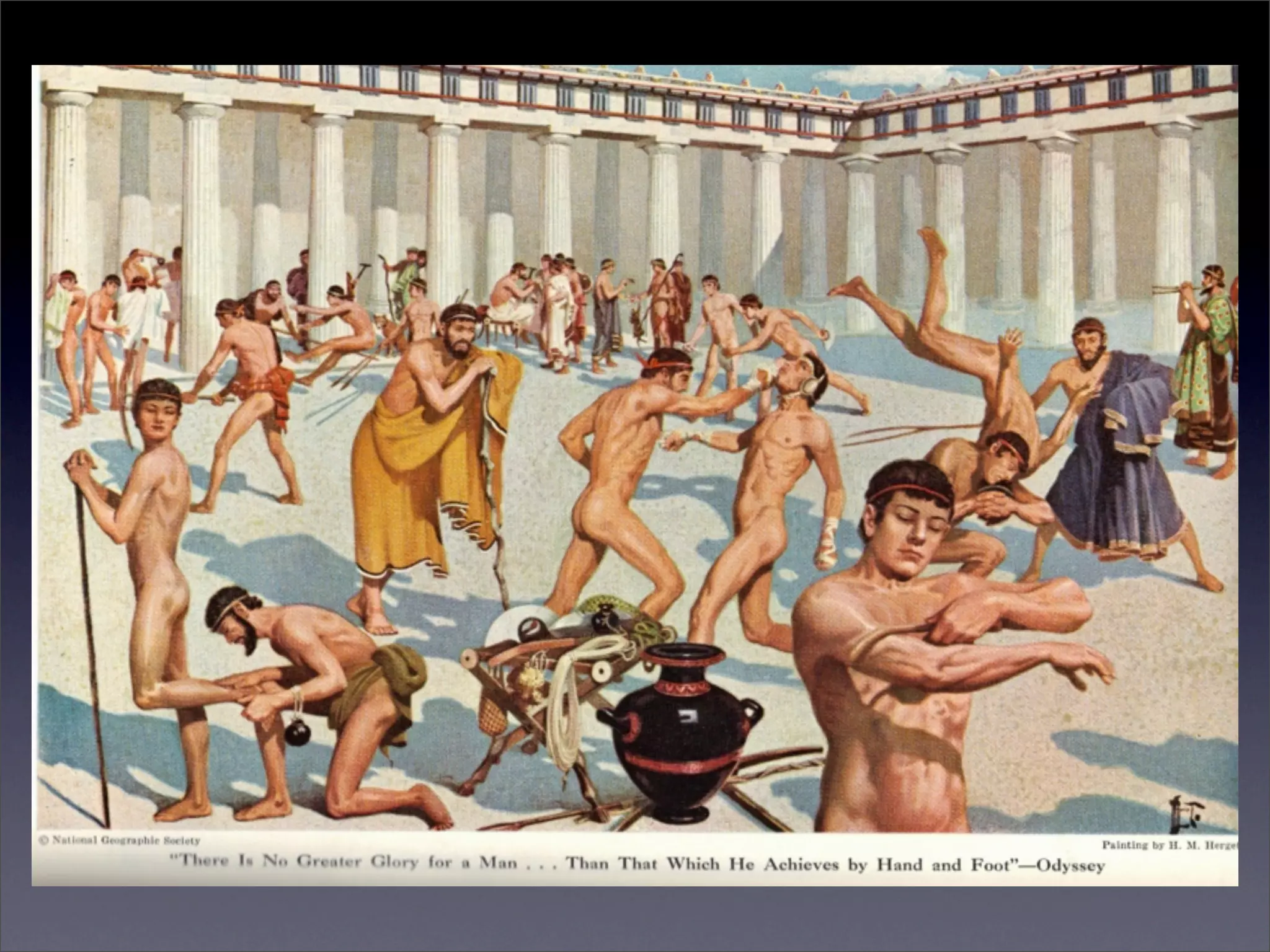
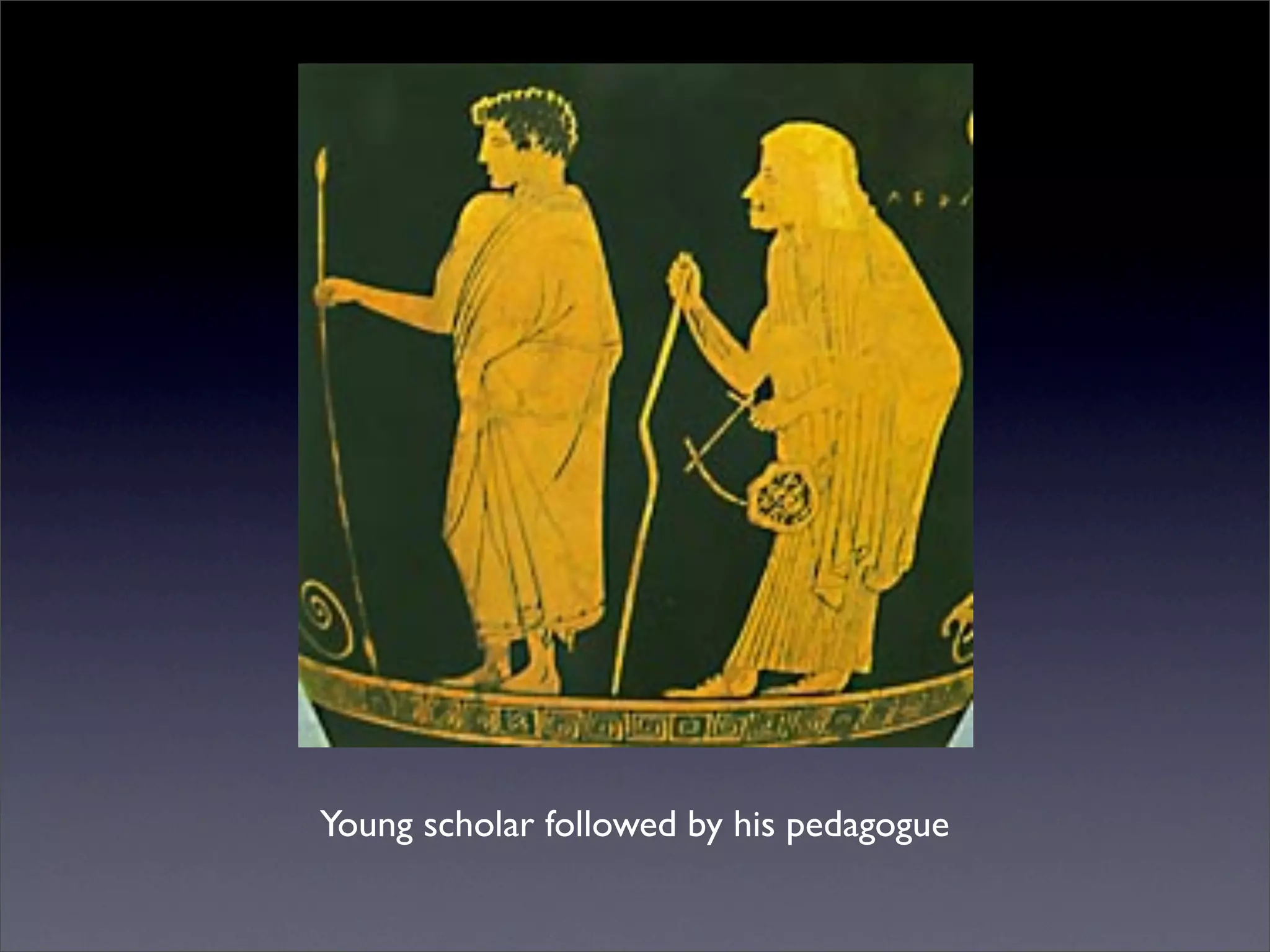
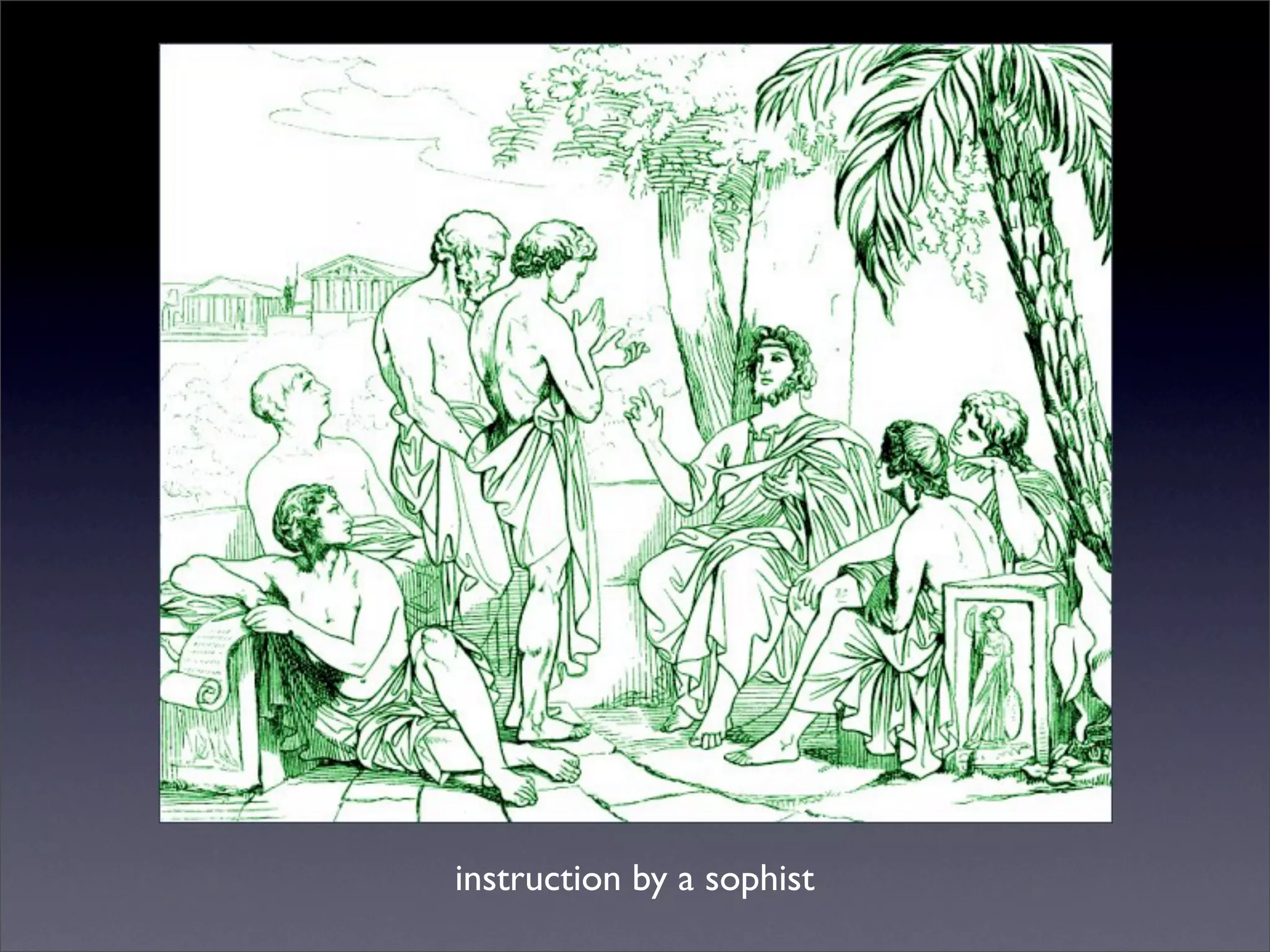
Athenian education
Young scholar followed by his pedagogue
instruction by a sophist
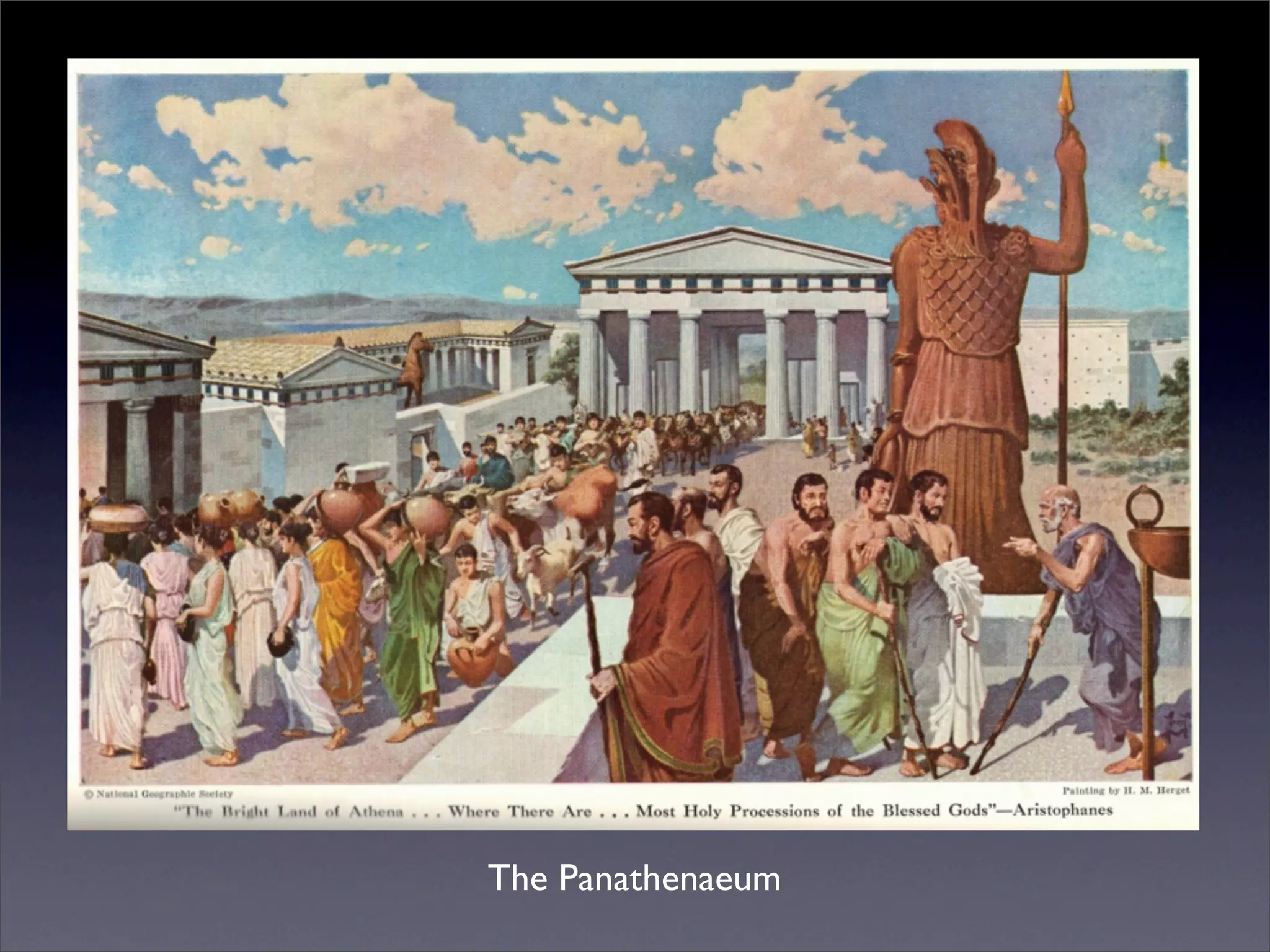
The Panathenaeum
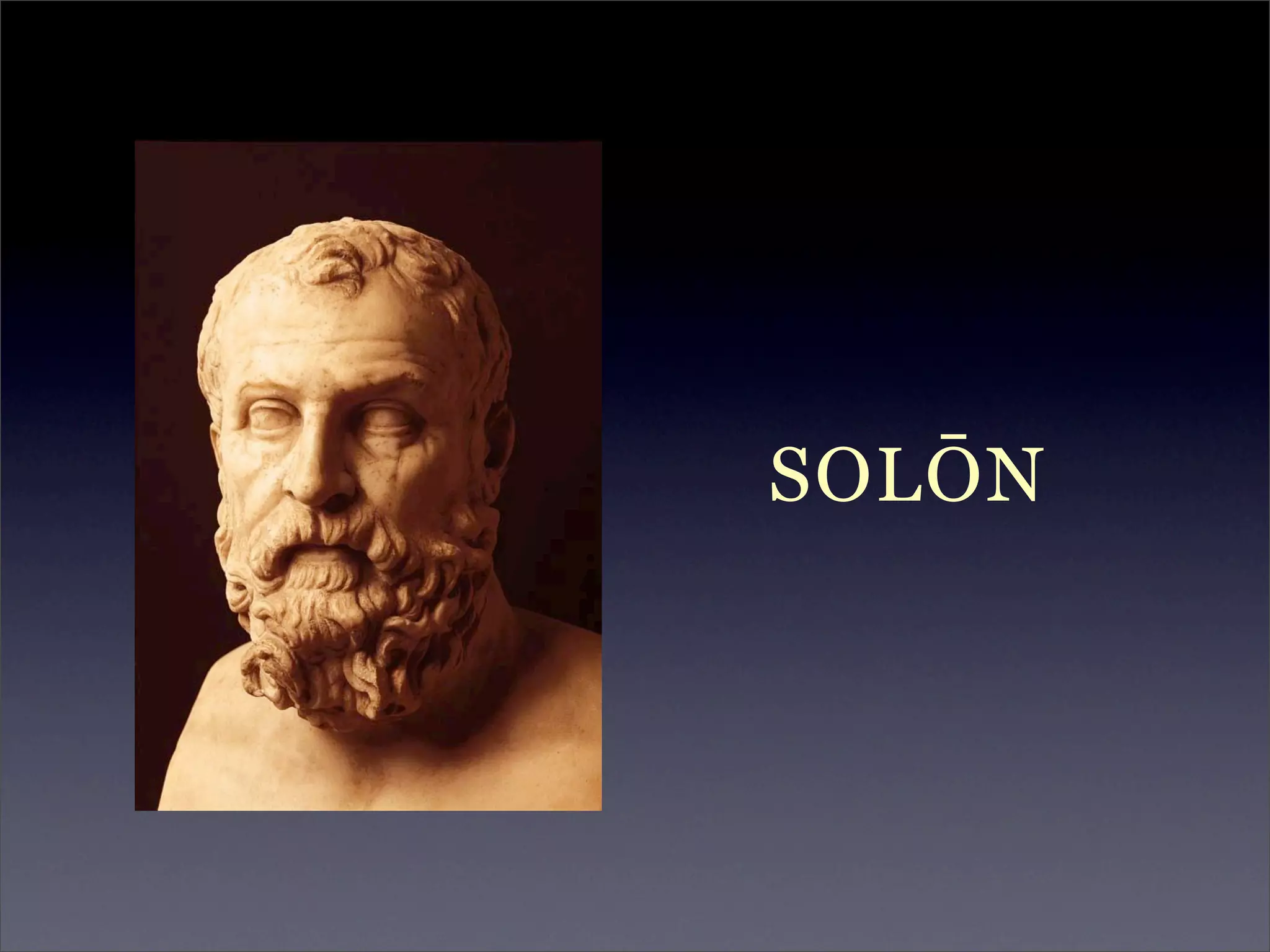
SOLŌN
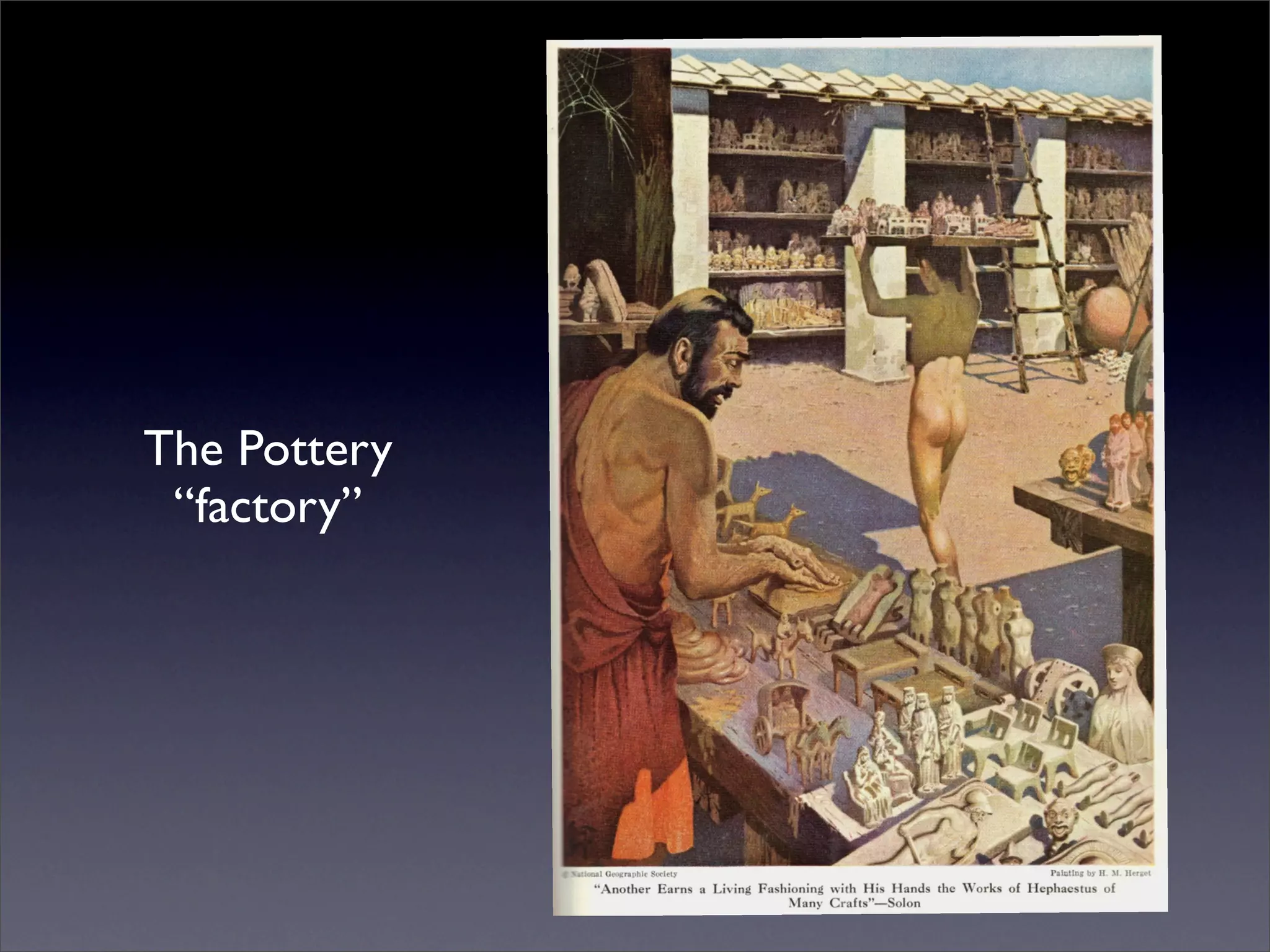
The Pottery
 “factory”
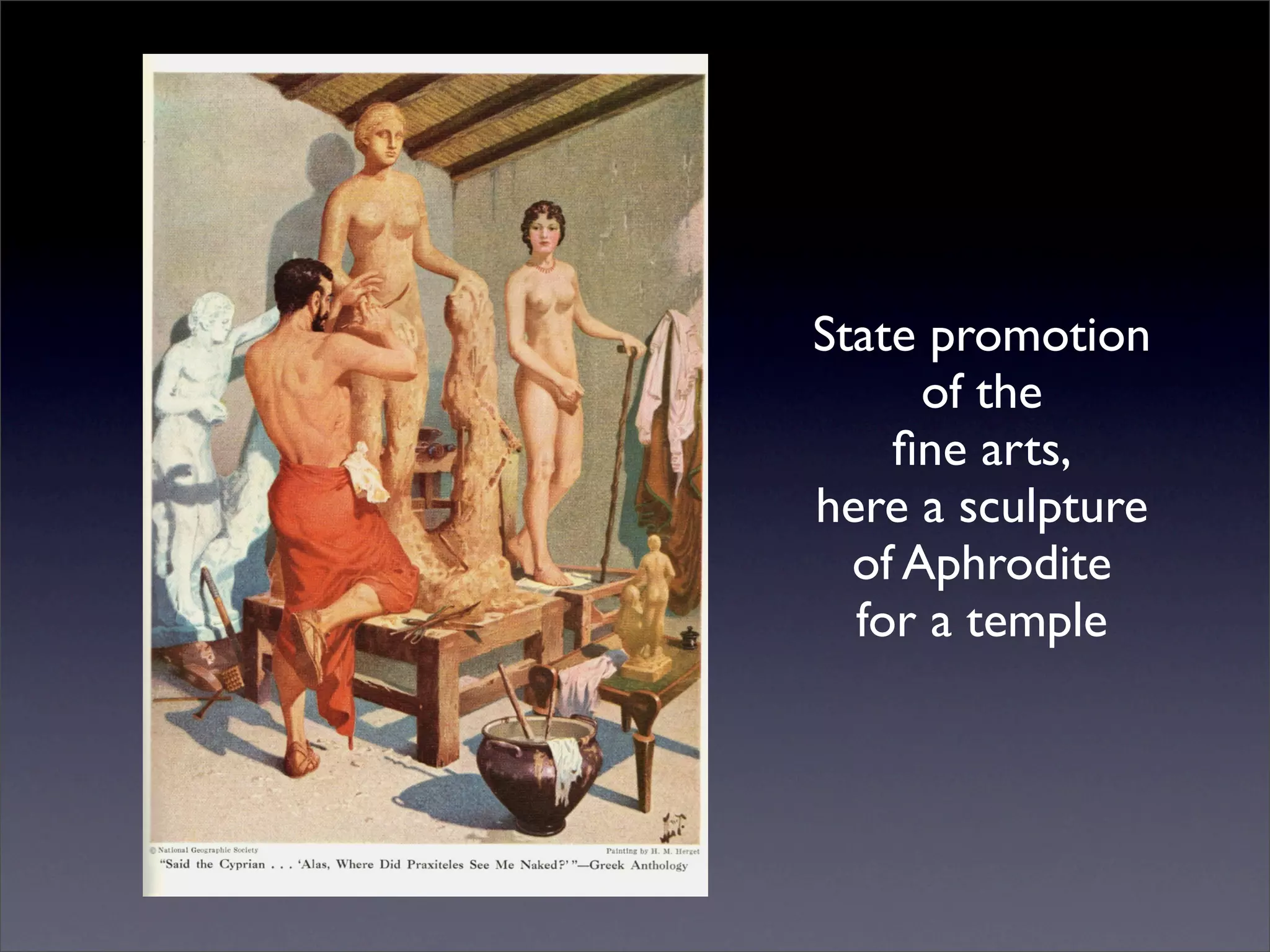
State promotion
      of the
    fine arts,
here a sculpture
  of Aphrodite
  for a temple
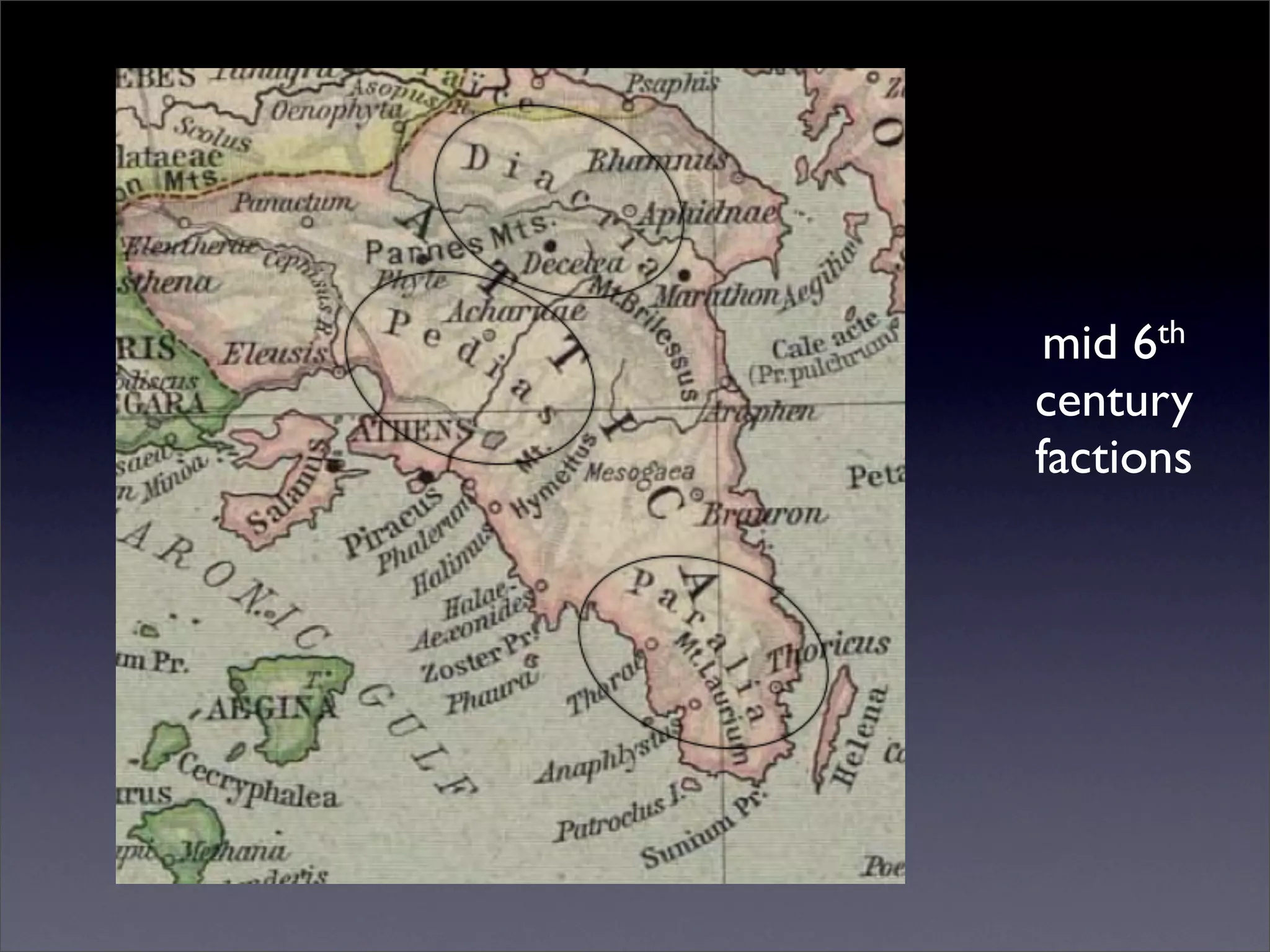
mid 6th
century
factions
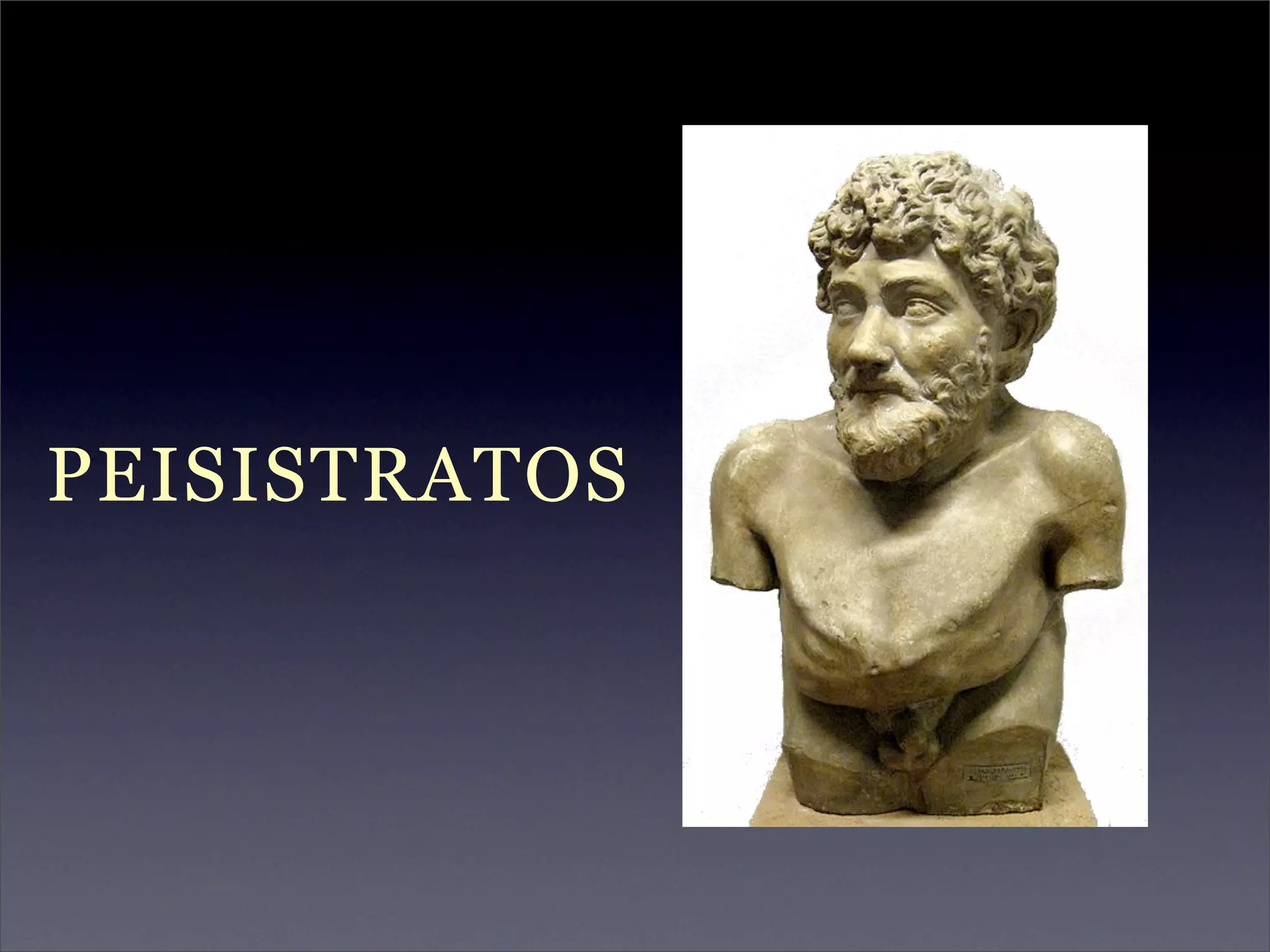
PEISISTRATOS
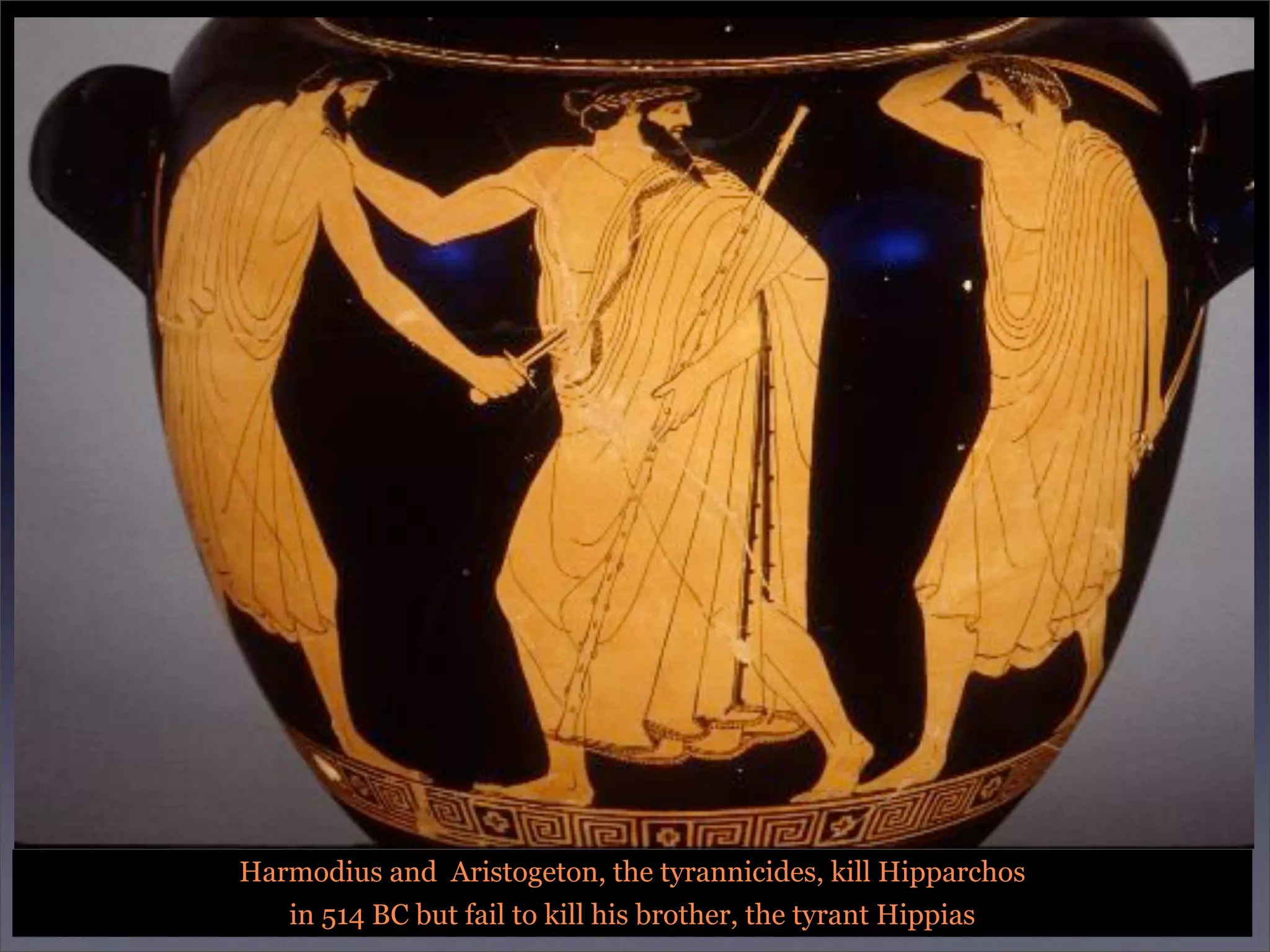
Harmodius and Aristogeton, the tyrannicides, kill Hipparchos
   in 514 BC but fail to kill his brother, the tyrant Hippias
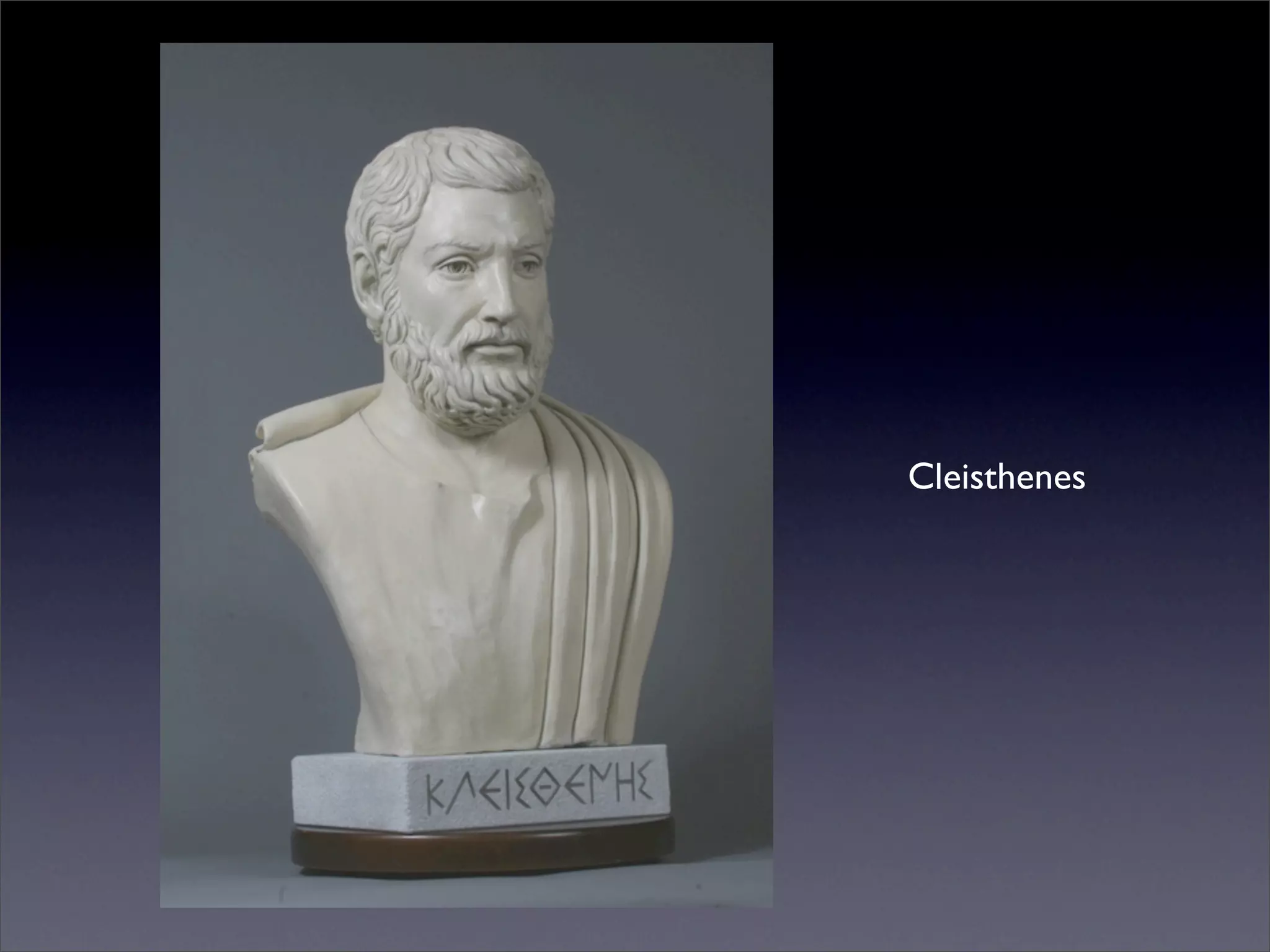
Cleisthenes
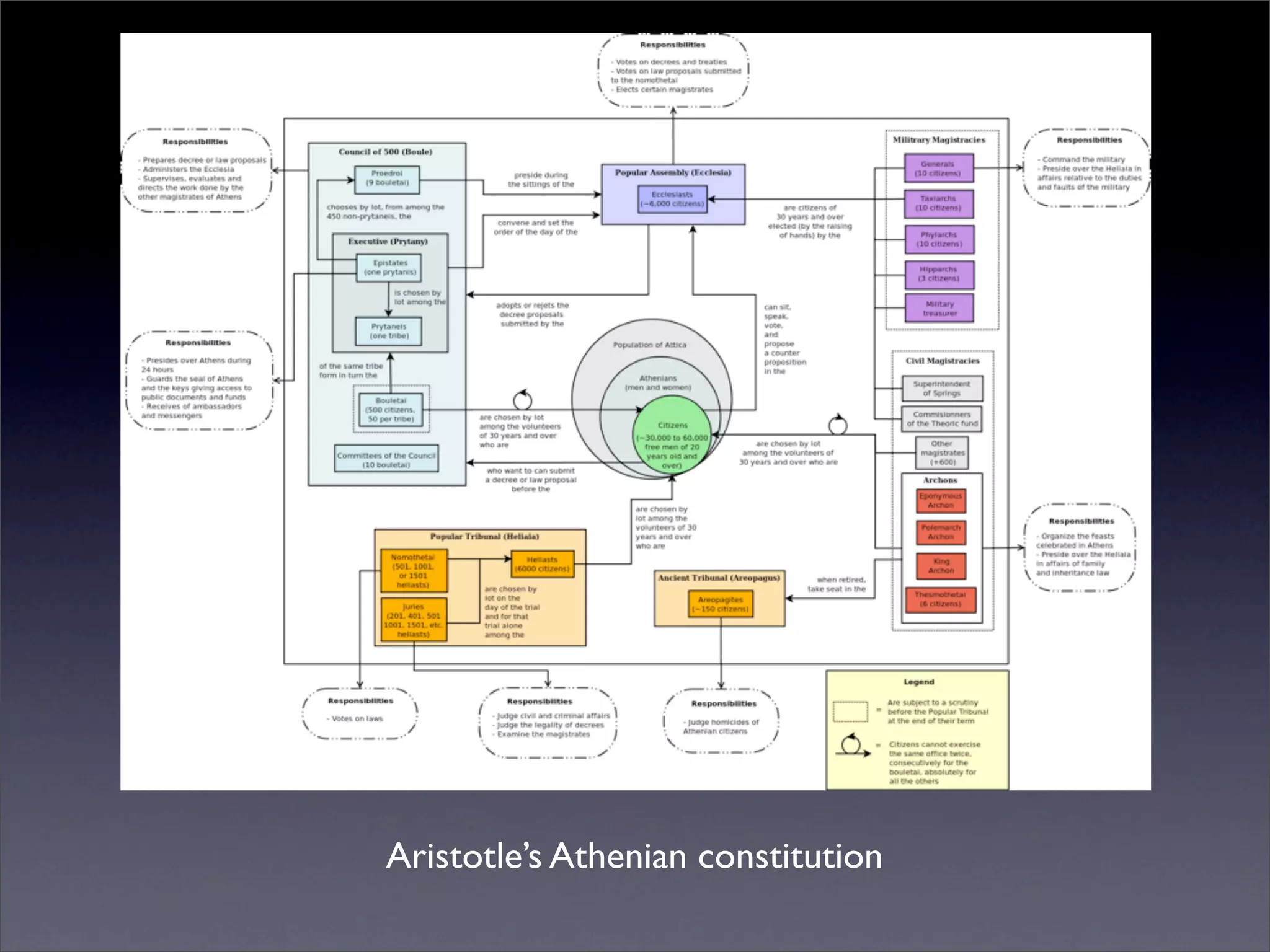
Aristotle’s Athenian constitution
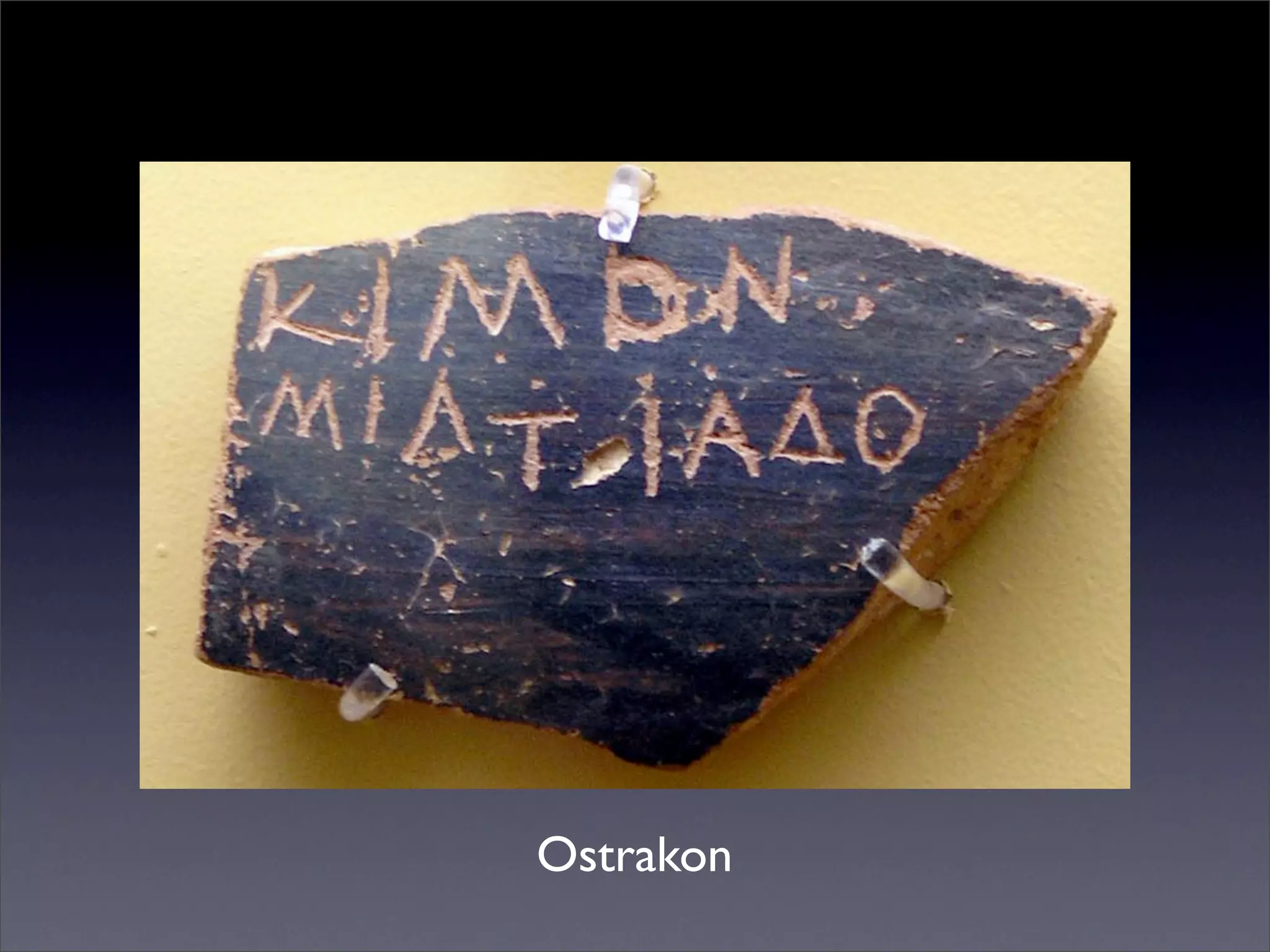
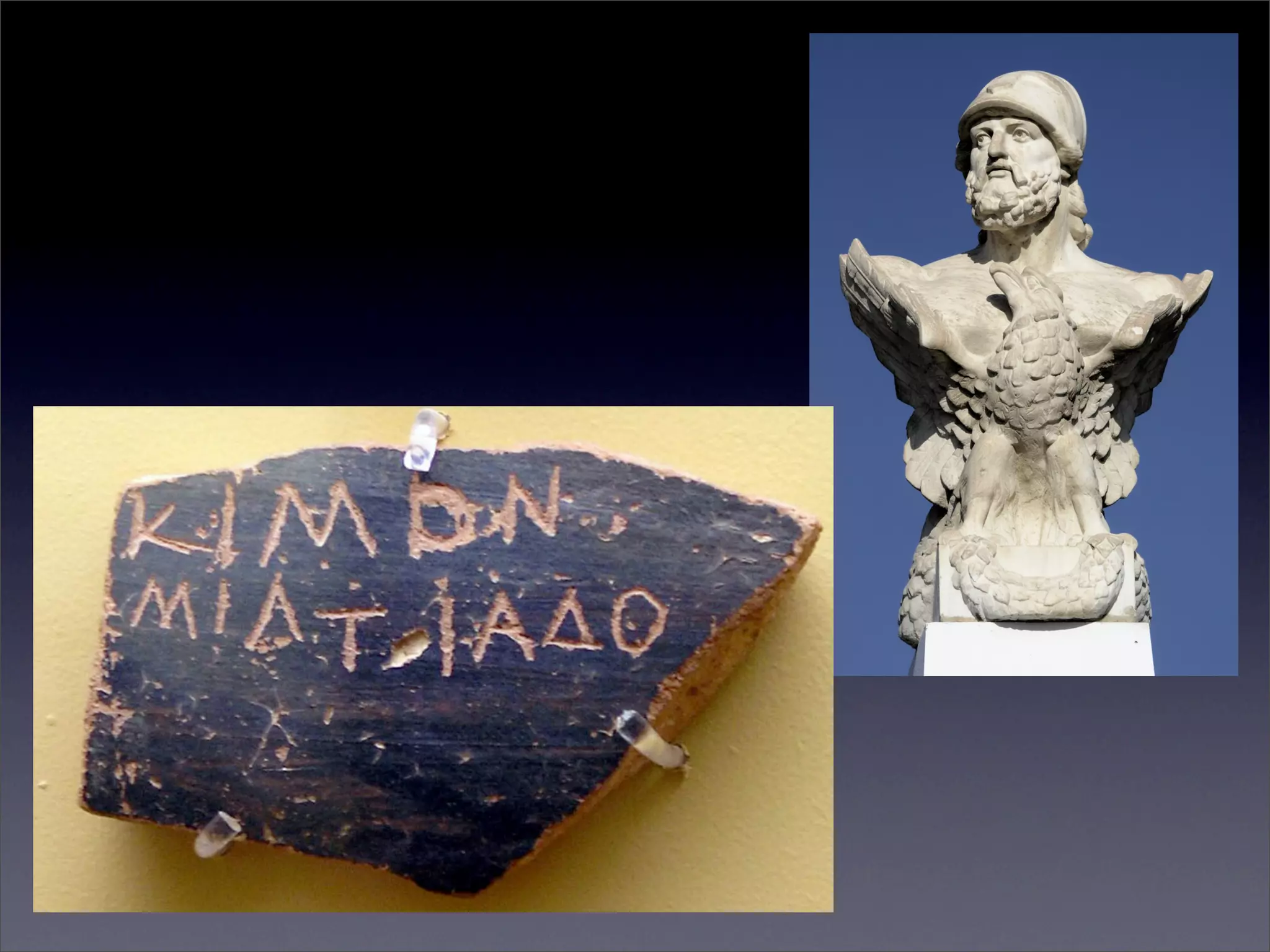
Ostrakon
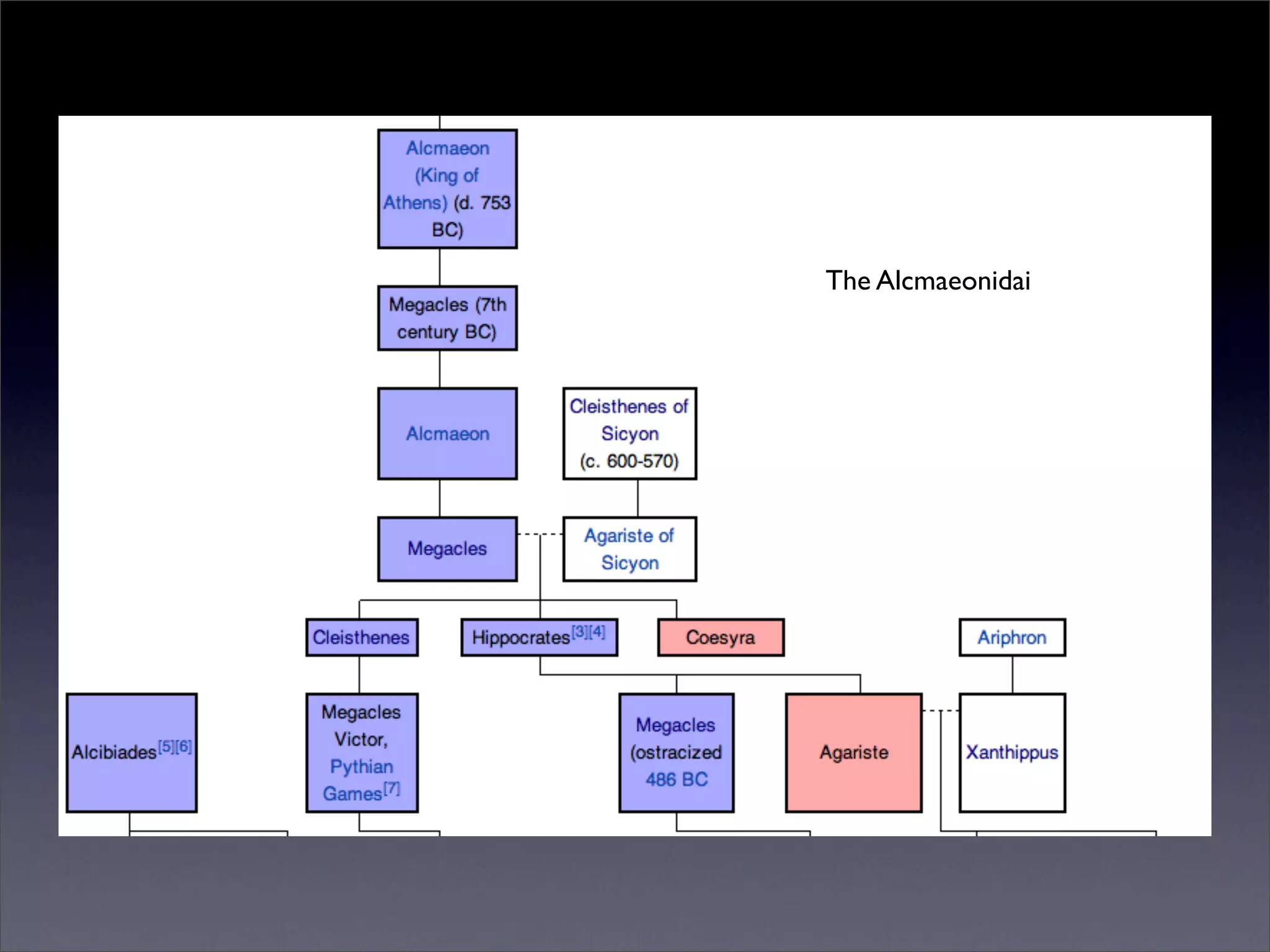
The Alcmaeonidai
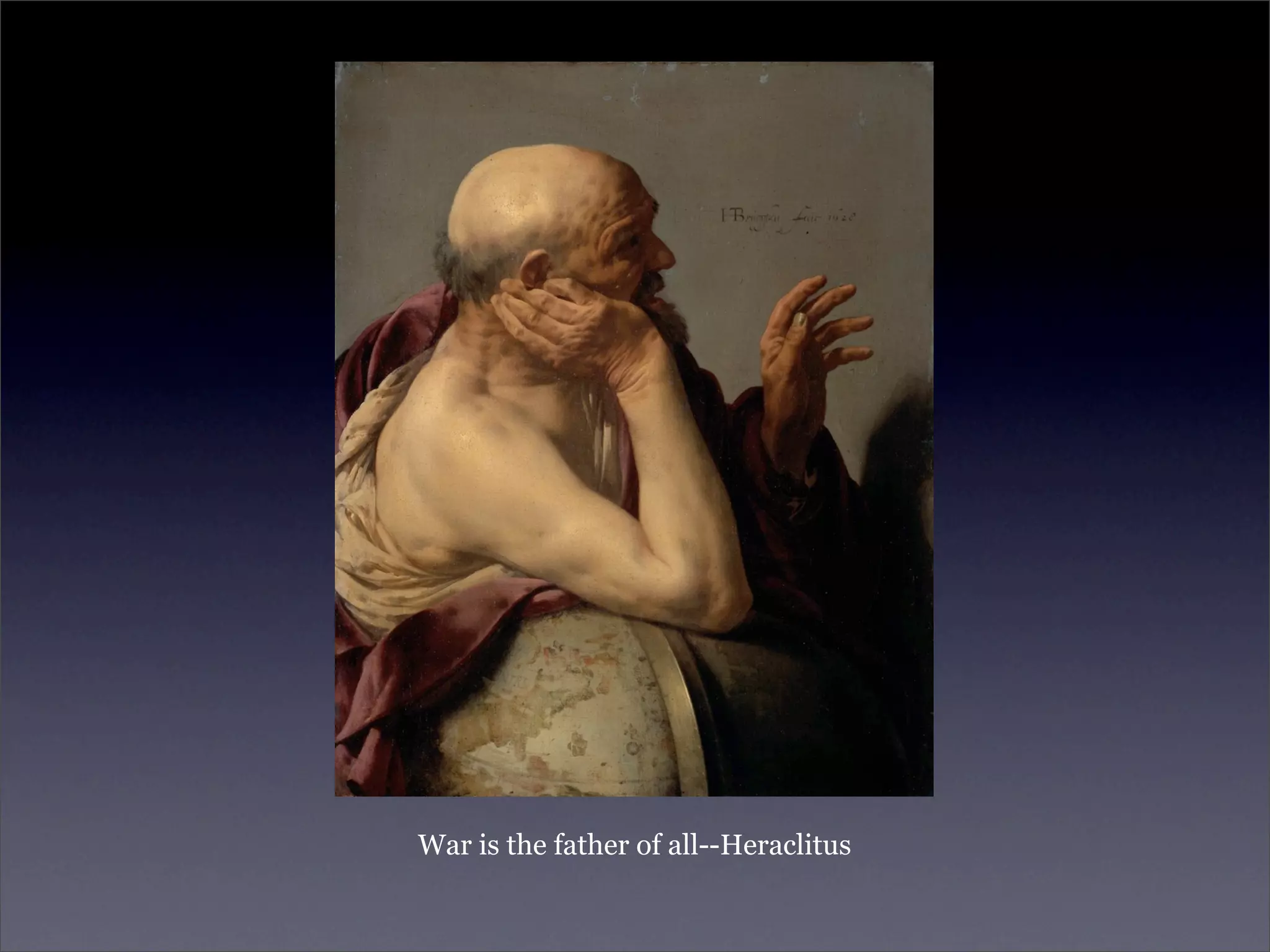
War is the father of all--Heraclitus
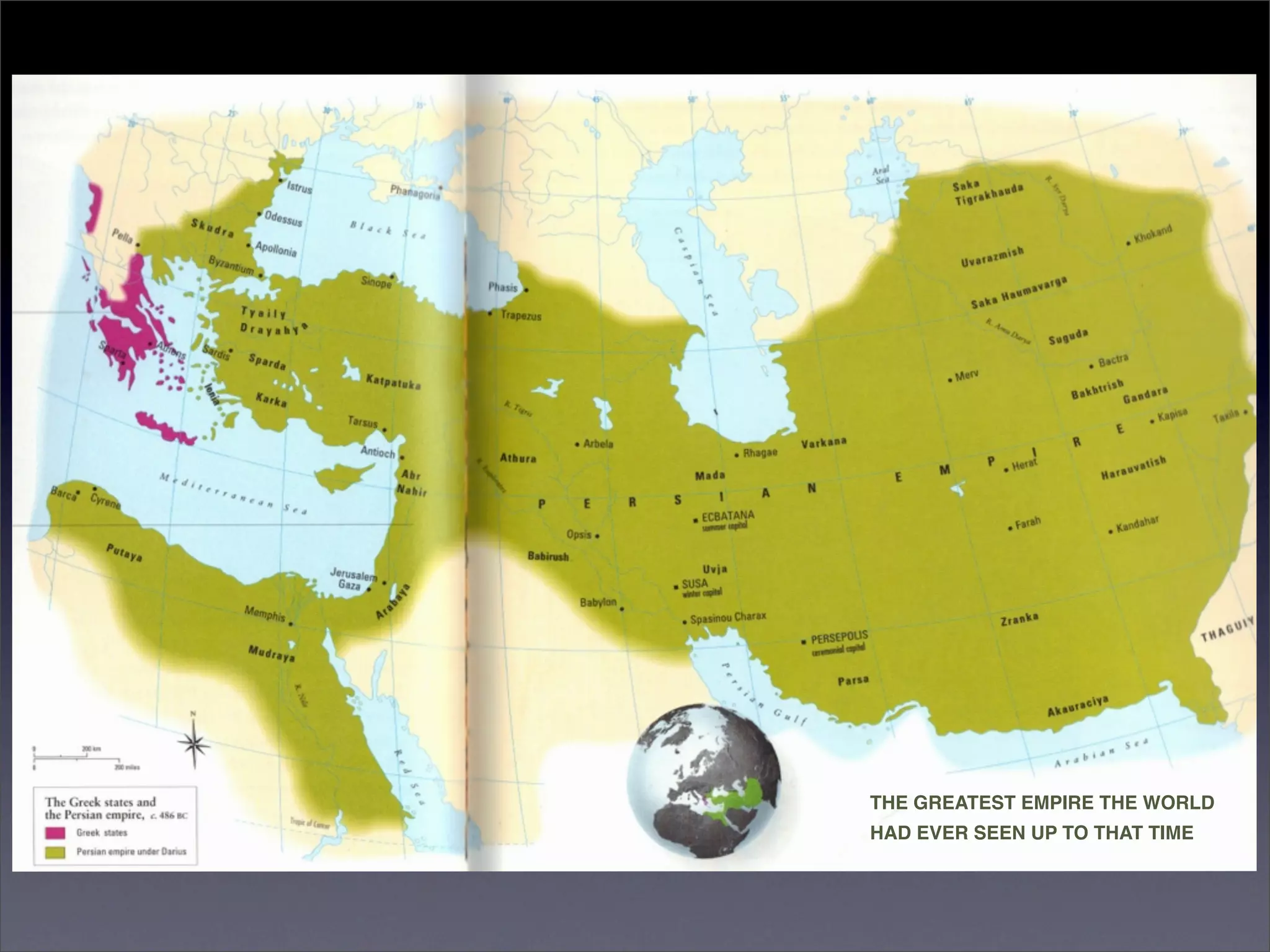
THE GREATEST EMPIRE THE WORLD
HAD EVER SEEN UP TO THAT TIME
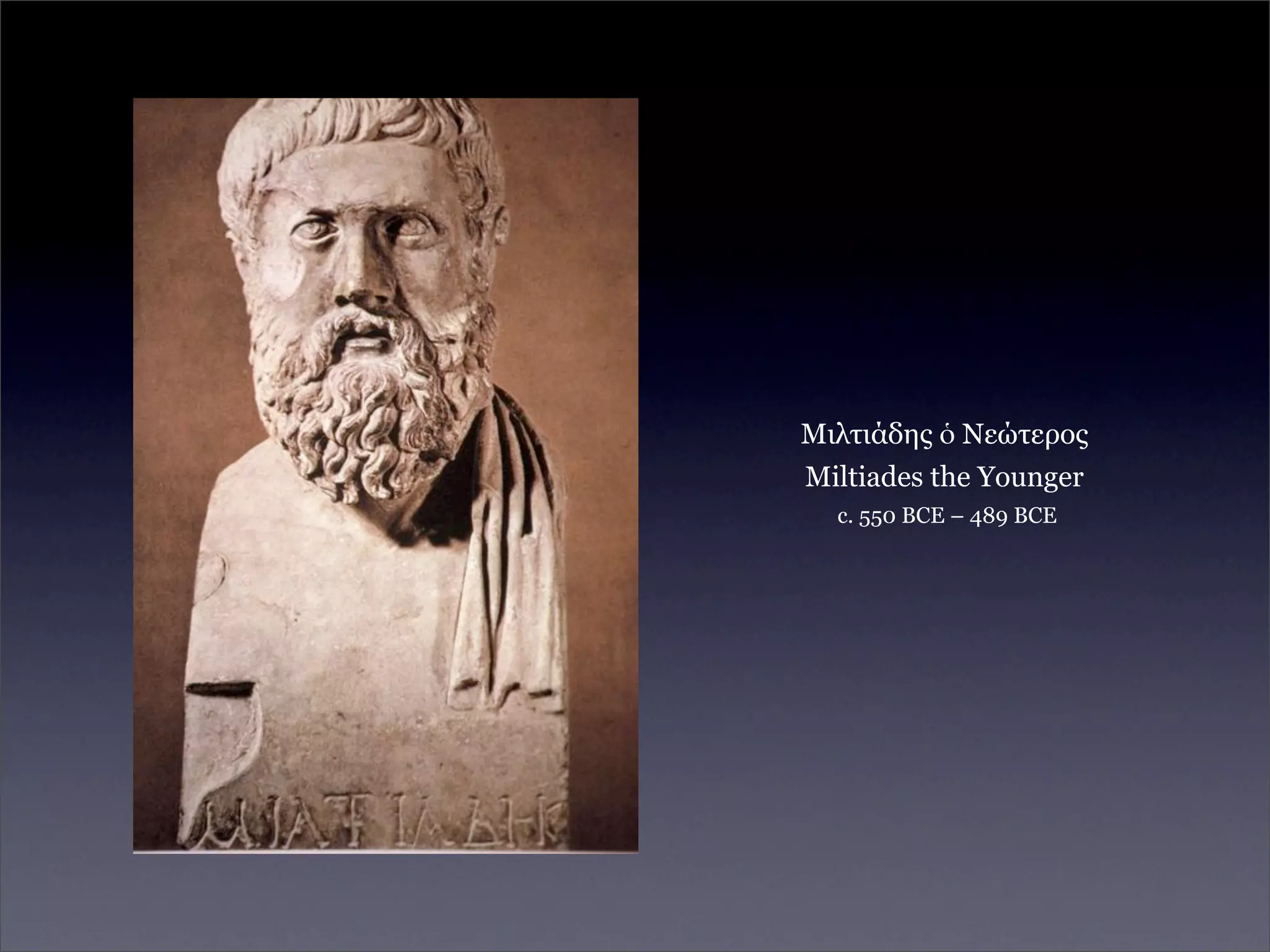
Μιλτιάδης ὁ Νεώτερος
Miltiades the Younger
  c. 550 BCE – 489 BCE
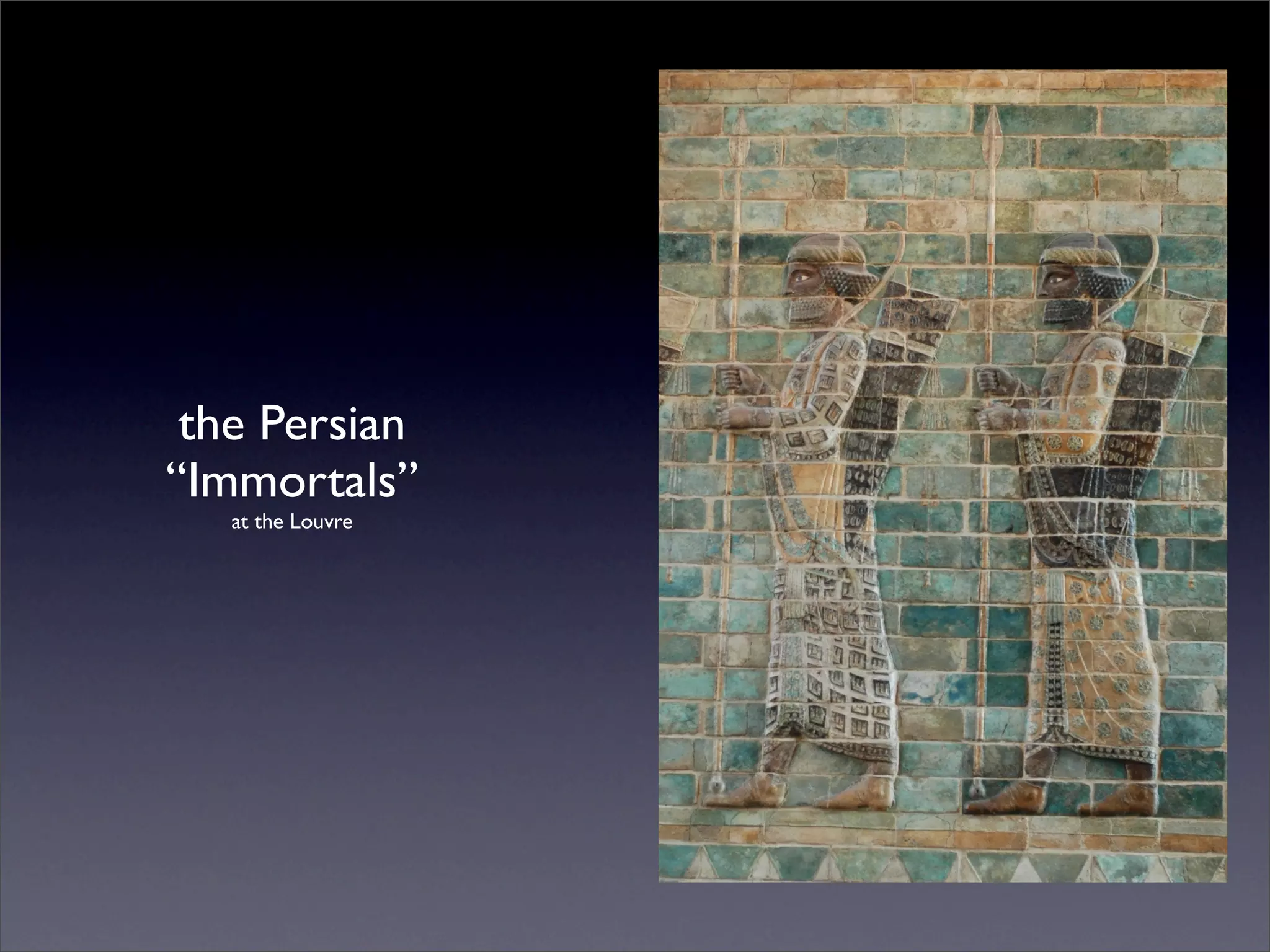
the Persian
“Immortals”
   at the Louvre
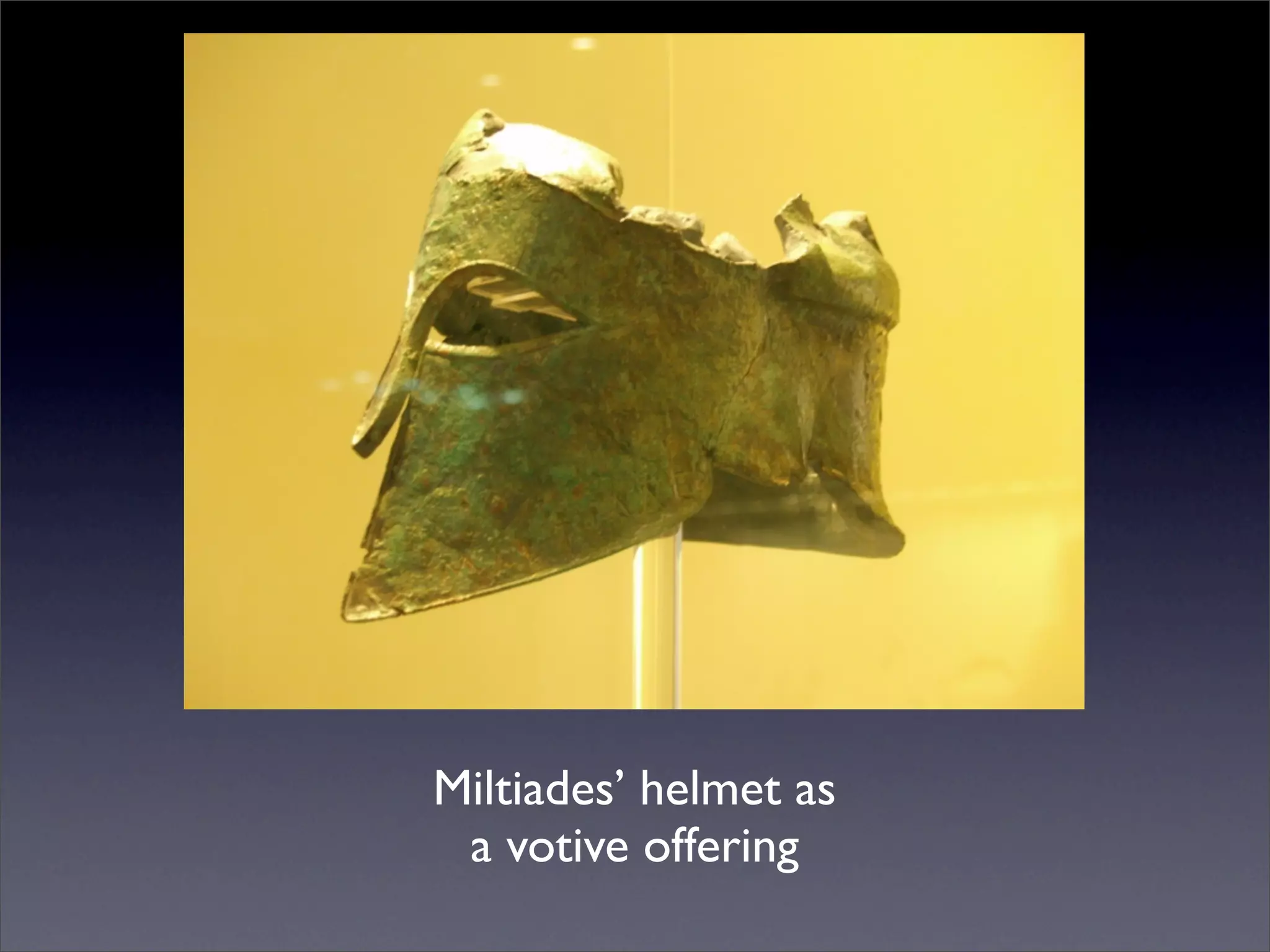
Miltiades’ helmet as
 a votive offering
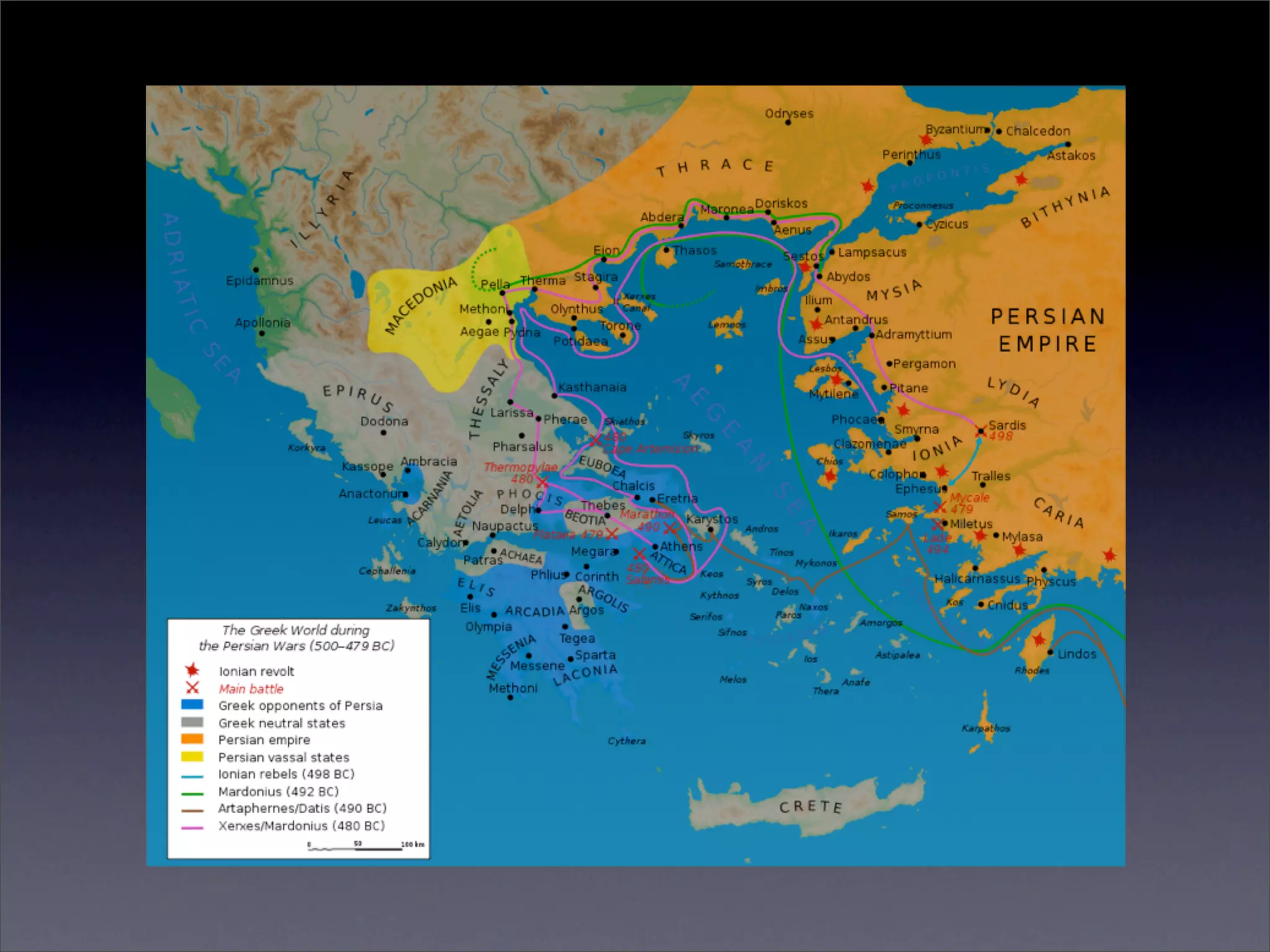
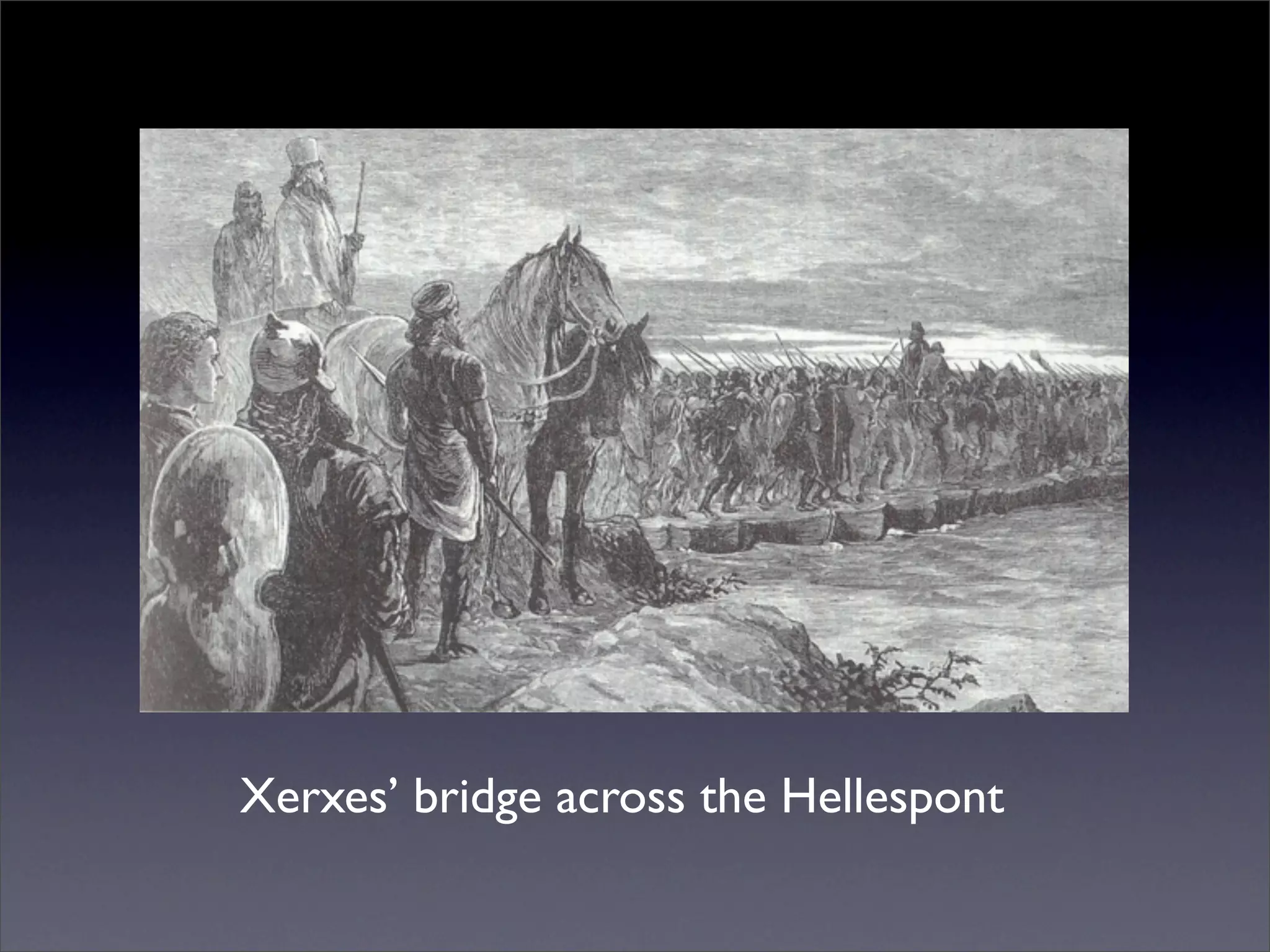
Xerxes’ bridge across the Hellespont
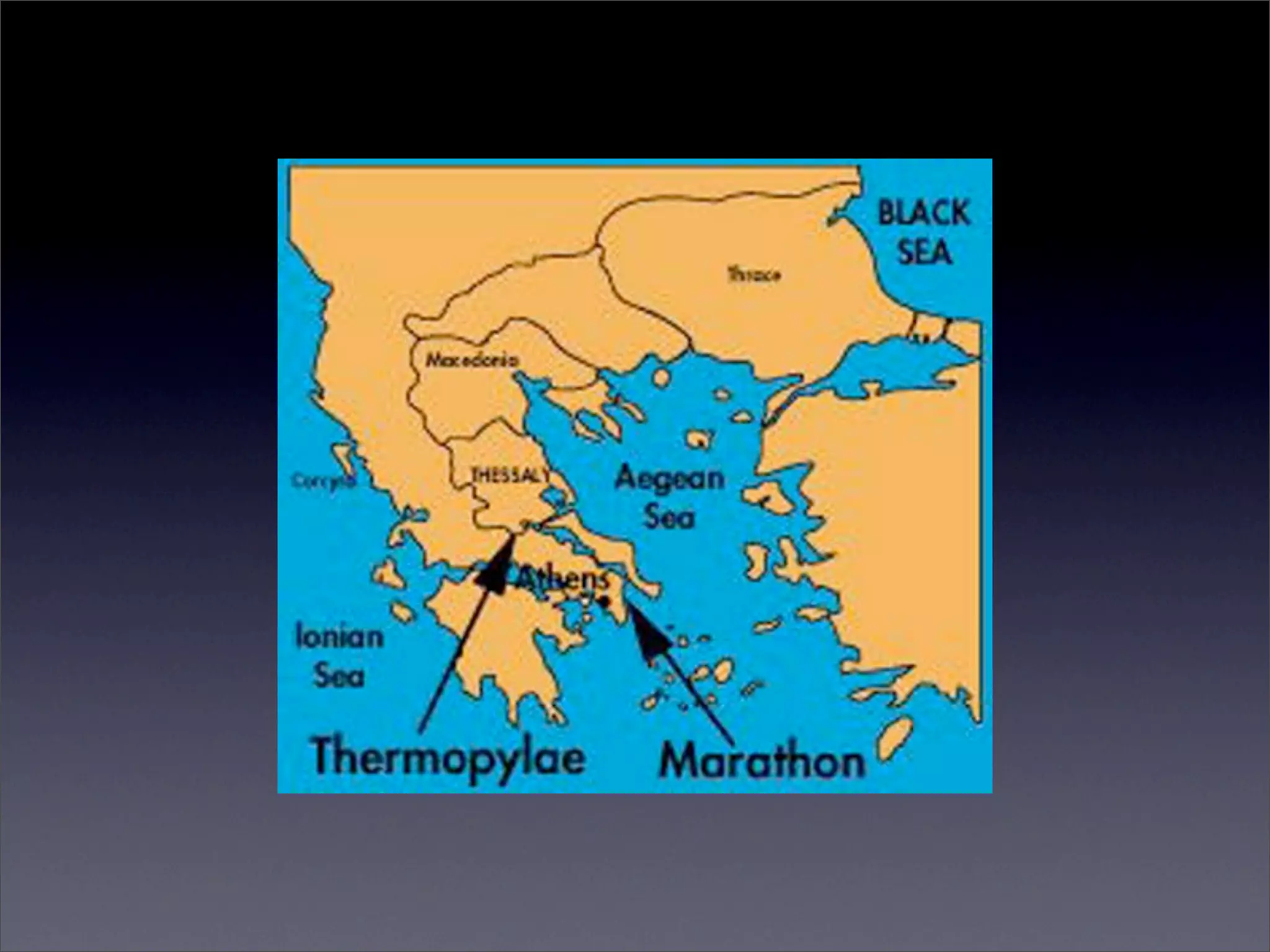
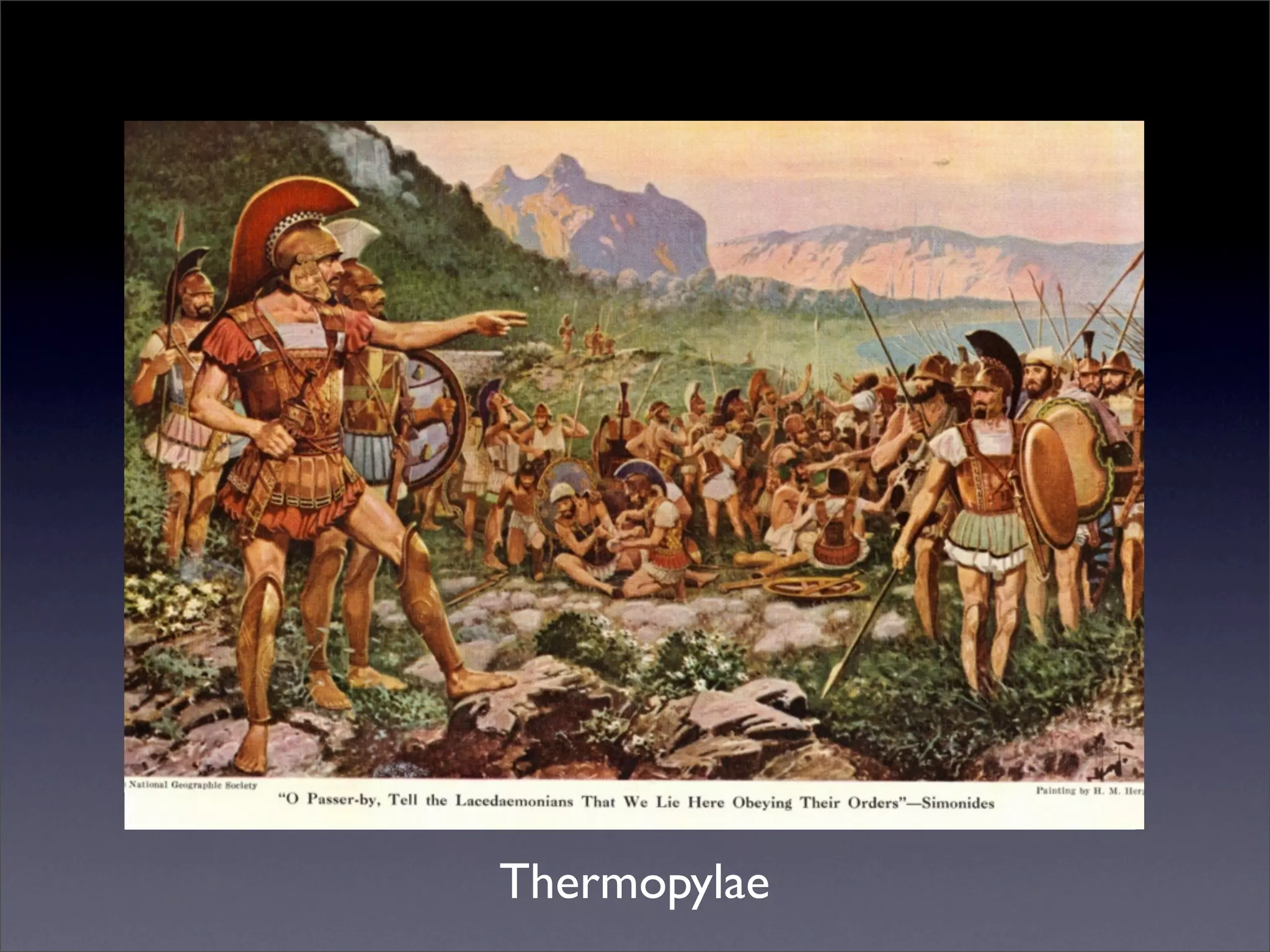
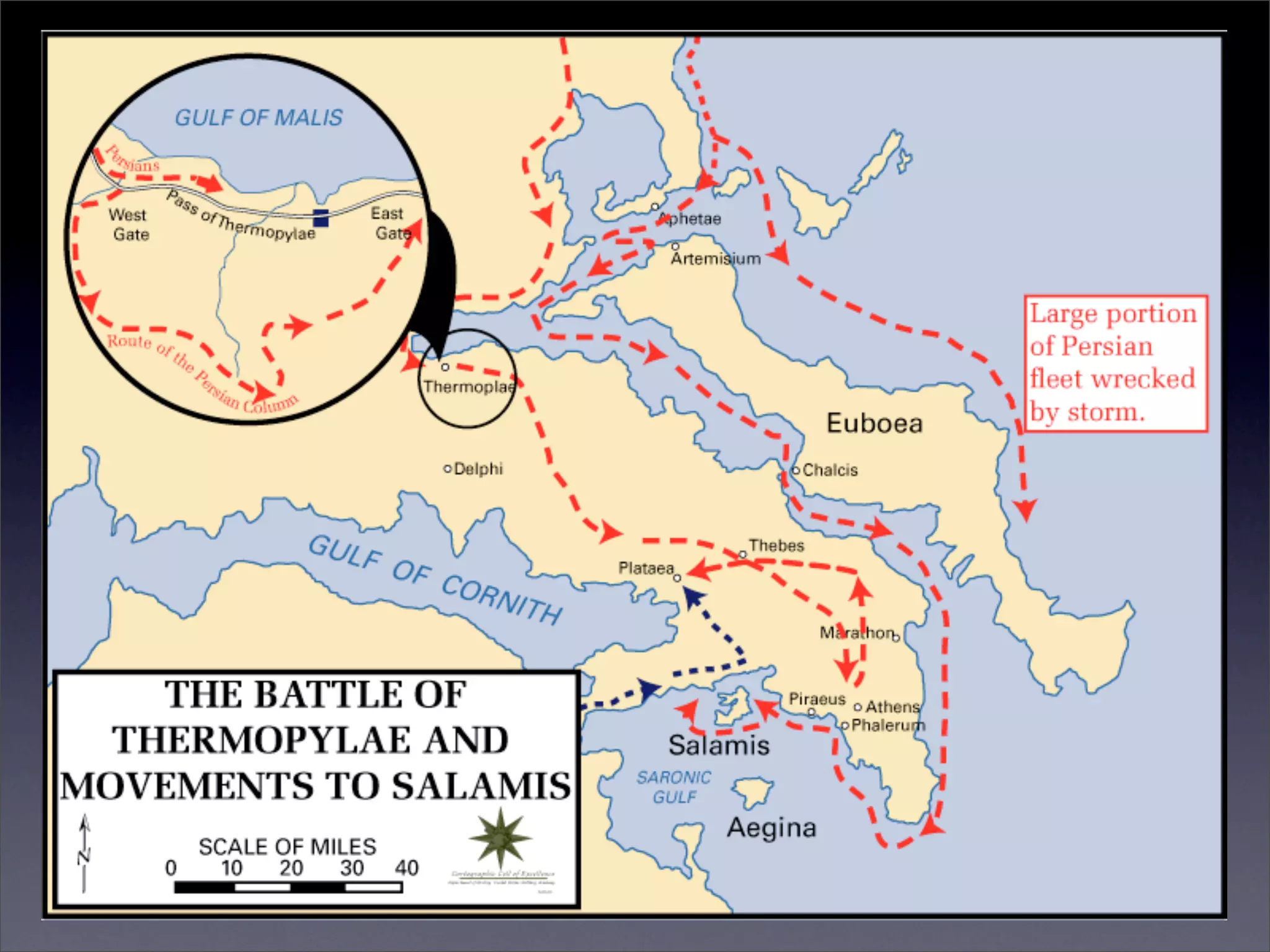
Thermopylae
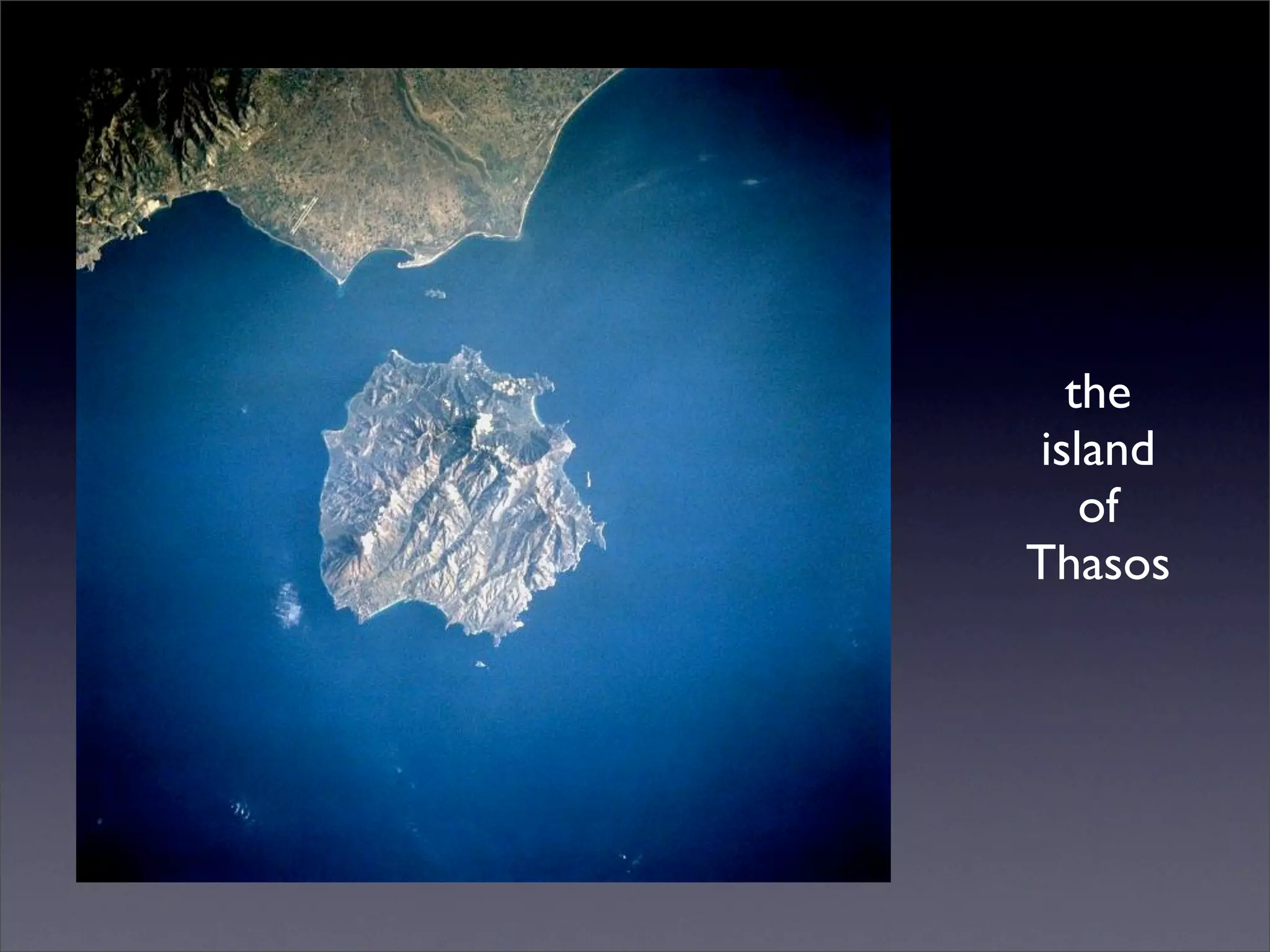
the
island
   of
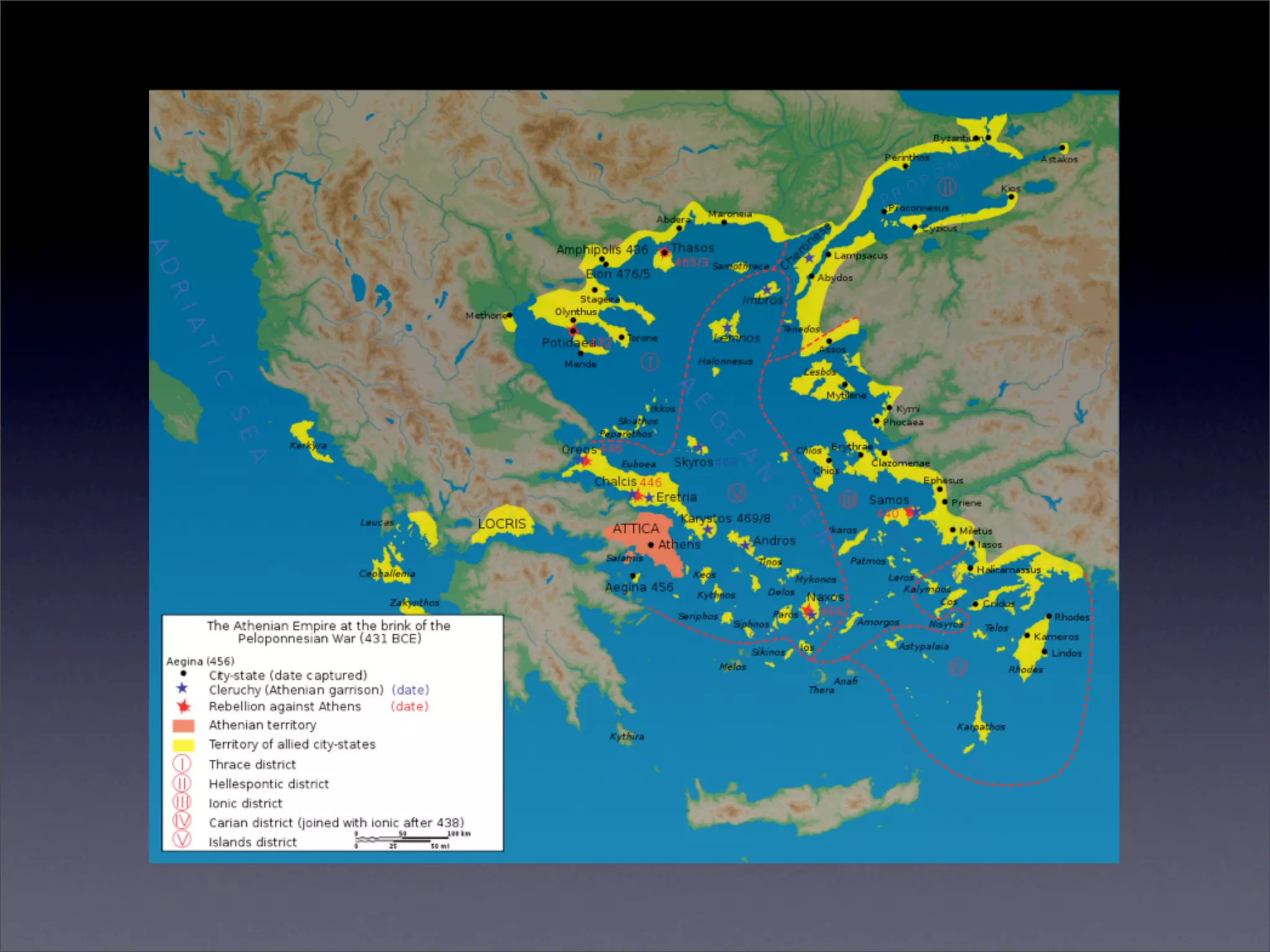
Thasos
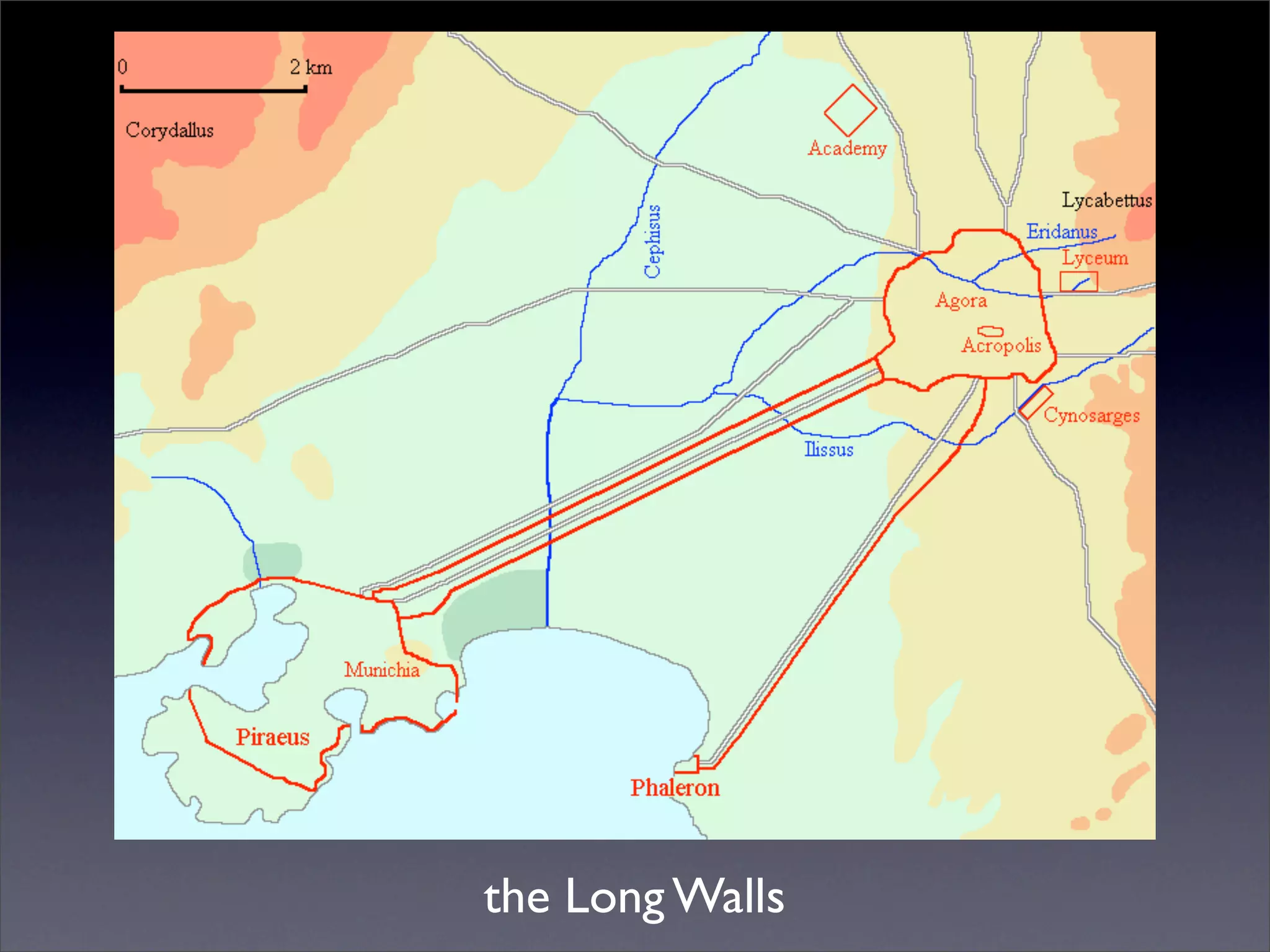
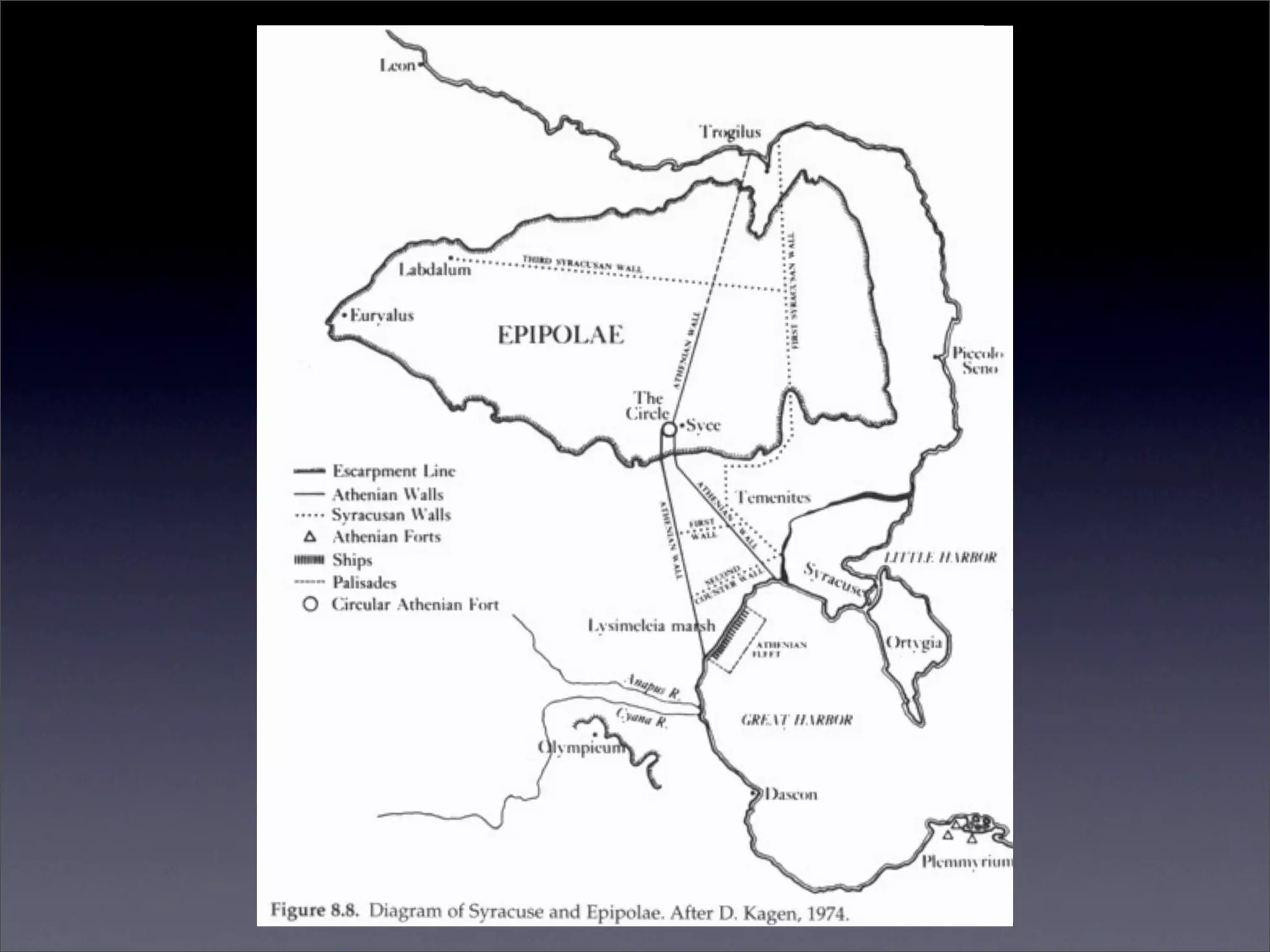
the Long Walls
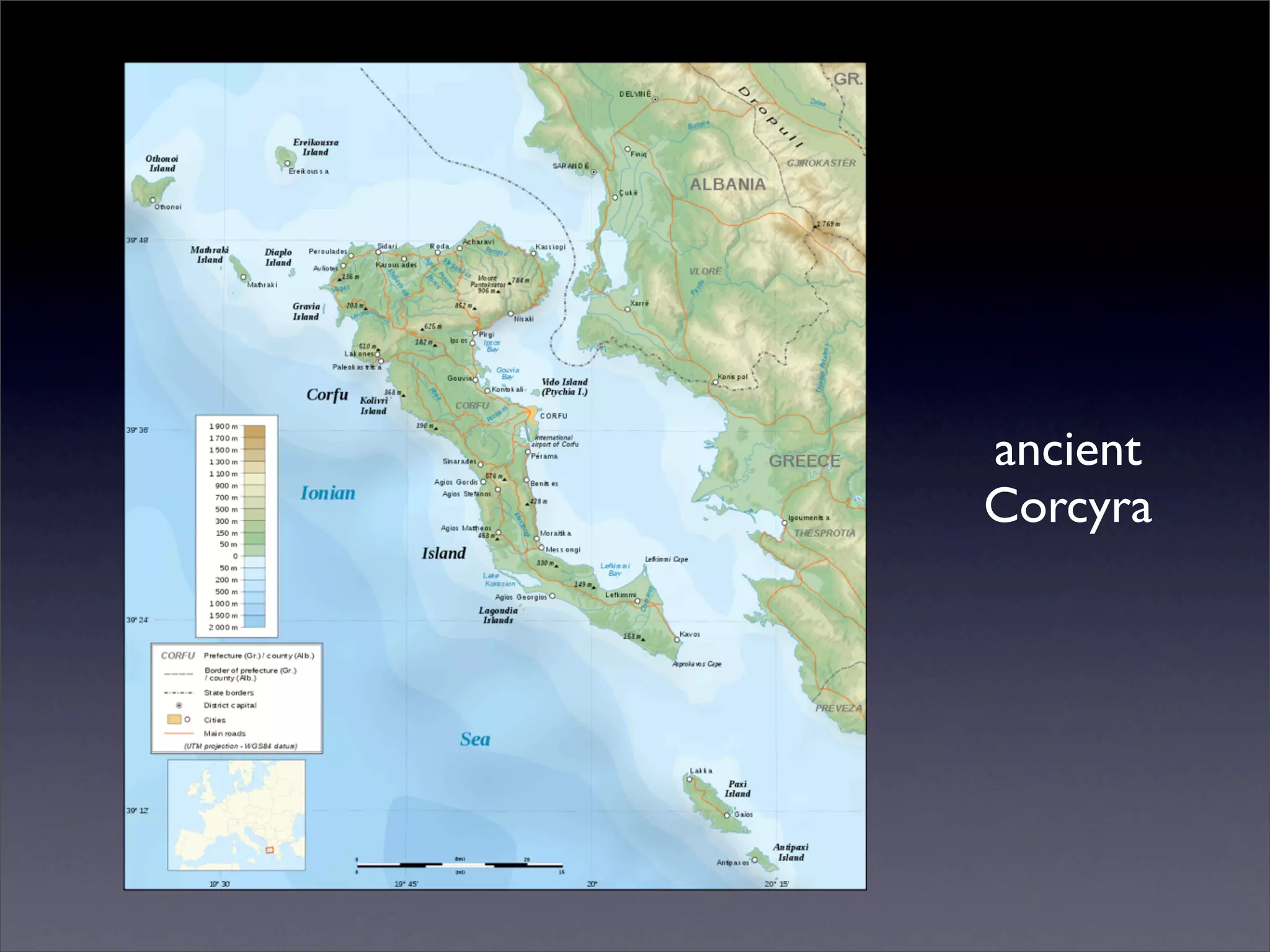
ancient
Corcyra
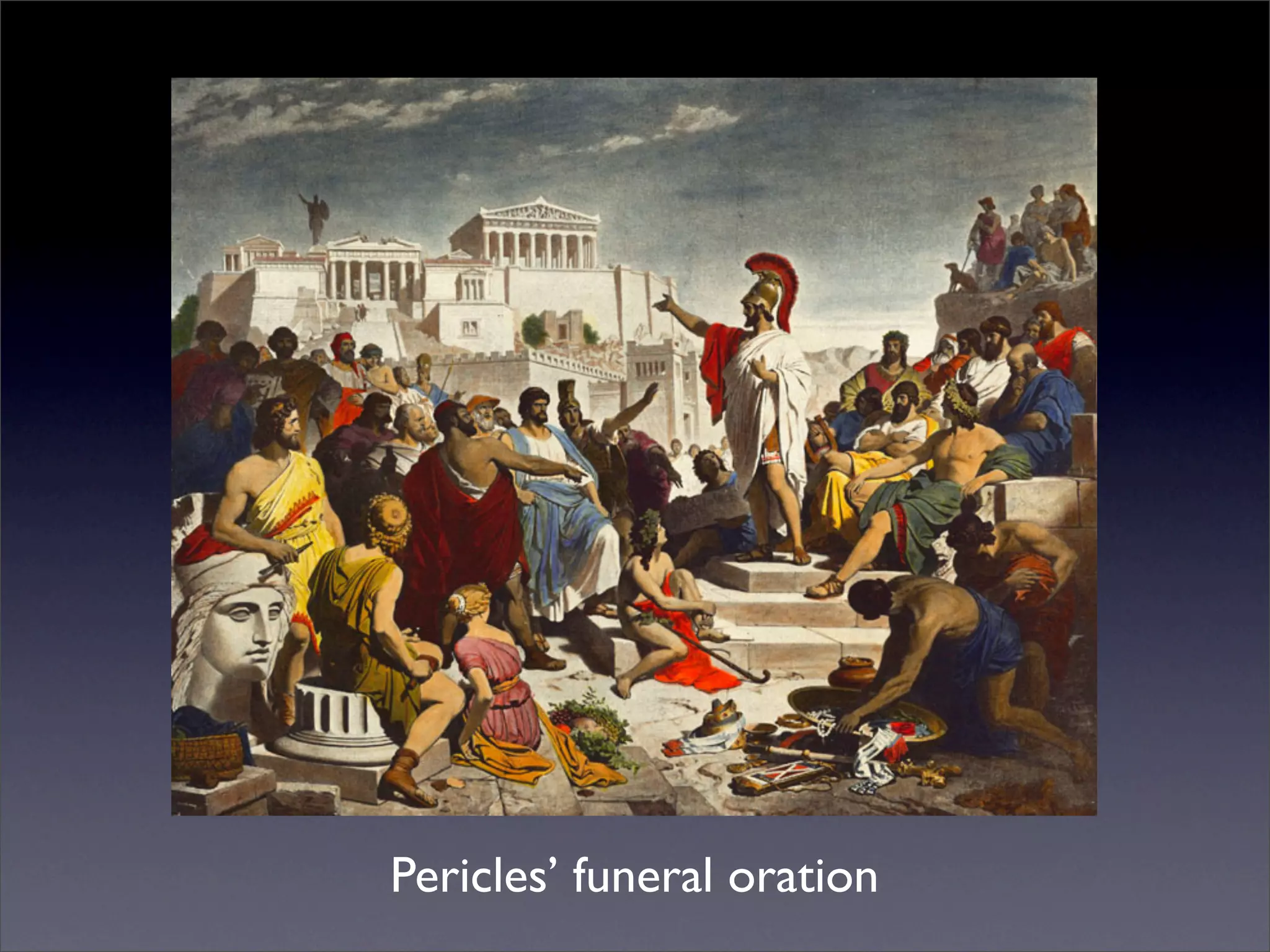
Pericles’ funeral oration
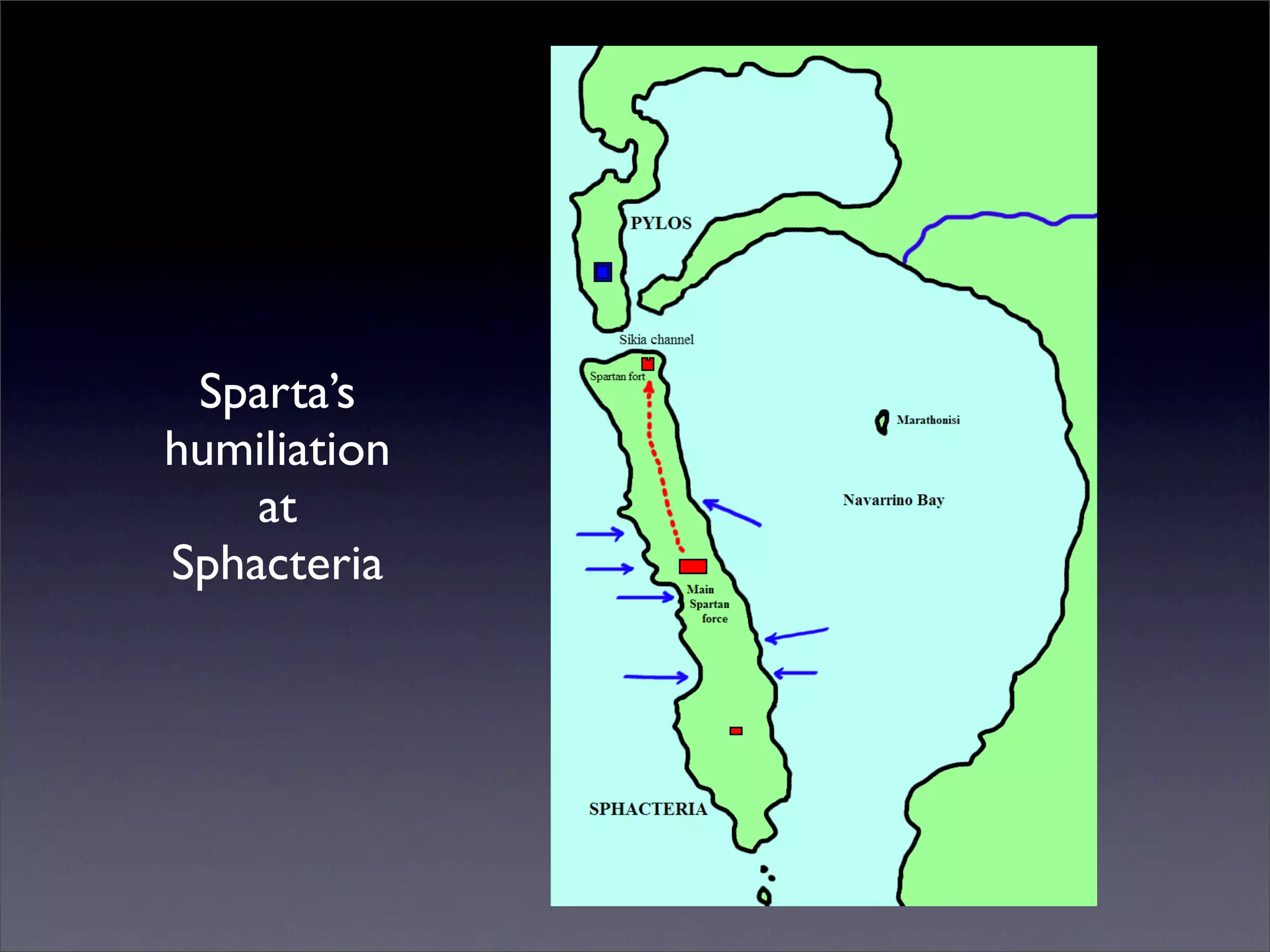
Sparta’s
humiliation
    at
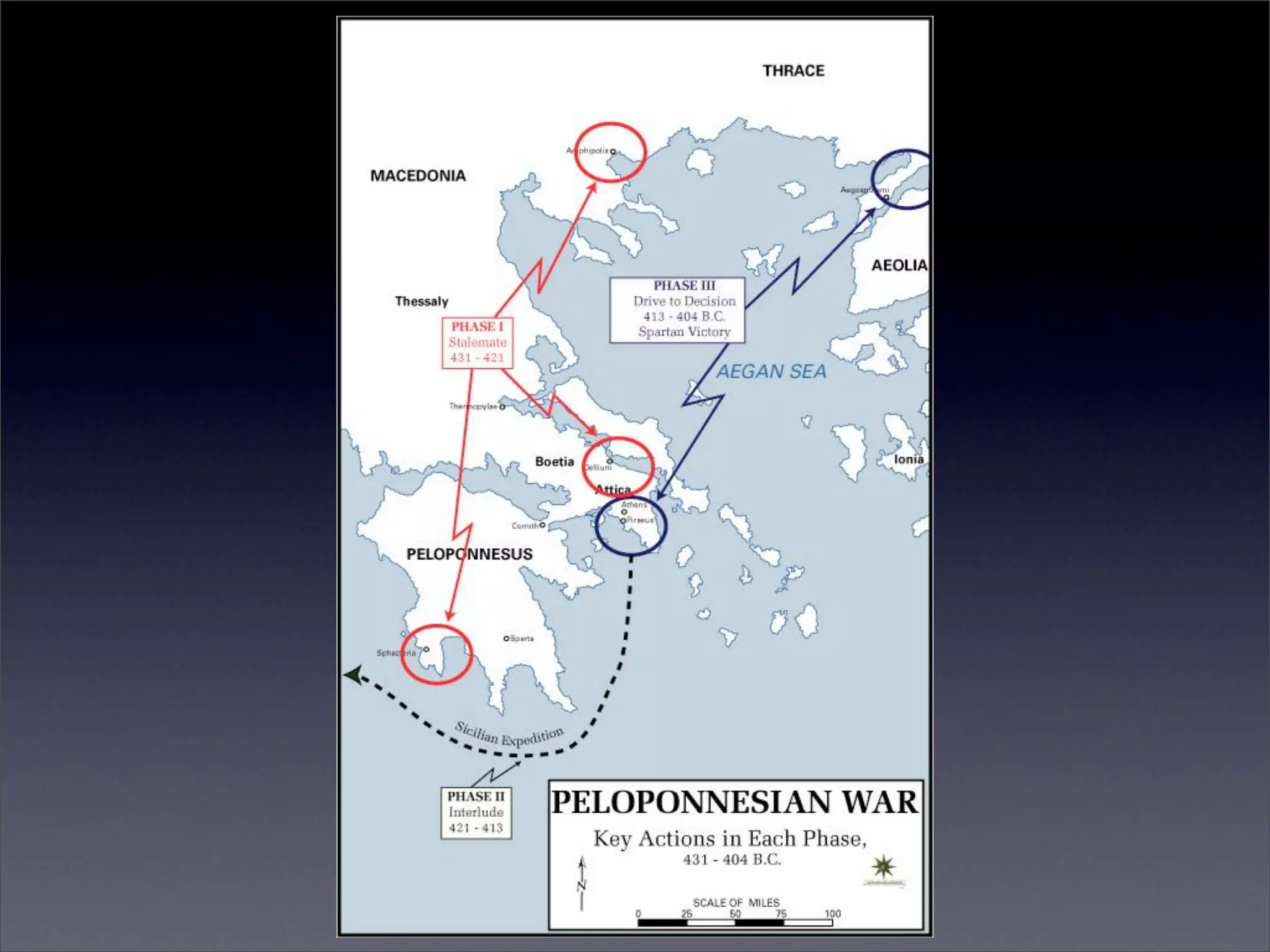
Sphacteria
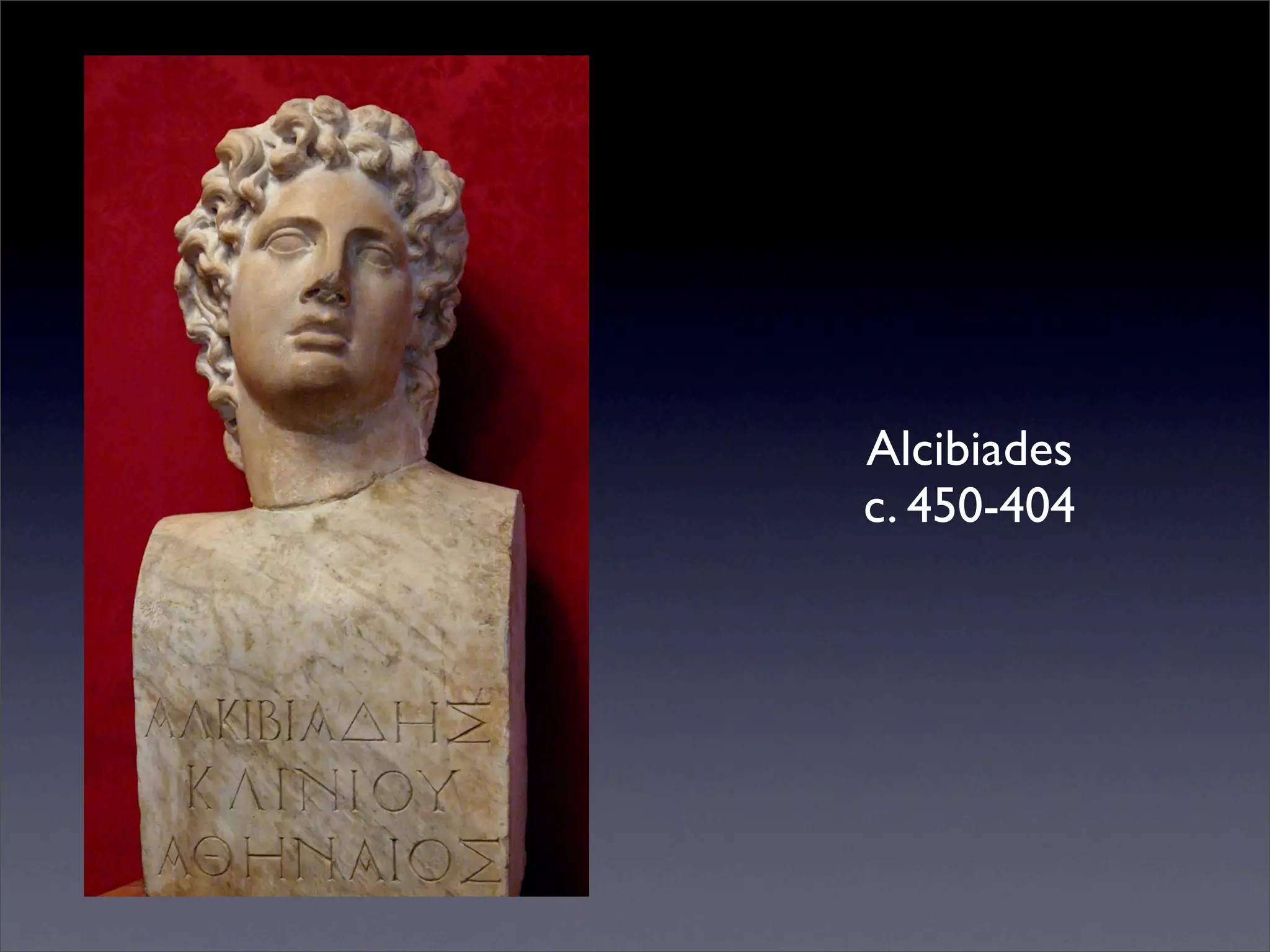
Alcibiades
c. 450-404
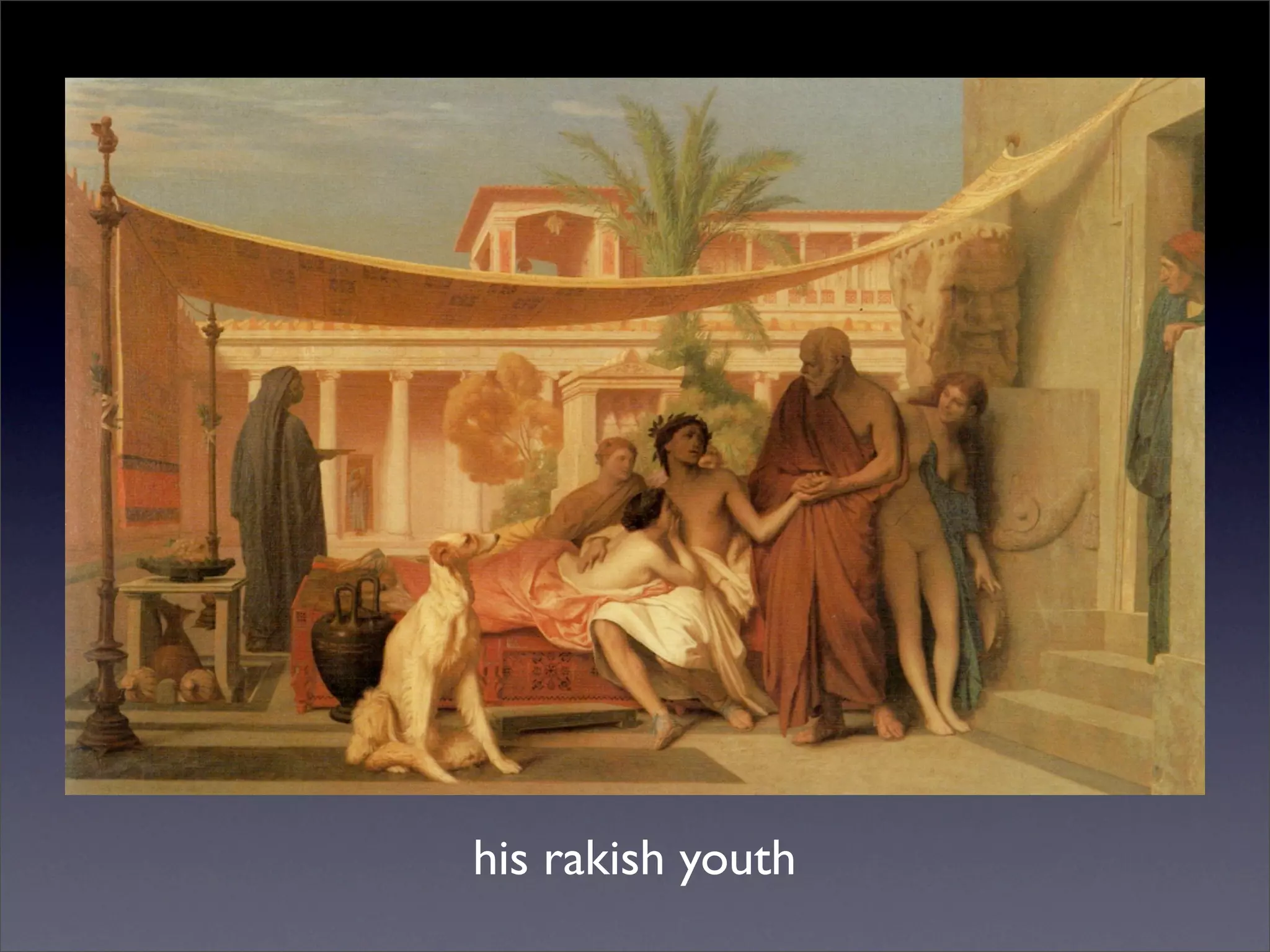
his rakish youth
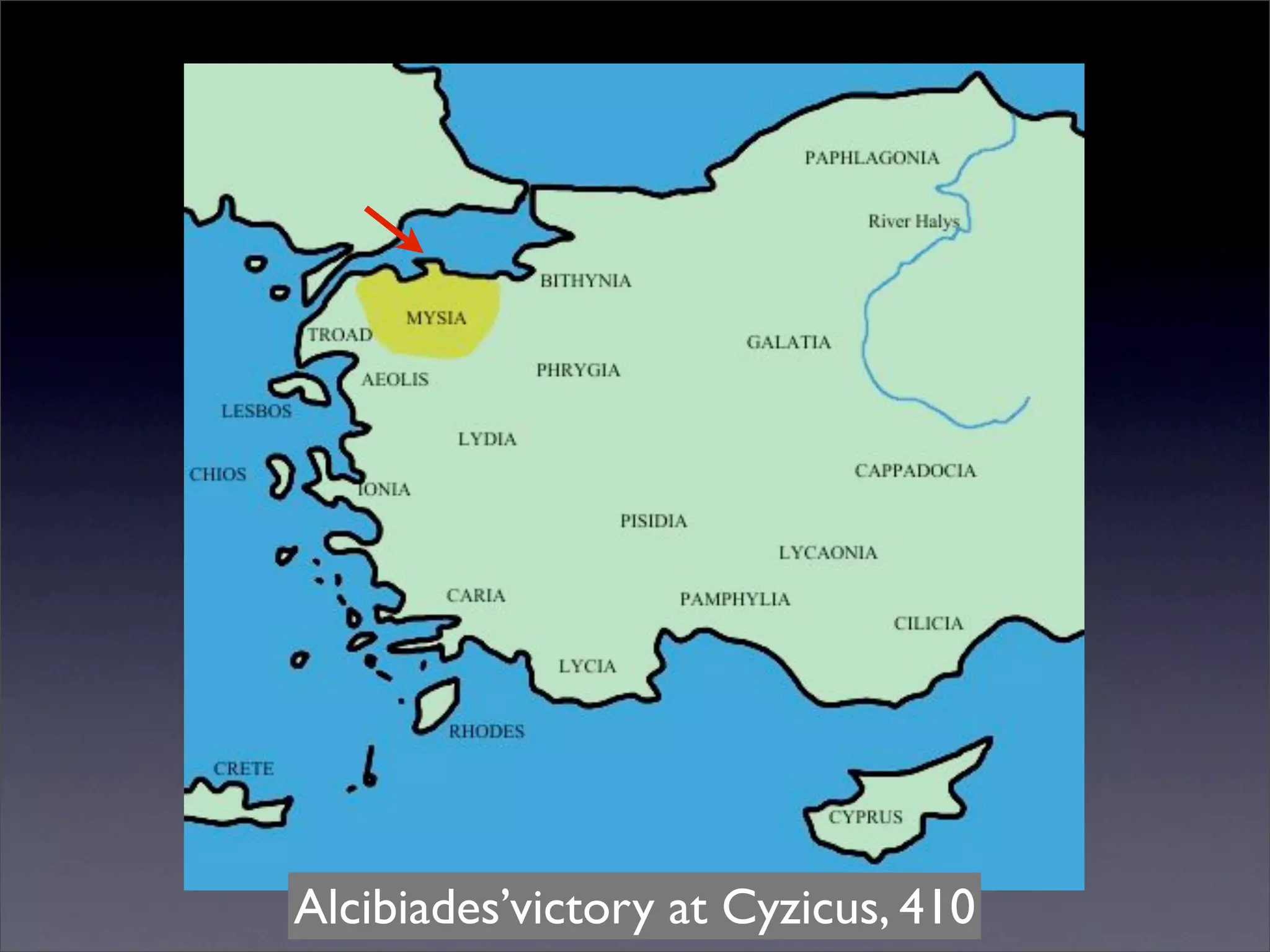
Alcibiades’victory at Cyzicus, 410
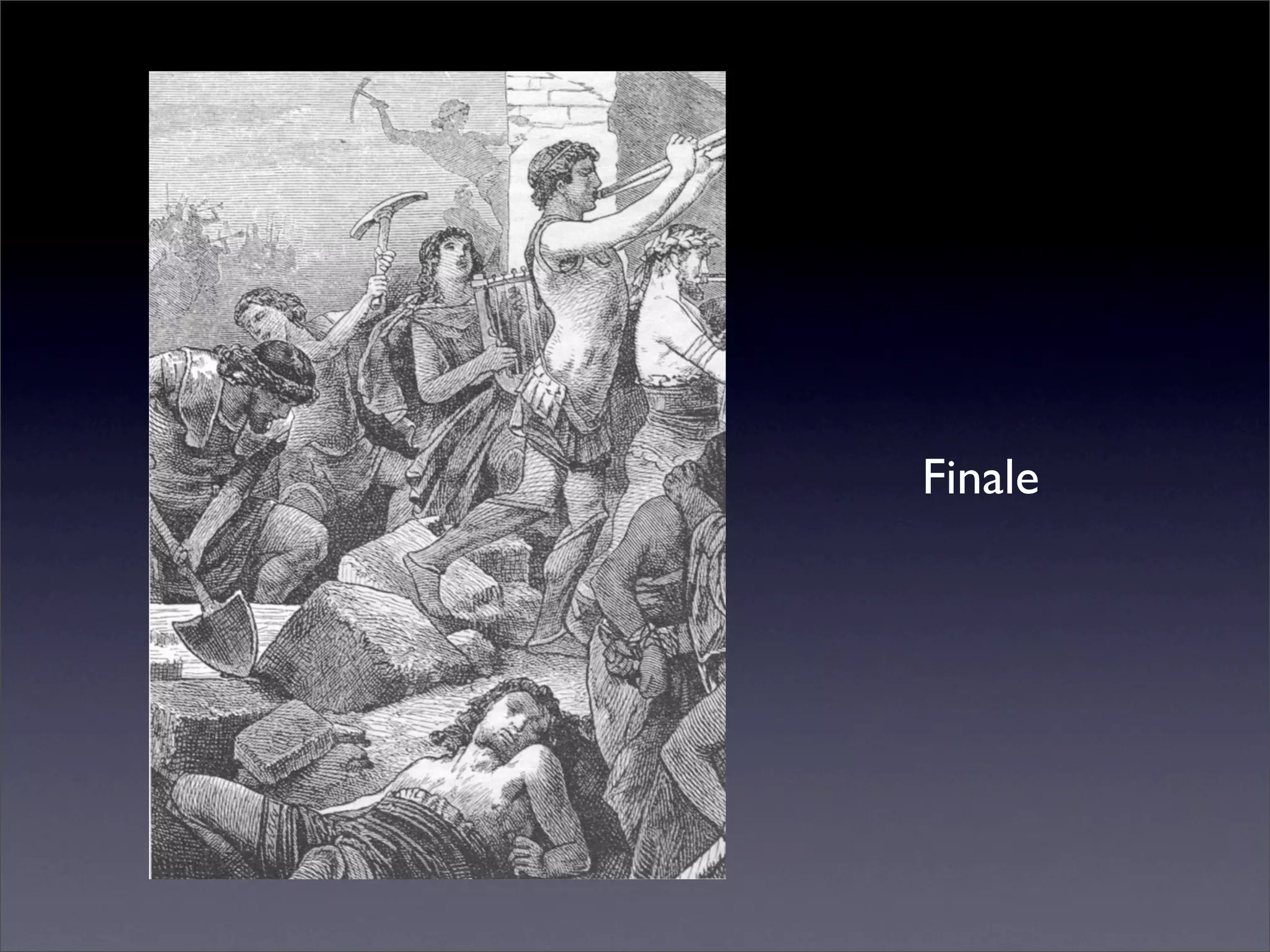
Finale
preview of today’s session
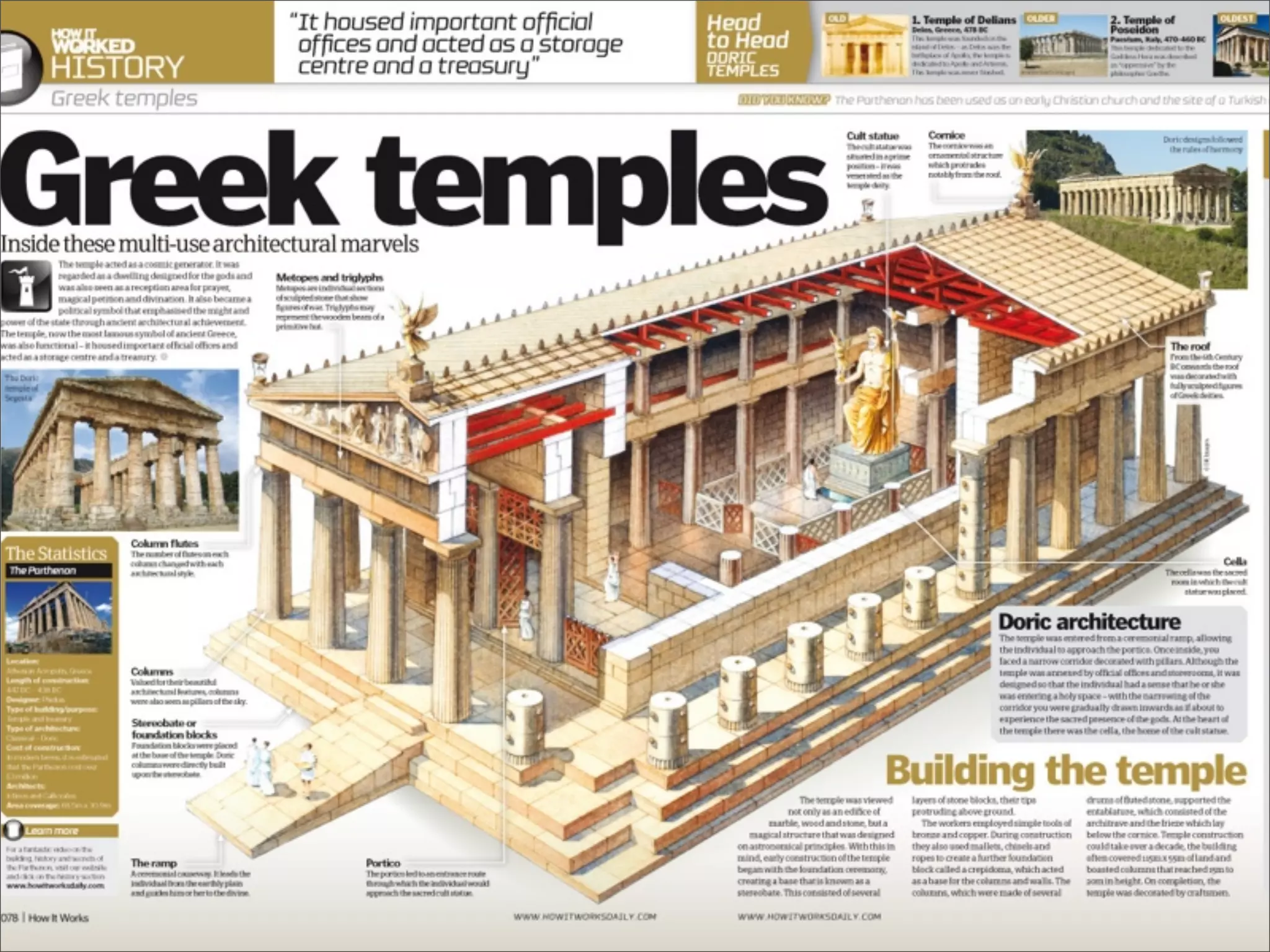
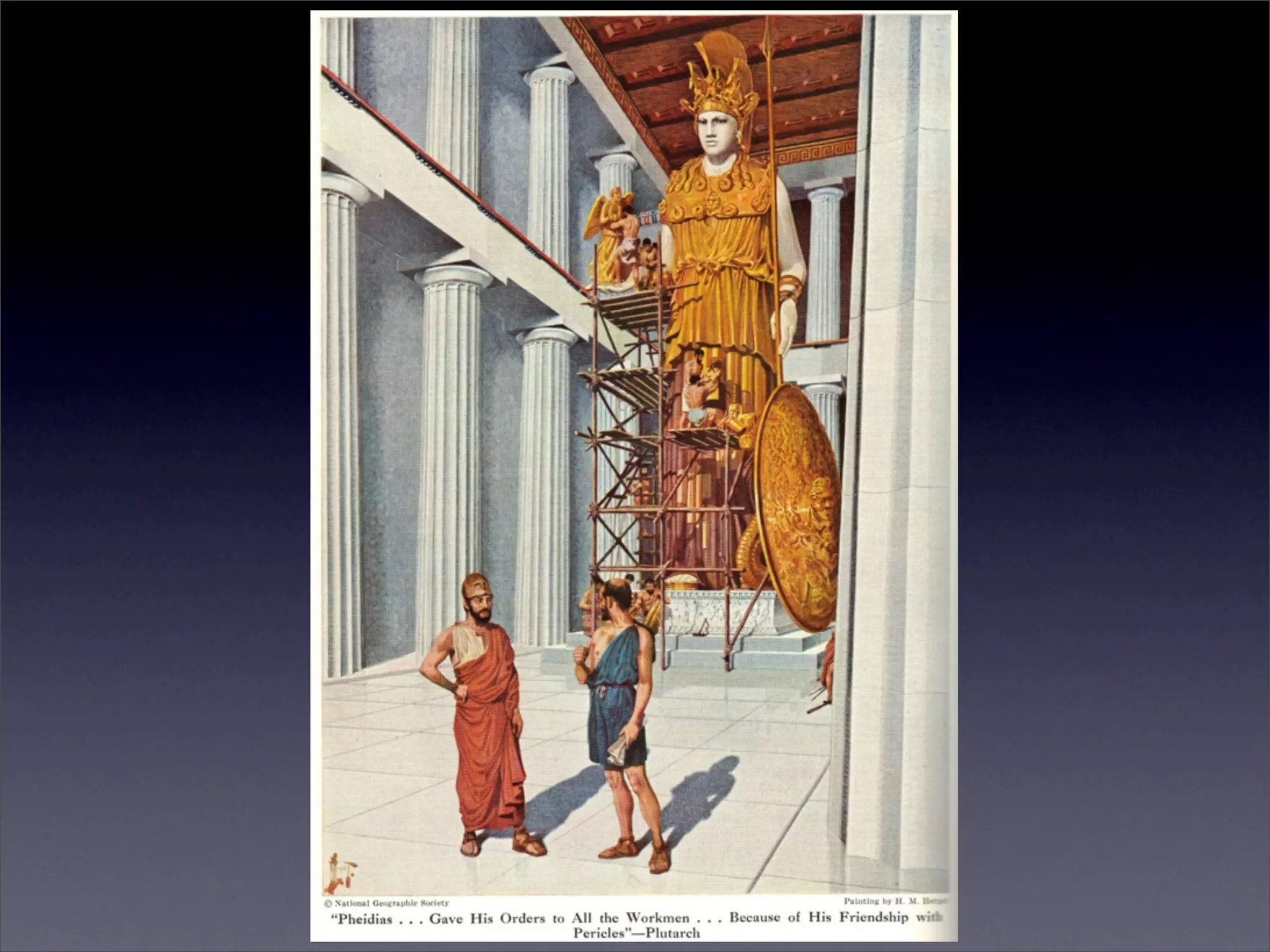
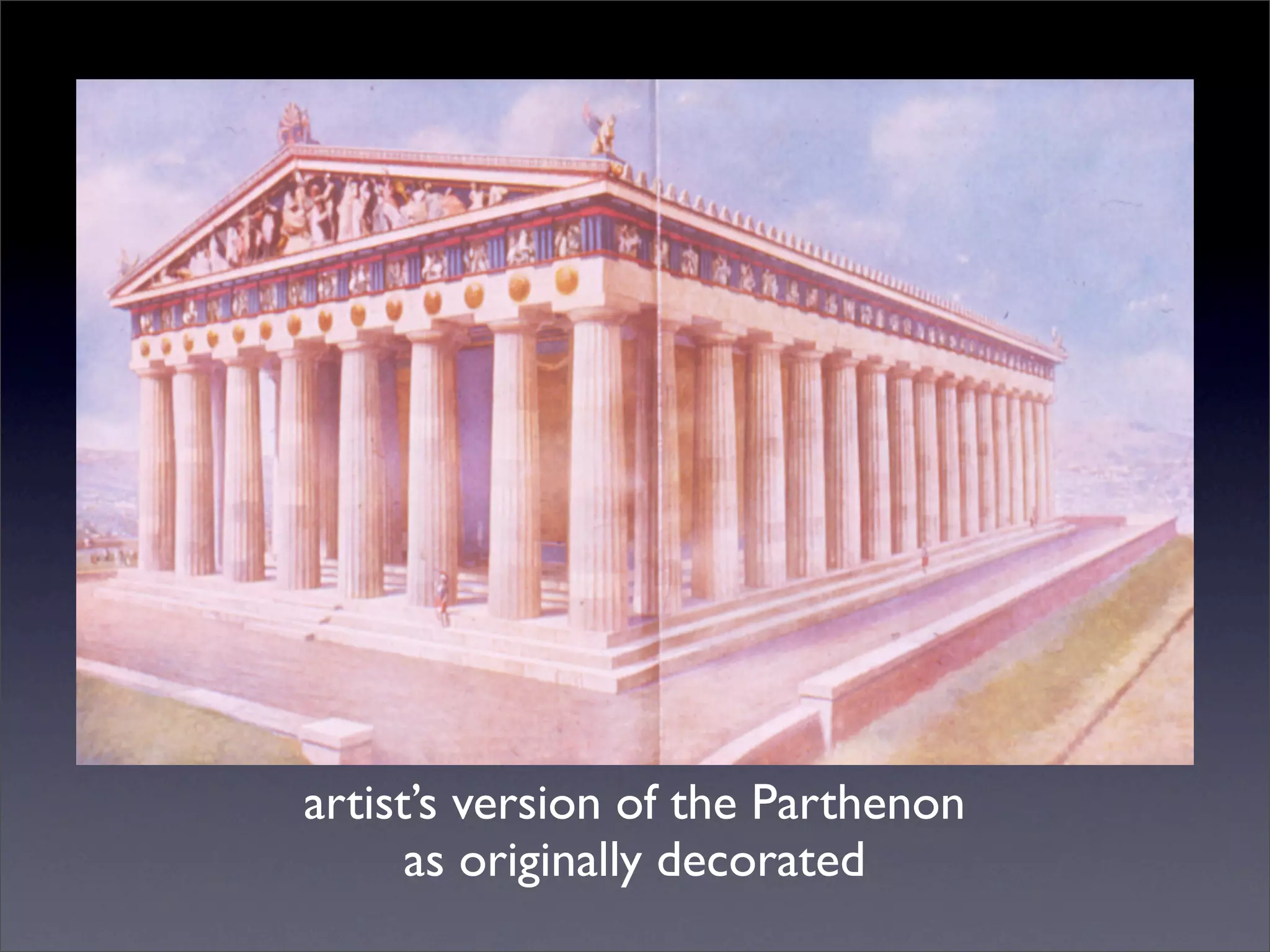
artist’s version of the Parthenon
      as originally decorated
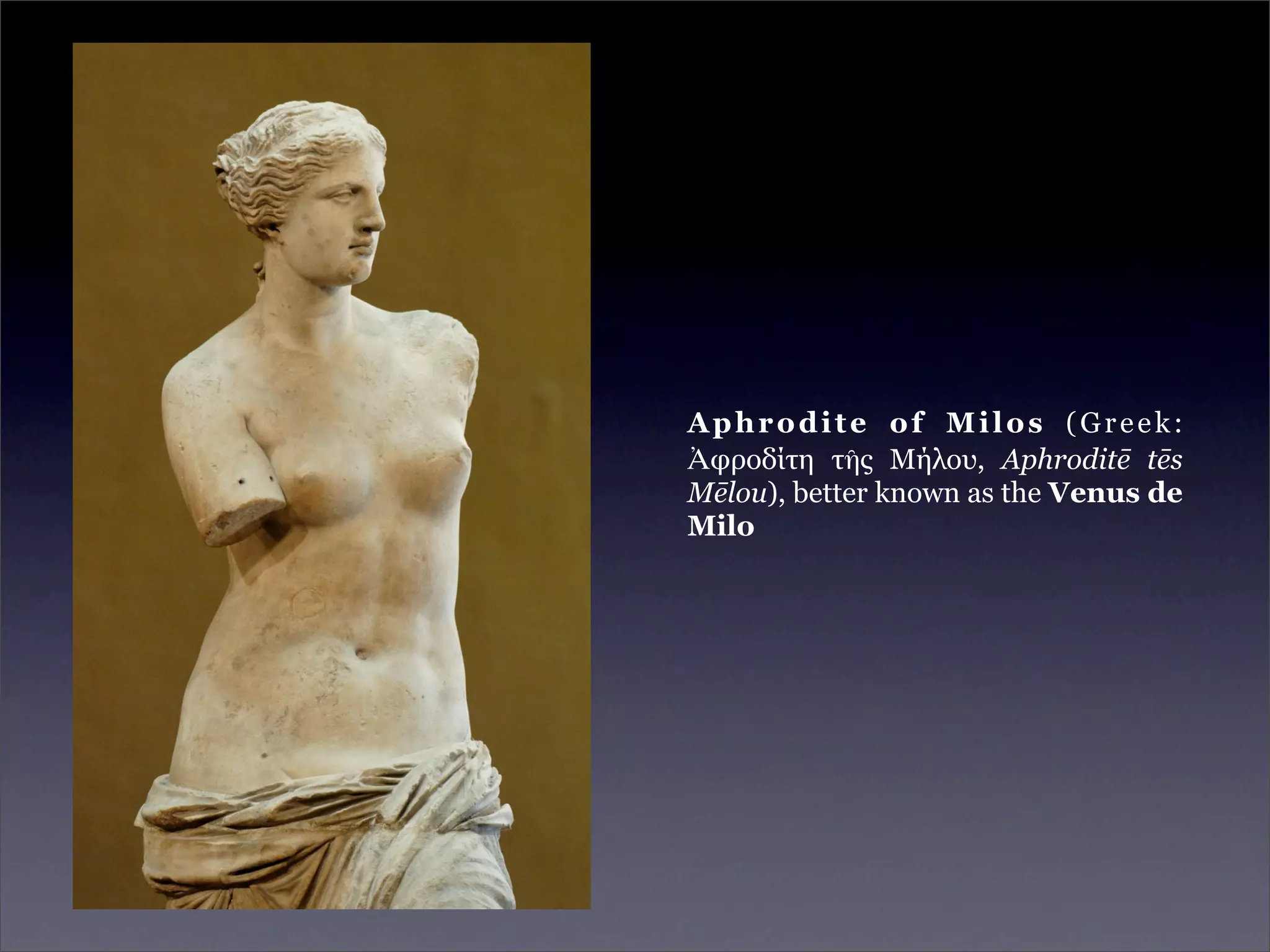
Aphrodite of Milos (Greek:
Ἀφροδίτη τῆς Μήλου, Aphroditē tēs
Mēlou), better known as the Venus de
Milo
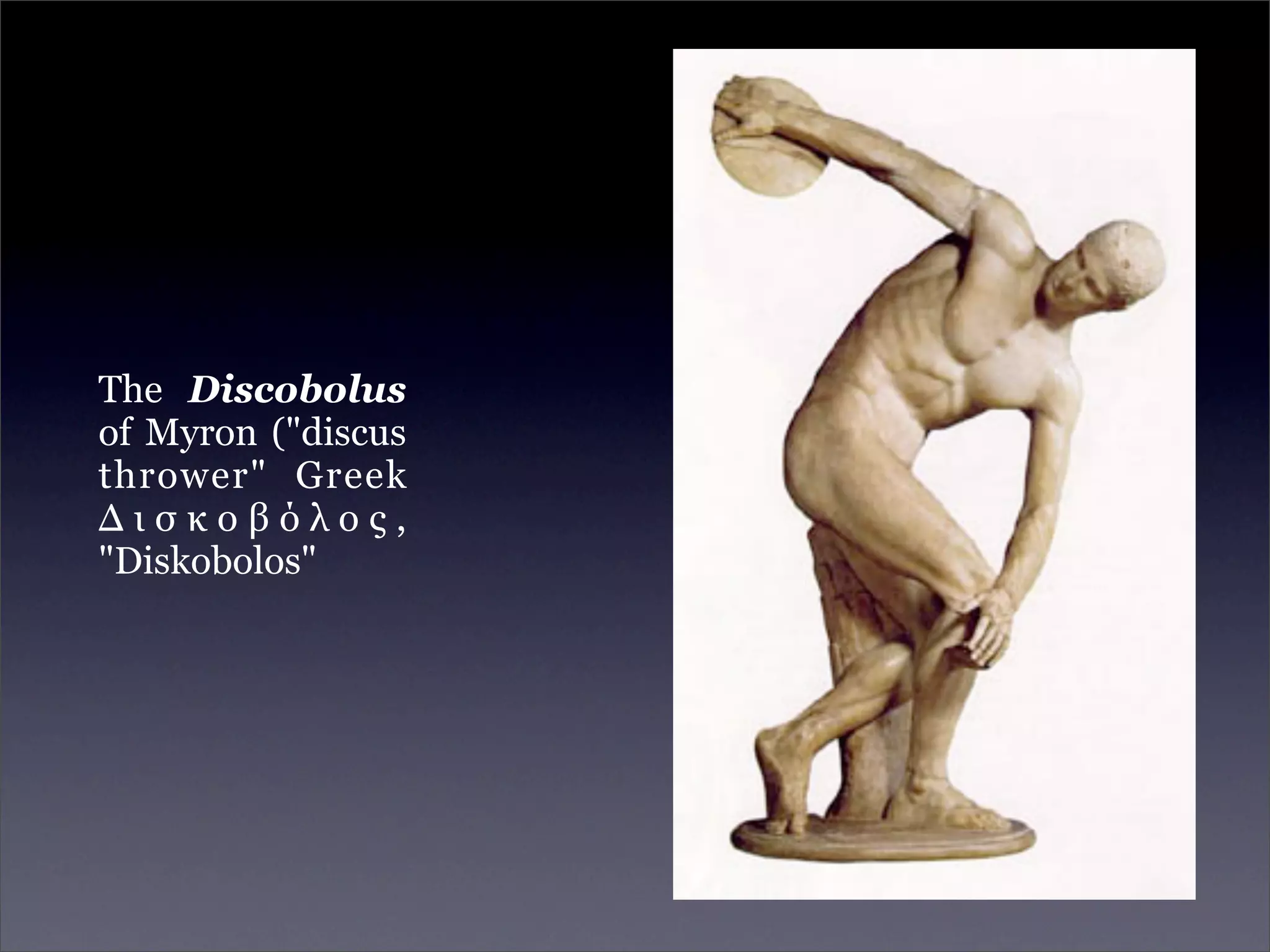
The Discobolus
of Myron ("discus
thrower" Greek
Δισκοβόλος,
"Diskobolos"
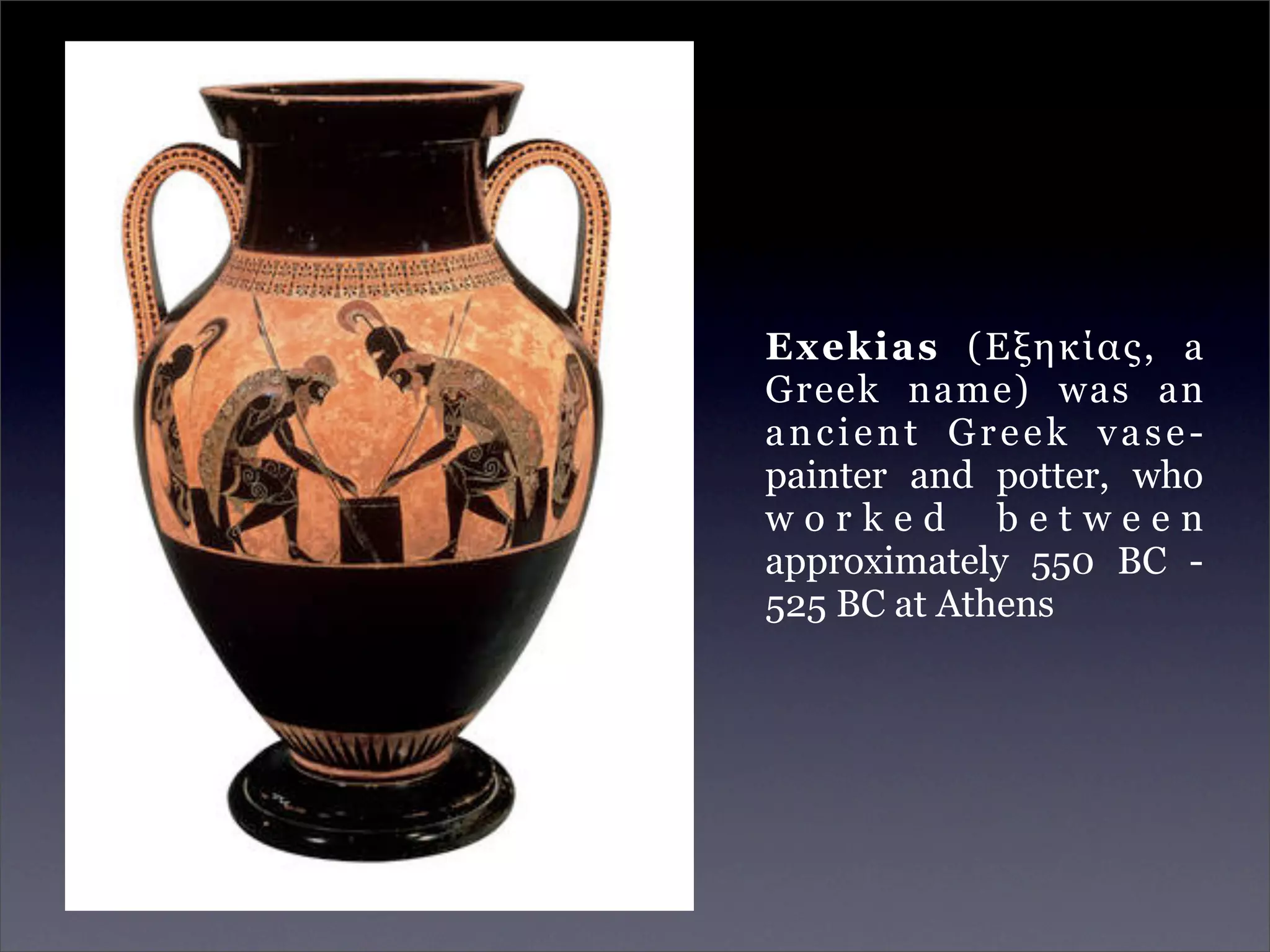
Exekias (Εξηκίας, a
Greek name) was an
ancient Greek vase-
painter and potter, who
worked between
approximately 550 BC -
525 BC at Athens
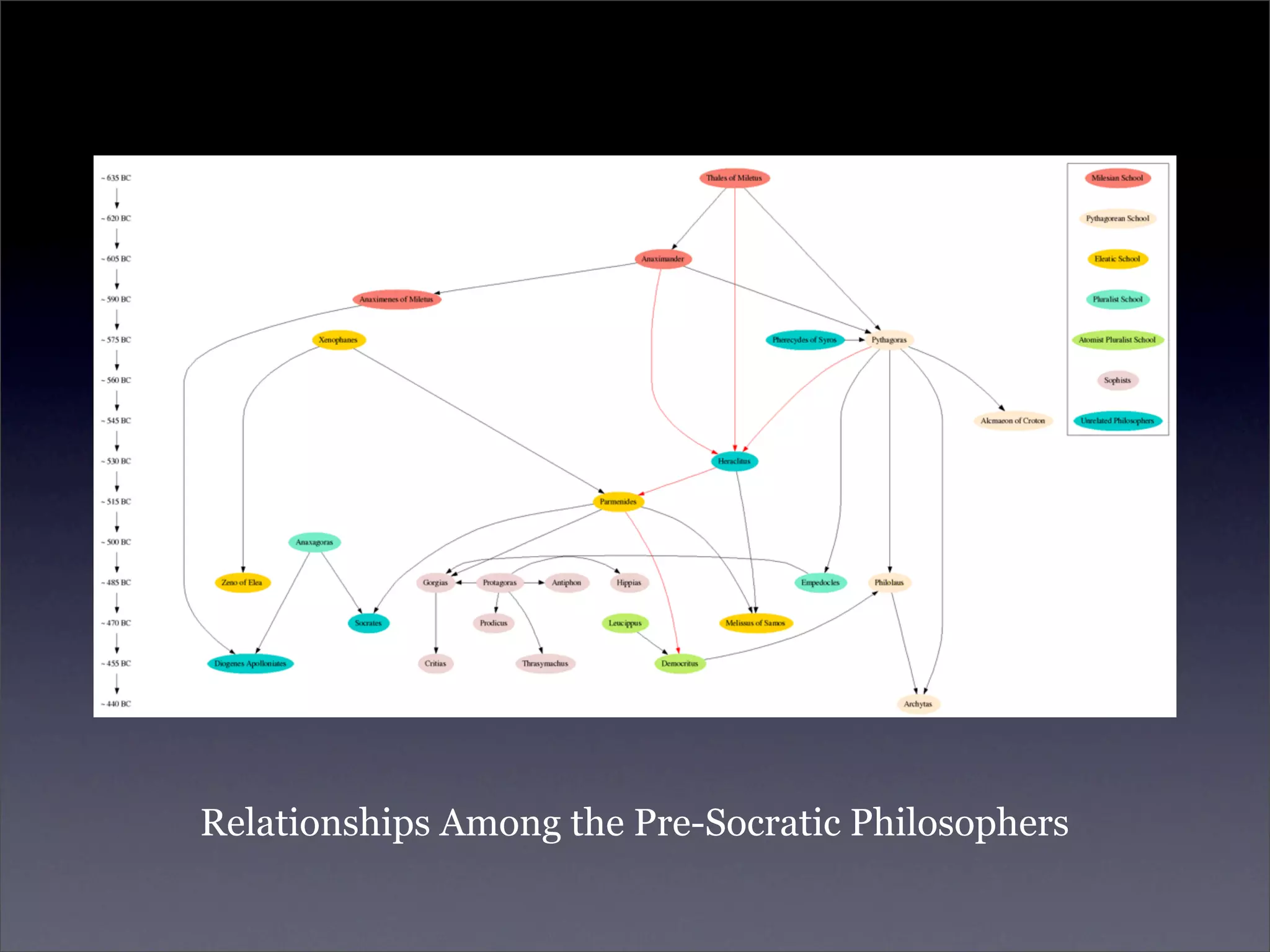
Relationships Among the Pre-Socratic Philosophers
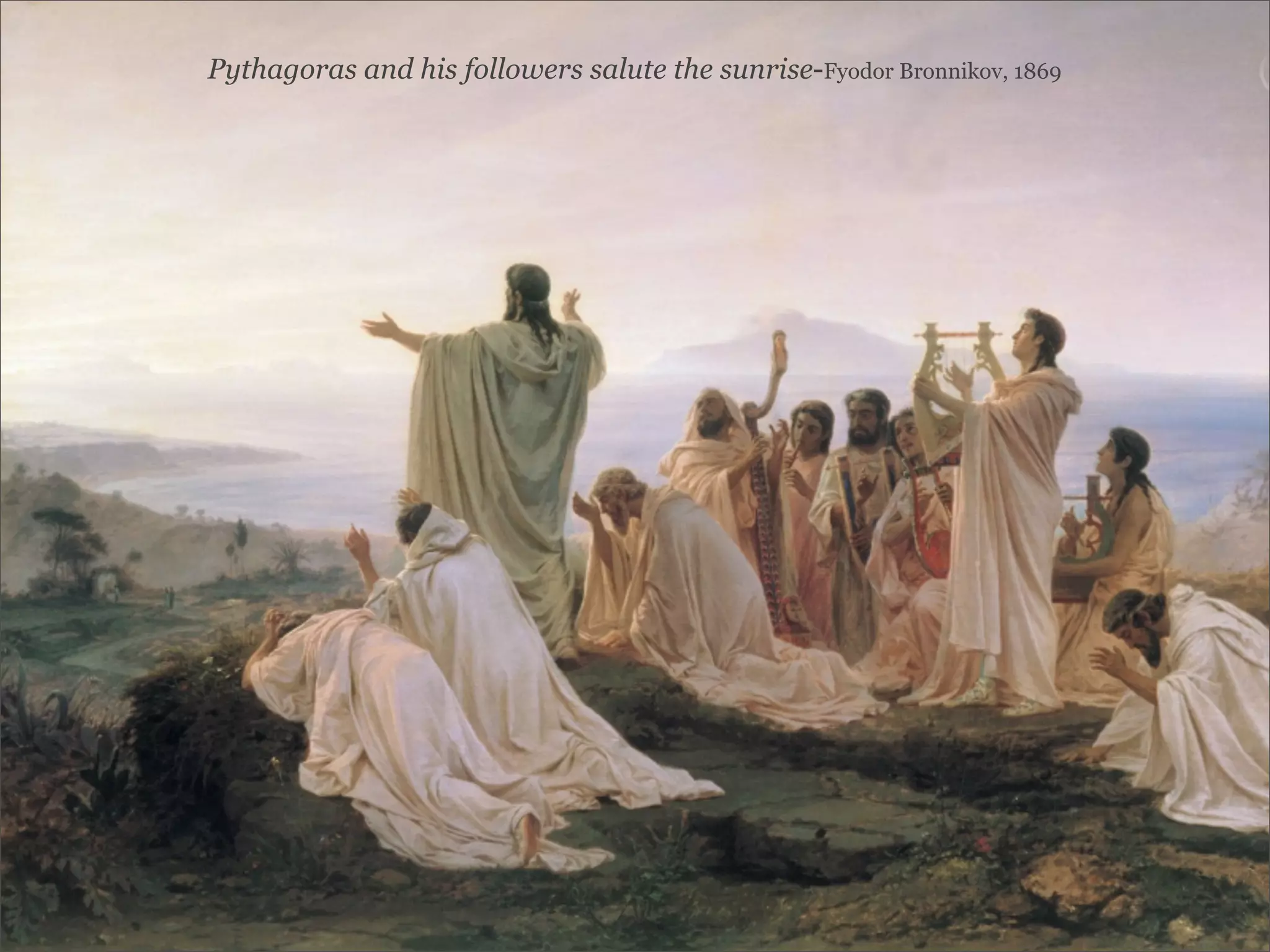
Pythagoras and his followers salute the sunrise-Fyodor Bronnikov, 1869
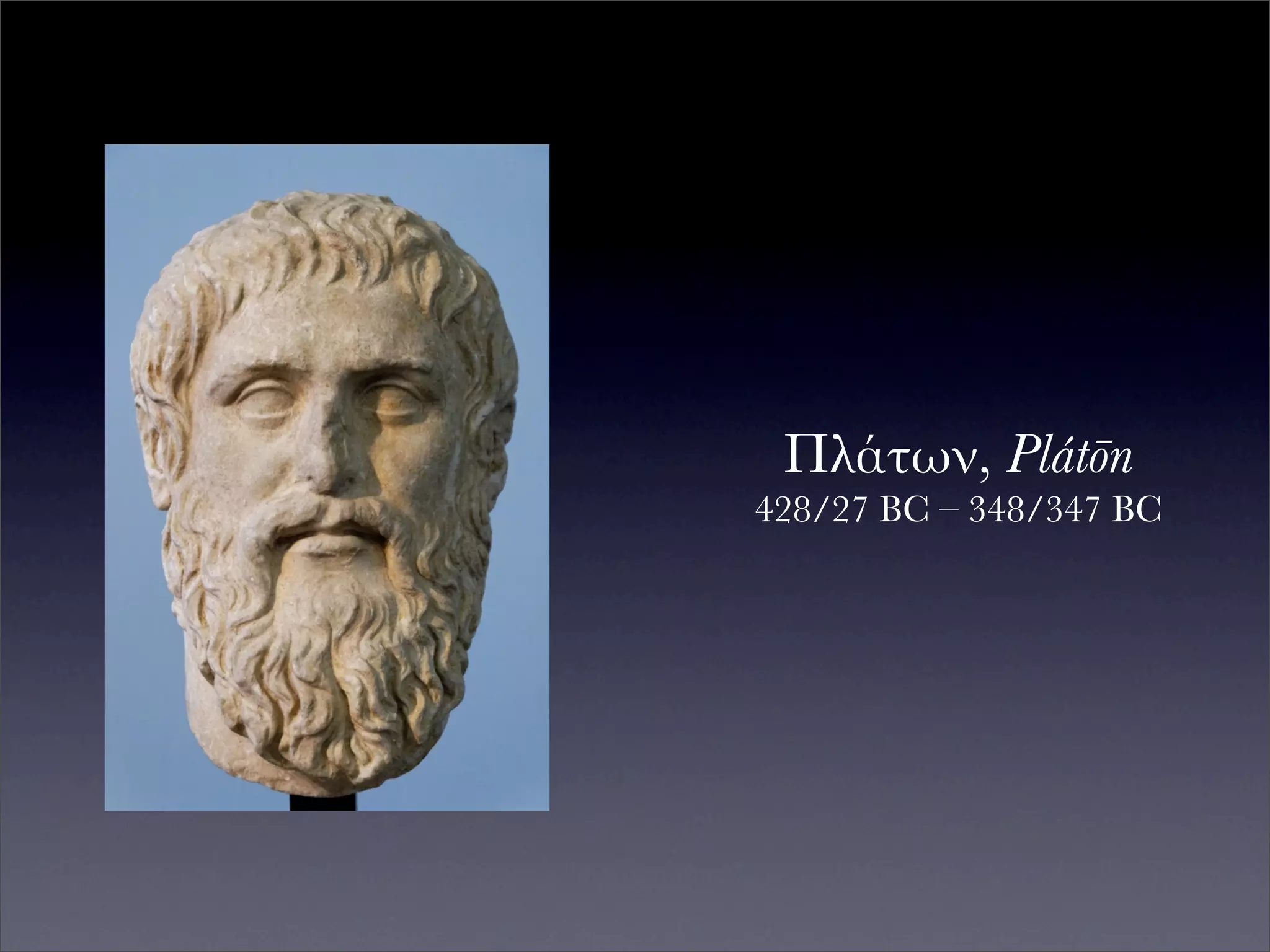
Πλάτων, Plátōn
428/27 BC – 348/347 BC
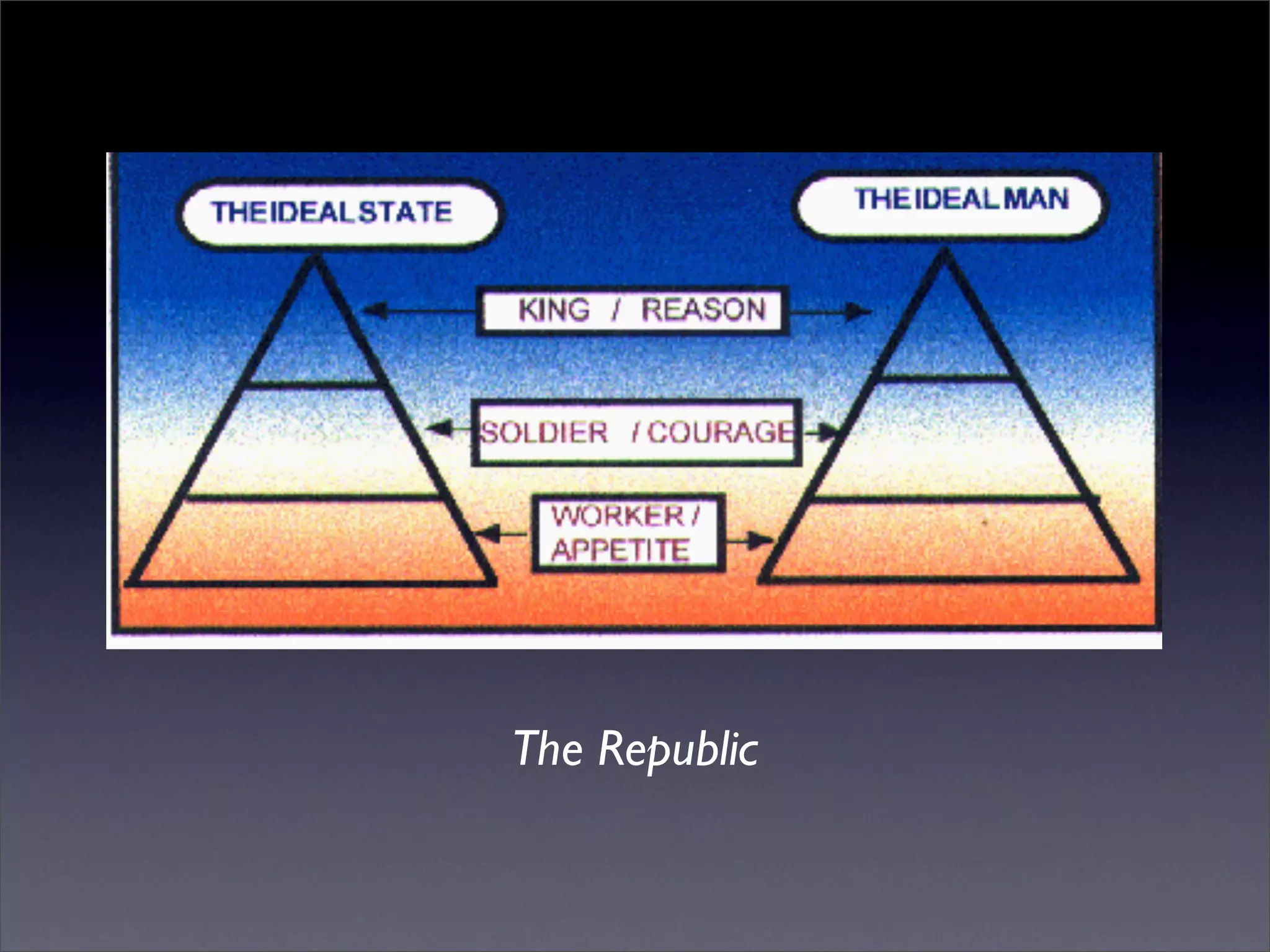
The Republic
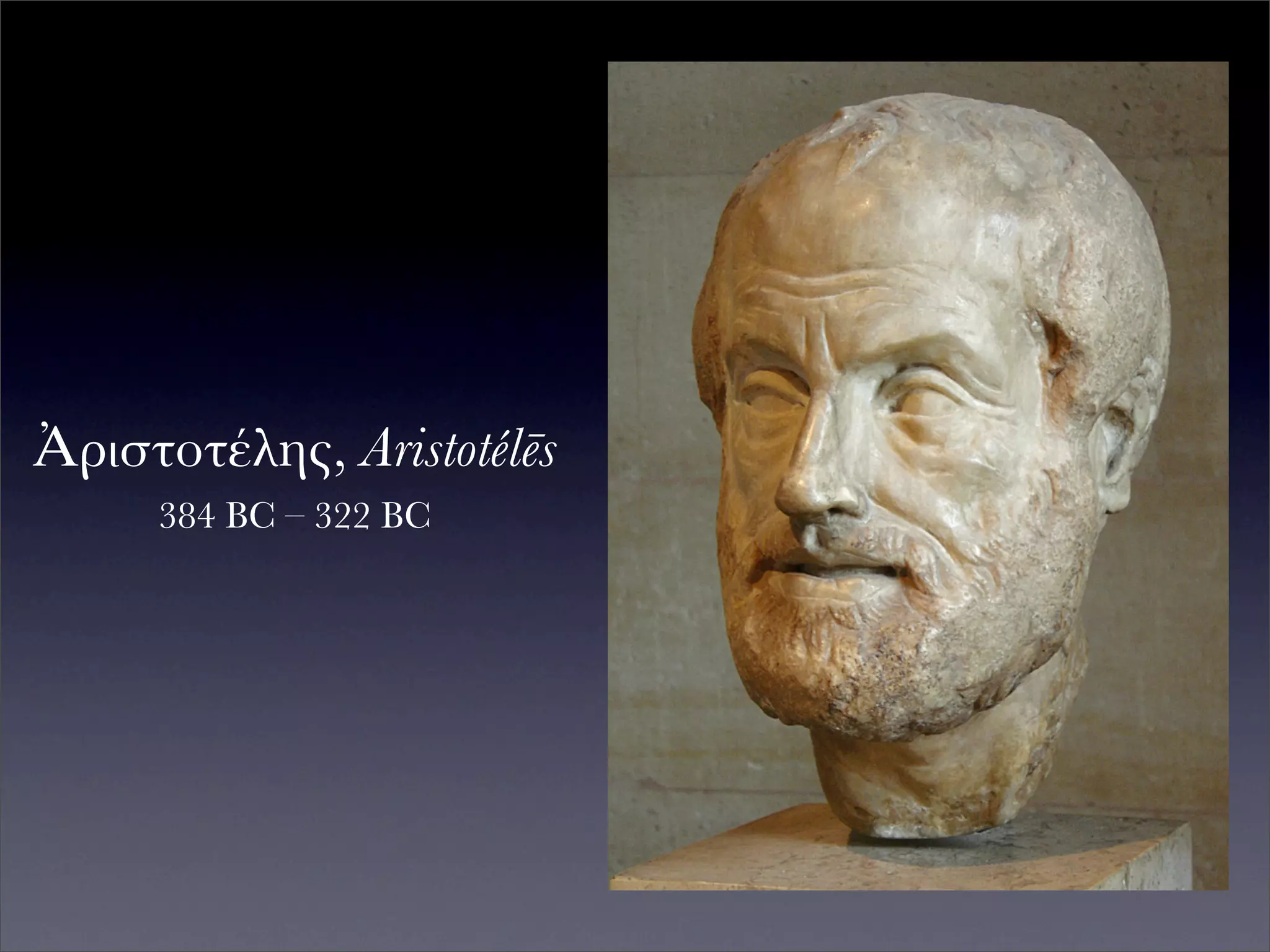
Ἀριστοτέλης, Aristotélēs
     384 BC – 322 BC
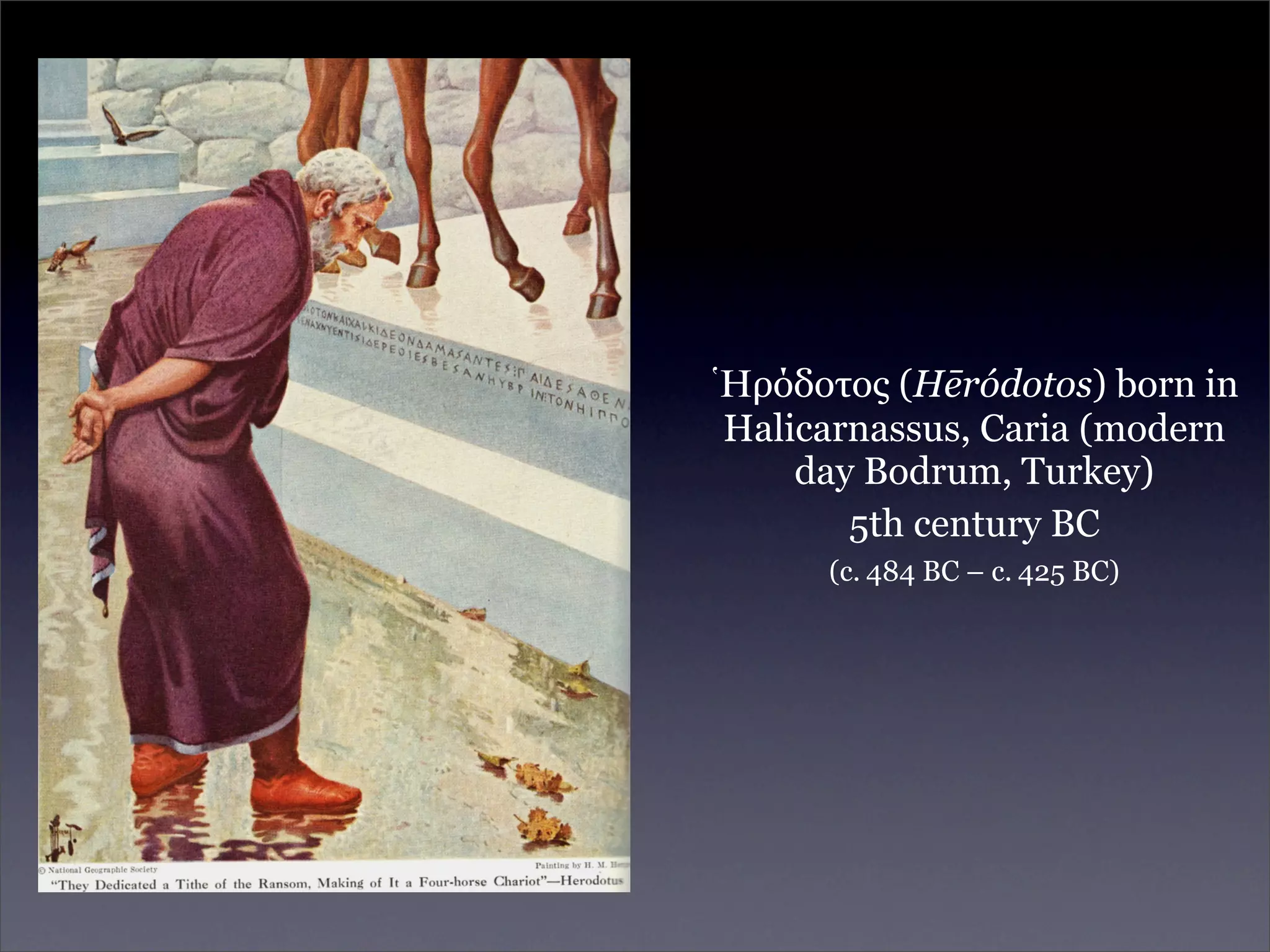
Ἡρόδοτος (Hēródotos) born in
Halicarnassus, Caria (modern
    day Bodrum, Turkey)
       5th century BC
      (c. 484 BC – c. 425 BC)
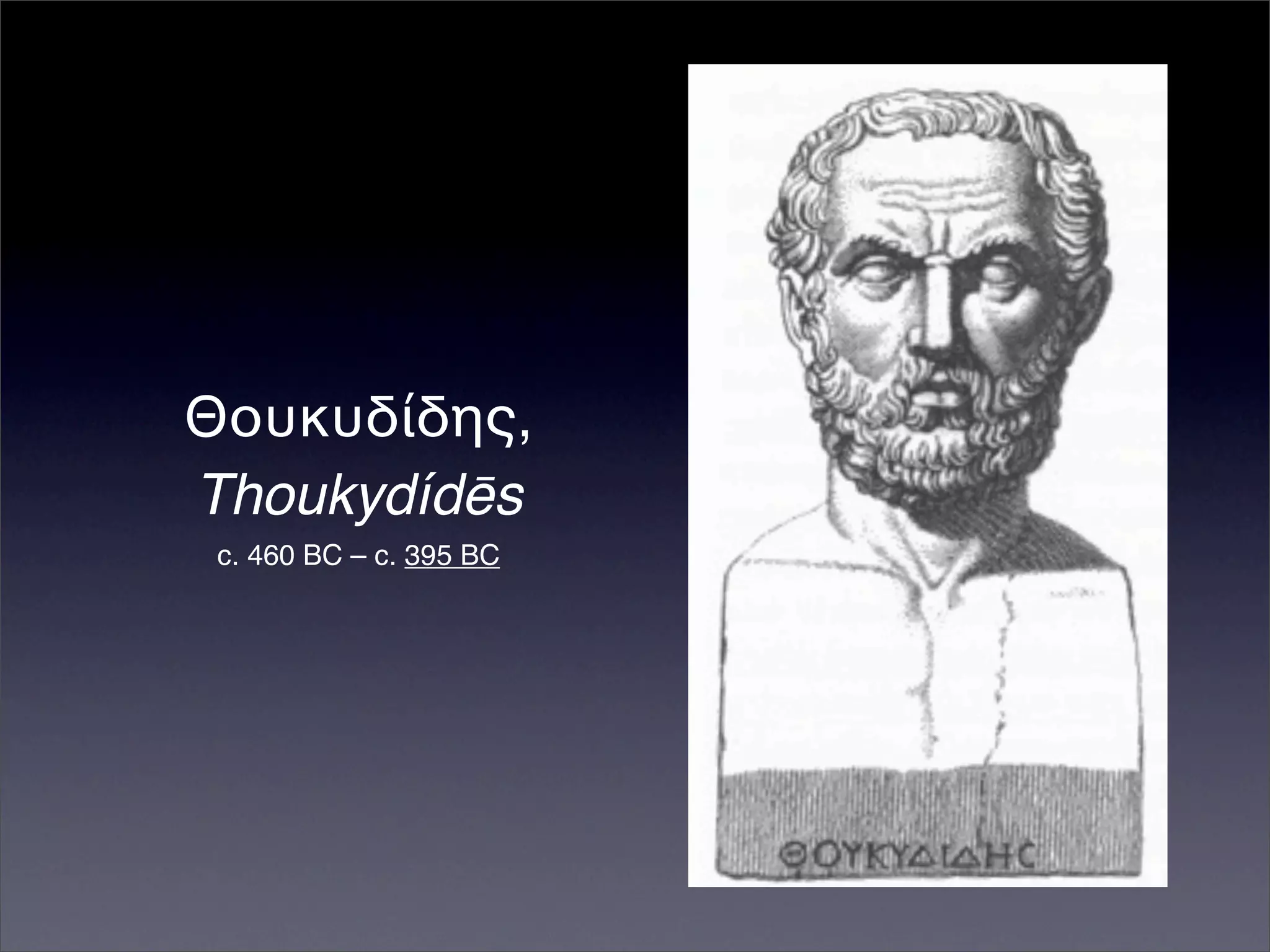
Θουκυδίδης,
Thoukydídēs
 c. 460 BC – c. 395 BC
Questions to answer in this session

why is the Golden Age often called the Age of Pericles?

what are the various forms of art which this age produced?

how did Greek playwrights give birth to the tragedy?

how did science and philosophy come to replace myth and
religion as the educational foundation for the upper class?

what is the Socratic method?

what is Plato’s theory of Forms?

how did the discipline of history begin?

what explains the stature of Thucydides as one of the greatest,
perhaps the greatest, historians?

Ancient Greece 2 session i Golden Age intro