Disease/Illness Report and Presentation
Wahida Sadaat
10/22/2014
Child Development 10-Health, Safety and Nutrition
Healthychildren.org
One of the surprising facts about asthma is that it is such a
common disease. More than 23 million Americans have the
condition and more than one-quarter them are children younger
than 18 years. Asthma may appear at any age; however, between
80% and 90% of children with asthma develop symptoms by age
4 or 5 years. When the condition is properly managed with
medications and environmental measures, most severe,
potentially incapacitating flare-ups can be prevented. There are
often early warning signs that a child is at risk for developing
asthma—eczema starting in the early months, frequent lower
respiratory symptoms and problems appearing before the first
birthday, and having a family history of asthma.
Healthychildren.org
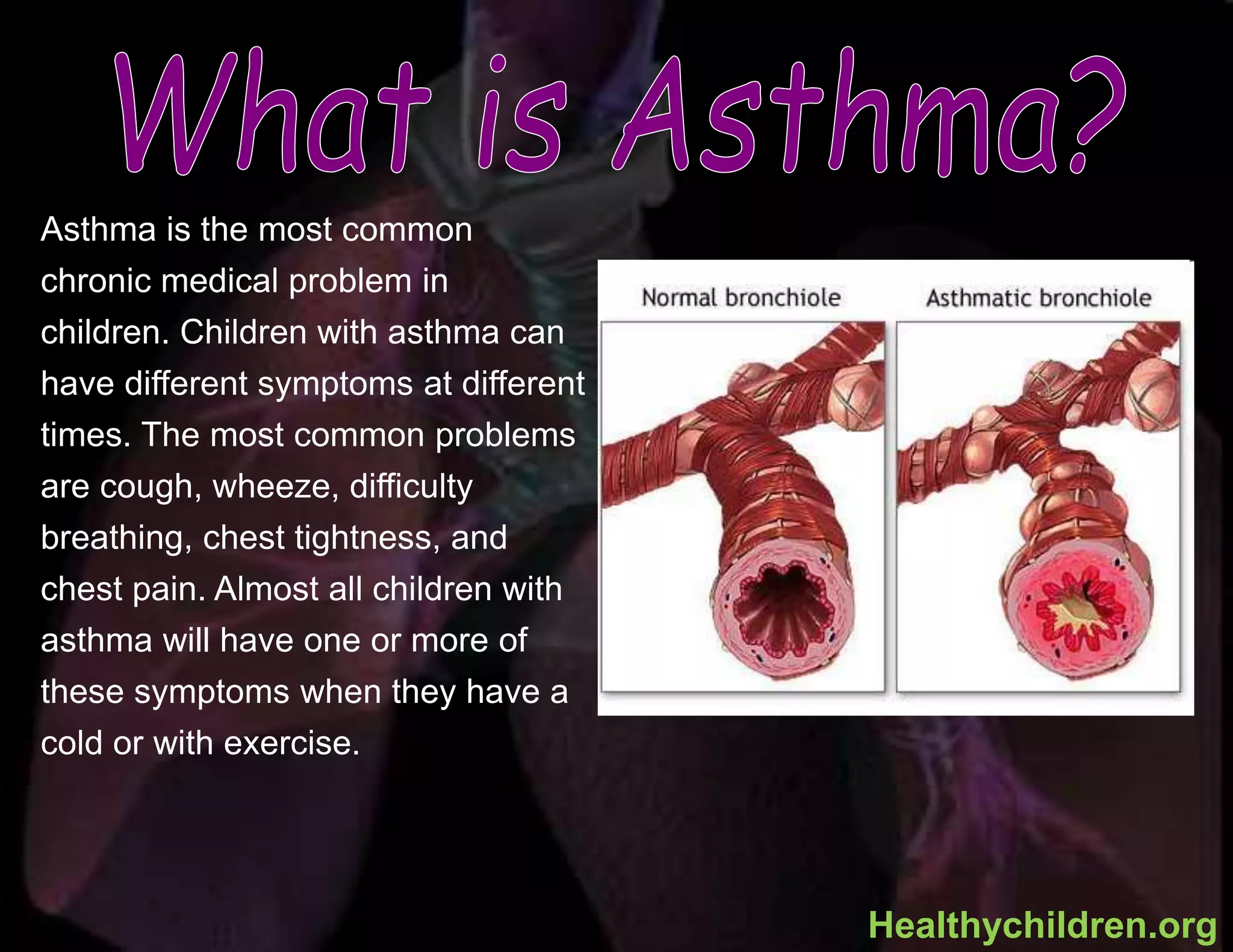
Asthma is the most common
chronic medical problem in
children. Children with asthma can
have different symptoms at different
times. The most common problems
are cough, wheeze, difficulty
breathing, chest tightness, and
chest pain. Almost all children with
asthma will have one or more of
these symptoms when they have a
cold or with exercise.
Healthychildren.org
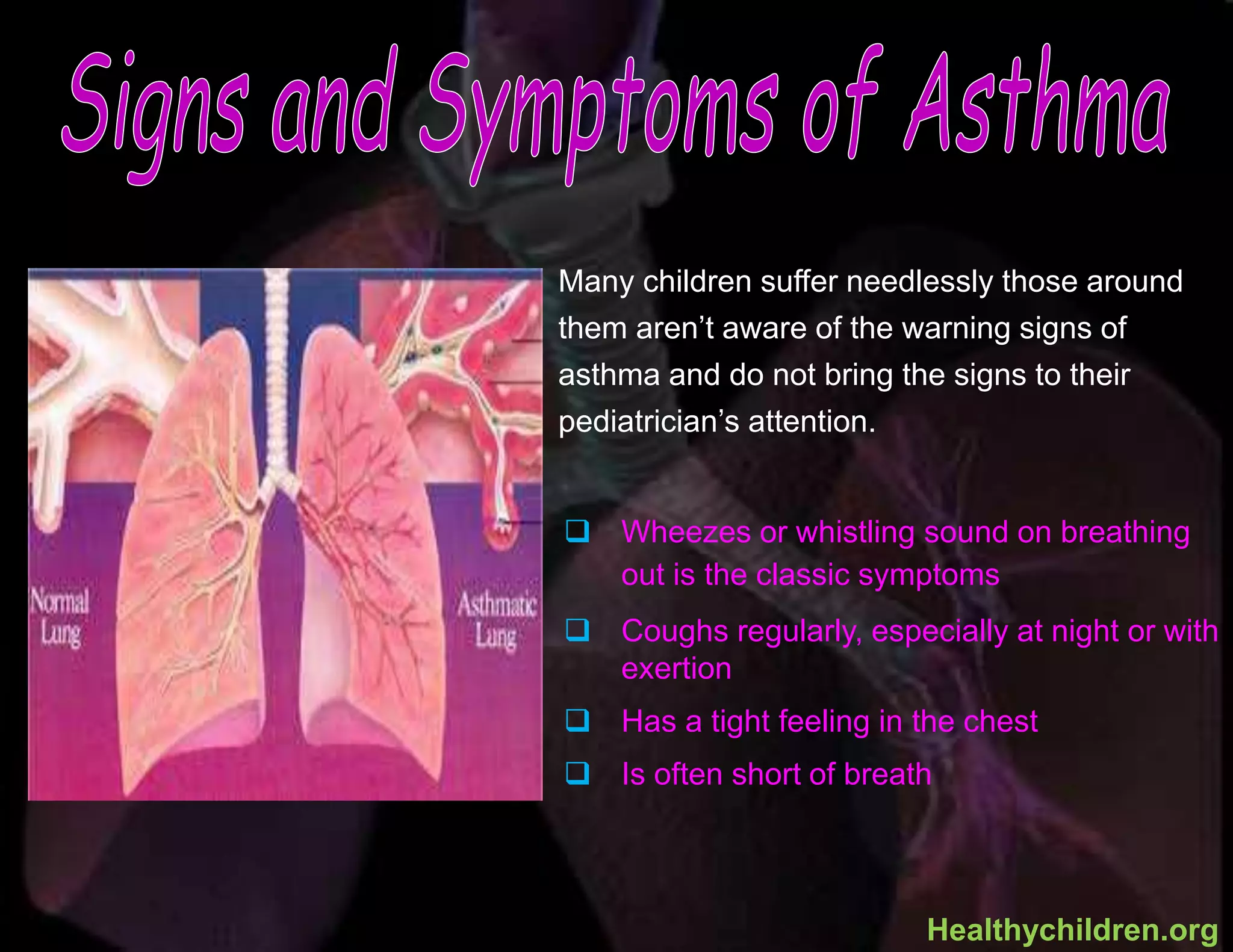
 Wheezes or whistling sound on breathing
out is the classic symptoms
 Coughs regularly, especially at night or with
exertion
 Has a tight feeling in the chest
 Is often short of breath
Many children suffer needlessly those around
them aren’t aware of the warning signs of
asthma and do not bring the signs to their
pediatrician’s attention.
Healthychildren.org
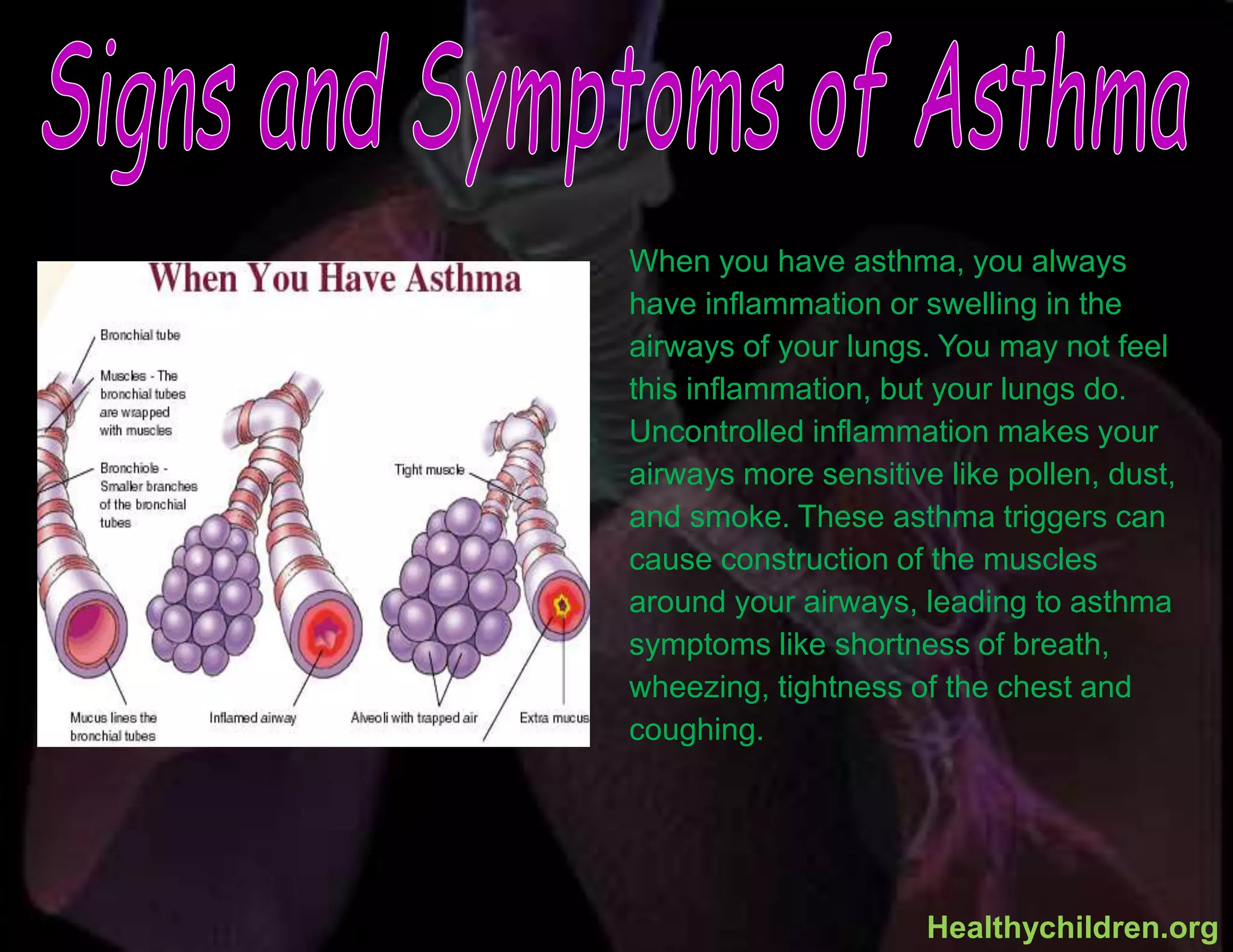
When you have asthma, you always
have inflammation or swelling in the
airways of your lungs. You may not feel
this inflammation, but your lungs do.
Uncontrolled inflammation makes your
airways more sensitive like pollen, dust,
and smoke. These asthma triggers can
cause construction of the muscles
around your airways, leading to asthma
symptoms like shortness of breath,
wheezing, tightness of the chest and
coughing.
Healthychildren.org
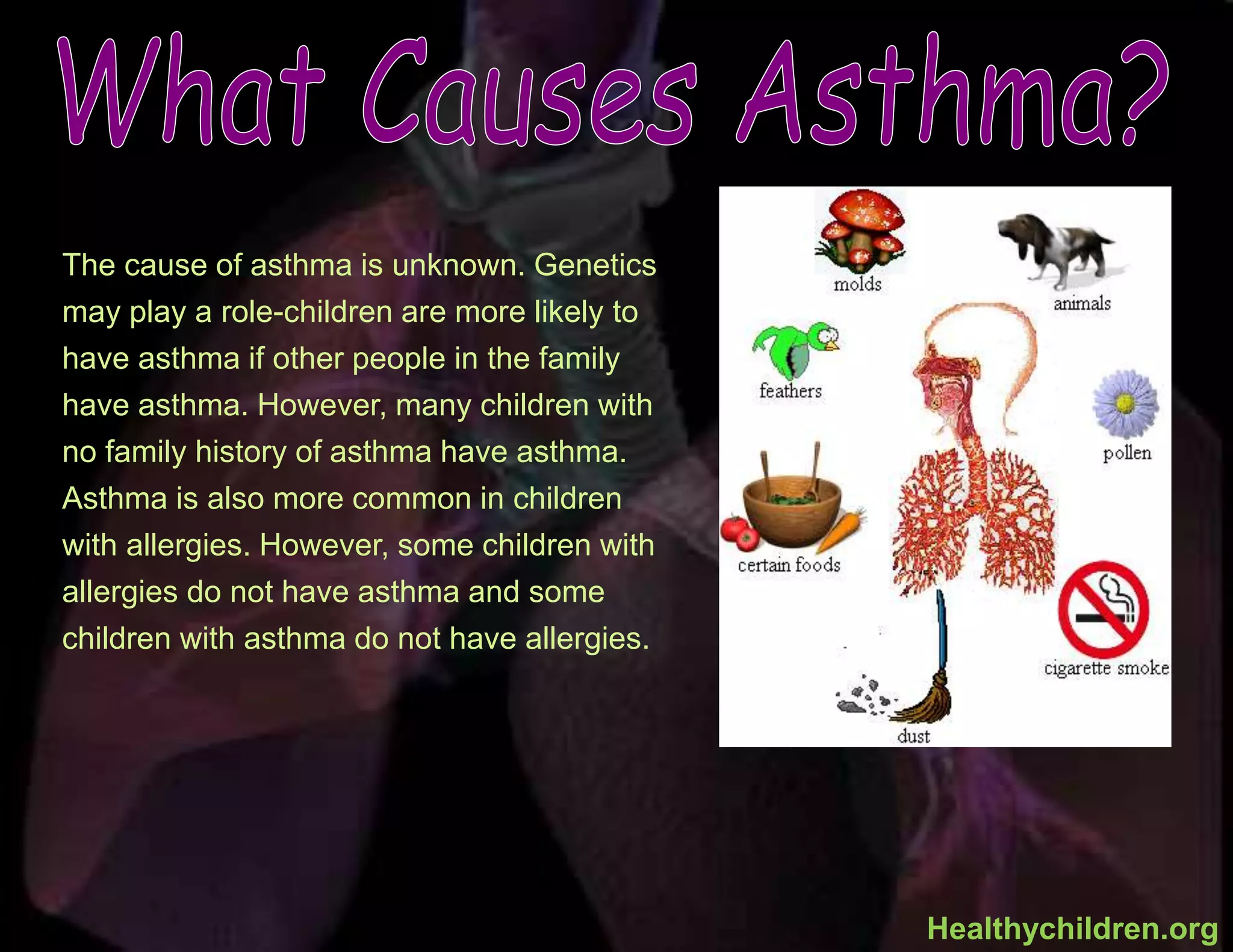
The cause of asthma is unknown. Genetics
may play a role-children are more likely to
have asthma if other people in the family
have asthma. However, many children with
no family history of asthma have asthma.
Asthma is also more common in children
with allergies. However, some children with
allergies do not have asthma and some
children with asthma do not have allergies.
Healthychildren.org
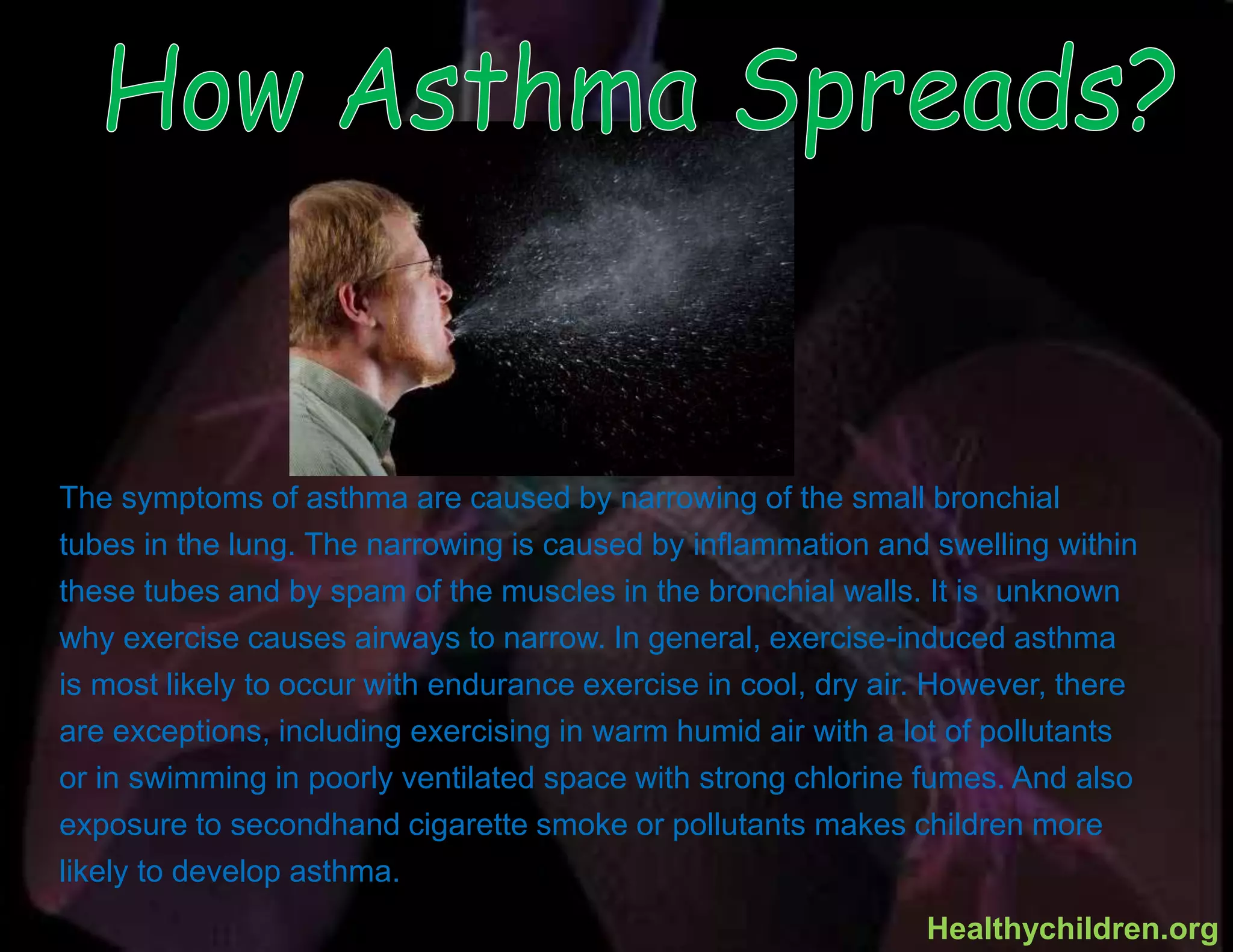
The symptoms of asthma are caused by narrowing of the small bronchial
tubes in the lung. The narrowing is caused by inflammation and swelling within
these tubes and by spam of the muscles in the bronchial walls. It is unknown
why exercise causes airways to narrow. In general, exercise-induced asthma
is most likely to occur with endurance exercise in cool, dry air. However, there
are exceptions, including exercising in warm humid air with a lot of pollutants
or in swimming in poorly ventilated space with strong chlorine fumes. And also
exposure to secondhand cigarette smoke or pollutants makes children more
likely to develop asthma.
Healthychildren.org
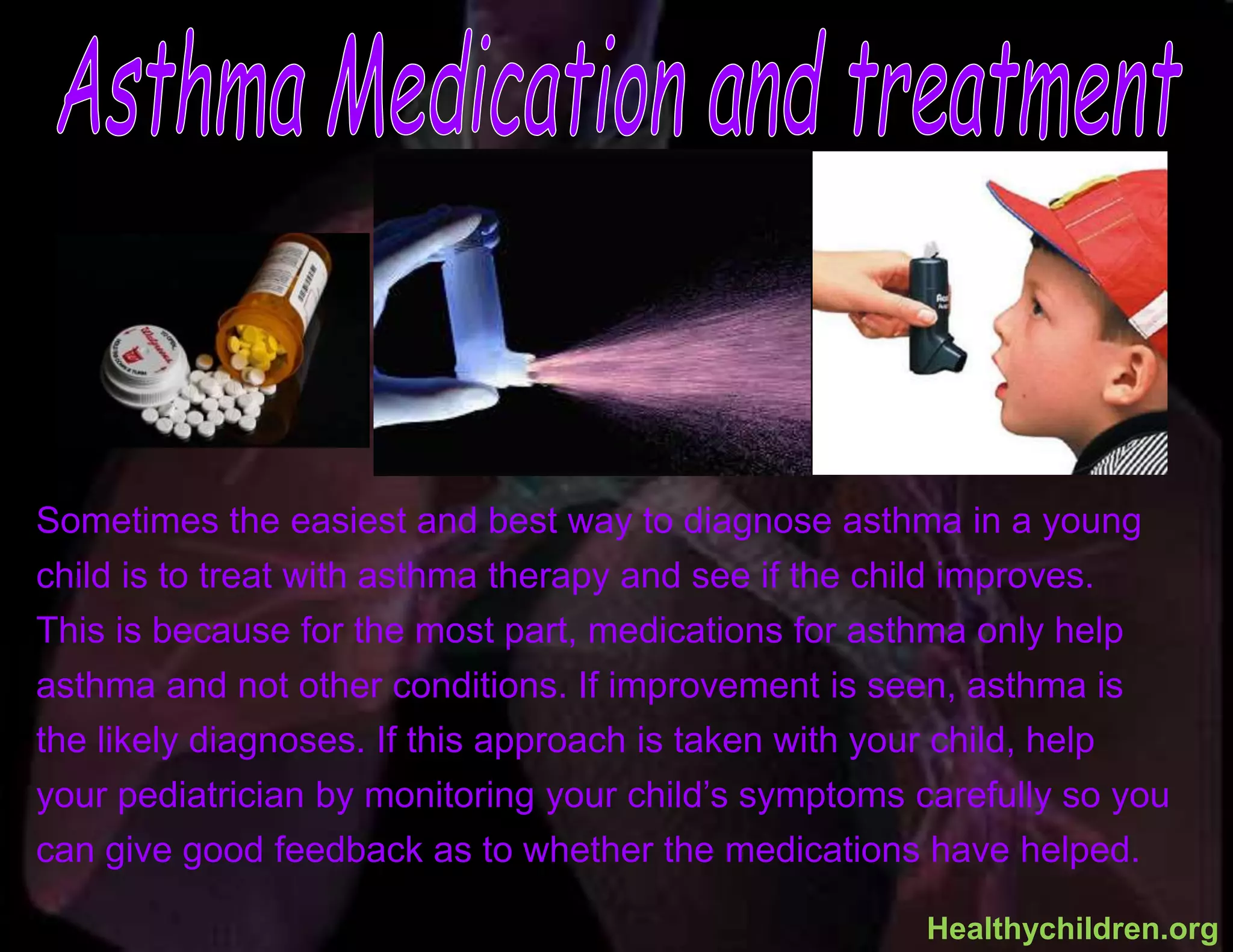
Sometimes the easiest and best way to diagnose asthma in a young
child is to treat with asthma therapy and see if the child improves.
This is because for the most part, medications for asthma only help
asthma and not other conditions. If improvement is seen, asthma is
the likely diagnoses. If this approach is taken with your child, help
your pediatrician by monitoring your child’s symptoms carefully so you
can give good feedback as to whether the medications have helped.
Healthychildren.org
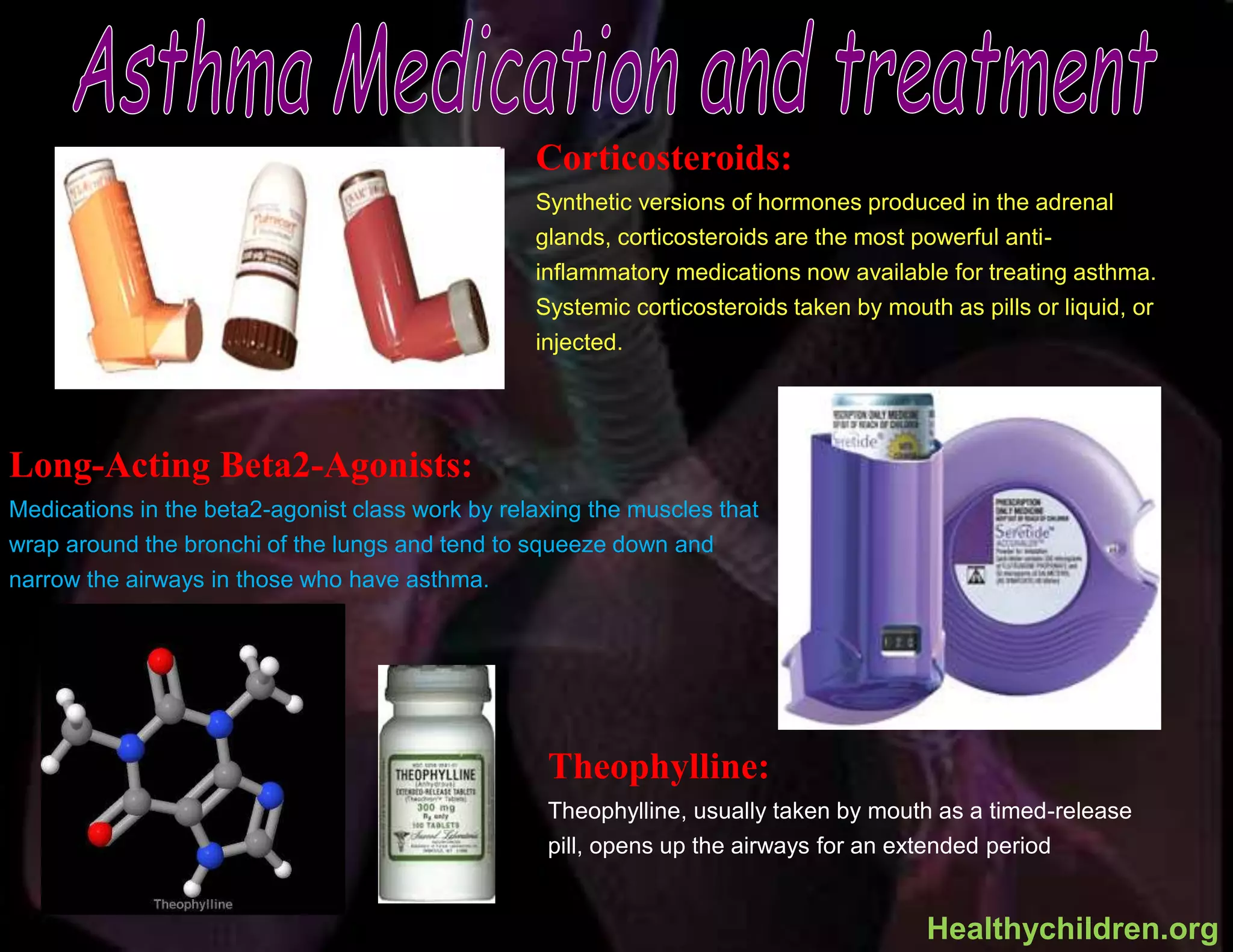
Corticosteroids:
Synthetic versions of hormones produced in the adrenal
glands, corticosteroids are the most powerful anti-
inflammatory medications now available for treating asthma.
Systemic corticosteroids taken by mouth as pills or liquid, or
injected.
Long-Acting Beta2-Agonists:
Medications in the beta2-agonist class work by relaxing the muscles that
wrap around the bronchi of the lungs and tend to squeeze down and
narrow the airways in those who have asthma.
Theophylline:
Theophylline, usually taken by mouth as a timed-release
pill, opens up the airways for an extended period
Healthychildren.org
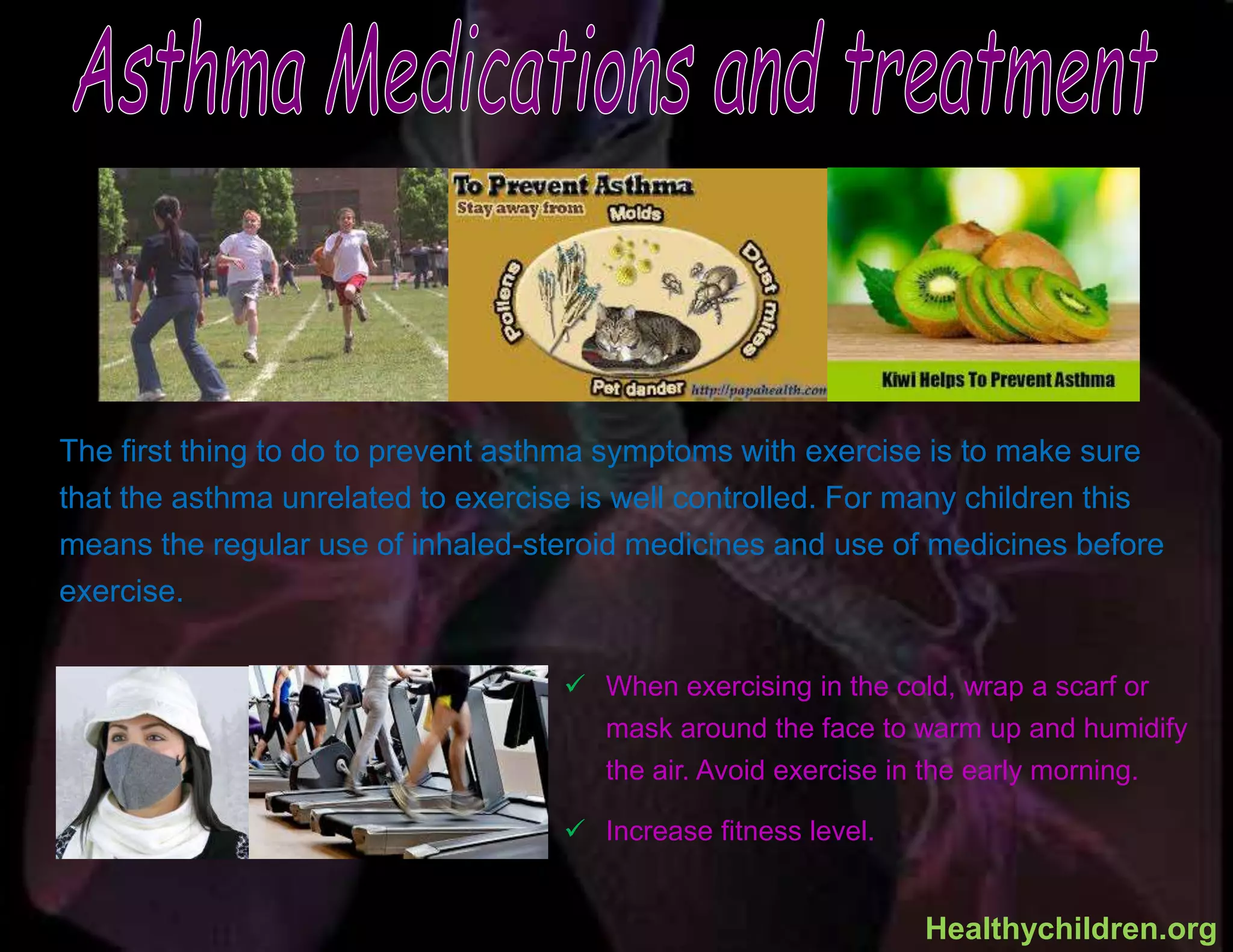
 When exercising in the cold, wrap a scarf or
mask around the face to warm up and humidify
the air. Avoid exercise in the early morning.
 Increase fitness level.
The first thing to do to prevent asthma symptoms with exercise is to make sure
that the asthma unrelated to exercise is well controlled. For many children this
means the regular use of inhaled-steroid medicines and use of medicines before
exercise.
Healthychildren.org
The environment at school is as important as the environment at home.
Students with asthma face a number of problems related to school. Talk to your
child about how well his asthma is being managed in school. Also talk to your
child’s teachers, school nurse, coaches, and other school personnel to get their
opinions on how well you child is coping with asthma in school and to see if
asthma symptoms are causing any of the following problems:
 Missing school due to asthma symptoms or doctor visits.
 Avoiding school or school activities. Work with your health care provider and
school personnel to encourage your child to participate in school activities.
Physical activity is important for your child’s physical and mental health.
Children with asthma should be able, and encouraged, to participate completely
in physical education, sports, and other activities in school.
Healthychildren.org
Asthma Presentation Wahida Sadaat Presentation

Asthma Presentation Wahida Sadaat Presentation

  • 1.
    Disease/Illness Report andPresentation Wahida Sadaat 10/22/2014 Child Development 10-Health, Safety and Nutrition Healthychildren.org
  • 2.
    One of thesurprising facts about asthma is that it is such a common disease. More than 23 million Americans have the condition and more than one-quarter them are children younger than 18 years. Asthma may appear at any age; however, between 80% and 90% of children with asthma develop symptoms by age 4 or 5 years. When the condition is properly managed with medications and environmental measures, most severe, potentially incapacitating flare-ups can be prevented. There are often early warning signs that a child is at risk for developing asthma—eczema starting in the early months, frequent lower respiratory symptoms and problems appearing before the first birthday, and having a family history of asthma. Healthychildren.org
  • 3.
    Asthma is themost common chronic medical problem in children. Children with asthma can have different symptoms at different times. The most common problems are cough, wheeze, difficulty breathing, chest tightness, and chest pain. Almost all children with asthma will have one or more of these symptoms when they have a cold or with exercise. Healthychildren.org
  • 4.
     Wheezes orwhistling sound on breathing out is the classic symptoms  Coughs regularly, especially at night or with exertion  Has a tight feeling in the chest  Is often short of breath Many children suffer needlessly those around them aren’t aware of the warning signs of asthma and do not bring the signs to their pediatrician’s attention. Healthychildren.org
  • 5.
    When you haveasthma, you always have inflammation or swelling in the airways of your lungs. You may not feel this inflammation, but your lungs do. Uncontrolled inflammation makes your airways more sensitive like pollen, dust, and smoke. These asthma triggers can cause construction of the muscles around your airways, leading to asthma symptoms like shortness of breath, wheezing, tightness of the chest and coughing. Healthychildren.org
  • 6.
    The cause ofasthma is unknown. Genetics may play a role-children are more likely to have asthma if other people in the family have asthma. However, many children with no family history of asthma have asthma. Asthma is also more common in children with allergies. However, some children with allergies do not have asthma and some children with asthma do not have allergies. Healthychildren.org
  • 7.
    The symptoms ofasthma are caused by narrowing of the small bronchial tubes in the lung. The narrowing is caused by inflammation and swelling within these tubes and by spam of the muscles in the bronchial walls. It is unknown why exercise causes airways to narrow. In general, exercise-induced asthma is most likely to occur with endurance exercise in cool, dry air. However, there are exceptions, including exercising in warm humid air with a lot of pollutants or in swimming in poorly ventilated space with strong chlorine fumes. And also exposure to secondhand cigarette smoke or pollutants makes children more likely to develop asthma. Healthychildren.org
  • 8.
    Sometimes the easiestand best way to diagnose asthma in a young child is to treat with asthma therapy and see if the child improves. This is because for the most part, medications for asthma only help asthma and not other conditions. If improvement is seen, asthma is the likely diagnoses. If this approach is taken with your child, help your pediatrician by monitoring your child’s symptoms carefully so you can give good feedback as to whether the medications have helped. Healthychildren.org
  • 9.
    Corticosteroids: Synthetic versions ofhormones produced in the adrenal glands, corticosteroids are the most powerful anti- inflammatory medications now available for treating asthma. Systemic corticosteroids taken by mouth as pills or liquid, or injected. Long-Acting Beta2-Agonists: Medications in the beta2-agonist class work by relaxing the muscles that wrap around the bronchi of the lungs and tend to squeeze down and narrow the airways in those who have asthma. Theophylline: Theophylline, usually taken by mouth as a timed-release pill, opens up the airways for an extended period Healthychildren.org
  • 10.
     When exercisingin the cold, wrap a scarf or mask around the face to warm up and humidify the air. Avoid exercise in the early morning.  Increase fitness level. The first thing to do to prevent asthma symptoms with exercise is to make sure that the asthma unrelated to exercise is well controlled. For many children this means the regular use of inhaled-steroid medicines and use of medicines before exercise. Healthychildren.org
  • 11.
    The environment atschool is as important as the environment at home. Students with asthma face a number of problems related to school. Talk to your child about how well his asthma is being managed in school. Also talk to your child’s teachers, school nurse, coaches, and other school personnel to get their opinions on how well you child is coping with asthma in school and to see if asthma symptoms are causing any of the following problems:  Missing school due to asthma symptoms or doctor visits.  Avoiding school or school activities. Work with your health care provider and school personnel to encourage your child to participate in school activities. Physical activity is important for your child’s physical and mental health. Children with asthma should be able, and encouraged, to participate completely in physical education, sports, and other activities in school. Healthychildren.org