Asthma in Children and Infants
Symptoms and Treatment
What is Asthma?
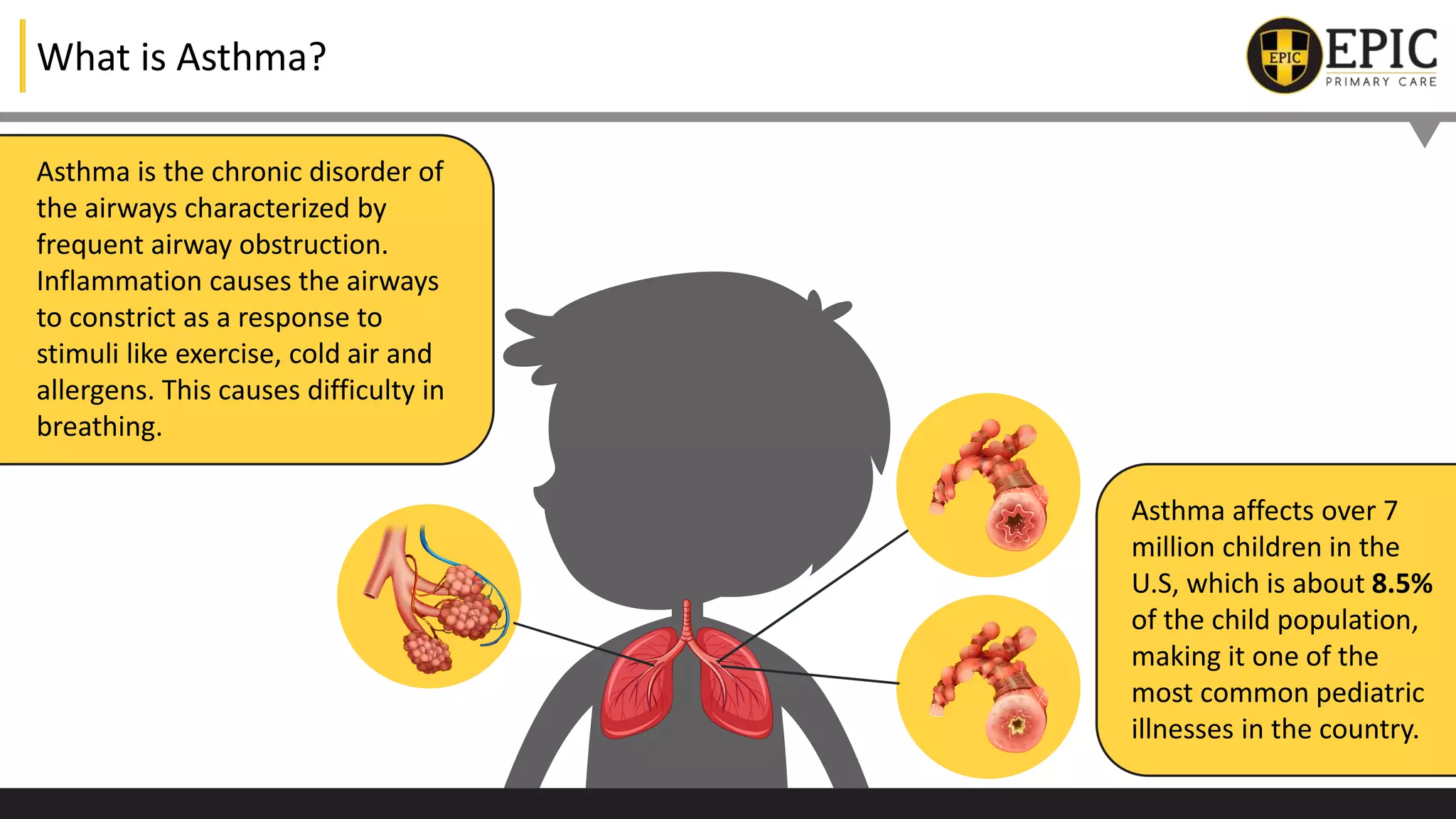
Asthma is the chronic disorder of
the airways characterized by
frequent airway obstruction.
Inflammation causes the airways
to constrict as a response to
stimuli like exercise, cold air and
allergens. This causes difficulty in
breathing.
Asthma affects over 7
million children in the
U.S, which is about 8.5%
of the child population,
making it one of the
most common pediatric
illnesses in the country.
Asthma Symptoms in Children and Infants
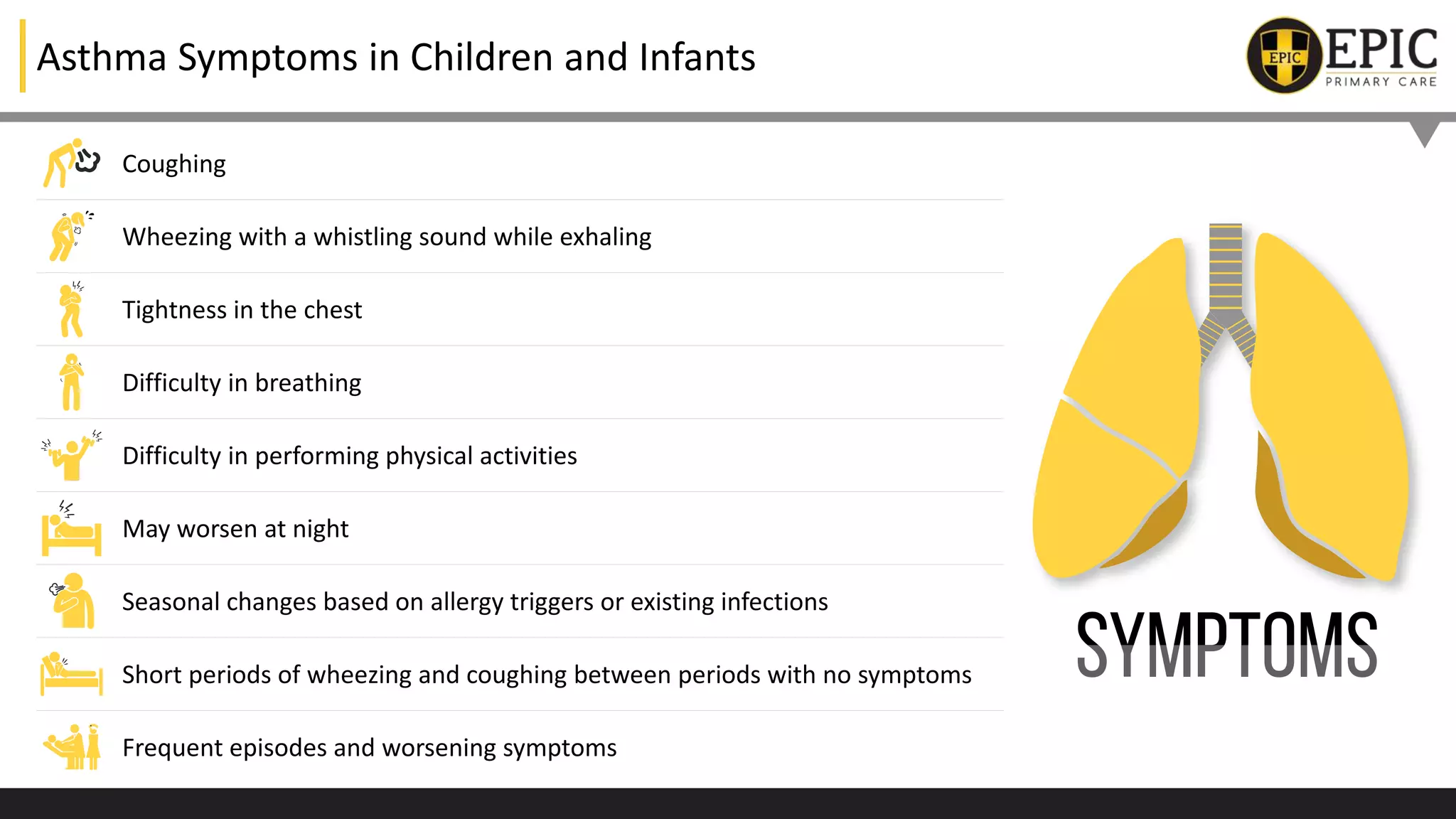
Coughing
Wheezing with a whistling sound while exhaling
Tightness in the chest
Frequent episodes and worsening symptoms
Difficulty in breathing
Difficulty in performing physical activities
May worsen at night
Seasonal changes based on allergy triggers or existing infections
Short periods of wheezing and coughing between periods with no symptoms
Risk Factors for Developing Childhood Asthma
• Hay fever, other nasal allergies or eczema (itchy rashes on skin)
• Family history of asthma
• Low weight at birth
• Frequent episodes of respiratory infections
• Exposure to tobacco smoke before birth
• Ethnicity – Black or Hispanic
• Growing up in unhygienic conditions
• Poor nutrition
How Asthma is Diagnosed
Asthma in children can be diagnosed often with a simple physical exam, symptoms and medical history. Often the
child may be asymptomatic when you are at the doctor’s, so it’s important to do the following:
• Inform your doctor about the history of breathing problems your child or even you,
have had; also any family history of allergies, eczema, or lung disease.
• Mention your child's symptoms in detail: cough, wheezing, tightness in the chest and
so on. Also mention how often they occur, if it gets worse at any specific time or
season, or when eating any food, or in any specific place you go to, and so on.
• The doctor will examine the child’s eyes and nose and listen to the heart and lungs.
• A chest x-ray may be ordered, and if the child is 6 years or more, a lung test called a
spirometry. This will help the doctor determine the severity of the illness.
• Other tests could include blood tests, skin testing and so on to establish the allergy
triggers.
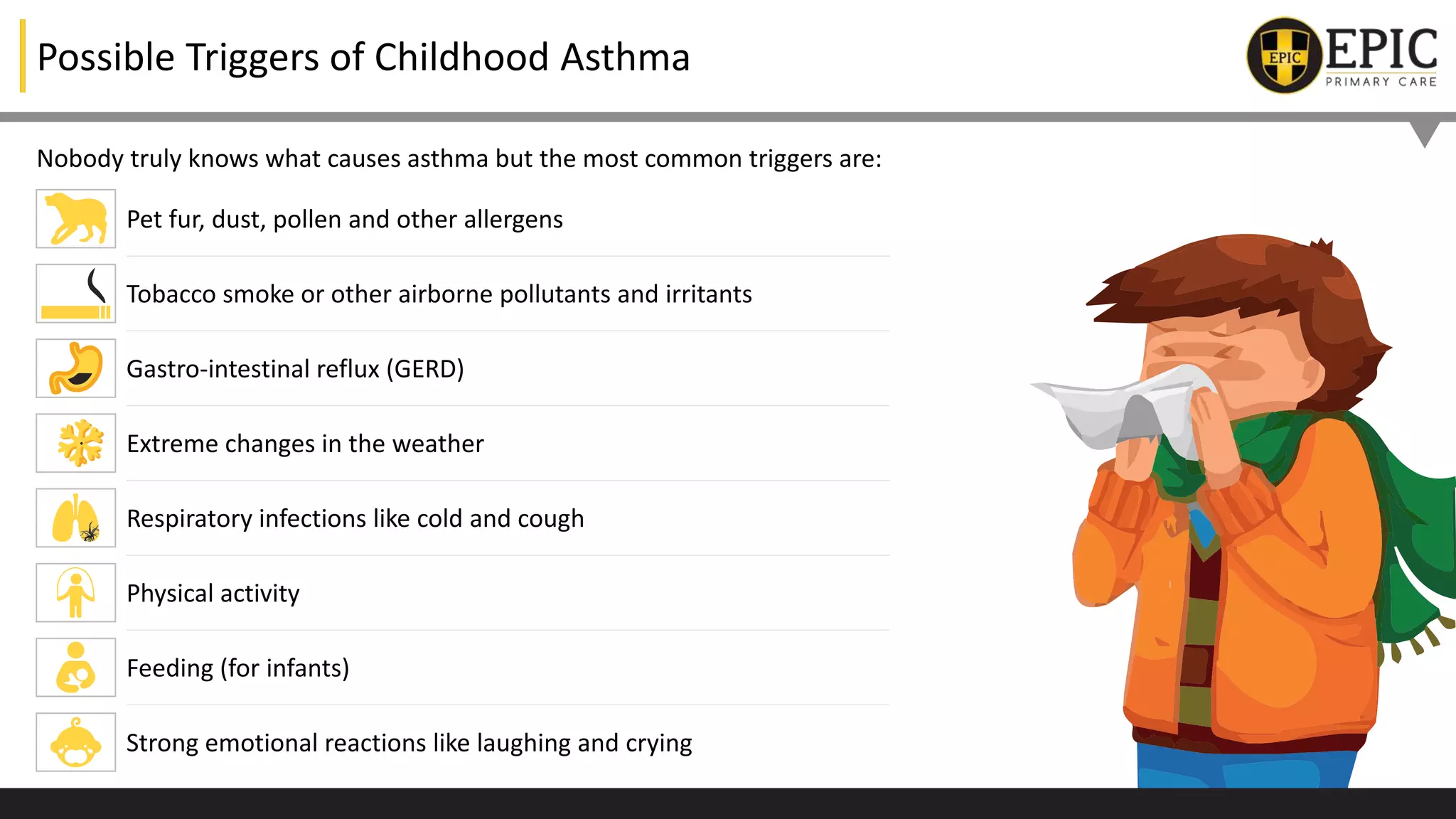
Possible Triggers of Childhood Asthma
Nobody truly knows what causes asthma but the most common triggers are:
Physical activity
Pet fur, dust, pollen and other allergens
Tobacco smoke or other airborne pollutants and irritants
Gastro-intestinal reflux (GERD)
Extreme changes in the weather
Respiratory infections like cold and cough
Feeding (for infants)
Strong emotional reactions like laughing and crying
How to Identify an Emergency in Childhood Asthma
Sometimes your child can have a life threatening asthma attack. It’s important that you can recognize when your
child is having an emergency; take your child to the ER immediately if you notice them:
• Gasping for air
• Being unable to speak
• Breathing so hard that the abdomen is sucked in completely
Goals & Medication
• Adequate control of symptoms
• Maintenance of lung function
• Enabling normal activity
• Minimizing risk of future aggravations
• Minimal medications with least potential side effects
• Short term medication to bring the symptoms under
control
• Long term medication like corticosteroids in the form of
inhalers, like fluticasone and bludesonide
• Leukotrine modifiers, like Montelukast
• Inflammation blocking drugs like Cromolyn
• Long term beta agonist in combination with
corticosteroids
Thank You
www.epicpc.com
Follow Us

Asthma in children & Infants: Symptoms and Treatment

  • 1.
    Asthma in Childrenand Infants Symptoms and Treatment
  • 2.
    What is Asthma? Asthmais the chronic disorder of the airways characterized by frequent airway obstruction. Inflammation causes the airways to constrict as a response to stimuli like exercise, cold air and allergens. This causes difficulty in breathing. Asthma affects over 7 million children in the U.S, which is about 8.5% of the child population, making it one of the most common pediatric illnesses in the country.
  • 3.
    Asthma Symptoms inChildren and Infants Coughing Wheezing with a whistling sound while exhaling Tightness in the chest Frequent episodes and worsening symptoms Difficulty in breathing Difficulty in performing physical activities May worsen at night Seasonal changes based on allergy triggers or existing infections Short periods of wheezing and coughing between periods with no symptoms
  • 4.
    Risk Factors forDeveloping Childhood Asthma • Hay fever, other nasal allergies or eczema (itchy rashes on skin) • Family history of asthma • Low weight at birth • Frequent episodes of respiratory infections • Exposure to tobacco smoke before birth • Ethnicity – Black or Hispanic • Growing up in unhygienic conditions • Poor nutrition
  • 5.
    How Asthma isDiagnosed Asthma in children can be diagnosed often with a simple physical exam, symptoms and medical history. Often the child may be asymptomatic when you are at the doctor’s, so it’s important to do the following: • Inform your doctor about the history of breathing problems your child or even you, have had; also any family history of allergies, eczema, or lung disease. • Mention your child's symptoms in detail: cough, wheezing, tightness in the chest and so on. Also mention how often they occur, if it gets worse at any specific time or season, or when eating any food, or in any specific place you go to, and so on. • The doctor will examine the child’s eyes and nose and listen to the heart and lungs. • A chest x-ray may be ordered, and if the child is 6 years or more, a lung test called a spirometry. This will help the doctor determine the severity of the illness. • Other tests could include blood tests, skin testing and so on to establish the allergy triggers.
  • 6.
    Possible Triggers ofChildhood Asthma Nobody truly knows what causes asthma but the most common triggers are: Physical activity Pet fur, dust, pollen and other allergens Tobacco smoke or other airborne pollutants and irritants Gastro-intestinal reflux (GERD) Extreme changes in the weather Respiratory infections like cold and cough Feeding (for infants) Strong emotional reactions like laughing and crying
  • 7.
    How to Identifyan Emergency in Childhood Asthma Sometimes your child can have a life threatening asthma attack. It’s important that you can recognize when your child is having an emergency; take your child to the ER immediately if you notice them: • Gasping for air • Being unable to speak • Breathing so hard that the abdomen is sucked in completely
  • 8.
    Goals & Medication •Adequate control of symptoms • Maintenance of lung function • Enabling normal activity • Minimizing risk of future aggravations • Minimal medications with least potential side effects • Short term medication to bring the symptoms under control • Long term medication like corticosteroids in the form of inhalers, like fluticasone and bludesonide • Leukotrine modifiers, like Montelukast • Inflammation blocking drugs like Cromolyn • Long term beta agonist in combination with corticosteroids
  • 9.