Ø Making judgments about the desirability of certain changes in
students and using that info to change teaching and the
curriculum.
Ø Tyler (1950) : The process of determining to what extend
educational objectives are being attained.
Ø Borg & Gall (1983) : The process of making judgement about the
merit, value or worth of educational program, projects, materials
and techniques.
Ø Stufflebeam et al. (1971) : The process of delineating, obtaining
& providing useful info for judging decision alternatives
Scriven (1967)
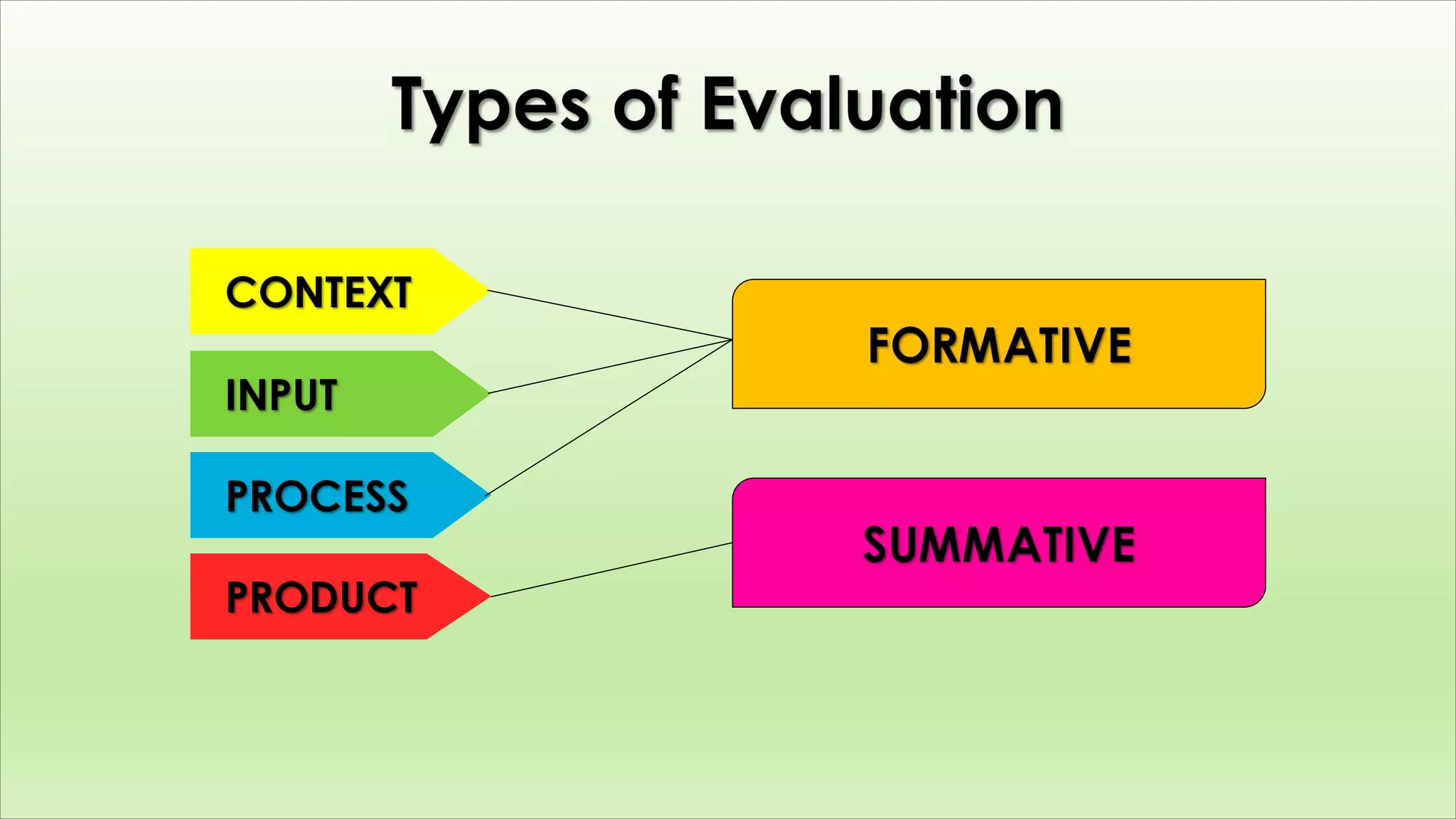
Ø FORMATIVE EVALUATION
− On-going program
− Program improvement
− Provide data about educational program (to assist
developer in improving the program
Ø SUMMATIVE EVALUATION
− Done at the completion of a program
− Concern with overall effectiveness of the program
− Provide data to determine the worth of the program
ü Are the program (curriculum) meeting existing or expected
needs?
ü Does the program contain extraneous and outdated materials?
ü Are the students able to perform adequately once they finish
their study?
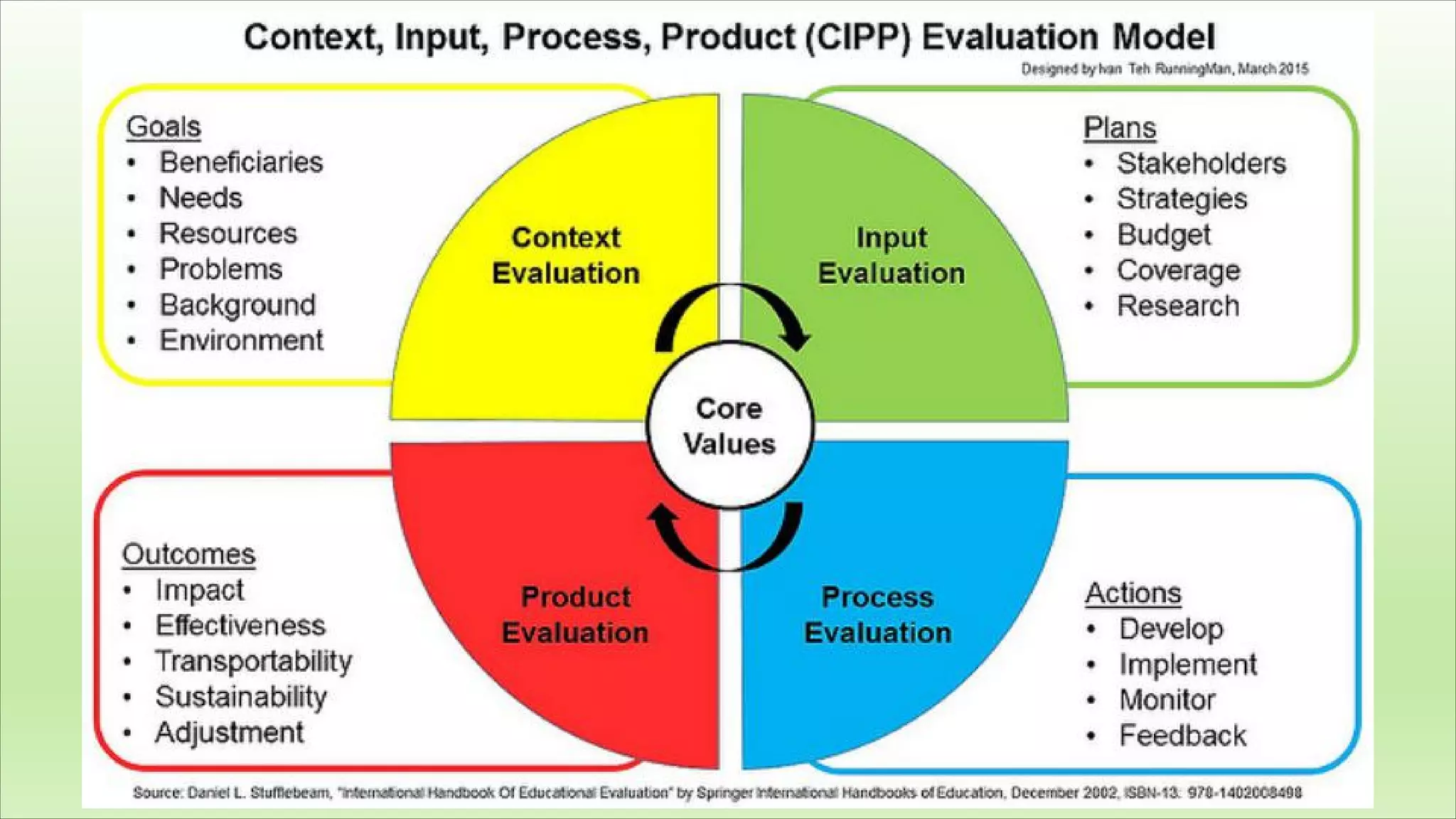
A comprehensive evaluation framework or model is necessary to
achieve a systematic, effective and efficient evaluation.
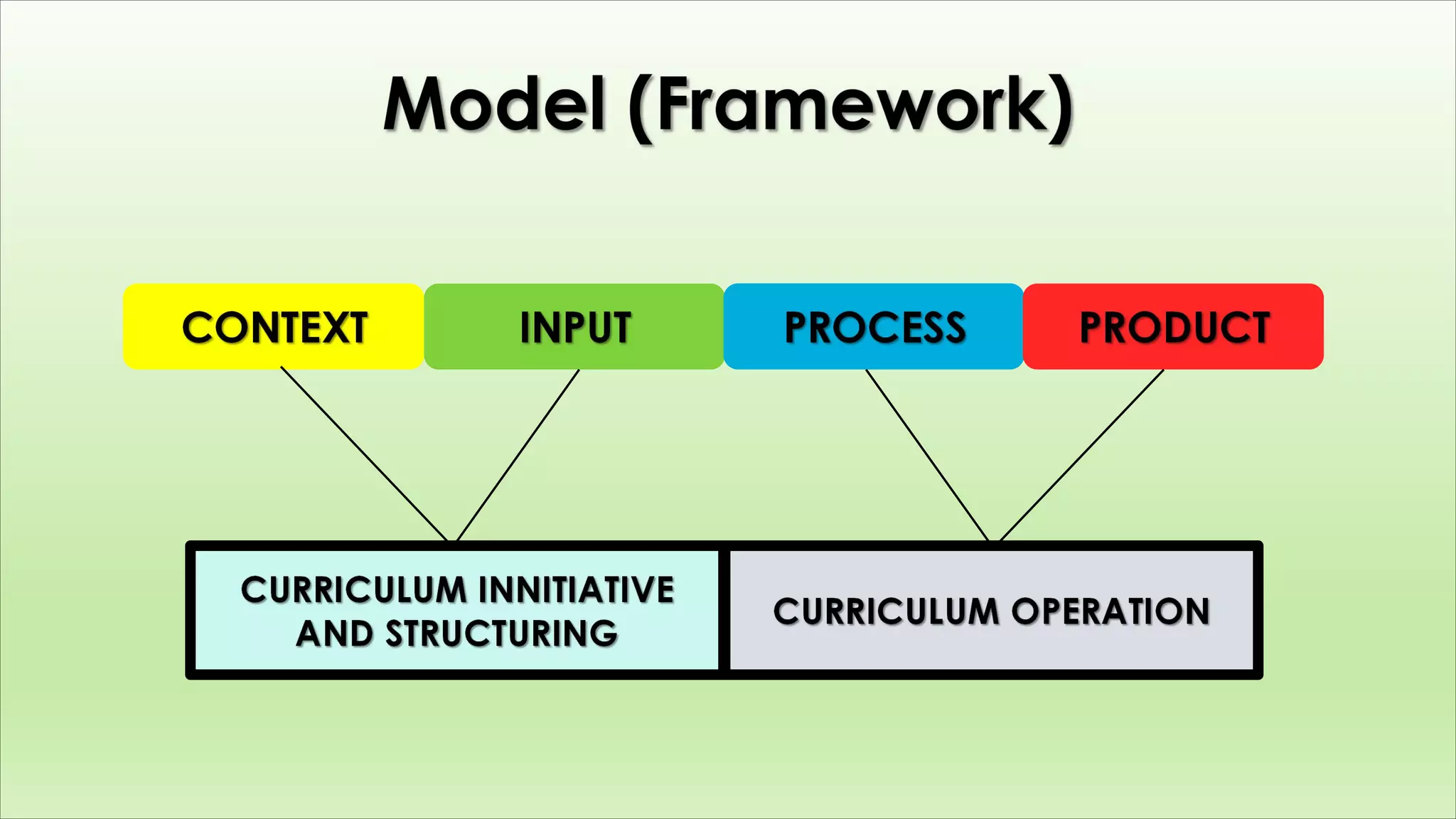
• Program evaluation model which was
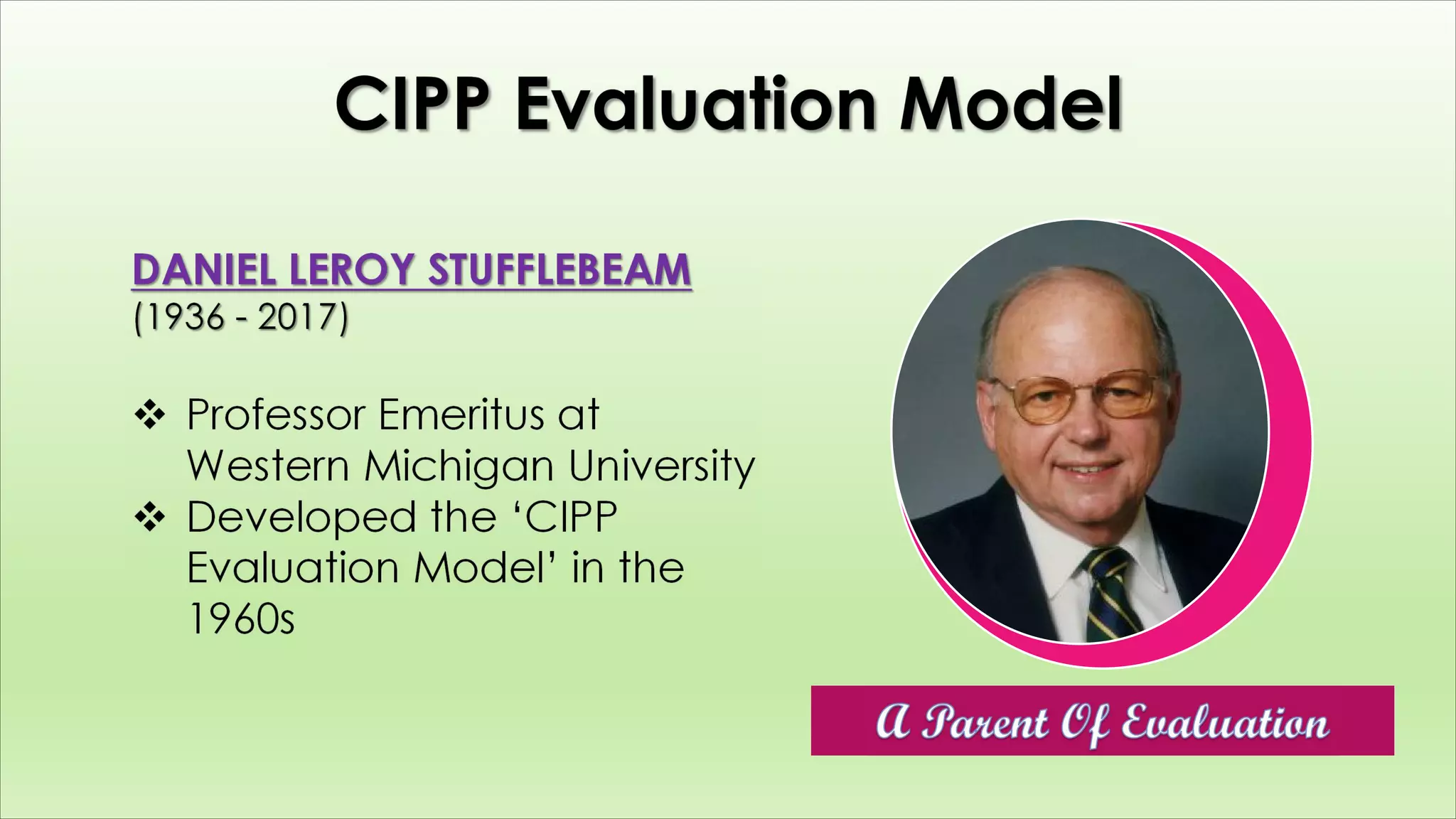
developed by Daniel Stufflebeam and
colleagues in the 1960s.
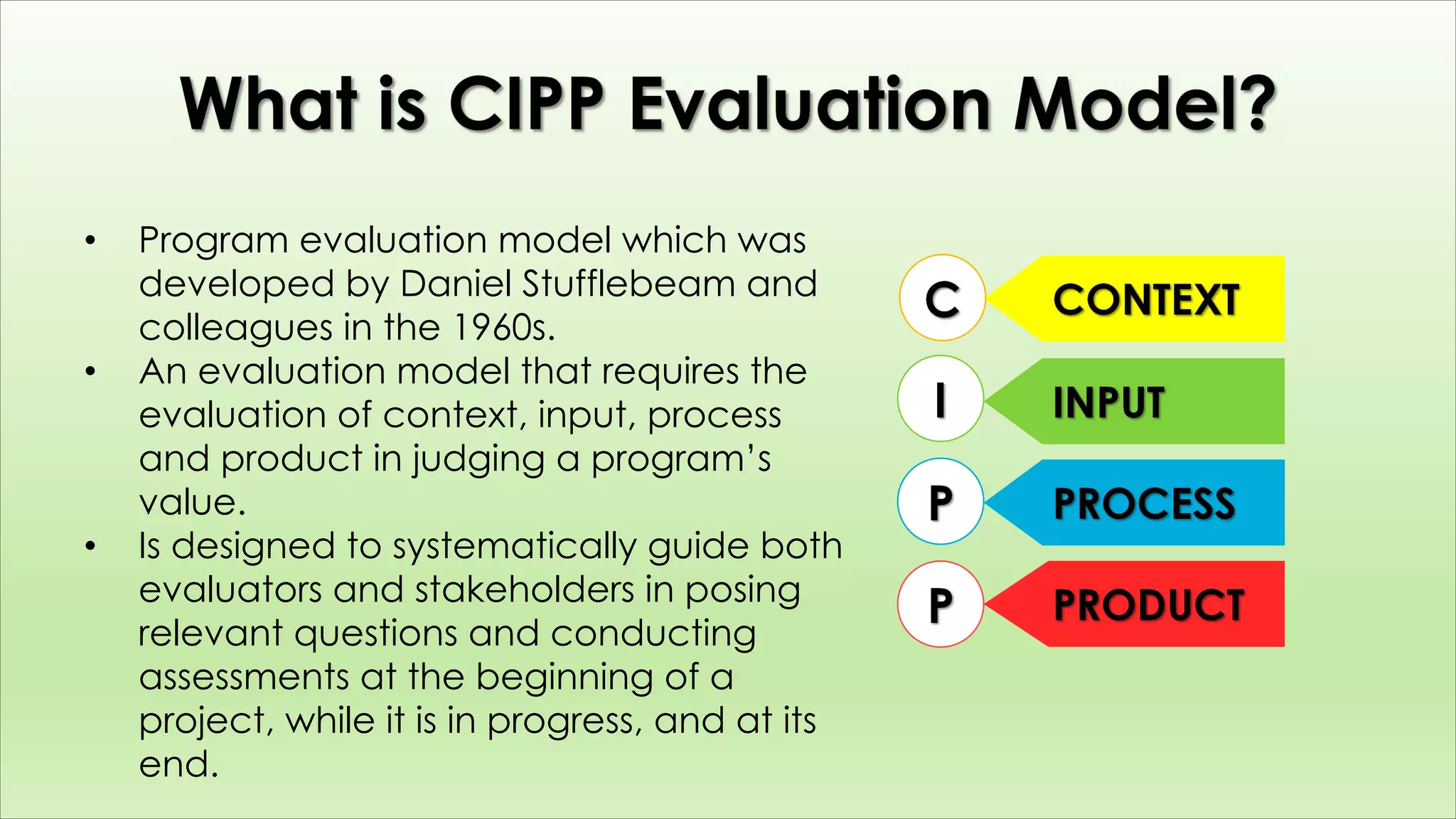
• An evaluation model that requires the
evaluation of context, input, process
and product in judging a program’s
value.
• Is designed to systematically guide both
evaluators and stakeholders in posing
relevant questions and conducting
assessments at the beginning of a
project, while it is in progress, and at its
end.
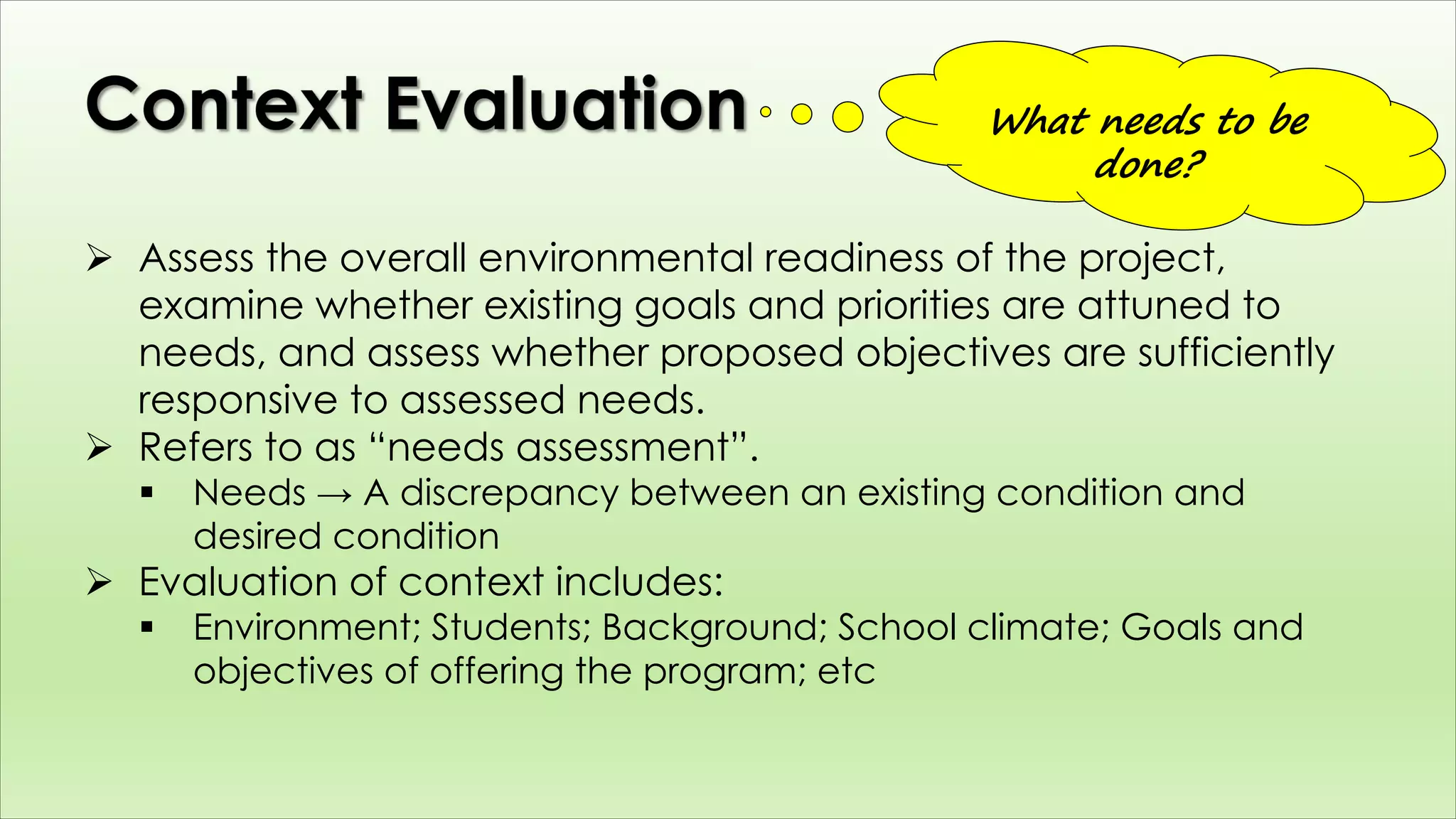
Ø Assess the overall environmental readiness of the project,
examine whether existing goals and priorities are attuned to
needs, and assess whether proposed objectives are sufficiently
responsive to assessed needs.
Ø Refers to as “needs assessment”.
§ Needs → A discrepancy between an existing condition and
desired condition
Ø Evaluation of context includes:
§ Environment
§ Students
§ Background
§ School climate
§ Goals and objectives of offering the program, etc
Ø Assess the overall environmental readiness of the project,
examine whether existing goals and priorities are attuned to
needs, and assess whether proposed objectives are sufficiently
responsive to assessed needs.
Ø Refers to as “needs assessment”.
§ Needs → A discrepancy between an existing condition and
desired condition
Ø Evaluation of context includes:
§ Environment; Students; Background; School climate; Goals and
objectives of offering the program; etc
What needs to be
done?
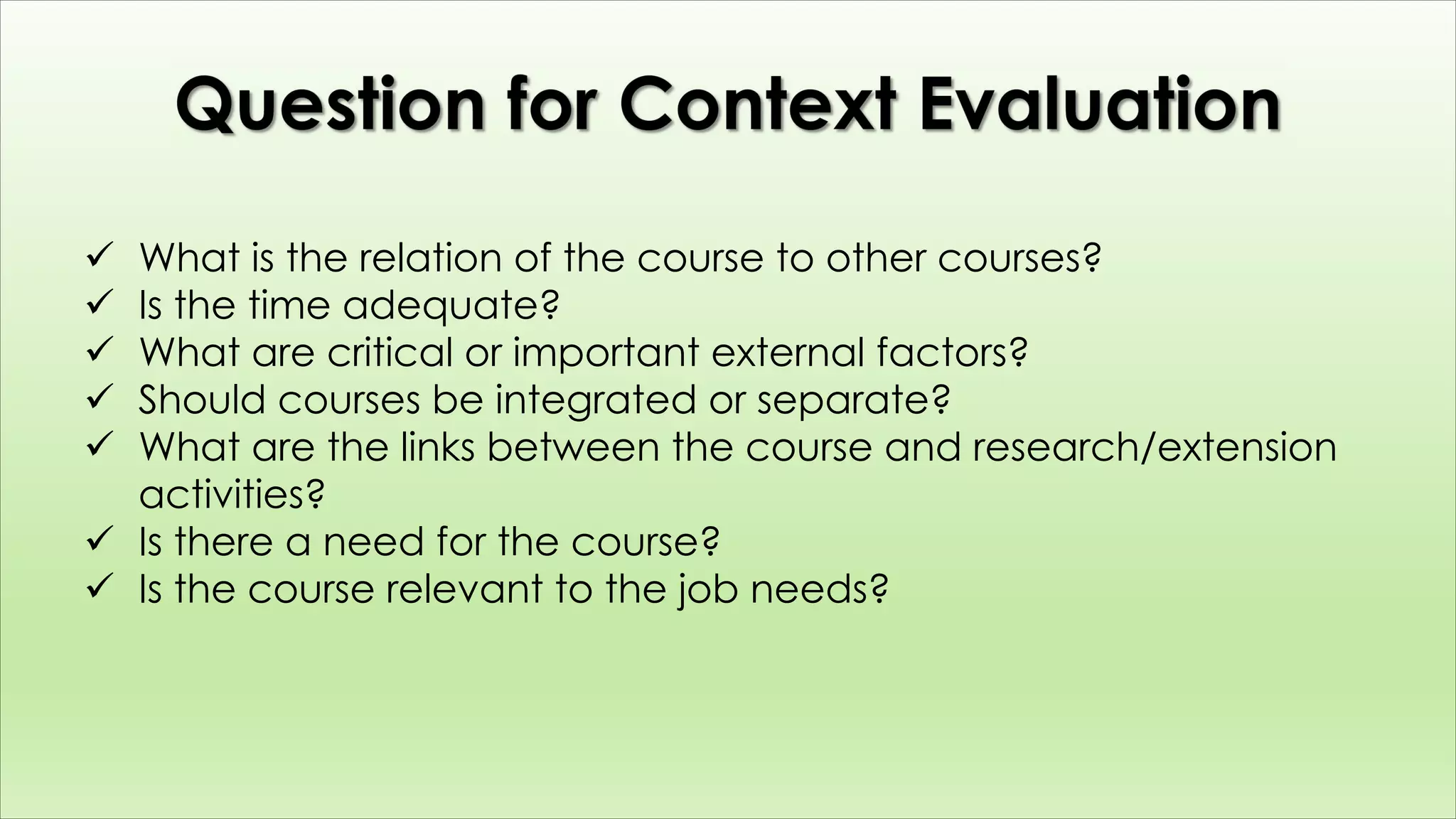
ü What is the relation of the course to other courses?
ü Is the time adequate?
ü What are critical or important external factors?
ü Should courses be integrated or separate?
ü What are the links between the course and research/extension
activities?
ü Is there a need for the course?
ü Is the course relevant to the job needs?
Ø Concerns judgement about resources and
strategies needed to accomplish program goals and objectives
Ø Refers to the ingredients of the curriculum
Ø This includes the quality of:
§ The curriculum and syllabus
§ Students
§ Teachers
§ Staffs
§ Facilities and infrastructures
§ etc.
How should it be
done?
ü What is the entering ability of students?
ü What are the learning skills of students?
ü What is the motivation of the students?
ü What are the living conditions of students?
ü What is the students’ existing knowledge?
ü Are the aims suitable?
ü Do the objectives derives from aim?
ü Are the objectives ‘smart’?
ü Is the course content clearly defined?
ü Does the content match student abilities?
ü Is the content relevant to practical problems?
ü What is the theory/practice balance?
ü What resources/equipment are available?
ü What books do the teachers have?
ü What books do the students have?
ü How strong are the teaching strategies of the teachers?
ü What time is available compared with the workload, for preparation?
ü What knowledge, skills and attitudes, related to the subject, do the
teachers have?
ü How supportive is the classroom environment?
ü How many students are there?
ü How many teachers are there?
ü How is the course organize?
ü What regulations relate to the training?
Ø Refers to the ways and means of how the curriculum has been
implemented - Involves the collection of data once the
program has been designed and put into operation
Ø Monitors the project implementation process.
Ø Assess the extent to which participants accept and carry out
their roles.
Ø Data which is collected over a period of time is useful in
detecting strengths and weaknesses of the program
Ø Process including:
§ Teachers’ methods
§ The facilities used
§ The students performance, etc.
Is it being done?
ü What is the workload of the students?
ü How well/actively do students participate?
ü Are there any problems related to teaching?
ü Are there any problems related to learning?
ü Is there an effective 2-way communication?
ü Is knowledge only transferred to students, or do they use and apply it?
ü Are there any problems which students face in using/ applying/
analysing the knowledge and skills?
ü Are the teaching and learning process continuously evaluated?
ü Are the teaching and learning affected by practical/institutional
problems?
ü What is the level of cooperation/interpersonal relations between
teachers and students?
ü How is discipline maintained?
Ø To determine the extent to which the goals of the program have
been achieved.
Ø Measure, interpret, and judge a project’s outcomes by assessing
their merit, worth, significance, and probity.
Ø Ascertain the extent to which the needs of all the participants
were met.
Ø Data collected can be used to make decisions about the
program and making modifications for improvement.
Ø This can be done through feedback from former students or
graduates, employers and the society.
Did the project
succeed?
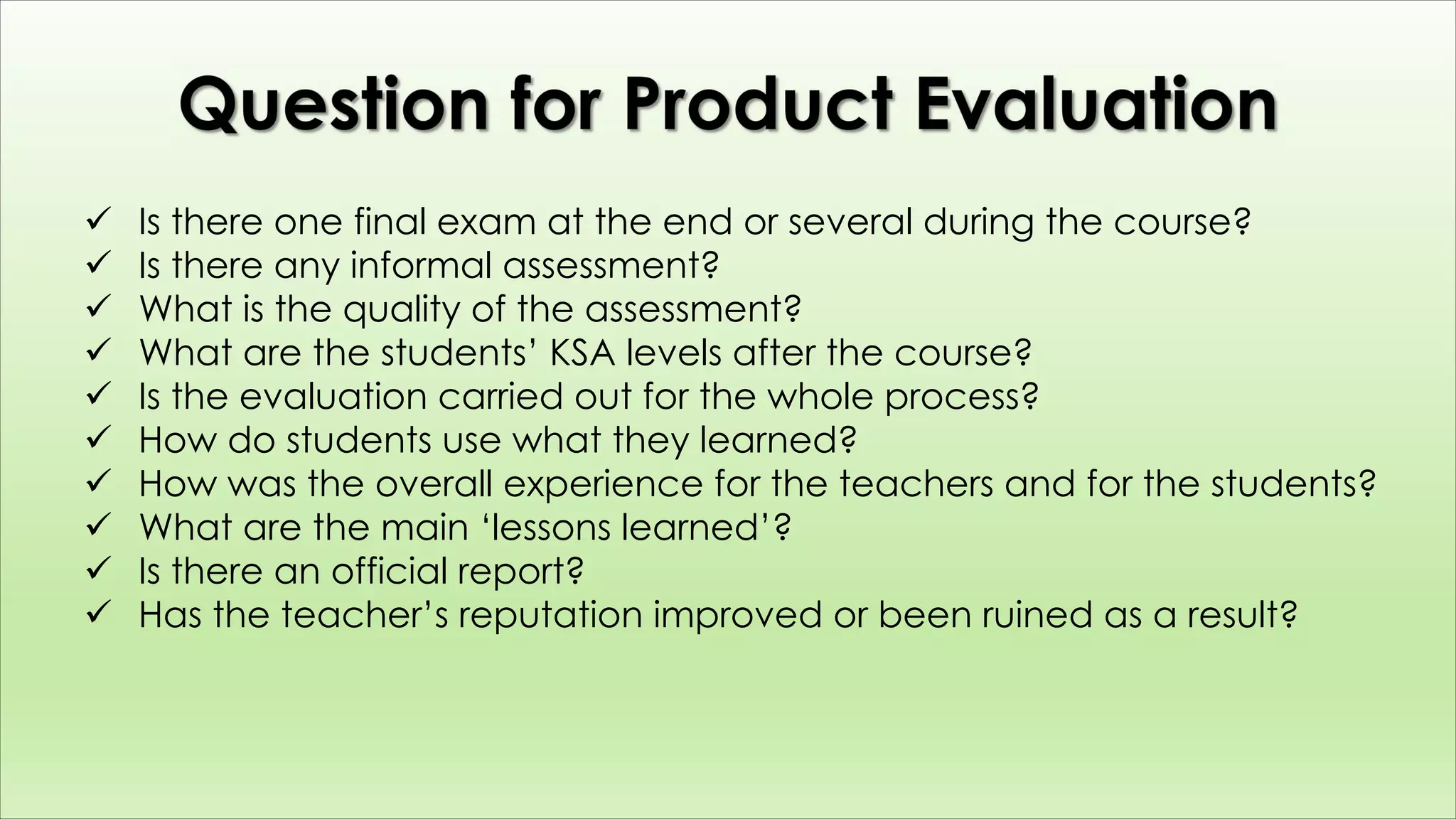
ü Is there one final exam at the end or several during the course?
ü Is there any informal assessment?
ü What is the quality of the assessment?
ü What are the students’ KSA levels after the course?
ü Is the evaluation carried out for the whole process?
ü How do students use what they learned?
ü How was the overall experience for the teachers and for the students?
ü What are the main ‘lessons learned’?
ü Is there an official report?
ü Has the teacher’s reputation improved or been ruined as a result?
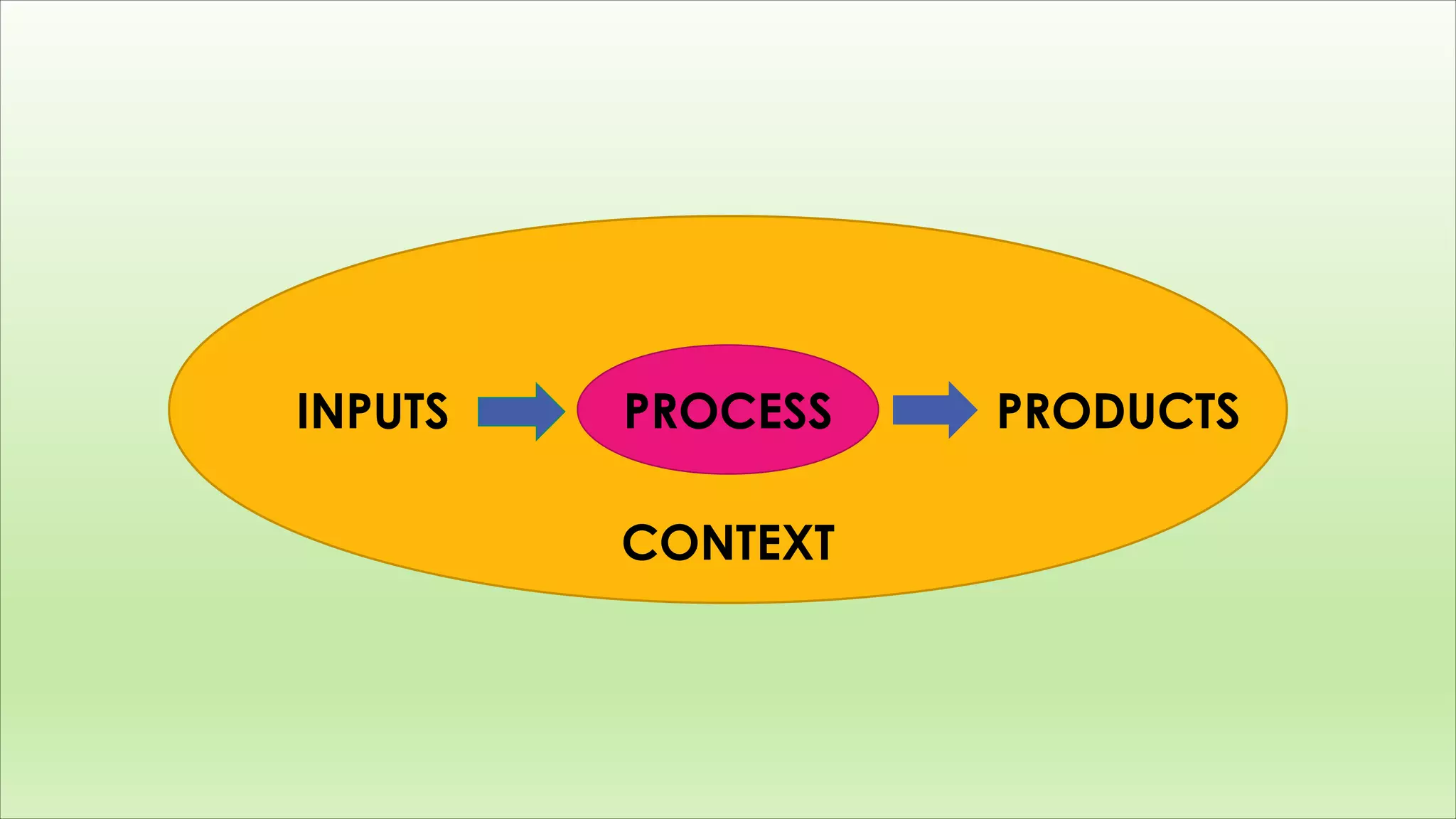
INPUTS PROCESS PRODUCTS
CONTEXT
2018-11-13
CIPP Evaluation Model

CIPP Evaluation Model

  • 2.
    Ø Making judgmentsabout the desirability of certain changes in students and using that info to change teaching and the curriculum. Ø Tyler (1950) : The process of determining to what extend educational objectives are being attained. Ø Borg & Gall (1983) : The process of making judgement about the merit, value or worth of educational program, projects, materials and techniques. Ø Stufflebeam et al. (1971) : The process of delineating, obtaining & providing useful info for judging decision alternatives
  • 3.
    Scriven (1967) Ø FORMATIVEEVALUATION − On-going program − Program improvement − Provide data about educational program (to assist developer in improving the program Ø SUMMATIVE EVALUATION − Done at the completion of a program − Concern with overall effectiveness of the program − Provide data to determine the worth of the program
  • 4.
    ü Are theprogram (curriculum) meeting existing or expected needs? ü Does the program contain extraneous and outdated materials? ü Are the students able to perform adequately once they finish their study? A comprehensive evaluation framework or model is necessary to achieve a systematic, effective and efficient evaluation.
  • 6.
    • Program evaluationmodel which was developed by Daniel Stufflebeam and colleagues in the 1960s. • An evaluation model that requires the evaluation of context, input, process and product in judging a program’s value. • Is designed to systematically guide both evaluators and stakeholders in posing relevant questions and conducting assessments at the beginning of a project, while it is in progress, and at its end.
  • 9.
    Ø Assess theoverall environmental readiness of the project, examine whether existing goals and priorities are attuned to needs, and assess whether proposed objectives are sufficiently responsive to assessed needs. Ø Refers to as “needs assessment”. § Needs → A discrepancy between an existing condition and desired condition Ø Evaluation of context includes: § Environment § Students § Background § School climate § Goals and objectives of offering the program, etc
  • 10.
    Ø Assess theoverall environmental readiness of the project, examine whether existing goals and priorities are attuned to needs, and assess whether proposed objectives are sufficiently responsive to assessed needs. Ø Refers to as “needs assessment”. § Needs → A discrepancy between an existing condition and desired condition Ø Evaluation of context includes: § Environment; Students; Background; School climate; Goals and objectives of offering the program; etc What needs to be done?
  • 11.
    ü What isthe relation of the course to other courses? ü Is the time adequate? ü What are critical or important external factors? ü Should courses be integrated or separate? ü What are the links between the course and research/extension activities? ü Is there a need for the course? ü Is the course relevant to the job needs?
  • 12.
    Ø Concerns judgementabout resources and strategies needed to accomplish program goals and objectives Ø Refers to the ingredients of the curriculum Ø This includes the quality of: § The curriculum and syllabus § Students § Teachers § Staffs § Facilities and infrastructures § etc. How should it be done?
  • 13.
    ü What isthe entering ability of students? ü What are the learning skills of students? ü What is the motivation of the students? ü What are the living conditions of students? ü What is the students’ existing knowledge? ü Are the aims suitable? ü Do the objectives derives from aim? ü Are the objectives ‘smart’? ü Is the course content clearly defined? ü Does the content match student abilities? ü Is the content relevant to practical problems? ü What is the theory/practice balance? ü What resources/equipment are available?
  • 14.
    ü What booksdo the teachers have? ü What books do the students have? ü How strong are the teaching strategies of the teachers? ü What time is available compared with the workload, for preparation? ü What knowledge, skills and attitudes, related to the subject, do the teachers have? ü How supportive is the classroom environment? ü How many students are there? ü How many teachers are there? ü How is the course organize? ü What regulations relate to the training?
  • 15.
    Ø Refers tothe ways and means of how the curriculum has been implemented - Involves the collection of data once the program has been designed and put into operation Ø Monitors the project implementation process. Ø Assess the extent to which participants accept and carry out their roles. Ø Data which is collected over a period of time is useful in detecting strengths and weaknesses of the program Ø Process including: § Teachers’ methods § The facilities used § The students performance, etc. Is it being done?
  • 16.
    ü What isthe workload of the students? ü How well/actively do students participate? ü Are there any problems related to teaching? ü Are there any problems related to learning? ü Is there an effective 2-way communication? ü Is knowledge only transferred to students, or do they use and apply it? ü Are there any problems which students face in using/ applying/ analysing the knowledge and skills? ü Are the teaching and learning process continuously evaluated? ü Are the teaching and learning affected by practical/institutional problems? ü What is the level of cooperation/interpersonal relations between teachers and students? ü How is discipline maintained?
  • 17.
    Ø To determinethe extent to which the goals of the program have been achieved. Ø Measure, interpret, and judge a project’s outcomes by assessing their merit, worth, significance, and probity. Ø Ascertain the extent to which the needs of all the participants were met. Ø Data collected can be used to make decisions about the program and making modifications for improvement. Ø This can be done through feedback from former students or graduates, employers and the society. Did the project succeed?
  • 18.
    ü Is thereone final exam at the end or several during the course? ü Is there any informal assessment? ü What is the quality of the assessment? ü What are the students’ KSA levels after the course? ü Is the evaluation carried out for the whole process? ü How do students use what they learned? ü How was the overall experience for the teachers and for the students? ü What are the main ‘lessons learned’? ü Is there an official report? ü Has the teacher’s reputation improved or been ruined as a result?
  • 19.
  • 20.