June 2012

ActionMedia
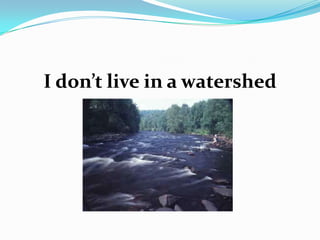
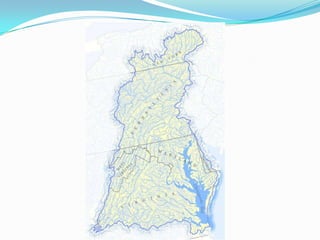
I don’t live in a watershed
WATFPSIJFD
WATFPSIJFD
WATFPSIJFD
Facts are Meaningless
Meaning always
comes from the story.
Facts illustrate the story
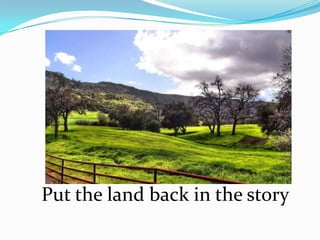
Put the land back in the story
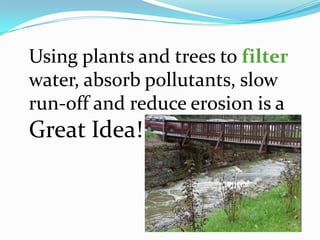
Using plants and trees to filter
water, absorb pollutants, slow
run-off and reduce erosion is a
Great Idea!
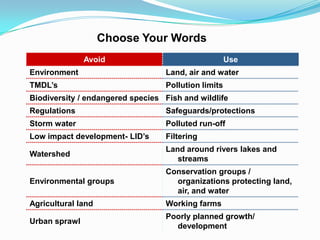
Choose Your Words
               Avoid                                 Use
Environment                       Land, air and water
TMDL’s                            Pollution limits
Biodiversity / endangered species Fish and wildlife
Regulations                       Safeguards/protections
Storm water                       Polluted run-off
Low impact development- LID’s     Filtering
                                  Land around rivers lakes and
Watershed
                                     streams
                                  Conservation groups /
Environmental groups                organizations protecting land,
                                    air, and water
Agricultural land                 Working farms
                                  Poorly planned growth/
Urban sprawl
                                    development
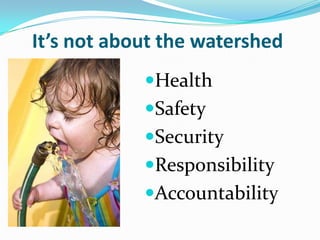
It’s not about the watershed
            Health
            Safety
            Security
            Responsibility
            Accountability
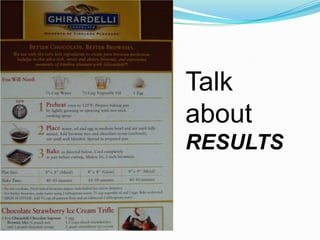
Talk
about
RESULTS
STRATEGIC COMMUNICATION
What action(s) do we want
taken?
Who can take that action?
What story do they need to hear?
Who should they hear it from?
How can we deliver the message?
NAMING THE TARGETS
Focus on primary targets:
        elected officials

    Which ones?
         Name them!
Name them
To the Editor:
Council Member MacKenzie spoke to the
 Chamber of Commerce recently about our
 opportunities for economic development.
 He’s right to be saying we have to plan
 ahead… (our infrastructure, our assets, our
 water…)
“Important action can be taken at the local
  level too. D.C. Mayor Vincent Gray has set a
  goal of making the Potomac clean enough
  for children to swim in and healthy enough
  that fish pulled from it can be eaten. This is
  tremendous long-term commitment to
  better river health.”
     Hedrick Belin & Ed Merrifield, Washington Post
STRATEGIC COMMUNICATION
What action(s) do we want taken?
Who can take that action?
What story do they need to
hear?
Who should they hear it from?
How can we deliver the message?
Everyone needs to hear
 It’s in my interest to take this action.
 People like me are doing it, or expect me to
  do it.
 (for public figures): People are watching to
  see what I’ll do.
           Praise & Blame
STRATEGIC COMMUNICATION
What action(s) do we want taken?
Who can take that action?
What story do they need to hear?
Who should they hear it from?
How can we deliver the message?
STRATEGIC MESSENGERS
Secondary targets:
     Who else is in the story?
            Taxpayers
            Farmers
            Builders
            Specific economic interests
            Institutional property owners
            People who drink water
     Who does the target need to hear from?
Which ones?
        Name them!
"The river's in trouble. I hope you
 understand, the river's in trouble,“ said
 PA Fish & Boat Commission Director
 John Arway. "Sick fish mean we have a
 sick river. I think you've seen the
 pictures, you've seen the data we've
 developed. We've got sick fish in the
 river."
“As part of home schooling, my mom and I read the
  newspaper. It was an article about pollution in our
  rivers…My father and I sometimes go fishing,
  camping, kayaking and swimming on, around and
  in the Susquehanna River. I am not in the water all
  the time like the fish, but if I spent more time
  doing these activities I wonder if I might get sick. I
  like doing these activities and want to one day
  share them with my children on the Susquehanna
  River…”
Grace Lustig (age 8) Patriot News
Caring for the land is a way of life for Janet Kline,
 a long-time Shenandoah Valley resident, who
 lives in a 155-year-old farmhouse, and keeps
 about 50 beef cattle and 17,000 breeder layer
 chickens. “I’m awfully glad I did this
 (c0nservation work),” explains Kline, a member
 of the Virginia Farm Bureau Women’s
 Committee. “The land is a loan for your kids,”
 she says. “We have to think about what we will
 do in the future. The Bay is a long way away for
 me, but I want clean water too.”
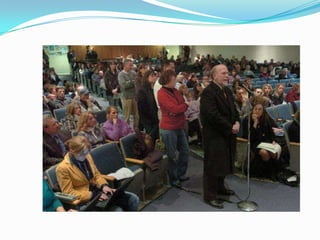
Listening
What do you think? Why?
I wish X could hear you say that.
Here’s an opportunity to tell
  them:
(And/or) Can I quote you on
  that?
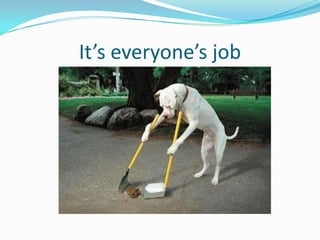
It’s everyone’s job
ActionMedia
     Michael Goldberg
goldberg@actionmedia.org
      612-805-4045

Increasing Communications Capacity- Michael Goldberg

  • 1.
  • 4.
    I don’t livein a watershed
  • 5.
  • 6.
  • 7.
  • 8.
  • 9.
    Meaning always comes fromthe story. Facts illustrate the story
  • 10.
    Put the landback in the story
  • 11.
    Using plants andtrees to filter water, absorb pollutants, slow run-off and reduce erosion is a Great Idea!
  • 12.
    Choose Your Words Avoid Use Environment Land, air and water TMDL’s Pollution limits Biodiversity / endangered species Fish and wildlife Regulations Safeguards/protections Storm water Polluted run-off Low impact development- LID’s Filtering Land around rivers lakes and Watershed streams Conservation groups / Environmental groups organizations protecting land, air, and water Agricultural land Working farms Poorly planned growth/ Urban sprawl development
  • 13.
    It’s not aboutthe watershed Health Safety Security Responsibility Accountability
  • 14.
  • 16.
    STRATEGIC COMMUNICATION What action(s)do we want taken? Who can take that action? What story do they need to hear? Who should they hear it from? How can we deliver the message?
  • 17.
    NAMING THE TARGETS Focuson primary targets: elected officials Which ones? Name them!
  • 18.
    Name them To theEditor: Council Member MacKenzie spoke to the Chamber of Commerce recently about our opportunities for economic development. He’s right to be saying we have to plan ahead… (our infrastructure, our assets, our water…)
  • 19.
    “Important action canbe taken at the local level too. D.C. Mayor Vincent Gray has set a goal of making the Potomac clean enough for children to swim in and healthy enough that fish pulled from it can be eaten. This is tremendous long-term commitment to better river health.” Hedrick Belin & Ed Merrifield, Washington Post
  • 20.
    STRATEGIC COMMUNICATION What action(s)do we want taken? Who can take that action? What story do they need to hear? Who should they hear it from? How can we deliver the message?
  • 22.
    Everyone needs tohear  It’s in my interest to take this action.  People like me are doing it, or expect me to do it.  (for public figures): People are watching to see what I’ll do. Praise & Blame
  • 23.
    STRATEGIC COMMUNICATION What action(s)do we want taken? Who can take that action? What story do they need to hear? Who should they hear it from? How can we deliver the message?
  • 24.
    STRATEGIC MESSENGERS Secondary targets: Who else is in the story? Taxpayers Farmers Builders Specific economic interests Institutional property owners People who drink water Who does the target need to hear from?
  • 25.
    Which ones? Name them!
  • 26.
    "The river's introuble. I hope you understand, the river's in trouble,“ said PA Fish & Boat Commission Director John Arway. "Sick fish mean we have a sick river. I think you've seen the pictures, you've seen the data we've developed. We've got sick fish in the river."
  • 27.
    “As part ofhome schooling, my mom and I read the newspaper. It was an article about pollution in our rivers…My father and I sometimes go fishing, camping, kayaking and swimming on, around and in the Susquehanna River. I am not in the water all the time like the fish, but if I spent more time doing these activities I wonder if I might get sick. I like doing these activities and want to one day share them with my children on the Susquehanna River…” Grace Lustig (age 8) Patriot News
  • 28.
    Caring for theland is a way of life for Janet Kline, a long-time Shenandoah Valley resident, who lives in a 155-year-old farmhouse, and keeps about 50 beef cattle and 17,000 breeder layer chickens. “I’m awfully glad I did this (c0nservation work),” explains Kline, a member of the Virginia Farm Bureau Women’s Committee. “The land is a loan for your kids,” she says. “We have to think about what we will do in the future. The Bay is a long way away for me, but I want clean water too.”
  • 29.
    Listening What do youthink? Why? I wish X could hear you say that. Here’s an opportunity to tell them: (And/or) Can I quote you on that?
  • 32.
  • 33.
    ActionMedia Michael Goldberg goldberg@actionmedia.org 612-805-4045