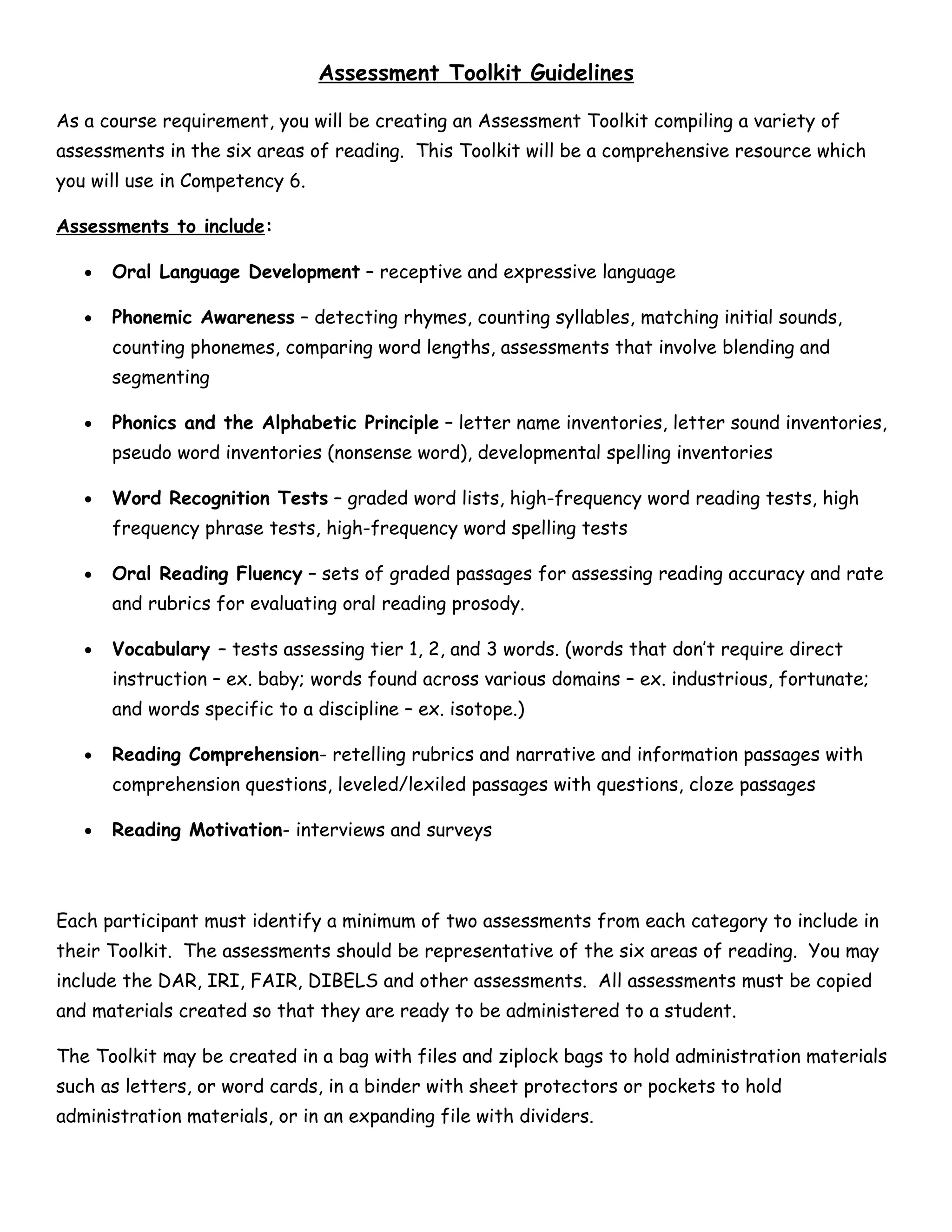
Assessment Toolkit Guidelines

As a course requirement, you will be creating an Assessment Toolkit compiling a variety of
assessments in the six areas of reading. This Toolkit will be a comprehensive resource which
you will use in Competency 6.

Assessments to include:

   •   Oral Language Development – receptive and expressive language

   •   Phonemic Awareness – detecting rhymes, counting syllables, matching initial sounds,
       counting phonemes, comparing word lengths, assessments that involve blending and
       segmenting

   •   Phonics and the Alphabetic Principle – letter name inventories, letter sound inventories,
       pseudo word inventories (nonsense word), developmental spelling inventories

   •   Word Recognition Tests – graded word lists, high-frequency word reading tests, high
       frequency phrase tests, high-frequency word spelling tests

   •   Oral Reading Fluency – sets of graded passages for assessing reading accuracy and rate
       and rubrics for evaluating oral reading prosody.

   •   Vocabulary – tests assessing tier 1, 2, and 3 words. (words that don’t require direct
       instruction – ex. baby; words found across various domains – ex. industrious, fortunate;
       and words specific to a discipline – ex. isotope.)

   •   Reading Comprehension- retelling rubrics and narrative and information passages with
       comprehension questions, leveled/lexiled passages with questions, cloze passages

   •   Reading Motivation- interviews and surveys


Each participant must identify a minimum of two assessments from each category to include in
their Toolkit. The assessments should be representative of the six areas of reading. You may
include the DAR, IRI, FAIR, DIBELS and other assessments. All assessments must be copied
and materials created so that they are ready to be administered to a student.

The Toolkit may be created in a bag with files and ziplock bags to hold administration materials
such as letters, or word cards, in a binder with sheet protectors or pockets to hold
administration materials, or in an expanding file with dividers.
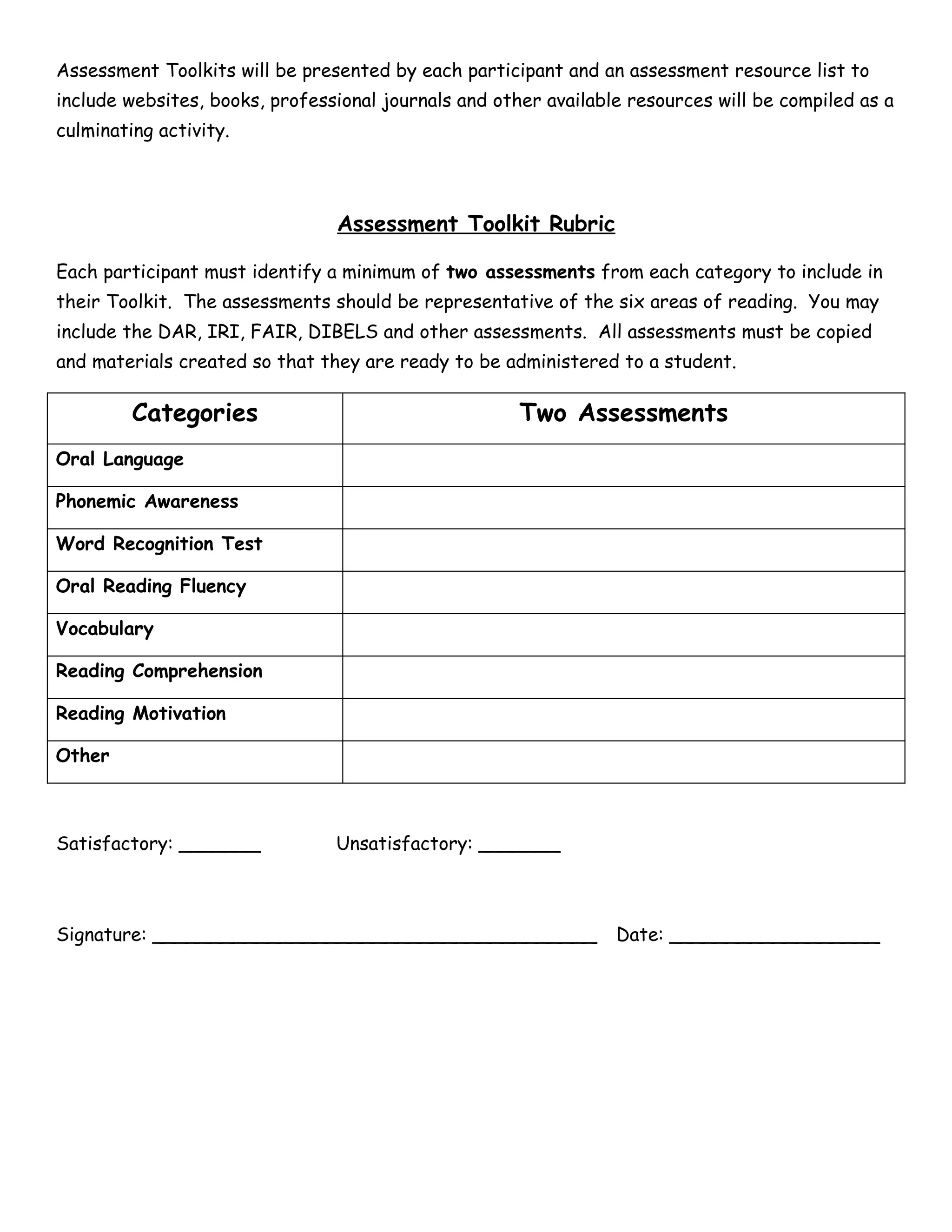
Assessment Toolkits will be presented by each participant and an assessment resource list to
include websites, books, professional journals and other available resources will be compiled as a
culminating activity.


                                Assessment Toolkit Rubric

Each participant must identify a minimum of two assessments from each category to include in
their Toolkit. The assessments should be representative of the six areas of reading. You may
include the DAR, IRI, FAIR, DIBELS and other assessments. All assessments must be copied
and materials created so that they are ready to be administered to a student.

         Categories                                   Two Assessments
Oral Language

Phonemic Awareness

Word Recognition Test

Oral Reading Fluency

Vocabulary

Reading Comprehension

Reading Motivation

Other


Satisfactory: _______           Unsatisfactory: _______


Signature: ______________________________________                Date: __________________

Assessment toolkit guidelines

  • 1.
    Assessment Toolkit Guidelines Asa course requirement, you will be creating an Assessment Toolkit compiling a variety of assessments in the six areas of reading. This Toolkit will be a comprehensive resource which you will use in Competency 6. Assessments to include: • Oral Language Development – receptive and expressive language • Phonemic Awareness – detecting rhymes, counting syllables, matching initial sounds, counting phonemes, comparing word lengths, assessments that involve blending and segmenting • Phonics and the Alphabetic Principle – letter name inventories, letter sound inventories, pseudo word inventories (nonsense word), developmental spelling inventories • Word Recognition Tests – graded word lists, high-frequency word reading tests, high frequency phrase tests, high-frequency word spelling tests • Oral Reading Fluency – sets of graded passages for assessing reading accuracy and rate and rubrics for evaluating oral reading prosody. • Vocabulary – tests assessing tier 1, 2, and 3 words. (words that don’t require direct instruction – ex. baby; words found across various domains – ex. industrious, fortunate; and words specific to a discipline – ex. isotope.) • Reading Comprehension- retelling rubrics and narrative and information passages with comprehension questions, leveled/lexiled passages with questions, cloze passages • Reading Motivation- interviews and surveys Each participant must identify a minimum of two assessments from each category to include in their Toolkit. The assessments should be representative of the six areas of reading. You may include the DAR, IRI, FAIR, DIBELS and other assessments. All assessments must be copied and materials created so that they are ready to be administered to a student. The Toolkit may be created in a bag with files and ziplock bags to hold administration materials such as letters, or word cards, in a binder with sheet protectors or pockets to hold administration materials, or in an expanding file with dividers.
  • 2.
    Assessment Toolkits willbe presented by each participant and an assessment resource list to include websites, books, professional journals and other available resources will be compiled as a culminating activity. Assessment Toolkit Rubric Each participant must identify a minimum of two assessments from each category to include in their Toolkit. The assessments should be representative of the six areas of reading. You may include the DAR, IRI, FAIR, DIBELS and other assessments. All assessments must be copied and materials created so that they are ready to be administered to a student. Categories Two Assessments Oral Language Phonemic Awareness Word Recognition Test Oral Reading Fluency Vocabulary Reading Comprehension Reading Motivation Other Satisfactory: _______ Unsatisfactory: _______ Signature: ______________________________________ Date: __________________