 Humanitarian need
 Regulatory compliance
 Liability and cost control
 Operational risk reduction
 Improved productivity
 “Valued neighbor”
 Establish company values
 Set and enforce company policies
 Consistently demonstrate commitment
 Be the “role model” for desired behavior
 Communicate expectations
 Create desired work culture
 Stay on top of things, and follow up
 Attitude
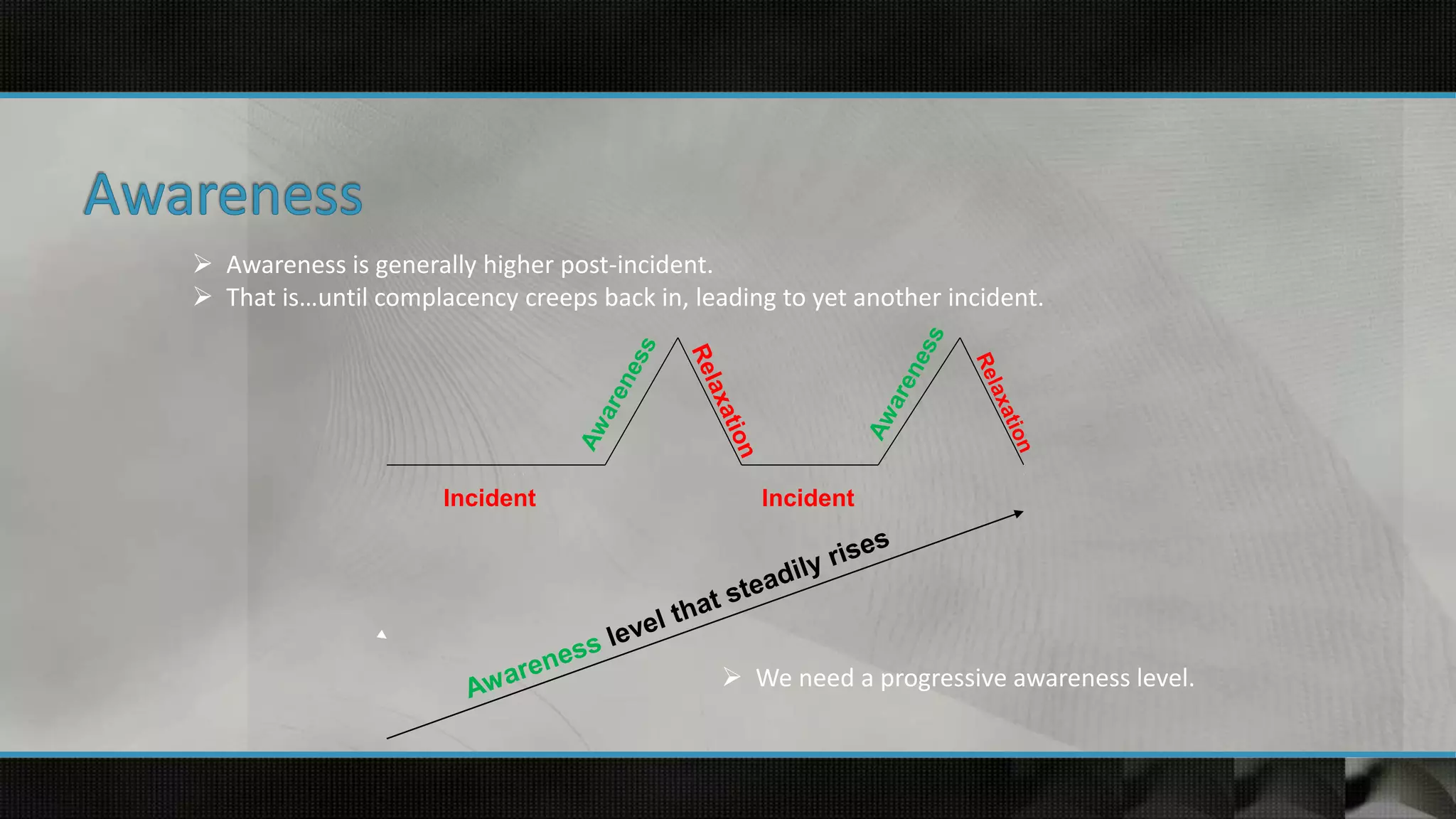
 Awareness
 Action
 Accountability
 “We don’t have time for Safety.”
 Do you have time for lost productivity?
 Do you have time for increased insurance premiums?
 Do you have time for diminished morale & high turn-over among employees?
 Do you have time for an OSHA mandated shut-down?
 “Can-do” attitude when it comes to safety.
 “We CAN improve our processes!”
 “We CAN make our environment safer for employees!”
Incident Incident
 Awareness is generally higher post-incident.
 That is…until complacency creeps back in, leading to yet another incident.
 We need a progressive awareness level.
 Lead by example.
 Report ALL near misses and injuries (no matter how slight).
 If you see an unsafe act or condition, STOP the process.
 Give feedback on how things can be improved and made safer.
 Consistently coach on the correct and safe way to perform a process.
 Hold people accountable for their Safety performance.
 Use the disciplinary policy. Give me the write-up.
 Give verbal coaching to employees.
 You ARE your brother’s keeper (all team members responsible for the short-
comings of the individual).
 Support Management & Employee efforts to establish a solid safety
culture.
 Communicate rules and procedures.
 Know the work you are supervising.
 Inspect what you expect.
 Enforce rules and procedures.
 NEVER allow deviation from established procedures.
 Know the rules.
 Be familiar with laws, directives and policies mandated by the company and
customers, OSHA and other regulatory agencies.
 Play by the rules.
 Encourage others to participate.
 Be visible.
 Ensure employees are aware of their expectations.
 Do you understand that safety is a condition of employment?
 Do you understand your safety responsibilities?
 Inform employees of any changes to procedure or expectations.
 Be transparent as to the reasons for policy or procedure.
 Provide feedback on performance.
 Invite feedback on safety concerns.
 Supervisors being on the floor all day makes this need little
explanation.
 Develop an eye for “the wrong”.
 Is it out of place?
 Is it safe?
 Is it broken?
 Is it according to procedure?
 Can it be improved upon?
 Is it being done according to my expectations?
 Take swift action if upon inspecting you see unsafe acts or conditions.
 In writing is preferable.
 Encourage others to take action against unsafe acts and conditions.
 Inspire employees to hold each other accountable for unsafe acts and
conditions.
 Point out the unsafe act or condition.
 Get the employee to acknowledge the act or condition as unsafe .
 Have them explain the risks of the unsafe act or condition.
 Get the employee to agree that the gains did not outweigh the consequences.
 Inspire the employee to suggest a proper, safe behavior.
 Establish a formal action plan for improvement.
 Be consistent and unbiased.
 Evaluate the frequency and severity of the act.
 Approach employee with his or her best interests in mind.
 Remind employee about external effects of incidents.
“Discipline is the instant willing obedience to all orders, respect for authority and teamwork.”
“Through pain comes discipline.”
 Verbal acknowledgment
 “Good job doing that thing you did!”
 Public praise
 “I’d like to give a shout-out to my homeboy who did that thing yesterday!”
 Material rewards
 “Thanks for doing that thing, here is a candy bar!”
 Task planning
 Employee education
 Enforcement
 Leadership by example
 Clear communication
Supervisor Safety Training 1

Supervisor Safety Training 1

  • 2.
     Humanitarian need Regulatory compliance  Liability and cost control  Operational risk reduction  Improved productivity  “Valued neighbor”
  • 3.
     Establish companyvalues  Set and enforce company policies  Consistently demonstrate commitment  Be the “role model” for desired behavior  Communicate expectations  Create desired work culture  Stay on top of things, and follow up
  • 4.
     Attitude  Awareness Action  Accountability
  • 5.
     “We don’thave time for Safety.”  Do you have time for lost productivity?  Do you have time for increased insurance premiums?  Do you have time for diminished morale & high turn-over among employees?  Do you have time for an OSHA mandated shut-down?  “Can-do” attitude when it comes to safety.  “We CAN improve our processes!”  “We CAN make our environment safer for employees!”
  • 6.
    Incident Incident  Awarenessis generally higher post-incident.  That is…until complacency creeps back in, leading to yet another incident.  We need a progressive awareness level.
  • 7.
     Lead byexample.  Report ALL near misses and injuries (no matter how slight).  If you see an unsafe act or condition, STOP the process.  Give feedback on how things can be improved and made safer.  Consistently coach on the correct and safe way to perform a process.
  • 8.
     Hold peopleaccountable for their Safety performance.  Use the disciplinary policy. Give me the write-up.  Give verbal coaching to employees.  You ARE your brother’s keeper (all team members responsible for the short- comings of the individual).
  • 9.
     Support Management& Employee efforts to establish a solid safety culture.  Communicate rules and procedures.  Know the work you are supervising.  Inspect what you expect.  Enforce rules and procedures.  NEVER allow deviation from established procedures.
  • 10.
     Know therules.  Be familiar with laws, directives and policies mandated by the company and customers, OSHA and other regulatory agencies.  Play by the rules.  Encourage others to participate.  Be visible.
  • 11.
     Ensure employeesare aware of their expectations.  Do you understand that safety is a condition of employment?  Do you understand your safety responsibilities?  Inform employees of any changes to procedure or expectations.  Be transparent as to the reasons for policy or procedure.  Provide feedback on performance.  Invite feedback on safety concerns.
  • 12.
     Supervisors beingon the floor all day makes this need little explanation.
  • 13.
     Develop aneye for “the wrong”.  Is it out of place?  Is it safe?  Is it broken?  Is it according to procedure?  Can it be improved upon?  Is it being done according to my expectations?
  • 14.
     Take swiftaction if upon inspecting you see unsafe acts or conditions.  In writing is preferable.  Encourage others to take action against unsafe acts and conditions.  Inspire employees to hold each other accountable for unsafe acts and conditions.
  • 15.
     Point outthe unsafe act or condition.  Get the employee to acknowledge the act or condition as unsafe .  Have them explain the risks of the unsafe act or condition.  Get the employee to agree that the gains did not outweigh the consequences.  Inspire the employee to suggest a proper, safe behavior.  Establish a formal action plan for improvement.
  • 16.
     Be consistentand unbiased.  Evaluate the frequency and severity of the act.  Approach employee with his or her best interests in mind.  Remind employee about external effects of incidents. “Discipline is the instant willing obedience to all orders, respect for authority and teamwork.” “Through pain comes discipline.”
  • 17.
     Verbal acknowledgment “Good job doing that thing you did!”  Public praise  “I’d like to give a shout-out to my homeboy who did that thing yesterday!”  Material rewards  “Thanks for doing that thing, here is a candy bar!”
  • 18.
     Task planning Employee education  Enforcement  Leadership by example  Clear communication