

Assessing Role-Plays and
Simulations
BESIG Annual Conference
Prague, Czech Republic
November 9, 2013
Assumptions
• Performance-based training
• Needs analysis
• Performance Objectives (POs)
• Maximum relevance – behavior change
• Realistic training exercises (or even authentic)
• Experts in communication skills (trainers)
• Experts in discourse community/conventions (learners)
• Assessment is not common in BE skills training
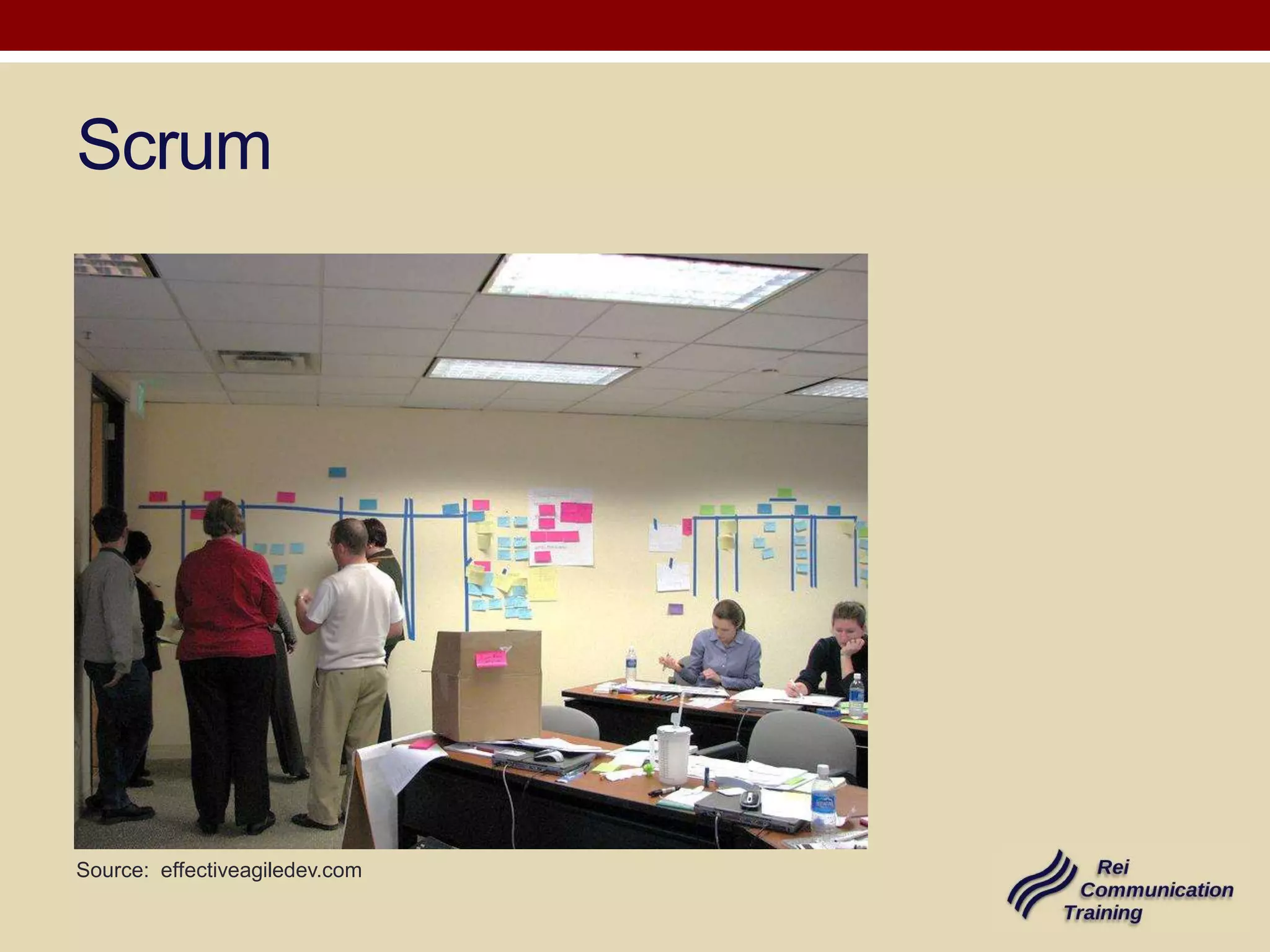
Scrum

Source: effectiveagiledev.com
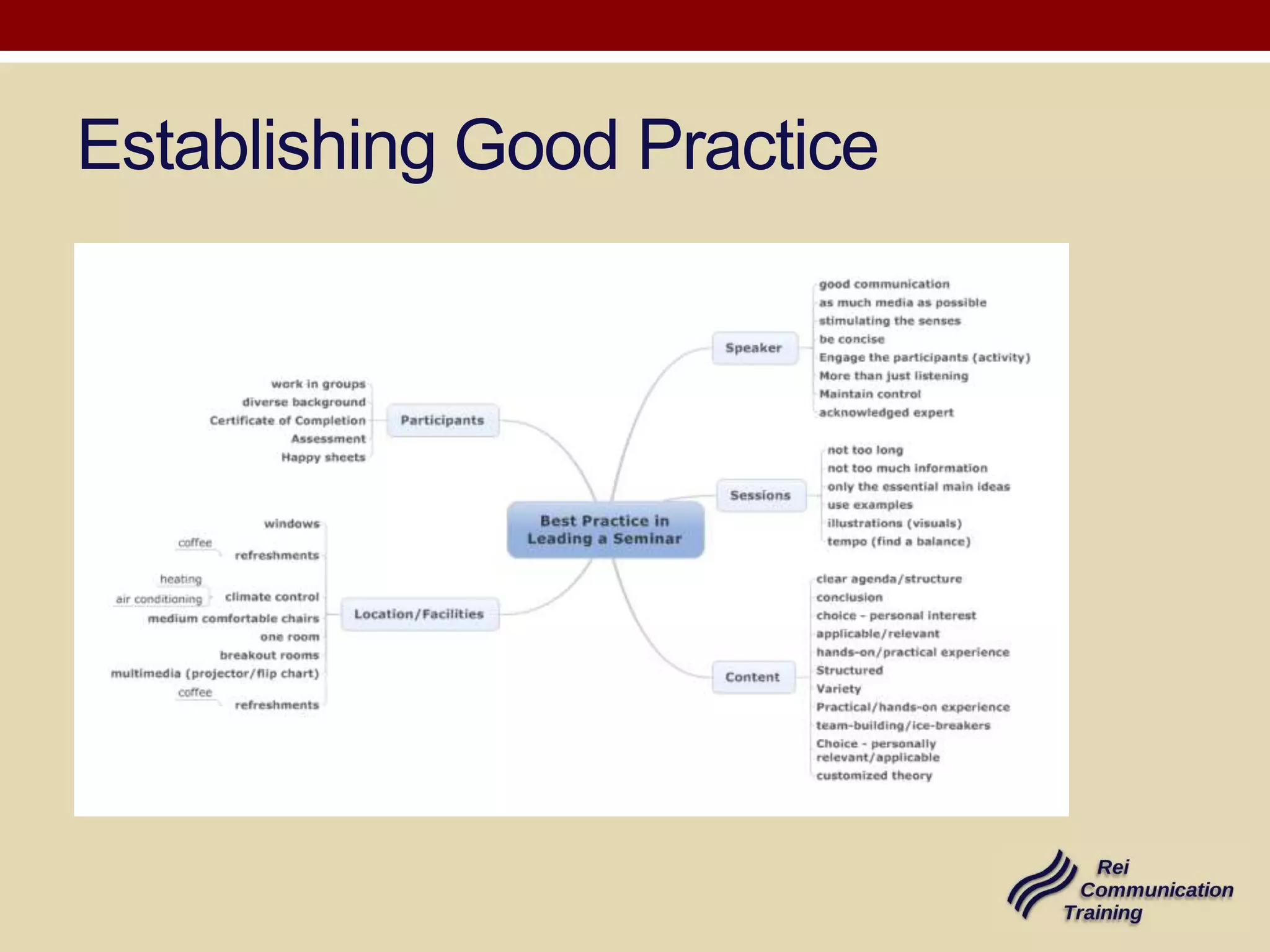
Establishing Good Practice
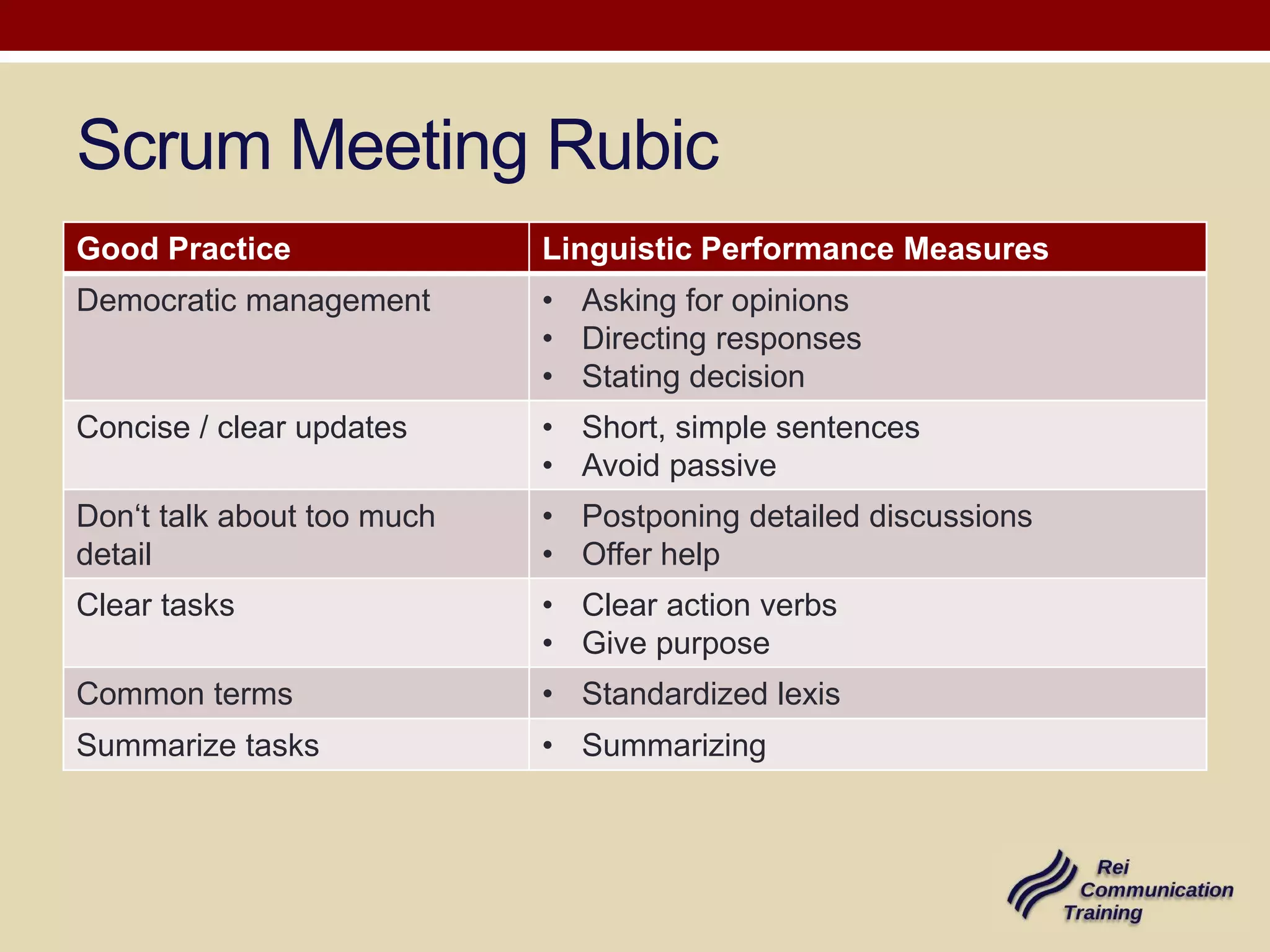
Scrum Meeting Rubic
Good Practice

Linguistic Performance Measures

Democratic management

• Asking for opinions
• Directing responses
• Stating decision

Concise / clear updates

• Short, simple sentences
• Avoid passive

Don‘t talk about too much
detail

• Postponing detailed discussions
• Offer help

Clear tasks

• Clear action verbs
• Give purpose

Common terms

• Standardized lexis

Summarize tasks

• Summarizing
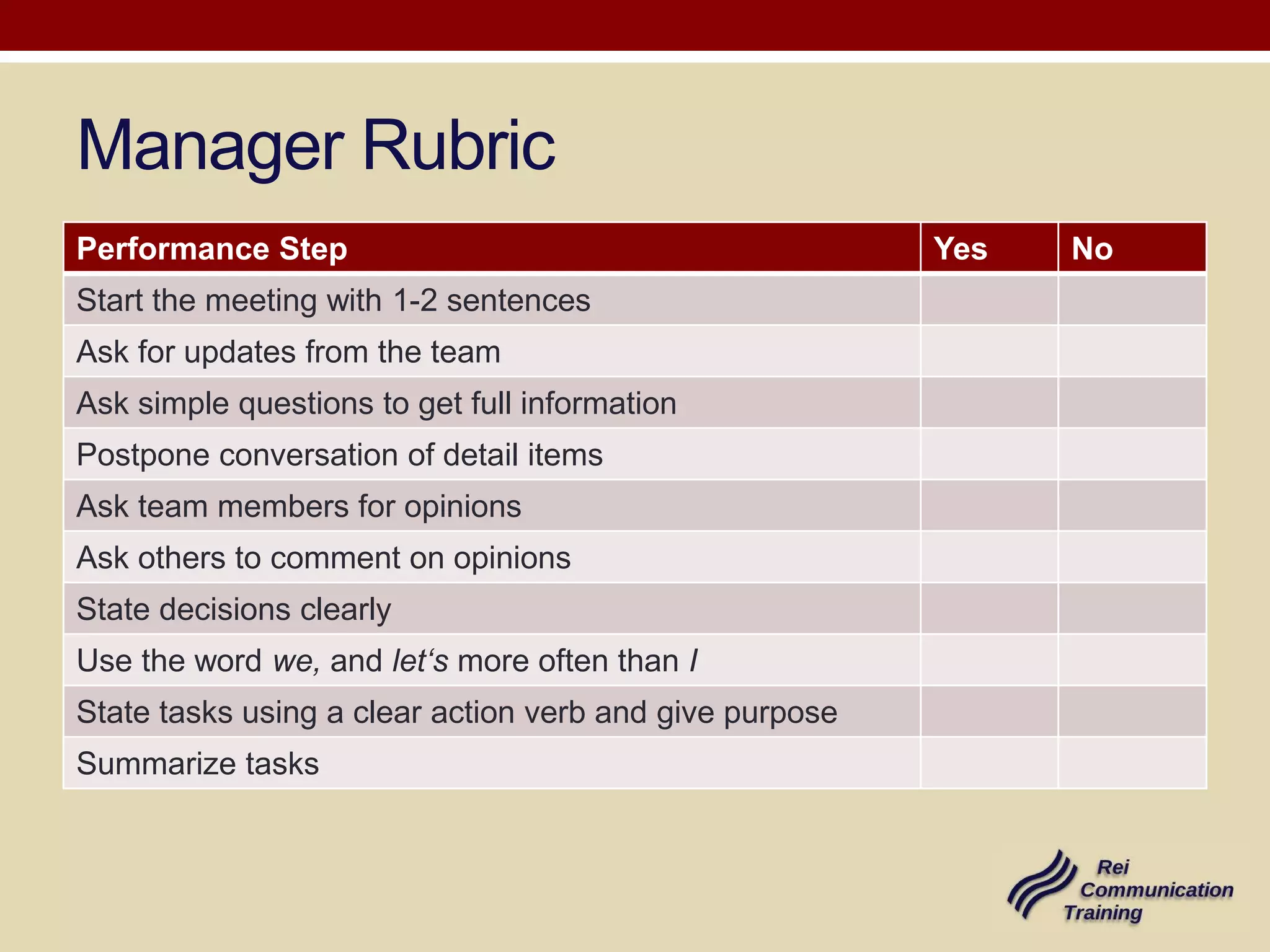
Manager Rubric
Performance Step
Start the meeting with 1-2 sentences
Ask for updates from the team
Ask simple questions to get full information
Postpone conversation of detail items
Ask team members for opinions
Ask others to comment on opinions
State decisions clearly

Use the word we, and let‘s more often than I
State tasks using a clear action verb and give purpose
Summarize tasks

Yes

No
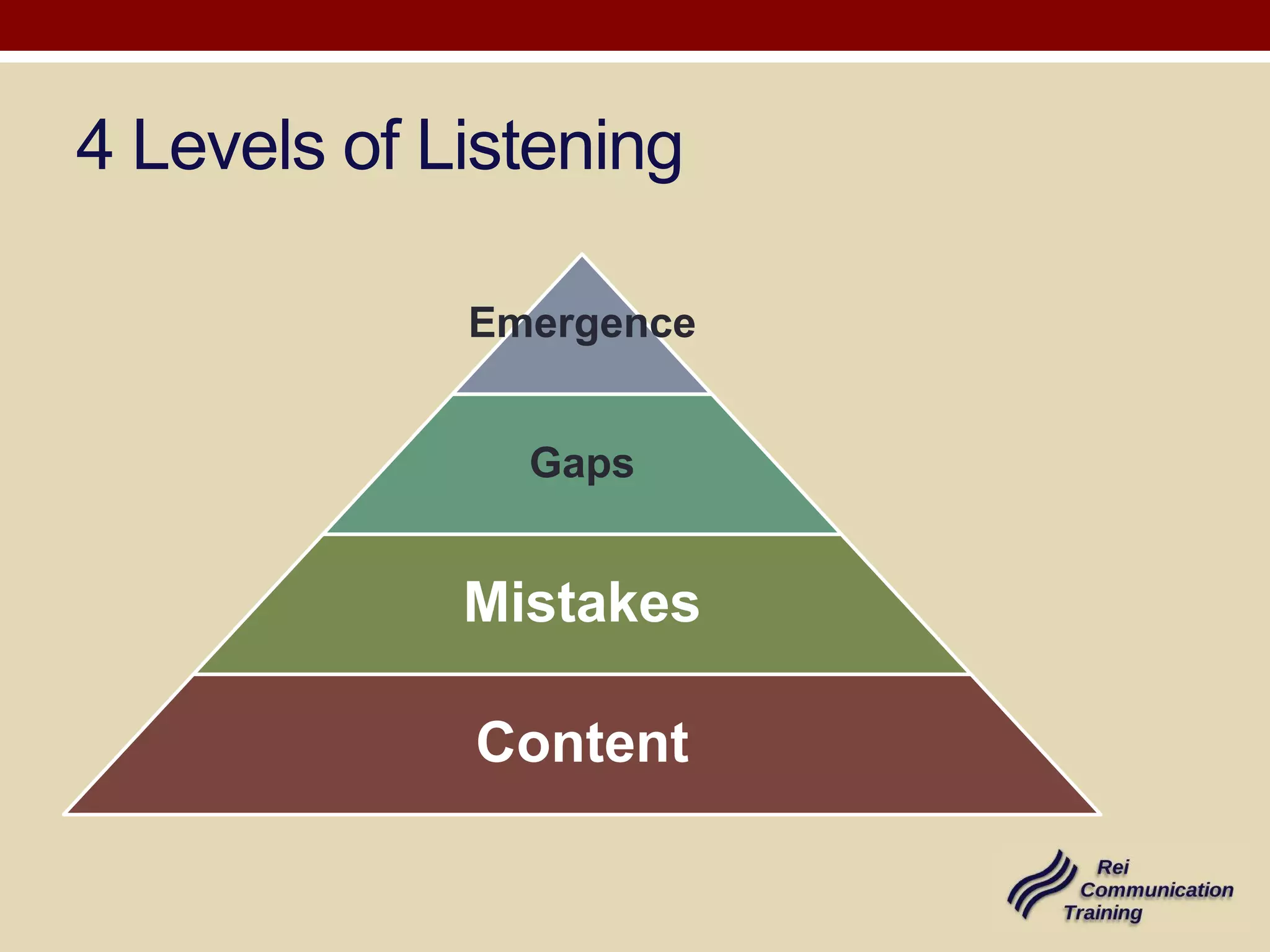
4 Levels of Listening
Emergence
Gaps

Mistakes
Content
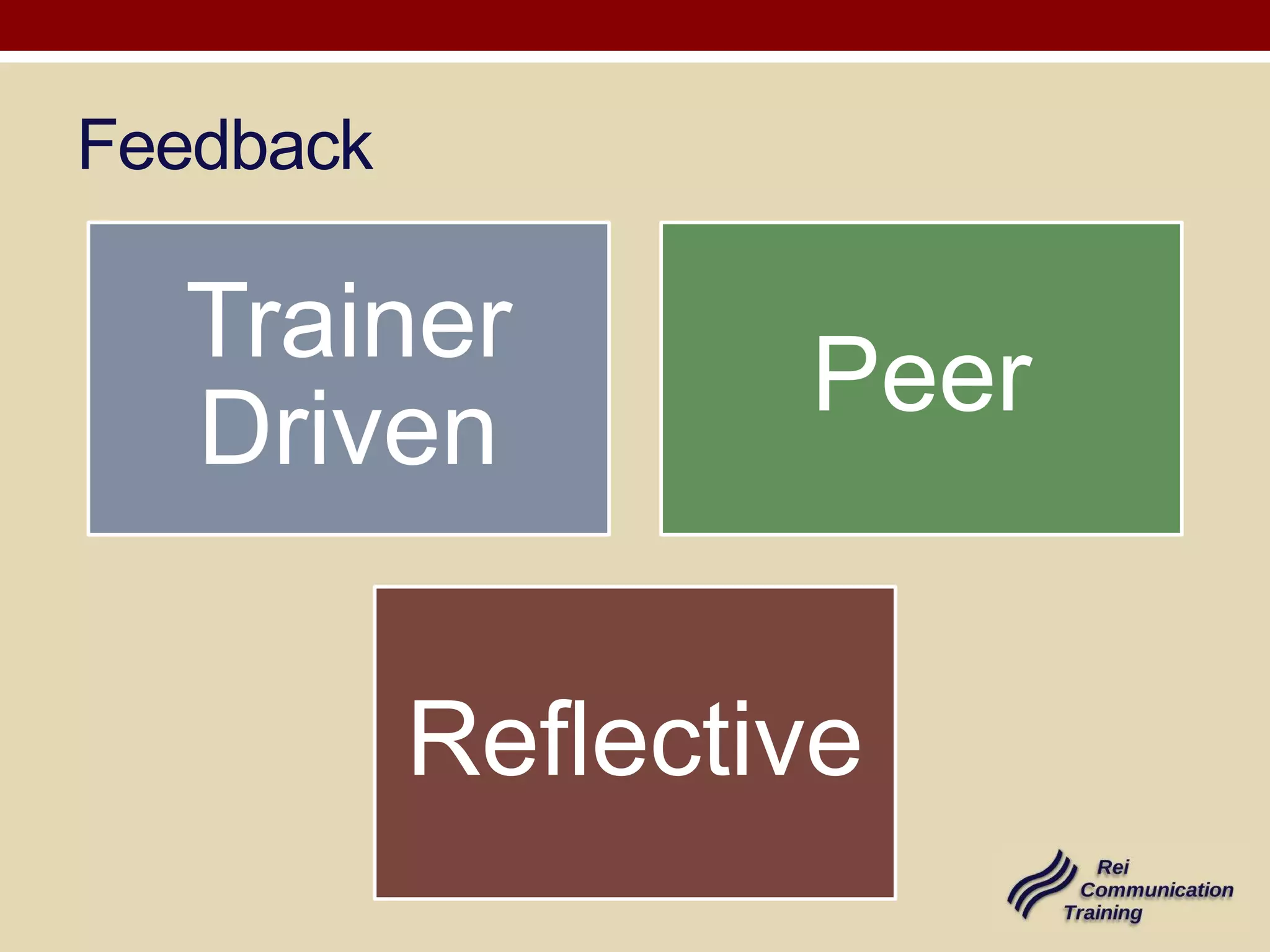
Feedback

Trainer
Driven

Peer

Reflective
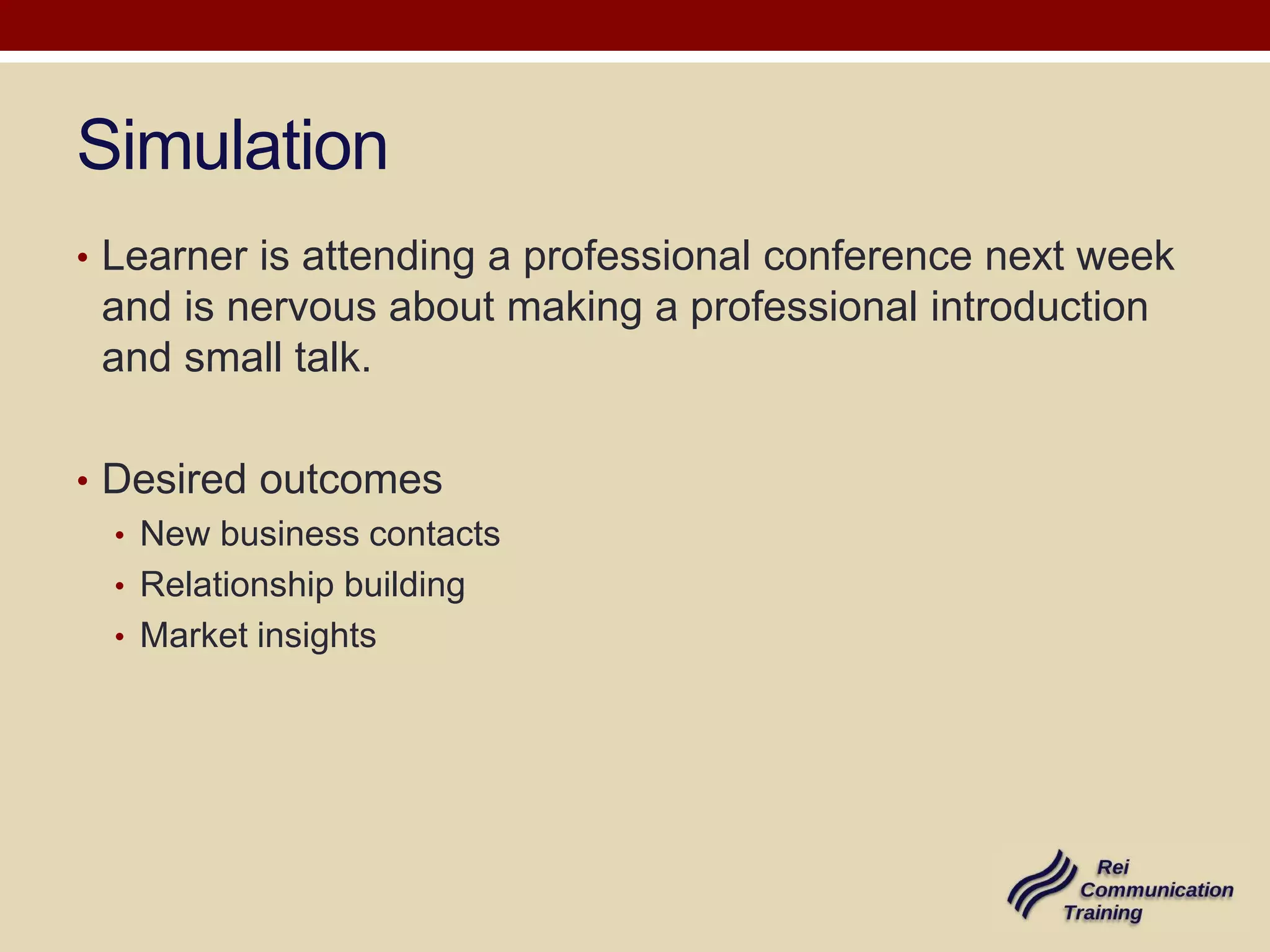
Simulation
• Learner is attending a professional conference next week

and is nervous about making a professional introduction
and small talk.
• Desired outcomes
• New business contacts
• Relationship building
• Market insights
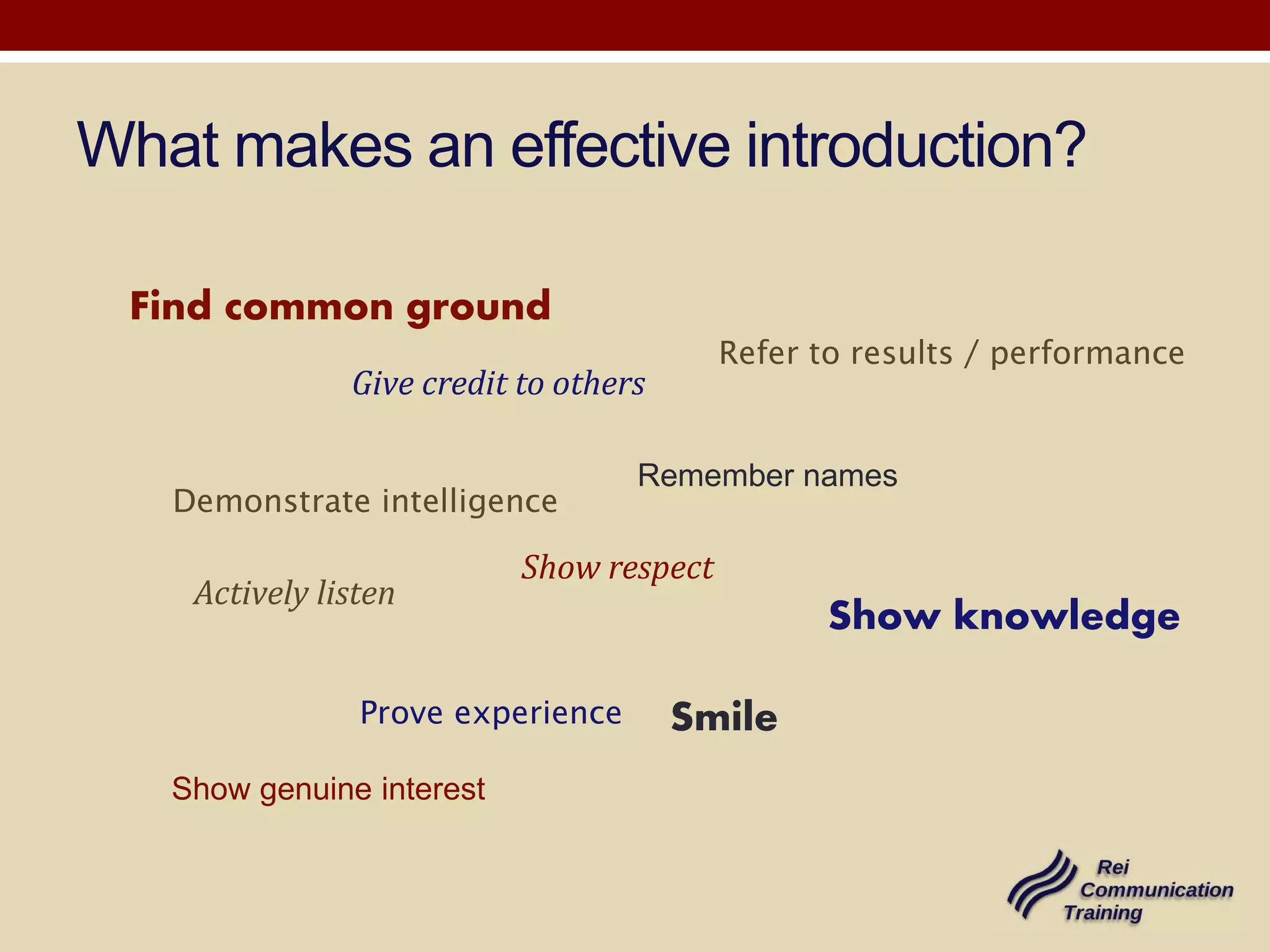
What makes an effective introduction?
Find common ground
Refer to results / performance

Give credit to others
Demonstrate intelligence

Actively listen

Show respect

Prove experience
Show genuine interest

Remember names

Show knowledge
Smile
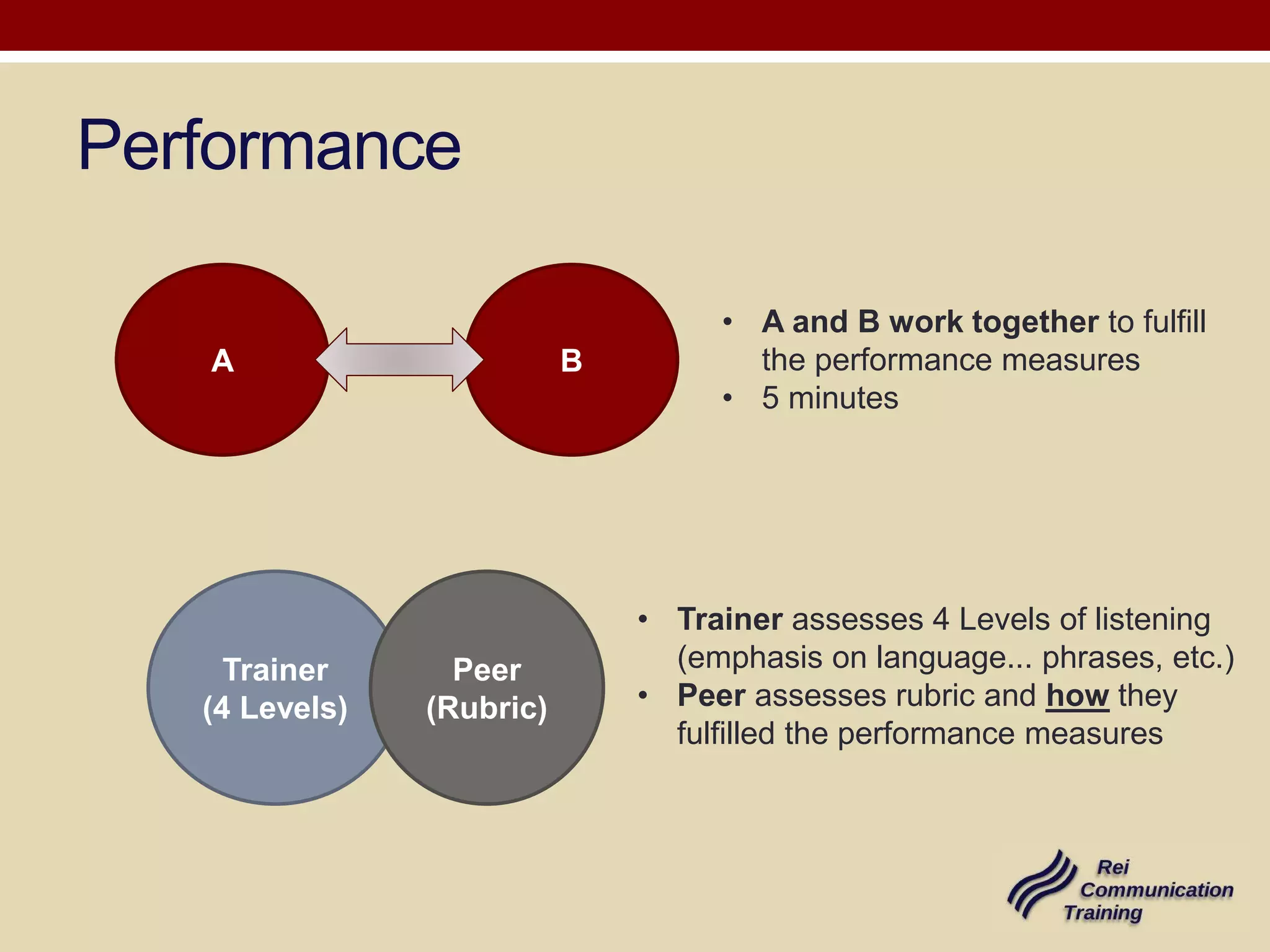
Performance
A

Trainer
(4 Levels)

B

Peer
(Rubric)

• A and B work together to fulfill
the performance measures
• 5 minutes

• Trainer assesses 4 Levels of listening
(emphasis on language... phrases, etc.)
• Peer assesses rubric and how they
fulfilled the performance measures
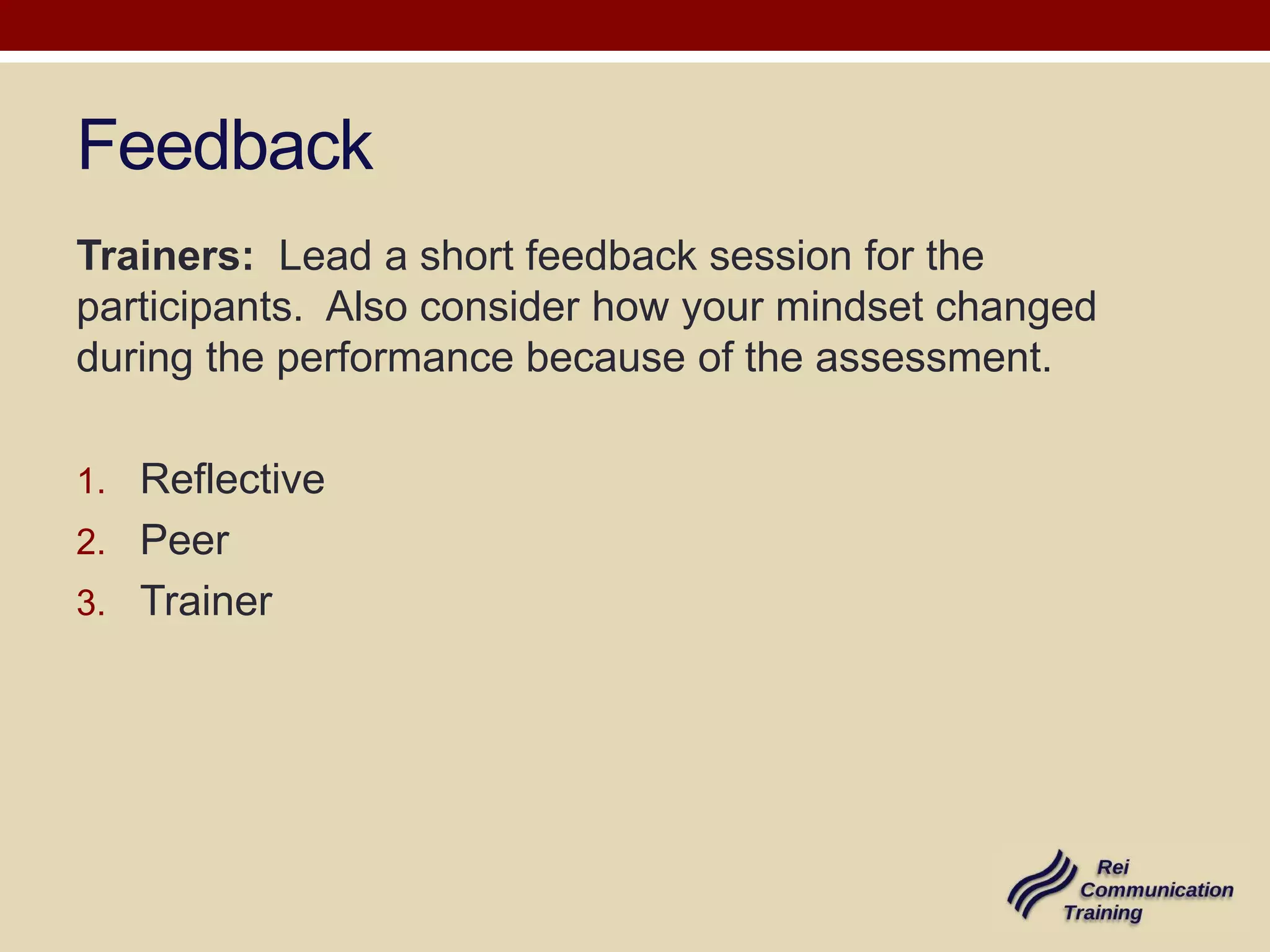
Feedback
Trainers: Lead a short feedback session for the
participants. Also consider how your mindset changed
during the performance because of the assessment.
1. Reflective
2. Peer
3. Trainer
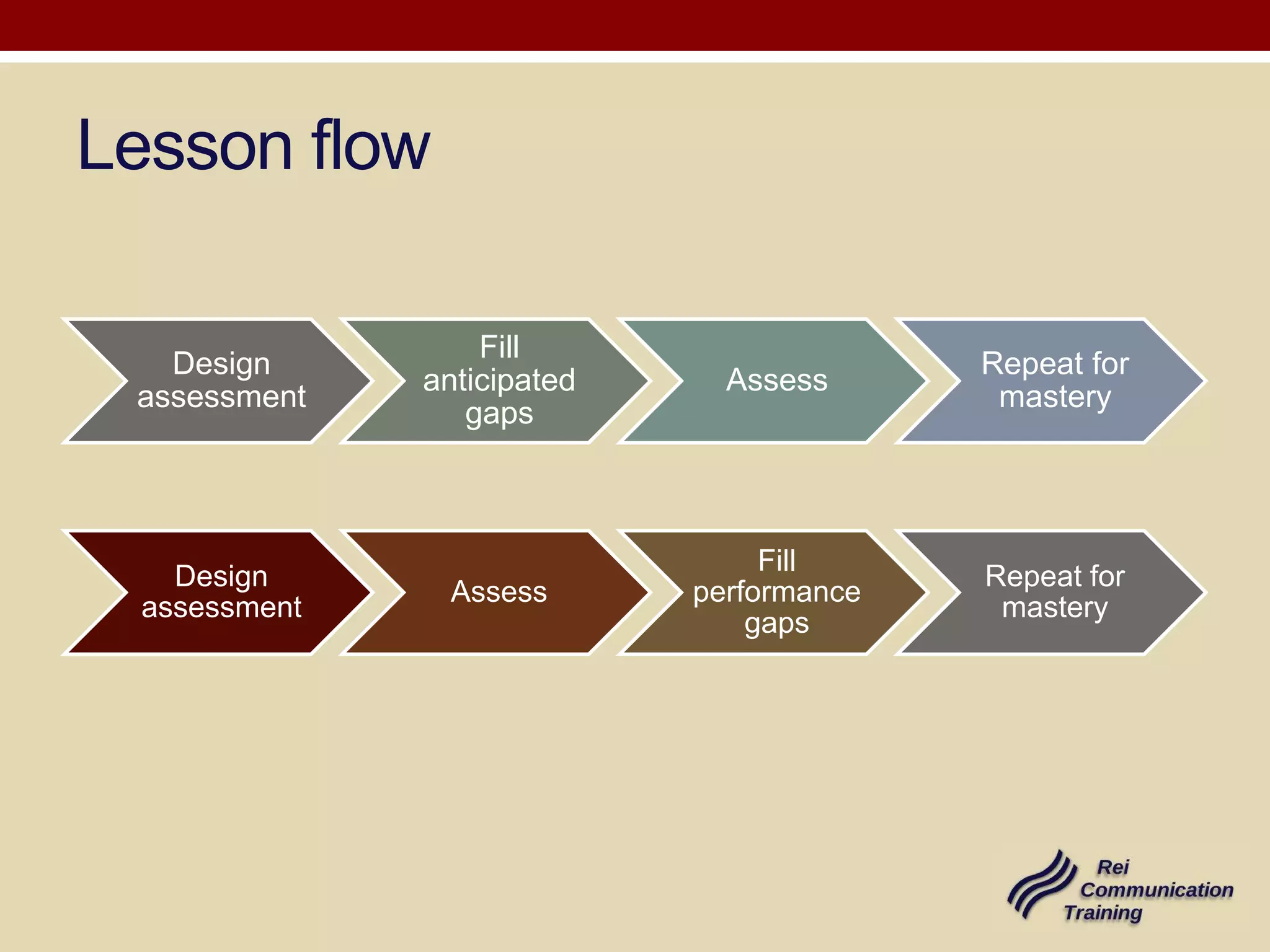
Lesson flow
Design
assessment

Design
assessment

Fill
anticipated
gaps

Assess

Repeat for
mastery

Assess

Fill
performance
gaps

Repeat for
mastery
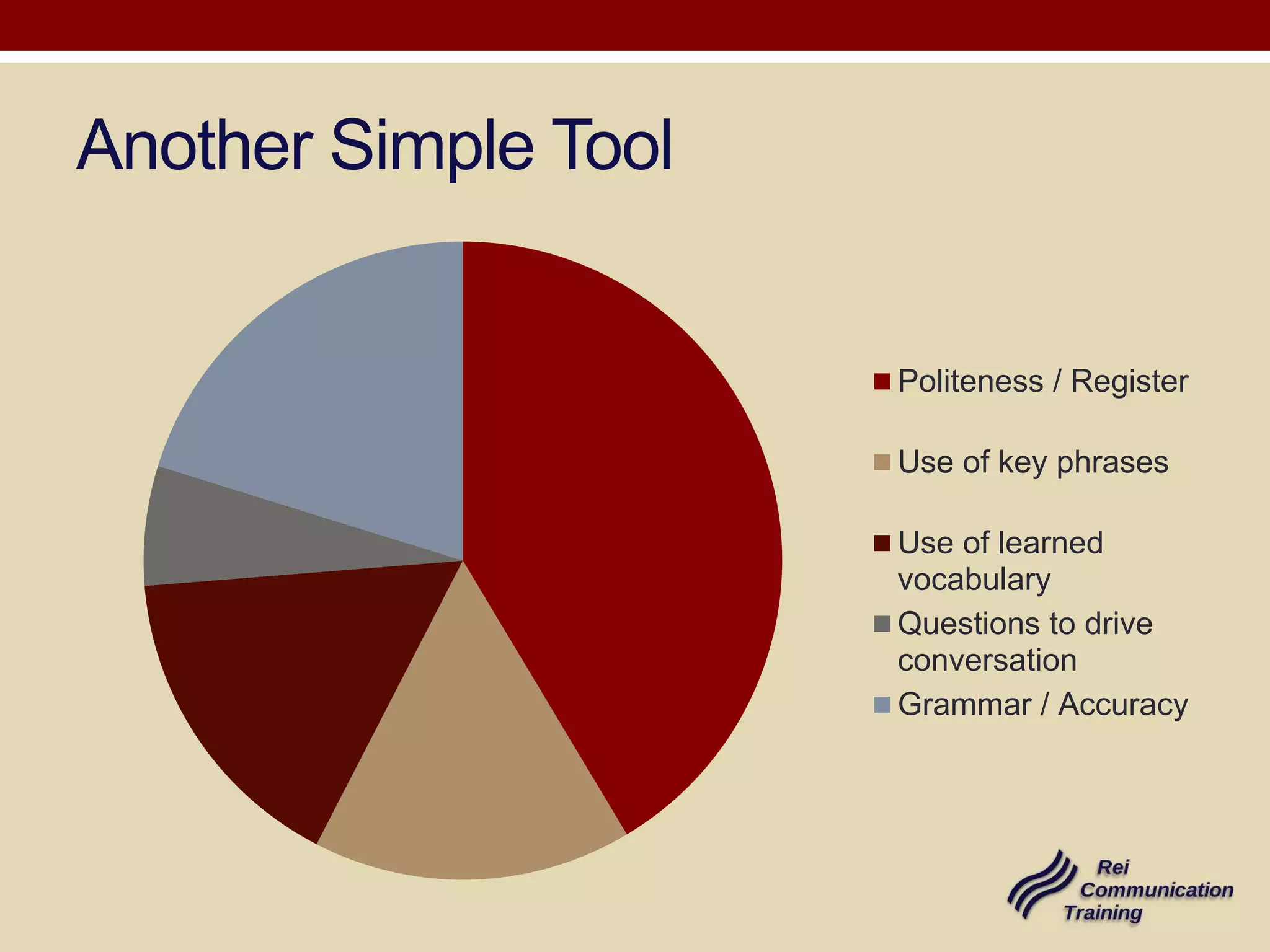
Another Simple Tool

Politeness / Register

Use of key phrases
Use of learned
vocabulary
Questions to drive
conversation
Grammar / Accuracy
Questions?
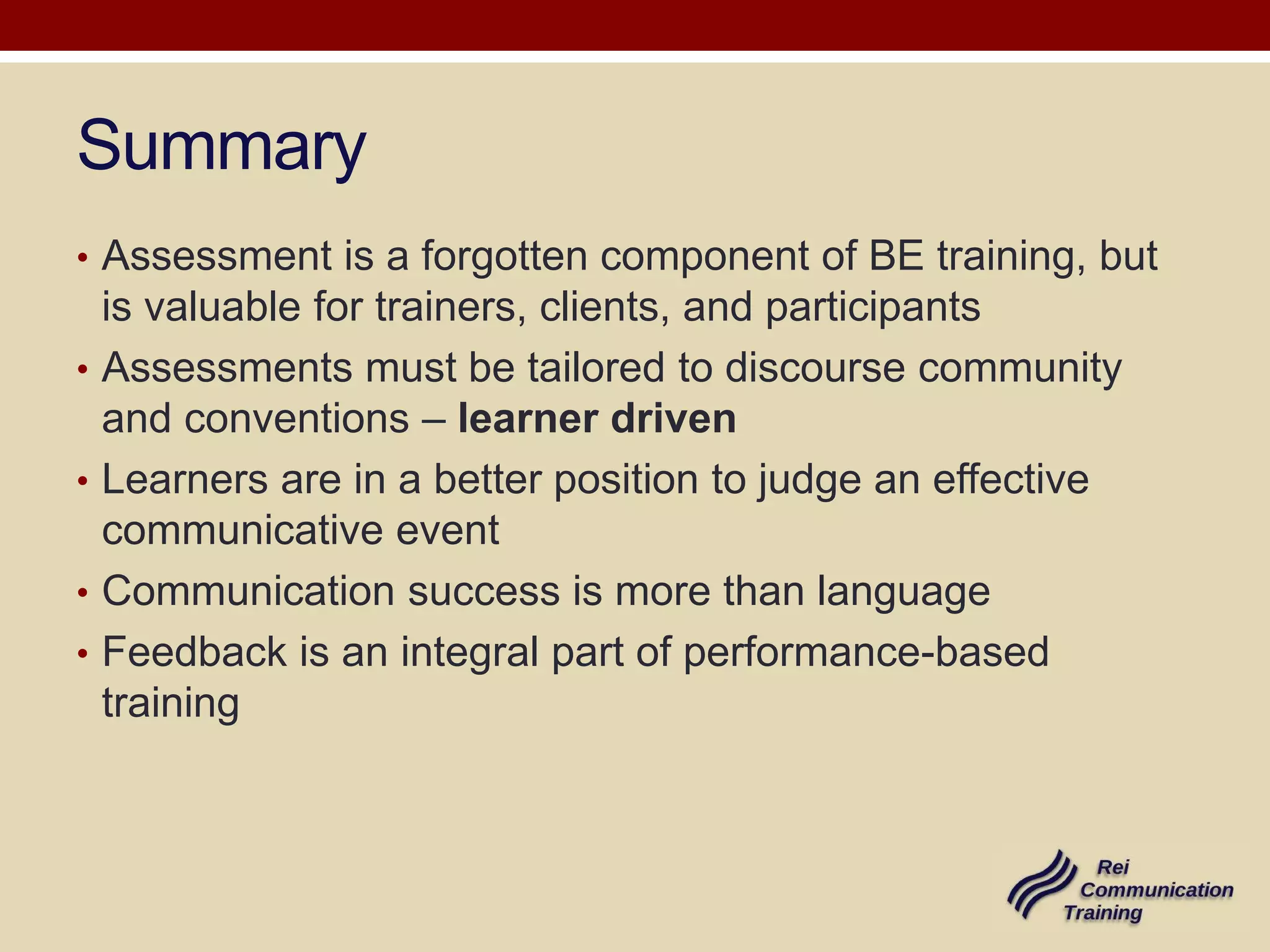
Summary
• Assessment is a forgotten component of BE training, but
•
•
•
•

is valuable for trainers, clients, and participants
Assessments must be tailored to discourse community
and conventions – learner driven
Learners are in a better position to judge an effective
communicative event
Communication success is more than language
Feedback is an integral part of performance-based
training

Assessing role plays and simulations

  • 1.
    Assessing Role-Plays and Simulations BESIGAnnual Conference Prague, Czech Republic November 9, 2013
  • 3.
    Assumptions • Performance-based training •Needs analysis • Performance Objectives (POs) • Maximum relevance – behavior change • Realistic training exercises (or even authentic) • Experts in communication skills (trainers) • Experts in discourse community/conventions (learners) • Assessment is not common in BE skills training
  • 4.
  • 5.
  • 6.
    Scrum Meeting Rubic GoodPractice Linguistic Performance Measures Democratic management • Asking for opinions • Directing responses • Stating decision Concise / clear updates • Short, simple sentences • Avoid passive Don‘t talk about too much detail • Postponing detailed discussions • Offer help Clear tasks • Clear action verbs • Give purpose Common terms • Standardized lexis Summarize tasks • Summarizing
  • 7.
    Manager Rubric Performance Step Startthe meeting with 1-2 sentences Ask for updates from the team Ask simple questions to get full information Postpone conversation of detail items Ask team members for opinions Ask others to comment on opinions State decisions clearly Use the word we, and let‘s more often than I State tasks using a clear action verb and give purpose Summarize tasks Yes No
  • 8.
    4 Levels ofListening Emergence Gaps Mistakes Content
  • 9.
  • 10.
    Simulation • Learner isattending a professional conference next week and is nervous about making a professional introduction and small talk. • Desired outcomes • New business contacts • Relationship building • Market insights
  • 11.
    What makes aneffective introduction? Find common ground Refer to results / performance Give credit to others Demonstrate intelligence Actively listen Show respect Prove experience Show genuine interest Remember names Show knowledge Smile
  • 12.
    Performance A Trainer (4 Levels) B Peer (Rubric) • Aand B work together to fulfill the performance measures • 5 minutes • Trainer assesses 4 Levels of listening (emphasis on language... phrases, etc.) • Peer assesses rubric and how they fulfilled the performance measures
  • 13.
    Feedback Trainers: Lead ashort feedback session for the participants. Also consider how your mindset changed during the performance because of the assessment. 1. Reflective 2. Peer 3. Trainer
  • 14.
  • 15.
    Another Simple Tool Politeness/ Register Use of key phrases Use of learned vocabulary Questions to drive conversation Grammar / Accuracy
  • 16.
  • 17.
    Summary • Assessment isa forgotten component of BE training, but • • • • is valuable for trainers, clients, and participants Assessments must be tailored to discourse community and conventions – learner driven Learners are in a better position to judge an effective communicative event Communication success is more than language Feedback is an integral part of performance-based training