


Are we fulfilling our promise?
Assessing and reporting training quality
IATEFL BESIG Annual Conference
Stuttgart, Germany
November 16, 2012
Charles Rei
Learning objectives
By the end of this session we will be able to...
1. Identify the benefits of comprehensive training
   assessment.
2. Identify and assess the four levels of training evaluation
   using quantitative and qualtative metrics.
3. Identify external factors which affect assessment.
4. Use surveys, performance-based assessment, and
   client contact to evaluate training.
5. Identify the main elements and organization of a
   comprehensive training evaluation report.
Training
           Perks
                     • A gift to the
                       employees


                         • Knowledge-
             Education     based
                         • Standardized

                     • Performance-
                       based
           Goals
                     • Personal
                       development
Current situation
• Surveys / Feedback forms
• Observation
• Interviews
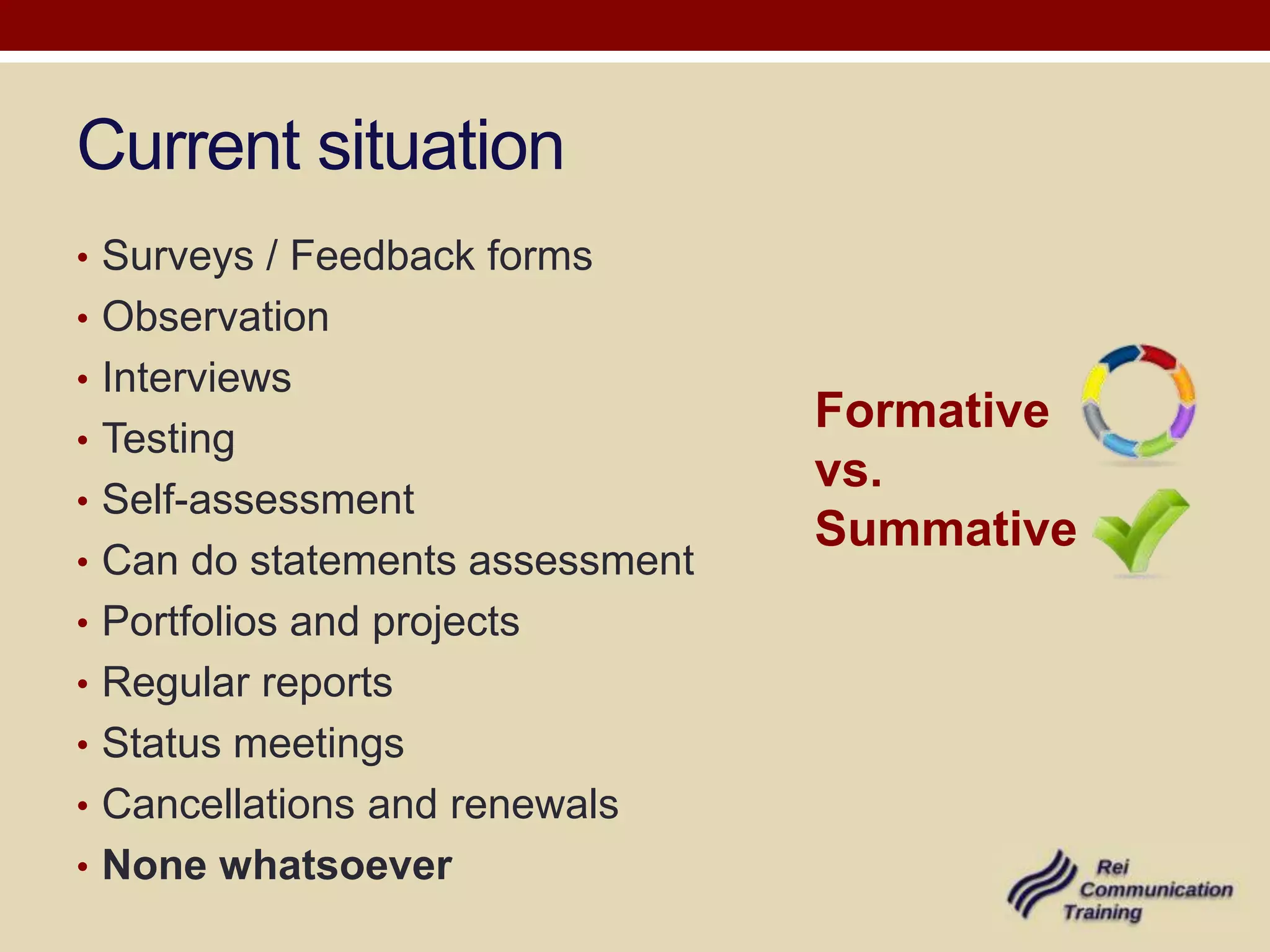
                                 Formative
• Testing
                                 vs.
• Self-assessment
                                 Summative
• Can do statements assessment
• Portfolios and projects
• Regular reports
• Status meetings
• Cancellations and renewals
• None whatsoever
Benefits of comprehensive assessment
• Learner accountability
   • Their dedication matters
• Organizational / professional development
  • Strengths and areas for improvement
  • Quality processes
  • Sharing best practice
• Added / demonstrated value
  • Client communications and relationships
  • Value-based pricing vs. Cost-plus pricing
  • Targeted sales leads (added services, target market)
THE FOUR LEVELS
Assessment Criteria
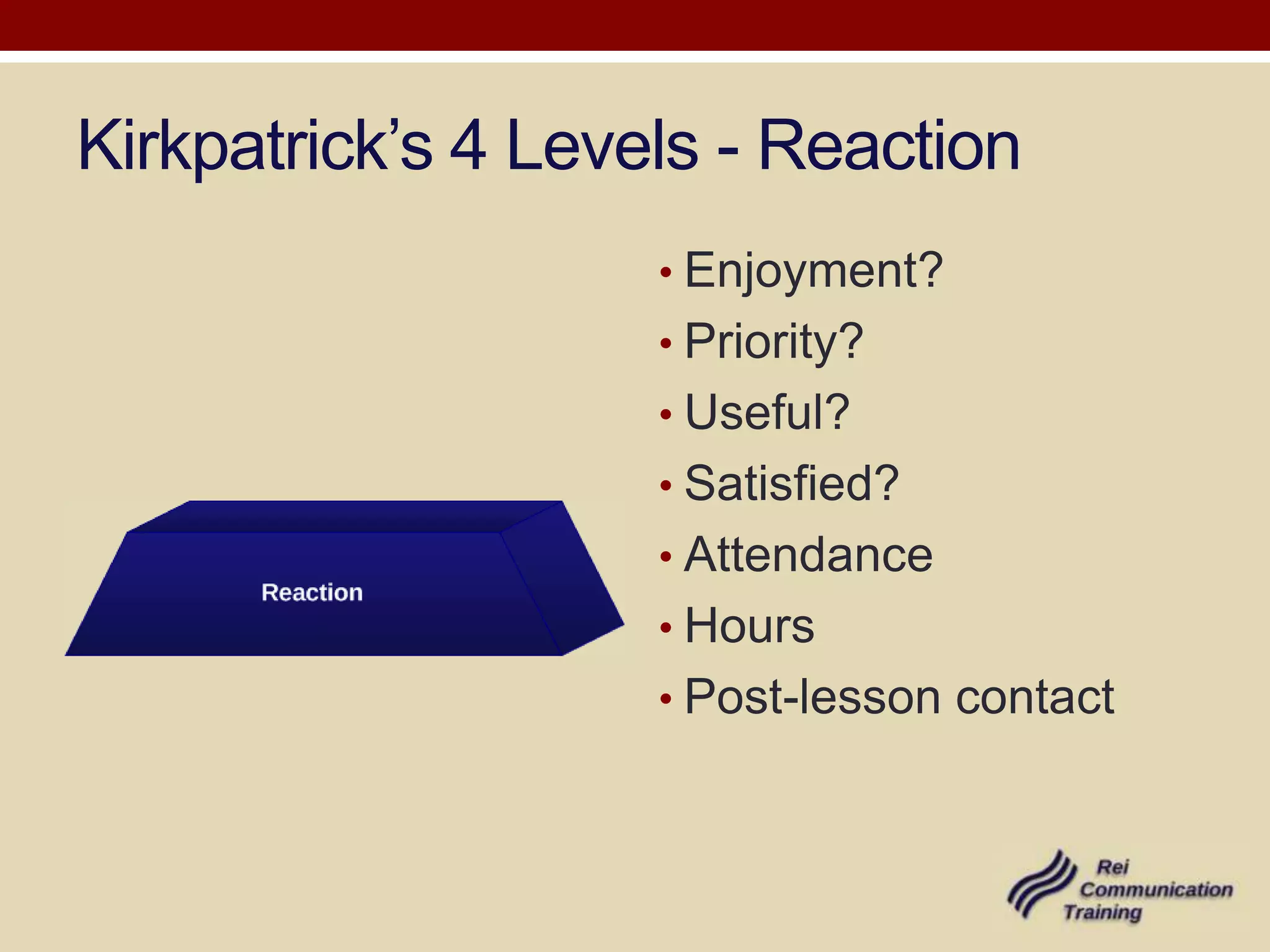
Kirkpatrick’s 4 Levels - Reaction
                    • Enjoyment?
                    • Priority?
                    • Useful?
                    • Satisfied?
                    • Attendance
                    • Hours
                    • Post-lesson contact
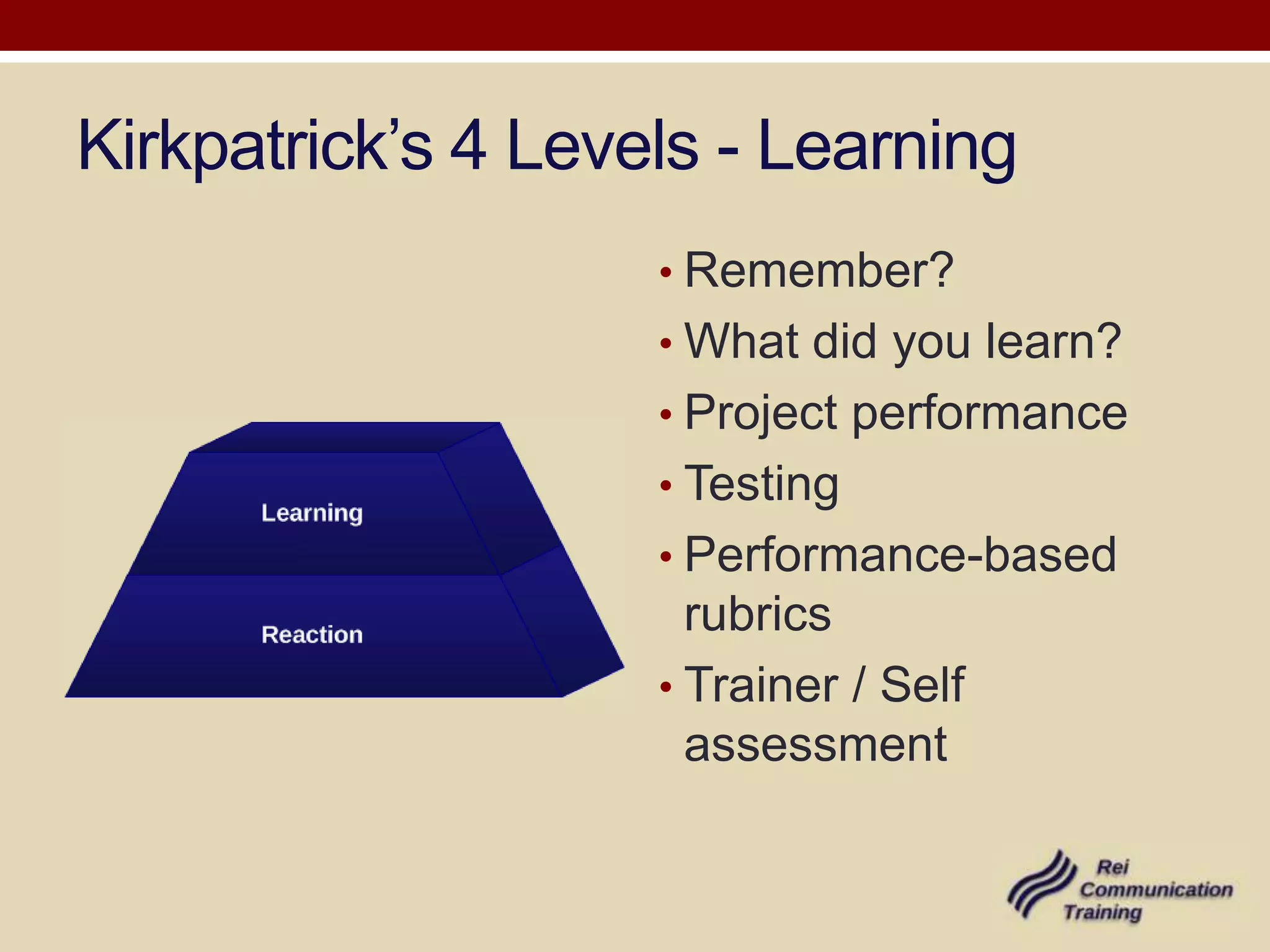
Kirkpatrick’s 4 Levels - Learning
                    • Remember?
                    • What did you learn?
                    • Project performance
                    • Testing
                    • Performance-based
                      rubrics
                    • Trainer / Self
                      assessment
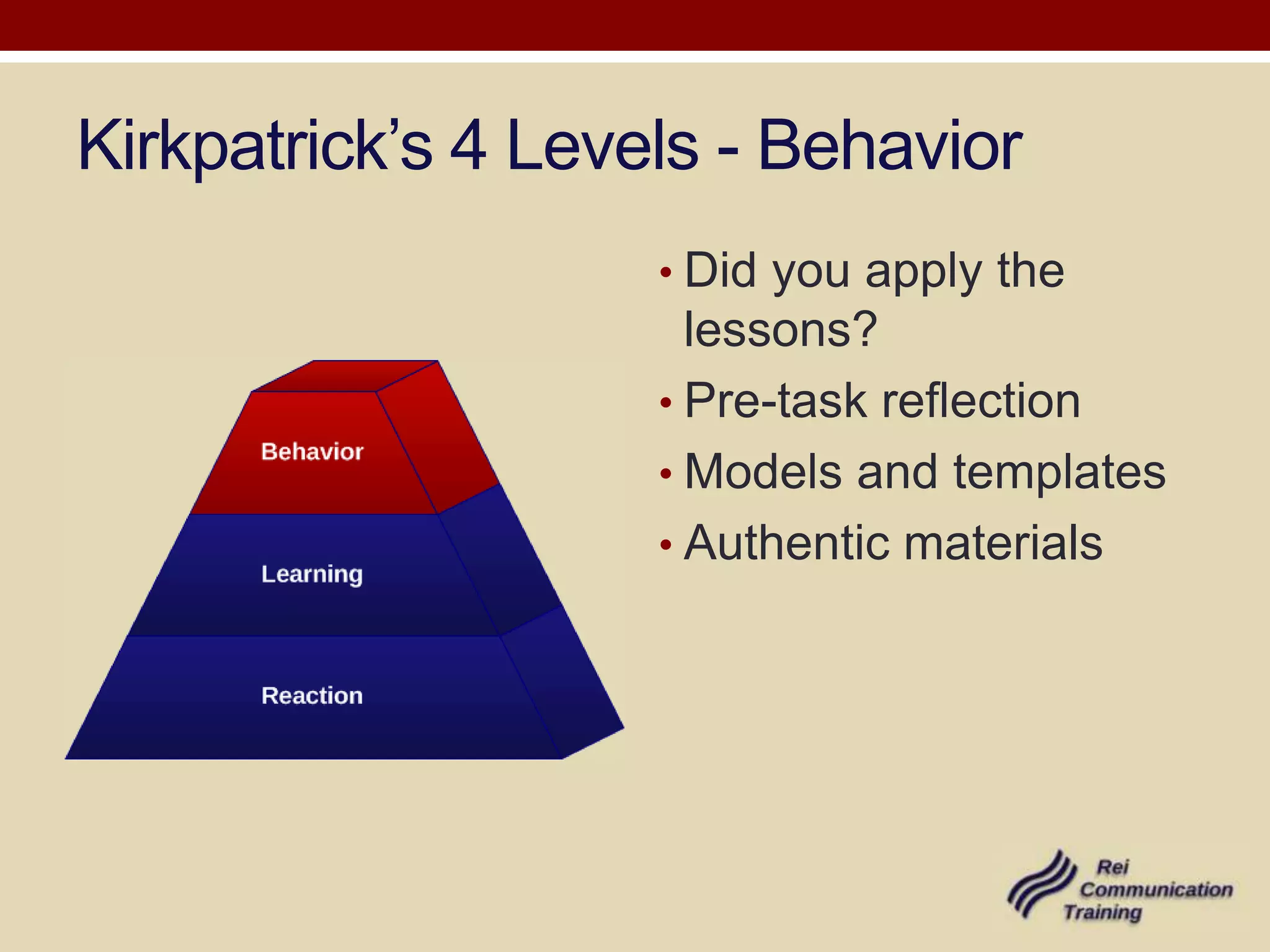
Kirkpatrick’s 4 Levels - Behavior
                    • Did you apply the
                      lessons?
                    • Pre-task reflection
                    • Models and templates
                    • Authentic materials
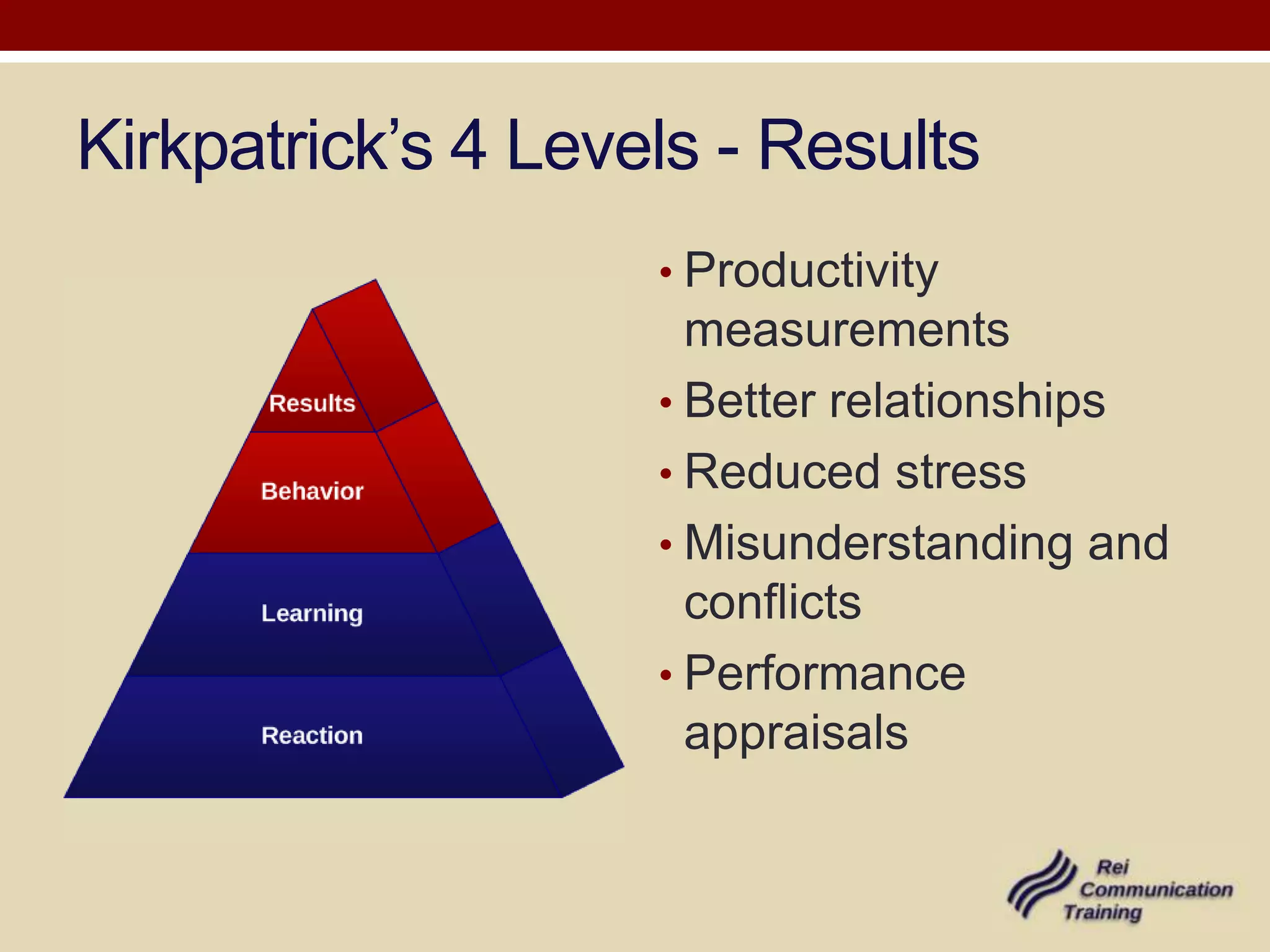
Kirkpatrick’s 4 Levels - Results
                    • Productivity
                      measurements
                    • Better relationships
                    • Reduced stress
                    • Misunderstanding and
                      conflicts
                    • Performance
                      appraisals
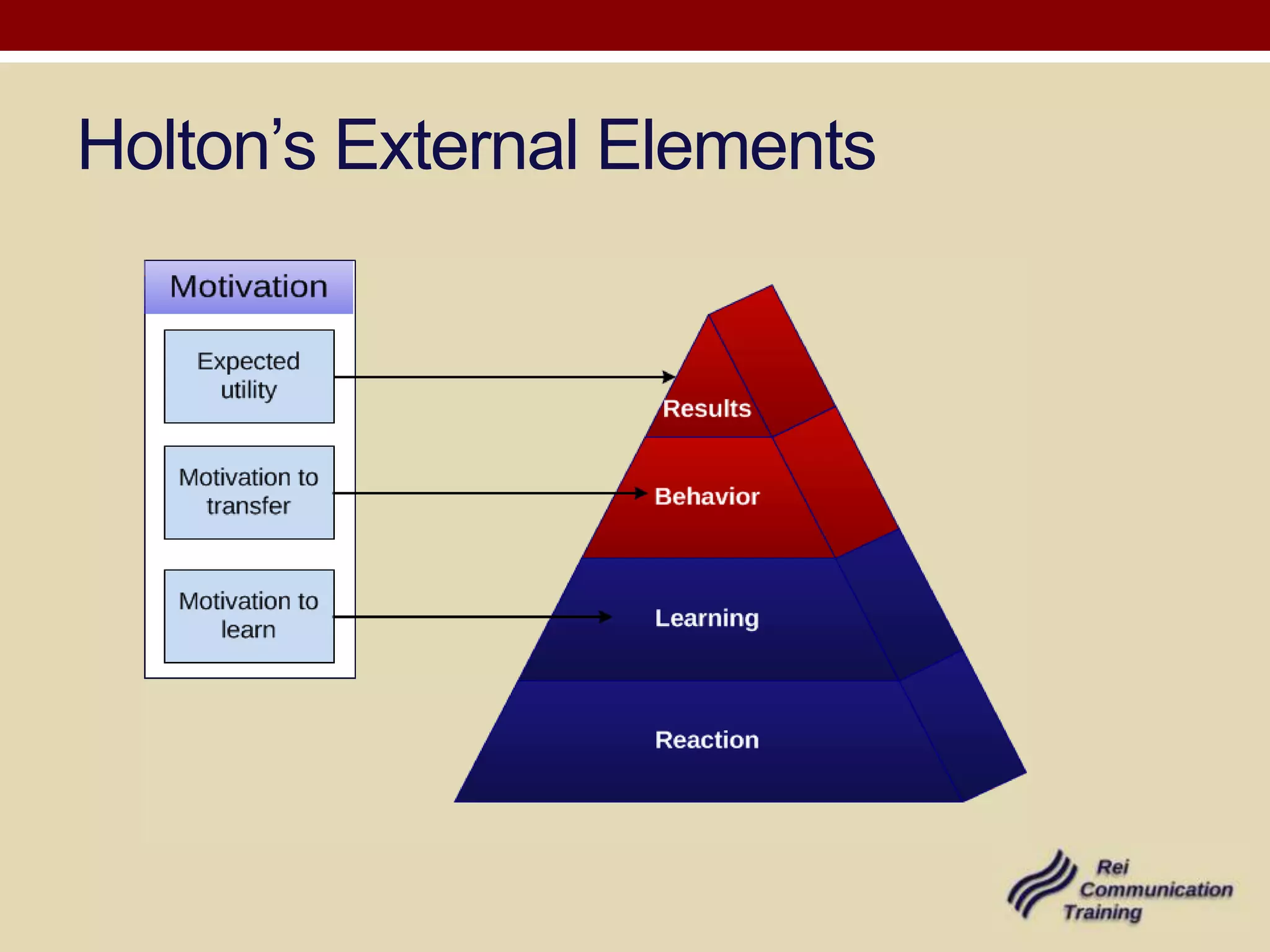
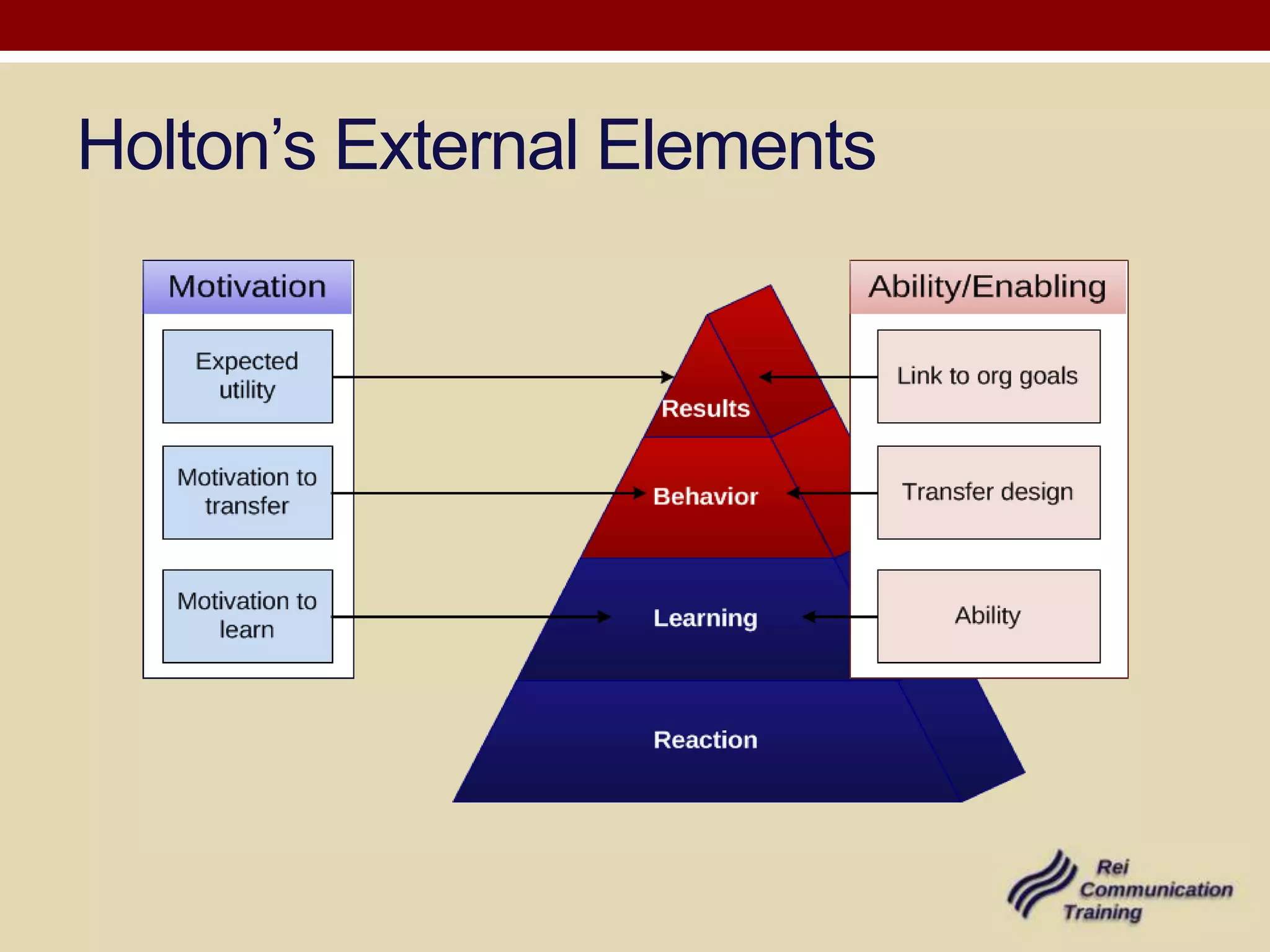
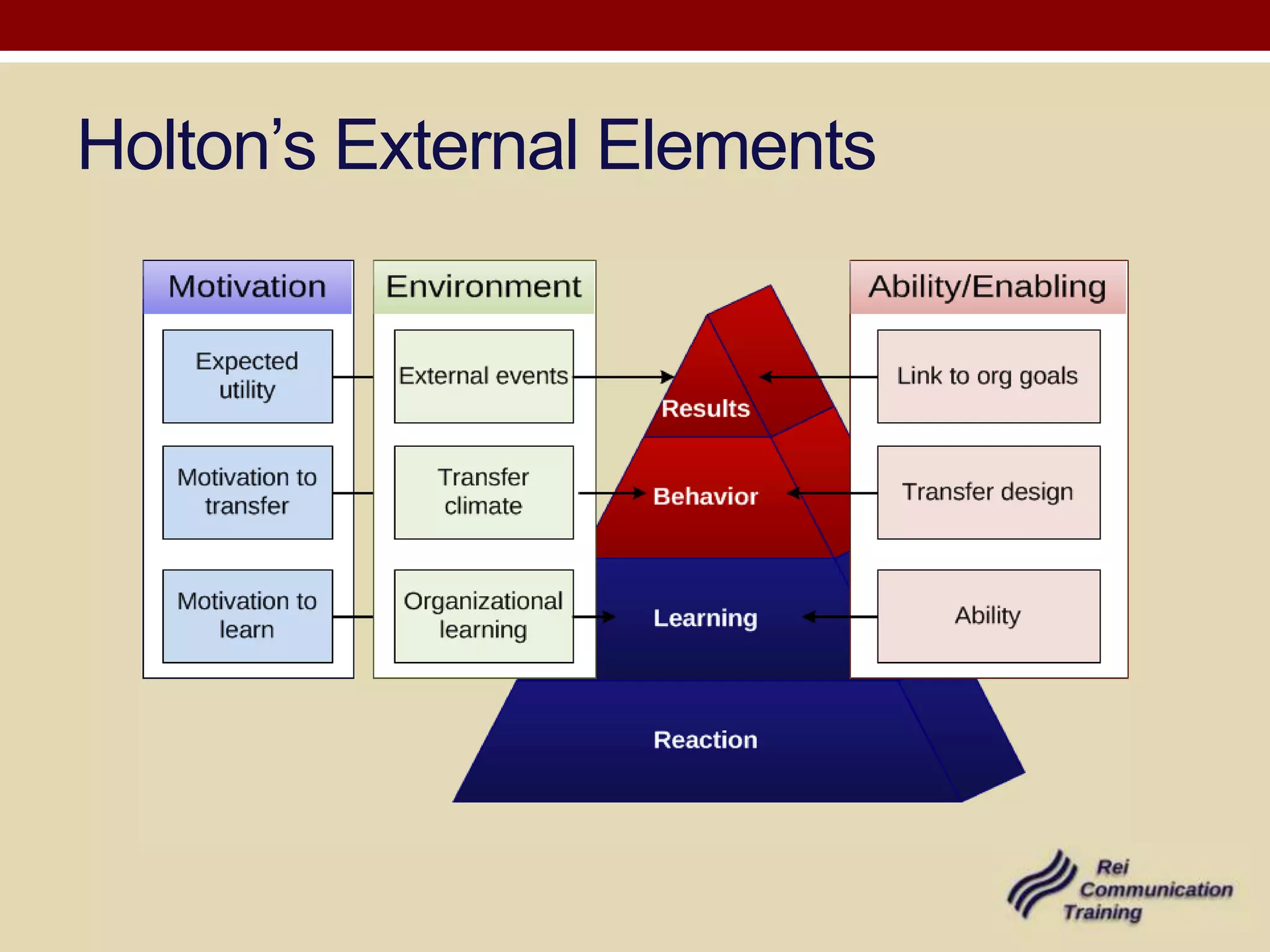
Holton’s External Elements
ASSESSMENT METHODS
How exactly should we get this information?
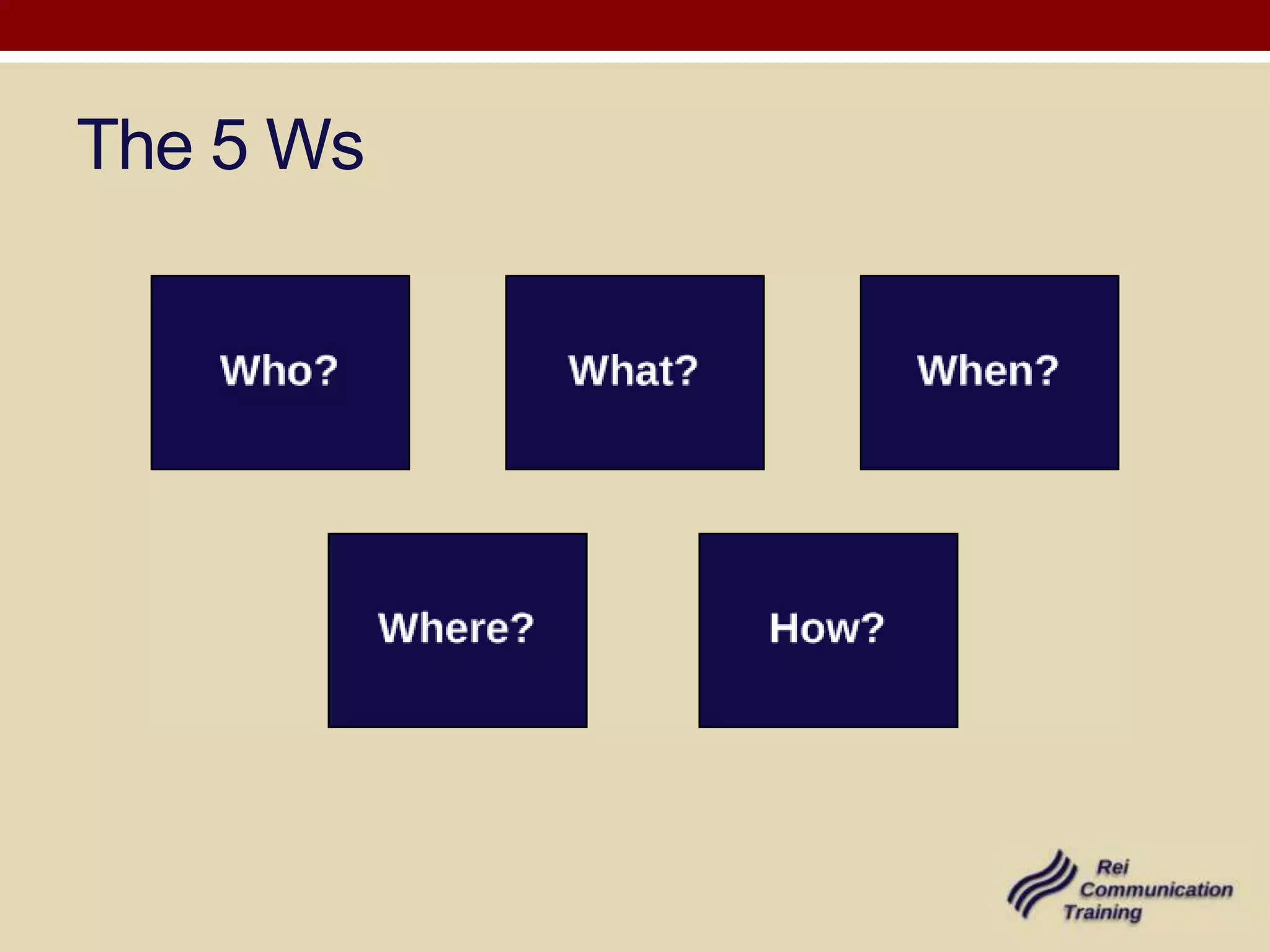
The 5 Ws
Surveys / Feedback
• All 4 levels


• Tips for sucessful surveys
   • Face-to-face
   • Concise
   • Organized / Consistent
   • Standardized vs. Customized
   • Most important questions first
   • Use open questions sparingly
   • Create realistic baseline expectations
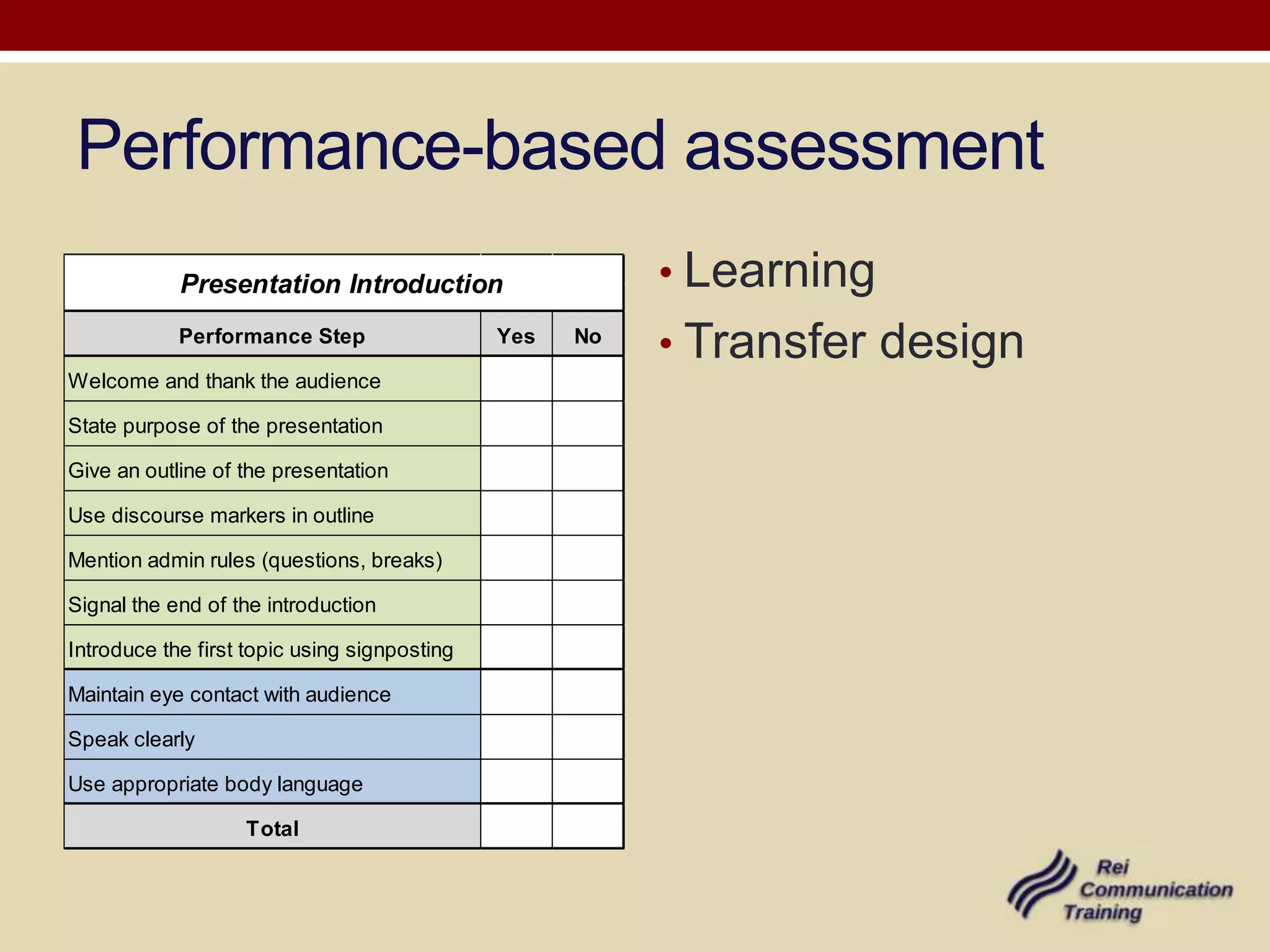
Performance-based assessment
            Presentation Introduction                    • Learning
            Performance Step                  Yes   No
                                                         • Transfer design
Welcome and thank the audience

State purpose of the presentation

Give an outline of the presentation

Use discourse markers in outline

Mention admin rules (questions, breaks)

Signal the end of the introduction

Introduce the first topic using signposting

Maintain eye contact with audience

Speak clearly

Use appropriate body language

                   Total
Client contact
• Externalities
• Behavior and results


• Targeted trainer-learner conversations
   • What’s going on in your department right now?
   • Are there any big projects coming up?
   • Did that lesson on trade fairs help you in Frankfurt? What helped
     the most? How was it different than what we practiced?
   • Have you written any emails in English this week? Can you print it
     for us?
• Client check-ins
BRINGING IT TOGETHER
Reporting
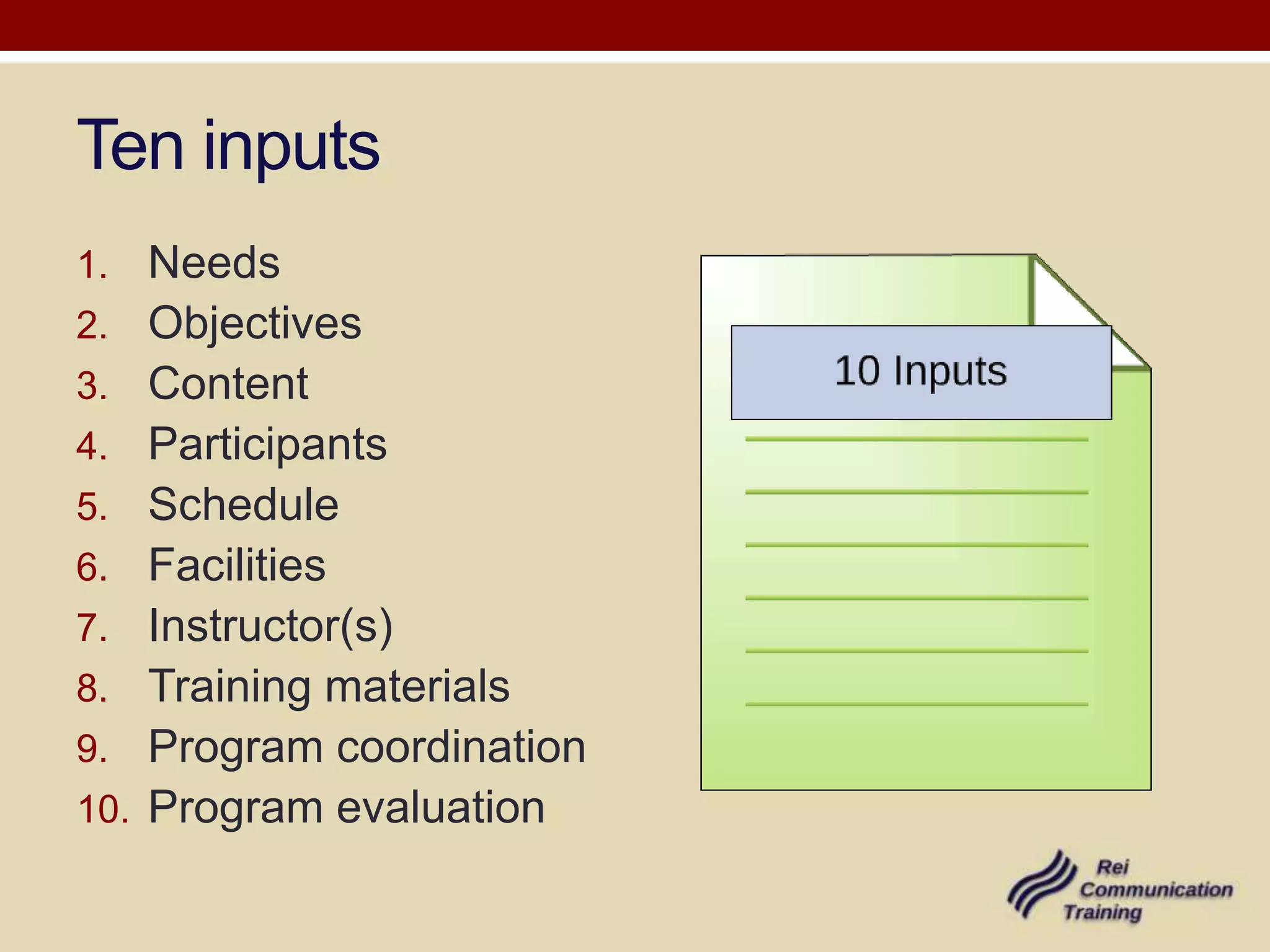
Ten inputs
1.    Needs
2.    Objectives
3.    Content
4.    Participants
5.    Schedule
6.    Facilities
7.    Instructor(s)
8.    Training materials
9.    Program coordination
10.   Program evaluation
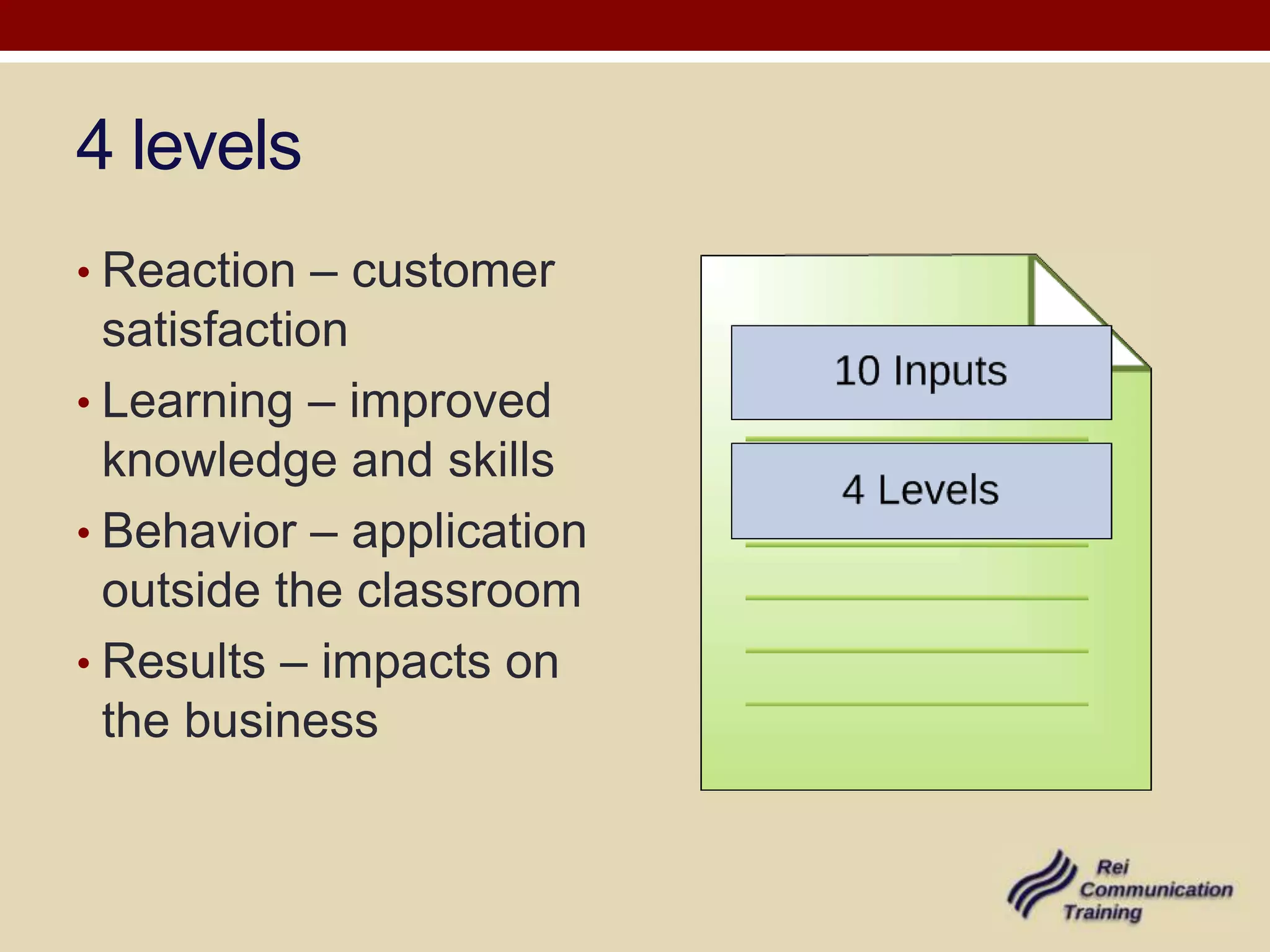
4 levels
• Reaction – customer
  satisfaction
• Learning – improved
  knowledge and skills
• Behavior – application
  outside the classroom
• Results – impacts on
  the business
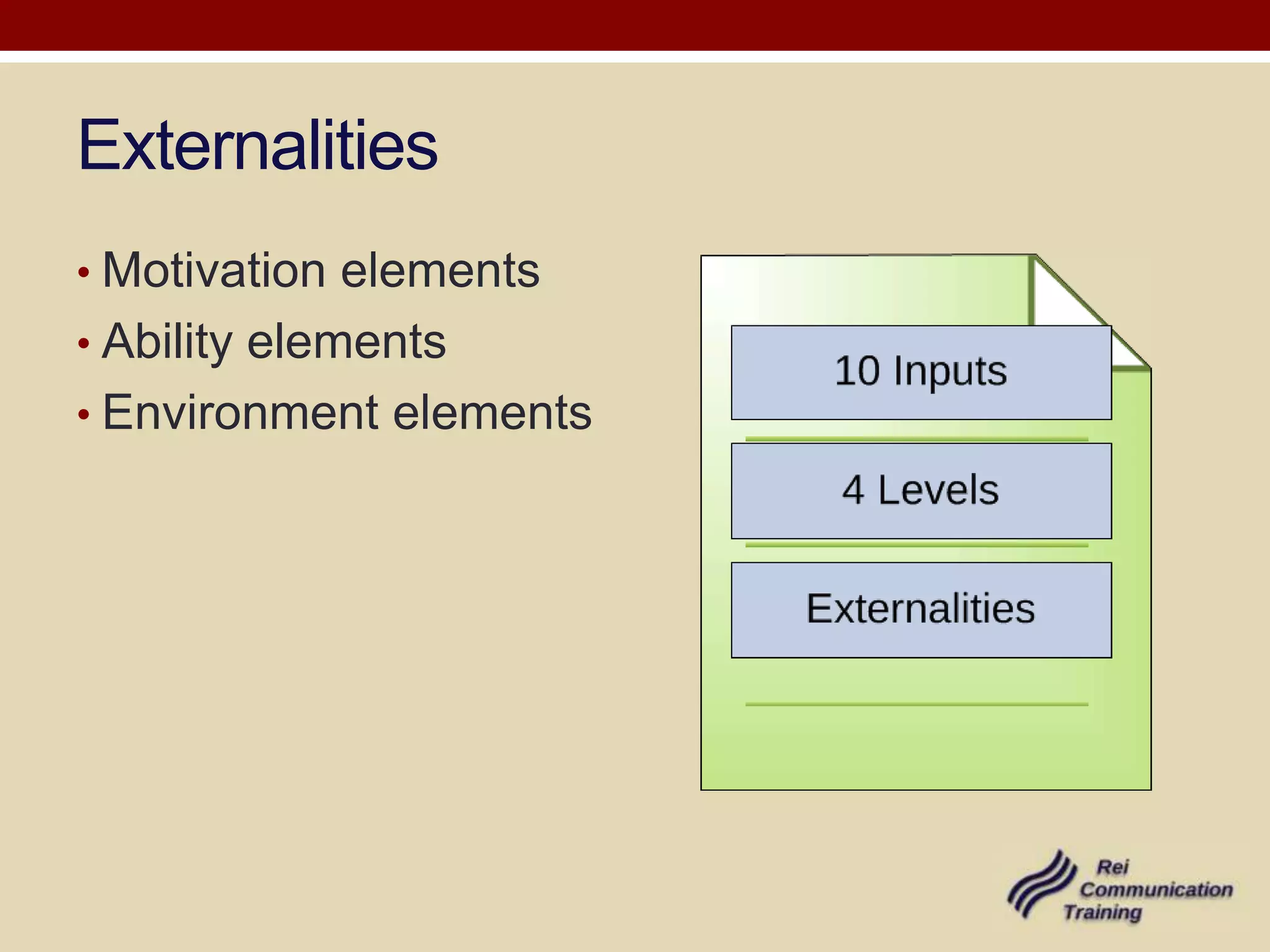
Externalities
• Motivation elements
• Ability elements
• Environment elements
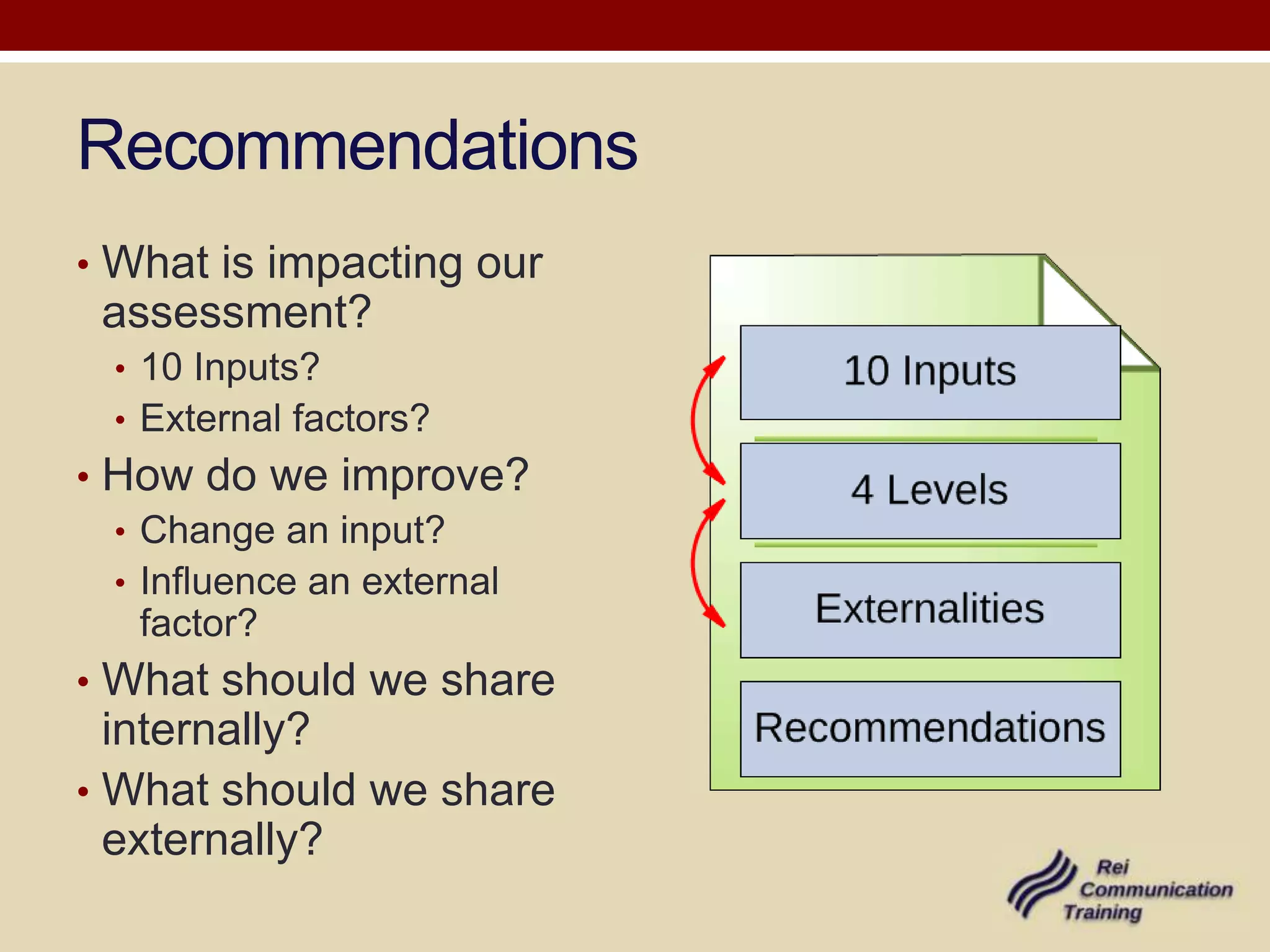
Recommendations
• What is impacting our
 assessment?
  • 10 Inputs?
  • External factors?
• How do we improve?
  • Change an input?
  • Influence an external
    factor?
• What should we share
  internally?
• What should we share
  externally?
INTO PRACTICE
Workshopping the four levels
Audience survey - Reaction


http://vot.rs/5ab67c
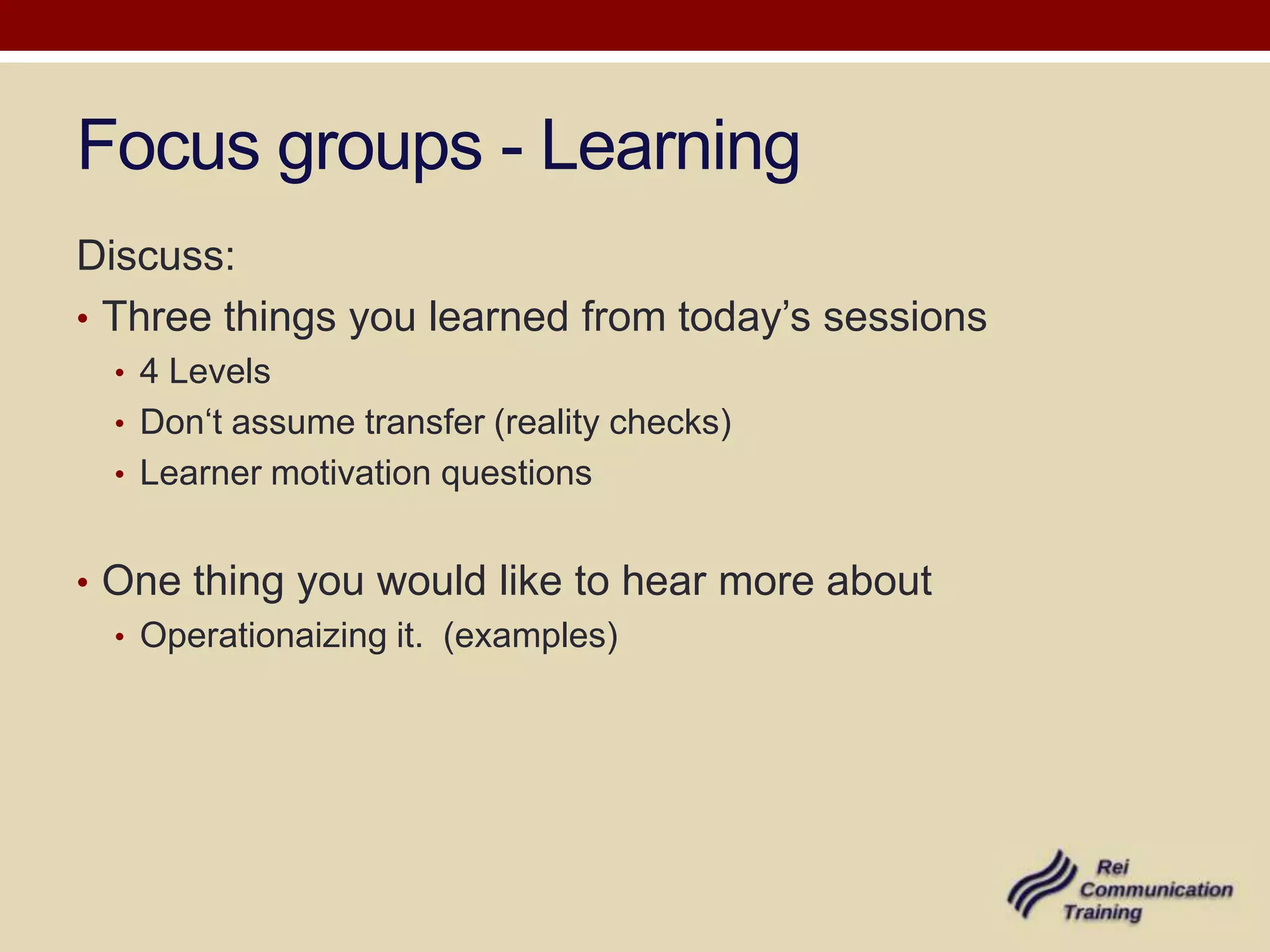
Focus groups - Learning
Discuss:
• Three things you learned from today’s sessions
  • 4 Levels
  • Don‘t assume transfer (reality checks)
  • Learner motivation questions


• One thing you would like to hear more about
  • Operationaizing it. (examples)
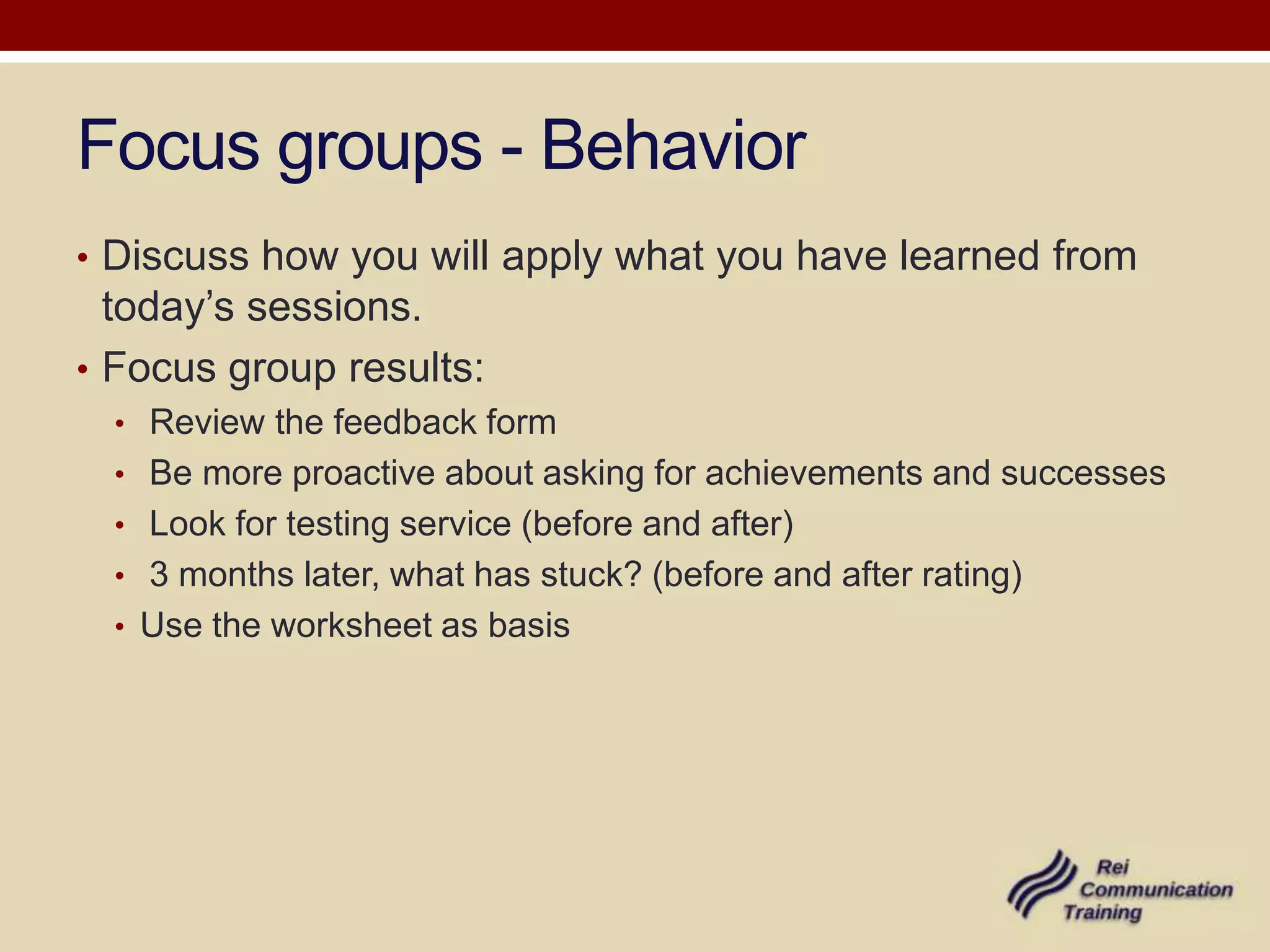
Focus groups - Behavior
• Discuss how you will apply what you have learned from
  today’s sessions.
• Focus group results:
  • Review the feedback form
  • Be more proactive about asking for achievements and successes
  • Look for testing service (before and after)
  • 3 months later, what has stuck? (before and after rating)
  • Use the worksheet as basis
Focus groups - Results
• What impact on your organization do you expect to see as
 a result of today’s training sessions?
TAKING IT FROM HERE
Conclusion
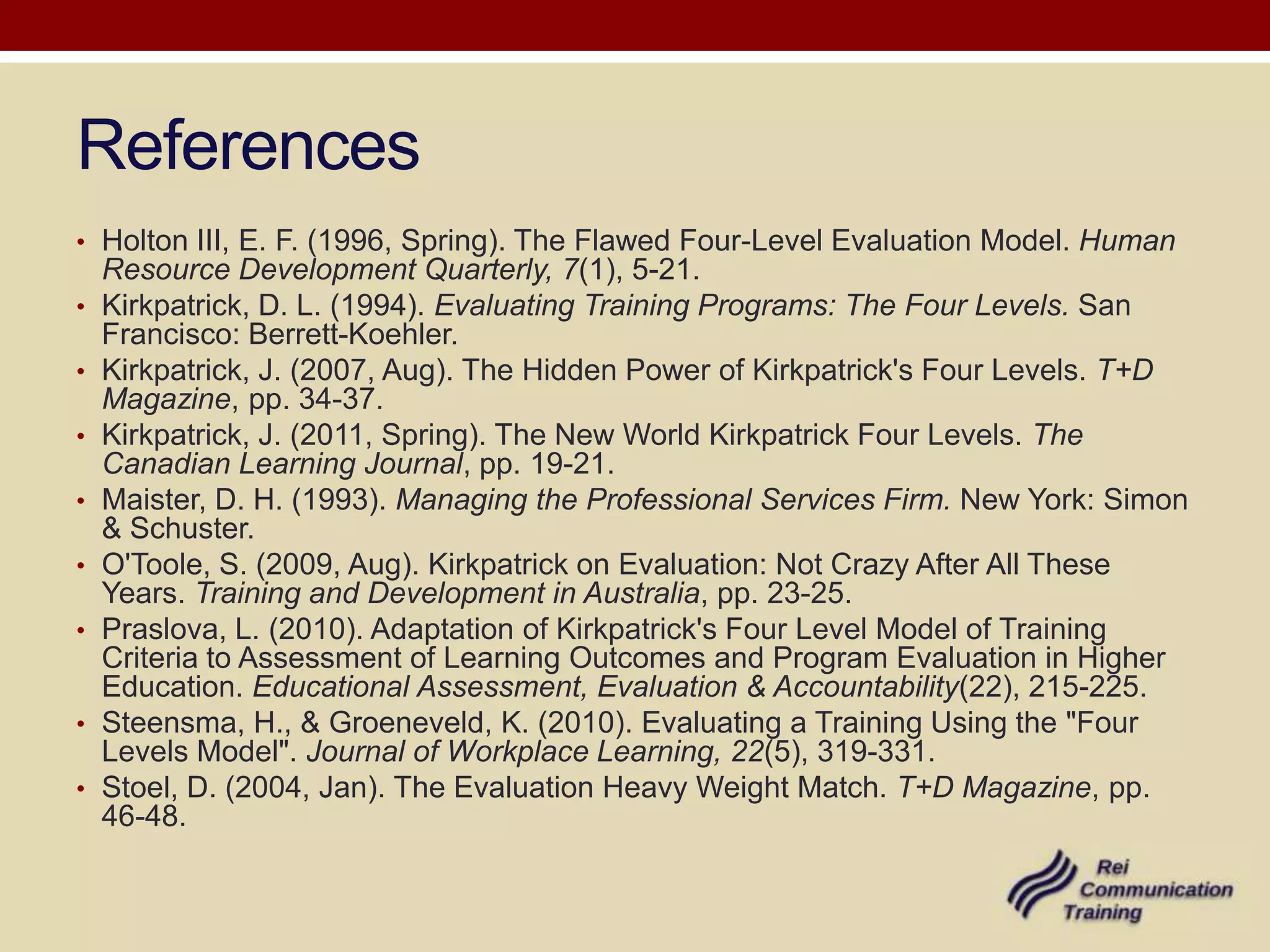
References
• Holton III, E. F. (1996, Spring). The Flawed Four-Level Evaluation Model. Human
    Resource Development Quarterly, 7(1), 5-21.
•   Kirkpatrick, D. L. (1994). Evaluating Training Programs: The Four Levels. San
    Francisco: Berrett-Koehler.
•   Kirkpatrick, J. (2007, Aug). The Hidden Power of Kirkpatrick's Four Levels. T+D
    Magazine, pp. 34-37.
•   Kirkpatrick, J. (2011, Spring). The New World Kirkpatrick Four Levels. The
    Canadian Learning Journal, pp. 19-21.
•   Maister, D. H. (1993). Managing the Professional Services Firm. New York: Simon
    & Schuster.
•   O'Toole, S. (2009, Aug). Kirkpatrick on Evaluation: Not Crazy After All These
    Years. Training and Development in Australia, pp. 23-25.
•   Praslova, L. (2010). Adaptation of Kirkpatrick's Four Level Model of Training
    Criteria to Assessment of Learning Outcomes and Program Evaluation in Higher
    Education. Educational Assessment, Evaluation & Accountability(22), 215-225.
•   Steensma, H., & Groeneveld, K. (2010). Evaluating a Training Using the "Four
    Levels Model". Journal of Workplace Learning, 22(5), 319-331.
•   Stoel, D. (2004, Jan). The Evaluation Heavy Weight Match. T+D Magazine, pp.
    46-48.
For more information / questions
Contact:    Charles Rei
            charles.rei@reicommunicationtraining.com
            http://www.reicommunicationtraining.com
            @Charlesrei1

Presentation and handouts at Business English Ideas
            http://businessenglishideas.blogspot.de/

Ongoing conversation on the BESIG Ning
           http://iatefl-besig.ning.com/
Quality processes
• If you were the client, would you care about these issues?
• Do any of these questions represent an unreasonable
  client expectation?
• How confident do you feel that your organization would
  outperform the competition on these questions?
• How valuable would it be if your organization earned top
  scores on this consistently?
• Can you think of another way to ensure consistent
  performance in these areas?

Thank you!

Are we fulfilling our promise

  • 1.
    Are we fulfillingour promise? Assessing and reporting training quality IATEFL BESIG Annual Conference Stuttgart, Germany November 16, 2012 Charles Rei
  • 2.
    Learning objectives By theend of this session we will be able to... 1. Identify the benefits of comprehensive training assessment. 2. Identify and assess the four levels of training evaluation using quantitative and qualtative metrics. 3. Identify external factors which affect assessment. 4. Use surveys, performance-based assessment, and client contact to evaluate training. 5. Identify the main elements and organization of a comprehensive training evaluation report.
  • 3.
    Training Perks • A gift to the employees • Knowledge- Education based • Standardized • Performance- based Goals • Personal development
  • 4.
    Current situation • Surveys/ Feedback forms • Observation • Interviews Formative • Testing vs. • Self-assessment Summative • Can do statements assessment • Portfolios and projects • Regular reports • Status meetings • Cancellations and renewals • None whatsoever
  • 5.
    Benefits of comprehensiveassessment • Learner accountability • Their dedication matters • Organizational / professional development • Strengths and areas for improvement • Quality processes • Sharing best practice • Added / demonstrated value • Client communications and relationships • Value-based pricing vs. Cost-plus pricing • Targeted sales leads (added services, target market)
  • 6.
  • 7.
    Kirkpatrick’s 4 Levels- Reaction • Enjoyment? • Priority? • Useful? • Satisfied? • Attendance • Hours • Post-lesson contact
  • 8.
    Kirkpatrick’s 4 Levels- Learning • Remember? • What did you learn? • Project performance • Testing • Performance-based rubrics • Trainer / Self assessment
  • 9.
    Kirkpatrick’s 4 Levels- Behavior • Did you apply the lessons? • Pre-task reflection • Models and templates • Authentic materials
  • 10.
    Kirkpatrick’s 4 Levels- Results • Productivity measurements • Better relationships • Reduced stress • Misunderstanding and conflicts • Performance appraisals
  • 11.
  • 12.
  • 13.
  • 14.
    ASSESSMENT METHODS How exactlyshould we get this information?
  • 15.
  • 16.
    Surveys / Feedback •All 4 levels • Tips for sucessful surveys • Face-to-face • Concise • Organized / Consistent • Standardized vs. Customized • Most important questions first • Use open questions sparingly • Create realistic baseline expectations
  • 17.
    Performance-based assessment Presentation Introduction • Learning Performance Step Yes No • Transfer design Welcome and thank the audience State purpose of the presentation Give an outline of the presentation Use discourse markers in outline Mention admin rules (questions, breaks) Signal the end of the introduction Introduce the first topic using signposting Maintain eye contact with audience Speak clearly Use appropriate body language Total
  • 18.
    Client contact • Externalities •Behavior and results • Targeted trainer-learner conversations • What’s going on in your department right now? • Are there any big projects coming up? • Did that lesson on trade fairs help you in Frankfurt? What helped the most? How was it different than what we practiced? • Have you written any emails in English this week? Can you print it for us? • Client check-ins
  • 19.
  • 20.
    Ten inputs 1. Needs 2. Objectives 3. Content 4. Participants 5. Schedule 6. Facilities 7. Instructor(s) 8. Training materials 9. Program coordination 10. Program evaluation
  • 21.
    4 levels • Reaction– customer satisfaction • Learning – improved knowledge and skills • Behavior – application outside the classroom • Results – impacts on the business
  • 22.
    Externalities • Motivation elements •Ability elements • Environment elements
  • 23.
    Recommendations • What isimpacting our assessment? • 10 Inputs? • External factors? • How do we improve? • Change an input? • Influence an external factor? • What should we share internally? • What should we share externally?
  • 24.
  • 25.
    Audience survey -Reaction http://vot.rs/5ab67c
  • 26.
    Focus groups -Learning Discuss: • Three things you learned from today’s sessions • 4 Levels • Don‘t assume transfer (reality checks) • Learner motivation questions • One thing you would like to hear more about • Operationaizing it. (examples)
  • 27.
    Focus groups -Behavior • Discuss how you will apply what you have learned from today’s sessions. • Focus group results: • Review the feedback form • Be more proactive about asking for achievements and successes • Look for testing service (before and after) • 3 months later, what has stuck? (before and after rating) • Use the worksheet as basis
  • 28.
    Focus groups -Results • What impact on your organization do you expect to see as a result of today’s training sessions?
  • 29.
    TAKING IT FROMHERE Conclusion
  • 30.
    References • Holton III,E. F. (1996, Spring). The Flawed Four-Level Evaluation Model. Human Resource Development Quarterly, 7(1), 5-21. • Kirkpatrick, D. L. (1994). Evaluating Training Programs: The Four Levels. San Francisco: Berrett-Koehler. • Kirkpatrick, J. (2007, Aug). The Hidden Power of Kirkpatrick's Four Levels. T+D Magazine, pp. 34-37. • Kirkpatrick, J. (2011, Spring). The New World Kirkpatrick Four Levels. The Canadian Learning Journal, pp. 19-21. • Maister, D. H. (1993). Managing the Professional Services Firm. New York: Simon & Schuster. • O'Toole, S. (2009, Aug). Kirkpatrick on Evaluation: Not Crazy After All These Years. Training and Development in Australia, pp. 23-25. • Praslova, L. (2010). Adaptation of Kirkpatrick's Four Level Model of Training Criteria to Assessment of Learning Outcomes and Program Evaluation in Higher Education. Educational Assessment, Evaluation & Accountability(22), 215-225. • Steensma, H., & Groeneveld, K. (2010). Evaluating a Training Using the "Four Levels Model". Journal of Workplace Learning, 22(5), 319-331. • Stoel, D. (2004, Jan). The Evaluation Heavy Weight Match. T+D Magazine, pp. 46-48.
  • 31.
    For more information/ questions Contact: Charles Rei charles.rei@reicommunicationtraining.com http://www.reicommunicationtraining.com @Charlesrei1 Presentation and handouts at Business English Ideas http://businessenglishideas.blogspot.de/ Ongoing conversation on the BESIG Ning http://iatefl-besig.ning.com/
  • 32.
    Quality processes • Ifyou were the client, would you care about these issues? • Do any of these questions represent an unreasonable client expectation? • How confident do you feel that your organization would outperform the competition on these questions? • How valuable would it be if your organization earned top scores on this consistently? • Can you think of another way to ensure consistent performance in these areas? Thank you!