Downloaded 108 times
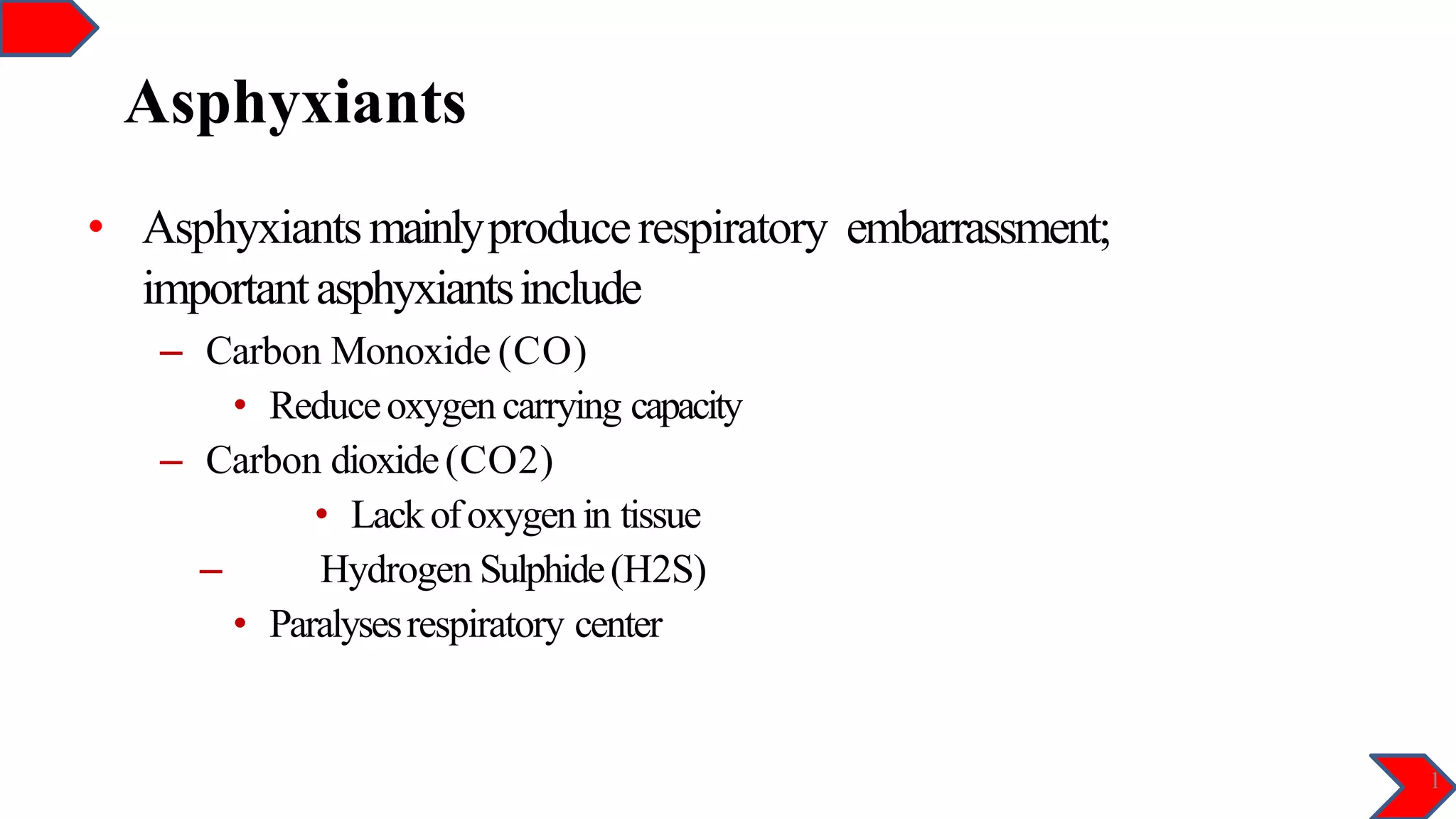

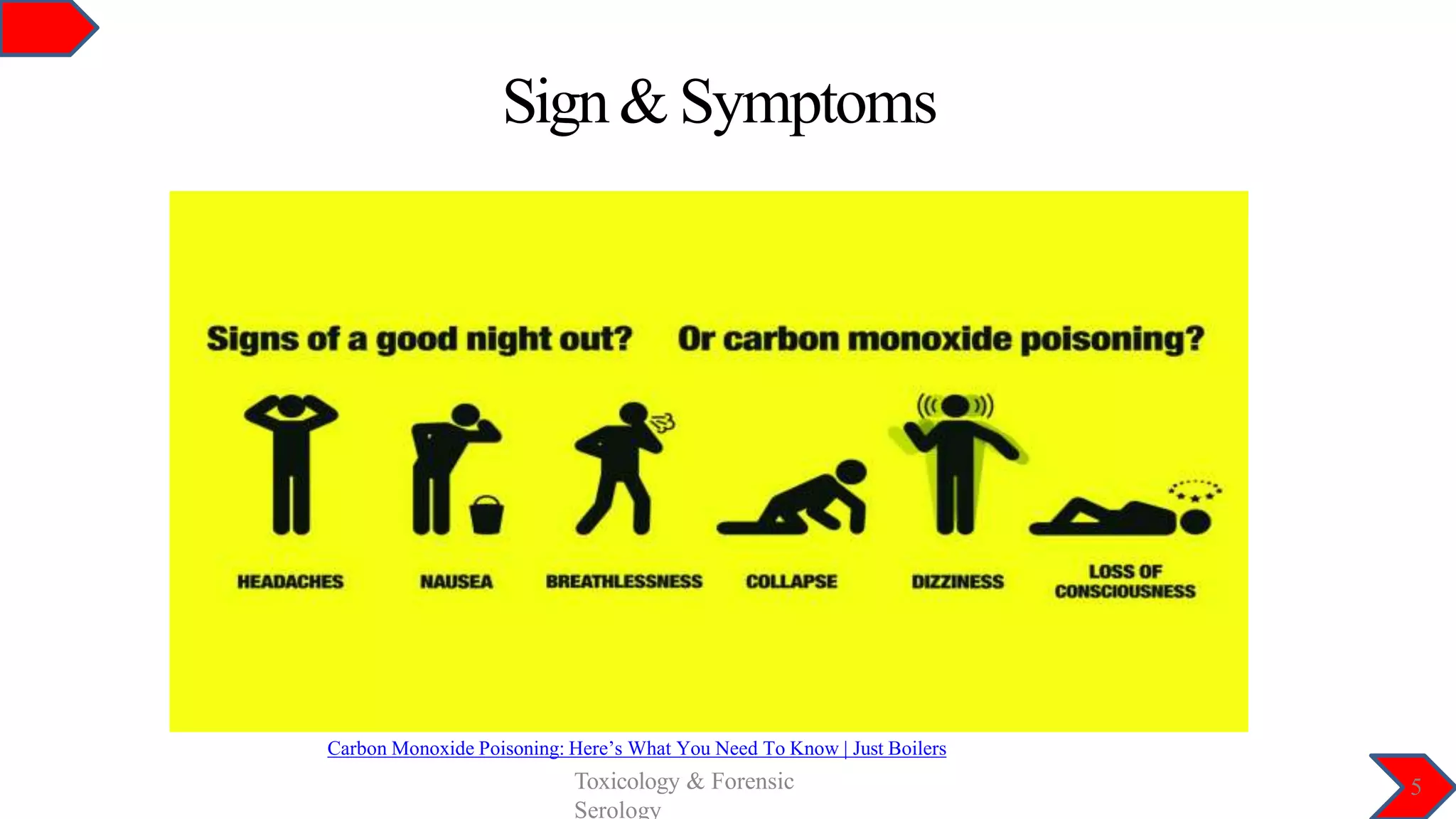
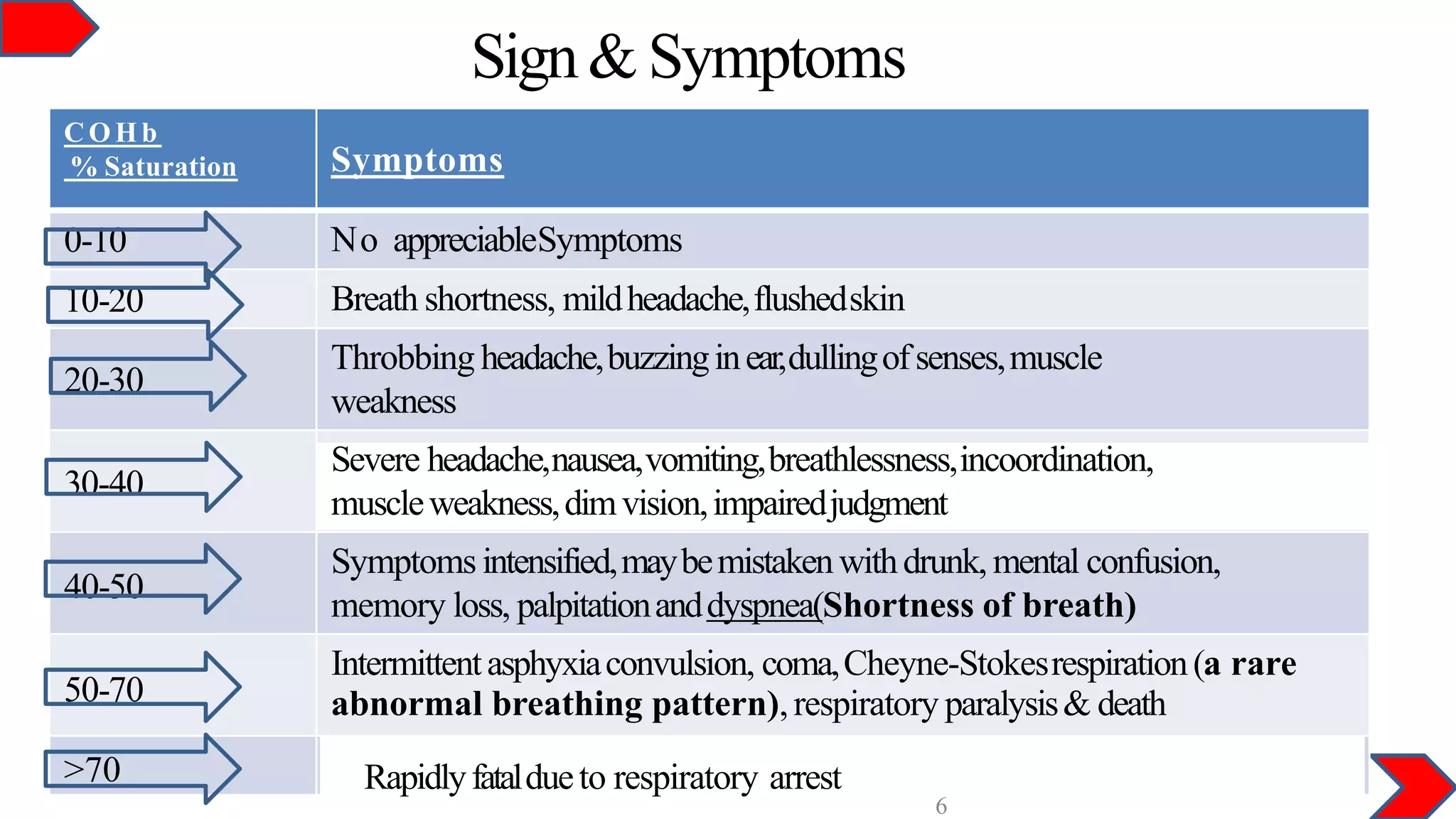

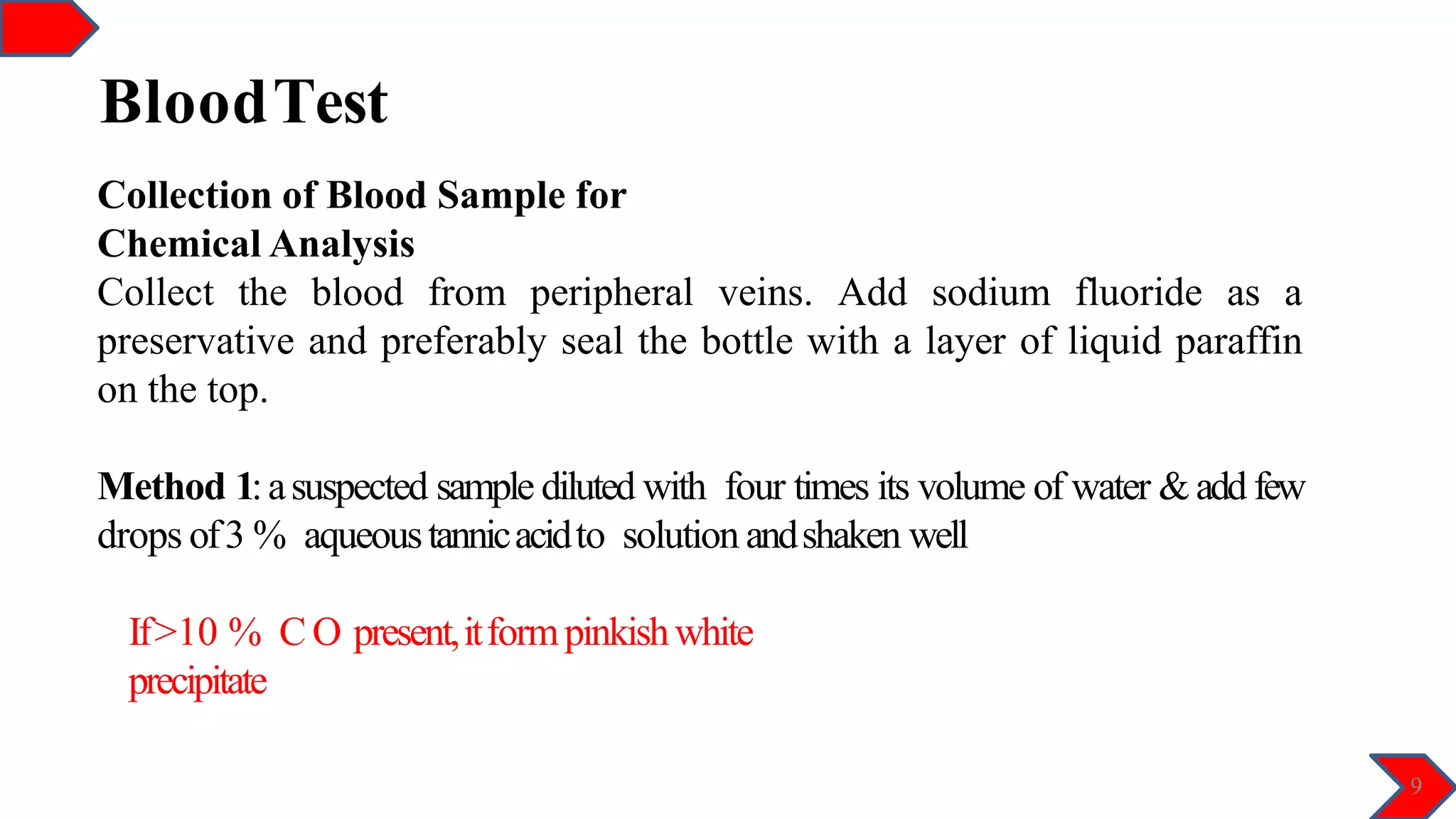

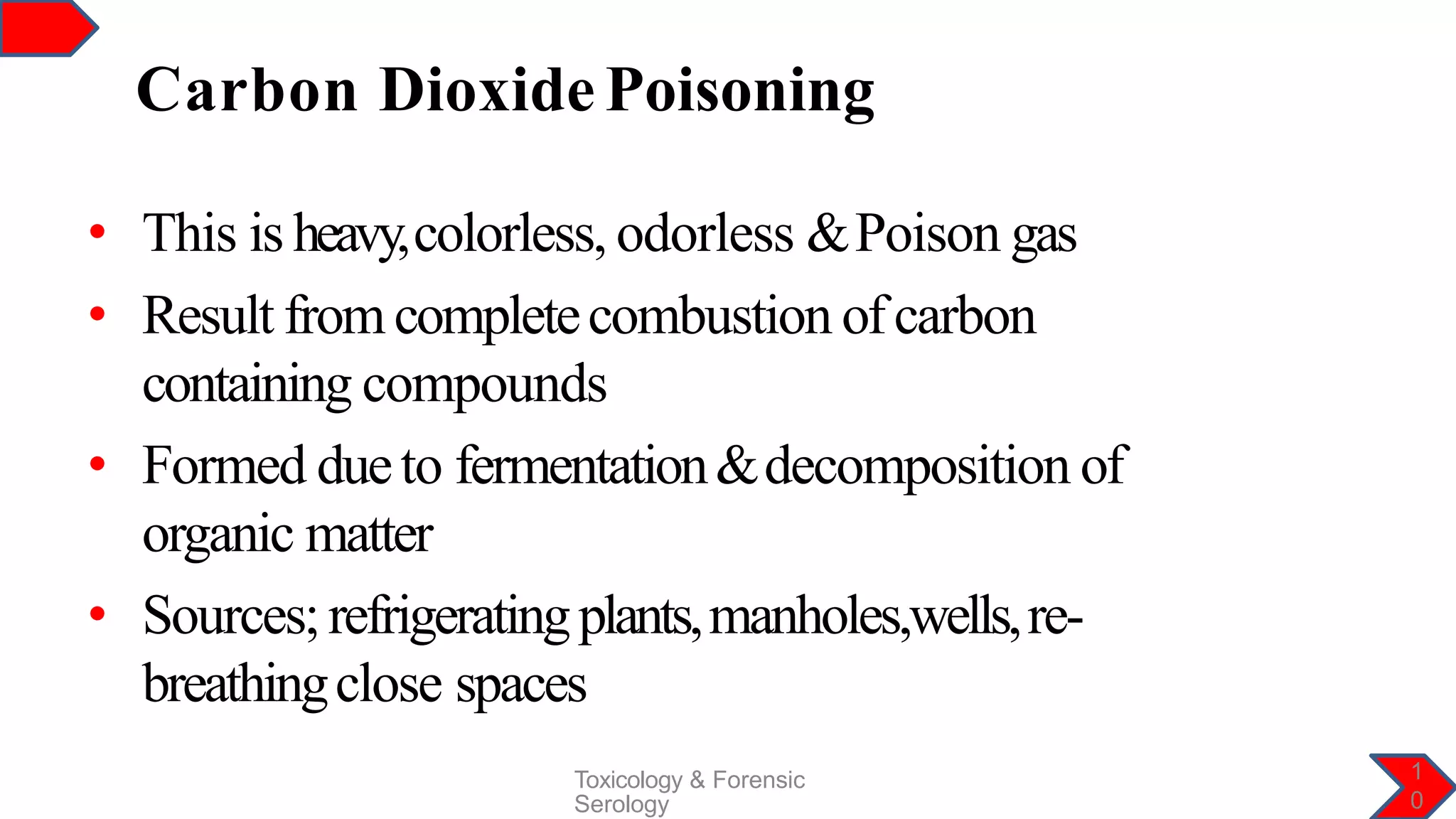
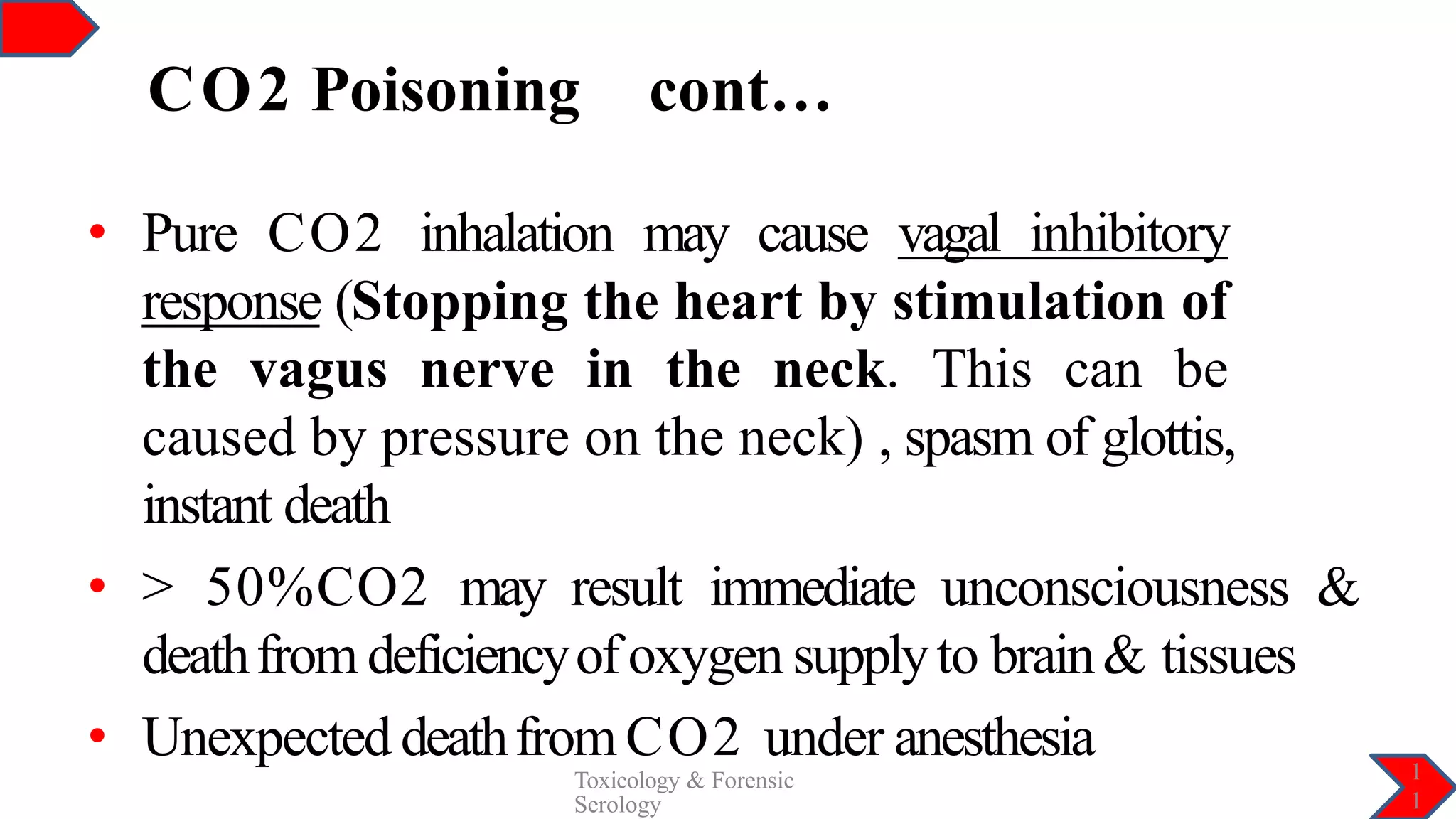

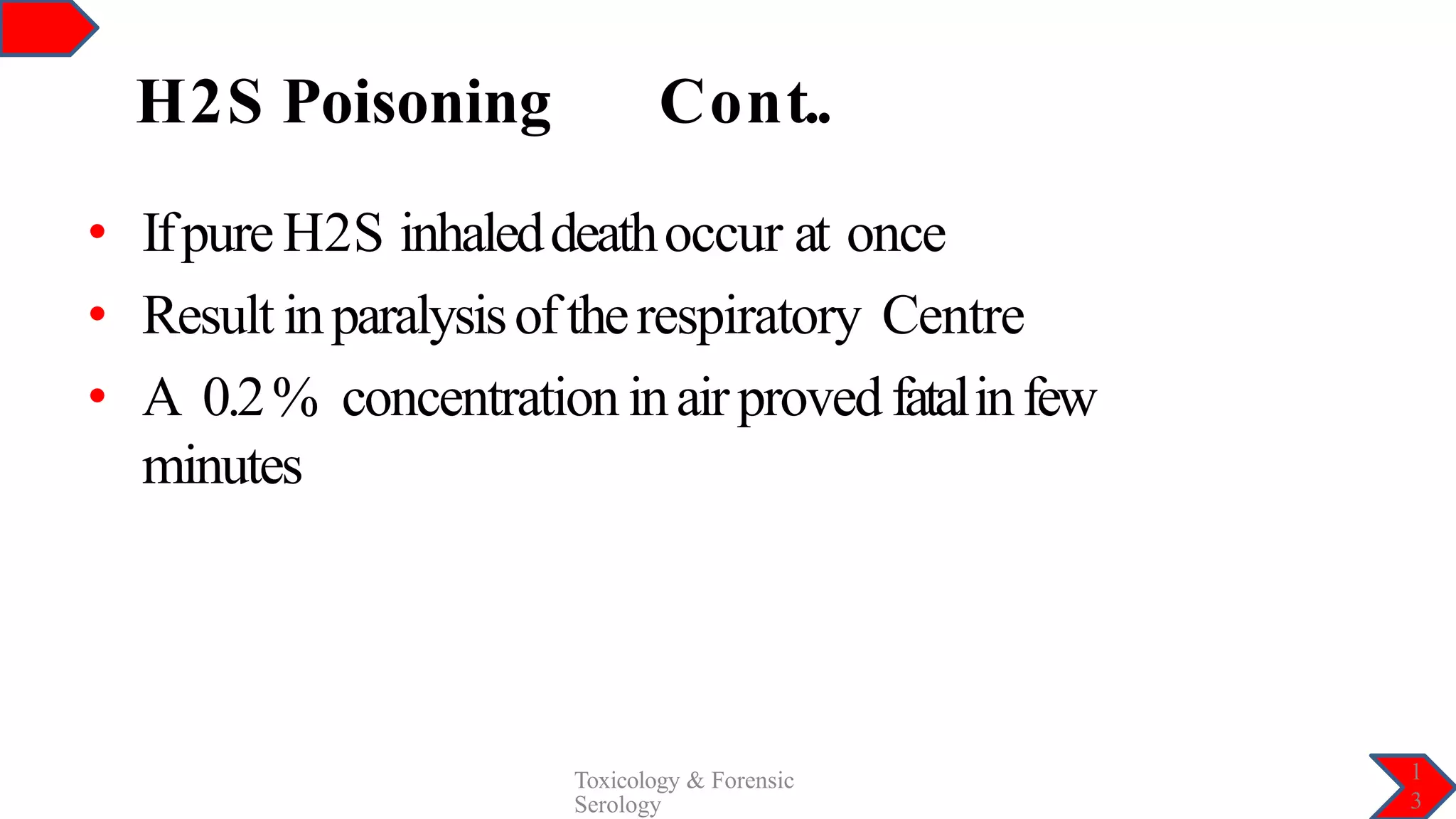
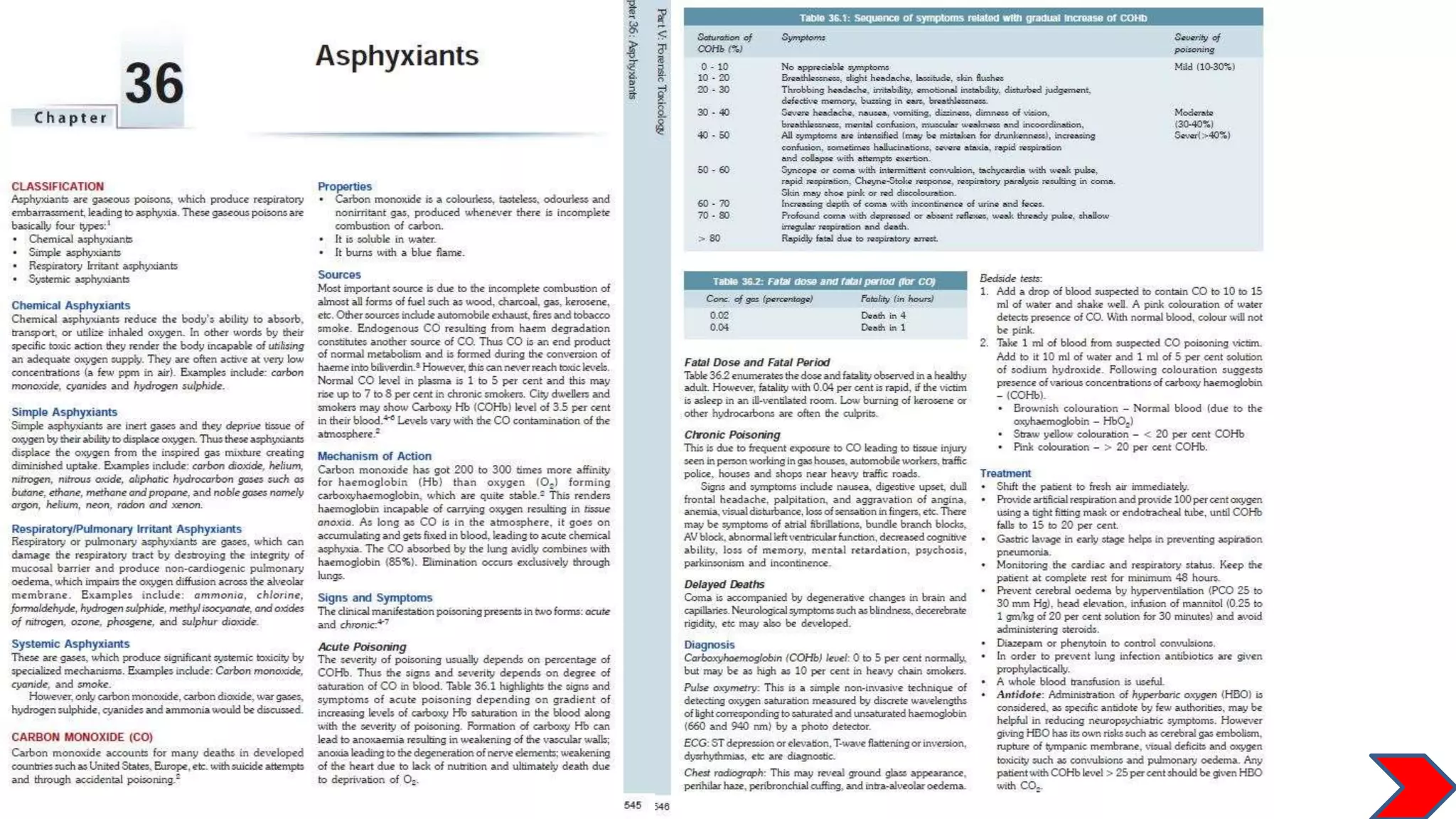


Asphyxiants are gases that reduce or displace oxygen in the air, leading to suffocation. The main asphyxiants are carbon monoxide, carbon dioxide, and hydrogen sulfide. Carbon monoxide binds strongly to hemoglobin, preventing oxygen transport. Carbon dioxide buildup leads to lack of oxygen in tissues. Hydrogen sulfide paralyzes the respiratory center. Diagnosis of carbon monoxide poisoning involves analyzing blood samples for carboxyhemoglobin levels above 10%. Exposure to high concentrations of any of these gases can rapidly lead to loss of consciousness, respiratory failure, and death.


