ASPHYXIA
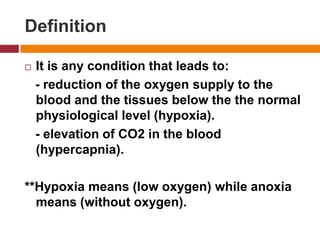
DefinitionIt isany condition thatleads to:   - reduction of the oxygensupply to the blood and the tissues below the the normal physiologicallevel (hypoxia).   - elevation of CO2 in the blood (hypercapnia).**Hypoxiameans (lowoxygen) whileanoxiameans (withoutoxygen).
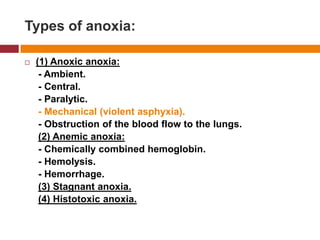
Types of anoxia:(1) Anoxicanoxia:     - Ambient.     - Central.     - Paralytic.     - Mechanical (violent asphyxia).     - Obstruction of the blood flow to the lungs.(2) Anemicanoxia:     - Chemicallycombinedhemoglobin.     - Hemolysis.     - Hemorrhage.(3) Stagnant anoxia.(4) Histotoxicanoxia.
Stages of mechanicalanoxia or violent asphyxia:Three stages:(1) Stage of forced respiration:     - It is due to stimulation of the respiratory center.     - Clinicalpicture: DYSPNEA(2) Stage of convulsions:     - It is due to cerebral irritation.     - Clinicalpicture: CONVULSIONS, CYANOSIS, HYPERTENSION, LOSS OF CONSCIOUSNESS, CONSTRICTED PUPILS.(3) Stage of paralysis:     - Clinicalpicture: LOSS OF CONSCIOUSNESS, FLACCID MUSCLES & LOST REFLEXES, DEEP CYANOSIS, DILATED PUPILS, IRREGULAR BREATHING (Cheyne-Stokes respiration).     **Deathoccurs in about 5 minutes..
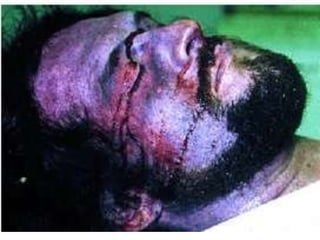
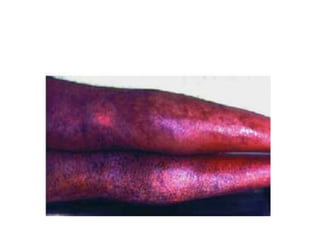
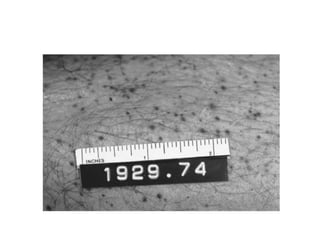
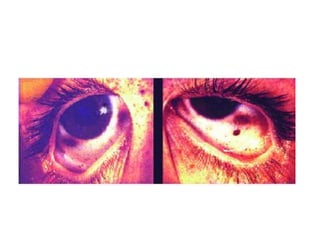
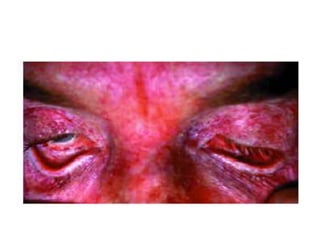
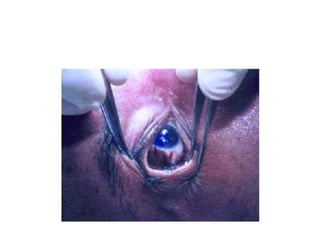
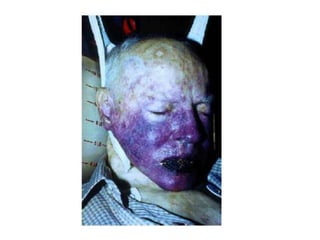
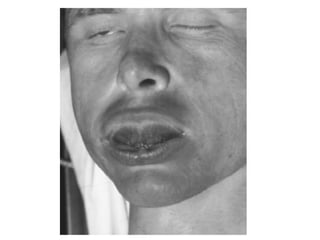
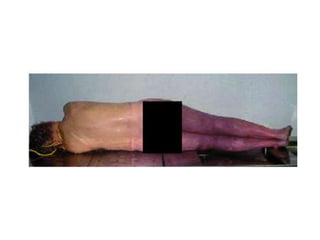
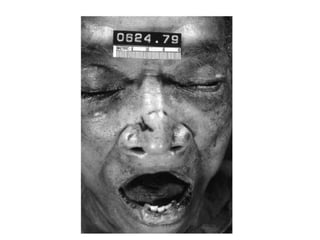
General postmortempicture of mechanicalanoxia:   - Deepcyanosis.   - Proptosis of the eyeballs.   - Bloody frothfrom the nose and mouth.   - Congested face withpetechialhemorrhage all over.   - Dark violet or blue extensive hypostasis.   ** All these are externalsignsN.B: Blood isdark and fluid in consistancy due to increased CO2 and fibrinolysisrespectively.
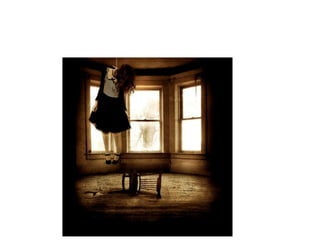
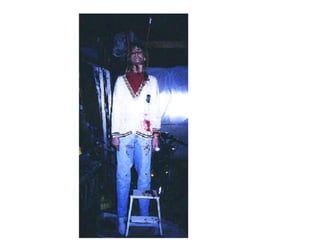
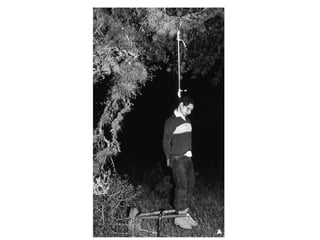
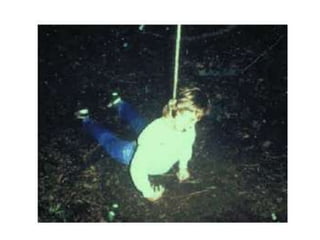
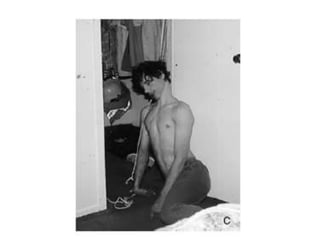
HangingDefinition:It is the mechanicalanoxicdeath due to suspensionof the body from the neck by a ligature.Causes of death:   - Cerebralischemia.   - Vagal cardiac inhibition.   - Mechanicalanoxia.   - Transection of the spinal cord (judicialhanging).
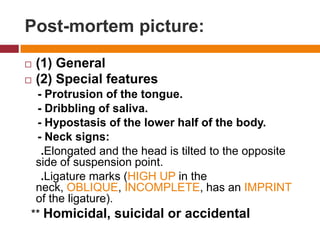
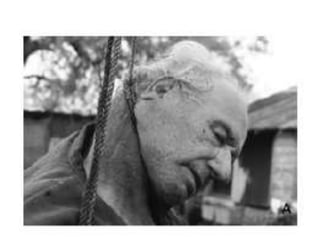
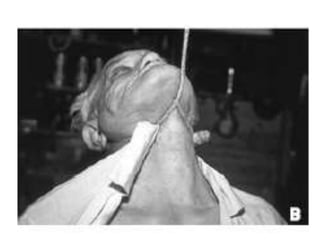
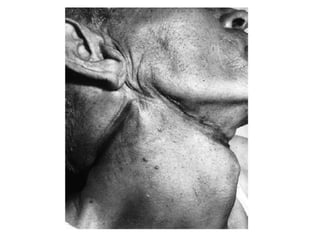
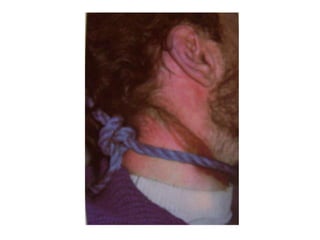
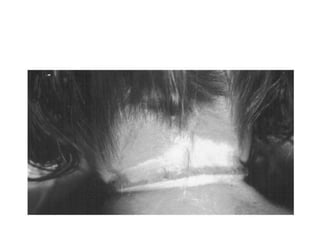
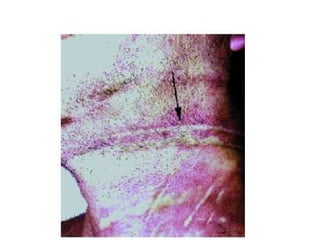
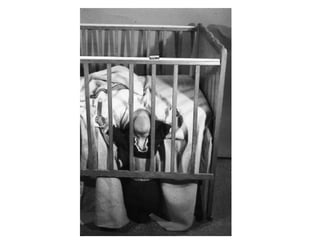
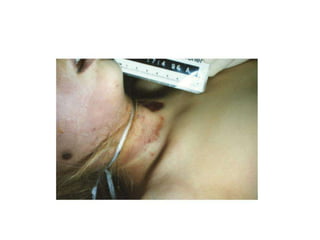
Post-mortem picture:(1) General(2) Specialfeatures    - Protrusion of the tongue.    - Dribbling of saliva.    - Hypostasis of the lowerhalf of the body.    - Neck signs:     .Elongated and the headistilted to the opposite side of suspension point.     .Ligature marks (HIGH UP in the neck, OBLIQUE, INCOMPLETE, has an IMPRINT of the ligature).  ** Homicidal, suicidal or accidental
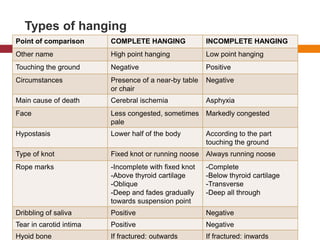
Types of hanging
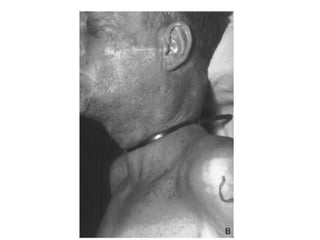
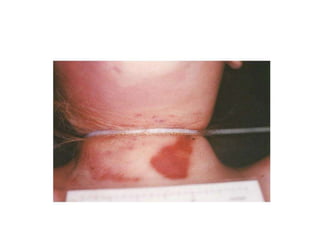
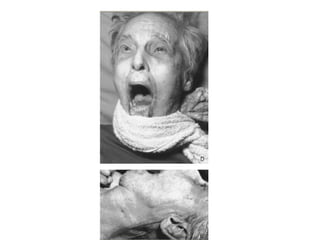
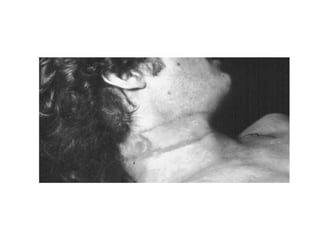
StrangulationDefinition:    It is the mechanicalanoxicdeathcaused by constriction of the neck by a ligature occluding the air passages fromoutside.Causes of death:    - Mechanicalanoxia.    - Reflex cardiac inhibition.    - Delayededema of the glottis and choking.
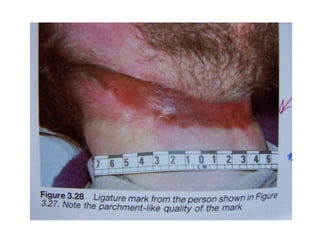
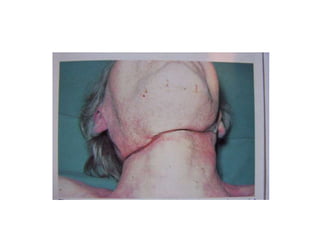
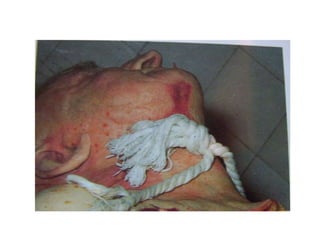
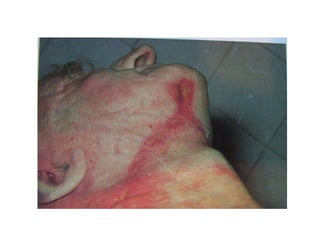
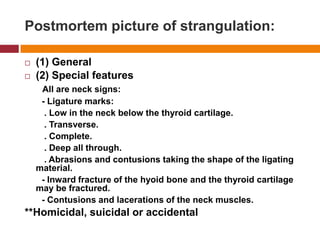
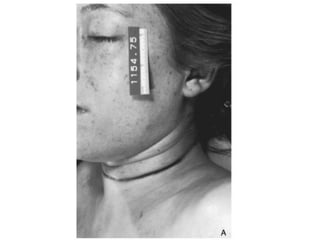
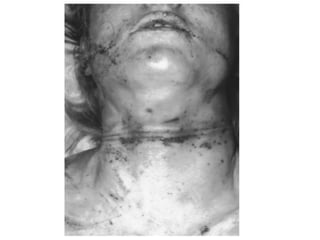
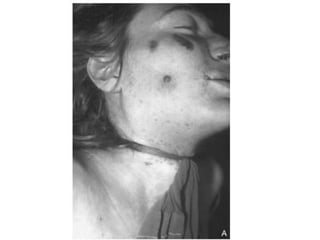
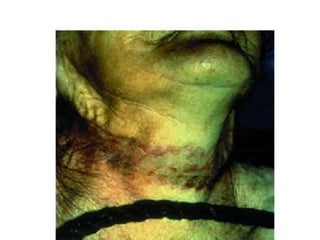
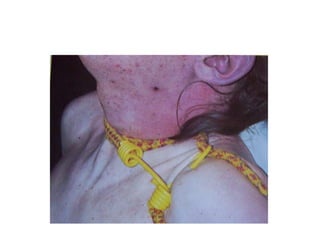
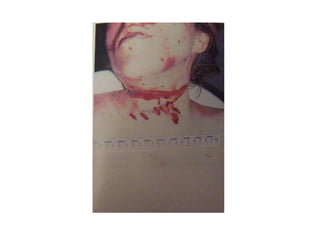
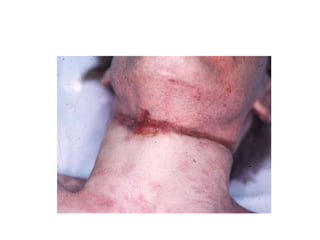
Postmortempicture of strangulation:(1) General(2) SpecialfeaturesAll are neck signs:       - Ligature marks:        . Low in the neck below the thyroid cartilage.        . Transverse.        . Complete.        . Deep all through.        . Abrasions and contusions taking the shape of the ligatingmaterial.       - Inward fracture of the hyoidbone and the thyroid cartilage maybefractured.       - Contusions and lacerations of the neck muscles.**Homicidal, suicidal or accidental
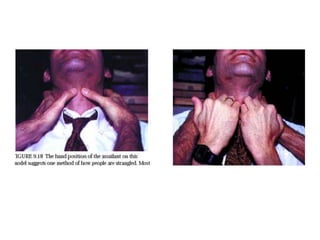
Throttling               «Manual strangulation»Definition:     It is the mechanicalanoxicdeathcaused by constriction of the neck by the hand occluding the air passages fromoutside.Causes of death:     - Mechanicalanoxia.     - Reflex cardiac inhibition.     - Cerebralanoxia.     - Delayedglotticedema and choking.
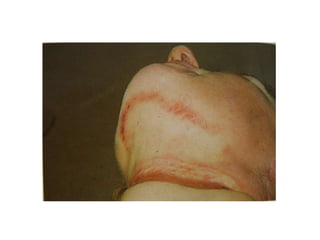
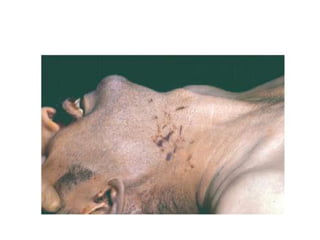
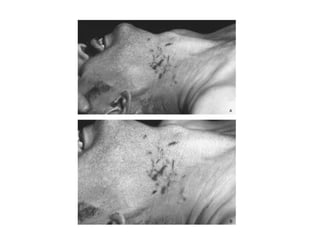
Postmortempicture:(1) General(2) Specialfeatures     All are neck signs    - Multiple contusions and fingernail abrasions.    - Inward fracture of the hyoidbone (itis the mostcommon cause of hyoidbone fracture) and fracture of the thyroid cartilage.    - Contusions of the deep tissues of the neck.** Homicidal, suicidal or accidental
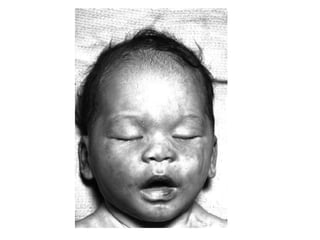
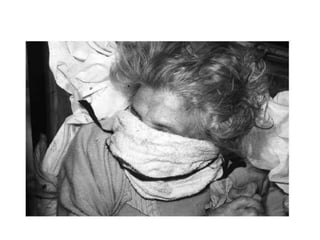
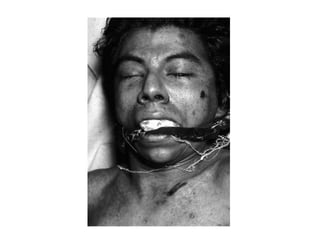
SmotheringDefinition:     It is the mechanicalanoxicdeathcaused by occlusion of the externalrespiratoryopenings by the hand or soft objects.Causes of death:MechanicalanoxiaPostmortempicture of smothering:     (1) General     (2) Specialfeatures          - Multiple contusions and fingernail abrasions.          - Contusions in the buccal mucosa.          - Ventral hypostasis in cotdeath.** Homicidal, suicidal or accidental
Traumatic asphyxia: OverlayingDefinition:    It is the mechanicalanoxicdeath due to mechanical pressure by a heavyobject on the chestwith or without abdominal compression leading to prevention of respiratorymovements.Causes of death:    - Mechanicalanoxia.    - Injury to vital organs.
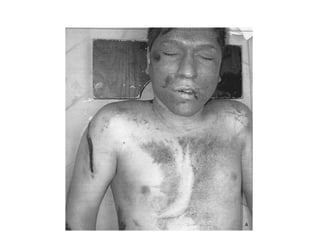
Postmortempicture(1) General(2) Specialfeatures        - Contusions and abrasions of the chest and abdomen.        - Fracture ribs.        - Rupture of internalorgans.        - Line of demarcationbetween the discoloredupper part of the body and the lower part.** Homicidal, suicidal or accidental
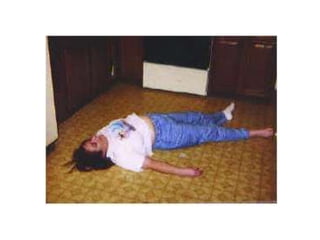
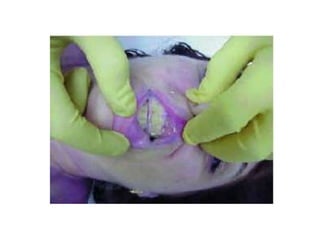
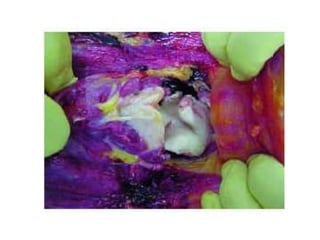
ChokingDefinition:     It is the mechanicalanoxicdeathcaused by occlusion of the respiratory passages frominside.Causes of death:    - Reflex cardiac inhibition    - MechanicalanoxiaTypes:    - Pathological    - Non-pathological**Homicidal, suicidal or accidental
DrowningDefinition:    It is the mechanicalanoxicdeath due to submersion of the respiratoryopeningsunder water.Causes of death:    - Direct causes: mechanicalanoxia    - Indirect causes:       . Reflex cardiac inhibition due to vagal stimulation      . Head injury or other fatal injuries.
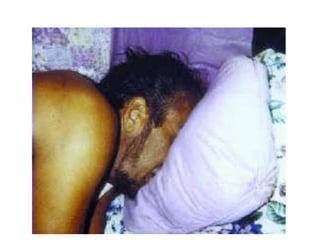
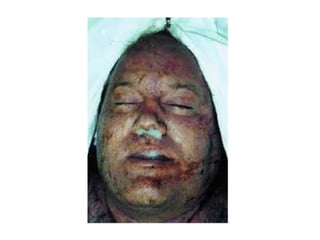
Posrmortempicture of drowning- Sure externalsigns:     . Froth     . Cadavericspasm- Probable externalsigns:     . Related to anoxicanoxia: cyanosis     . Related to presence of the body in water:                         skin is pale&wetGoose skinWasherwoman skinPostmortem injuries     . Affection of postmortem changes due to presence in water:Cooling, hypostasis, adipocere, putrefaction**Homicidal, suicidal or accidental
Asphyxia presentation

Asphyxia presentation

  • 1.
  • 2.
    DefinitionIt isany conditionthatleads to: - reduction of the oxygensupply to the blood and the tissues below the the normal physiologicallevel (hypoxia). - elevation of CO2 in the blood (hypercapnia).**Hypoxiameans (lowoxygen) whileanoxiameans (withoutoxygen).
  • 3.
    Types of anoxia:(1)Anoxicanoxia: - Ambient. - Central. - Paralytic. - Mechanical (violent asphyxia). - Obstruction of the blood flow to the lungs.(2) Anemicanoxia: - Chemicallycombinedhemoglobin. - Hemolysis. - Hemorrhage.(3) Stagnant anoxia.(4) Histotoxicanoxia.
  • 4.
    Stages of mechanicalanoxiaor violent asphyxia:Three stages:(1) Stage of forced respiration: - It is due to stimulation of the respiratory center. - Clinicalpicture: DYSPNEA(2) Stage of convulsions: - It is due to cerebral irritation. - Clinicalpicture: CONVULSIONS, CYANOSIS, HYPERTENSION, LOSS OF CONSCIOUSNESS, CONSTRICTED PUPILS.(3) Stage of paralysis: - Clinicalpicture: LOSS OF CONSCIOUSNESS, FLACCID MUSCLES & LOST REFLEXES, DEEP CYANOSIS, DILATED PUPILS, IRREGULAR BREATHING (Cheyne-Stokes respiration). **Deathoccurs in about 5 minutes..
  • 5.
    General postmortempicture ofmechanicalanoxia: - Deepcyanosis. - Proptosis of the eyeballs. - Bloody frothfrom the nose and mouth. - Congested face withpetechialhemorrhage all over. - Dark violet or blue extensive hypostasis. ** All these are externalsignsN.B: Blood isdark and fluid in consistancy due to increased CO2 and fibrinolysisrespectively.
  • 12.
    HangingDefinition:It is themechanicalanoxicdeath due to suspensionof the body from the neck by a ligature.Causes of death: - Cerebralischemia. - Vagal cardiac inhibition. - Mechanicalanoxia. - Transection of the spinal cord (judicialhanging).
  • 13.
    Post-mortem picture:(1) General(2)Specialfeatures - Protrusion of the tongue. - Dribbling of saliva. - Hypostasis of the lowerhalf of the body. - Neck signs: .Elongated and the headistilted to the opposite side of suspension point. .Ligature marks (HIGH UP in the neck, OBLIQUE, INCOMPLETE, has an IMPRINT of the ligature). ** Homicidal, suicidal or accidental
  • 14.
  • 31.
    StrangulationDefinition: It is the mechanicalanoxicdeathcaused by constriction of the neck by a ligature occluding the air passages fromoutside.Causes of death: - Mechanicalanoxia. - Reflex cardiac inhibition. - Delayededema of the glottis and choking.
  • 32.
    Postmortempicture of strangulation:(1)General(2) SpecialfeaturesAll are neck signs: - Ligature marks: . Low in the neck below the thyroid cartilage. . Transverse. . Complete. . Deep all through. . Abrasions and contusions taking the shape of the ligatingmaterial. - Inward fracture of the hyoidbone and the thyroid cartilage maybefractured. - Contusions and lacerations of the neck muscles.**Homicidal, suicidal or accidental
  • 48.
    Throttling «Manual strangulation»Definition: It is the mechanicalanoxicdeathcaused by constriction of the neck by the hand occluding the air passages fromoutside.Causes of death: - Mechanicalanoxia. - Reflex cardiac inhibition. - Cerebralanoxia. - Delayedglotticedema and choking.
  • 49.
    Postmortempicture:(1) General(2) Specialfeatures All are neck signs - Multiple contusions and fingernail abrasions. - Inward fracture of the hyoidbone (itis the mostcommon cause of hyoidbone fracture) and fracture of the thyroid cartilage. - Contusions of the deep tissues of the neck.** Homicidal, suicidal or accidental
  • 53.
    SmotheringDefinition: It is the mechanicalanoxicdeathcaused by occlusion of the externalrespiratoryopenings by the hand or soft objects.Causes of death:MechanicalanoxiaPostmortempicture of smothering: (1) General (2) Specialfeatures - Multiple contusions and fingernail abrasions. - Contusions in the buccal mucosa. - Ventral hypostasis in cotdeath.** Homicidal, suicidal or accidental
  • 59.
    Traumatic asphyxia: OverlayingDefinition: It is the mechanicalanoxicdeath due to mechanical pressure by a heavyobject on the chestwith or without abdominal compression leading to prevention of respiratorymovements.Causes of death: - Mechanicalanoxia. - Injury to vital organs.
  • 60.
    Postmortempicture(1) General(2) Specialfeatures - Contusions and abrasions of the chest and abdomen. - Fracture ribs. - Rupture of internalorgans. - Line of demarcationbetween the discoloredupper part of the body and the lower part.** Homicidal, suicidal or accidental
  • 62.
    ChokingDefinition: It is the mechanicalanoxicdeathcaused by occlusion of the respiratory passages frominside.Causes of death: - Reflex cardiac inhibition - MechanicalanoxiaTypes: - Pathological - Non-pathological**Homicidal, suicidal or accidental
  • 67.
    DrowningDefinition: It is the mechanicalanoxicdeath due to submersion of the respiratoryopeningsunder water.Causes of death: - Direct causes: mechanicalanoxia - Indirect causes: . Reflex cardiac inhibition due to vagal stimulation . Head injury or other fatal injuries.
  • 68.
    Posrmortempicture of drowning-Sure externalsigns: . Froth . Cadavericspasm- Probable externalsigns: . Related to anoxicanoxia: cyanosis . Related to presence of the body in water: skin is pale&wetGoose skinWasherwoman skinPostmortem injuries . Affection of postmortem changes due to presence in water:Cooling, hypostasis, adipocere, putrefaction**Homicidal, suicidal or accidental