Birth asphyxia-managementtobindominic2006 mbbs
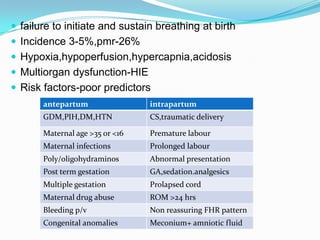
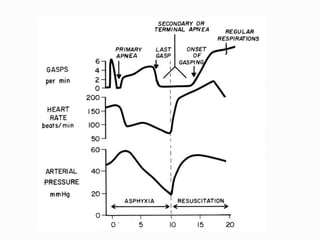
failure to initiate and sustain breathing at birthIncidence 3-5%,pmr-26%Hypoxia,hypoperfusion,hypercapnia,acidosisMultiorgan dysfunction-HIERisk factors-poor predictors
Etiology-placental insufficiencyEach delivery is an emergencyResuscitation successanticipationadequate preparationtimely evaluationquick & correct actionPreparation: warm towels,suctiondevices,self inflating                                                      bag,2 infant masks,radiantheater,clock
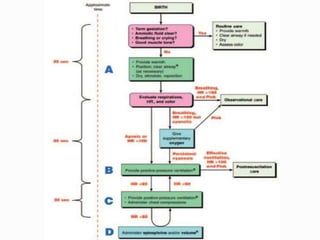
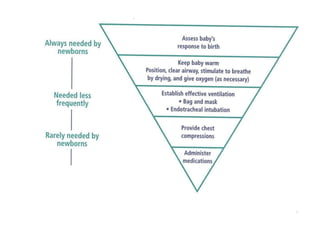
Basic resuscitationProvide warmthClear  airwayDry,stimulate,repositionEvaluation Signs: respiration,HR &colourApgar score not a prerequisite
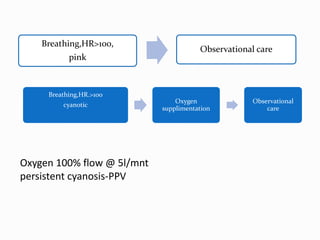
Oxygen 100% flow @ 5l/mntpersistent cyanosis-PPV
PPVSelf inflating bag & face mask BMVindicationscontraindications-diaphragmatic hernia(non vigourous babies MSL)procedure: 240-750ml, 90-100% oxygen @5-6l/mnt or room airneck slightly extendedappropriate face mask & seal itcompress & w/f chest riseventilation @40-60 breaths/mntadequate pressure-indicator evaluate HRIf ppv>2mnts,orogastric tube for abdomen decompression
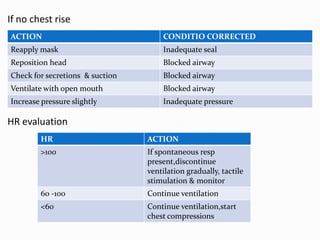
If no chest riseHR evaluation
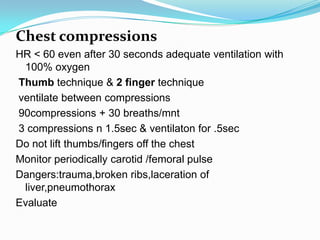
Chest compressionsHR < 60 even after 30 seconds adequate ventilation with 100% oxygenThumb technique& 2 finger techniqueventilate between compressions 90compressions + 30 breaths/mnt 3 compressions n 1.5sec & ventilaton for .5secDo not lift thumbs/fingers off the chestMonitor periodically carotid /femoral pulseDangers:trauma,broken ribs,laceration of liver,pneumothoraxEvaluate
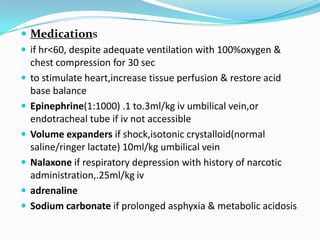
Medicationsif hr<60, despite adequate ventilation with 100%oxygen & chest compression for 30 secto stimulate heart,increase tissue perfusion & restore acid base balanceEpinephrine(1:1000) .1 to.3ml/kg iv umbilical vein,orendotracheal tube if iv not accessibleVolume expanders if shock,isotonic crystalloid(normal saline/ringer lactate) 10ml/kg umbilical veinNalaxone if respiratory depression with history of narcotic administration,.25ml/kg ivadrenalineSodium carbonate if prolonged asphyxia & metabolic acidosis
Endotracheal intubationConsidered at any steps,used rarelyIndicationsDiaphragmatic herniaBMV ineffectiveTracheal suction is required (nonvigorous baby MSL)Prolonged BMVIf any medications
Post resuscitation carekeep baby with motherPut to breast feeding asap (risk of hypoglycemia)Examine the baby 4 anomalies,hypothermia,danger signsMonitor temp,po2,pco2,perfusion,glucose,metabolic profile. treat cerbralodema,seizuresRecord resuscitationcounsel on complicationsNormal breathing ,body temp ,ocassional cry, good suckling & movements discharge
Practices not beneficial:Slapping the newborn, soaking it in cold water, sprinkling it with water,,milkingthe cord,Tactilestimulation,Routineaspiration of upper airway,Routinegastric suctioning,posturaldrainage,slapping the back,squeezingchest,sodium bicarbonateNon-initiation of resuscitationgestation < 23 weeksbirthweight < 400 gramsanencephaly ,severe hydrocephalyconfirmed trisomy 13 or 18Renal agenesisCongenital malformationsIf risk of high survival morbidity & mortalityDiscontinuationeven after 10mnts of resuscitation, if no signs of life
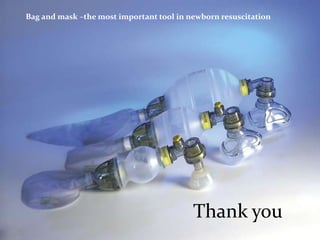
Bag and mask –the most important tool in newborn resuscitationThank you

Birth asphyxia management

  • 1.
  • 2.
    failure to initiateand sustain breathing at birthIncidence 3-5%,pmr-26%Hypoxia,hypoperfusion,hypercapnia,acidosisMultiorgan dysfunction-HIERisk factors-poor predictors
  • 4.
    Etiology-placental insufficiencyEach deliveryis an emergencyResuscitation successanticipationadequate preparationtimely evaluationquick & correct actionPreparation: warm towels,suctiondevices,self inflating bag,2 infant masks,radiantheater,clock
  • 6.
    Basic resuscitationProvide warmthClear airwayDry,stimulate,repositionEvaluation Signs: respiration,HR &colourApgar score not a prerequisite
  • 7.
    Oxygen 100% flow@ 5l/mntpersistent cyanosis-PPV
  • 8.
    PPVSelf inflating bag& face mask BMVindicationscontraindications-diaphragmatic hernia(non vigourous babies MSL)procedure: 240-750ml, 90-100% oxygen @5-6l/mnt or room airneck slightly extendedappropriate face mask & seal itcompress & w/f chest riseventilation @40-60 breaths/mntadequate pressure-indicator evaluate HRIf ppv>2mnts,orogastric tube for abdomen decompression
  • 9.
    If no chestriseHR evaluation
  • 10.
    Chest compressionsHR <60 even after 30 seconds adequate ventilation with 100% oxygenThumb technique& 2 finger techniqueventilate between compressions 90compressions + 30 breaths/mnt 3 compressions n 1.5sec & ventilaton for .5secDo not lift thumbs/fingers off the chestMonitor periodically carotid /femoral pulseDangers:trauma,broken ribs,laceration of liver,pneumothoraxEvaluate
  • 11.
    Medicationsif hr<60, despiteadequate ventilation with 100%oxygen & chest compression for 30 secto stimulate heart,increase tissue perfusion & restore acid base balanceEpinephrine(1:1000) .1 to.3ml/kg iv umbilical vein,orendotracheal tube if iv not accessibleVolume expanders if shock,isotonic crystalloid(normal saline/ringer lactate) 10ml/kg umbilical veinNalaxone if respiratory depression with history of narcotic administration,.25ml/kg ivadrenalineSodium carbonate if prolonged asphyxia & metabolic acidosis
  • 13.
    Endotracheal intubationConsidered atany steps,used rarelyIndicationsDiaphragmatic herniaBMV ineffectiveTracheal suction is required (nonvigorous baby MSL)Prolonged BMVIf any medications
  • 14.
    Post resuscitation carekeepbaby with motherPut to breast feeding asap (risk of hypoglycemia)Examine the baby 4 anomalies,hypothermia,danger signsMonitor temp,po2,pco2,perfusion,glucose,metabolic profile. treat cerbralodema,seizuresRecord resuscitationcounsel on complicationsNormal breathing ,body temp ,ocassional cry, good suckling & movements discharge
  • 15.
    Practices not beneficial:Slappingthe newborn, soaking it in cold water, sprinkling it with water,,milkingthe cord,Tactilestimulation,Routineaspiration of upper airway,Routinegastric suctioning,posturaldrainage,slapping the back,squeezingchest,sodium bicarbonateNon-initiation of resuscitationgestation < 23 weeksbirthweight < 400 gramsanencephaly ,severe hydrocephalyconfirmed trisomy 13 or 18Renal agenesisCongenital malformationsIf risk of high survival morbidity & mortalityDiscontinuationeven after 10mnts of resuscitation, if no signs of life
  • 16.
    Bag and mask–the most important tool in newborn resuscitationThank you