GOVT. SUKHRAM NAGE
COLLEGE NAGRI
DIST. DHAMTARI C.G.(493778)
Session 2023-24
Paper III –Microbiology,
Phycology,and Mycology
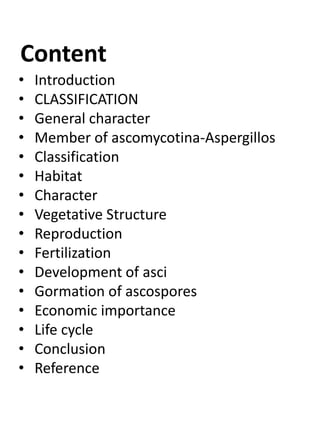
Topic-Ascomycotina
Content
• Introduction
• CLASSIFICATION
• General character
• Member of ascomycotina-Aspergillos
• Classification
• Habitat
• Character
• Vegetative Structure
• Reproduction
• Fertilization
• Development of asci
• Gormation of ascospores
• Economic importance
• Life cycle
• Conclusion
• Reference
Introduction
• Largest sub-division and most diverse group
of higher fungi.
• Name derived from Greek word ‘Ascos’means
bladder or sac and Latin word ‘mykes’ means
fungi.
• Popularly known –sac fungi
• Morphologically diverse.
• It includes organisms from unicellular yeasts
to complex cup fungi.
• 40% of lichens have an ascomycota as the
fungal part of the lichen.
General character
• Unicellular or multicellular fungi
• Cell wall – chitin and glucans
• Mycelium –septate and branched
• Reproductive structure –ascus or asci
• Ascospores are produced endogenously in
asci
• Fruiting body –ascocarp
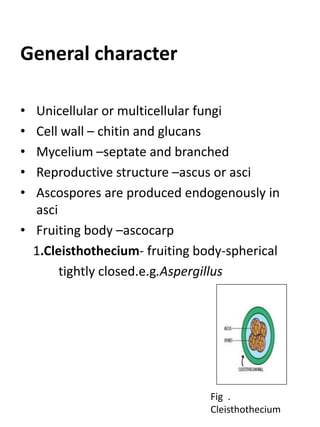
1.Cleisthothecium- fruiting body-spherical
tightly closed.e.g.Aspergillus
Fig .
Cleisthothecium
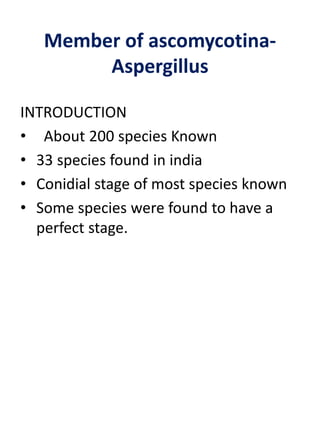
• Apothecium- Cup shaped and asci are
present in
hymenium,e.g.Peziza
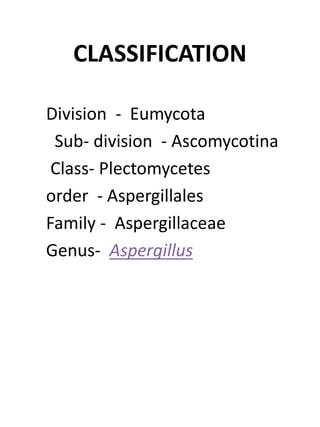
• Perithecium - Flask shaped with external
opening,
e.g Neurospora
Fig. Apothecium of
peziza
Member of ascomycotina-
Aspergillus
INTRODUCTION
• About 200 species Known
• 33 species found in india
• Conidial stage of most species known
• Some species were found to have a
perfect stage.
CLASSIFICATION
Division - Eumycota
Sub- division - Ascomycotina
Class- Plectomycetes
order - Aspergillales
Family - Aspergillaceae
Genus- Aspergillus
Habitat
• On decaying vegetables and fruits
• Starchy media such as bread and rice.
• Cloths and soil
• Found as parasites in plants and
animals
Character
• Known as blue-green or black
mould.
• Saprophytic fungus
• Cells multinucleated
• Asexual reproduction – conidia
• Fruiting body- cleisthothecium
• Aspergillus is also regarded as
‘weed of laboratory’.because it can
grow in unwanted places.
Vegetative character
• Mycelium is well developed
• Slender ,tubular ,pale coloured
• Thin walled hyphae.
• Branched and septate
• Mycelium- homokaryotic and
heterokaryotic
• Cell multinucleate
• Granular cytoplasm
Reproduction
• Vegatative reproduction- By fragmentation
of hyphae
• Sexual reproduction is rare.
Majority of the species of aspergillus are
homothallic.
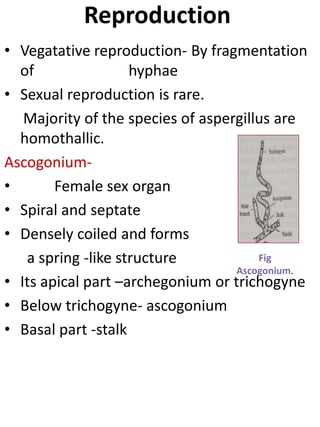
Ascogonium-
• Female sex organ
• Spiral and septate
• Densely coiled and forms
a spring -like structure
• Its apical part –archegonium or trichogyne
• Below trichogyne- ascogonium
• Basal part -stalk
Fig
Ascogonium.
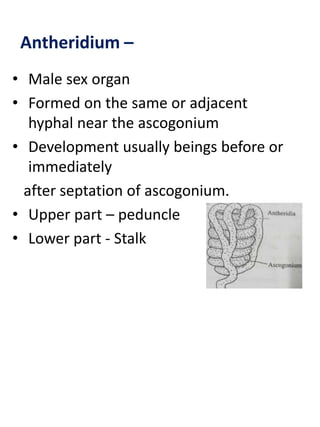
Antheridium –
• Male sex organ
• Formed on the same or adjacent
hyphal near the ascogonium
• Development usually beings before or
immediately
after septation of ascogonium.
• Upper part – peduncle
• Lower part - Stalk
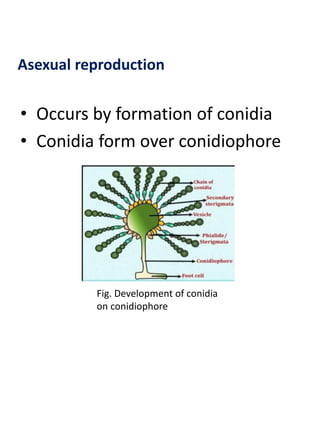
Asexual reproduction
• Occurs by formation of conidia
• Conidia form over conidiophore
Fig. Development of conidia
on conidiophore
Fertilization
• Before fertilization the stalk of the antheridium
elongates and coil
• Grow upwards in contact with the ascogonium
until the antheridium touches the trichogyne.
• This is known as gametangial copulation.
• Point os contact of antheridium with the
trichogyne disslove.
• Contents of antheridium are transferred into
ascogonium through trichogyne.
• This process is called plasmogamy.
• Content of both mix
• But the fusion of both nuclei do not take place
immediately.
• Both nuclei arrange them in pairs
• Ascogonium becomes dikaryotic.
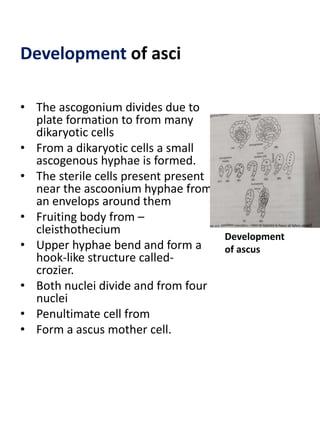
Development of asci
• The ascogonium divides due to
plate formation to from many
dikaryotic cells
• From a dikaryotic cells a small
ascogenous hyphae is formed.
• The sterile cells present present
near the ascoonium hyphae from
an envelops around them
• Fruiting body from –
cleisthothecium
• Upper hyphae bend and form a
hook-like structure called-
crozier.
• Both nuclei divide and from four
nuclei
• Penultimate cell from
• Form a ascus mother cell.
Development
of ascus
Formation of ascospores
• The diploid nuclei present inside ascus
from 8 haploid nuclei by meiotic
division
• Later mitotic division
• Protoplasm collect around nuclei and
from a wall
• In this way they get converted into
ascospores.
Economic importance
• Positive impacts
• production of organic acid like
gluconic acid,citric acid by A.niger and
A. fumaricvus
• production of antibiotics
• Production of amylase
Negative impacts
• spoli food and vegetables
• Disesase of plants
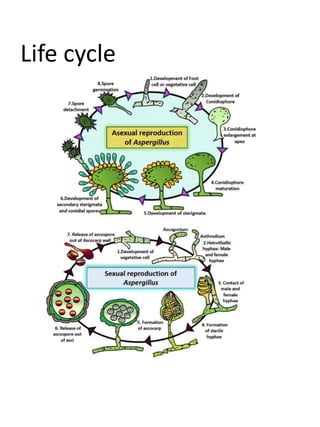
Life cycle
Conclusion
• Aspergillus is a black mold .
• There is a both advantages and
disadvantages of asperilus that
cause a huge ecological impact by
imposing postive and negative
effects.
Reference
Rastogi p.c. singh pandey jain

aspergillus.ppsx

  • 1.
    GOVT. SUKHRAM NAGE COLLEGENAGRI DIST. DHAMTARI C.G.(493778) Session 2023-24 Paper III –Microbiology, Phycology,and Mycology Topic-Ascomycotina
  • 2.
    Content • Introduction • CLASSIFICATION •General character • Member of ascomycotina-Aspergillos • Classification • Habitat • Character • Vegetative Structure • Reproduction • Fertilization • Development of asci • Gormation of ascospores • Economic importance • Life cycle • Conclusion • Reference
  • 3.
    Introduction • Largest sub-divisionand most diverse group of higher fungi. • Name derived from Greek word ‘Ascos’means bladder or sac and Latin word ‘mykes’ means fungi. • Popularly known –sac fungi • Morphologically diverse. • It includes organisms from unicellular yeasts to complex cup fungi. • 40% of lichens have an ascomycota as the fungal part of the lichen.
  • 4.
    General character • Unicellularor multicellular fungi • Cell wall – chitin and glucans • Mycelium –septate and branched • Reproductive structure –ascus or asci • Ascospores are produced endogenously in asci • Fruiting body –ascocarp 1.Cleisthothecium- fruiting body-spherical tightly closed.e.g.Aspergillus Fig . Cleisthothecium
  • 5.
    • Apothecium- Cupshaped and asci are present in hymenium,e.g.Peziza • Perithecium - Flask shaped with external opening, e.g Neurospora Fig. Apothecium of peziza
  • 6.
    Member of ascomycotina- Aspergillus INTRODUCTION •About 200 species Known • 33 species found in india • Conidial stage of most species known • Some species were found to have a perfect stage.
  • 7.
    CLASSIFICATION Division - Eumycota Sub-division - Ascomycotina Class- Plectomycetes order - Aspergillales Family - Aspergillaceae Genus- Aspergillus
  • 8.
    Habitat • On decayingvegetables and fruits • Starchy media such as bread and rice. • Cloths and soil • Found as parasites in plants and animals
  • 9.
    Character • Known asblue-green or black mould. • Saprophytic fungus • Cells multinucleated • Asexual reproduction – conidia • Fruiting body- cleisthothecium • Aspergillus is also regarded as ‘weed of laboratory’.because it can grow in unwanted places.
  • 10.
    Vegetative character • Myceliumis well developed • Slender ,tubular ,pale coloured • Thin walled hyphae. • Branched and septate • Mycelium- homokaryotic and heterokaryotic • Cell multinucleate • Granular cytoplasm
  • 11.
    Reproduction • Vegatative reproduction-By fragmentation of hyphae • Sexual reproduction is rare. Majority of the species of aspergillus are homothallic. Ascogonium- • Female sex organ • Spiral and septate • Densely coiled and forms a spring -like structure • Its apical part –archegonium or trichogyne • Below trichogyne- ascogonium • Basal part -stalk Fig Ascogonium.
  • 12.
    Antheridium – • Malesex organ • Formed on the same or adjacent hyphal near the ascogonium • Development usually beings before or immediately after septation of ascogonium. • Upper part – peduncle • Lower part - Stalk
  • 13.
    Asexual reproduction • Occursby formation of conidia • Conidia form over conidiophore Fig. Development of conidia on conidiophore
  • 14.
    Fertilization • Before fertilizationthe stalk of the antheridium elongates and coil • Grow upwards in contact with the ascogonium until the antheridium touches the trichogyne. • This is known as gametangial copulation. • Point os contact of antheridium with the trichogyne disslove. • Contents of antheridium are transferred into ascogonium through trichogyne. • This process is called plasmogamy. • Content of both mix • But the fusion of both nuclei do not take place immediately. • Both nuclei arrange them in pairs • Ascogonium becomes dikaryotic.
  • 15.
    Development of asci •The ascogonium divides due to plate formation to from many dikaryotic cells • From a dikaryotic cells a small ascogenous hyphae is formed. • The sterile cells present present near the ascoonium hyphae from an envelops around them • Fruiting body from – cleisthothecium • Upper hyphae bend and form a hook-like structure called- crozier. • Both nuclei divide and from four nuclei • Penultimate cell from • Form a ascus mother cell. Development of ascus
  • 16.
    Formation of ascospores •The diploid nuclei present inside ascus from 8 haploid nuclei by meiotic division • Later mitotic division • Protoplasm collect around nuclei and from a wall • In this way they get converted into ascospores.
  • 17.
    Economic importance • Positiveimpacts • production of organic acid like gluconic acid,citric acid by A.niger and A. fumaricvus • production of antibiotics • Production of amylase Negative impacts • spoli food and vegetables • Disesase of plants
  • 18.
  • 19.
    Conclusion • Aspergillus isa black mold . • There is a both advantages and disadvantages of asperilus that cause a huge ecological impact by imposing postive and negative effects.
  • 20.