GOVT. SUKHRAM NAGE COLLEGE NAGRI
DHAMTARI (C.G.) 493778
Guided by
Session – 2024-25
Paper 1st
– Plant Development and Plant Resources
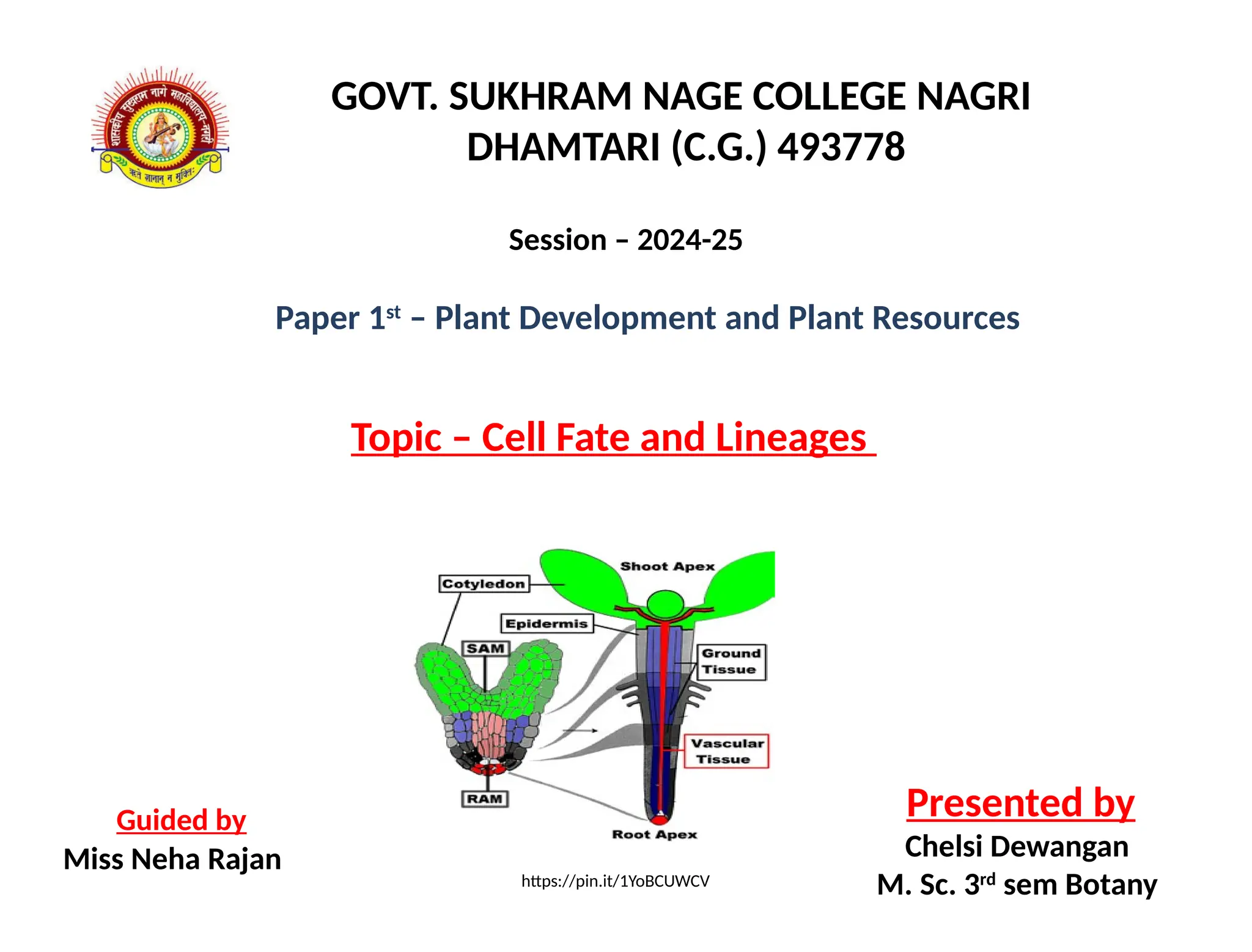
Topic – Cell Fate and Lineages
Presented by
Chelsi Dewangan
M. Sc. 3rd
sem Botany
Miss Neha Rajan
https://pin.it/1YoBCUWCV
Content
• Introduction
• Definition
• Cell fate commitment
• Stage of commitment
• Control of cell fate
• Cell lineages
• History of cell lineage studied
• Cell lineage in plants
• Genes involved in root formation
• Reference
Cell fate and lineage
Cell fate
 During embryogenesis of higher organism, cell type are specified in a
specific arrangement during the process of pattern formation.
 Two Meristems form during embryogenesis at opposite sides of the
apical basal axis Shoot apical meristem and root apical meristem.
Introduction
Definition
•The fate of a cell describes its future identity or the identity of its
daughter cell before is actually phenotypically detectable through
differentiation or division .
•Cell fate is determined by the actions of numerous cells intrinsic and
extrinsic factors.
•The fate of a cell describes what it will become in the in the course of
normal development.
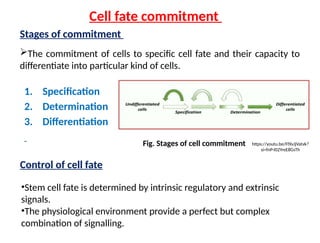
1. Specification
2. Determination
3. Differentiation
Cell fate commitment
The commitment of cells to specific cell fate and their capacity to
differentiate into particular kind of cells.
Stages of commitment
https://youtu.be/FfXvJjVatvk?
si=fnP-I02YreE8GsTh
Fig. Stages of cell commitment
Control of cell fate
•Stem cell fate is determined by intrinsic regulatory and extrinsic
signals.
•The physiological environment provide a perfect but complex
combination of signalling.
Cell lineage
Introduction
History of cell lineage studied
•The cell lineage of an organism is the pattern of cell division during its
development.
•cell lineage are described by following cell division in living individuals,
or by marking cell and examining their progeny.
•Some organism or precursor cell display invariant patterns of cell
division in which specification of cell fat is correlated with cell division
pattern .
•Cell lineage studies began Whitman's description of cleavage patterns
in leach embryo's in the 1870s.
•And continued with description of lineage in many invertebrate animal
including nematodes , sea urchins and ascidians.
https://pin.it/1YoBCUWCV
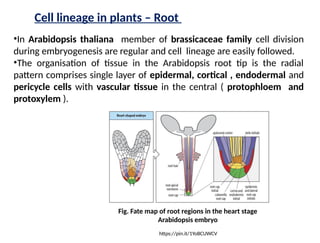
Fig. Fate map of root regions in the heart stage
Arabidopsis embryo
Cell lineage in plants – Root
•In Arabidopsis thaliana member of brassicaceae family cell division
during embryogenesis are regular and cell lineage are easily followed.
•The organisation of tissue in the Arabidopsis root tip is the radial
pattern comprises single layer of epidermal, cortical , endodermal and
pericycle cells with vascular tissue in the central ( protophloem and
protoxylem ).
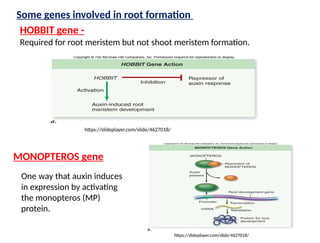
One way that auxin induces
in expression by activating
the monopteros (MP)
protein.
Some genes involved in root formation
HOBBIT gene -
MONOPTEROS gene
Required for root meristem but not shoot meristem formation.
https://slideplayer.com/slide/4627018/
Reference
Thankyou
Bhojawani S. S. , Bhatnagar S. P. And Dantu P. K. The Embryology of
Angiosperms .

cell fate and lineage notes for msc.pptx

  • 1.
    GOVT. SUKHRAM NAGECOLLEGE NAGRI DHAMTARI (C.G.) 493778 Guided by Session – 2024-25 Paper 1st – Plant Development and Plant Resources Topic – Cell Fate and Lineages Presented by Chelsi Dewangan M. Sc. 3rd sem Botany Miss Neha Rajan https://pin.it/1YoBCUWCV
  • 2.
    Content • Introduction • Definition •Cell fate commitment • Stage of commitment • Control of cell fate • Cell lineages • History of cell lineage studied • Cell lineage in plants • Genes involved in root formation • Reference Cell fate and lineage
  • 3.
    Cell fate  Duringembryogenesis of higher organism, cell type are specified in a specific arrangement during the process of pattern formation.  Two Meristems form during embryogenesis at opposite sides of the apical basal axis Shoot apical meristem and root apical meristem. Introduction Definition •The fate of a cell describes its future identity or the identity of its daughter cell before is actually phenotypically detectable through differentiation or division . •Cell fate is determined by the actions of numerous cells intrinsic and extrinsic factors. •The fate of a cell describes what it will become in the in the course of normal development.
  • 4.
    1. Specification 2. Determination 3.Differentiation Cell fate commitment The commitment of cells to specific cell fate and their capacity to differentiate into particular kind of cells. Stages of commitment https://youtu.be/FfXvJjVatvk? si=fnP-I02YreE8GsTh Fig. Stages of cell commitment Control of cell fate •Stem cell fate is determined by intrinsic regulatory and extrinsic signals. •The physiological environment provide a perfect but complex combination of signalling.
  • 5.
    Cell lineage Introduction History ofcell lineage studied •The cell lineage of an organism is the pattern of cell division during its development. •cell lineage are described by following cell division in living individuals, or by marking cell and examining their progeny. •Some organism or precursor cell display invariant patterns of cell division in which specification of cell fat is correlated with cell division pattern . •Cell lineage studies began Whitman's description of cleavage patterns in leach embryo's in the 1870s. •And continued with description of lineage in many invertebrate animal including nematodes , sea urchins and ascidians.
  • 6.
    https://pin.it/1YoBCUWCV Fig. Fate mapof root regions in the heart stage Arabidopsis embryo Cell lineage in plants – Root •In Arabidopsis thaliana member of brassicaceae family cell division during embryogenesis are regular and cell lineage are easily followed. •The organisation of tissue in the Arabidopsis root tip is the radial pattern comprises single layer of epidermal, cortical , endodermal and pericycle cells with vascular tissue in the central ( protophloem and protoxylem ).
  • 7.
    One way thatauxin induces in expression by activating the monopteros (MP) protein. Some genes involved in root formation HOBBIT gene - MONOPTEROS gene Required for root meristem but not shoot meristem formation. https://slideplayer.com/slide/4627018/ https://slideplayer.com/slide/4627018/
  • 8.
    Reference Thankyou Bhojawani S. S., Bhatnagar S. P. And Dantu P. K. The Embryology of Angiosperms .