Instructor: Dr. Nguyễn Trung Hậu
Class: DH13TPA
Members:
1. Trần Ngọc Bích (13125811)
2. Đinh Ngọc Mỹ Duyên (13125821)
3. Trương Phan Thu Hiền (13125832)
4. Huỳnh Thị Kiều Giang (13125105)
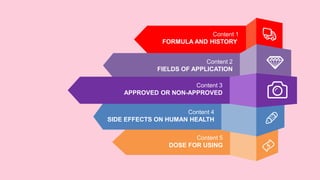
Content 5
DOSE FOR USING
Content 4
SIDE EFFECTS ON HUMAN HEALTH
Content 1
FORMULA AND HISTORY
Content 2
FIELDS OF APPLICATION
Content 3
APPROVED OR NON-APPROVED
FORMULA
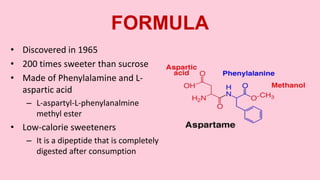
• Discovered in 1965
• 200 times sweeter than sucrose
• Made of Phenylalamine and L-
aspartic acid
– L-aspartyl-L-phenylanalmine
methyl ester
• Low-calorie sweeteners
– It is a dipeptide that is completely
digested after consumption
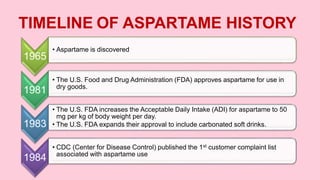
TIMELINE OF ASPARTAME HISTORY
1965
• Aspartame is discovered
1981
• The U.S. Food and Drug Administration (FDA) approves aspartame for use in
dry goods.
1983
• The U.S. FDA increases the Acceptable Daily Intake (ADI) for aspartame to 50
mg per kg of body weight per day.
• The U.S. FDA expands their approval to include carbonated soft drinks.
1984
• CDC (Center for Disease Control) published the 1st customer complaint list
associated with aspartame use
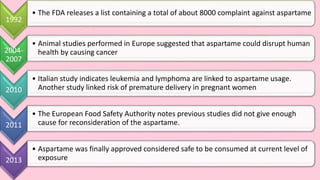
1992
• The FDA releases a list containing a total of about 8000 complaint against aspartame
2004-
2007
• Animal studies performed in Europe suggested that aspartame could disrupt human
health by causing cancer
2010
• Italian study indicates leukemia and lymphoma are linked to aspartame usage.
Another study linked risk of premature delivery in pregnant women
2011
• The European Food Safety Authority notes previous studies did not give enough
cause for reconsideration of the aspartame.
2013
• Aspartame was finally approved considered safe to be consumed at current level of
exposure
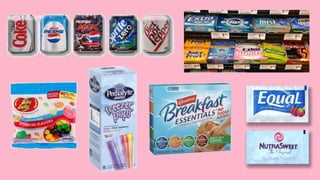
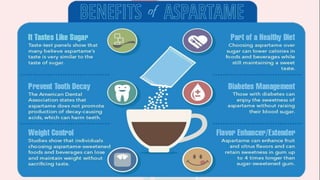
FIELDS OF APPLICATION
APPROVED OR NOT?
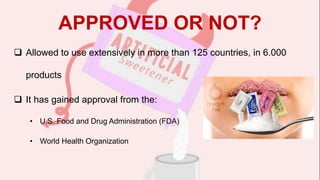
 Allowed to use extensively in more than 125 countries, in 6.000
products
 It has gained approval from the:
• U.S. Food and Drug Administration (FDA)
• World Health Organization
APPROVED OR NOT?
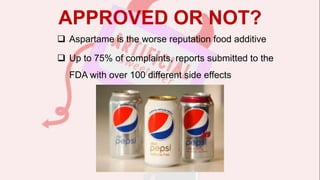
 Aspartame is the worse reputation food additive
 Up to 75% of complaints, reports submitted to the
FDA with over 100 different side effects
SIDE EFFECTS OF ASPARTAME
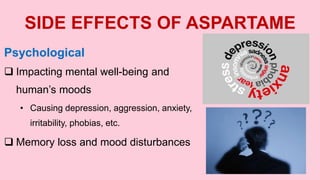
Psychological
 Impacting mental well-being and
human’s moods
• Causing depression, aggression, anxiety,
irritability, phobias, etc.
 Memory loss and mood disturbances
SIDE EFFECTS OF
ASPARTAME
Neurological
 Impacting the control center for the body and
brain’s function
 Impairing the motor skills
 Causing dizziness, numbness in the limbs,
facial pain, headaches, fatigue, etc.
SIDE EFFECTS OF
ASPARTAME
Physical
 Causing nausea, vertigo, skin lesions, loss of
taste, muscular and joint pain, heart attack
symptoms and menstrual cramps.
 Physical experience: diarrhea, abdominal
pain, painful swallowing, hair loss, burning
during urination, high blood pressure, allergic
reactions in the mouth.
SIDE EFFECTS OF
ASPARTAME
Critical
 Should be treated in a timely manner
 Leading to permanent and extremely painful medical
problems
 The most critical symptoms: peptic ulcers, brain
damage, suicidal thoughts, aspartame addiction, birth
defects
 May cause mental retardation, even death
 The acceptable daily intake (ADI) recommendations are:
• FDA: 50 milligrams per kilogram of body weight
• EFSA: 40 milligrams per kilogram of body weight
 Aspartame becomes toxic only once you consume 4,000 mg/kg of body
weight – or about 1,600 cans of Diet Coke a day.
 The only exception is for people suffering from a rare genetic disease
phenylketonuria (PKU)
DOSE USING
DOSE USING
However, aspartame consumption for the general
population and various subgroups are well below
the ADI through marketing research.
CONCLUSION
• Aspartame is one of the most controversial
sweeteners in the world.
• It is claimed to cause health problems ranging
from headaches to cancer.
• On the other hand, food safety authorities and
other mainstream sources consider it to be
safe.
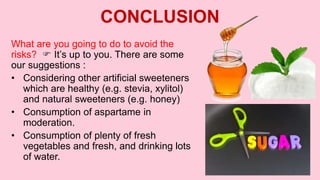
CONCLUSION
What are you going to do to avoid the
risks?  It’s up to you. There are some
our suggestions :
• Considering other artificial sweeteners
which are healthy (e.g. stevia, xylitol)
and natural sweeteners (e.g. honey)
• Consumption of aspartame in
moderation.
• Consumption of plenty of fresh
vegetables and fresh, and drinking lots
of water.

Aspartame

  • 1.
    Instructor: Dr. NguyễnTrung Hậu Class: DH13TPA Members: 1. Trần Ngọc Bích (13125811) 2. Đinh Ngọc Mỹ Duyên (13125821) 3. Trương Phan Thu Hiền (13125832) 4. Huỳnh Thị Kiều Giang (13125105)
  • 2.
    Content 5 DOSE FORUSING Content 4 SIDE EFFECTS ON HUMAN HEALTH Content 1 FORMULA AND HISTORY Content 2 FIELDS OF APPLICATION Content 3 APPROVED OR NON-APPROVED
  • 3.
    FORMULA • Discovered in1965 • 200 times sweeter than sucrose • Made of Phenylalamine and L- aspartic acid – L-aspartyl-L-phenylanalmine methyl ester • Low-calorie sweeteners – It is a dipeptide that is completely digested after consumption
  • 4.
    TIMELINE OF ASPARTAMEHISTORY 1965 • Aspartame is discovered 1981 • The U.S. Food and Drug Administration (FDA) approves aspartame for use in dry goods. 1983 • The U.S. FDA increases the Acceptable Daily Intake (ADI) for aspartame to 50 mg per kg of body weight per day. • The U.S. FDA expands their approval to include carbonated soft drinks. 1984 • CDC (Center for Disease Control) published the 1st customer complaint list associated with aspartame use
  • 5.
    1992 • The FDAreleases a list containing a total of about 8000 complaint against aspartame 2004- 2007 • Animal studies performed in Europe suggested that aspartame could disrupt human health by causing cancer 2010 • Italian study indicates leukemia and lymphoma are linked to aspartame usage. Another study linked risk of premature delivery in pregnant women 2011 • The European Food Safety Authority notes previous studies did not give enough cause for reconsideration of the aspartame. 2013 • Aspartame was finally approved considered safe to be consumed at current level of exposure
  • 6.
  • 9.
    APPROVED OR NOT? Allowed to use extensively in more than 125 countries, in 6.000 products  It has gained approval from the: • U.S. Food and Drug Administration (FDA) • World Health Organization
  • 11.
    APPROVED OR NOT? Aspartame is the worse reputation food additive  Up to 75% of complaints, reports submitted to the FDA with over 100 different side effects
  • 12.
    SIDE EFFECTS OFASPARTAME Psychological  Impacting mental well-being and human’s moods • Causing depression, aggression, anxiety, irritability, phobias, etc.  Memory loss and mood disturbances
  • 13.
    SIDE EFFECTS OF ASPARTAME Neurological Impacting the control center for the body and brain’s function  Impairing the motor skills  Causing dizziness, numbness in the limbs, facial pain, headaches, fatigue, etc.
  • 14.
    SIDE EFFECTS OF ASPARTAME Physical Causing nausea, vertigo, skin lesions, loss of taste, muscular and joint pain, heart attack symptoms and menstrual cramps.  Physical experience: diarrhea, abdominal pain, painful swallowing, hair loss, burning during urination, high blood pressure, allergic reactions in the mouth.
  • 15.
    SIDE EFFECTS OF ASPARTAME Critical Should be treated in a timely manner  Leading to permanent and extremely painful medical problems  The most critical symptoms: peptic ulcers, brain damage, suicidal thoughts, aspartame addiction, birth defects  May cause mental retardation, even death
  • 16.
     The acceptabledaily intake (ADI) recommendations are: • FDA: 50 milligrams per kilogram of body weight • EFSA: 40 milligrams per kilogram of body weight  Aspartame becomes toxic only once you consume 4,000 mg/kg of body weight – or about 1,600 cans of Diet Coke a day.  The only exception is for people suffering from a rare genetic disease phenylketonuria (PKU) DOSE USING
  • 17.
    DOSE USING However, aspartameconsumption for the general population and various subgroups are well below the ADI through marketing research.
  • 18.
    CONCLUSION • Aspartame isone of the most controversial sweeteners in the world. • It is claimed to cause health problems ranging from headaches to cancer. • On the other hand, food safety authorities and other mainstream sources consider it to be safe.
  • 19.
    CONCLUSION What are yougoing to do to avoid the risks?  It’s up to you. There are some our suggestions : • Considering other artificial sweeteners which are healthy (e.g. stevia, xylitol) and natural sweeteners (e.g. honey) • Consumption of aspartame in moderation. • Consumption of plenty of fresh vegetables and fresh, and drinking lots of water.