Resolution of the Phytanic Acid
𝛼-Oxidation Pathway:
Identification of Pristanal as
Product of the Decarboxylation
of 2-Hydroxyphytanoyl-CoA
N. M. Verhoeven, D. S. M. Schor, H. J. ten Brink, R. J. A. Wanders, and C. Jakobs
Department of Clinical Chemistry, Free University Hospital, Amsterdam, The
Netherlands; and Departments of Clinical Chemistry and Pediatrics, University
of Amsterdam, Academic Medical Centre, Amsterdam, The Netherlands
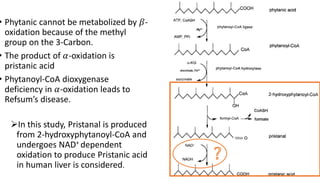
• Phytanic cannot be metabolized by 𝛽-
oxidation because of the methyl
group on the 3-Carbon.
• The product of 𝛼-oxidation is
pristanic acid
• Phytanoyl-CoA dioxygenase
deficiency in 𝛼-oxidation leads to
Refsum’s disease.
In this study, Pristanal is produced
from 2-hydroxyphytanoyl-CoA and
undergoes NAD+ dependent
oxidation to produce Pristanic acid
in human liver is considered.
Methods
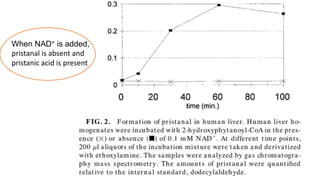
• Homogenized human liver was incubation to produce pristanic acid
• Each 200 𝜇l of NAD+ was added after 0, 10, 30, 60 and 120 minutes
through incubation
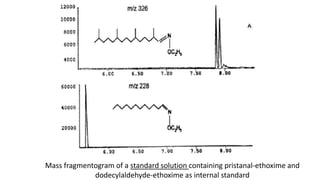
• For analysis of pristanal, ethoxylamine and dodecylaldehyde was
added as internal standard
• Then they were analyzed by gas chromatography (for pristanal-
ethoxime m/z 326 was monitored, for dodecylaldehyde-ethoxime
m/z 228 was monitor)
Mass fragmentogram of a standard solution containing pristanal-ethoxime and
dodecylaldehyde-ethoxime as internal standard
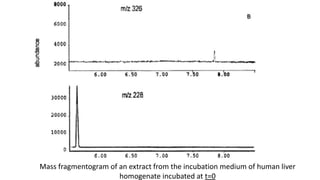
Mass fragmentogram of an extract from the incubation medium of human liver
homogenate incubated at t=0
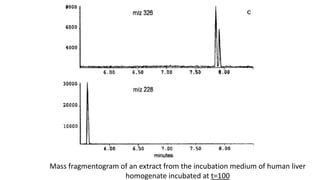
Mass fragmentogram of an extract from the incubation medium of human liver
homogenate incubated at t=100
When NAD+ is added,
pristanal is absent and
pristanic acid is present
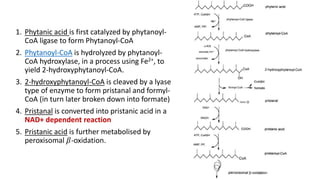
1. Phytanic acid is first catalyzed by phytanoyl-
CoA ligase to form Phytanoyl-CoA
2. Phytanoyl-CoA is hydrolyzed by phytanoyl-
CoA hydroxylase, in a process using Fe2+, to
yield 2-hydroxyphytanoyl-CoA.
3. 2-hydroxyphytanoyl-CoA is cleaved by a lyase
type of enzyme to form pristanal and formyl-
CoA (in turn later broken down into formate)
4. Pristanal is converted into pristanic acid in a
NAD+ dependent reaction
5. Pristanic acid is further metabolised by
peroxisomal 𝛽-oxidation.
Thank you for your attention

Phytanic acid and alpha-oxidation

  • 1.
    Resolution of thePhytanic Acid 𝛼-Oxidation Pathway: Identification of Pristanal as Product of the Decarboxylation of 2-Hydroxyphytanoyl-CoA N. M. Verhoeven, D. S. M. Schor, H. J. ten Brink, R. J. A. Wanders, and C. Jakobs Department of Clinical Chemistry, Free University Hospital, Amsterdam, The Netherlands; and Departments of Clinical Chemistry and Pediatrics, University of Amsterdam, Academic Medical Centre, Amsterdam, The Netherlands
  • 2.
    • Phytanic cannotbe metabolized by 𝛽- oxidation because of the methyl group on the 3-Carbon. • The product of 𝛼-oxidation is pristanic acid • Phytanoyl-CoA dioxygenase deficiency in 𝛼-oxidation leads to Refsum’s disease. In this study, Pristanal is produced from 2-hydroxyphytanoyl-CoA and undergoes NAD+ dependent oxidation to produce Pristanic acid in human liver is considered.
  • 3.
    Methods • Homogenized humanliver was incubation to produce pristanic acid • Each 200 𝜇l of NAD+ was added after 0, 10, 30, 60 and 120 minutes through incubation • For analysis of pristanal, ethoxylamine and dodecylaldehyde was added as internal standard • Then they were analyzed by gas chromatography (for pristanal- ethoxime m/z 326 was monitored, for dodecylaldehyde-ethoxime m/z 228 was monitor)
  • 4.
    Mass fragmentogram ofa standard solution containing pristanal-ethoxime and dodecylaldehyde-ethoxime as internal standard
  • 5.
    Mass fragmentogram ofan extract from the incubation medium of human liver homogenate incubated at t=0
  • 6.
    Mass fragmentogram ofan extract from the incubation medium of human liver homogenate incubated at t=100
  • 7.
    When NAD+ isadded, pristanal is absent and pristanic acid is present
  • 8.
    1. Phytanic acidis first catalyzed by phytanoyl- CoA ligase to form Phytanoyl-CoA 2. Phytanoyl-CoA is hydrolyzed by phytanoyl- CoA hydroxylase, in a process using Fe2+, to yield 2-hydroxyphytanoyl-CoA. 3. 2-hydroxyphytanoyl-CoA is cleaved by a lyase type of enzyme to form pristanal and formyl- CoA (in turn later broken down into formate) 4. Pristanal is converted into pristanic acid in a NAD+ dependent reaction 5. Pristanic acid is further metabolised by peroxisomal 𝛽-oxidation.
  • 9.
    Thank you foryour attention