• Instructor: Nguyễn Trung Hậu.
• Group’s member:
Lê Thị Huỳnh Anh
Hà Thị Anh Thư
Trần Tiểu Lam
Lê Ngô Quỳnh
Trương Đăng Hòa
Hồ Thị Thanh Thủy
CONTENT
I. HISTORY AND FORMULATION
II.FIELD OF APPLICATION
III.SUCRALOSE APROVAL
IV.SIDE EFFECTS ON HUMAN HEALTH
• 1976- Discovered.
• 1977- Final formula settled upon
• 1991- Approved in Canada
• 1993- Approved in Australia
• 1996- Approved in New Zealand
• 1998-Patented and approved in US
• 2006- Approved in over 60 countries.
I. HISTORY
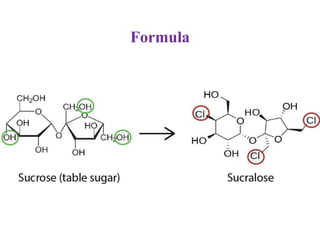
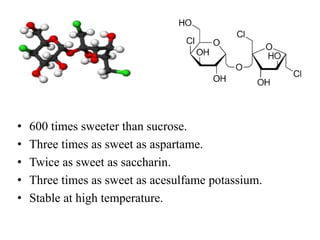
Formula
• 600 times sweeter than sucrose.
• Three times as sweet as aspartame.
• Twice as sweet as saccharin.
• Three times as sweet as acesulfame potassium.
• Stable at high temperature.
Approval of Sucralose
• Sucralose is approved for use in food as a non-
nutritive sweetener.
• First approved for use in Canada in 1991
• The FDA approved sucralose for certain food and
beverage categories in 1998, and expanded the
approval to all food and beverage categories in 1999.
• Sucralose is also approved for use for certain
technological purposes.
• Sucralose is approved for use in over 80 countries.
• Subsequent approvals came in Australia in 1993,
in New Zealand in 1996, in the United States in
1998, and in the European Union in 2004.
DOSAGE
1.5 mg per kilogram of body weight.
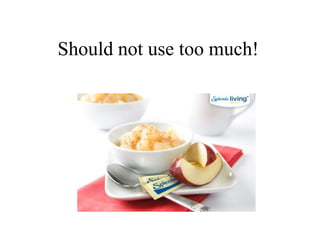
Should not use too much!
II. APPLICATIONS
In food industry
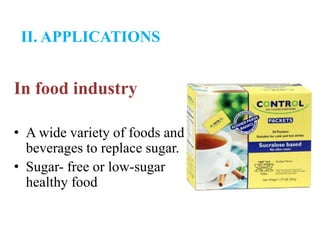
• A wide variety of foods and
beverages to replace sugar.
• Sugar- free or low-sugar
healthy food
Beverages
• Raw juice , Carbonated soft drink, Fruit juice and tea
– Partly replace sugar in the beverage  improve the
flavor and reduce the cost
– Heat stability  ideal for manufacturing processes
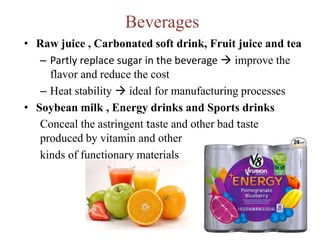
• Soybean milk , Energy drinks and Sports drinks
Conceal the astringent taste and other bad taste
produced by vitamin and other
kinds of functionary materials
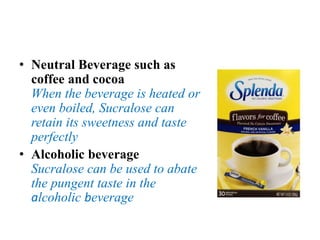
• Neutral Beverage such as
coffee and cocoa
When the beverage is heated or
even boiled, Sucralose can
retain its sweetness and taste
perfectly
• Alcoholic beverage
Sucralose can be used to abate
the pungent taste in the
alcoholic beverage
Dairy Products
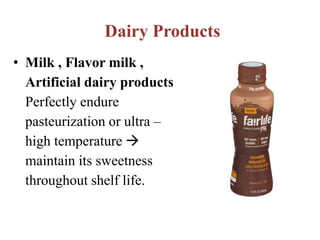
• Milk , Flavor milk ,
Artificial dairy products
Perfectly endure
pasteurization or ultra –
high temperature 
maintain its sweetness
throughout shelf life.
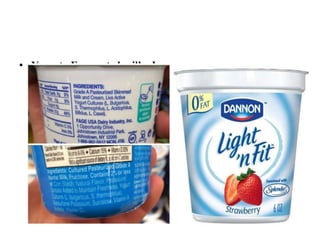
• Yogurt , Fermented milk , Lactobacillus beverage
– The ferment process may produce unpleasant taste that can
not be eliminated by simply adding sugar
 Sucralose can reduce the unpleasant taste
while maintaining its stability in acid.
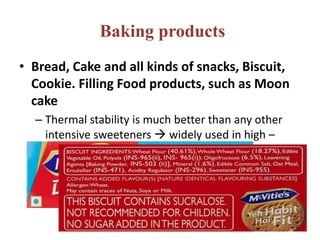
Baking products
• Bread, Cake and all kinds of snacks, Biscuit,
Cookie. Filling Food products, such as Moon
cake
– Thermal stability is much better than any other
intensive sweeteners  widely used in high –
temperature food processing
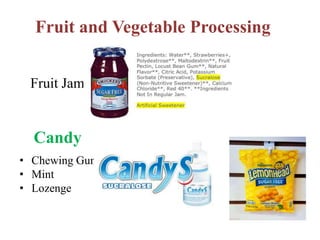
Fruit and Vegetable Processing
Fruit Jam
Candy
• Chewing Gum
• Mint
• Lozenge
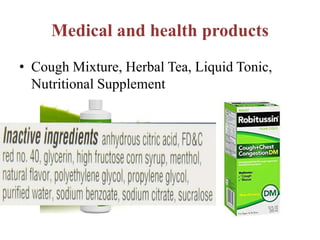
Medical and health products
• Cough Mixture, Herbal Tea, Liquid Tonic,
Nutritional Supplement
Others
• Salad sauce, Condiment, Natural flavor extracts,
Meat product, Soup
– Stability
– Soften the taste of the salty food and sour food
• Digestion
• Disrupts your intestinal flora
• Prevent absorption of medication
• Headaches
• Insulin response
• Allergies
III. SIDE EFFECTS
Others
• Gastrointestinal problems
• Migraines
• Seizures
• Dizziness
• Blurred vision
• Allergic reactions
• Blood sugar increases
• Weight gain
www.truthaboutsplenda.com
There are a range of artificial sweeteners available to
those who wish to avoid sugar or honey. Sucralose,
commonly sold under the brand name "Splenda," was
approved for sale by the Food and Drug Administration
as a tabletop sweetener in 1998, and the following year
as a general sweetener, according to the National
Cancer institute. While the FDA considers the
substance safe for human consumption, there are some
negative effects associated with it.
BE AN ERUDITE CONSUMER!
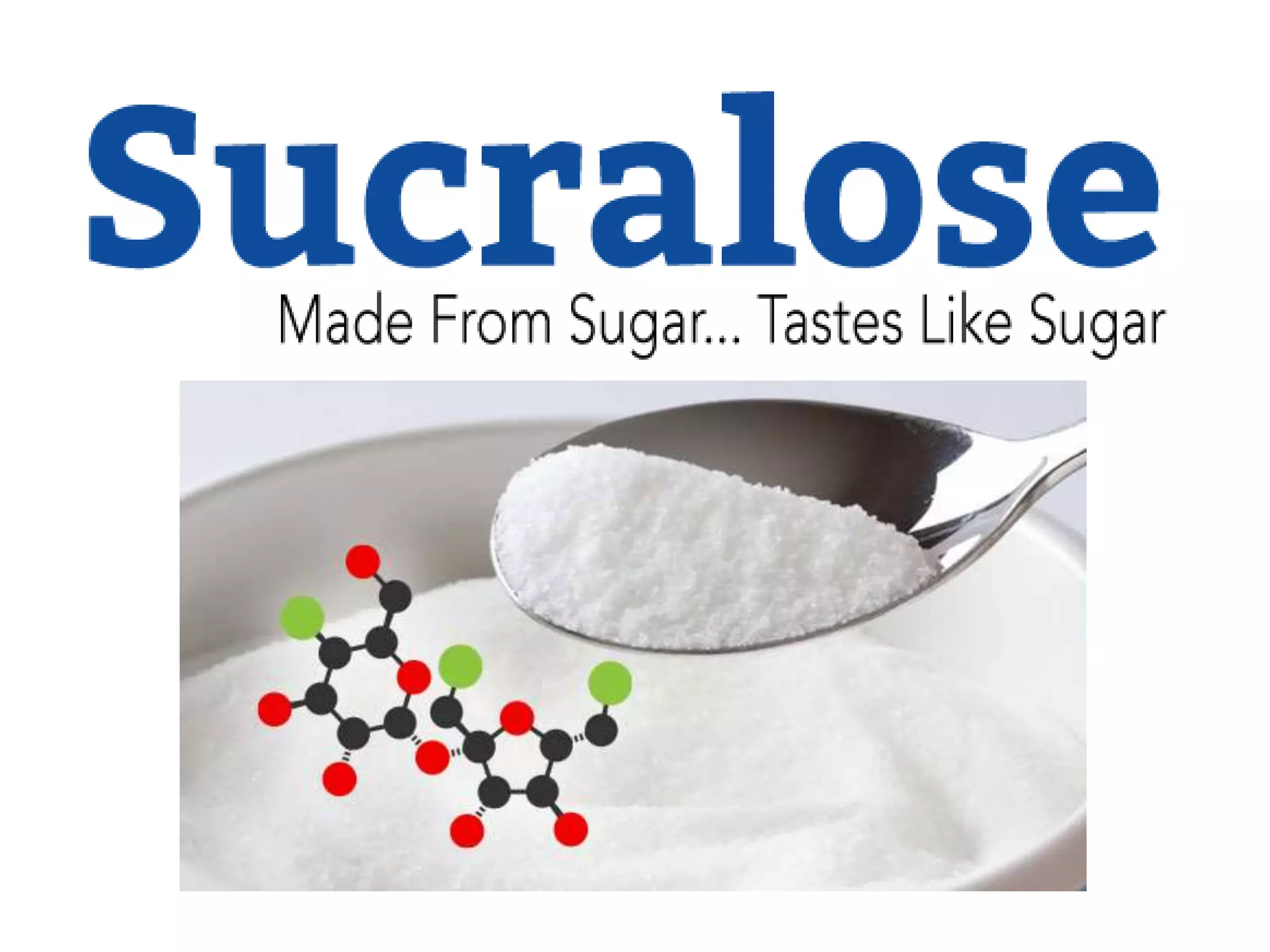
Sucralose

Sucralose

  • 2.
    • Instructor: NguyễnTrung Hậu. • Group’s member: Lê Thị Huỳnh Anh Hà Thị Anh Thư Trần Tiểu Lam Lê Ngô Quỳnh Trương Đăng Hòa Hồ Thị Thanh Thủy
  • 3.
    CONTENT I. HISTORY ANDFORMULATION II.FIELD OF APPLICATION III.SUCRALOSE APROVAL IV.SIDE EFFECTS ON HUMAN HEALTH
  • 4.
    • 1976- Discovered. •1977- Final formula settled upon • 1991- Approved in Canada • 1993- Approved in Australia • 1996- Approved in New Zealand • 1998-Patented and approved in US • 2006- Approved in over 60 countries. I. HISTORY
  • 5.
  • 6.
    • 600 timessweeter than sucrose. • Three times as sweet as aspartame. • Twice as sweet as saccharin. • Three times as sweet as acesulfame potassium. • Stable at high temperature.
  • 7.
    Approval of Sucralose •Sucralose is approved for use in food as a non- nutritive sweetener. • First approved for use in Canada in 1991 • The FDA approved sucralose for certain food and beverage categories in 1998, and expanded the approval to all food and beverage categories in 1999. • Sucralose is also approved for use for certain technological purposes.
  • 8.
    • Sucralose isapproved for use in over 80 countries. • Subsequent approvals came in Australia in 1993, in New Zealand in 1996, in the United States in 1998, and in the European Union in 2004. DOSAGE 1.5 mg per kilogram of body weight.
  • 9.
    Should not usetoo much!
  • 10.
    II. APPLICATIONS In foodindustry • A wide variety of foods and beverages to replace sugar. • Sugar- free or low-sugar healthy food
  • 11.
    Beverages • Raw juice, Carbonated soft drink, Fruit juice and tea – Partly replace sugar in the beverage  improve the flavor and reduce the cost – Heat stability  ideal for manufacturing processes • Soybean milk , Energy drinks and Sports drinks Conceal the astringent taste and other bad taste produced by vitamin and other kinds of functionary materials
  • 12.
    • Neutral Beveragesuch as coffee and cocoa When the beverage is heated or even boiled, Sucralose can retain its sweetness and taste perfectly • Alcoholic beverage Sucralose can be used to abate the pungent taste in the alcoholic beverage
  • 13.
    Dairy Products • Milk, Flavor milk , Artificial dairy products Perfectly endure pasteurization or ultra – high temperature  maintain its sweetness throughout shelf life.
  • 14.
    • Yogurt ,Fermented milk , Lactobacillus beverage – The ferment process may produce unpleasant taste that can not be eliminated by simply adding sugar  Sucralose can reduce the unpleasant taste while maintaining its stability in acid.
  • 15.
    Baking products • Bread,Cake and all kinds of snacks, Biscuit, Cookie. Filling Food products, such as Moon cake – Thermal stability is much better than any other intensive sweeteners  widely used in high – temperature food processing
  • 16.
    Fruit and VegetableProcessing Fruit Jam Candy • Chewing Gum • Mint • Lozenge
  • 17.
    Medical and healthproducts • Cough Mixture, Herbal Tea, Liquid Tonic, Nutritional Supplement
  • 18.
    Others • Salad sauce,Condiment, Natural flavor extracts, Meat product, Soup – Stability – Soften the taste of the salty food and sour food
  • 19.
    • Digestion • Disruptsyour intestinal flora • Prevent absorption of medication • Headaches • Insulin response • Allergies III. SIDE EFFECTS
  • 20.
    Others • Gastrointestinal problems •Migraines • Seizures • Dizziness • Blurred vision • Allergic reactions • Blood sugar increases • Weight gain www.truthaboutsplenda.com
  • 21.
    There are arange of artificial sweeteners available to those who wish to avoid sugar or honey. Sucralose, commonly sold under the brand name "Splenda," was approved for sale by the Food and Drug Administration as a tabletop sweetener in 1998, and the following year as a general sweetener, according to the National Cancer institute. While the FDA considers the substance safe for human consumption, there are some negative effects associated with it. BE AN ERUDITE CONSUMER!