Digital tracker – case notes
Victoria University of Wellington, New Zealand
Key Drivers:
• Strategic imperative on enhancing the student digital experience;
• Student success and retention project being launched;
• Need to for data to help us on a journey of digital transformation;
• To check perceived usability issues with our digital learning platform/s
• A desire to know what students bring into the digital space – both
capabilities and tools;
• Our other institutional surveys are too light touch in the digital
domain;
• Ability to benchmark seen as a big win.
Our student sample
• We created a randomised sample of 10,000
full time students across all years of study
and across all faculties
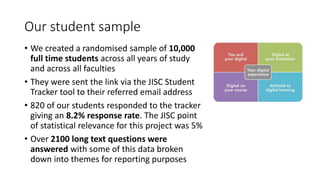
• They were sent the link via the JISC Student
Tracker tool to their referred email address
• 820 of our students responded to the tracker
giving an 8.2% response rate. The JISC point
of statistical relevance for this project was 5%
• Over 2100 long text questions were
answered with some of this data broken
down into themes for reporting purposes
Key findings
• Overall, there is a high level of satisfaction with the provision of standardised
digital services, such as WiFi, printing and student desktops across the
university.
• Consistency and effective use of digital tools was highlighted as an issue across
courses. This is an improvement area of focus for the overall student digital
experience.
• Expectations on use of digital tools in courses is not made clear to students
before courses start.
• There is a strong perception that Victoria's courses are not preparing their
graduates for the digital workplace. This was highlighted in how important they
believe digital to be vs the industry focused outcomes in their course.
• There is a perception some of Victoria's digital tools are dated, underutilised
and lack collaborative features. This includes our VLE as the core learning portal,
lack of online resources and the use of more educational video.
Follow up and Actions:
• Follow this up with a number of student focus groups to explore student
perceptions of their digital environment and their digital capability;
• Organise and present Faculty level data and insights with the Associate
Dean Learning and Teaching of each faculty highlighted in the survey;
• Investigate and plan initiatives to increase information available to
students, including the use of digital tools in courses, support and self-
help guides as well as digital capability training;
• In line with the Digital Vision for Learning &Teaching, perform a learning
platform review to ensure we have the right tools to support the modern
student digital experience at the university
• Develop good practice recommendations on the use of digital tools in
courses and review against the minimum online course presence guideline
Students’ digital
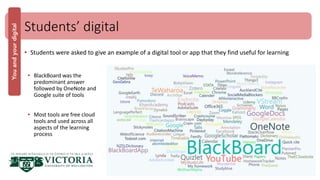
• Students were asked to give an example of a digital tool or app that they find useful for learning
• BlackBoard was the
predominant answer
followed by OneNote and
Google suite of tools
• Most tools are free cloud
tools and used across all
aspects of the learning
process
On reflection: issues
• Getting good response rate was difficult;
• Needed to identify how to feedback to community at an early stage
• Actioning insights requires early stakeholder buy in
• A busy calendar means it is difficult to fit into the institutional survey
schedule
• There is a need to help others make sense of data
• Already questioning how do we keep this current and relevant
Conclusions
• Very helpful process in helping our central academic development
unit raise the profile of digital capability development across the
institution
• Valuable in both reflecting on and driving strategic decision making
• Clear sense that the year on year data will be beneficial as a key touch
point to help map progress along an institutional digital
transformation journey
• Will we run it again … YES

Ascilite2018 steven warburton

  • 1.
    Digital tracker –case notes Victoria University of Wellington, New Zealand
  • 2.
    Key Drivers: • Strategicimperative on enhancing the student digital experience; • Student success and retention project being launched; • Need to for data to help us on a journey of digital transformation; • To check perceived usability issues with our digital learning platform/s • A desire to know what students bring into the digital space – both capabilities and tools; • Our other institutional surveys are too light touch in the digital domain; • Ability to benchmark seen as a big win.
  • 3.
    Our student sample •We created a randomised sample of 10,000 full time students across all years of study and across all faculties • They were sent the link via the JISC Student Tracker tool to their referred email address • 820 of our students responded to the tracker giving an 8.2% response rate. The JISC point of statistical relevance for this project was 5% • Over 2100 long text questions were answered with some of this data broken down into themes for reporting purposes
  • 4.
    Key findings • Overall,there is a high level of satisfaction with the provision of standardised digital services, such as WiFi, printing and student desktops across the university. • Consistency and effective use of digital tools was highlighted as an issue across courses. This is an improvement area of focus for the overall student digital experience. • Expectations on use of digital tools in courses is not made clear to students before courses start. • There is a strong perception that Victoria's courses are not preparing their graduates for the digital workplace. This was highlighted in how important they believe digital to be vs the industry focused outcomes in their course. • There is a perception some of Victoria's digital tools are dated, underutilised and lack collaborative features. This includes our VLE as the core learning portal, lack of online resources and the use of more educational video.
  • 5.
    Follow up andActions: • Follow this up with a number of student focus groups to explore student perceptions of their digital environment and their digital capability; • Organise and present Faculty level data and insights with the Associate Dean Learning and Teaching of each faculty highlighted in the survey; • Investigate and plan initiatives to increase information available to students, including the use of digital tools in courses, support and self- help guides as well as digital capability training; • In line with the Digital Vision for Learning &Teaching, perform a learning platform review to ensure we have the right tools to support the modern student digital experience at the university • Develop good practice recommendations on the use of digital tools in courses and review against the minimum online course presence guideline
  • 6.
    Students’ digital • Studentswere asked to give an example of a digital tool or app that they find useful for learning • BlackBoard was the predominant answer followed by OneNote and Google suite of tools • Most tools are free cloud tools and used across all aspects of the learning process
  • 7.
    On reflection: issues •Getting good response rate was difficult; • Needed to identify how to feedback to community at an early stage • Actioning insights requires early stakeholder buy in • A busy calendar means it is difficult to fit into the institutional survey schedule • There is a need to help others make sense of data • Already questioning how do we keep this current and relevant
  • 8.
    Conclusions • Very helpfulprocess in helping our central academic development unit raise the profile of digital capability development across the institution • Valuable in both reflecting on and driving strategic decision making • Clear sense that the year on year data will be beneficial as a key touch point to help map progress along an institutional digital transformation journey • Will we run it again … YES