ePortfolios: Reflecting Quality Learning Celebration and demonstration of the learning journey our school has embarked on. Issues to consider and unpacking a quality example of an ePortfolio artefact.
Why use ePortfolios? Becta research:  Impact of e-Portfolios on Learning   Key findings include: e-portfolios benefit learning most effectively when considered as part of a joined-up teaching and learning approach, rather than as a discrete entity. The approach should include online repositories, planning and communication tools, and opportunities for both students and teachers to draw out and present e-portfolios at particular times and for particular purposes. There is then likely to be substantial impact on both learning processes and learning outcomes. e-portfolio processes support both pastoral or social needs and curriculum outcomes e-portfolio processes and tools for organisation and communication support the learning outcomes of students with a wide range of abilities e-portfolios make progress and attainment more obvious to both teachers and students, because viewing and revisiting the repository of work reveals development, achievements, strengths and weaknesses
Positive Outcomes Students are more actively involved in their learning Caregivers are given up to date information about where their child is at Teaching and learning is more focused Improved school-home relationships Learning celebrated with a wider audience Folio samples are not static and continue to be interacted with Evidence can be mixed media e.g. video
Issues to consider Infrastructure: Do you have the resources to sustain frequent and consistent use of the internet?  Time: Are teachers prepared to spend time adjusting their practice? Resourcing: Scanners? Projectors? Computers? Administrator? Parent access to internet: Library? After school access to computer suites?
What is in an ePortfolio? Evidence of progress and achievement A mixture of product and process Samples of standardised/curriculum testing, work samples, summative assessment from all learning areas Artefacts have clear links to learning Feedback from student, peers, teacher and parents
First steps Establish the purpose of the ePortfolio Will it replace reporting? Who will own the ePortfolio? Free tools vs. commercial products Does the school actively engage in formative assessment? Will the roll out be school-wide or piloted with a small group of teachers?
Personnel Leadership support and encouragement Teaching and learning focus rather than technical Consistency across the school Will the pilot group be a mix of early adopters and reluctant change makers? Outside support and training Key personnel released to manage tools
Teaching and Learning Teaching and learning is the key to a successful ePortfolio Understanding of assessment process How much will the child influence the content and direction of the ePortfolio? Lifelong?
What should a quality artefact contain? Evidence of the student’s progress or achievement If reporting against NZC then need clear links to the curriculum and an identified level Learning intention and success criteria to provide guidance and focus for feedback/feed forward Links to planning and assessment Opportunities for students to set and achieve learning goals with artefacts as evidence
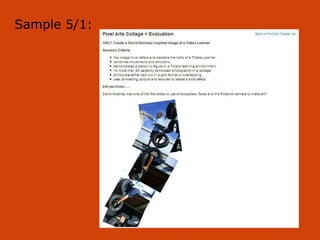
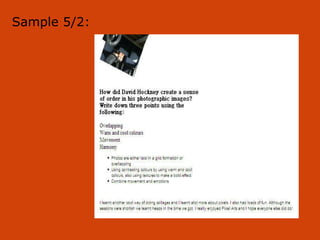
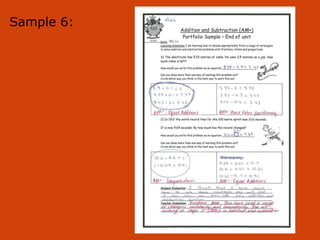
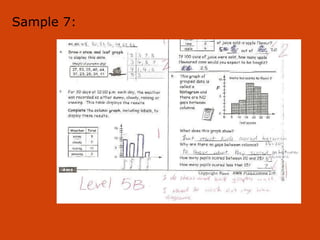
Examples Look at the following examples Do they have clear learning outlined? Is there an indication of what the sample should contain if it has met the learning intention? Is the success criteria absent? Co-constructed? Are the students engaged in the task? Is there evidence of feedback from students, parents, teacher? Could you make a judgement about the level the student has achieved?
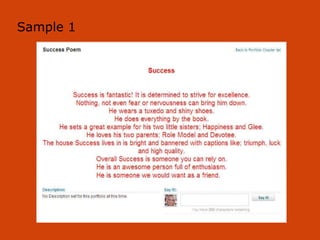
Sample 1
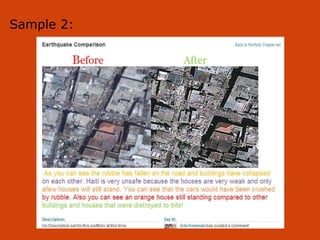
Sample 2:
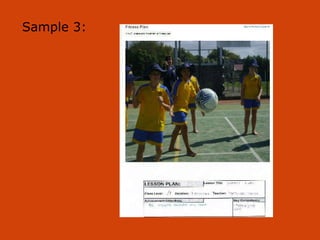
Sample 3:
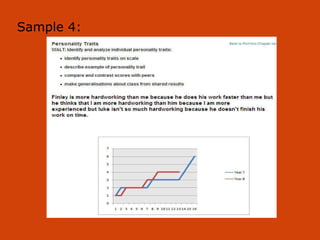
Sample 4:
Sample 4/1:
Sample 4/2:
Sample 5/1:
Sample 5/2:
Sample 6:
Sample 7:
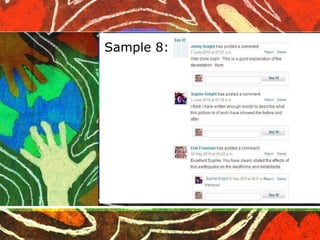
Sample 8:
Next steps Developing student understanding Increasing student ownership and responsibility for selecting samples Integrating more mixed media e.g. video Continuing to develop understanding of National Standards and ensuring we are including evidence for OTJ in the ePortfolio Establishing relationships with contributing schools/secondary schools to develop consistency and sustainability Encouraging parental involvement

ePortfolios: Reflecting Quality Learning

  • 1.
    ePortfolios: Reflecting QualityLearning Celebration and demonstration of the learning journey our school has embarked on. Issues to consider and unpacking a quality example of an ePortfolio artefact.
  • 2.
    Why use ePortfolios?Becta research: Impact of e-Portfolios on Learning Key findings include: e-portfolios benefit learning most effectively when considered as part of a joined-up teaching and learning approach, rather than as a discrete entity. The approach should include online repositories, planning and communication tools, and opportunities for both students and teachers to draw out and present e-portfolios at particular times and for particular purposes. There is then likely to be substantial impact on both learning processes and learning outcomes. e-portfolio processes support both pastoral or social needs and curriculum outcomes e-portfolio processes and tools for organisation and communication support the learning outcomes of students with a wide range of abilities e-portfolios make progress and attainment more obvious to both teachers and students, because viewing and revisiting the repository of work reveals development, achievements, strengths and weaknesses
  • 3.
    Positive Outcomes Studentsare more actively involved in their learning Caregivers are given up to date information about where their child is at Teaching and learning is more focused Improved school-home relationships Learning celebrated with a wider audience Folio samples are not static and continue to be interacted with Evidence can be mixed media e.g. video
  • 4.
    Issues to considerInfrastructure: Do you have the resources to sustain frequent and consistent use of the internet? Time: Are teachers prepared to spend time adjusting their practice? Resourcing: Scanners? Projectors? Computers? Administrator? Parent access to internet: Library? After school access to computer suites?
  • 5.
    What is inan ePortfolio? Evidence of progress and achievement A mixture of product and process Samples of standardised/curriculum testing, work samples, summative assessment from all learning areas Artefacts have clear links to learning Feedback from student, peers, teacher and parents
  • 6.
    First steps Establishthe purpose of the ePortfolio Will it replace reporting? Who will own the ePortfolio? Free tools vs. commercial products Does the school actively engage in formative assessment? Will the roll out be school-wide or piloted with a small group of teachers?
  • 7.
    Personnel Leadership supportand encouragement Teaching and learning focus rather than technical Consistency across the school Will the pilot group be a mix of early adopters and reluctant change makers? Outside support and training Key personnel released to manage tools
  • 8.
    Teaching and LearningTeaching and learning is the key to a successful ePortfolio Understanding of assessment process How much will the child influence the content and direction of the ePortfolio? Lifelong?
  • 9.
    What should aquality artefact contain? Evidence of the student’s progress or achievement If reporting against NZC then need clear links to the curriculum and an identified level Learning intention and success criteria to provide guidance and focus for feedback/feed forward Links to planning and assessment Opportunities for students to set and achieve learning goals with artefacts as evidence
  • 10.
    Examples Look atthe following examples Do they have clear learning outlined? Is there an indication of what the sample should contain if it has met the learning intention? Is the success criteria absent? Co-constructed? Are the students engaged in the task? Is there evidence of feedback from students, parents, teacher? Could you make a judgement about the level the student has achieved?
  • 11.
  • 12.
  • 13.
  • 14.
  • 15.
  • 16.
  • 17.
  • 18.
  • 19.
  • 20.
  • 21.
  • 22.
    Next steps Developingstudent understanding Increasing student ownership and responsibility for selecting samples Integrating more mixed media e.g. video Continuing to develop understanding of National Standards and ensuring we are including evidence for OTJ in the ePortfolio Establishing relationships with contributing schools/secondary schools to develop consistency and sustainability Encouraging parental involvement