ARTIFICIAL INTELLIGENCE 
JOHN PESCO 
ALEX MOORE 
TRAVIS PARSONS
CAN MACHINES THINK? 
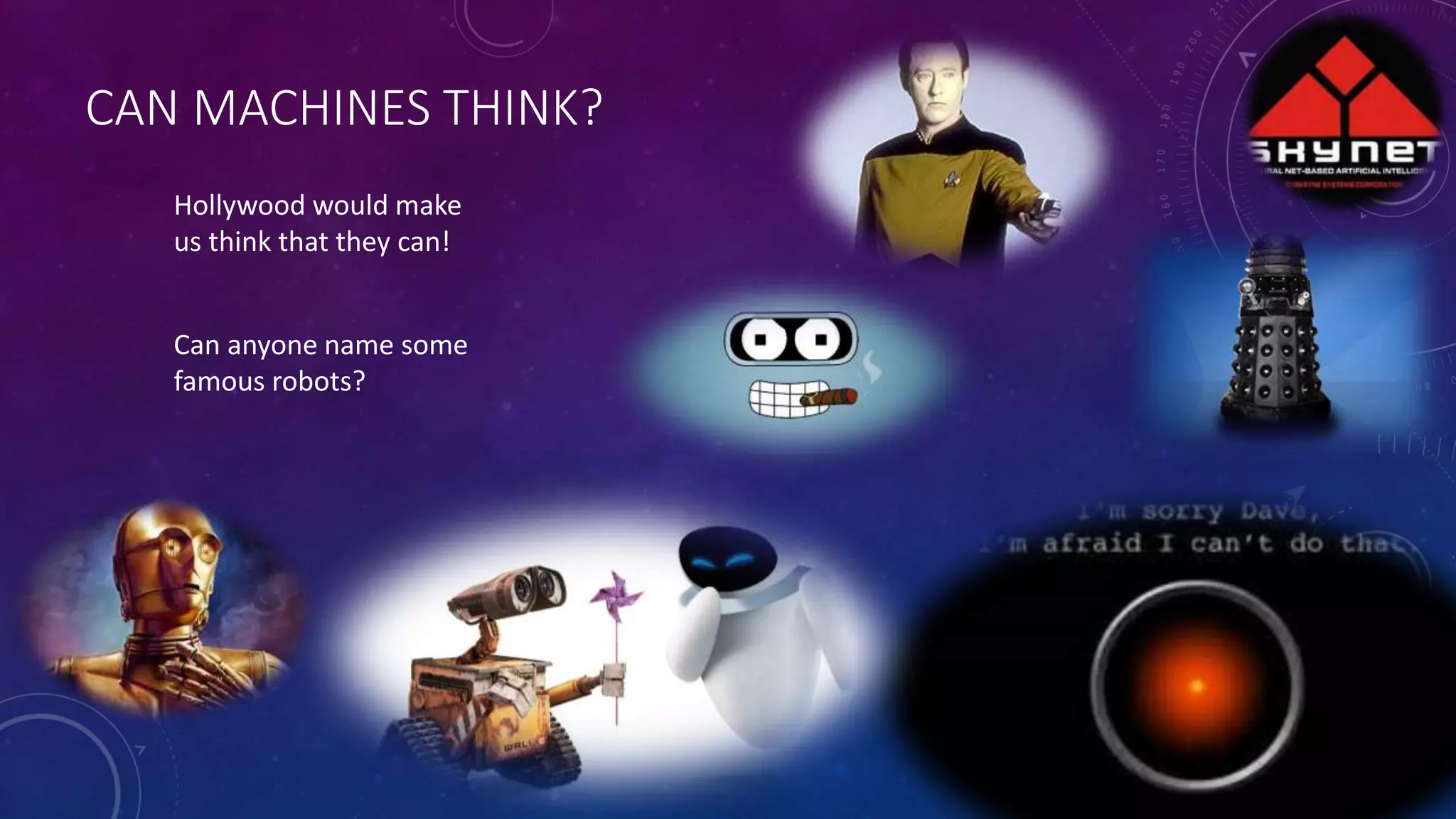
Hollywood would make 
us think that they can! 
Can anyone name some 
famous robots?
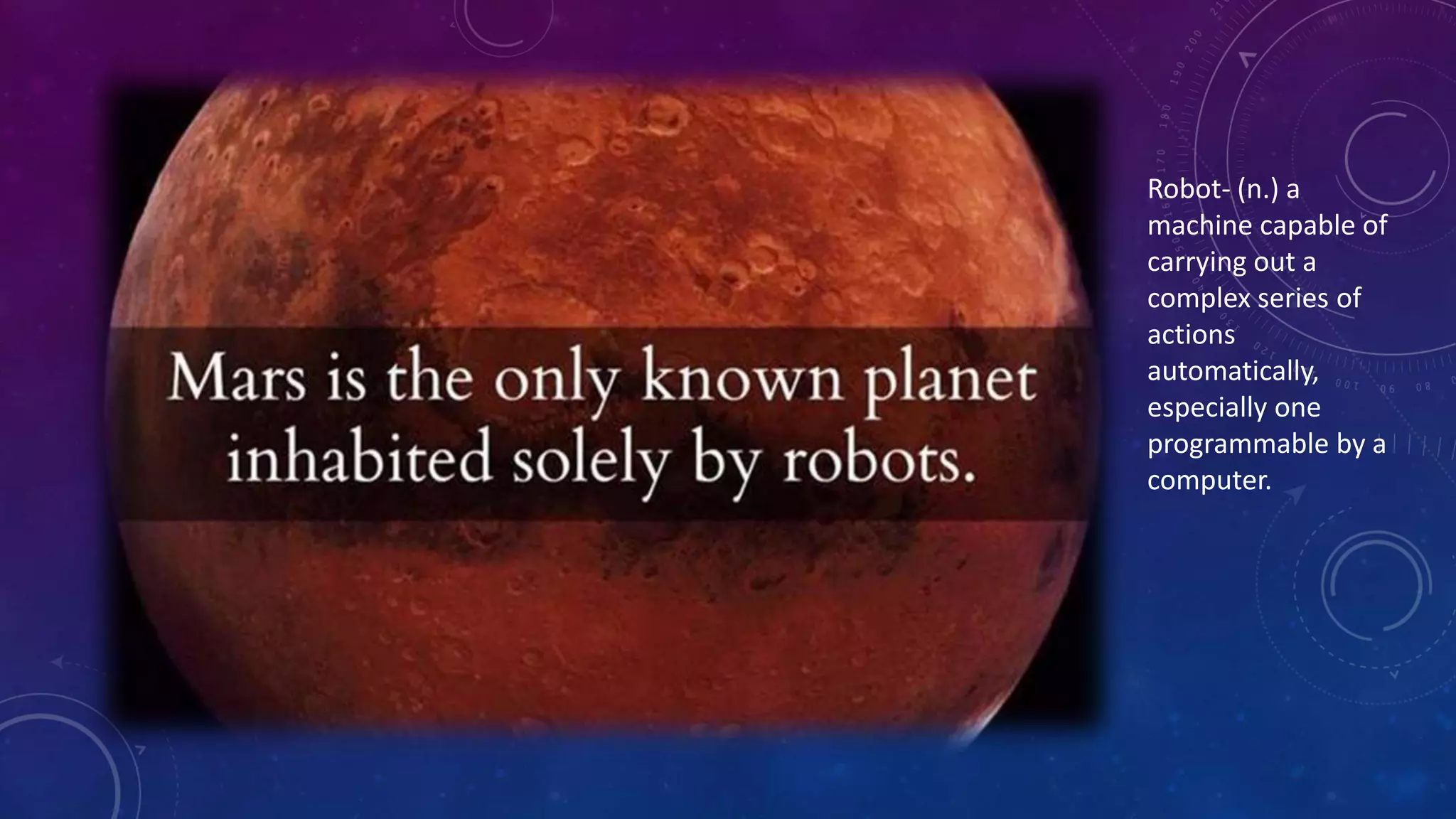
Robot- (n.) a 
machine capable of 
carrying out a 
complex series of 
actions 
automatically, 
especially one 
programmable by a 
computer.
ALAN TURING: THE (L)IMITATION GAME 
(1912-1954) 
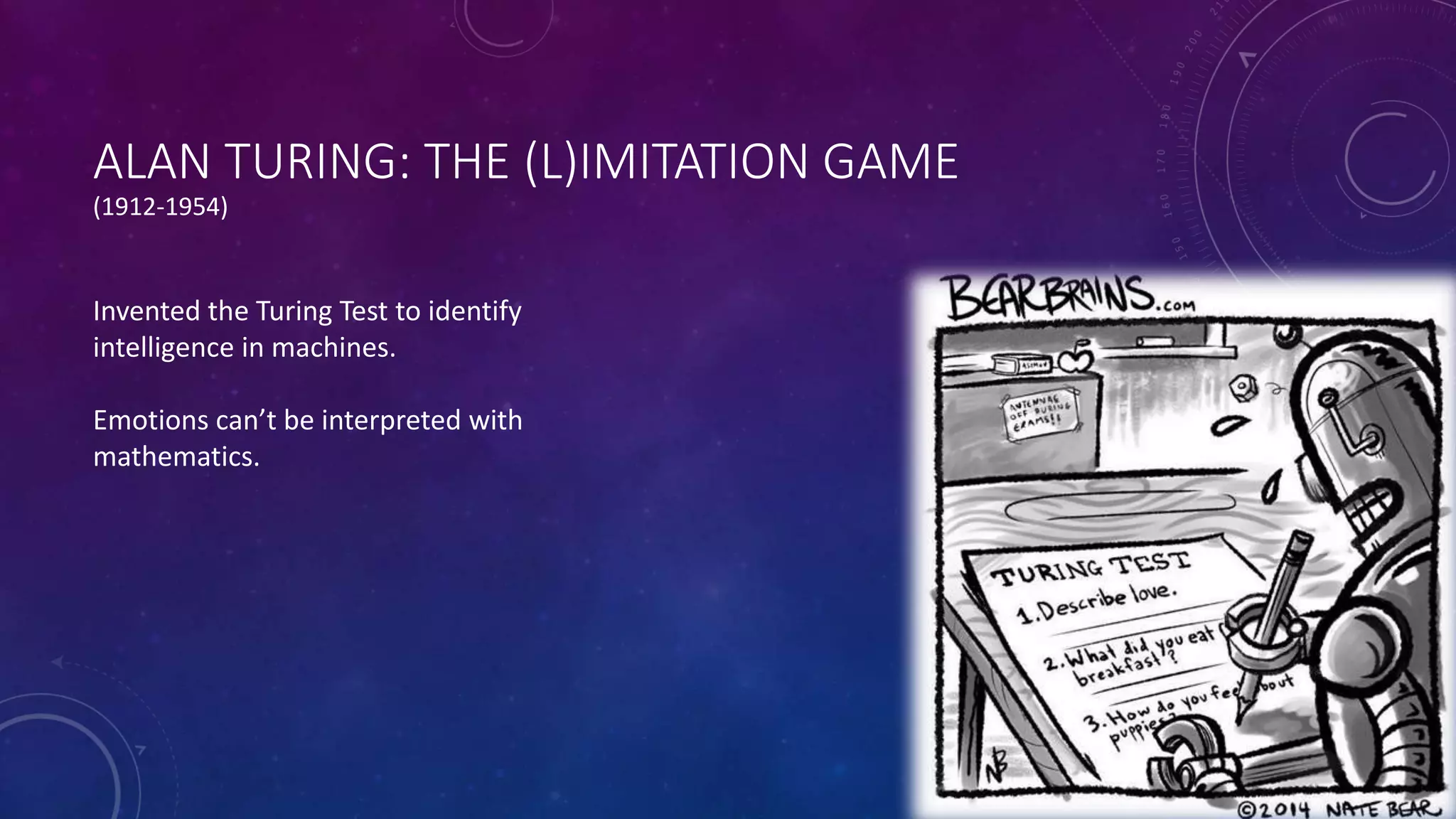
Invented the Turing Test to identify 
intelligence in machines. 
Emotions can’t be interpreted with 
mathematics.
THE TURING TEST, WHEN WON’T WE RECOGNIZE AI? 
• AI imitates our 
responses fluently 
• AI has freewill to 
deviate from set 
instructions. 
From Blade Runner
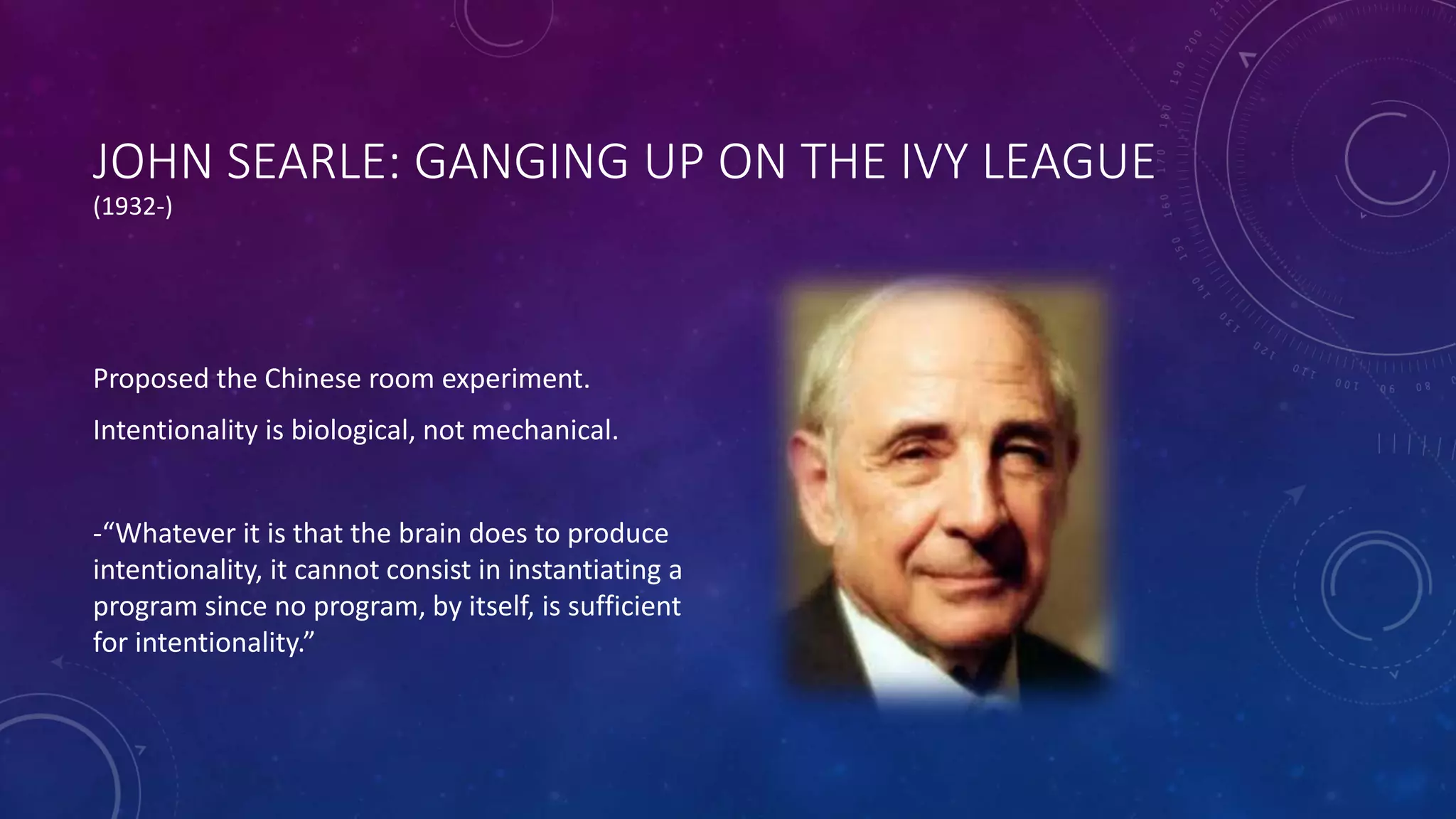
JOHN SEARLE: GANGING UP ON THE IVY LEAGUE 
(1932-) 
Proposed the Chinese room experiment. 
Intentionality is biological, not mechanical. 
-“Whatever it is that the brain does to produce 
intentionality, it cannot consist in instantiating a 
program since no program, by itself, is sufficient 
for intentionality.”
CHINESE ROOM VS THE MATRIX 
Neo is in the locked 
room now. 
He may be a kung-fu 
master, but only 
when plugged into 
the Matrix. 
He needs a program 
with specific 
instructions in order 
to interpret what all 
of it means. (The 
Matrix)
PUSH IT TO THE LIMIT 
• Power restrictions 
• Physical restrictions 
• Mathematics as a limiting 
factor 
Quick processing and 
controlling motion in machines 
requires lots of power, and the 
materials used have certain 
limits when introduced to 
electricity or other forms of 
energy.
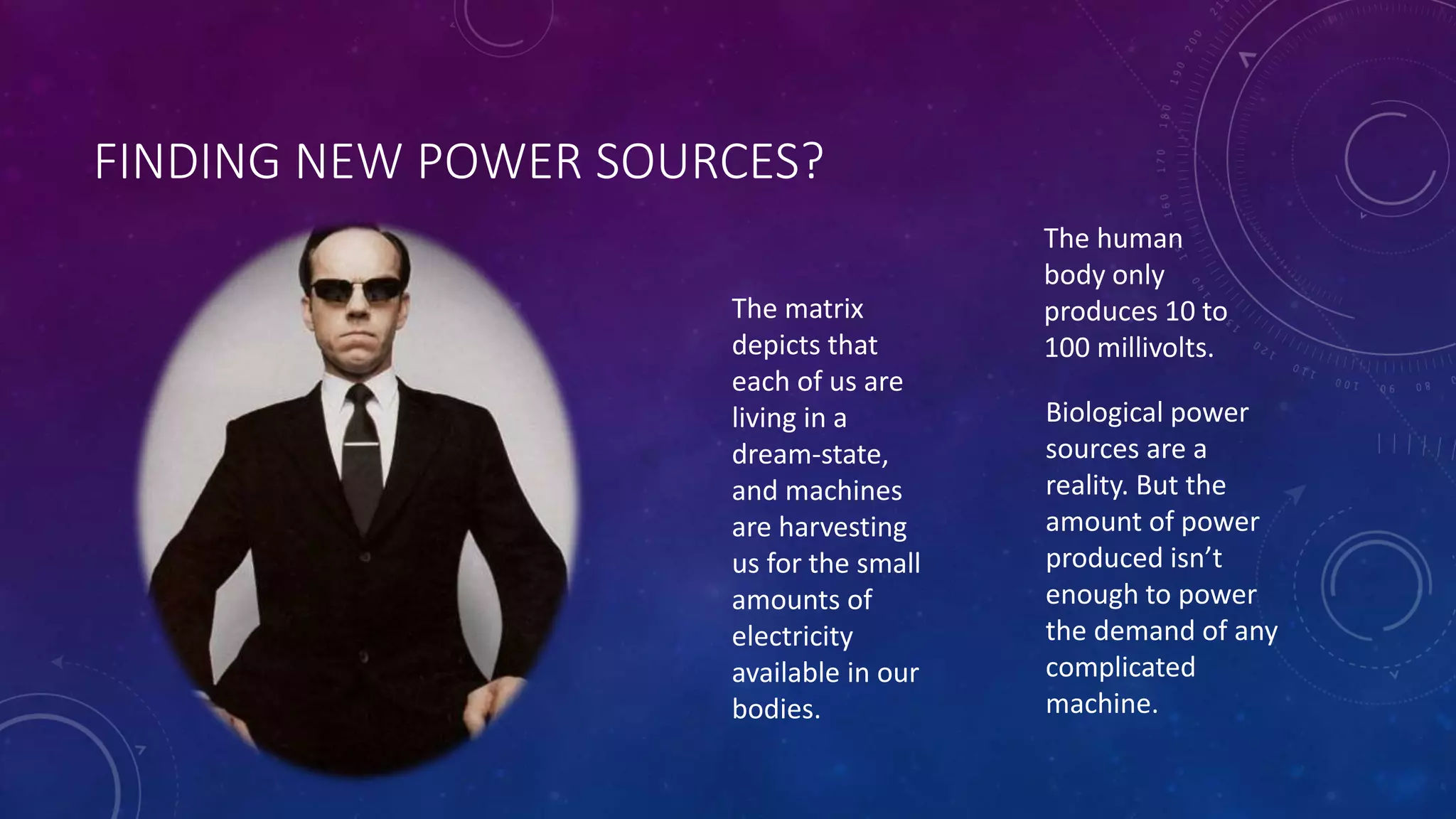
FINDING NEW POWER SOURCES? 
The matrix 
depicts that 
each of us are 
living in a 
dream-state, 
and machines 
are harvesting 
us for the small 
amounts of 
electricity 
available in our 
bodies. 
The human 
body only 
produces 10 to 
100 millivolts. 
Biological power 
sources are a 
reality. But the 
amount of power 
produced isn’t 
enough to power 
the demand of any 
complicated 
machine.
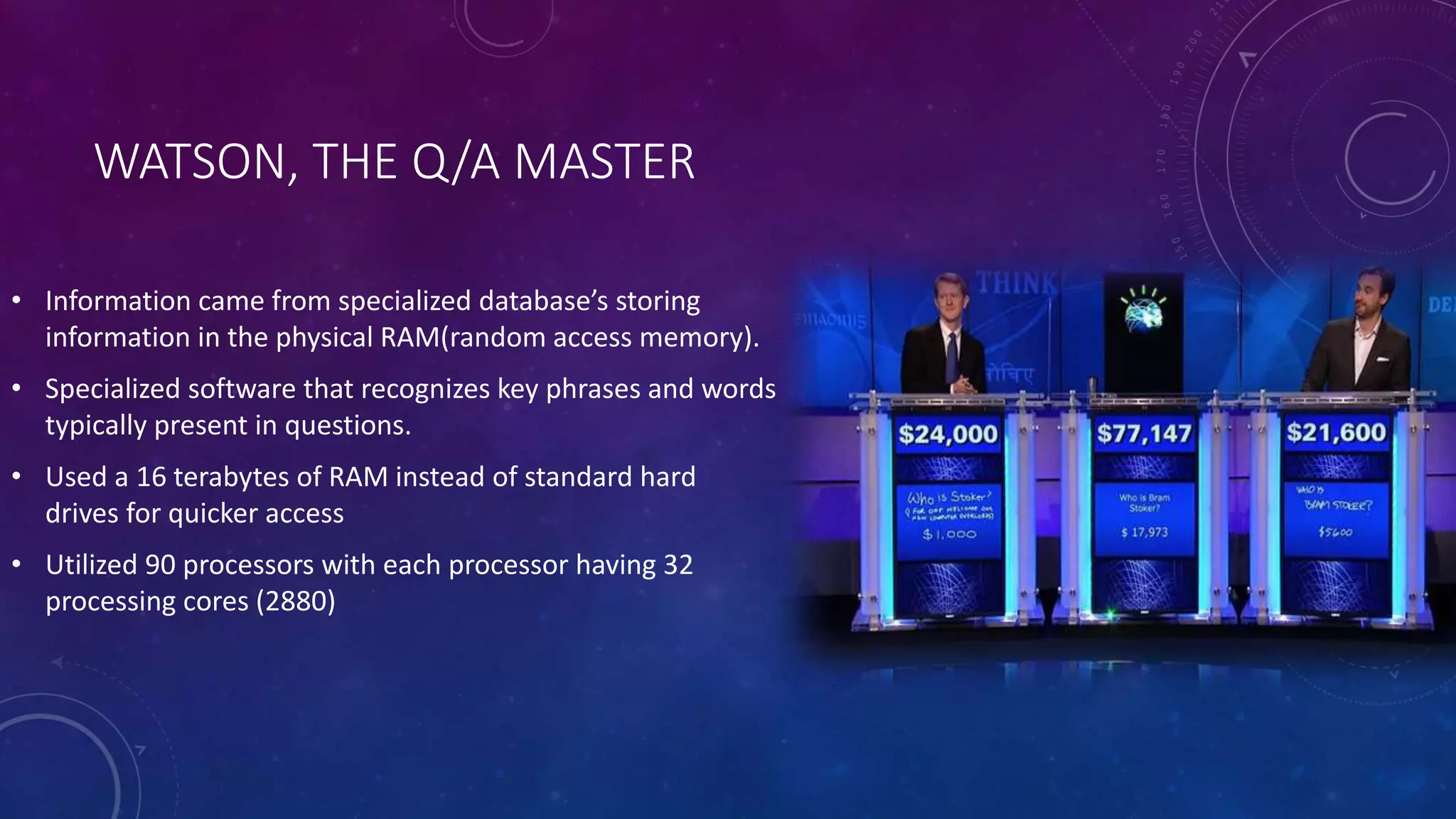
WATSON, THE Q/A MASTER 
• Information came from specialized database’s storing 
information in the physical RAM(random access memory). 
• Specialized software that recognizes key phrases and words 
typically present in questions. 
• Used a 16 terabytes of RAM instead of standard hard 
drives for quicker access 
• Utilized 90 processors with each processor having 32 
processing cores (2880)
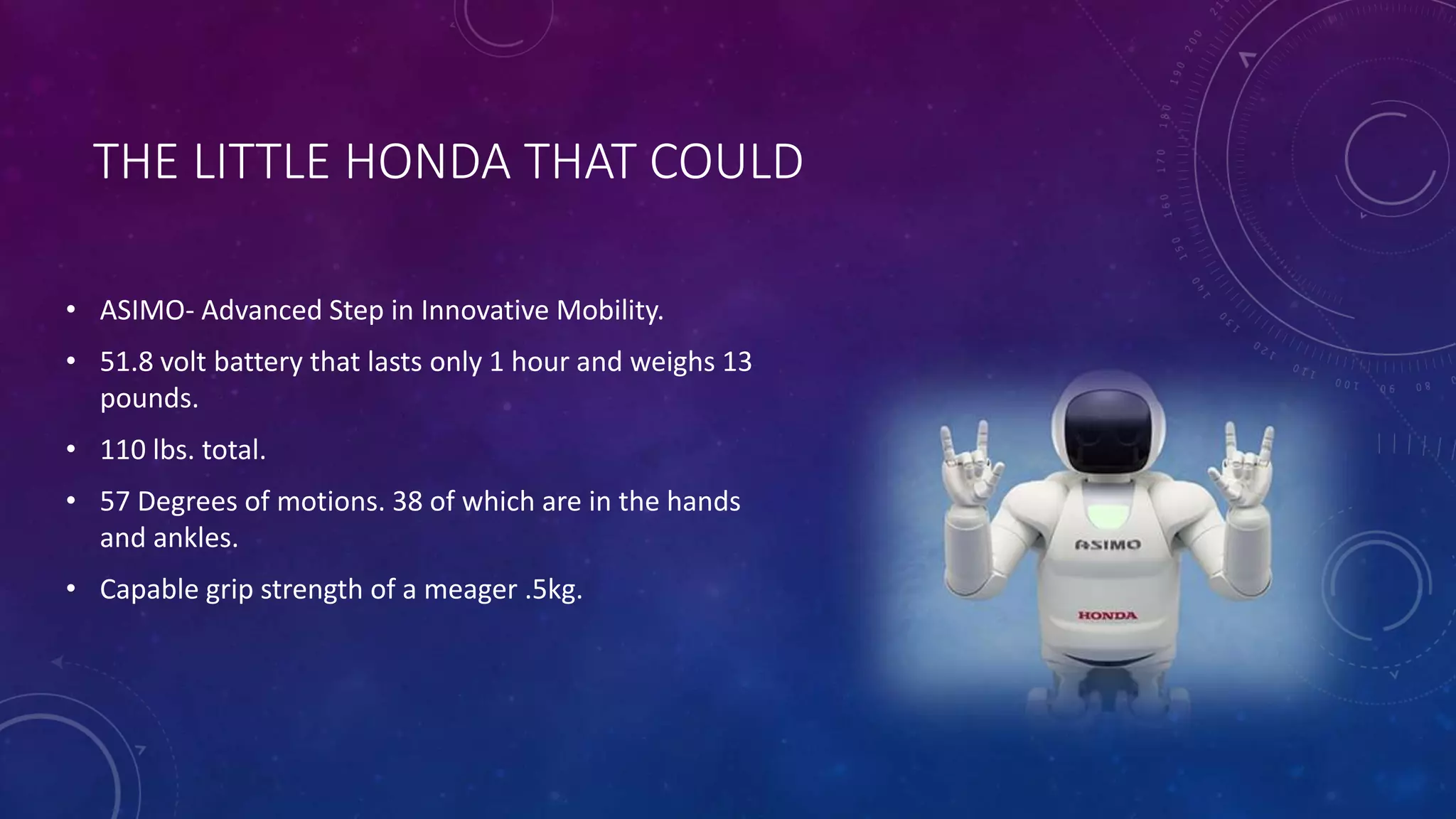
THE LITTLE HONDA THAT COULD 
• ASIMO- Advanced Step in Innovative Mobility. 
• 51.8 volt battery that lasts only 1 hour and weighs 13 
pounds. 
• 110 lbs. total. 
• 57 Degrees of motions. 38 of which are in the hands 
and ankles. 
• Capable grip strength of a meager .5kg.
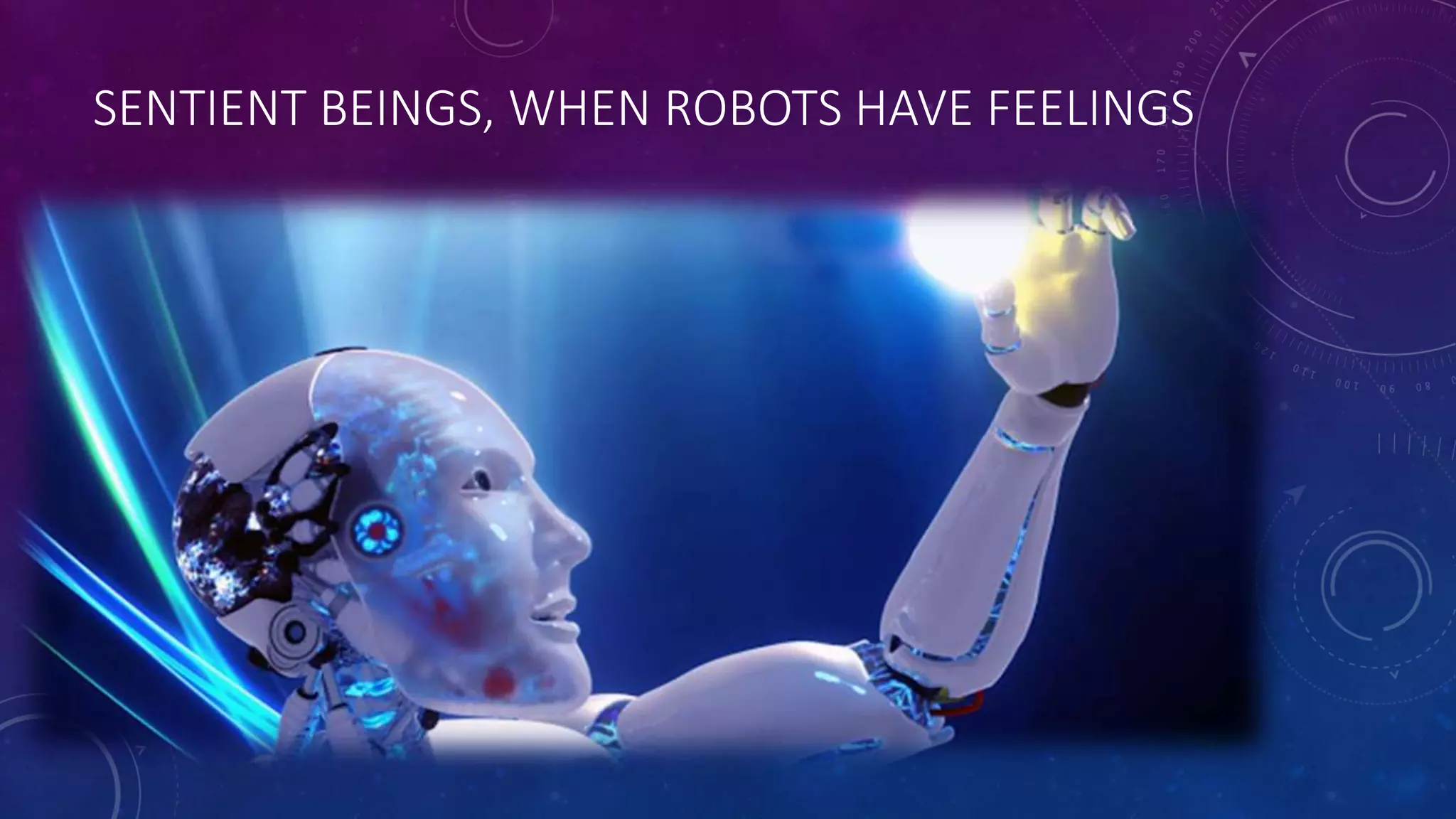
SENTIENT BEINGS, WHEN ROBOTS HAVE FEELINGS
ASIMOV’S LAWS OF ROBOTICS (NOT ACTUAL LAWS) 
• These are still programmed rules 
designed for fiction. 
• Military robots are designed to 
kill you. 
• There are no real safeguards. 
• Robots take our jobs. That hurts 
us. Goes against first law. 
1. A robot may not injure a human being or, 
through inaction, allow a human being to come to 
harm. 
2. A robot must obey the orders given to it by 
human beings, except where such orders would 
conflict with the First Law. 
3. A robot must protect its own existence as long 
as such protection does not conflict with the First 
or Second Law.
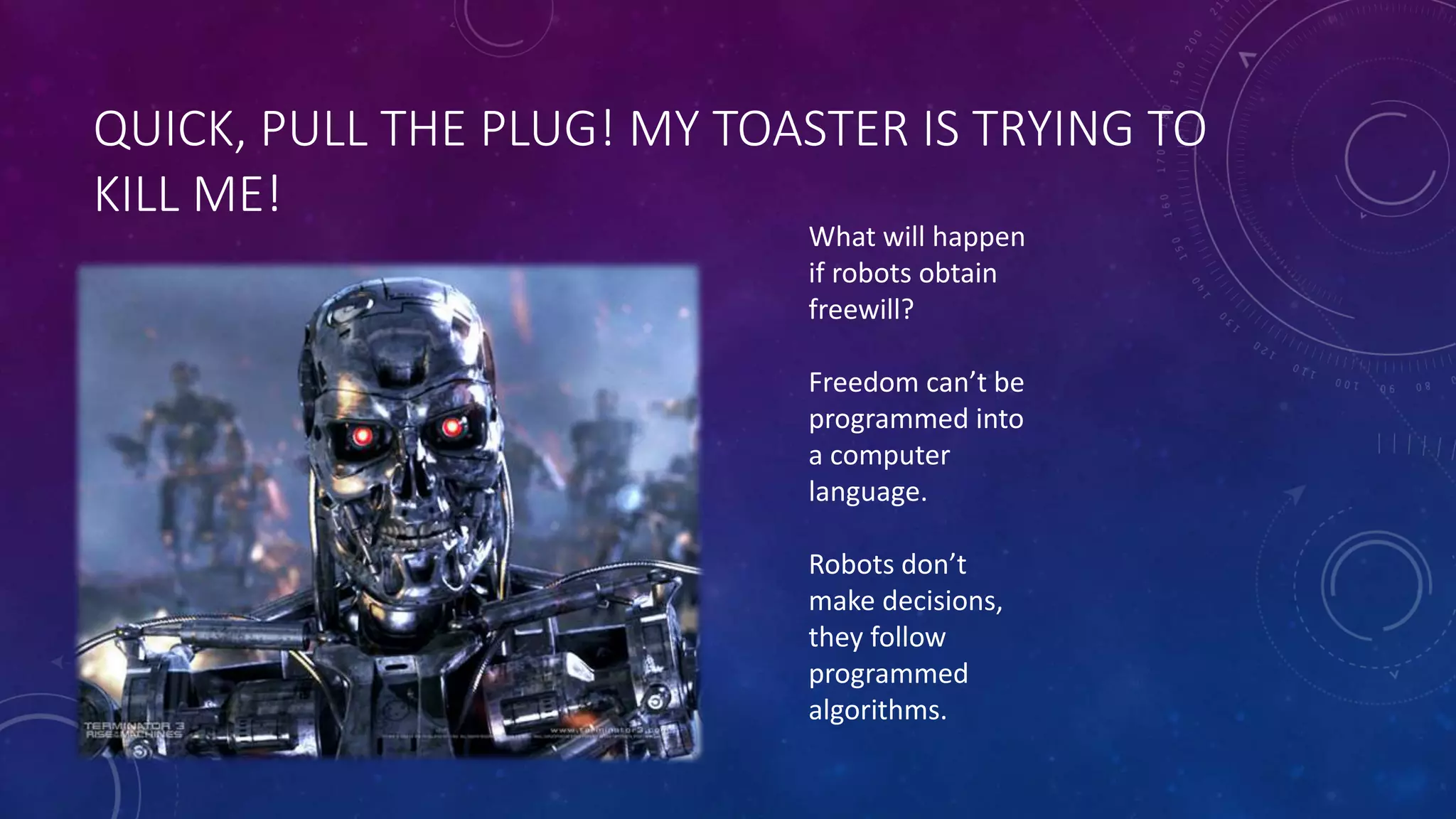
QUICK, PULL THE PLUG! MY TOASTER IS TRYING TO 
KILL ME! 
What will happen 
if robots obtain 
freewill? 
Freedom can’t be 
programmed into 
a computer 
language. 
Robots don’t 
make decisions, 
they follow 
programmed 
algorithms.
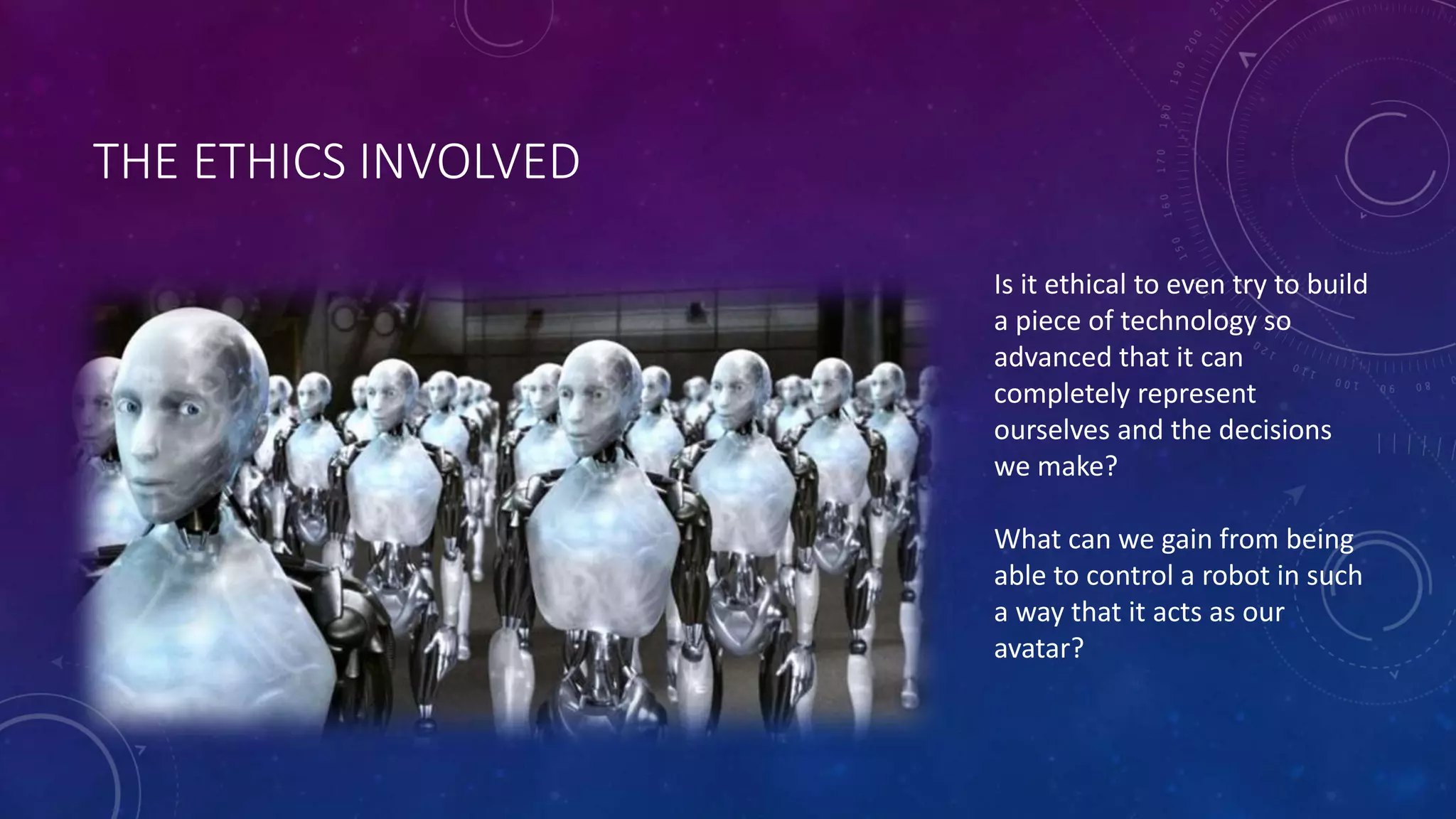
THE ETHICS INVOLVED 
Is it ethical to even try to build 
a piece of technology so 
advanced that it can 
completely represent 
ourselves and the decisions 
we make? 
What can we gain from being 
able to control a robot in such 
a way that it acts as our 
avatar?
Artificial intelligence

Artificial intelligence

  • 1.
    ARTIFICIAL INTELLIGENCE JOHNPESCO ALEX MOORE TRAVIS PARSONS
  • 2.
    CAN MACHINES THINK? Hollywood would make us think that they can! Can anyone name some famous robots?
  • 3.
    Robot- (n.) a machine capable of carrying out a complex series of actions automatically, especially one programmable by a computer.
  • 4.
    ALAN TURING: THE(L)IMITATION GAME (1912-1954) Invented the Turing Test to identify intelligence in machines. Emotions can’t be interpreted with mathematics.
  • 5.
    THE TURING TEST,WHEN WON’T WE RECOGNIZE AI? • AI imitates our responses fluently • AI has freewill to deviate from set instructions. From Blade Runner
  • 6.
    JOHN SEARLE: GANGINGUP ON THE IVY LEAGUE (1932-) Proposed the Chinese room experiment. Intentionality is biological, not mechanical. -“Whatever it is that the brain does to produce intentionality, it cannot consist in instantiating a program since no program, by itself, is sufficient for intentionality.”
  • 7.
    CHINESE ROOM VSTHE MATRIX Neo is in the locked room now. He may be a kung-fu master, but only when plugged into the Matrix. He needs a program with specific instructions in order to interpret what all of it means. (The Matrix)
  • 8.
    PUSH IT TOTHE LIMIT • Power restrictions • Physical restrictions • Mathematics as a limiting factor Quick processing and controlling motion in machines requires lots of power, and the materials used have certain limits when introduced to electricity or other forms of energy.
  • 9.
    FINDING NEW POWERSOURCES? The matrix depicts that each of us are living in a dream-state, and machines are harvesting us for the small amounts of electricity available in our bodies. The human body only produces 10 to 100 millivolts. Biological power sources are a reality. But the amount of power produced isn’t enough to power the demand of any complicated machine.
  • 10.
    WATSON, THE Q/AMASTER • Information came from specialized database’s storing information in the physical RAM(random access memory). • Specialized software that recognizes key phrases and words typically present in questions. • Used a 16 terabytes of RAM instead of standard hard drives for quicker access • Utilized 90 processors with each processor having 32 processing cores (2880)
  • 11.
    THE LITTLE HONDATHAT COULD • ASIMO- Advanced Step in Innovative Mobility. • 51.8 volt battery that lasts only 1 hour and weighs 13 pounds. • 110 lbs. total. • 57 Degrees of motions. 38 of which are in the hands and ankles. • Capable grip strength of a meager .5kg.
  • 12.
    SENTIENT BEINGS, WHENROBOTS HAVE FEELINGS
  • 13.
    ASIMOV’S LAWS OFROBOTICS (NOT ACTUAL LAWS) • These are still programmed rules designed for fiction. • Military robots are designed to kill you. • There are no real safeguards. • Robots take our jobs. That hurts us. Goes against first law. 1. A robot may not injure a human being or, through inaction, allow a human being to come to harm. 2. A robot must obey the orders given to it by human beings, except where such orders would conflict with the First Law. 3. A robot must protect its own existence as long as such protection does not conflict with the First or Second Law.
  • 14.
    QUICK, PULL THEPLUG! MY TOASTER IS TRYING TO KILL ME! What will happen if robots obtain freewill? Freedom can’t be programmed into a computer language. Robots don’t make decisions, they follow programmed algorithms.
  • 15.
    THE ETHICS INVOLVED Is it ethical to even try to build a piece of technology so advanced that it can completely represent ourselves and the decisions we make? What can we gain from being able to control a robot in such a way that it acts as our avatar?