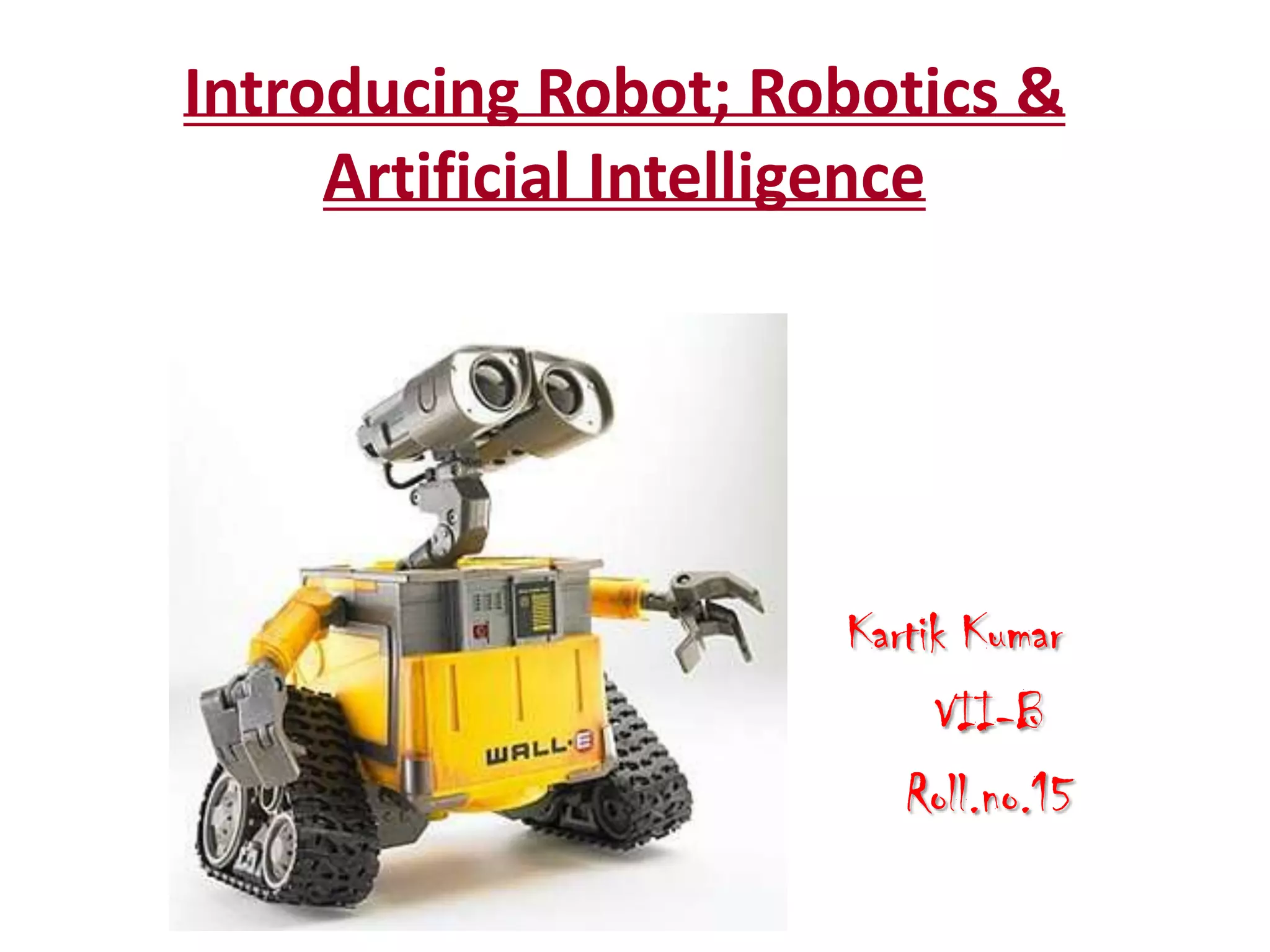
Introducing Robot; Robotics &
     Artificial Intelligence


                     Kartik Kumar
                          VII-B
                        Roll.no.15
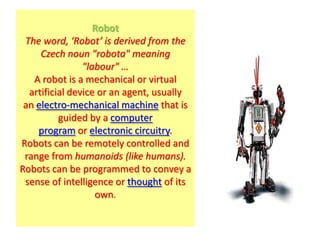
Robot
 The word, ‘Robot’ is derived from the
     Czech noun "robota" meaning
                "labour" …
   A robot is a mechanical or virtual
  artificial device or an agent, usually
 an electro-mechanical machine that is
          guided by a computer
    program or electronic circuitry.
Robots can be remotely controlled and
 range from humanoids (like humans).
Robots can be programmed to convey a
 sense of intelligence or thought of its
                   own.
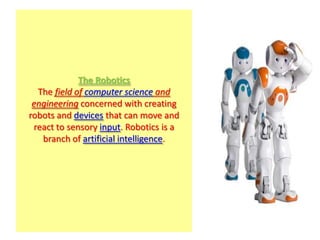
The Robotics
  The field of computer science and
 engineering concerned with creating
robots and devices that can move and
 react to sensory input. Robotics is a
   branch of artificial intelligence.
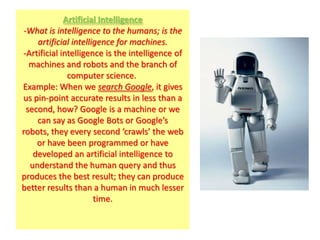
Artificial Intelligence
-What is intelligence to the humans; is the
    artificial intelligence for machines.
-Artificial intelligence is the intelligence of
  machines and robots and the branch of
              computer science.
Example: When we search Google, it gives
us pin-point accurate results in less than a
 second, how? Google is a machine or we
    can say as Google Bots or Google’s
robots, they every second ‘crawls’ the web
    or have been programmed or have
   developed an artificial intelligence to
  understand the human query and thus
produces the best result; they can produce
better results than a human in much lesser
                      time.
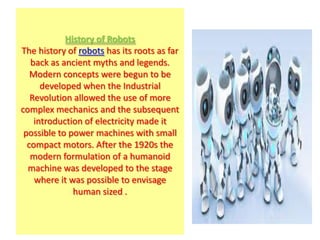
History of Robots
The history of robots has its roots as far
   back as ancient myths and legends.
   Modern concepts were begun to be
      developed when the Industrial
   Revolution allowed the use of more
complex mechanics and the subsequent
    introduction of electricity made it
 possible to power machines with small
  compact motors. After the 1920s the
   modern formulation of a humanoid
  machine was developed to the stage
    where it was possible to envisage
              human sized .
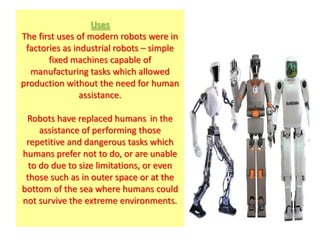
Uses
The first uses of modern robots were in
 factories as industrial robots – simple
       fixed machines capable of
  manufacturing tasks which allowed
production without the need for human
                assistance.

 Robots have replaced humans in the
     assistance of performing those
 repetitive and dangerous tasks which
humans prefer not to do, or are unable
  to do due to size limitations, or even
 those such as in outer space or at the
bottom of the sea where humans could
not survive the extreme environments.
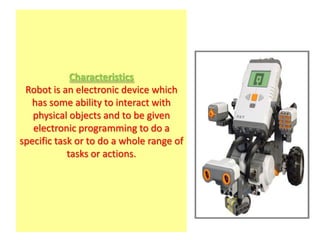
Characteristics
 Robot is an electronic device which
   has some ability to interact with
   physical objects and to be given
   electronic programming to do a
specific task or to do a whole range of
            tasks or actions.
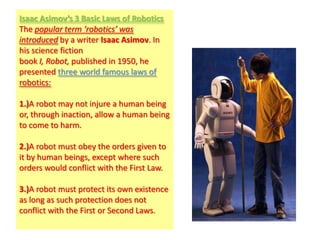
Isaac Asimov’s 3 Basic Laws of Robotics
The popular term ‘robotics’ was
introduced by a writer Isaac Asimov. In
his science fiction
book I, Robot, published in 1950, he
presented three world famous laws of
robotics:

1.)A robot may not injure a human being
or, through inaction, allow a human being
to come to harm.

2.)A robot must obey the orders given to
it by human beings, except where such
orders would conflict with the First Law.

3.)A robot must protect its own existence
as long as such protection does not
conflict with the First or Second Laws.
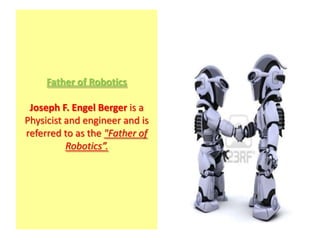
Father of Robotics

 Joseph F. Engel Berger is a
Physicist and engineer and is
referred to as the "Father of
          Robotics”.
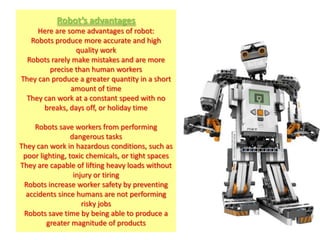
Robot’s advantages
     Here are some advantages of robot:
   Robots produce more accurate and high
                 quality work
  Robots rarely make mistakes and are more
        precise than human workers
They can produce a greater quantity in a short
               amount of time
 They can work at a constant speed with no
       breaks, days off, or holiday time

     Robots save workers from performing
                 dangerous tasks
They can work in hazardous conditions, such as
 poor lighting, toxic chemicals, or tight spaces
They are capable of lifting heavy loads without
                  injury or tiring
 Robots increase worker safety by preventing
  accidents since humans are not performing
                     risky jobs
 Robots save time by being able to produce a
         greater magnitude of products
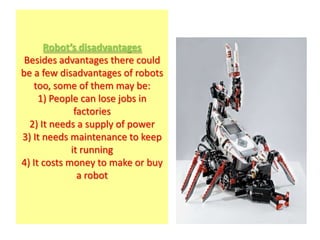
Robot’s disadvantages
 Besides advantages there could
be a few disadvantages of robots
   too, some of them may be:
     1) People can lose jobs in
              factories
  2) It needs a supply of power
3) It needs maintenance to keep
             it running
4) It costs money to make or buy
               a robot
Tip of the day
   Robots have made our life very easy and we
  should use it as much as needed not more not
                         less,
 … by the way have you seen Rajnikant’s popular
       film on Robotic invasion?: ‘ROBOT’?
  We should never forget that Robots can never
   replace humans in sentiments, feelings and
love, so better we ‘use’ robots for ‘work’ only but
           ‘love’ real humans in real life!
Do not become a machine … Live life; King’s like : )
                    ***********

Kartik kumar

  • 1.
    Introducing Robot; Robotics& Artificial Intelligence Kartik Kumar VII-B Roll.no.15
  • 2.
    Robot The word,‘Robot’ is derived from the Czech noun "robota" meaning "labour" … A robot is a mechanical or virtual artificial device or an agent, usually an electro-mechanical machine that is guided by a computer program or electronic circuitry. Robots can be remotely controlled and range from humanoids (like humans). Robots can be programmed to convey a sense of intelligence or thought of its own.
  • 3.
    The Robotics The field of computer science and engineering concerned with creating robots and devices that can move and react to sensory input. Robotics is a branch of artificial intelligence.
  • 4.
    Artificial Intelligence -What isintelligence to the humans; is the artificial intelligence for machines. -Artificial intelligence is the intelligence of machines and robots and the branch of computer science. Example: When we search Google, it gives us pin-point accurate results in less than a second, how? Google is a machine or we can say as Google Bots or Google’s robots, they every second ‘crawls’ the web or have been programmed or have developed an artificial intelligence to understand the human query and thus produces the best result; they can produce better results than a human in much lesser time.
  • 5.
    History of Robots Thehistory of robots has its roots as far back as ancient myths and legends. Modern concepts were begun to be developed when the Industrial Revolution allowed the use of more complex mechanics and the subsequent introduction of electricity made it possible to power machines with small compact motors. After the 1920s the modern formulation of a humanoid machine was developed to the stage where it was possible to envisage human sized .
  • 6.
    Uses The first usesof modern robots were in factories as industrial robots – simple fixed machines capable of manufacturing tasks which allowed production without the need for human assistance. Robots have replaced humans in the assistance of performing those repetitive and dangerous tasks which humans prefer not to do, or are unable to do due to size limitations, or even those such as in outer space or at the bottom of the sea where humans could not survive the extreme environments.
  • 7.
    Characteristics Robot isan electronic device which has some ability to interact with physical objects and to be given electronic programming to do a specific task or to do a whole range of tasks or actions.
  • 8.
    Isaac Asimov’s 3Basic Laws of Robotics The popular term ‘robotics’ was introduced by a writer Isaac Asimov. In his science fiction book I, Robot, published in 1950, he presented three world famous laws of robotics: 1.)A robot may not injure a human being or, through inaction, allow a human being to come to harm. 2.)A robot must obey the orders given to it by human beings, except where such orders would conflict with the First Law. 3.)A robot must protect its own existence as long as such protection does not conflict with the First or Second Laws.
  • 9.
    Father of Robotics Joseph F. Engel Berger is a Physicist and engineer and is referred to as the "Father of Robotics”.
  • 10.
    Robot’s advantages Here are some advantages of robot: Robots produce more accurate and high quality work Robots rarely make mistakes and are more precise than human workers They can produce a greater quantity in a short amount of time They can work at a constant speed with no breaks, days off, or holiday time Robots save workers from performing dangerous tasks They can work in hazardous conditions, such as poor lighting, toxic chemicals, or tight spaces They are capable of lifting heavy loads without injury or tiring Robots increase worker safety by preventing accidents since humans are not performing risky jobs Robots save time by being able to produce a greater magnitude of products
  • 11.
    Robot’s disadvantages Besidesadvantages there could be a few disadvantages of robots too, some of them may be: 1) People can lose jobs in factories 2) It needs a supply of power 3) It needs maintenance to keep it running 4) It costs money to make or buy a robot
  • 12.
    Tip of theday Robots have made our life very easy and we should use it as much as needed not more not less, … by the way have you seen Rajnikant’s popular film on Robotic invasion?: ‘ROBOT’? We should never forget that Robots can never replace humans in sentiments, feelings and love, so better we ‘use’ robots for ‘work’ only but ‘love’ real humans in real life! Do not become a machine … Live life; King’s like : ) ***********