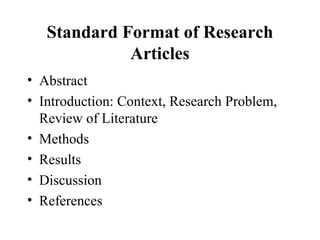
Standard Format of Research
Articles
• Abstract
• Introduction: Context, Research Problem,
Review of Literature
• Methods
• Results
• Discussion
• References
Introduction
• Background - the reasons the author(s)
conducted the study; theoretical framework
• Statement of Purpose - the goal of the
research (the destination); the problem
statement
• Hypotheses - “educated guesses” about
relationships or differences
Methodology
• Participants (sample) - who the subjects are,
how obtained/selected
• Materials (equipment, apparatus, measuring
instruments) - what was used, quality of
measuring instruments
• Procedures - how study was conducted;
what subjects did or what was done to them
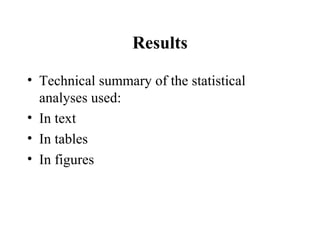
Results
• Technical summary of the statistical
analyses used:
• In text
• In tables
• In figures
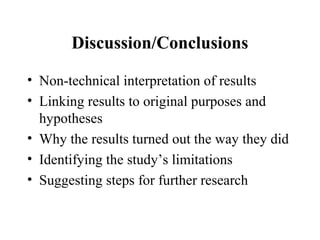
Discussion/Conclusions
• Non-technical interpretation of results
• Linking results to original purposes and
hypotheses
• Why the results turned out the way they did
• Identifying the study’s limitations
• Suggesting steps for further research
Evaluating Research
• Goal: to be able to critique a research
article by identifying the strengths and
weaknesses of each component of the
research
• “Tools for Evaluating Research Reports”
Evaluating Introductions:
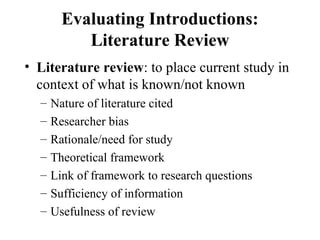
Literature Review
• Literature review: to place current study in
context of what is known/not known
–
–
–
–
–
–
–

Nature of literature cited
Researcher bias
Rationale/need for study
Theoretical framework
Link of framework to research questions
Sufficiency of information
Usefulness of review
Evaluating Introductions:
Research Questions/Hypotheses
• Research questions and hypotheses drive
the study
–
–
–
–
–
–
–

Clarity of problem
Sufficient rationale
Contribution to existing knowledge
Link to theoretical framework and lit review
Assumptions explicit/implicit
Operational definition of terms
Statement of hypotheses
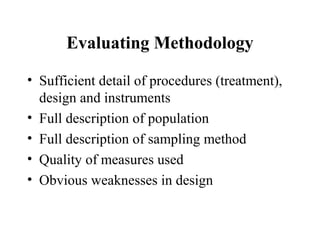
Evaluating Methodology
• Sufficient detail of procedures (treatment),
design and instruments
• Full description of population
• Full description of sampling method
• Quality of measures used
• Obvious weaknesses in design
Evaluating Results
• Appropriateness of statistical techniques
used
• Clarity of presentation of results
• Adequacy of presentation of results
Evaluating Discussion/Conclusions
•
•
•
•
•
•

Consistency of conclusions with findings
Appropriateness of generalizations
Discussion of implications of findings
Discussion of limitations of study
Alternative explanation for findings
Linkage of conclusions with theoretical
framework, research questions
Practice Exercise Evaluating the Introduction
• Literature Review
• Research problem/questions

Standard format of Research article ( how to write research article )

  • 1.
    Standard Format ofResearch Articles • Abstract • Introduction: Context, Research Problem, Review of Literature • Methods • Results • Discussion • References
  • 2.
    Introduction • Background -the reasons the author(s) conducted the study; theoretical framework • Statement of Purpose - the goal of the research (the destination); the problem statement • Hypotheses - “educated guesses” about relationships or differences
  • 3.
    Methodology • Participants (sample)- who the subjects are, how obtained/selected • Materials (equipment, apparatus, measuring instruments) - what was used, quality of measuring instruments • Procedures - how study was conducted; what subjects did or what was done to them
  • 4.
    Results • Technical summaryof the statistical analyses used: • In text • In tables • In figures
  • 5.
    Discussion/Conclusions • Non-technical interpretationof results • Linking results to original purposes and hypotheses • Why the results turned out the way they did • Identifying the study’s limitations • Suggesting steps for further research
  • 6.
    Evaluating Research • Goal:to be able to critique a research article by identifying the strengths and weaknesses of each component of the research • “Tools for Evaluating Research Reports”
  • 7.
    Evaluating Introductions: Literature Review •Literature review: to place current study in context of what is known/not known – – – – – – – Nature of literature cited Researcher bias Rationale/need for study Theoretical framework Link of framework to research questions Sufficiency of information Usefulness of review
  • 8.
    Evaluating Introductions: Research Questions/Hypotheses •Research questions and hypotheses drive the study – – – – – – – Clarity of problem Sufficient rationale Contribution to existing knowledge Link to theoretical framework and lit review Assumptions explicit/implicit Operational definition of terms Statement of hypotheses
  • 9.
    Evaluating Methodology • Sufficientdetail of procedures (treatment), design and instruments • Full description of population • Full description of sampling method • Quality of measures used • Obvious weaknesses in design
  • 10.
    Evaluating Results • Appropriatenessof statistical techniques used • Clarity of presentation of results • Adequacy of presentation of results
  • 11.
    Evaluating Discussion/Conclusions • • • • • • Consistency ofconclusions with findings Appropriateness of generalizations Discussion of implications of findings Discussion of limitations of study Alternative explanation for findings Linkage of conclusions with theoretical framework, research questions
  • 12.
    Practice Exercise Evaluatingthe Introduction • Literature Review • Research problem/questions