

3/10/2016 University of Petroleum & Energy studies 1
India
Argentina
Let’s go to
Argentina
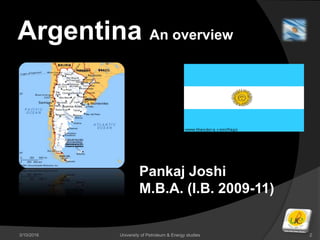
Argentina An overview
3/10/2016 University of Petroleum & Energy studies 2
Pankaj Joshi
M.B.A. (I.B. 2009-11)
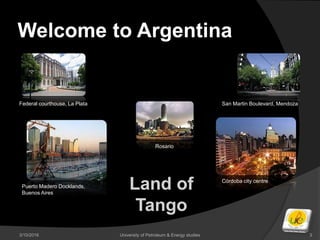
Welcome to Argentina
3/10/2016 University of Petroleum & Energy studies 3
Land of
Tango
Puerto Madero Docklands,
Buenos Aires
Rosario
Córdoba city centre
San Martin Boulevard, MendozaFederal courthouse, La Plata
Etymology
 The name of Argentina is derived from the
Latin word argentum which means(silver).
 The first use of the name Argentina can be
traced back to the first voyages made by the
Spanish and Portuguese conquerors to the
Río de la Plata which means "Silver River",
during the first years of 16th century.
3/10/2016 University of Petroleum & Energy studies 4
3/10/2016 University of Petroleum & Energy studies 5
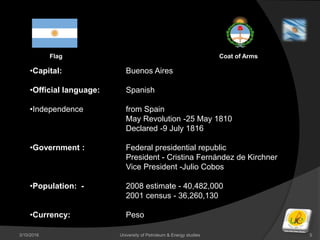
•Capital: Buenos Aires
•Official language: Spanish
•Independence from Spain
May Revolution -25 May 1810
Declared -9 July 1816
•Government : Federal presidential republic
President - Cristina Fernández de Kirchner
Vice President -Julio Cobos
•Population: - 2008 estimate - 40,482,000
2001 census - 36,260,130
•Currency: Peso
Flag Coat of Arms
History
3/10/2016 University of Petroleum & Energy studies 6
Pre-Columbian era
 The earliest evidence of human activity in
Argentina found thus far is in Patagonia
(Piedra Museo, Santa Cruz) and dates from
11,000 BC.
 The central and southern areas (Pampas
and Patagonia) were dominated by nomadic
cultures.
 They developed a culture based on yucca,
sweet potato and yerba mate.
3/10/2016 University of Petroleum & Energy studies 7
Spanish colonial era
 European explorers arrived in 1516.
 Spain established the Viceroyalty of Peru in
1542 encompassing all its holdings in South
America, and established a permanent
colony on the site of Buenos Aires in 1580.
 The area was largely a country of Spanish
immigrants and their descendants, known as
criollos,
3/10/2016 University of Petroleum & Energy studies 8
Birth of Argentina
 News of the French Revolution and
the American Revolutionary War
brought liberal ideas to Latin
America.
 Buenos Aires formed its own junta
on May 25, 1810 and invited the
other provinces to join. Two states
emerged in what is now Argentina:
 1810 - United Provinces of South
America
 1815 - Liga Federal
3/10/2016 University of Petroleum & Energy studies 9
 Military campaigns led by
General José de San Martín
between 1814 and 1817 made
independence increasingly a
reality. Argentines revere San
Martín as the hero of national
independence.
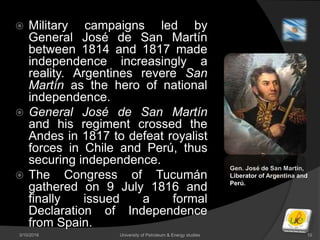
 General José de San Martín
and his regiment crossed the
Andes in 1817 to defeat royalist
forces in Chile and Perú, thus
securing independence.
 The Congress of Tucumán
gathered on 9 July 1816 and
finally issued a formal
Declaration of Independence
from Spain.
3/10/2016 University of Petroleum & Energy studies 10
Gen. José de San Martín,
Liberator of Argentina and
Perú.
Independence
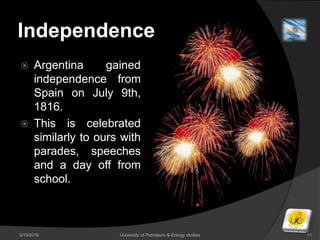
 Argentina gained
independence from
Spain on July 9th,
1816.
 This is celebrated
similarly to ours with
parades, speeches
and a day off from
school.
3/10/2016 University of Petroleum & Energy studies 11
The emergence of modern
Argentina
3/10/2016 University of Petroleum & Energy studies 12
3/10/2016 University of Petroleum & Energy studies 13
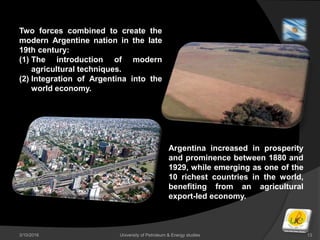
Two forces combined to create the
modern Argentine nation in the late
19th century:
(1) The introduction of modern
agricultural techniques.
(2) Integration of Argentina into the
world economy.
Argentina increased in prosperity
and prominence between 1880 and
1929, while emerging as one of the
10 richest countries in the world,
benefiting from an agricultural
export-led economy.
The democratic transition
(from 1983 to today)
 On October 30, 1983, Argentines went to the polls to
choose their Leaders in election.
 The country returned to constitutional rule after Raúl
Alfonsín, candidate of the Radical Civic Union received
52% of the popular vote for president.
 On 1989 An inability to maintain public confidence
undermined the effectiveness of the Alfonsín
government, which left office six months early after
Peronist candidate Carlos Saúl Menem won the 1989
presidential elections.
3/10/2016 University of Petroleum & Energy studies 14
3/10/2016 University of Petroleum & Energy studies 15
 The Kirchner era:- Governor Néstor
Kirchner, a social democratic leader, was
elected president in May 2003 .
 The 2007 general election took place in
ten provinces in September and
Fernández de Kirchner won in six
provinces. On December 10, 2007,
Cristina Fernández de Kirchner took over
the presidency from her husband, after
winning elections with 44% of the vote.
 She implied that she would introduce
changes to the country during her
presidency.
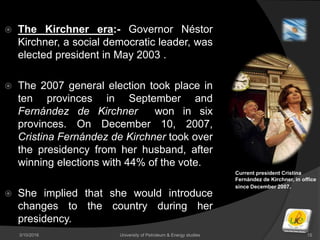
Current president Cristina
Fernández de Kirchner, in office
since December 2007.
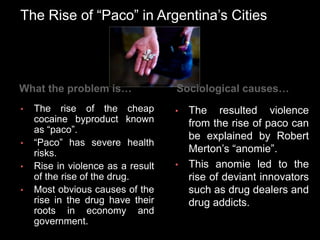
The Rise of “Paco” in Argentina’s Cities
What the problem is…
• The rise of the cheap
cocaine byproduct known
as “paco”.
• “Paco” has severe health
risks.
• Rise in violence as a result
of the rise of the drug.
• Most obvious causes of the
rise in the drug have their
roots in economy and
government.
Sociological causes…
• The resulted violence
from the rise of paco can
be explained by Robert
Merton’s “anomie”.
• This anomie led to the
rise of deviant innovators
such as drug dealers and
drug addicts.
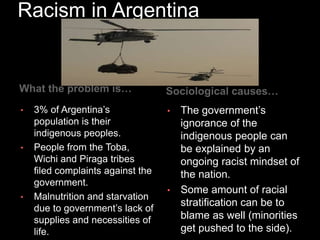
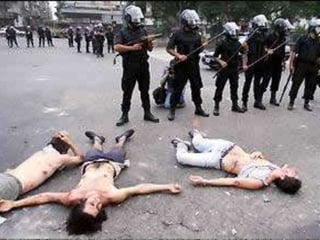
Racism in Argentina
What the problem is…
• 3% of Argentina’s
population is their
indigenous peoples.
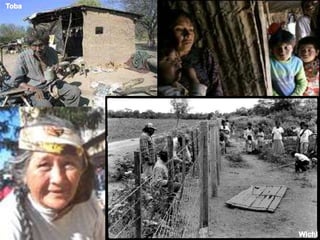
• People from the Toba,
Wichi and Piraga tribes
filed complaints against the
government.
• Malnutrition and starvation
due to government’s lack of
supplies and necessities of
life.
Sociological causes…
• The government’s
ignorance of the
indigenous people can
be explained by an
ongoing racist mindset of
the nation.
• Some amount of racial
stratification can be to
blame as well (minorities
get pushed to the side).
2001- 2002
Economic Crisis
-Trade imbalance
-Corrupt policies
-Large foreign debt
Argentine Culture
• Immigrant population
• The role of machismo
• Argentine music
• Sports in Argentina
• Argentinean Cuisine
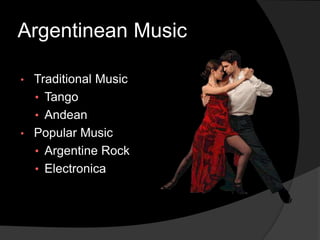
Argentinean Music
• Traditional Music
• Tango
• Andean
• Popular Music
• Argentine Rock
• Electronica
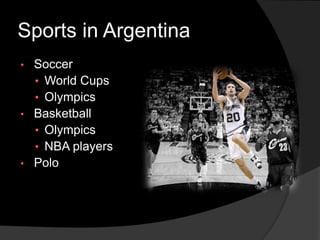
Sports in Argentina
• Soccer
• World Cups
• Olympics
• Basketball
• Olympics
• NBA players
• Polo
Thank You
3/10/2016 University of Petroleum & Energy studies 26

Argentina

  • 1.
    3/10/2016 University ofPetroleum & Energy studies 1 India Argentina Let’s go to Argentina
  • 2.
    Argentina An overview 3/10/2016University of Petroleum & Energy studies 2 Pankaj Joshi M.B.A. (I.B. 2009-11)
  • 3.
    Welcome to Argentina 3/10/2016University of Petroleum & Energy studies 3 Land of Tango Puerto Madero Docklands, Buenos Aires Rosario Córdoba city centre San Martin Boulevard, MendozaFederal courthouse, La Plata
  • 4.
    Etymology  The nameof Argentina is derived from the Latin word argentum which means(silver).  The first use of the name Argentina can be traced back to the first voyages made by the Spanish and Portuguese conquerors to the Río de la Plata which means "Silver River", during the first years of 16th century. 3/10/2016 University of Petroleum & Energy studies 4
  • 5.
    3/10/2016 University ofPetroleum & Energy studies 5 •Capital: Buenos Aires •Official language: Spanish •Independence from Spain May Revolution -25 May 1810 Declared -9 July 1816 •Government : Federal presidential republic President - Cristina Fernández de Kirchner Vice President -Julio Cobos •Population: - 2008 estimate - 40,482,000 2001 census - 36,260,130 •Currency: Peso Flag Coat of Arms
  • 6.
    History 3/10/2016 University ofPetroleum & Energy studies 6
  • 7.
    Pre-Columbian era  Theearliest evidence of human activity in Argentina found thus far is in Patagonia (Piedra Museo, Santa Cruz) and dates from 11,000 BC.  The central and southern areas (Pampas and Patagonia) were dominated by nomadic cultures.  They developed a culture based on yucca, sweet potato and yerba mate. 3/10/2016 University of Petroleum & Energy studies 7
  • 8.
    Spanish colonial era European explorers arrived in 1516.  Spain established the Viceroyalty of Peru in 1542 encompassing all its holdings in South America, and established a permanent colony on the site of Buenos Aires in 1580.  The area was largely a country of Spanish immigrants and their descendants, known as criollos, 3/10/2016 University of Petroleum & Energy studies 8
  • 9.
    Birth of Argentina News of the French Revolution and the American Revolutionary War brought liberal ideas to Latin America.  Buenos Aires formed its own junta on May 25, 1810 and invited the other provinces to join. Two states emerged in what is now Argentina:  1810 - United Provinces of South America  1815 - Liga Federal 3/10/2016 University of Petroleum & Energy studies 9
  • 10.
     Military campaignsled by General José de San Martín between 1814 and 1817 made independence increasingly a reality. Argentines revere San Martín as the hero of national independence.  General José de San Martín and his regiment crossed the Andes in 1817 to defeat royalist forces in Chile and Perú, thus securing independence.  The Congress of Tucumán gathered on 9 July 1816 and finally issued a formal Declaration of Independence from Spain. 3/10/2016 University of Petroleum & Energy studies 10 Gen. José de San Martín, Liberator of Argentina and Perú.
  • 11.
    Independence  Argentina gained independencefrom Spain on July 9th, 1816.  This is celebrated similarly to ours with parades, speeches and a day off from school. 3/10/2016 University of Petroleum & Energy studies 11
  • 12.
    The emergence ofmodern Argentina 3/10/2016 University of Petroleum & Energy studies 12
  • 13.
    3/10/2016 University ofPetroleum & Energy studies 13 Two forces combined to create the modern Argentine nation in the late 19th century: (1) The introduction of modern agricultural techniques. (2) Integration of Argentina into the world economy. Argentina increased in prosperity and prominence between 1880 and 1929, while emerging as one of the 10 richest countries in the world, benefiting from an agricultural export-led economy.
  • 14.
    The democratic transition (from1983 to today)  On October 30, 1983, Argentines went to the polls to choose their Leaders in election.  The country returned to constitutional rule after Raúl Alfonsín, candidate of the Radical Civic Union received 52% of the popular vote for president.  On 1989 An inability to maintain public confidence undermined the effectiveness of the Alfonsín government, which left office six months early after Peronist candidate Carlos Saúl Menem won the 1989 presidential elections. 3/10/2016 University of Petroleum & Energy studies 14
  • 15.
    3/10/2016 University ofPetroleum & Energy studies 15  The Kirchner era:- Governor Néstor Kirchner, a social democratic leader, was elected president in May 2003 .  The 2007 general election took place in ten provinces in September and Fernández de Kirchner won in six provinces. On December 10, 2007, Cristina Fernández de Kirchner took over the presidency from her husband, after winning elections with 44% of the vote.  She implied that she would introduce changes to the country during her presidency. Current president Cristina Fernández de Kirchner, in office since December 2007.
  • 17.
    The Rise of“Paco” in Argentina’s Cities What the problem is… • The rise of the cheap cocaine byproduct known as “paco”. • “Paco” has severe health risks. • Rise in violence as a result of the rise of the drug. • Most obvious causes of the rise in the drug have their roots in economy and government. Sociological causes… • The resulted violence from the rise of paco can be explained by Robert Merton’s “anomie”. • This anomie led to the rise of deviant innovators such as drug dealers and drug addicts.
  • 19.
    Racism in Argentina Whatthe problem is… • 3% of Argentina’s population is their indigenous peoples. • People from the Toba, Wichi and Piraga tribes filed complaints against the government. • Malnutrition and starvation due to government’s lack of supplies and necessities of life. Sociological causes… • The government’s ignorance of the indigenous people can be explained by an ongoing racist mindset of the nation. • Some amount of racial stratification can be to blame as well (minorities get pushed to the side).
  • 22.
    2001- 2002 Economic Crisis -Tradeimbalance -Corrupt policies -Large foreign debt
  • 23.
    Argentine Culture • Immigrantpopulation • The role of machismo • Argentine music • Sports in Argentina • Argentinean Cuisine
  • 24.
    Argentinean Music • TraditionalMusic • Tango • Andean • Popular Music • Argentine Rock • Electronica
  • 25.
    Sports in Argentina •Soccer • World Cups • Olympics • Basketball • Olympics • NBA players • Polo
  • 26.
    Thank You 3/10/2016 Universityof Petroleum & Energy studies 26