Are Engineers
Human?
Enrico Viceconte, Stoà Business School
“Storie ed esperienze di cambiamento professionale. La
creatività nelle comunità di pratiche”
1
Gruppo di lavoro
Pratiche lavorative e formazione
Arezzo 13-14 ottobre
Storie ed esperienze di cambiamento professionale
La creatività nelle comunità di pratiche
“Storie ed esperienze di cambiamento professionale. La
creatività nelle comunità di pratiche”
2
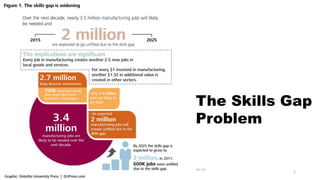
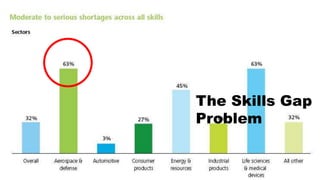
The Skills Gap
Problem
“Storie ed esperienze di cambiamento professionale. La
creatività nelle comunità di pratiche”
3
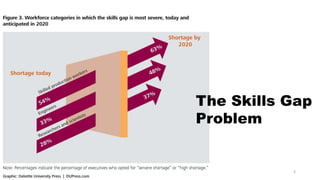
The Skills Gap
Problem
“Storie ed esperienze di cambiamento professionale. La
creatività nelle comunità di pratiche”
4
The Skills Gap
Problem
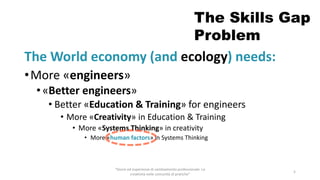
The World economy (and ecology) needs:
•More «engineers»
•«Better engineers»
• Better «Education & Training» for engineers
• More «Creativity» in Education & Training
• More «Systems Thinking» in creativity
• More «human factors» in Systems Thinking
“Storie ed esperienze di cambiamento professionale. La
creatività nelle comunità di pratiche”
5
The Skills Gap
Problem
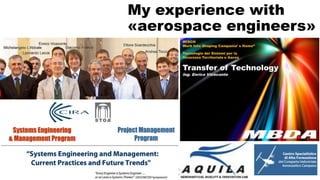
My experience with
«aerospace engineers»
“Storie ed esperienze di cambiamento professionale. La
creatività nelle comunità di pratiche”
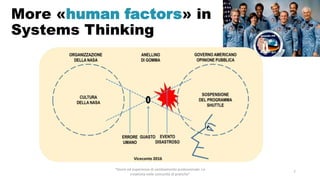
More «human factors» in
Systems Thinking
“Storie ed esperienze di cambiamento professionale. La
creatività nelle comunità di pratiche”
7
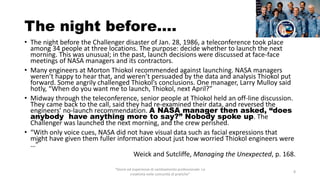
The night before….
• The night before the Challenger disaster of Jan. 28, 1986, a teleconference took place
among 34 people at three locations. The purpose: decide whether to launch the next
morning. This was unusual; in the past, launch decisions were discussed at face-face
meetings of NASA managers and its contractors.
• Many engineers at Morton Thiokol recommended against launching. NASA managers
weren’t happy to hear that, and weren’t persuaded by the data and analysis Thiokol put
forward. Some angrily challenged Thiokol’s conclusions. One manager, Larry Mulloy said
hotly, “When do you want me to launch, Thiokol, next April?”
• Midway through the teleconference, senior people at Thiokol held an off-line discussion.
They came back to the call, said they had re-examined their data, and reversed the
engineers’ no-launch recommendation. A NASA manager then asked, “does
anybody have anything more to say?” Nobody spoke up. The
Challenger was launched the next morning, and the crew perished.
• “With only voice cues, NASA did not have visual data such as facial expressions that
might have given them fuller information about just how worried Thiokol engineers were
…”
Weick and Sutcliffe, Managing the Unexpected, p. 168.
“Storie ed esperienze di cambiamento professionale. La
creatività nelle comunità di pratiche”
8
Why Organizational Learning?
• Complicatedness: Containing intricately combined or involved parts.
Where engineers work.
• Complexity: Situations that are difficult to understand, have
considerable ambiguity and uncertainty, and often have no
“solutions,” only options and tradeoffs
• Chaos: Seemingly random events that have an underlying pattern
(which is difficult to discern)
• Change: turbulent environments in which the future is difficult to
predict or control
“Storie ed esperienze di cambiamento professionale. La
creatività nelle comunità di pratiche”
9
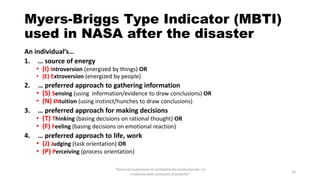
Myers-Briggs Type Indicator (MBTI)
used in NASA after the disaster
An individual’s…
1. … source of energy
• (I) Introversion (energized by things) OR
• (E) Extroversion (energized by people)
2. … preferred approach to gathering information
• (S) Sensing (using information/evidence to draw conclusions) OR
• (N) iNtuition (using instinct/hunches to draw conclusions)
3. … preferred approach for making decisions
• (T) Thinking (basing decisions on rational thought) OR
• (F) Feeling (basing decisions on emotional reaction)
4. … preferred approach to life, work
• (J) Judging (task orientation) OR
• (P) Perceiving (process orientation)
“Storie ed esperienze di cambiamento professionale. La
creatività nelle comunità di pratiche”
10
“Storie ed esperienze di cambiamento professionale. La
creatività nelle comunità di pratiche”
11
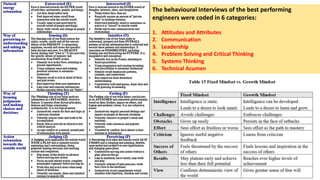
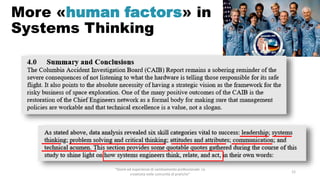
The behavioural Interviews of the best performing
engineers were coded in 6 categories:
1. Attitudes and Attributes
2. Communication
3. Leadership
4. Problem Solving and Critical Thinking
5. Systems Thinking
6. Technical Acumen
“Storie ed esperienze di cambiamento professionale. La
creatività nelle comunità di pratiche”
12
More «human factors» in
Systems Thinking
“Storie ed esperienze di cambiamento professionale. La creatività
nelle comunità di pratiche” 13
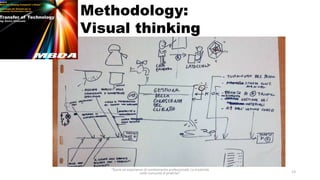
Methodology:
Visual thinking
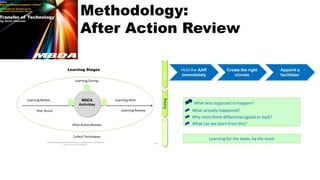
Methodology:
After Action Review
“Storie ed esperienze di cambiamento professionale. La
creatività nelle comunità di pratiche”
15
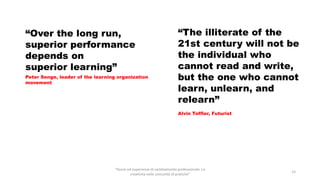
“Over the long run,
superior performance
depends on
superior learning”
Peter Senge, leader of the learning organization
movement
“The illiterate of the
21st century will not be
the individual who
cannot read and write,
but the one who cannot
learn, unlearn, and
relearn”
Alvin Toffler, Futurist
enrico.viceconte@gmail.com
www.stoa.it
“Storie ed esperienze di cambiamento professionale. La
creatività nelle comunità di pratiche”
16

Are Engineers Human?

  • 1.
    Are Engineers Human? Enrico Viceconte,Stoà Business School “Storie ed esperienze di cambiamento professionale. La creatività nelle comunità di pratiche” 1 Gruppo di lavoro Pratiche lavorative e formazione Arezzo 13-14 ottobre Storie ed esperienze di cambiamento professionale La creatività nelle comunità di pratiche
  • 2.
    “Storie ed esperienzedi cambiamento professionale. La creatività nelle comunità di pratiche” 2 The Skills Gap Problem
  • 3.
    “Storie ed esperienzedi cambiamento professionale. La creatività nelle comunità di pratiche” 3 The Skills Gap Problem
  • 4.
    “Storie ed esperienzedi cambiamento professionale. La creatività nelle comunità di pratiche” 4 The Skills Gap Problem
  • 5.
    The World economy(and ecology) needs: •More «engineers» •«Better engineers» • Better «Education & Training» for engineers • More «Creativity» in Education & Training • More «Systems Thinking» in creativity • More «human factors» in Systems Thinking “Storie ed esperienze di cambiamento professionale. La creatività nelle comunità di pratiche” 5 The Skills Gap Problem
  • 6.
    My experience with «aerospaceengineers» “Storie ed esperienze di cambiamento professionale. La creatività nelle comunità di pratiche”
  • 7.
    More «human factors»in Systems Thinking “Storie ed esperienze di cambiamento professionale. La creatività nelle comunità di pratiche” 7
  • 8.
    The night before…. •The night before the Challenger disaster of Jan. 28, 1986, a teleconference took place among 34 people at three locations. The purpose: decide whether to launch the next morning. This was unusual; in the past, launch decisions were discussed at face-face meetings of NASA managers and its contractors. • Many engineers at Morton Thiokol recommended against launching. NASA managers weren’t happy to hear that, and weren’t persuaded by the data and analysis Thiokol put forward. Some angrily challenged Thiokol’s conclusions. One manager, Larry Mulloy said hotly, “When do you want me to launch, Thiokol, next April?” • Midway through the teleconference, senior people at Thiokol held an off-line discussion. They came back to the call, said they had re-examined their data, and reversed the engineers’ no-launch recommendation. A NASA manager then asked, “does anybody have anything more to say?” Nobody spoke up. The Challenger was launched the next morning, and the crew perished. • “With only voice cues, NASA did not have visual data such as facial expressions that might have given them fuller information about just how worried Thiokol engineers were …” Weick and Sutcliffe, Managing the Unexpected, p. 168. “Storie ed esperienze di cambiamento professionale. La creatività nelle comunità di pratiche” 8
  • 9.
    Why Organizational Learning? •Complicatedness: Containing intricately combined or involved parts. Where engineers work. • Complexity: Situations that are difficult to understand, have considerable ambiguity and uncertainty, and often have no “solutions,” only options and tradeoffs • Chaos: Seemingly random events that have an underlying pattern (which is difficult to discern) • Change: turbulent environments in which the future is difficult to predict or control “Storie ed esperienze di cambiamento professionale. La creatività nelle comunità di pratiche” 9
  • 10.
    Myers-Briggs Type Indicator(MBTI) used in NASA after the disaster An individual’s… 1. … source of energy • (I) Introversion (energized by things) OR • (E) Extroversion (energized by people) 2. … preferred approach to gathering information • (S) Sensing (using information/evidence to draw conclusions) OR • (N) iNtuition (using instinct/hunches to draw conclusions) 3. … preferred approach for making decisions • (T) Thinking (basing decisions on rational thought) OR • (F) Feeling (basing decisions on emotional reaction) 4. … preferred approach to life, work • (J) Judging (task orientation) OR • (P) Perceiving (process orientation) “Storie ed esperienze di cambiamento professionale. La creatività nelle comunità di pratiche” 10
  • 11.
    “Storie ed esperienzedi cambiamento professionale. La creatività nelle comunità di pratiche” 11 The behavioural Interviews of the best performing engineers were coded in 6 categories: 1. Attitudes and Attributes 2. Communication 3. Leadership 4. Problem Solving and Critical Thinking 5. Systems Thinking 6. Technical Acumen
  • 12.
    “Storie ed esperienzedi cambiamento professionale. La creatività nelle comunità di pratiche” 12 More «human factors» in Systems Thinking
  • 13.
    “Storie ed esperienzedi cambiamento professionale. La creatività nelle comunità di pratiche” 13 Methodology: Visual thinking
  • 14.
  • 15.
    “Storie ed esperienzedi cambiamento professionale. La creatività nelle comunità di pratiche” 15 “Over the long run, superior performance depends on superior learning” Peter Senge, leader of the learning organization movement “The illiterate of the 21st century will not be the individual who cannot read and write, but the one who cannot learn, unlearn, and relearn” Alvin Toffler, Futurist
  • 16.
    enrico.viceconte@gmail.com www.stoa.it “Storie ed esperienzedi cambiamento professionale. La creatività nelle comunità di pratiche” 16