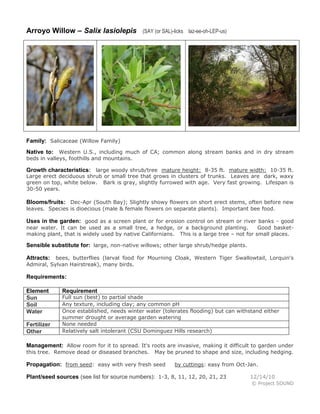
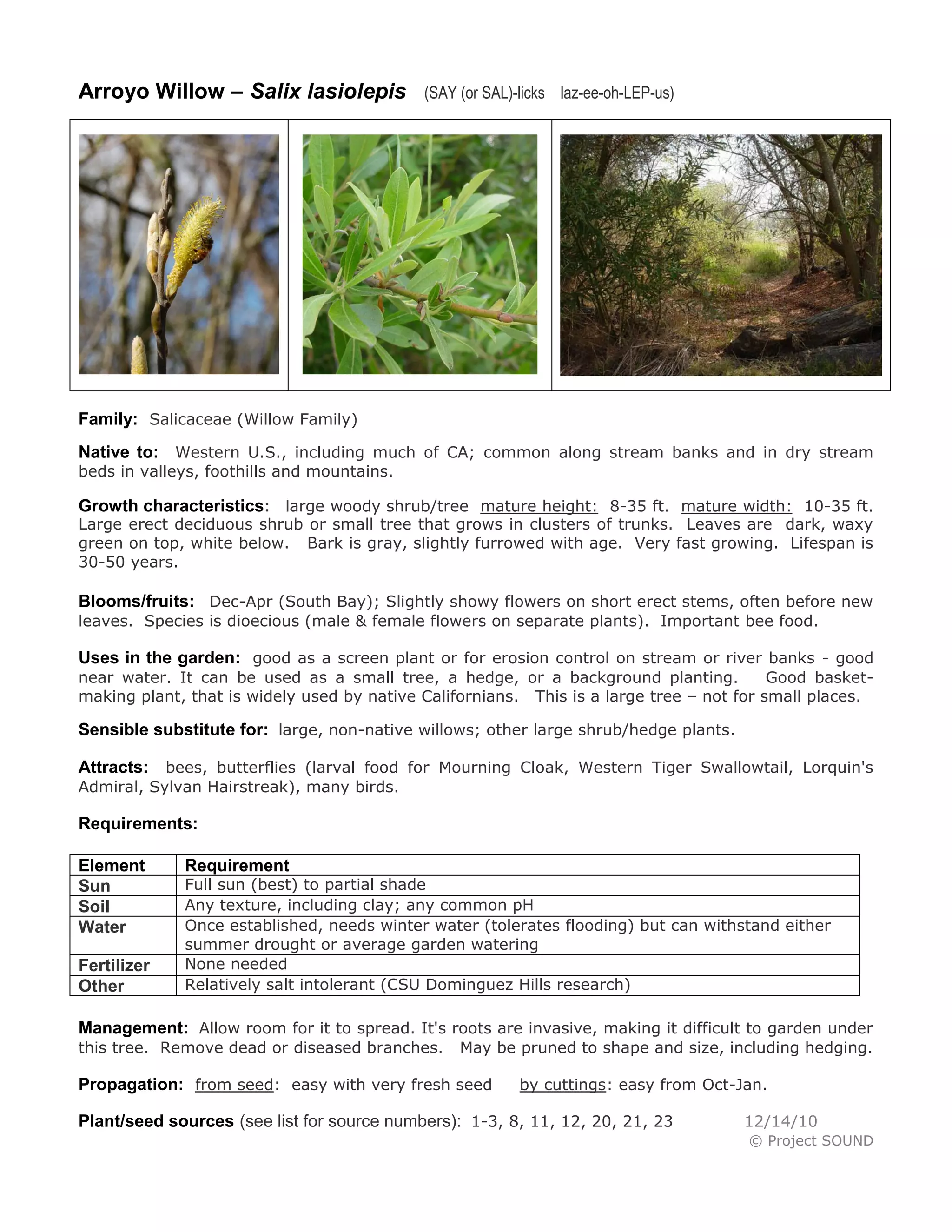
Arroyo Willow – Salix lasiolepis

(SAY (or SAL)-licks laz-ee-oh-LEP-us)

Family: Salicaceae (Willow Family)
Native to: Western U.S., including much of CA; common along stream banks and in dry stream
beds in valleys, foothills and mountains.

Growth characteristics: large woody shrub/tree mature height: 8-35 ft. mature width: 10-35 ft.
Large erect deciduous shrub or small tree that grows in clusters of trunks. Leaves are dark, waxy
green on top, white below. Bark is gray, slightly furrowed with age. Very fast growing. Lifespan is
30-50 years.

Blooms/fruits: Dec-Apr (South Bay); Slightly showy flowers on short erect stems, often before new
leaves. Species is dioecious (male & female flowers on separate plants). Important bee food.

Uses in the garden: good as a screen plant or for erosion control on stream or river banks - good
near water. It can be used as a small tree, a hedge, or a background planting.
Good basketmaking plant, that is widely used by native Californians. This is a large tree – not for small places.

Sensible substitute for: large, non-native willows; other large shrub/hedge plants.
Attracts: bees, butterflies (larval food for Mourning Cloak, Western Tiger Swallowtail, Lorquin's
Admiral, Sylvan Hairstreak), many birds.

Requirements:
Element
Sun
Soil
Water
Fertilizer
Other

Requirement

Full sun (best) to partial shade
Any texture, including clay; any common pH
Once established, needs winter water (tolerates flooding) but can withstand either
summer drought or average garden watering
None needed
Relatively salt intolerant (CSU Dominguez Hills research)

Management: Allow room for it to spread. It's roots are invasive, making it difficult to garden under
this tree. Remove dead or diseased branches.

May be pruned to shape and size, including hedging.

Propagation: from seed: easy with very fresh seed

by cuttings: easy from Oct-Jan.

Plant/seed sources (see list for source numbers): 1-3, 8, 11, 12, 20, 21, 23

12/14/10
© Project SOUND

Gardening sheet salix lasiolepis

  • 1.
    Arroyo Willow –Salix lasiolepis (SAY (or SAL)-licks laz-ee-oh-LEP-us) Family: Salicaceae (Willow Family) Native to: Western U.S., including much of CA; common along stream banks and in dry stream beds in valleys, foothills and mountains. Growth characteristics: large woody shrub/tree mature height: 8-35 ft. mature width: 10-35 ft. Large erect deciduous shrub or small tree that grows in clusters of trunks. Leaves are dark, waxy green on top, white below. Bark is gray, slightly furrowed with age. Very fast growing. Lifespan is 30-50 years. Blooms/fruits: Dec-Apr (South Bay); Slightly showy flowers on short erect stems, often before new leaves. Species is dioecious (male & female flowers on separate plants). Important bee food. Uses in the garden: good as a screen plant or for erosion control on stream or river banks - good near water. It can be used as a small tree, a hedge, or a background planting. Good basketmaking plant, that is widely used by native Californians. This is a large tree – not for small places. Sensible substitute for: large, non-native willows; other large shrub/hedge plants. Attracts: bees, butterflies (larval food for Mourning Cloak, Western Tiger Swallowtail, Lorquin's Admiral, Sylvan Hairstreak), many birds. Requirements: Element Sun Soil Water Fertilizer Other Requirement Full sun (best) to partial shade Any texture, including clay; any common pH Once established, needs winter water (tolerates flooding) but can withstand either summer drought or average garden watering None needed Relatively salt intolerant (CSU Dominguez Hills research) Management: Allow room for it to spread. It's roots are invasive, making it difficult to garden under this tree. Remove dead or diseased branches. May be pruned to shape and size, including hedging. Propagation: from seed: easy with very fresh seed by cuttings: easy from Oct-Jan. Plant/seed sources (see list for source numbers): 1-3, 8, 11, 12, 20, 21, 23 12/14/10 © Project SOUND