Coast Live Oak – Quercus agrifolia var. agrifolia

(KWHERE-kus ag-ree-FOE-lee-uh)

Family: Fagaceae (Oak Family)
Native to:

Coastal California to Baja; found on well-drained soils on bluffs, gentle slopes, and

canyons.

medium/large woody tree
mature height: 10-70 ft.
mature width: 40-70
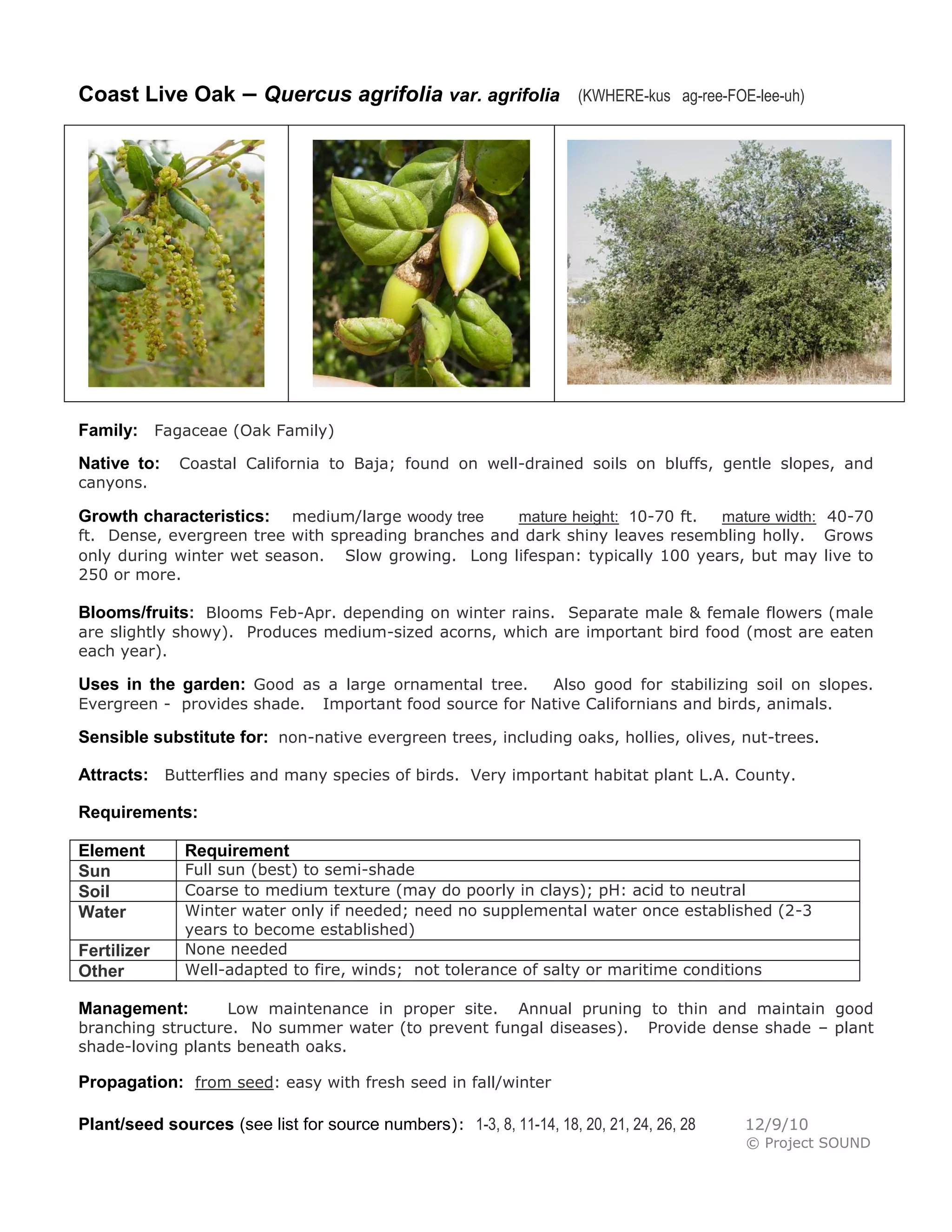
ft. Dense, evergreen tree with spreading branches and dark shiny leaves resembling holly. Grows
only during winter wet season. Slow growing. Long lifespan: typically 100 years, but may live to
250 or more.

Growth characteristics:

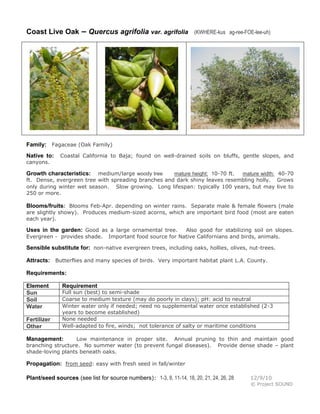
Blooms/fruits: Blooms Feb-Apr. depending on winter rains. Separate male & female flowers (male
are slightly showy). Produces medium-sized acorns, which are important bird food (most are eaten
each year).

Uses in the garden: Good as a large ornamental tree.
Evergreen - provides shade.

Also good for stabilizing soil on slopes.
Important food source for Native Californians and birds, animals.

Sensible substitute for: non-native evergreen trees, including oaks, hollies, olives, nut-trees.
Attracts: Butterflies and many species of birds. Very important habitat plant L.A. County.
Requirements:
Element
Sun
Soil
Water
Fertilizer
Other

Requirement

Full sun (best) to semi-shade
Coarse to medium texture (may do poorly in clays); pH: acid to neutral
Winter water only if needed; need no supplemental water once established (2-3
years to become established)
None needed
Well-adapted to fire, winds; not tolerance of salty or maritime conditions

Low maintenance in proper site. Annual pruning to thin and maintain good
branching structure. No summer water (to prevent fungal diseases). Provide dense shade – plant
shade-loving plants beneath oaks.

Management:

Propagation: from seed: easy with fresh seed in fall/winter
Plant/seed sources (see list for source numbers): 1-3, 8, 11-14, 18, 20, 21, 24, 26, 28

12/9/10
© Project SOUND

Gardening sheet quercus agrifolia

  • 1.
    Coast Live Oak– Quercus agrifolia var. agrifolia (KWHERE-kus ag-ree-FOE-lee-uh) Family: Fagaceae (Oak Family) Native to: Coastal California to Baja; found on well-drained soils on bluffs, gentle slopes, and canyons. medium/large woody tree mature height: 10-70 ft. mature width: 40-70 ft. Dense, evergreen tree with spreading branches and dark shiny leaves resembling holly. Grows only during winter wet season. Slow growing. Long lifespan: typically 100 years, but may live to 250 or more. Growth characteristics: Blooms/fruits: Blooms Feb-Apr. depending on winter rains. Separate male & female flowers (male are slightly showy). Produces medium-sized acorns, which are important bird food (most are eaten each year). Uses in the garden: Good as a large ornamental tree. Evergreen - provides shade. Also good for stabilizing soil on slopes. Important food source for Native Californians and birds, animals. Sensible substitute for: non-native evergreen trees, including oaks, hollies, olives, nut-trees. Attracts: Butterflies and many species of birds. Very important habitat plant L.A. County. Requirements: Element Sun Soil Water Fertilizer Other Requirement Full sun (best) to semi-shade Coarse to medium texture (may do poorly in clays); pH: acid to neutral Winter water only if needed; need no supplemental water once established (2-3 years to become established) None needed Well-adapted to fire, winds; not tolerance of salty or maritime conditions Low maintenance in proper site. Annual pruning to thin and maintain good branching structure. No summer water (to prevent fungal diseases). Provide dense shade – plant shade-loving plants beneath oaks. Management: Propagation: from seed: easy with fresh seed in fall/winter Plant/seed sources (see list for source numbers): 1-3, 8, 11-14, 18, 20, 21, 24, 26, 28 12/9/10 © Project SOUND