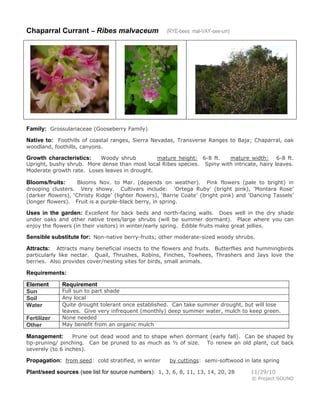
Chaparral Currant – Ribes malvaceum

(RYE-bees mal-VAY-see-um)

Family: Grossulariaceae (Gooseberry Family)
Native to: Foothills of coastal ranges, Sierra Nevadas, Transverse Ranges to Baja; Chaparral, oak
woodland, foothills, canyons.
Woody shrub
mature height: 6-8 ft.
mature width: 6-8 ft.
Upright, bushy shrub. More dense than most local Ribes species. Spiny with intricate, hairy leaves.
Moderate growth rate. Loses leaves in drought.

Growth characteristics:

Blooms Nov. to Mar. (depends on weather). Pink flowers (pale to bright) in
drooping clusters. Very showy. Cultivars include: ‘Ortega Ruby’ (bright pink), ‘Montara Rose’
(darker flowers), ‘Christy Ridge’ (lighter flowers), ‘Barrie Coate’ (bright pink) and ‘Dancing Tassels’
(longer flowers). Fruit is a purple-black berry, in spring.

Blooms/fruits:

Uses in the garden: Excellent for back beds and north-facing walls. Does well in the dry shade
under oaks and other native trees/large shrubs (will be summer dormant). Place where you can
enjoy the flowers (in their visitors) in winter/early spring. Edible fruits make great jellies.

Sensible substitute for: Non-native berry-fruits; other moderate-sized woody shrubs.
Attracts many beneficial insects to the flowers and fruits. Butterflies and hummingbirds
particularly like nectar. Quail, Thrushes, Robins, Finches, Towhees, Thrashers and Jays love the
berries. Also provides cover/nesting sites for birds, small animals.

Attracts:

Requirements:
Element
Sun
Soil
Water
Fertilizer
Other

Requirement

Full sun to part shade
Any local
Quite drought tolerant once established. Can take summer drought, but will lose
leaves. Give very infrequent (monthly) deep summer water, mulch to keep green.
None needed
May benefit from an organic mulch

Prune out dead wood and to shape when dormant (early fall). Can be shaped by
tip-pruning/ pinching. Can be pruned to as much as ½ of size. To renew an old plant, cut back
severely (to 6 inches).

Management:

Propagation: from seed: cold stratified, in winter

by cuttings: semi-softwood in late spring

Plant/seed sources (see list for source numbers): 1, 3, 6, 8, 11, 13, 14, 20, 28

11/29/10
© Project SOUND

Gardening sheet ribes malvaceum

  • 1.
    Chaparral Currant –Ribes malvaceum (RYE-bees mal-VAY-see-um) Family: Grossulariaceae (Gooseberry Family) Native to: Foothills of coastal ranges, Sierra Nevadas, Transverse Ranges to Baja; Chaparral, oak woodland, foothills, canyons. Woody shrub mature height: 6-8 ft. mature width: 6-8 ft. Upright, bushy shrub. More dense than most local Ribes species. Spiny with intricate, hairy leaves. Moderate growth rate. Loses leaves in drought. Growth characteristics: Blooms Nov. to Mar. (depends on weather). Pink flowers (pale to bright) in drooping clusters. Very showy. Cultivars include: ‘Ortega Ruby’ (bright pink), ‘Montara Rose’ (darker flowers), ‘Christy Ridge’ (lighter flowers), ‘Barrie Coate’ (bright pink) and ‘Dancing Tassels’ (longer flowers). Fruit is a purple-black berry, in spring. Blooms/fruits: Uses in the garden: Excellent for back beds and north-facing walls. Does well in the dry shade under oaks and other native trees/large shrubs (will be summer dormant). Place where you can enjoy the flowers (in their visitors) in winter/early spring. Edible fruits make great jellies. Sensible substitute for: Non-native berry-fruits; other moderate-sized woody shrubs. Attracts many beneficial insects to the flowers and fruits. Butterflies and hummingbirds particularly like nectar. Quail, Thrushes, Robins, Finches, Towhees, Thrashers and Jays love the berries. Also provides cover/nesting sites for birds, small animals. Attracts: Requirements: Element Sun Soil Water Fertilizer Other Requirement Full sun to part shade Any local Quite drought tolerant once established. Can take summer drought, but will lose leaves. Give very infrequent (monthly) deep summer water, mulch to keep green. None needed May benefit from an organic mulch Prune out dead wood and to shape when dormant (early fall). Can be shaped by tip-pruning/ pinching. Can be pruned to as much as ½ of size. To renew an old plant, cut back severely (to 6 inches). Management: Propagation: from seed: cold stratified, in winter by cuttings: semi-softwood in late spring Plant/seed sources (see list for source numbers): 1, 3, 6, 8, 11, 13, 14, 20, 28 11/29/10 © Project SOUND