Architecture framework for
ecommerce
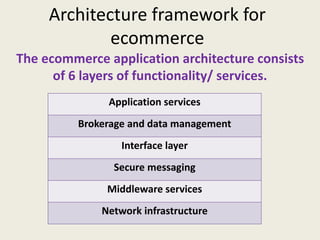
The ecommerce application architecture consists
of 6 layers of functionality/ services.
Application services
Brokerage and data management
Interface layer
Secure messaging
Middleware services
Network infrastructure
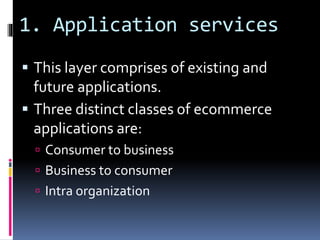
1. Application services
 This layer comprises of existing and
future applications.
 Three distinct classes of ecommerce
applications are:
 Consumer to business
 Business to consumer
 Intra organization
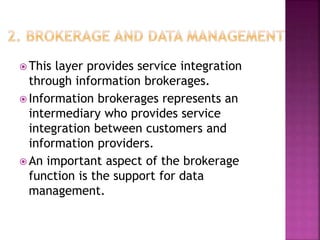
 This layer provides service integration
through information brokerages.
 Information brokerages represents an
intermediary who provides service
integration between customers and
information providers.
 An important aspect of the brokerage
function is the support for data
management.
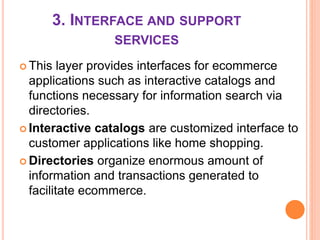
3. INTERFACE AND SUPPORT
SERVICES
 This layer provides interfaces for ecommerce
applications such as interactive catalogs and
functions necessary for information search via
directories.
 Interactive catalogs are customized interface to
customer applications like home shopping.
 Directories organize enormous amount of
information and transactions generated to
facilitate ecommerce.
4. SECURE MESSAGING
 E-messaging is a critical business issue.
 Messaging is the software that sites
between the network infrastructure and the
clients or ecommerce applications.
 Messaging services offers solutions for
communicating unstructured data, reports
as well as structured data such as purchase
orders, shipping notices, etc.
5. MIDDLEWARE SERVICES
 With the growth of networks, client server
technology and all other forms of communicating
between or among different platforms, the problems
of getting all the pieces to work together grew.
 Users demanded interaction between dissimilar
systems, networks that permitted shared resources
and applications that could be accessed by multiple
software programs.
 Middleware is the ultimate mediator between
software programs that enables them to
communicate with one another.
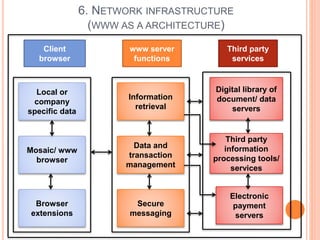
6. NETWORK INFRASTRUCTURE
(WWW AS A ARCHITECTURE)
Client
browser
www server
functions
Third party
services
Local or
company
specific data
Mosaic/ www
browser
Browser
extensions
Information
retrieval
Data and
transaction
management
Secure
messaging
Digital library of
document/ data
servers
Third party
information
processing tools/
services
Electronic
payment
servers
 A communication protocol is a formal
description of digital message formats for
exchanging those messages in or between
computing systems.
 The internet protocol(IP) is the principle
communications protocol used for
datagram (packets) across an internet using
the internet protocol suite.
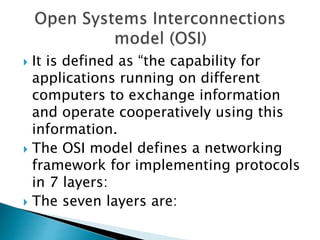
 It is defined as “the capability for
applications running on different
computers to exchange information
and operate cooperatively using this
information.
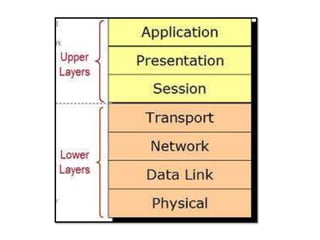
 The OSI model defines a networking
framework for implementing protocols
in 7 layers:
 The seven layers are:
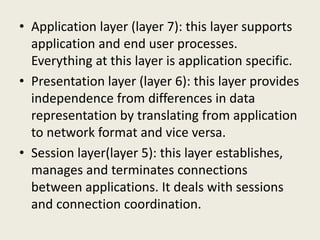
• Application layer (layer 7): this layer supports
application and end user processes.
Everything at this layer is application specific.
• Presentation layer (layer 6): this layer provides
independence from differences in data
representation by translating from application
to network format and vice versa.
• Session layer(layer 5): this layer establishes,
manages and terminates connections
between applications. It deals with sessions
and connection coordination.
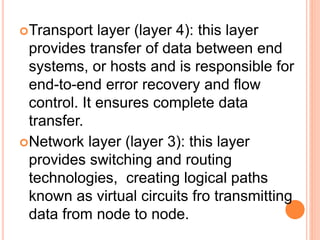
Transport layer (layer 4): this layer
provides transfer of data between end
systems, or hosts and is responsible for
end-to-end error recovery and flow
control. It ensures complete data
transfer.
Network layer (layer 3): this layer
provides switching and routing
technologies, creating logical paths
known as virtual circuits fro transmitting
data from node to node.
 Data link layer( layer 2): in this layer, data packets
are encoded and decoded into bits. This layer
performs the transmission of data and error
control from one node to another node.
 Physical layer (layer 1): this layer conveys the bit
stream- electrical impulse, light or radio signal. It
provides the hardware means of sending and
receiving data on a carrier, including cables, cards
and physical aspects.
TCP/IP
 TCP/IP is the communication protocol for
communication between computers on the internet.
 TCP - transmission control protocol
IP – internet protocol
 TCP takes care of communication between your
application software (browser) and your network
software.
 IP takes care of the communication with other
computers.
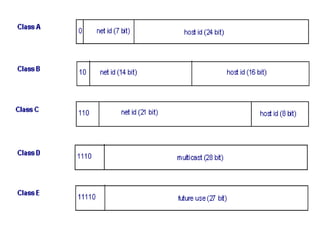
When a message is sent, an IP
address for both the sending and
receiving nodes must be known.
The IP address are 32 bits(4
bytes length) in length,
decomposition of the IP address
varies according to the assigned
class.
File transfer protocol (FTP)
• FTP is a standard network protocol used
to transfer files from one host to another
host over a TCP based network, such as
internet.
• A popular method for uploading and
downloading files is the file transfer
protocol (FTP).
• FTP is common tool used for uploading
web documents to a server.
HTTP- HYPERTEXT TRANSFER
PROTOCOL
 The protocol that underlies the www is called the
HTTP.
 It is a simple request/response protocol.
 When a user clicks on a link on a webpage, the
connection is opened, data is transferred and the
connection is broken.
Secure HTTP
 This supports a variety of security mechanisms
to HTTP clients and servers.
 It provides encryption techniques for secure
conversation between client and server.
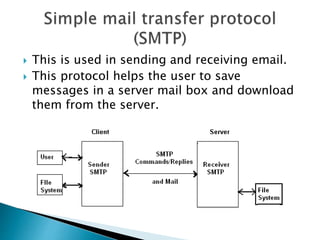
 This is used in sending and receiving email.
 This protocol helps the user to save
messages in a server mail box and download
them from the server.
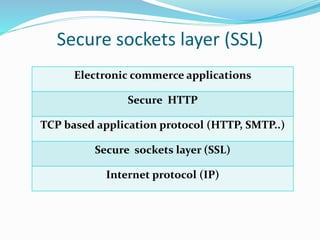
Secure sockets layer (SSL)
Electronic commerce applications
Secure HTTP
TCP based application protocol (HTTP, SMTP..)
Secure sockets layer (SSL)
Internet protocol (IP)

architecture framework for ecommerce

  • 1.
    Architecture framework for ecommerce Theecommerce application architecture consists of 6 layers of functionality/ services. Application services Brokerage and data management Interface layer Secure messaging Middleware services Network infrastructure
  • 2.
    1. Application services This layer comprises of existing and future applications.  Three distinct classes of ecommerce applications are:  Consumer to business  Business to consumer  Intra organization
  • 3.
     This layerprovides service integration through information brokerages.  Information brokerages represents an intermediary who provides service integration between customers and information providers.  An important aspect of the brokerage function is the support for data management.
  • 4.
    3. INTERFACE ANDSUPPORT SERVICES  This layer provides interfaces for ecommerce applications such as interactive catalogs and functions necessary for information search via directories.  Interactive catalogs are customized interface to customer applications like home shopping.  Directories organize enormous amount of information and transactions generated to facilitate ecommerce.
  • 5.
    4. SECURE MESSAGING E-messaging is a critical business issue.  Messaging is the software that sites between the network infrastructure and the clients or ecommerce applications.  Messaging services offers solutions for communicating unstructured data, reports as well as structured data such as purchase orders, shipping notices, etc.
  • 6.
    5. MIDDLEWARE SERVICES With the growth of networks, client server technology and all other forms of communicating between or among different platforms, the problems of getting all the pieces to work together grew.  Users demanded interaction between dissimilar systems, networks that permitted shared resources and applications that could be accessed by multiple software programs.  Middleware is the ultimate mediator between software programs that enables them to communicate with one another.
  • 7.
    6. NETWORK INFRASTRUCTURE (WWWAS A ARCHITECTURE) Client browser www server functions Third party services Local or company specific data Mosaic/ www browser Browser extensions Information retrieval Data and transaction management Secure messaging Digital library of document/ data servers Third party information processing tools/ services Electronic payment servers
  • 8.
     A communicationprotocol is a formal description of digital message formats for exchanging those messages in or between computing systems.  The internet protocol(IP) is the principle communications protocol used for datagram (packets) across an internet using the internet protocol suite.
  • 9.
     It isdefined as “the capability for applications running on different computers to exchange information and operate cooperatively using this information.  The OSI model defines a networking framework for implementing protocols in 7 layers:  The seven layers are:
  • 11.
    • Application layer(layer 7): this layer supports application and end user processes. Everything at this layer is application specific. • Presentation layer (layer 6): this layer provides independence from differences in data representation by translating from application to network format and vice versa. • Session layer(layer 5): this layer establishes, manages and terminates connections between applications. It deals with sessions and connection coordination.
  • 12.
    Transport layer (layer4): this layer provides transfer of data between end systems, or hosts and is responsible for end-to-end error recovery and flow control. It ensures complete data transfer. Network layer (layer 3): this layer provides switching and routing technologies, creating logical paths known as virtual circuits fro transmitting data from node to node.
  • 13.
     Data linklayer( layer 2): in this layer, data packets are encoded and decoded into bits. This layer performs the transmission of data and error control from one node to another node.  Physical layer (layer 1): this layer conveys the bit stream- electrical impulse, light or radio signal. It provides the hardware means of sending and receiving data on a carrier, including cables, cards and physical aspects.
  • 14.
    TCP/IP  TCP/IP isthe communication protocol for communication between computers on the internet.  TCP - transmission control protocol IP – internet protocol  TCP takes care of communication between your application software (browser) and your network software.  IP takes care of the communication with other computers.
  • 15.
    When a messageis sent, an IP address for both the sending and receiving nodes must be known. The IP address are 32 bits(4 bytes length) in length, decomposition of the IP address varies according to the assigned class.
  • 17.
    File transfer protocol(FTP) • FTP is a standard network protocol used to transfer files from one host to another host over a TCP based network, such as internet. • A popular method for uploading and downloading files is the file transfer protocol (FTP). • FTP is common tool used for uploading web documents to a server.
  • 18.
    HTTP- HYPERTEXT TRANSFER PROTOCOL The protocol that underlies the www is called the HTTP.  It is a simple request/response protocol.  When a user clicks on a link on a webpage, the connection is opened, data is transferred and the connection is broken. Secure HTTP  This supports a variety of security mechanisms to HTTP clients and servers.  It provides encryption techniques for secure conversation between client and server.
  • 19.
     This isused in sending and receiving email.  This protocol helps the user to save messages in a server mail box and download them from the server.
  • 20.
    Secure sockets layer(SSL) Electronic commerce applications Secure HTTP TCP based application protocol (HTTP, SMTP..) Secure sockets layer (SSL) Internet protocol (IP)