Excavations: The Different
Stages and The Process
Anush Shirvanyan
What is Archaeology
Archaeology is
● A systematic approach to uncovering the past, learning about ancient people - how
they lived, what they looked like, what tools they used, what their cultures were like.
Archaeologists are
● The scientists who study the remains of past civilizations and groups of people
through excavations.
Excavations are
The digging, recording, and interpreting the physical remains of the people (artifacts,
fossils) who lived in an area in order to understand their culture.
The Main Reasons Archaeologists Decide to Excavate
❏ They may have a research
question about the past that
they think can only be
answered by digging in a
particular area.
❏ Human development, such as
building roads or houses, or
natural causes may endanger a
site, so archaeologists excavate
before the site is destroyed.
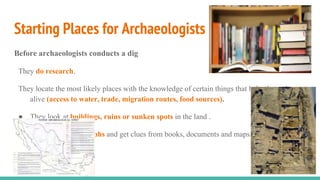
Starting Places for Archaeologists
Before archaeologists conducts a dig
They do research.
They locate the most likely places with the knowledge of certain things that helped people stay
alive (access to water, trade, migration routes, food sources).
● They look at buildings, ruins or sunken spots in the land .
● Use aerial photographs and get clues from books, documents and maps.
The Process
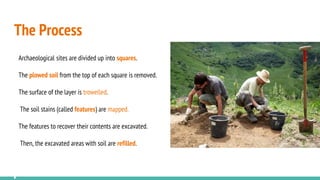
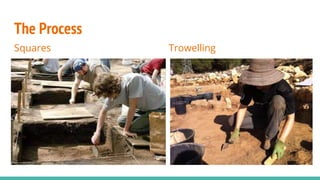
Archaeological sites are divided up into squares.
The plowed soil from the top of each square is removed.
The surface of the layer is trowelled.
The soil stains (called features) are mapped.
The features to recover their contents are excavated.
Then, the excavated areas with soil are refilled.
The Process
Squares Trowelling
Example of A Pit
The Excavation
In a full excavation, archaeologists:
Excavate the full site,
Map,
Measure,
Collect the artifacts,
Sort,
Analyzing the Findings
In this stage, archaeologists study the artifacts they found.
Uncover the results of the findings, such as:
Age,
Material of the artifact,
Its usage and frequency
What Archaeologists Look For When Digging
“Buried treasure”. Artifacts such as tools that people could have moved
or carried.
“Eco-Facts”. Clues about past environments in things like seeds, animal
bones and soil types.
“Features.” Things like walls, floors or fireplaces that can’t be moved.
“Midden”. Things found in the garbage dump - animals bones, shells, plants.
❏The Excavation is the surgical aspect of archaeology - the surgery of the buried landscape
❏All forms of archaeological excavation, from design to execution, require great skill and careful preparation.
References
Basics of Archaeology for Simulated Dig Users. AIA Education Department. Retrieved 16 October 2016,
from https://www.archaeological.org/pdfs/education/digs/Digs_basics.pdf
Establishing the site grid - Excavating Occaneechi Town: An archaeology primer. (2016). Learnnc.org.
Retrieved 16 October 2016, from http://www.learnnc.org/lp/editions/occaneechi-archaeology-
primer/1711
excavation | archaeology. Encyclopedia Britannica. Retrieved 16 October 2016, from
https://www.britannica.com/science/excavation-archaeology
What is Archaeology?. Saa.org. Retrieved 16 October 2016, from
http://www.saa.org/ForthePublic/Resources/EducationalResources/ForEducators/ArchaeologyforEdu

Archaeology - Excavations: Digging: The Process

  • 1.
    Excavations: The Different Stagesand The Process Anush Shirvanyan
  • 2.
    What is Archaeology Archaeologyis ● A systematic approach to uncovering the past, learning about ancient people - how they lived, what they looked like, what tools they used, what their cultures were like. Archaeologists are ● The scientists who study the remains of past civilizations and groups of people through excavations. Excavations are The digging, recording, and interpreting the physical remains of the people (artifacts, fossils) who lived in an area in order to understand their culture.
  • 3.
    The Main ReasonsArchaeologists Decide to Excavate ❏ They may have a research question about the past that they think can only be answered by digging in a particular area. ❏ Human development, such as building roads or houses, or natural causes may endanger a site, so archaeologists excavate before the site is destroyed.
  • 5.
    Starting Places forArchaeologists Before archaeologists conducts a dig They do research. They locate the most likely places with the knowledge of certain things that helped people stay alive (access to water, trade, migration routes, food sources). ● They look at buildings, ruins or sunken spots in the land . ● Use aerial photographs and get clues from books, documents and maps.
  • 6.
    The Process Archaeological sitesare divided up into squares. The plowed soil from the top of each square is removed. The surface of the layer is trowelled. The soil stains (called features) are mapped. The features to recover their contents are excavated. Then, the excavated areas with soil are refilled.
  • 7.
  • 8.
  • 9.
    The Excavation In afull excavation, archaeologists: Excavate the full site, Map, Measure, Collect the artifacts, Sort,
  • 10.
    Analyzing the Findings Inthis stage, archaeologists study the artifacts they found. Uncover the results of the findings, such as: Age, Material of the artifact, Its usage and frequency
  • 11.
    What Archaeologists LookFor When Digging “Buried treasure”. Artifacts such as tools that people could have moved or carried. “Eco-Facts”. Clues about past environments in things like seeds, animal bones and soil types. “Features.” Things like walls, floors or fireplaces that can’t be moved. “Midden”. Things found in the garbage dump - animals bones, shells, plants.
  • 12.
    ❏The Excavation isthe surgical aspect of archaeology - the surgery of the buried landscape ❏All forms of archaeological excavation, from design to execution, require great skill and careful preparation.
  • 14.
    References Basics of Archaeologyfor Simulated Dig Users. AIA Education Department. Retrieved 16 October 2016, from https://www.archaeological.org/pdfs/education/digs/Digs_basics.pdf Establishing the site grid - Excavating Occaneechi Town: An archaeology primer. (2016). Learnnc.org. Retrieved 16 October 2016, from http://www.learnnc.org/lp/editions/occaneechi-archaeology- primer/1711 excavation | archaeology. Encyclopedia Britannica. Retrieved 16 October 2016, from https://www.britannica.com/science/excavation-archaeology What is Archaeology?. Saa.org. Retrieved 16 October 2016, from http://www.saa.org/ForthePublic/Resources/EducationalResources/ForEducators/ArchaeologyforEdu