PRESENTED BY:
ANJALI MISHRA
ROLL NO. 2012170010
M.A FINAL YEAR
Region is one of the most fundamental concepts in
Geography. which has been defined differently by
different geographers. In concluding part of the 19th
century, the French geographers like Vidal de Labache
called the of similar physical cultural characteristics
as pays.
A more comprehensive and widely acceptable definition
of region can be given as
“an area having the homogeneity of the physical and
cultural phenomena”
Regionalism also known as sub-nationalism, is a
concept of political geography. It is a movement
which seeks to politicize the territorial predicaments
of its regions with the aim of protecting or furthering
its regional interest. Generally, regionalism is based
on ethnicity, caste, creed, languge,colour or culture.
Regionalism also aims at achieving autonomy and
local power. Despite industrialization, modernization
and globalization, it is an international phenomenon
and may be observed in almost all the developed and
developing countries of the world.
 Regionalism may help in overcoming and solving

some of the socio-political and economic problems
of its supporter, but it is a big barrier in the process
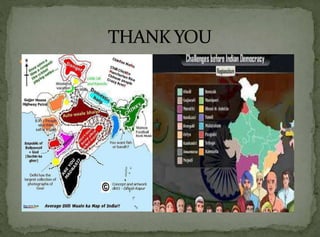
of national integration. In India also, there seems to
be an emerging trend of regionalism . The people of
Assam, Manipur, Mizoram, Nagaland,
Maharashtra, Punjab, Kashmir, Tamil Nadu, etc.
occasionally give the impression of a strong
feeling of regionalism.
 This type of sub- nationalism has posed some

serious problems to India, like that of Punjabiat
and Kashmiriat. What ever the objective of the
regionalists may be, it creates many problems for
the government .
Regionalism in geography has for a long time been
recognized as a form of classification, but not until
the late 1950s was the similarity between
regionalization and scientific procedures of
classification and division explicitly underlined.
Classification consists of grouping of objects into
classes( or categories) on the basis of certain
common property possessed by all the members of
a class, or on the basis of some specified
relationship obtaining between the objects under
investigation.
 In terminology of science, the objects being

classified are called the Individuals, and the totality
of individuals under classification, is named as the
universe or the population .
 In the first stage of classification, one particular
property that is possessed by all the members of the
population in greater or smaller degree, is selected to
serve as the basis of classification. Such property is
known as the differentiating Characteristic.
 When grouping into classes is done on the basis of
some similarity between objects under classification,
the procedure is known as association by similarity.
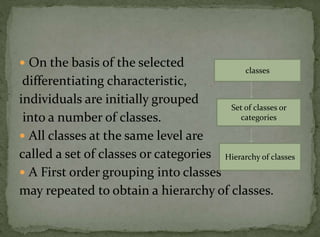
 On the basis of the selected

classes

differentiating characteristic,
individuals are initially grouped
Set of classes or
categories
into a number of classes.
 All classes at the same level are
called a set of classes or categories Hierarchy of classes
 A First order grouping into classes
may repeated to obtain a hierarchy of classes.
 Regionalization is akin to scientific procedures of

classification and division, the principles of
classification and division may be fruitfully applied in
the construction of regional systems. Grigg enumerated
these principles as follows.
 Classification should be designed for a specific purpose
;it rarely serves two different purposes equally well.
Purpose determines the differentiating criterion selected,
and the number of regions delimited. Thus a set of soil
regions based upon properties such as colour and texture
shall not necessarily be reliable guide to regional variety
in soil productivity.
 There exist differences in kind between objects ;

objects which differ in kind shall not easily fit into
the same system of classification. This is a
fundamental principle of taxonomy. Thus, stones
and animals, being different in kind, cannot be put
under the same classification system. In geography,
land and sea differ in kind, so that they are seldom
included in same system of regionalization. The case
of ecological classification, where forms of life –
animals and plants may be classified on the basis of
their habitat. This is also true in the case of systems
of geographical regions and the general- purpose
regions devised by human ecologists.
 Classification are not absolute : they require to be

changed as new information becomes available
about the object being classified . Owing to this,
“almost every classification which is proposed in
early stage of a science will be found to break down
as deeper similarities of objects come to be
observed “ (Jevons, 1887). For Geography the
lesson is obvious: We must keep updating the
regional systems used in our teaching programmes
such as Herbertson’s model of major regions , or
Whittlesey,s scheme of agricultural regions – each
needs a thorough review.
 Classification of any group of objects should be

based upon properties of those objects. In other
words, the differentiating characteristics used
should represent properties of the objects being
classed. For example, attempts have been made
to delimit agricultural region not by properties
of the system of farming in practice, but by
factors which are supposed to cause the
observed differences in farming systems.
 When dividing, the division should be exhaustive,

and the classes formed should exclude each other. In
the case geographical regionalization, this rule
means that if an area is to be divided into regions
then all parts of the area must be assigned to some
region, and each to one region only.
 When dividing, the division should proceed at every
stage, and as far as possible, throughout upon one
principle. In any regional system, regions of the
same order should be based upon the same property
or some degree of variation of the same property.
Thus, a system of climatic regions can logically be
based upon variations in annual and seasonal incidence
of rainfall, or in the rate of evapotranspirations, or any
other significant element of climate.
The differentiating characteristics, or the principle of
division, must be important for the purpose of division.
the differentiating characteristic should be so chosen as
to be of help in understanding the distributional pattern
in question, or the spatial relationships of the objects or
the problems being investigated.
 For geographers, regionalism may be a good area

for research, especially to identify the basis of
regional strong biasness in particular area and to
predict the future pattern of behaviour of the
people of that region

 GEOGRAPHICAL THOUGHT A contextual history of

ideas by RD Dihshit
 Evolution of geographical thought by Majid Husain

Regionalism

  • 1.
    PRESENTED BY: ANJALI MISHRA ROLLNO. 2012170010 M.A FINAL YEAR
  • 2.
    Region is oneof the most fundamental concepts in Geography. which has been defined differently by different geographers. In concluding part of the 19th century, the French geographers like Vidal de Labache called the of similar physical cultural characteristics as pays. A more comprehensive and widely acceptable definition of region can be given as “an area having the homogeneity of the physical and cultural phenomena”
  • 3.
    Regionalism also knownas sub-nationalism, is a concept of political geography. It is a movement which seeks to politicize the territorial predicaments of its regions with the aim of protecting or furthering its regional interest. Generally, regionalism is based on ethnicity, caste, creed, languge,colour or culture. Regionalism also aims at achieving autonomy and local power. Despite industrialization, modernization and globalization, it is an international phenomenon and may be observed in almost all the developed and developing countries of the world.
  • 4.
     Regionalism mayhelp in overcoming and solving some of the socio-political and economic problems of its supporter, but it is a big barrier in the process of national integration. In India also, there seems to be an emerging trend of regionalism . The people of Assam, Manipur, Mizoram, Nagaland, Maharashtra, Punjab, Kashmir, Tamil Nadu, etc. occasionally give the impression of a strong feeling of regionalism.
  • 5.
     This typeof sub- nationalism has posed some serious problems to India, like that of Punjabiat and Kashmiriat. What ever the objective of the regionalists may be, it creates many problems for the government .
  • 6.
    Regionalism in geographyhas for a long time been recognized as a form of classification, but not until the late 1950s was the similarity between regionalization and scientific procedures of classification and division explicitly underlined. Classification consists of grouping of objects into classes( or categories) on the basis of certain common property possessed by all the members of a class, or on the basis of some specified relationship obtaining between the objects under investigation.
  • 7.
     In terminologyof science, the objects being classified are called the Individuals, and the totality of individuals under classification, is named as the universe or the population .  In the first stage of classification, one particular property that is possessed by all the members of the population in greater or smaller degree, is selected to serve as the basis of classification. Such property is known as the differentiating Characteristic.  When grouping into classes is done on the basis of some similarity between objects under classification, the procedure is known as association by similarity.
  • 8.
     On thebasis of the selected classes differentiating characteristic, individuals are initially grouped Set of classes or categories into a number of classes.  All classes at the same level are called a set of classes or categories Hierarchy of classes  A First order grouping into classes may repeated to obtain a hierarchy of classes.
  • 9.
     Regionalization isakin to scientific procedures of classification and division, the principles of classification and division may be fruitfully applied in the construction of regional systems. Grigg enumerated these principles as follows.  Classification should be designed for a specific purpose ;it rarely serves two different purposes equally well. Purpose determines the differentiating criterion selected, and the number of regions delimited. Thus a set of soil regions based upon properties such as colour and texture shall not necessarily be reliable guide to regional variety in soil productivity.
  • 10.
     There existdifferences in kind between objects ; objects which differ in kind shall not easily fit into the same system of classification. This is a fundamental principle of taxonomy. Thus, stones and animals, being different in kind, cannot be put under the same classification system. In geography, land and sea differ in kind, so that they are seldom included in same system of regionalization. The case of ecological classification, where forms of life – animals and plants may be classified on the basis of their habitat. This is also true in the case of systems of geographical regions and the general- purpose regions devised by human ecologists.
  • 11.
     Classification arenot absolute : they require to be changed as new information becomes available about the object being classified . Owing to this, “almost every classification which is proposed in early stage of a science will be found to break down as deeper similarities of objects come to be observed “ (Jevons, 1887). For Geography the lesson is obvious: We must keep updating the regional systems used in our teaching programmes such as Herbertson’s model of major regions , or Whittlesey,s scheme of agricultural regions – each needs a thorough review.
  • 12.
     Classification ofany group of objects should be based upon properties of those objects. In other words, the differentiating characteristics used should represent properties of the objects being classed. For example, attempts have been made to delimit agricultural region not by properties of the system of farming in practice, but by factors which are supposed to cause the observed differences in farming systems.
  • 13.
     When dividing,the division should be exhaustive, and the classes formed should exclude each other. In the case geographical regionalization, this rule means that if an area is to be divided into regions then all parts of the area must be assigned to some region, and each to one region only.  When dividing, the division should proceed at every stage, and as far as possible, throughout upon one principle. In any regional system, regions of the same order should be based upon the same property or some degree of variation of the same property.
  • 14.
    Thus, a systemof climatic regions can logically be based upon variations in annual and seasonal incidence of rainfall, or in the rate of evapotranspirations, or any other significant element of climate. The differentiating characteristics, or the principle of division, must be important for the purpose of division. the differentiating characteristic should be so chosen as to be of help in understanding the distributional pattern in question, or the spatial relationships of the objects or the problems being investigated.
  • 15.
     For geographers,regionalism may be a good area for research, especially to identify the basis of regional strong biasness in particular area and to predict the future pattern of behaviour of the people of that region
  • 16.
  • 17.
     GEOGRAPHICAL THOUGHTA contextual history of ideas by RD Dihshit  Evolution of geographical thought by Majid Husain