© Oxford University Press 2016 www.oxfordsecondary.co.uk/acknowledgements
This resource sheet may have been changed from the original. 1
B7 Summary questions
Student Book answers
Question
number
Answer Marks Guidance
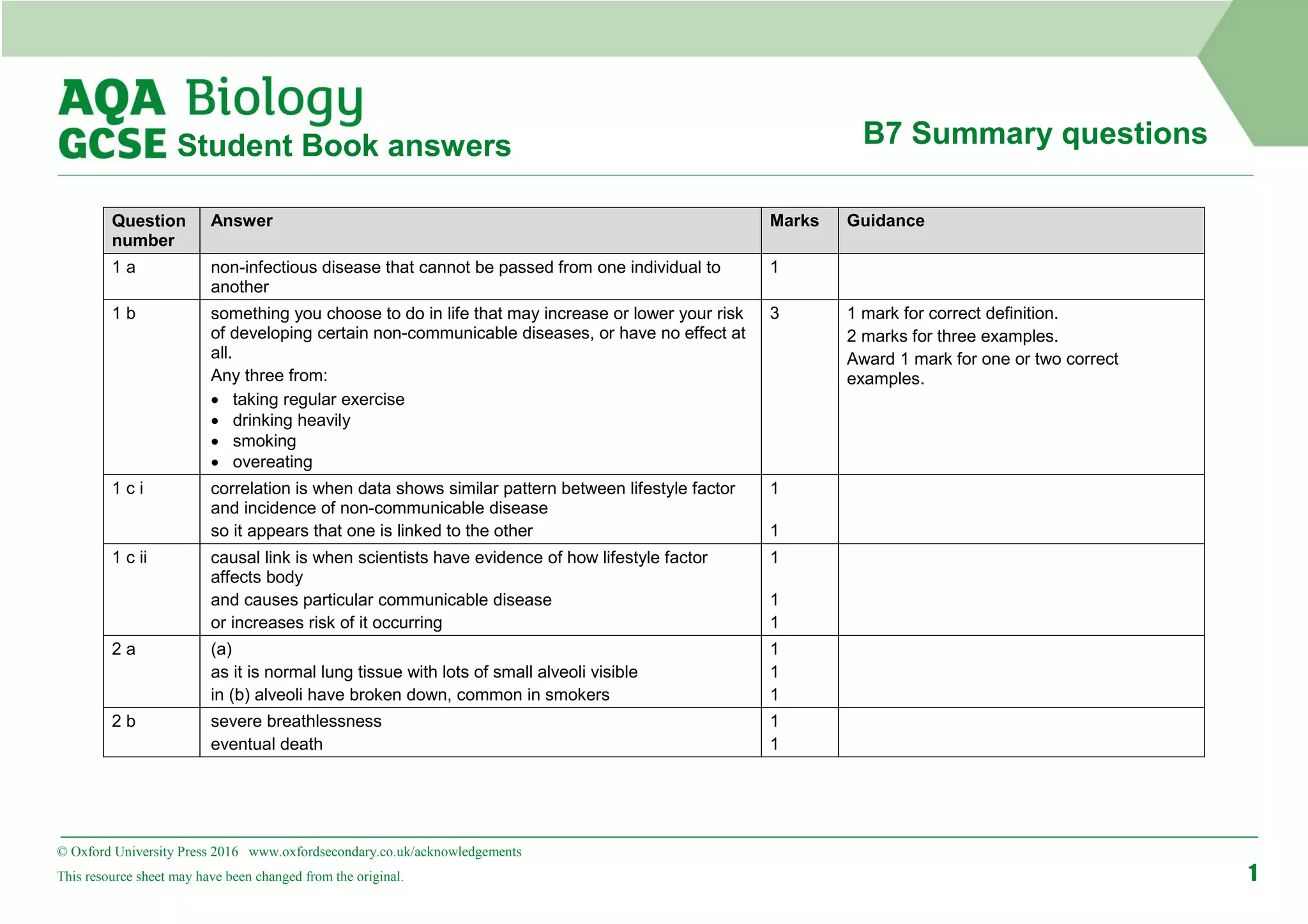
1 a non-infectious disease that cannot be passed from one individual to
another
1
1 b something you choose to do in life that may increase or lower your risk
of developing certain non-communicable diseases, or have no effect at
all.
Any three from:
• taking regular exercise
• drinking heavily
• smoking
• overeating
3 1 mark for correct definition.
2 marks for three examples.
Award 1 mark for one or two correct
examples.
1 c i correlation is when data shows similar pattern between lifestyle factor
and incidence of non-communicable disease
so it appears that one is linked to the other
1
1
1 c ii causal link is when scientists have evidence of how lifestyle factor
affects body
and causes particular communicable disease
or increases risk of it occurring
1
1
1
2 a (a)
as it is normal lung tissue with lots of small alveoli visible
in (b) alveoli have broken down, common in smokers
1
1
1
2 b severe breathlessness
eventual death
1
1
© Oxford University Press 2016 www.oxfordsecondary.co.uk/acknowledgements
This resource sheet may have been changed from the original. 2
B7 Summary questions
Student Book answers
2 c tar in cigarette smoke affects delicate alveoli
causing breakdown of alveolar structure and development of big
spaces and scarring
This reduces alveolar surface area, so less gas exchange takes place
inefficient gas exchange means individual is short of oxygen and
carbon dioxide levels build up in the blood
causing breathlessness
1
1
1
1
1
2 d i Any two from:
• bronchitis
• lung cancer
• other cancers of breathing system
2
2 d ii the more cigarettes smoked, the higher the concentration of damaging
chemicals in body cells
and the higher the risk of developing a smoking-related disease
the longer a person smokes, the longer body cells are exposed to
chemicals in cigarette smoke
and the higher the risk that cells will be damaged and disease will result
1
1
1
1
3 a i 700 1
3 a ii death rate for non-smoker aged 45–54: 100 per 100 000 men
death rate for smoker aged 45–54 smoking more than 25 cigarettes a
day: 390 per 100 000 men
390/100 = 3.9 times higher
1
1
1
© Oxford University Press 2016 www.oxfordsecondary.co.uk/acknowledgements
This resource sheet may have been changed from the original. 3
B7 Summary questions
Student Book answers
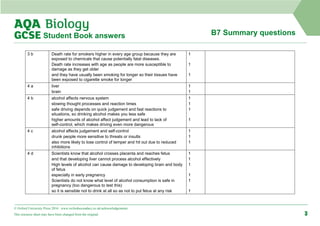
3 b Death rate for smokers higher in every age group because they are
exposed to chemicals that cause potentially fatal diseases.
Death rate increases with age as people are more susceptible to
damage as they get older
and they have usually been smoking for longer so their tissues have
been exposed to cigarette smoke for longer
1
1
1
4 a liver
brain
1
1
4 b alcohol affects nervous system
slowing thought processes and reaction times
safe driving depends on quick judgement and fast reactions to
situations, so drinking alcohol makes you less safe
higher amounts of alcohol affect judgement and lead to lack of
self-control, which makes driving even more dangerous
1
1
1
1
4 c alcohol affects judgement and self-control
drunk people more sensitive to threats or insults
also more likely to lose control of temper and hit out due to reduced
inhibitions
1
1
1
4 d Scientists know that alcohol crosses placenta and reaches fetus
and that developing liver cannot process alcohol effectively
High levels of alcohol can cause damage to developing brain and body
of fetus
especially in early pregnancy
Scientists do not know what level of alcohol consumption is safe in
pregnancy (too dangerous to test this)
so it is sensible not to drink at all so as not to put fetus at any risk
1
1
1
1
1
1
© Oxford University Press 2016 www.oxfordsecondary.co.uk/acknowledgements
This resource sheet may have been changed from the original. 4
B7 Summary questions
Student Book answers
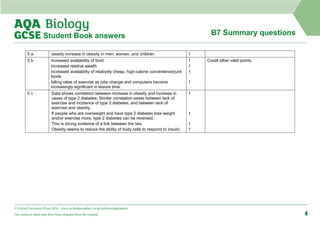
5 a steady increase in obesity in men, women, and children 1
5 b increased availability of food
increased relative wealth
increased availability of relatively cheap, high-calorie convenience/junk
foods
falling rates of exercise as jobs change and computers become
increasingly significant in leisure time.
1
1
1
1
Credit other valid points.
5 c Data shows correlation between increase in obesity and increase in
cases of type 2 diabetes. Similar correlation exists between lack of
exercise and incidence of type 2 diabetes, and between lack of
exercise and obesity.
If people who are overweight and have type 2 diabetes lose weight
and/or exercise more, type 2 diabetes can be reversed.
This is strong evidence of a link between the two.
Obesity seems to reduce the ability of body cells to respond to insulin.
1
1
1
1

AQA Biology B7 [ Summary answers ]

  • 1.
    © Oxford UniversityPress 2016 www.oxfordsecondary.co.uk/acknowledgements This resource sheet may have been changed from the original. 1 B7 Summary questions Student Book answers Question number Answer Marks Guidance 1 a non-infectious disease that cannot be passed from one individual to another 1 1 b something you choose to do in life that may increase or lower your risk of developing certain non-communicable diseases, or have no effect at all. Any three from: • taking regular exercise • drinking heavily • smoking • overeating 3 1 mark for correct definition. 2 marks for three examples. Award 1 mark for one or two correct examples. 1 c i correlation is when data shows similar pattern between lifestyle factor and incidence of non-communicable disease so it appears that one is linked to the other 1 1 1 c ii causal link is when scientists have evidence of how lifestyle factor affects body and causes particular communicable disease or increases risk of it occurring 1 1 1 2 a (a) as it is normal lung tissue with lots of small alveoli visible in (b) alveoli have broken down, common in smokers 1 1 1 2 b severe breathlessness eventual death 1 1
  • 2.
    © Oxford UniversityPress 2016 www.oxfordsecondary.co.uk/acknowledgements This resource sheet may have been changed from the original. 2 B7 Summary questions Student Book answers 2 c tar in cigarette smoke affects delicate alveoli causing breakdown of alveolar structure and development of big spaces and scarring This reduces alveolar surface area, so less gas exchange takes place inefficient gas exchange means individual is short of oxygen and carbon dioxide levels build up in the blood causing breathlessness 1 1 1 1 1 2 d i Any two from: • bronchitis • lung cancer • other cancers of breathing system 2 2 d ii the more cigarettes smoked, the higher the concentration of damaging chemicals in body cells and the higher the risk of developing a smoking-related disease the longer a person smokes, the longer body cells are exposed to chemicals in cigarette smoke and the higher the risk that cells will be damaged and disease will result 1 1 1 1 3 a i 700 1 3 a ii death rate for non-smoker aged 45–54: 100 per 100 000 men death rate for smoker aged 45–54 smoking more than 25 cigarettes a day: 390 per 100 000 men 390/100 = 3.9 times higher 1 1 1
  • 3.
    © Oxford UniversityPress 2016 www.oxfordsecondary.co.uk/acknowledgements This resource sheet may have been changed from the original. 3 B7 Summary questions Student Book answers 3 b Death rate for smokers higher in every age group because they are exposed to chemicals that cause potentially fatal diseases. Death rate increases with age as people are more susceptible to damage as they get older and they have usually been smoking for longer so their tissues have been exposed to cigarette smoke for longer 1 1 1 4 a liver brain 1 1 4 b alcohol affects nervous system slowing thought processes and reaction times safe driving depends on quick judgement and fast reactions to situations, so drinking alcohol makes you less safe higher amounts of alcohol affect judgement and lead to lack of self-control, which makes driving even more dangerous 1 1 1 1 4 c alcohol affects judgement and self-control drunk people more sensitive to threats or insults also more likely to lose control of temper and hit out due to reduced inhibitions 1 1 1 4 d Scientists know that alcohol crosses placenta and reaches fetus and that developing liver cannot process alcohol effectively High levels of alcohol can cause damage to developing brain and body of fetus especially in early pregnancy Scientists do not know what level of alcohol consumption is safe in pregnancy (too dangerous to test this) so it is sensible not to drink at all so as not to put fetus at any risk 1 1 1 1 1 1
  • 4.
    © Oxford UniversityPress 2016 www.oxfordsecondary.co.uk/acknowledgements This resource sheet may have been changed from the original. 4 B7 Summary questions Student Book answers 5 a steady increase in obesity in men, women, and children 1 5 b increased availability of food increased relative wealth increased availability of relatively cheap, high-calorie convenience/junk foods falling rates of exercise as jobs change and computers become increasingly significant in leisure time. 1 1 1 1 Credit other valid points. 5 c Data shows correlation between increase in obesity and increase in cases of type 2 diabetes. Similar correlation exists between lack of exercise and incidence of type 2 diabetes, and between lack of exercise and obesity. If people who are overweight and have type 2 diabetes lose weight and/or exercise more, type 2 diabetes can be reversed. This is strong evidence of a link between the two. Obesity seems to reduce the ability of body cells to respond to insulin. 1 1 1 1