Oration under the auspices of TN Chapter of ISG
PROF N MADANAGOPALAN MD
FRCP
PROF NMG….....
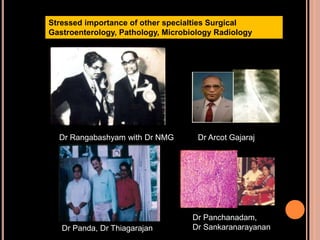
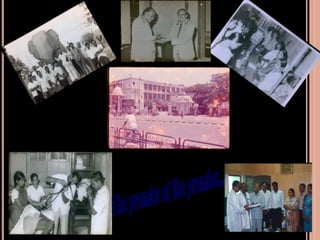
Stressed importance of other specialties Surgical
Gastroenterology, Pathology, Microbiology Radiology
Dr Rangabashyam with Dr NMG
Dr Panda, Dr Thiagarajan
Dr Panchanadam,
Dr Sankaranarayanan
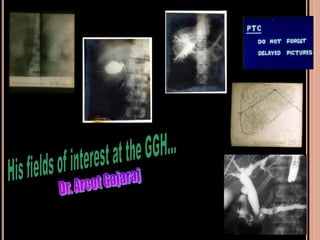
Dr Arcot Gajaraj
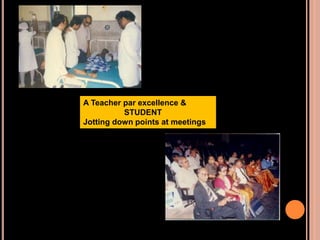
A Teacher par excellence &
STUDENT
Jotting down points at meetings
A KEEN RESEARCHER… MAJOR
CONTRIBUTIONS
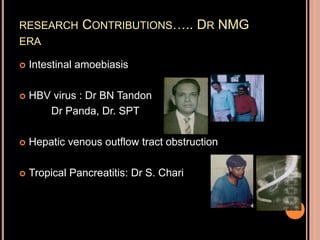
RESEARCH CONTRIBUTIONS….. DR NMG
ERA
 Intestinal amoebiasis
 HBV virus : Dr BN Tandon
Dr Panda, Dr. SPT
 Hepatic venous outflow tract obstruction
 Tropical Pancreatitis: Dr S. Chari
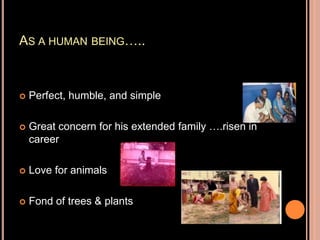
AS A HUMAN BEING…..
 Perfect, humble, and simple
 Great concern for his extended family ….risen in
career
 Love for animals
 Fond of trees & plants
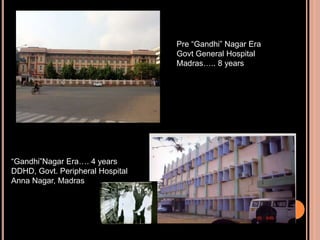
Pre “Gandhi” Nagar Era
Govt General Hospital
Madras….. 8 years
“Gandhi”Nagar Era…. 4 years
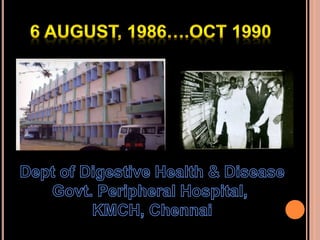
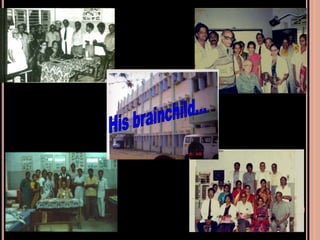
DDHD, Govt. Peripheral Hospital
Anna Nagar, Madras
MADRAS MEDICAL COLLEGE &
GOVT. GENERAL HOSPITAL
1978 …..MD PG
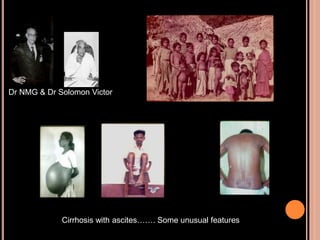
Cirrhosis with ascites……. Some unusual features
Dr NMG & Dr Solomon Victor
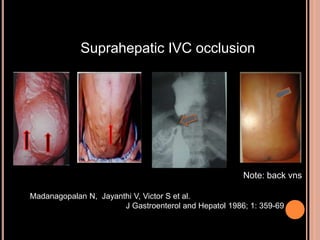
CLINICAL PRESENTATION
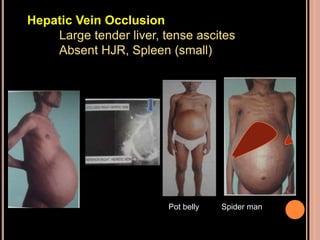
Pot belly Spider man
Hepatic Vein Occlusion
Large tender liver, tense ascites
Absent HJR, Spleen (small)
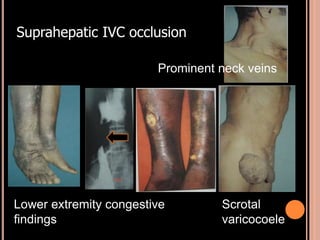
Scrotal
varicocoele
Lower extremity congestive
findings
Prominent neck veins
Suprahepatic IVC occlusion
Note: back vns
Madanagopalan N, Jayanthi V, Victor S et al.
J Gastroenterol and Hepatol 1986; 1: 359-69
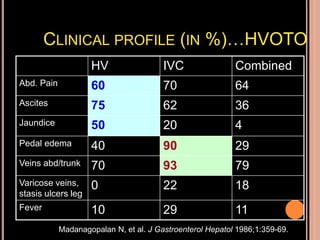
CLINICAL PROFILE (IN %)…HVOTO
HV IVC Combined
Abd. Pain 60 70 64
Ascites 75 62 36
Jaundice 50 20 4
Pedal edema 40 90 29
Veins abd/trunk 70 93 79
Varicose veins,
stasis ulcers leg
0 22 18
Fever 10 29 11
Madanagopalan N, et al. J Gastroenterol Hepatol 1986;1:359-69.
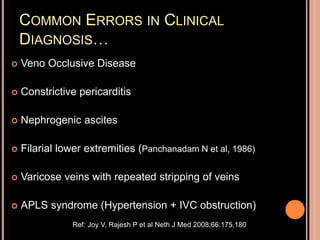
COMMON ERRORS IN CLINICAL
DIAGNOSIS…
 Veno Occlusive Disease
 Constrictive pericarditis
 Nephrogenic ascites
 Filarial lower extremities (Panchanadam N et al, 1986)
 Varicose veins with repeated stripping of veins
 APLS syndrome (Hypertension + IVC obstruction)
Ref: Joy V, Rajesh P et al Neth J Med 2008;66:175,180
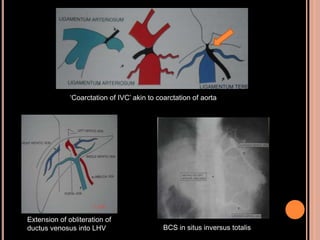
AETIOLOGY… CONGENITAL OR
ACQUIRED
Extension of obliteration of
ductus venosus into LHV BCS in situs inversus totalis
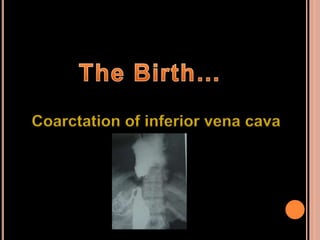
‘Coarctation of IVC’ akin to coarctation of aorta
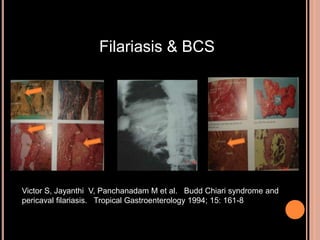
Filariasis & BCS
Victor S, Jayanthi V, Panchanadam M et al. Budd Chiari syndrome and
pericaval filariasis. Tropical Gastroenterology 1994; 15: 161-8
Coarctation of inferior vena cava
REVIEWING THE LITERATURE
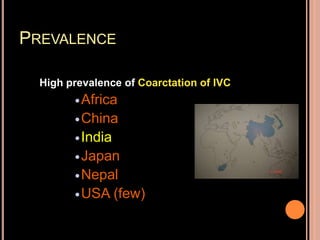
PREVALENCE
High prevalence of Coarctation of IVC
Africa
China
India
Japan
Nepal
USA (few)
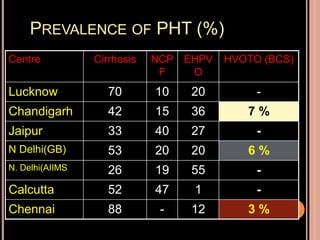
PREVALENCE OF PHT (%)
Centre Cirrhosis NCP
F
EHPV
O
HVOTO (BCS)
Lucknow 70 10 20 -
Chandigarh 42 15 36 7 %
Jaipur 33 40 27 -
N Delhi(GB) 53 20 20 6 %
N. Delhi(AIIMS 26 19 55 -
Calcutta 52 47 1 -
Chennai 88 - 12 3 %
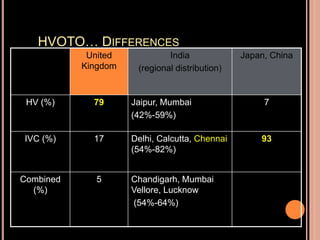
HVOTO… DIFFERENCES
United
Kingdom
India
(regional distribution)
Japan, China
HV (%) 79 Jaipur, Mumbai
(42%-59%)
7
IVC (%) 17 Delhi, Calcutta, Chennai
(54%-82%)
93
Combined
(%)
5 Chandigarh, Mumbai
Vellore, Lucknow
(54%-64%)
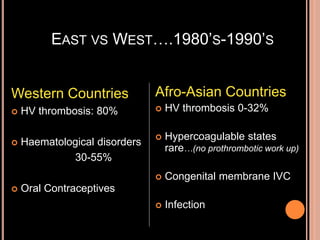
EAST VS WEST….1980’S-1990’S
Western Countries
 HV thrombosis: 80%
 Haematological disorders
30-55%
 Oral Contraceptives
Afro-Asian Countries
 HV thrombosis 0-32%
 Hypercoagulable states
rare…(no prothrombotic work up)
 Congenital membrane IVC
 Infection
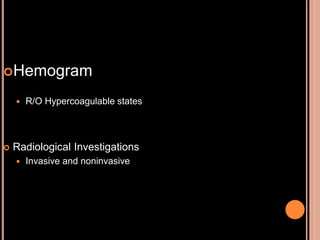
INVESTIGATIONS…
Hemogram
 R/O Hypercoagulable states
 Radiological Investigations
 Invasive and noninvasive
INFERIOR VENA CAVOGRAM
&
FUNCTIONAL HEPATOGRAM
BERNARD INSTITUTE OF RADIOLOGY
(Late) Prof Arcot Gajaraj MD
(Late) Dr I Kandasamy MD
1978-1980
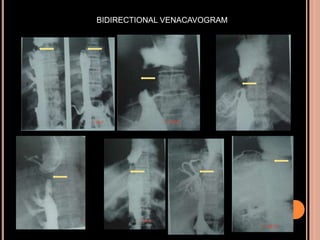
BIDIRECTIONAL VENACAVOGRAM
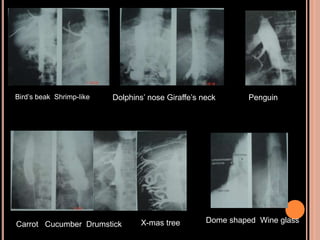
Bird’s beak Shrimp-like Dolphins’ nose Giraffe’s neck
X-mas treeCarrot Cucumber Drumstick
Dome shaped Wine glass
Penguin
IDENTIFYING THE HEPATIC VEIN/S
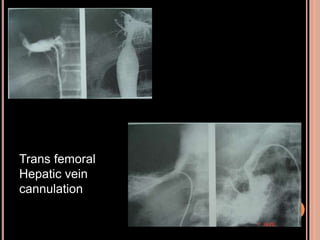
Trans femoral
Hepatic vein
cannulation
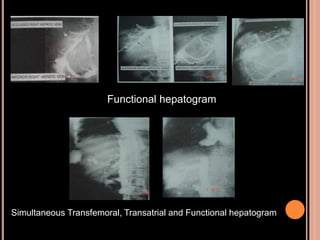
Simultaneous Transfemoral, Transatrial and Functional hepatogram
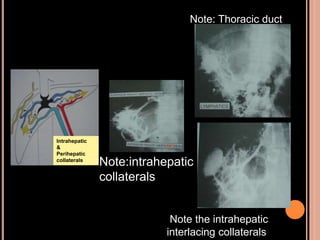
Functional hepatogram
Central Intermediate Portal Superficial
Intrahepatic
&
Perihepatic
collaterals
Note the intrahepatic
interlacing collaterals
Note: Thoracic duct
Note:intrahepatic
collaterals
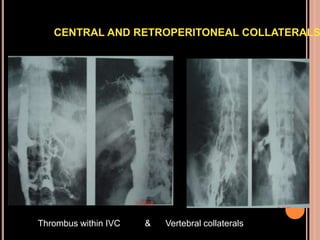
Thrombus within IVC & Vertebral collaterals
CENTRAL AND RETROPERITONEAL COLLATERALS
ULTRASOUND AND
DOPPLER
1985-1990
Dr Bharathi Dhala, Dr Sathyabhama
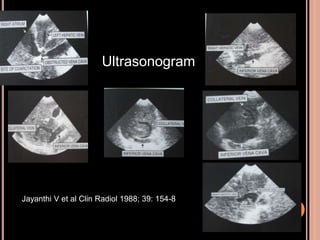
Ultrasonogram
Jayanthi V et al Clin Radiol 1988; 39: 154-8
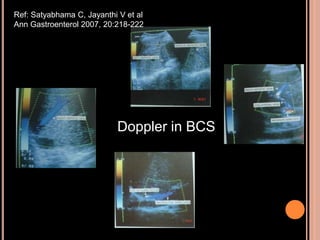
Doppler in BCS
Ref: Satyabhama C, Jayanthi V et al
Ann Gastroenterol 2007, 20:218-222
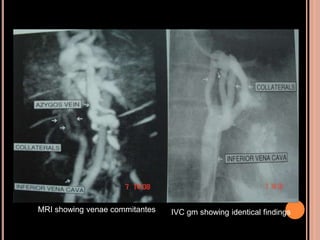
MRI showing venae commitantes IVC gm showing identical findings
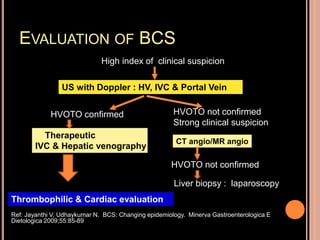
EVALUATION OF BCS
High index of clinical suspicion
US with Doppler : HV, IVC & Portal Vein
HVOTO confirmed HVOTO not confirmed
Strong clinical suspicion
Therapeutic
IVC & Hepatic venography
Thrombophilic & Cardiac evaluation
CT angio/MR angio
HVOTO not confirmed
Liver biopsy : laparoscopy
Ref: Jayanthi V, Udhaykumar N. BCS: Changing epidemiology. Minerva Gastroenterologica E
Dietologica 2009;55:85-89
MANAGEMENT
SURGERY…1980’S
SURGICAL SHUNTS…
 Principle
 decompress the liver by
 Cavoatrial shunt, mesoatrial shunt etc….
 Indications (with a patent portal vein)
 non-fulminant presentation
 chronic without significant hepatic fibrosis
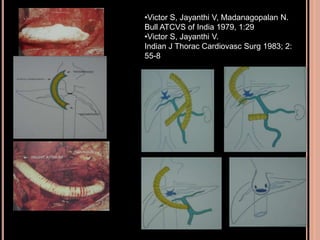
Ref: Victor S, Jayanthi V, Raghuram K, Madanagopalan N.
J Thorac Cardiovasc Surg 1986; 91: 99-105
•Victor S, Jayanthi V, Madanagopalan N.
Bull ATCVS of India 1979, 1:29
•Victor S, Jayanthi V.
Indian J Thorac Cardiovasc Surg 1983; 2:
55-8
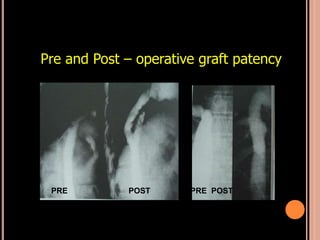
Pre and Post – operative graft patency
PRE POST PRE POST
NOT TOO FAR BEHIND….
ENDOVASCULAR TREATMENT …
HVOTO
Joseph G, George OK, Pati PK, Eapen CE, Malathi S,
Sathyabhama C, Jayanthi V
Christian Medical College, Vellore, Precision
Diagnostics and Stanley Medical College, Chennai
Ref: Indian Heart Journal 2002; 54; 731-2
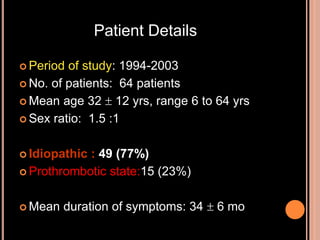
 Period of study: 1994-2003
 No. of patients: 64 patients
 Mean age 32  12 yrs, range 6 to 64 yrs
 Sex ratio: 1.5 :1
 Idiopathic : 49 (77%)
 Prothrombotic state:15 (23%)
 Mean duration of symptoms: 34  6 mo
Patient Details
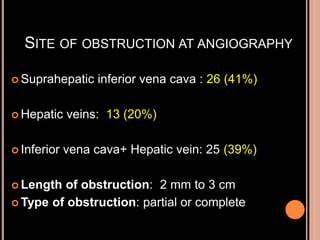
SITE OF OBSTRUCTION AT ANGIOGRAPHY
 Suprahepatic inferior vena cava : 26 (41%)
 Hepatic veins: 13 (20%)
 Inferior vena cava+ Hepatic vein: 25 (39%)
 Length of obstruction: 2 mm to 3 cm
 Type of obstruction: partial or complete
RECANALISATION
PROCEDURES
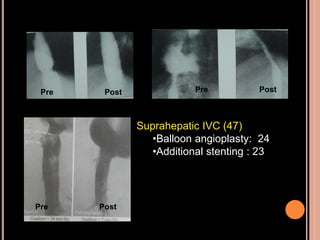
Suprahepatic IVC (47)
•Balloon angioplasty: 24
•Additional stenting : 23
Pre Post Pre Post
Pre Post
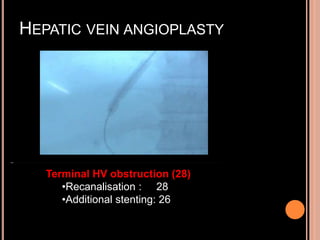
HEPATIC VEIN ANGIOPLASTY
Terminal HV obstruction (28)
•Recanalisation : 28
•Additional stenting: 26
RESULTS & FOLLOW-UP…
 Successful procedure
 42 of 45 patients (93%)
 Antegrade flow
 Pressure gradient
 IVC-RA: 15.0+2.5 to 5.5+0.8 mm Hg (p<0.01)
Ref: Indian Heart Journal 2002; 54; 731-2
COMPLICATIONS
 Bleed related : 4 patients
 Cardiac tamponade : one patient – died
 Right hemothorax : one patient
Settled with conservative management or aspiration
ALGORITHM ….PRESENT DAYS
Treatment depends on
onset
site
extent of obstruction
Anticoagulation (acute)
Angioplasty + Stent deployment
Liver transplantation
* Surgical bypass … not recommended
KEY POINTS
 BCS: Rare but life threatening disorder
 Only curable form of portal hypertension
 Early recognition possible in patients with
 Resistant ascites
 Back veins
 Venous congestion in lower limbs
 US & Doppler of portal, HV and IVC: initial screening
procedure
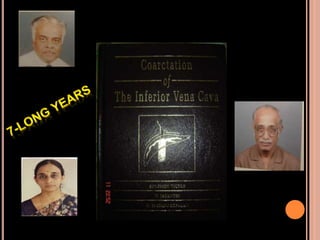
WORK ON CIVC ….1978 TO 1996..
LESSONS I LEARNT ….. DR NMG & DR SV
 Hard work and dedication paves way to success
 Not to give up easily: hurdles can be circumvented
 Step by step the art of writing…
SECOND INNINGS…
MOVED on…..DM (GE)
 Jayanthi V, Chacko A, Karim G, Mathan VI. Intestinal
transit in healthy southern Indian subjects and in
patients with tropical sprue. Gut 1989; 30: 35-8…..
 Normal transit time of a healthy south Indian 22 hrs
GANDHI NAGAR….ERA
GALLSTONE DISEASE
THE FIVE F’S…
 Gall bladder stone diseases
 Fat
 Fertile
 Fair
 Female
 Forty
 UDCA as an agent for dissolving GS
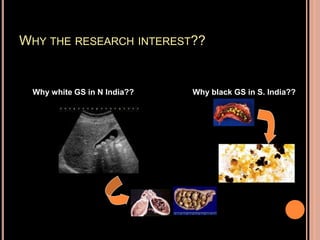
WHY THE RESEARCH INTEREST??
Why white GS in N India?? Why black GS in S. India??
PATTERN OF GS
DISEASE…CHENNAI
 Retrospective study: 1986-1992
 No. of patients : 346 patients
 Mean age
 Men: 51.1. yrs
 Female: 46.2 yrs
 M:F ratio: 1.3:1
 Macroscopic appearance
 Black pigment GS: 77%
 Mixed GS: 17%
 Cholesterol : 6%
Jayanthi V. JAPI 1996;44:461-4
GALLSTONES….SOUTH INDIA
Case - controlled study
 Equally common in either sex
Risk factors
 Women
Obesity
Diabetes
 Men
Sedentary
Retired life style
Abstinence from smoking
Ref: Jayanthi V et al: Bombay Hospital Journal 1999;41:494-502
GALL STONES…. S. INDIA
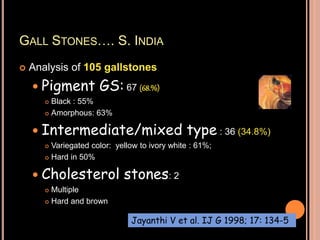
 Analysis of 105 gallstones
 Pigment GS: 67 (68.%)
 Black : 55%
 Amorphous: 63%
 Intermediate/mixed type : 36 (34.8%)
 Variegated color: yellow to ivory white : 61%;
 Hard in 50%
 Cholesterol stones: 2
 Multiple
 Hard and brown
Jayanthi V et al. IJ G 1998; 17: 134-5
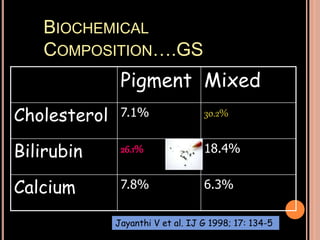
BIOCHEMICAL
COMPOSITION….GS
Pigment Mixed
Cholesterol 7.1% 30.2%
Bilirubin 26.1% 18.4%
Calcium 7.8% 6.3%
Jayanthi V et al. IJ G 1998; 17: 134-5
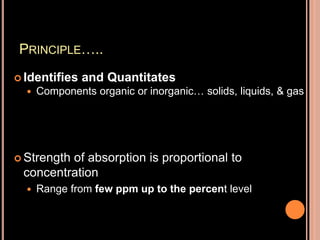
PRINCIPLE…..
 Identifies and Quantitates
 Components organic or inorganic… solids, liquids, & gas
 Strength of absorption is proportional to
concentration
 Range from few ppm up to the percent level
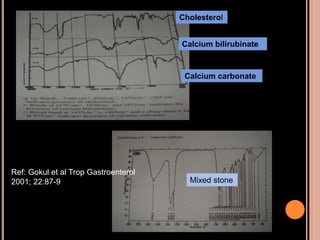
Cholesterol
Calcium bilirubinate
Calcium carbonate
Mixed stone
Ref: Gokul et al Trop Gastroenterol
2001; 22:87-9
0 200 400 600 800 1000
1
10
100
1000
K
ZnZn
Cu
Fe
Fe
Mn
Ca
Ca
Counts/Channel
Channel Number
0 200 400 600 800 1000
10
100
1000
PbPb
Zn
Zn
Cu
Cu
Fe
Fe
MnCa
Ca
K
Counts/Channel
Channel Number
Cholesterol gallstone
0 200 400 600 800 1000
1
10
100
1000
PbZn
Zn
Cu
Fe
Fe
Mn
Ca
Ca
K
Counts/Channel
Channel Number
Mixed gallstonePigment gallstone
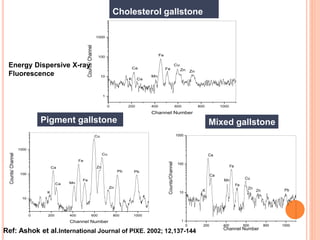
EDXRF
spectra
Energy Dispersive X-ray
Fluorescence
Ref: Ashok et al.International Journal of PIXE. 2002; 12,137-144
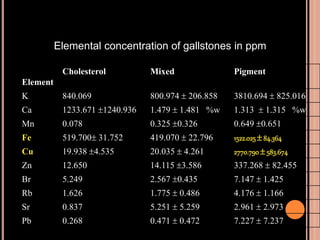
Elemental concentration of gallstones in ppm
Element
Cholesterol Mixed Pigment
K 840.069 800.974  206.858 3810.694  825.016
Ca 1233.671 1240.936 1.479  1.481 %w 1.313  1.315 %w
Mn 0.078 0.325 0.326 0.649 0.651
Fe 519.700 31.752 419.070  22.796 1522.025 84.364
Cu 19.938 4.535 20.035  4.261 2770.790 583.674
Zn 12.650 14.115 3.586 337.268  82.455
Br 5.249 2.567 0.435 7.147  1.425
Rb 1.626 1.775  0.486 4.176  1.166
Sr 0.837 5.251  5.259 2.961  2.973
Pb 0.268 0.471  0.472 7.227  7.237
COLLABORATIVE STUDY…SOUTHERN
STATES
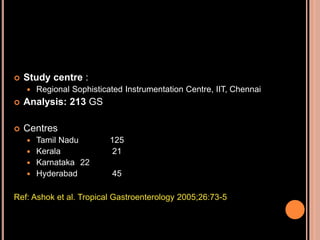
 Study centre :
 Regional Sophisticated Instrumentation Centre, IIT, Chennai
 Analysis: 213 GS
 Centres
 Tamil Nadu 125
 Kerala 21
 Karnataka 22
 Hyderabad 45
Ref: Ashok et al. Tropical Gastroenterology 2005;26:73-5
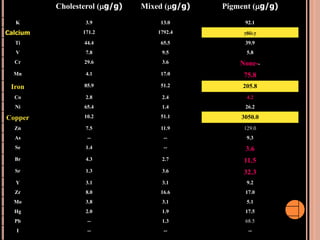
Cholesterol (g/g) Mixed (g/g) Pigment (g/g)
K 3.9 13.0 92.1
Calcium 171.2 1792.4 7861.7
Ti 44.4 65.5 39.9
V 7.8 9.5 5.8
Cr 29.6 3.6 None--
Mn 4.1 17.0 75.8
Iron 85.9 51.2 205.8
Co 2.8 2.4 4.2
Ni 65.4 1.4 26.2
Copper 10.2 51.1 3050.0
Zn 7.5 11.9 129.0
As -- -- 9.3
Se 1.4 -- 3.6
Br 4.3 2.7 11.5
Sr 1.3 3.6 32.3
Y 3.1 3.1 9.2
Zr 8.0 16.6 17.0
Mo 3.8 3.1 5.1
Hg 2.0 1.9 17.5
Pb -- 1.3 68.5
I -- -- --
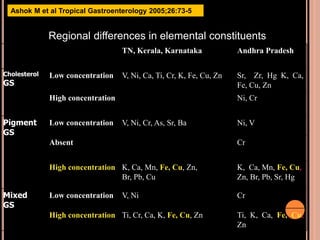
Regional differences in elemental constituents
TN, Kerala, Karnataka Andhra Pradesh
Cholesterol
GS
Low concentration V, Ni, Ca, Ti, Cr, K, Fe, Cu, Zn Sr, Zr, Hg K, Ca,
Fe, Cu, Zn
High concentration Ni, Cr
Pigment
GS
Low concentration V, Ni, Cr, As, Sr, Ba Ni, V
Absent Cr
High concentration K, Ca, Mn, Fe, Cu, Zn,
Br, Pb, Cu
K, Ca, Mn, Fe, Cu,
Zn, Br, Pb, Sr, Hg
Mixed
GS
Low concentration V, Ni Cr
High concentration Ti, Cr, Ca, K, Fe, Cu, Zn Ti, K, Ca, Fe, Cu,
Zn
Ashok M et al Tropical Gastroenterology 2005;26:73-5
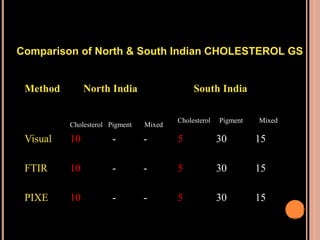
Method North India
Cholesterol Pigment Mixed
South India
Cholesterol Pigment Mixed
Visual 10 - - 5 30 15
FTIR 10 - - 5 30 15
PIXE 10 - - 5 30 15
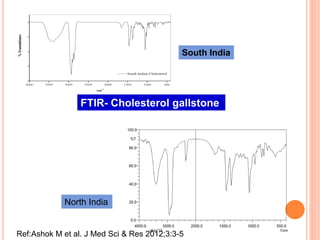
Comparison of North & South Indian CHOLESTEROL GS
4000 3500 3000 2500 2000 1500 1000 500
South Indian Cholesterol
%Transmittance
cm
-1
FTIR- Cholesterol gallstone
North India
South India
Ref:Ashok M et al. J Med Sci & Res 2012;3:3-5
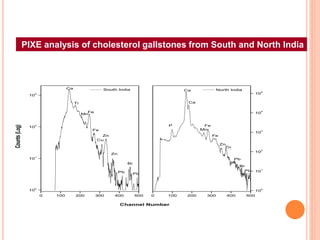
0 100 200 300 400 500
10
0
10
1
10
2
10
3
0 100 200 300 400 500
10
0
10
1
10
2
10
3
10
4
10
5
South India
Ti
Mn
Pb
Pb
Br
Zn
Zn
Cu
Fe
Fe
Ca
Counts(Log)
P
North India
Pb
Br
Pb
Zn
Zn
Fe
Mn
Fe
Ca
Ca
Channel Number
PIXE analysis of cholesterol gallstones from South and North India
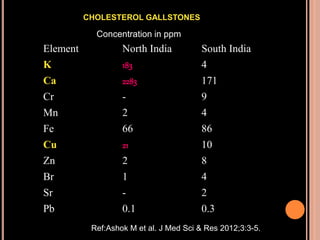
Element North India South India
K 183 4
Ca 2283 171
Cr - 9
Mn 2 4
Fe 66 86
Cu 21 10
Zn 2 8
Br 1 4
Sr - 2
Pb 0.1 0.3
Concentration in ppm
Ref:Ashok M et al. J Med Sci & Res 2012;3:3-5.
CHOLESTEROL GALLSTONES
QUESTION ???
 The cause of high copper and iron content in the
pigment stone not clear
 Could it be dietary in origin ?
IS A DIETARY FACTOR RESPONSIBLE
..?
 Positive association
 Tamarind (OR 27.6; 95 % CI 9.5 to 84.4)
 Spicy foods (OR 6; 95%CI 2.8 to 16.3)
 Fried foods (OR 9.1; 95%CI 2.8 to 33.2) (≥4 times per week)
 Cooking oil ≥300 mL per month (OR 62.0; p<0.0000)
 Negative association
 Vegetables : ≥2 times per week (OR 0.09; 95 % CI 0.04-0.21)
 Fruits: > 3 times / week (OR 0.45; 95 % CI 0.20 to 0.99)
 Sugar: (OR 0.27; 95 % CI 0.07 to 0.95)
 Tea and coffee : less frequently by cases (2.5 vs. 2.9 cups/day; ANOVA
p<0.01).
Ref: Alexander, Vijaya S, Srinvas M, Jayanthi et al.
Indian J Gastroenterol 2005 & 2014
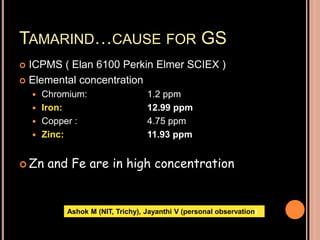
TAMARIND…CAUSE FOR GS
 ICPMS ( Elan 6100 Perkin Elmer SCIEX )
 Elemental concentration
 Chromium: 1.2 ppm
 Iron: 12.99 ppm
 Copper : 4.75 ppm
 Zinc: 11.93 ppm
 Zn and Fe are in high concentration
Ashok M (NIT, Trichy), Jayanthi V (personal observation)
ARE PIGMENT GS AT RISK FOR GB
CANCER
 Retrospective data : 2001 to 2010
 Gallbladder cancer
 Cholecystectomy for GS disease
 Data retrieved : age, gender, clinical presentation,
findings on imaging, histology and details of management
Ref: Sachidananda et al. Indian J Surg Oncol 2012;3:228–230
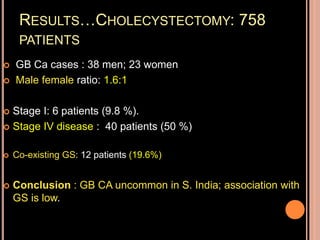
RESULTS…CHOLECYSTECTOMY: 758
PATIENTS
 GB Ca cases : 38 men; 23 women
 Male female ratio: 1.6:1
 Stage I: 6 patients (9.8 %).
 Stage IV disease : 40 patients (50 %)
 Co-existing GS: 12 patients (19.6%)
 Conclusion : GB CA uncommon in S. India; association with
GS is low.
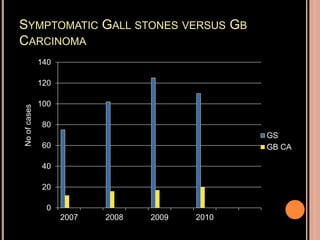
SYMPTOMATIC GALL STONES VERSUS GB
CARCINOMA
0
20
40
60
80
100
120
140
2007 2008 2009 2010
GS
GB CA
Noofcases
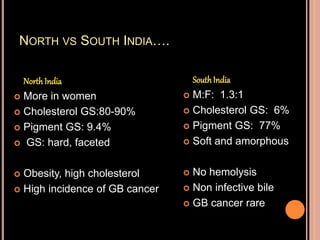
NORTH VS SOUTH INDIA….
NorthIndia
 More in women
 Cholesterol GS:80-90%
 Pigment GS: 9.4%
 GS: hard, faceted
 Obesity, high cholesterol
 High incidence of GB cancer
SouthIndia
 M:F: 1.3:1
 Cholesterol GS: 6%
 Pigment GS: 77%
 Soft and amorphous
 No hemolysis
 Non infective bile
 GB cancer rare
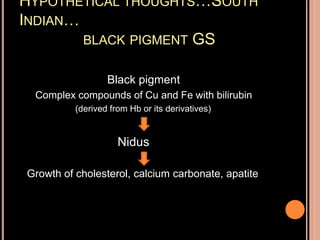
HYPOTHETICAL THOUGHTS…SOUTH
INDIAN…
BLACK PIGMENT GS
Black pigment
Complex compounds of Cu and Fe with bilirubin
(derived from Hb or its derivatives)
Nidus
Growth of cholesterol, calcium carbonate, apatite
ONGOING RESEARCH WORK
 Composition of bile….is south Indian bile non lithogenic?.....
Personal information: low cholesterol
 Crystallisation of GS based on bile composition
 Dissolution of synthesized GS by chemical agents
SUMMARISING…. GS
SUMMARY…
 Gallstones from south India are distinctive
 Morphology
 Chemical composition
 Majority are pigment or mixed
 Bile is non lithogenic (Ms Ramya, personal communication)
 GB cancer incidence is low
SHIFT TO ADMINISTRATION,
TEACHING…
PASSING ON THE BATON….
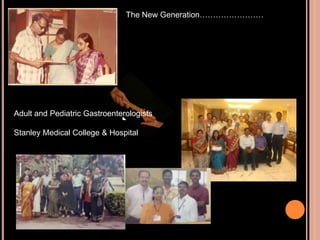
Adult and Pediatric Gastroenterologists
Stanley Medical College & Hospital
The New Generation……………………
 Krishnaveni: excels in EUS at PSG
 Randhir (Cleveland): Liver indices in PHT
 Sumathi, Hema & Nirmala (HOD, ICH)….. Epidemiology of
carcinoma stomach…Now Crohn’s disease in children
 Rajesh (Salem)….several case reports
 Rajesh (Madurai)….H pylori and long term PPI
 Jijo Cherian….epidemiology of ca stomach and esophagus
 Joy Verghese …..cirrhosis liver, liver transplant related (12
publications as a DM student)
 Arvind….Leptospirosis, HCV management
 Arul selvam and Siva…. Hepatitis B, Alcohol:liver and pancreas
DM PGs
MD & MS STUDENTS…MMC, SMC
 Uday Navneetham….a MD PG, MMC, today a
leading Gastroenterologist at Florida Hospital,
Orlando started his journey with a publication in
Am J Gastroenterology on Hepatic encephalopathy
…..
 Prabhu…Acute corrosive injury
 Mala: waist and hip circumference in GERD
 Indian J Gastroenterol 2015 (in press)
 ……. Many more
MEDICAL STUDENTS…..FINAL YEARS… MMC,
KMC & SMC
 Dr Saurav (3 rd year): plenary paper, ISG, Jaipur, Mind
and Liver test
 Guru Vythi, Guru, KMCH……publications on Dyspepsia
and GERD among hospital personnel
 Alexander and Ramya (6 publications): epidemiology of
gallstones, GER in pregnancy, long term effects of PPI
on gastric mucosa
 Arun Kumar: at least 20 publications, co-authored GE
text book, now in New York
 Anand and Ashok: Gall stone dietary factors
3
PROFESSIONAL HURDLES….
 Every day is filled with small steps
Every step is a learning hurdle
Every hurdle can be overcome
Every hurdle that is overcome makes you a
stronger person
 As hard as the journey may be
Never regret climbing those small steps
Never regret crossing the hurdles
In the end, that is what will bring you success
CORPORATE SECTOR…..WORK CONTINUES … DR
M RELA
 Dr Joy Verghese….transplant related
 Dr Dinesh…acute liver failure
 Dr Deepti….transfusion medicine
 Dr Palaniappan… EUS, therapeutic endoscopy
 Dr R Ravi…therapeutic endoscopy
 Dr Srinivas…..motility study
CONCLUDING ….
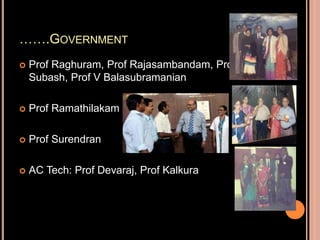
…….GOVERNMENT
 Prof Raghuram, Prof Rajasambandam, Prof
Subash, Prof V Balasubramanian
 Prof Ramathilakam
 Prof Surendran
 AC Tech: Prof Devaraj, Prof Kalkura
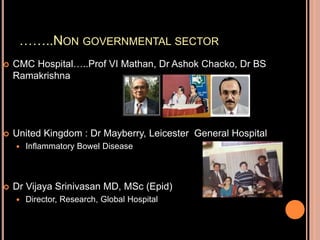
……..NON GOVERNMENTAL SECTOR
 CMC Hospital…..Prof VI Mathan, Dr Ashok Chacko, Dr BS
Ramakrishna
 United Kingdom : Dr Mayberry, Leicester General Hospital
 Inflammatory Bowel Disease
 Dr Vijaya Srinivasan MD, MSc (Epid)
 Director, Research, Global Hospital
For South India to remain in forefront… time to wake
up in the research front…. Represent in full strength
in the National Forum of Indian Society of
Gastroenterology
Great researchers…”Publish or Perish”
PROF. N. MADANAGOPALAN
TEACHER, PHILOSOPHER, &
RESEARCHER
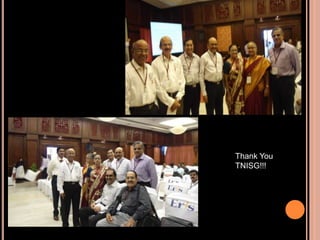
Thank You
TNISG!!!
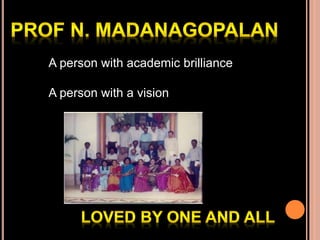
A person with academic brilliance
A person with a vision
FOR THE FUTURE…..
 What is the nidus of the GS….?
 Is there a role for bacteria….?
 Our study showed E coli was present in 20%
 Are there other dietary factors…?
 Is GS disease a genetic disorder…?
FURTHER READING…
 Ashok M et al. International J PIXE, 2002
 Ashok M et al. Radiol Nuclear Chem 2002
 Gokulakrishnan S et al. Gastoenterology Today,
2002
 Gokulakrishnan S et al. Tropical Gastroenterol
2001;22:87-9
ACKNOWLEDGEMENTS…
 Dr. Naryana Kalkura PhD,
Crystal Growth Centre
 Dr. Devaraj PhD, Glycotechnology Centre
 Dr. Ashok M PhD
 Dr. Gokulakrishnan S, PhD, Germany
 Dr. Meenakshi
 Dr. V. Vijayan PhD, Institute of Biophysics,
Bhubaneswar
 My colleagues at Stanley Medical College
QUALITATIVE ANALYSIS..
 Wavelength of light absorbed is characteristic of the chemical bond i.e.
(functional groups)
 FTIR spectra of pure compounds are unique : like a molecular
"fingerprint".
 Organic compounds have very rich, detailed spectra, inorganic
compounds are usually much simpler
 Spectrum of an unknown can be identified by comparison to a library of
known compounds
 Can be combined with NMR, mass spectrometry, emission spectroscopy,
X-ray diffraction
RECOMMENDED READING…
 Datta et al: Gut 1972; 13:372-378
 Madanagopalan et al: J Gastroentrol Hepatol 1986; 1:359-
369
 Victor et al: Coarctation of Inferior vena cava. Tropical
Gastroenterology 1987;8:127-142
 Monograph: Victor et al. Coarctation of Inferior Vena Cava,
1996
 Eapen CE et al. Changing profile of BCS in India. Indian J
Gastroenterol 2007;26(2):77-81
 Amarapurkar DN et al. Changing spectrum of Budd-Chiari
syndrome in India with special reference to non-surgical
treatment. World J Gastroenterol 2008;14:278-85
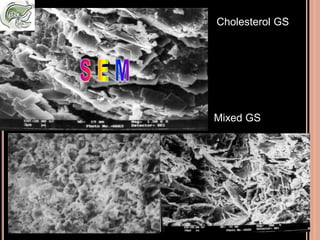
Cholesterol GS
Mixed GS
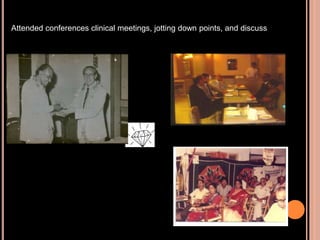
Attended conferences clinical meetings, jotting down points, and discuss
A LEADER …..
 Hard working, simple down to earth person
 Caring for the poor
 Credence to junior's
 Respected them for their input
PREVALENCE - INDIA
Chandigarh
New Delhi
Calcutta
Mumbai
Chennai – 1:10 PHT
BCS
Vellore

Prof.N. Madanagopalan Oration

  • 1.
    Oration under theauspices of TN Chapter of ISG PROF N MADANAGOPALAN MD FRCP
  • 2.
  • 4.
    Stressed importance ofother specialties Surgical Gastroenterology, Pathology, Microbiology Radiology Dr Rangabashyam with Dr NMG Dr Panda, Dr Thiagarajan Dr Panchanadam, Dr Sankaranarayanan Dr Arcot Gajaraj
  • 5.
    A Teacher parexcellence & STUDENT Jotting down points at meetings
  • 6.
    A KEEN RESEARCHER…MAJOR CONTRIBUTIONS
  • 7.
    RESEARCH CONTRIBUTIONS….. DRNMG ERA  Intestinal amoebiasis  HBV virus : Dr BN Tandon Dr Panda, Dr. SPT  Hepatic venous outflow tract obstruction  Tropical Pancreatitis: Dr S. Chari
  • 9.
    AS A HUMANBEING…..  Perfect, humble, and simple  Great concern for his extended family ….risen in career  Love for animals  Fond of trees & plants
  • 10.
    Pre “Gandhi” NagarEra Govt General Hospital Madras….. 8 years “Gandhi”Nagar Era…. 4 years DDHD, Govt. Peripheral Hospital Anna Nagar, Madras
  • 11.
    MADRAS MEDICAL COLLEGE& GOVT. GENERAL HOSPITAL 1978 …..MD PG
  • 12.
    Cirrhosis with ascites…….Some unusual features Dr NMG & Dr Solomon Victor
  • 14.
  • 15.
    Pot belly Spiderman Hepatic Vein Occlusion Large tender liver, tense ascites Absent HJR, Spleen (small)
  • 16.
  • 17.
    Suprahepatic IVC occlusion Note:back vns Madanagopalan N, Jayanthi V, Victor S et al. J Gastroenterol and Hepatol 1986; 1: 359-69
  • 18.
    CLINICAL PROFILE (IN%)…HVOTO HV IVC Combined Abd. Pain 60 70 64 Ascites 75 62 36 Jaundice 50 20 4 Pedal edema 40 90 29 Veins abd/trunk 70 93 79 Varicose veins, stasis ulcers leg 0 22 18 Fever 10 29 11 Madanagopalan N, et al. J Gastroenterol Hepatol 1986;1:359-69.
  • 19.
    COMMON ERRORS INCLINICAL DIAGNOSIS…  Veno Occlusive Disease  Constrictive pericarditis  Nephrogenic ascites  Filarial lower extremities (Panchanadam N et al, 1986)  Varicose veins with repeated stripping of veins  APLS syndrome (Hypertension + IVC obstruction) Ref: Joy V, Rajesh P et al Neth J Med 2008;66:175,180
  • 20.
  • 21.
    Extension of obliterationof ductus venosus into LHV BCS in situs inversus totalis ‘Coarctation of IVC’ akin to coarctation of aorta
  • 22.
    Filariasis & BCS VictorS, Jayanthi V, Panchanadam M et al. Budd Chiari syndrome and pericaval filariasis. Tropical Gastroenterology 1994; 15: 161-8
  • 23.
  • 24.
  • 25.
    PREVALENCE High prevalence ofCoarctation of IVC Africa China India Japan Nepal USA (few)
  • 26.
    PREVALENCE OF PHT(%) Centre Cirrhosis NCP F EHPV O HVOTO (BCS) Lucknow 70 10 20 - Chandigarh 42 15 36 7 % Jaipur 33 40 27 - N Delhi(GB) 53 20 20 6 % N. Delhi(AIIMS 26 19 55 - Calcutta 52 47 1 - Chennai 88 - 12 3 %
  • 27.
    HVOTO… DIFFERENCES United Kingdom India (regional distribution) Japan,China HV (%) 79 Jaipur, Mumbai (42%-59%) 7 IVC (%) 17 Delhi, Calcutta, Chennai (54%-82%) 93 Combined (%) 5 Chandigarh, Mumbai Vellore, Lucknow (54%-64%)
  • 28.
    EAST VS WEST….1980’S-1990’S WesternCountries  HV thrombosis: 80%  Haematological disorders 30-55%  Oral Contraceptives Afro-Asian Countries  HV thrombosis 0-32%  Hypercoagulable states rare…(no prothrombotic work up)  Congenital membrane IVC  Infection
  • 29.
  • 30.
    Hemogram  R/O Hypercoagulablestates  Radiological Investigations  Invasive and noninvasive
  • 31.
    INFERIOR VENA CAVOGRAM & FUNCTIONALHEPATOGRAM BERNARD INSTITUTE OF RADIOLOGY (Late) Prof Arcot Gajaraj MD (Late) Dr I Kandasamy MD 1978-1980
  • 32.
  • 33.
    Bird’s beak Shrimp-likeDolphins’ nose Giraffe’s neck X-mas treeCarrot Cucumber Drumstick Dome shaped Wine glass Penguin
  • 34.
  • 35.
  • 36.
    Simultaneous Transfemoral, Transatrialand Functional hepatogram Functional hepatogram
  • 37.
  • 38.
    Intrahepatic & Perihepatic collaterals Note the intrahepatic interlacingcollaterals Note: Thoracic duct Note:intrahepatic collaterals
  • 39.
    Thrombus within IVC& Vertebral collaterals CENTRAL AND RETROPERITONEAL COLLATERALS
  • 40.
  • 41.
    Ultrasonogram Jayanthi V etal Clin Radiol 1988; 39: 154-8
  • 42.
    Doppler in BCS Ref:Satyabhama C, Jayanthi V et al Ann Gastroenterol 2007, 20:218-222
  • 43.
    MRI showing venaecommitantes IVC gm showing identical findings
  • 44.
    EVALUATION OF BCS Highindex of clinical suspicion US with Doppler : HV, IVC & Portal Vein HVOTO confirmed HVOTO not confirmed Strong clinical suspicion Therapeutic IVC & Hepatic venography Thrombophilic & Cardiac evaluation CT angio/MR angio HVOTO not confirmed Liver biopsy : laparoscopy Ref: Jayanthi V, Udhaykumar N. BCS: Changing epidemiology. Minerva Gastroenterologica E Dietologica 2009;55:85-89
  • 45.
  • 47.
  • 48.
    SURGICAL SHUNTS…  Principle decompress the liver by  Cavoatrial shunt, mesoatrial shunt etc….  Indications (with a patent portal vein)  non-fulminant presentation  chronic without significant hepatic fibrosis Ref: Victor S, Jayanthi V, Raghuram K, Madanagopalan N. J Thorac Cardiovasc Surg 1986; 91: 99-105
  • 49.
    •Victor S, JayanthiV, Madanagopalan N. Bull ATCVS of India 1979, 1:29 •Victor S, Jayanthi V. Indian J Thorac Cardiovasc Surg 1983; 2: 55-8
  • 50.
    Pre and Post– operative graft patency PRE POST PRE POST
  • 51.
    NOT TOO FARBEHIND….
  • 53.
    ENDOVASCULAR TREATMENT … HVOTO JosephG, George OK, Pati PK, Eapen CE, Malathi S, Sathyabhama C, Jayanthi V Christian Medical College, Vellore, Precision Diagnostics and Stanley Medical College, Chennai Ref: Indian Heart Journal 2002; 54; 731-2
  • 54.
     Period ofstudy: 1994-2003  No. of patients: 64 patients  Mean age 32  12 yrs, range 6 to 64 yrs  Sex ratio: 1.5 :1  Idiopathic : 49 (77%)  Prothrombotic state:15 (23%)  Mean duration of symptoms: 34  6 mo Patient Details
  • 55.
    SITE OF OBSTRUCTIONAT ANGIOGRAPHY  Suprahepatic inferior vena cava : 26 (41%)  Hepatic veins: 13 (20%)  Inferior vena cava+ Hepatic vein: 25 (39%)  Length of obstruction: 2 mm to 3 cm  Type of obstruction: partial or complete
  • 56.
  • 57.
    Suprahepatic IVC (47) •Balloonangioplasty: 24 •Additional stenting : 23 Pre Post Pre Post Pre Post
  • 58.
    HEPATIC VEIN ANGIOPLASTY TerminalHV obstruction (28) •Recanalisation : 28 •Additional stenting: 26
  • 59.
    RESULTS & FOLLOW-UP… Successful procedure  42 of 45 patients (93%)  Antegrade flow  Pressure gradient  IVC-RA: 15.0+2.5 to 5.5+0.8 mm Hg (p<0.01) Ref: Indian Heart Journal 2002; 54; 731-2
  • 60.
    COMPLICATIONS  Bleed related: 4 patients  Cardiac tamponade : one patient – died  Right hemothorax : one patient Settled with conservative management or aspiration
  • 61.
    ALGORITHM ….PRESENT DAYS Treatmentdepends on onset site extent of obstruction Anticoagulation (acute) Angioplasty + Stent deployment Liver transplantation * Surgical bypass … not recommended
  • 62.
    KEY POINTS  BCS:Rare but life threatening disorder  Only curable form of portal hypertension  Early recognition possible in patients with  Resistant ascites  Back veins  Venous congestion in lower limbs  US & Doppler of portal, HV and IVC: initial screening procedure
  • 63.
    WORK ON CIVC….1978 TO 1996..
  • 66.
    LESSONS I LEARNT….. DR NMG & DR SV  Hard work and dedication paves way to success  Not to give up easily: hurdles can be circumvented  Step by step the art of writing…
  • 67.
  • 69.
     Jayanthi V,Chacko A, Karim G, Mathan VI. Intestinal transit in healthy southern Indian subjects and in patients with tropical sprue. Gut 1989; 30: 35-8…..  Normal transit time of a healthy south Indian 22 hrs
  • 70.
  • 73.
  • 74.
    THE FIVE F’S… Gall bladder stone diseases  Fat  Fertile  Fair  Female  Forty  UDCA as an agent for dissolving GS
  • 75.
    WHY THE RESEARCHINTEREST?? Why white GS in N India?? Why black GS in S. India??
  • 76.
    PATTERN OF GS DISEASE…CHENNAI Retrospective study: 1986-1992  No. of patients : 346 patients  Mean age  Men: 51.1. yrs  Female: 46.2 yrs  M:F ratio: 1.3:1  Macroscopic appearance  Black pigment GS: 77%  Mixed GS: 17%  Cholesterol : 6% Jayanthi V. JAPI 1996;44:461-4
  • 77.
    GALLSTONES….SOUTH INDIA Case -controlled study  Equally common in either sex Risk factors  Women Obesity Diabetes  Men Sedentary Retired life style Abstinence from smoking Ref: Jayanthi V et al: Bombay Hospital Journal 1999;41:494-502
  • 79.
    GALL STONES…. S.INDIA  Analysis of 105 gallstones  Pigment GS: 67 (68.%)  Black : 55%  Amorphous: 63%  Intermediate/mixed type : 36 (34.8%)  Variegated color: yellow to ivory white : 61%;  Hard in 50%  Cholesterol stones: 2  Multiple  Hard and brown Jayanthi V et al. IJ G 1998; 17: 134-5
  • 80.
    BIOCHEMICAL COMPOSITION….GS Pigment Mixed Cholesterol 7.1%30.2% Bilirubin 26.1% 18.4% Calcium 7.8% 6.3% Jayanthi V et al. IJ G 1998; 17: 134-5
  • 82.
    PRINCIPLE…..  Identifies andQuantitates  Components organic or inorganic… solids, liquids, & gas  Strength of absorption is proportional to concentration  Range from few ppm up to the percent level
  • 83.
    Cholesterol Calcium bilirubinate Calcium carbonate Mixedstone Ref: Gokul et al Trop Gastroenterol 2001; 22:87-9
  • 84.
    0 200 400600 800 1000 1 10 100 1000 K ZnZn Cu Fe Fe Mn Ca Ca Counts/Channel Channel Number 0 200 400 600 800 1000 10 100 1000 PbPb Zn Zn Cu Cu Fe Fe MnCa Ca K Counts/Channel Channel Number Cholesterol gallstone 0 200 400 600 800 1000 1 10 100 1000 PbZn Zn Cu Fe Fe Mn Ca Ca K Counts/Channel Channel Number Mixed gallstonePigment gallstone EDXRF spectra Energy Dispersive X-ray Fluorescence Ref: Ashok et al.International Journal of PIXE. 2002; 12,137-144
  • 85.
    Elemental concentration ofgallstones in ppm Element Cholesterol Mixed Pigment K 840.069 800.974  206.858 3810.694  825.016 Ca 1233.671 1240.936 1.479  1.481 %w 1.313  1.315 %w Mn 0.078 0.325 0.326 0.649 0.651 Fe 519.700 31.752 419.070  22.796 1522.025 84.364 Cu 19.938 4.535 20.035  4.261 2770.790 583.674 Zn 12.650 14.115 3.586 337.268  82.455 Br 5.249 2.567 0.435 7.147  1.425 Rb 1.626 1.775  0.486 4.176  1.166 Sr 0.837 5.251  5.259 2.961  2.973 Pb 0.268 0.471  0.472 7.227  7.237
  • 86.
  • 87.
     Study centre:  Regional Sophisticated Instrumentation Centre, IIT, Chennai  Analysis: 213 GS  Centres  Tamil Nadu 125  Kerala 21  Karnataka 22  Hyderabad 45 Ref: Ashok et al. Tropical Gastroenterology 2005;26:73-5
  • 88.
    Cholesterol (g/g) Mixed(g/g) Pigment (g/g) K 3.9 13.0 92.1 Calcium 171.2 1792.4 7861.7 Ti 44.4 65.5 39.9 V 7.8 9.5 5.8 Cr 29.6 3.6 None-- Mn 4.1 17.0 75.8 Iron 85.9 51.2 205.8 Co 2.8 2.4 4.2 Ni 65.4 1.4 26.2 Copper 10.2 51.1 3050.0 Zn 7.5 11.9 129.0 As -- -- 9.3 Se 1.4 -- 3.6 Br 4.3 2.7 11.5 Sr 1.3 3.6 32.3 Y 3.1 3.1 9.2 Zr 8.0 16.6 17.0 Mo 3.8 3.1 5.1 Hg 2.0 1.9 17.5 Pb -- 1.3 68.5 I -- -- --
  • 89.
    Regional differences inelemental constituents TN, Kerala, Karnataka Andhra Pradesh Cholesterol GS Low concentration V, Ni, Ca, Ti, Cr, K, Fe, Cu, Zn Sr, Zr, Hg K, Ca, Fe, Cu, Zn High concentration Ni, Cr Pigment GS Low concentration V, Ni, Cr, As, Sr, Ba Ni, V Absent Cr High concentration K, Ca, Mn, Fe, Cu, Zn, Br, Pb, Cu K, Ca, Mn, Fe, Cu, Zn, Br, Pb, Sr, Hg Mixed GS Low concentration V, Ni Cr High concentration Ti, Cr, Ca, K, Fe, Cu, Zn Ti, K, Ca, Fe, Cu, Zn Ashok M et al Tropical Gastroenterology 2005;26:73-5
  • 90.
    Method North India CholesterolPigment Mixed South India Cholesterol Pigment Mixed Visual 10 - - 5 30 15 FTIR 10 - - 5 30 15 PIXE 10 - - 5 30 15 Comparison of North & South Indian CHOLESTEROL GS
  • 91.
    4000 3500 30002500 2000 1500 1000 500 South Indian Cholesterol %Transmittance cm -1 FTIR- Cholesterol gallstone North India South India Ref:Ashok M et al. J Med Sci & Res 2012;3:3-5
  • 92.
    0 100 200300 400 500 10 0 10 1 10 2 10 3 0 100 200 300 400 500 10 0 10 1 10 2 10 3 10 4 10 5 South India Ti Mn Pb Pb Br Zn Zn Cu Fe Fe Ca Counts(Log) P North India Pb Br Pb Zn Zn Fe Mn Fe Ca Ca Channel Number PIXE analysis of cholesterol gallstones from South and North India
  • 93.
    Element North IndiaSouth India K 183 4 Ca 2283 171 Cr - 9 Mn 2 4 Fe 66 86 Cu 21 10 Zn 2 8 Br 1 4 Sr - 2 Pb 0.1 0.3 Concentration in ppm Ref:Ashok M et al. J Med Sci & Res 2012;3:3-5. CHOLESTEROL GALLSTONES
  • 94.
    QUESTION ???  Thecause of high copper and iron content in the pigment stone not clear  Could it be dietary in origin ?
  • 95.
    IS A DIETARYFACTOR RESPONSIBLE ..?  Positive association  Tamarind (OR 27.6; 95 % CI 9.5 to 84.4)  Spicy foods (OR 6; 95%CI 2.8 to 16.3)  Fried foods (OR 9.1; 95%CI 2.8 to 33.2) (≥4 times per week)  Cooking oil ≥300 mL per month (OR 62.0; p<0.0000)  Negative association  Vegetables : ≥2 times per week (OR 0.09; 95 % CI 0.04-0.21)  Fruits: > 3 times / week (OR 0.45; 95 % CI 0.20 to 0.99)  Sugar: (OR 0.27; 95 % CI 0.07 to 0.95)  Tea and coffee : less frequently by cases (2.5 vs. 2.9 cups/day; ANOVA p<0.01). Ref: Alexander, Vijaya S, Srinvas M, Jayanthi et al. Indian J Gastroenterol 2005 & 2014
  • 96.
    TAMARIND…CAUSE FOR GS ICPMS ( Elan 6100 Perkin Elmer SCIEX )  Elemental concentration  Chromium: 1.2 ppm  Iron: 12.99 ppm  Copper : 4.75 ppm  Zinc: 11.93 ppm  Zn and Fe are in high concentration Ashok M (NIT, Trichy), Jayanthi V (personal observation)
  • 97.
    ARE PIGMENT GSAT RISK FOR GB CANCER
  • 98.
     Retrospective data: 2001 to 2010  Gallbladder cancer  Cholecystectomy for GS disease  Data retrieved : age, gender, clinical presentation, findings on imaging, histology and details of management Ref: Sachidananda et al. Indian J Surg Oncol 2012;3:228–230
  • 99.
    RESULTS…CHOLECYSTECTOMY: 758 PATIENTS  GBCa cases : 38 men; 23 women  Male female ratio: 1.6:1  Stage I: 6 patients (9.8 %).  Stage IV disease : 40 patients (50 %)  Co-existing GS: 12 patients (19.6%)  Conclusion : GB CA uncommon in S. India; association with GS is low.
  • 100.
    SYMPTOMATIC GALL STONESVERSUS GB CARCINOMA 0 20 40 60 80 100 120 140 2007 2008 2009 2010 GS GB CA Noofcases
  • 101.
    NORTH VS SOUTHINDIA…. NorthIndia  More in women  Cholesterol GS:80-90%  Pigment GS: 9.4%  GS: hard, faceted  Obesity, high cholesterol  High incidence of GB cancer SouthIndia  M:F: 1.3:1  Cholesterol GS: 6%  Pigment GS: 77%  Soft and amorphous  No hemolysis  Non infective bile  GB cancer rare
  • 102.
    HYPOTHETICAL THOUGHTS…SOUTH INDIAN… BLACK PIGMENTGS Black pigment Complex compounds of Cu and Fe with bilirubin (derived from Hb or its derivatives) Nidus Growth of cholesterol, calcium carbonate, apatite
  • 103.
    ONGOING RESEARCH WORK Composition of bile….is south Indian bile non lithogenic?..... Personal information: low cholesterol  Crystallisation of GS based on bile composition  Dissolution of synthesized GS by chemical agents
  • 104.
  • 105.
    SUMMARY…  Gallstones fromsouth India are distinctive  Morphology  Chemical composition  Majority are pigment or mixed  Bile is non lithogenic (Ms Ramya, personal communication)  GB cancer incidence is low
  • 106.
  • 107.
    PASSING ON THEBATON….
  • 108.
    Adult and PediatricGastroenterologists Stanley Medical College & Hospital The New Generation……………………
  • 109.
     Krishnaveni: excelsin EUS at PSG  Randhir (Cleveland): Liver indices in PHT  Sumathi, Hema & Nirmala (HOD, ICH)….. Epidemiology of carcinoma stomach…Now Crohn’s disease in children  Rajesh (Salem)….several case reports  Rajesh (Madurai)….H pylori and long term PPI  Jijo Cherian….epidemiology of ca stomach and esophagus  Joy Verghese …..cirrhosis liver, liver transplant related (12 publications as a DM student)  Arvind….Leptospirosis, HCV management  Arul selvam and Siva…. Hepatitis B, Alcohol:liver and pancreas DM PGs
  • 110.
    MD & MSSTUDENTS…MMC, SMC  Uday Navneetham….a MD PG, MMC, today a leading Gastroenterologist at Florida Hospital, Orlando started his journey with a publication in Am J Gastroenterology on Hepatic encephalopathy …..  Prabhu…Acute corrosive injury  Mala: waist and hip circumference in GERD  Indian J Gastroenterol 2015 (in press)  ……. Many more
  • 111.
    MEDICAL STUDENTS…..FINAL YEARS…MMC, KMC & SMC  Dr Saurav (3 rd year): plenary paper, ISG, Jaipur, Mind and Liver test  Guru Vythi, Guru, KMCH……publications on Dyspepsia and GERD among hospital personnel  Alexander and Ramya (6 publications): epidemiology of gallstones, GER in pregnancy, long term effects of PPI on gastric mucosa  Arun Kumar: at least 20 publications, co-authored GE text book, now in New York  Anand and Ashok: Gall stone dietary factors
  • 114.
  • 116.
    PROFESSIONAL HURDLES….  Everyday is filled with small steps Every step is a learning hurdle Every hurdle can be overcome Every hurdle that is overcome makes you a stronger person  As hard as the journey may be Never regret climbing those small steps Never regret crossing the hurdles In the end, that is what will bring you success
  • 117.
    CORPORATE SECTOR…..WORK CONTINUES… DR M RELA  Dr Joy Verghese….transplant related  Dr Dinesh…acute liver failure  Dr Deepti….transfusion medicine  Dr Palaniappan… EUS, therapeutic endoscopy  Dr R Ravi…therapeutic endoscopy  Dr Srinivas…..motility study
  • 120.
  • 122.
    …….GOVERNMENT  Prof Raghuram,Prof Rajasambandam, Prof Subash, Prof V Balasubramanian  Prof Ramathilakam  Prof Surendran  AC Tech: Prof Devaraj, Prof Kalkura
  • 123.
    ……..NON GOVERNMENTAL SECTOR CMC Hospital…..Prof VI Mathan, Dr Ashok Chacko, Dr BS Ramakrishna  United Kingdom : Dr Mayberry, Leicester General Hospital  Inflammatory Bowel Disease  Dr Vijaya Srinivasan MD, MSc (Epid)  Director, Research, Global Hospital
  • 124.
    For South Indiato remain in forefront… time to wake up in the research front…. Represent in full strength in the National Forum of Indian Society of Gastroenterology Great researchers…”Publish or Perish”
  • 126.
    PROF. N. MADANAGOPALAN TEACHER,PHILOSOPHER, & RESEARCHER
  • 128.
  • 129.
    A person withacademic brilliance A person with a vision
  • 131.
    FOR THE FUTURE….. What is the nidus of the GS….?  Is there a role for bacteria….?  Our study showed E coli was present in 20%  Are there other dietary factors…?  Is GS disease a genetic disorder…?
  • 132.
    FURTHER READING…  AshokM et al. International J PIXE, 2002  Ashok M et al. Radiol Nuclear Chem 2002  Gokulakrishnan S et al. Gastoenterology Today, 2002  Gokulakrishnan S et al. Tropical Gastroenterol 2001;22:87-9
  • 133.
    ACKNOWLEDGEMENTS…  Dr. NaryanaKalkura PhD, Crystal Growth Centre  Dr. Devaraj PhD, Glycotechnology Centre  Dr. Ashok M PhD  Dr. Gokulakrishnan S, PhD, Germany  Dr. Meenakshi  Dr. V. Vijayan PhD, Institute of Biophysics, Bhubaneswar  My colleagues at Stanley Medical College
  • 134.
    QUALITATIVE ANALYSIS..  Wavelengthof light absorbed is characteristic of the chemical bond i.e. (functional groups)  FTIR spectra of pure compounds are unique : like a molecular "fingerprint".  Organic compounds have very rich, detailed spectra, inorganic compounds are usually much simpler  Spectrum of an unknown can be identified by comparison to a library of known compounds  Can be combined with NMR, mass spectrometry, emission spectroscopy, X-ray diffraction
  • 135.
    RECOMMENDED READING…  Dattaet al: Gut 1972; 13:372-378  Madanagopalan et al: J Gastroentrol Hepatol 1986; 1:359- 369  Victor et al: Coarctation of Inferior vena cava. Tropical Gastroenterology 1987;8:127-142  Monograph: Victor et al. Coarctation of Inferior Vena Cava, 1996  Eapen CE et al. Changing profile of BCS in India. Indian J Gastroenterol 2007;26(2):77-81  Amarapurkar DN et al. Changing spectrum of Budd-Chiari syndrome in India with special reference to non-surgical treatment. World J Gastroenterol 2008;14:278-85
  • 139.
  • 141.
    Attended conferences clinicalmeetings, jotting down points, and discuss
  • 142.
    A LEADER ….. Hard working, simple down to earth person  Caring for the poor  Credence to junior's  Respected them for their input
  • 144.
    PREVALENCE - INDIA Chandigarh NewDelhi Calcutta Mumbai Chennai – 1:10 PHT BCS Vellore