Approach to Constipation
ANWER GHANI
FIBMS
IRAQ
.
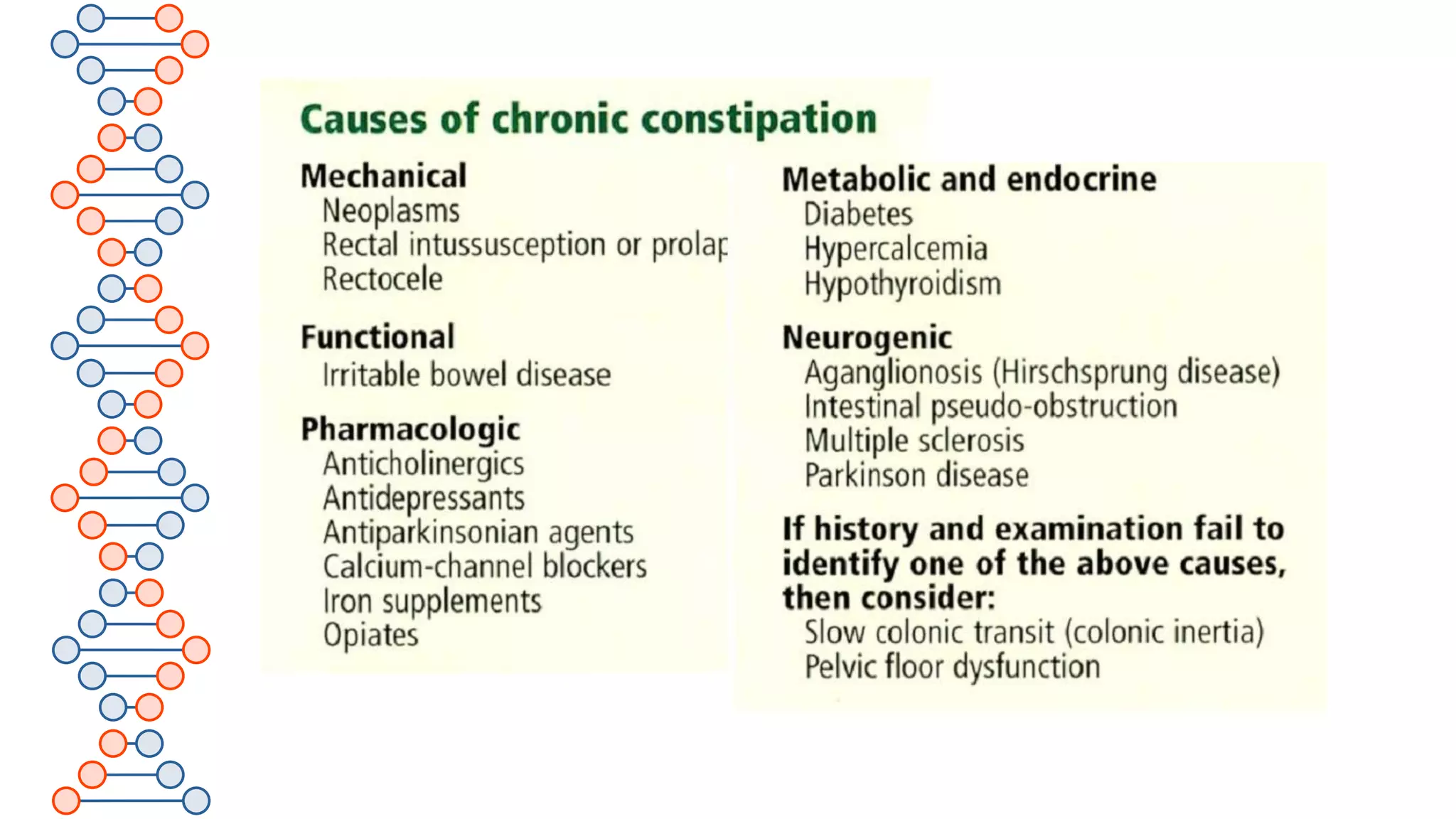
 Chronic constipation is a worldwide problem.
 It can be either primary or secondary.
 It is often, erroneously, considered as a single disease
but it is a complex and multifaceted syndrome.
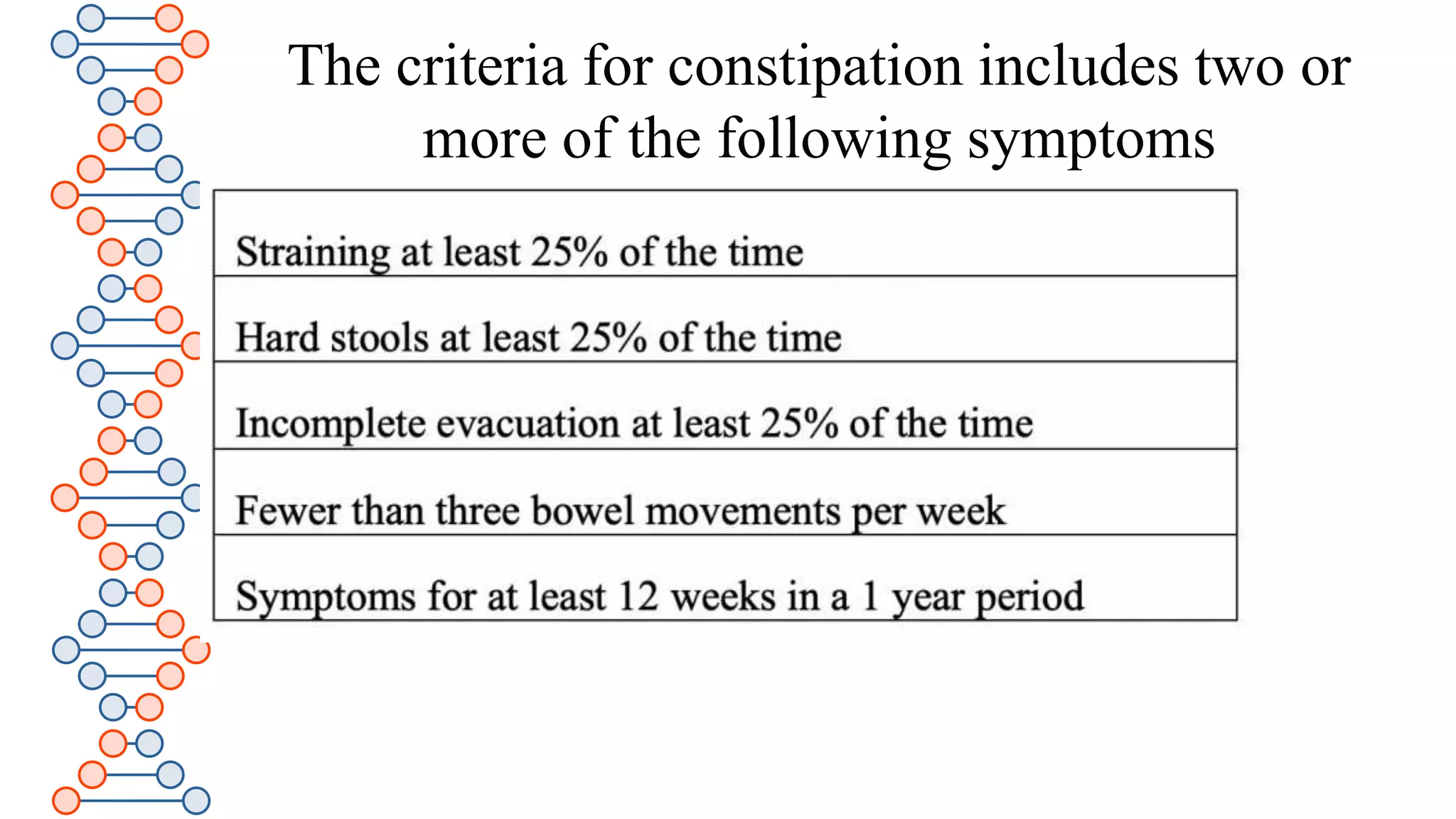
The criteria for constipation includes two or
more of the following symptoms
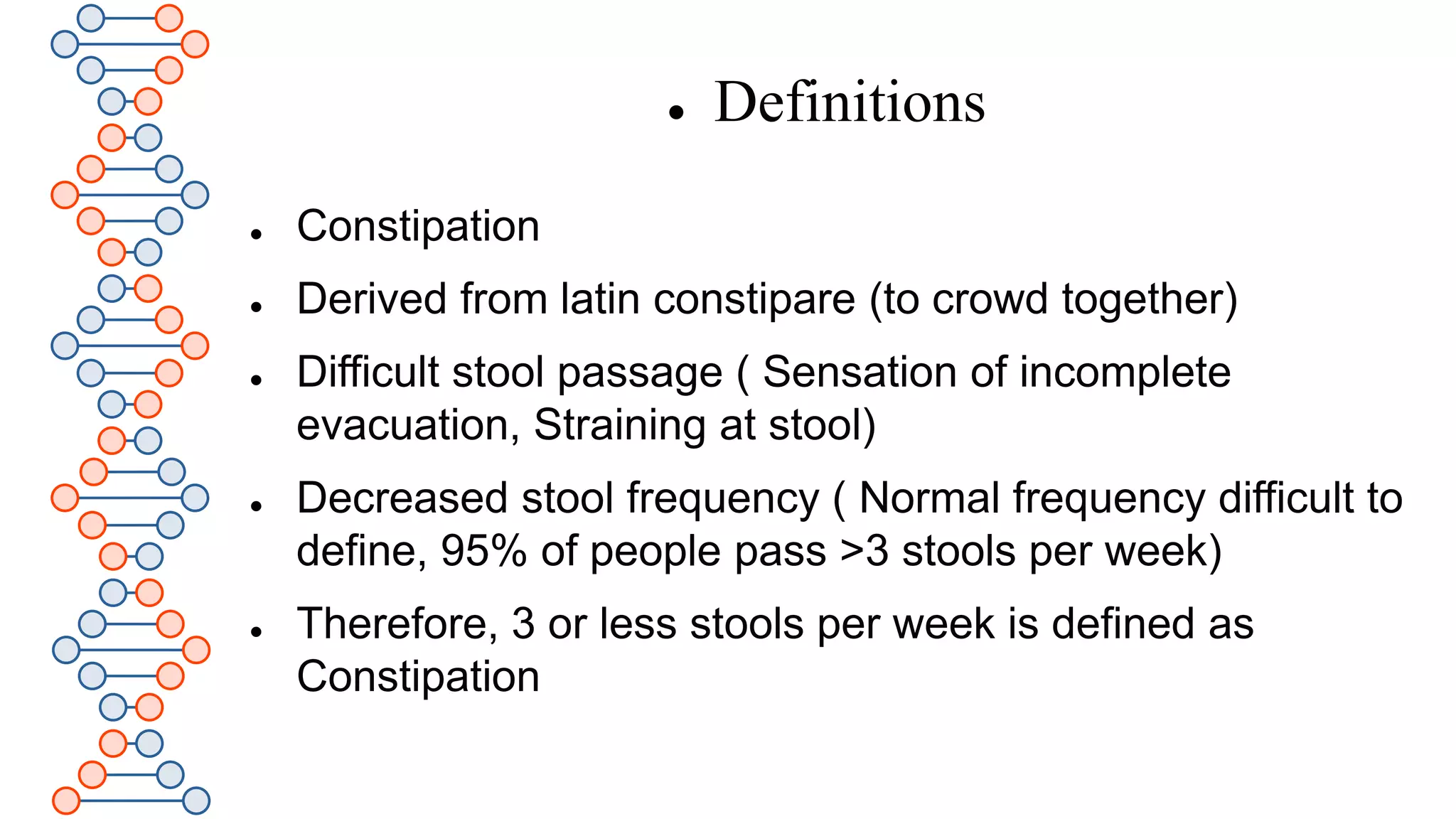
 Definitions
 Constipation
 Derived from latin constipare (to crowd together)
 Difficult stool passage ( Sensation of incomplete
evacuation, Straining at stool)
 Decreased stool frequency ( Normal frequency difficult to
define, 95% of people pass >3 stools per week)
 Therefore, 3 or less stools per week is defined as
Constipation
.
.
 .
.
 .
.
 ,
.
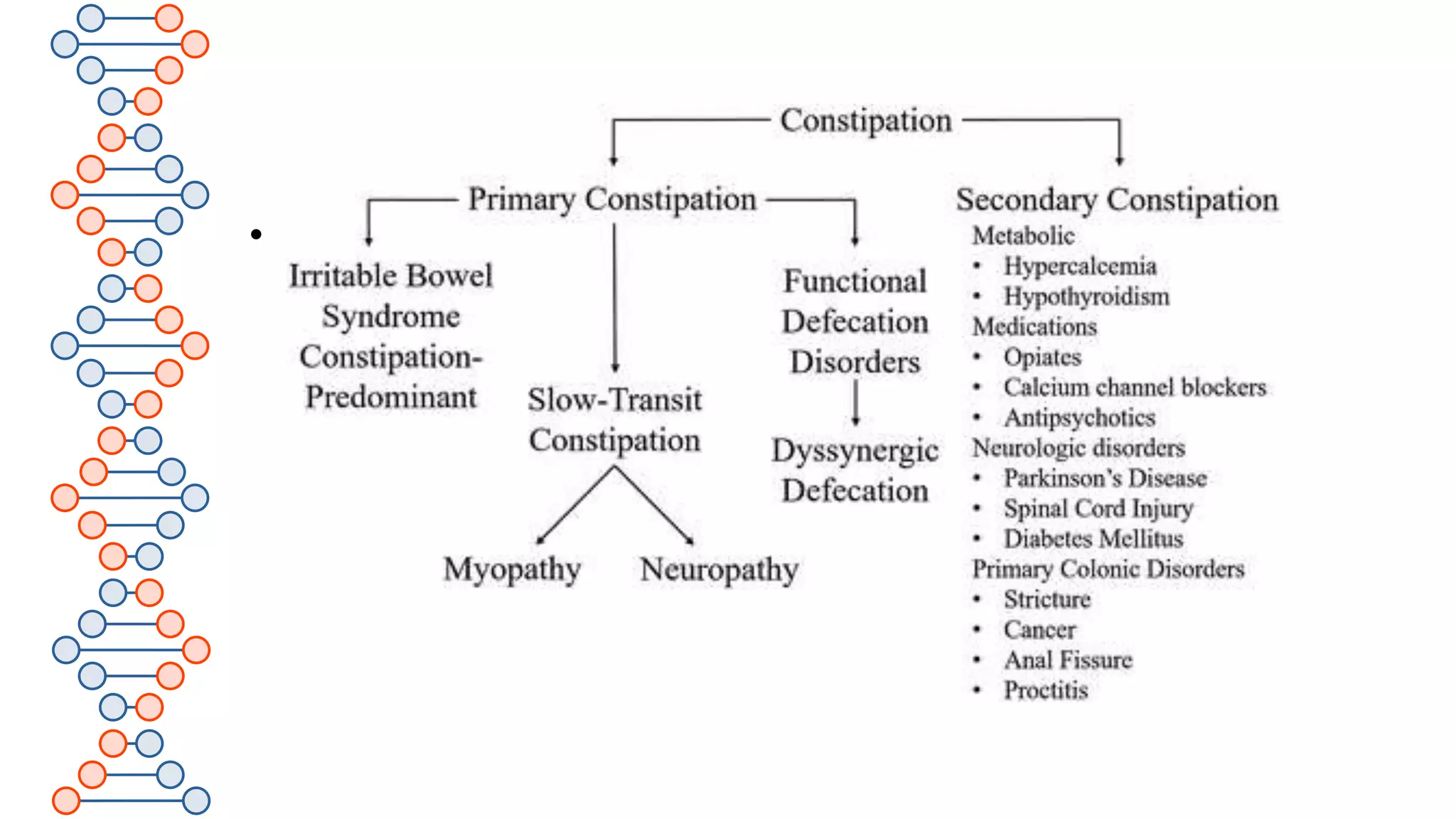
 The term “primary constipation” itself hides different
conditions, such as irritable bowel syndrome with
constipation (IBS-C), functional constipation, functional
defecation disorders, and rectal hyposensitivity.
Hx
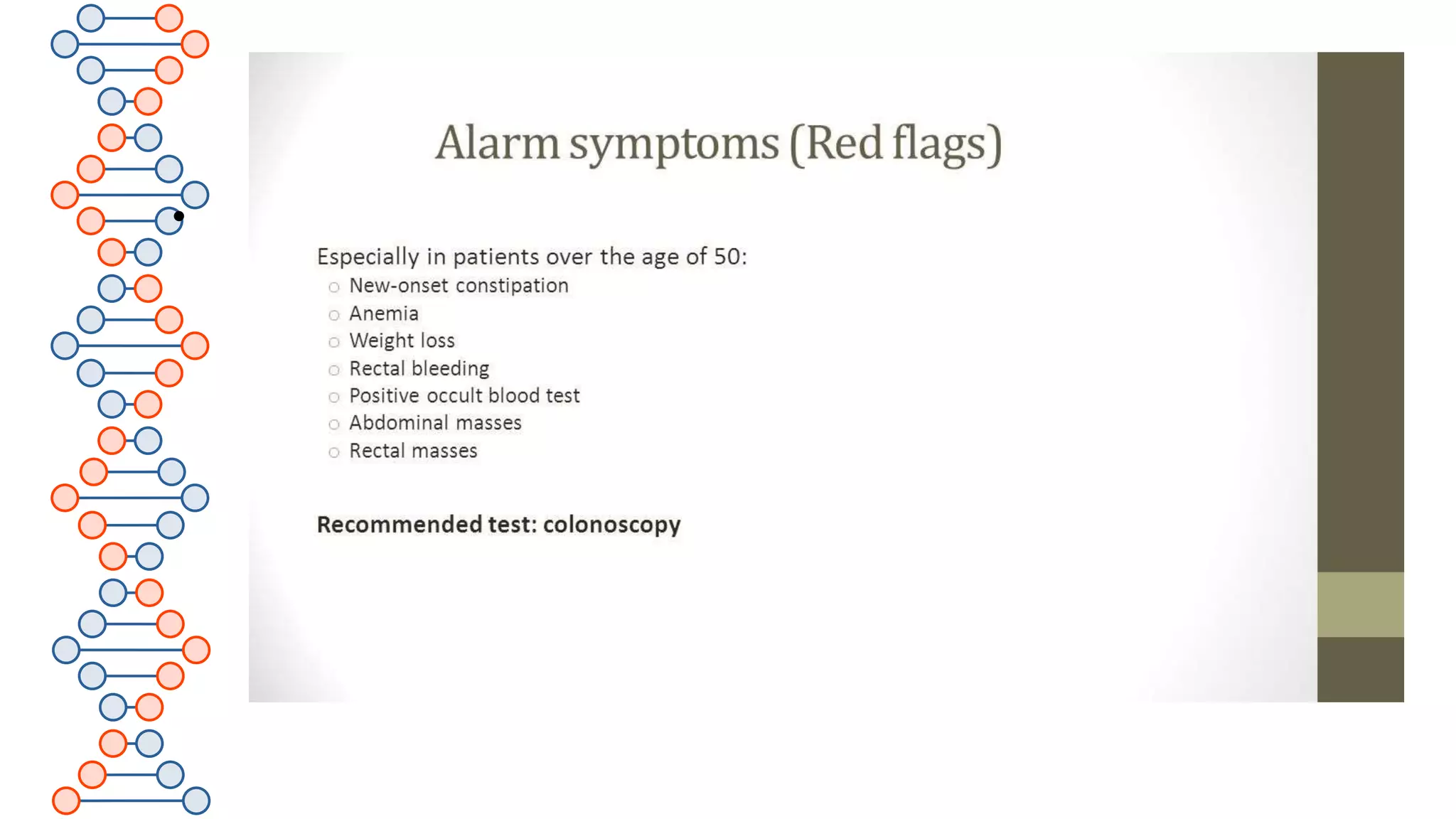
 History can identify alarm symptoms, such as weight loss,
bloody stools, anemia, or a family history of colon cancer.
 History can identify conditions potentially associated with
constipation, such as dietary mistakes, low physical
activity; the use of constipating drugs, metabolic,
psychiatric, or neurological diseases; and previous
perineal-pelvic_x0002_abdominal or obstetric-
gynecological surgery.
 Red flags
 In case of alarm symptoms/signs, colonoscopy is
recommended.
Ex
 The examination can detect a possible gastrointestinal
mass.
 Examination should include inspection of the anorectal
region and exploration of the rectum.
 A digital rectal examination should detect any signs of
organic disease or obstructed defecation (rectal masses,
fecal impaction, stricture, rectal intussusception, or
rectocele).
 +ve alarm s→ colonscoppy. (abno +Ve → Rx, Abno -ve
→ Chronic C)
 -ve alarm s→drugs Hx (+ve drug Hx → stop drugs,
 -ve drug Hx → chronic c)
Rx
 ,
.
 many patients will benefit from abolishing or reducing
medications that cause constipation.
.
 many patients will benefit from recommending changes
in lifestyle and diet with correct fluid (at least 1.5 l/day)
and fiber (25 mg/day) intake.
.
 Increased intake of whole fruits and vegetables
significantly reduced fecal transit time by 14 h and
increased the number of daily bowel movements by 0.4
and daily wet fecal weight by 118 g compared to 100%
fruit and vegetable juices.

.
 If diet management is not sufficient, it is mandatory to
move to a second step encompassing the use of fiber
supplementations and osmotic laxatives.
.
 ,
.
 If osmotic laxatives are ineffective, it is possible to use
 -stimulant or softening laxatives then
 -prokinetics or prosecretory agents.
 In this subset of patients, further tests such as anorectal manometry and/or entero-defecography
and/or colonic transit time are advisable.
 .
Laxative use
 .
Other therapeutic options
 - pelvic floor rehabilitation
 -sacral nerve stimulation
 -anorectal surgery
Other tests
 colpo-cysto_x0002_entero-defecography
 magnetic resonance (MR) defecography
 dynamic transperineal ultrasonography (DTP-US)
.
 Colonic and/or gastrojejunal manometry should be
performed in patients with serious slow-transit
constipation
Approach to Rx of Chronic C
 Diet (fluid and fibers)
 No resp → suppl fibers
 No resp → bulck laxative , Osmotic laxa
 No resp → stimulant or softening laxat
 No resp → Prokinetics (prucalopride), Prosecretory (linaclotide, lubiprostone)
 No resp →Pelvic floor rehabilitation.
 No resp → Sacral nerve stimulation, Anorectal surgery, Colectomy
 (after performing colonic and gastrojejejunal manometry)
 Complications of Constipation
 Hemorrhoids
 Anal fissures
 Rectal bleeding
 Fecal incontinence
 Fecaloma
 Pelvic organ prolapse
 Fecal impaction
 Bowel obstruction
 Bowel perforation
 Stercoral peritonitis

Approach to constipation

  • 1.
  • 2.
    .  Chronic constipationis a worldwide problem.  It can be either primary or secondary.  It is often, erroneously, considered as a single disease but it is a complex and multifaceted syndrome.
  • 3.
    The criteria forconstipation includes two or more of the following symptoms
  • 4.
     Definitions  Constipation Derived from latin constipare (to crowd together)  Difficult stool passage ( Sensation of incomplete evacuation, Straining at stool)  Decreased stool frequency ( Normal frequency difficult to define, 95% of people pass >3 stools per week)  Therefore, 3 or less stools per week is defined as Constipation
  • 5.
  • 6.
  • 7.
  • 8.
  • 9.
    .  The term“primary constipation” itself hides different conditions, such as irritable bowel syndrome with constipation (IBS-C), functional constipation, functional defecation disorders, and rectal hyposensitivity.
  • 10.
    Hx  History canidentify alarm symptoms, such as weight loss, bloody stools, anemia, or a family history of colon cancer.  History can identify conditions potentially associated with constipation, such as dietary mistakes, low physical activity; the use of constipating drugs, metabolic, psychiatric, or neurological diseases; and previous perineal-pelvic_x0002_abdominal or obstetric- gynecological surgery.
  • 11.
  • 12.
     In caseof alarm symptoms/signs, colonoscopy is recommended.
  • 13.
    Ex  The examinationcan detect a possible gastrointestinal mass.  Examination should include inspection of the anorectal region and exploration of the rectum.  A digital rectal examination should detect any signs of organic disease or obstructed defecation (rectal masses, fecal impaction, stricture, rectal intussusception, or rectocele).
  • 14.
     +ve alarms→ colonscoppy. (abno +Ve → Rx, Abno -ve → Chronic C)  -ve alarm s→drugs Hx (+ve drug Hx → stop drugs,  -ve drug Hx → chronic c)
  • 15.
  • 16.
    .  many patientswill benefit from abolishing or reducing medications that cause constipation.
  • 17.
    .  many patientswill benefit from recommending changes in lifestyle and diet with correct fluid (at least 1.5 l/day) and fiber (25 mg/day) intake.
  • 18.
    .  Increased intakeof whole fruits and vegetables significantly reduced fecal transit time by 14 h and increased the number of daily bowel movements by 0.4 and daily wet fecal weight by 118 g compared to 100% fruit and vegetable juices. 
  • 19.
    .  If dietmanagement is not sufficient, it is mandatory to move to a second step encompassing the use of fiber supplementations and osmotic laxatives.
  • 20.
  • 21.
    .  If osmoticlaxatives are ineffective, it is possible to use  -stimulant or softening laxatives then  -prokinetics or prosecretory agents.  In this subset of patients, further tests such as anorectal manometry and/or entero-defecography and/or colonic transit time are advisable.
  • 22.
  • 23.
  • 24.
    Other therapeutic options - pelvic floor rehabilitation  -sacral nerve stimulation  -anorectal surgery
  • 25.
    Other tests  colpo-cysto_x0002_entero-defecography magnetic resonance (MR) defecography  dynamic transperineal ultrasonography (DTP-US)
  • 26.
    .  Colonic and/orgastrojejunal manometry should be performed in patients with serious slow-transit constipation
  • 27.
    Approach to Rxof Chronic C  Diet (fluid and fibers)  No resp → suppl fibers  No resp → bulck laxative , Osmotic laxa  No resp → stimulant or softening laxat  No resp → Prokinetics (prucalopride), Prosecretory (linaclotide, lubiprostone)  No resp →Pelvic floor rehabilitation.  No resp → Sacral nerve stimulation, Anorectal surgery, Colectomy  (after performing colonic and gastrojejejunal manometry)
  • 28.
     Complications ofConstipation  Hemorrhoids  Anal fissures  Rectal bleeding  Fecal incontinence  Fecaloma  Pelvic organ prolapse  Fecal impaction  Bowel obstruction  Bowel perforation  Stercoral peritonitis