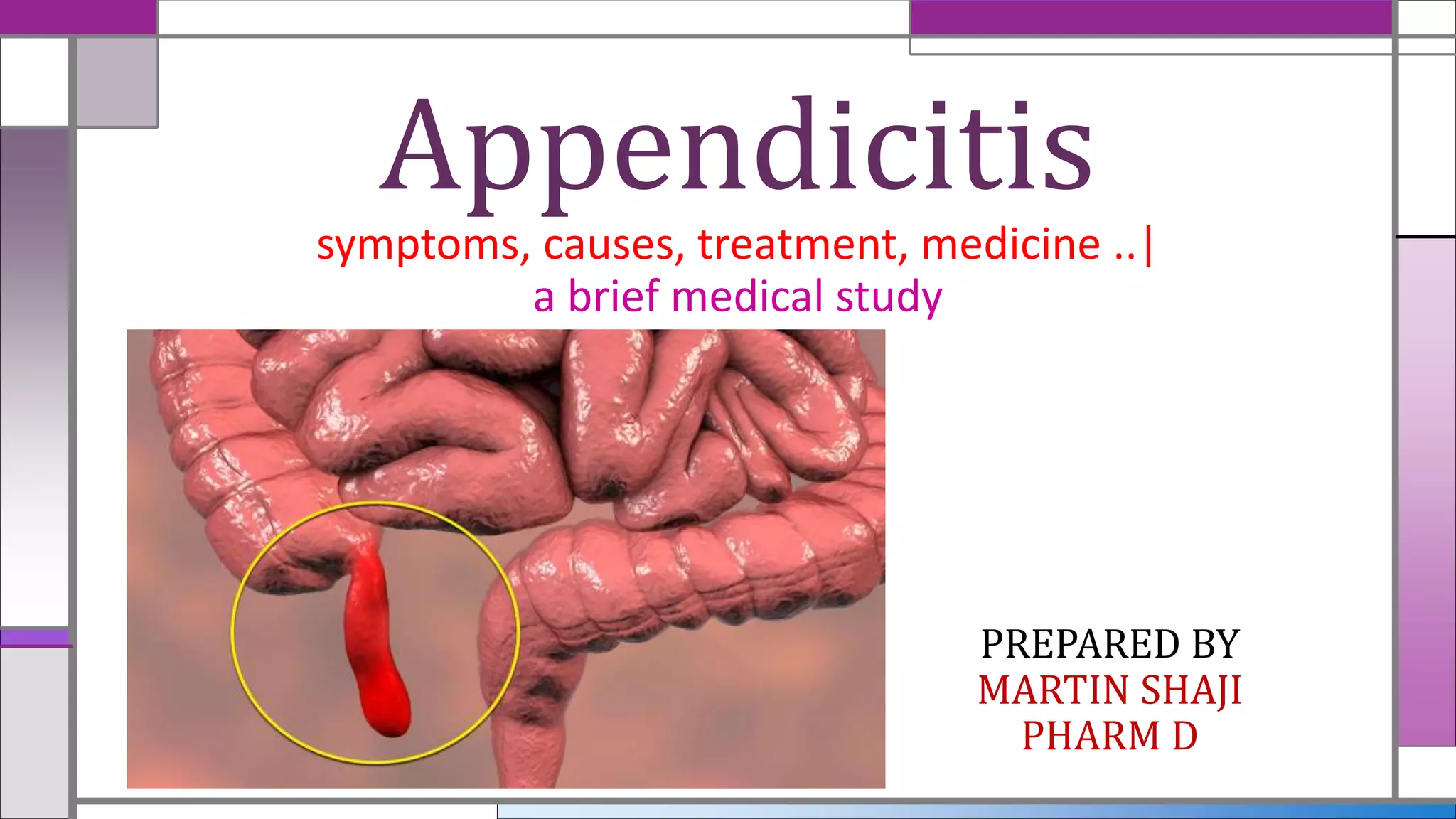
Appendicitis
symptoms, causes, treatment, medicine ..|
a brief medical study
PREPARED BY
MARTIN SHAJI
PHARM D
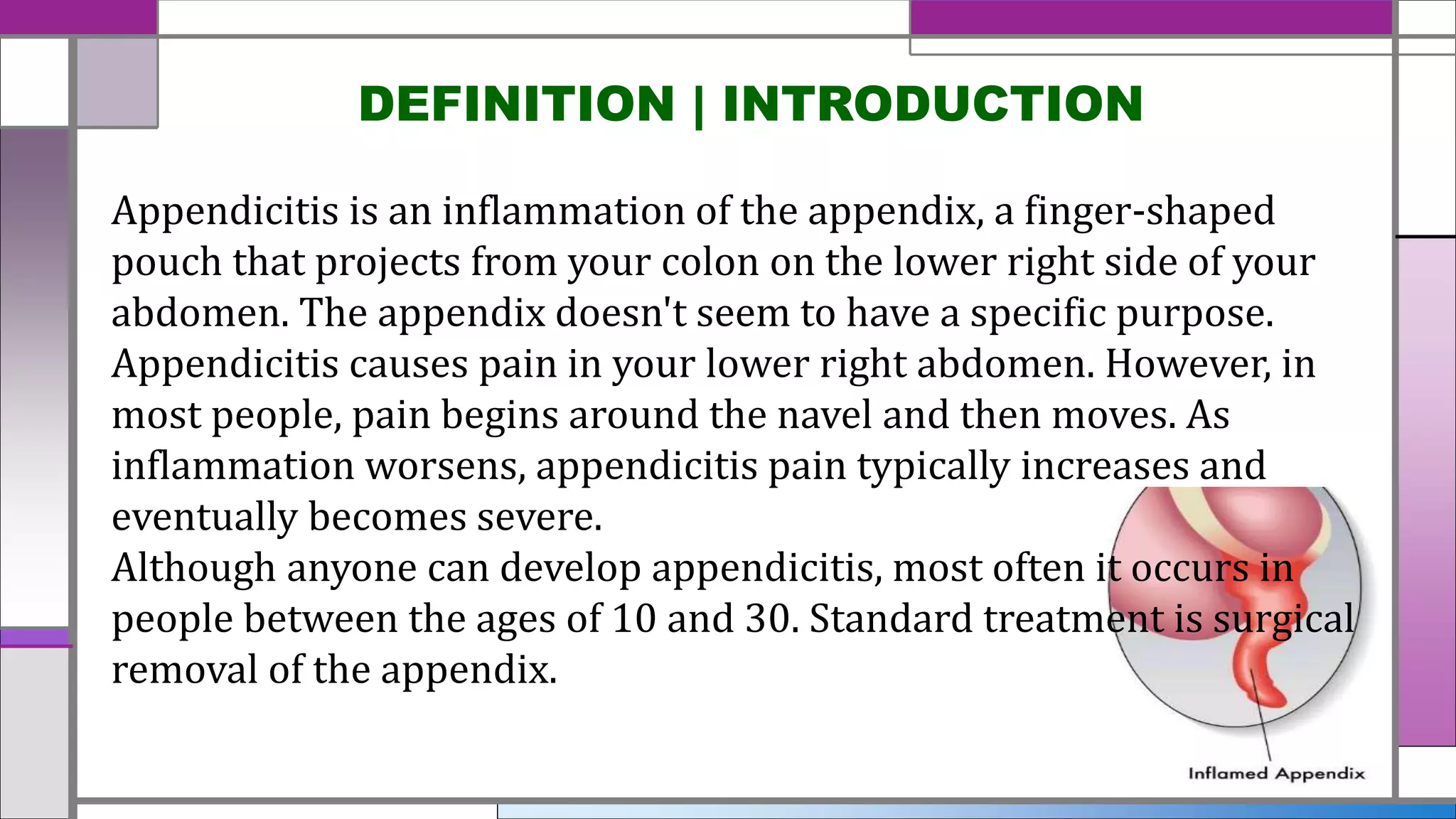
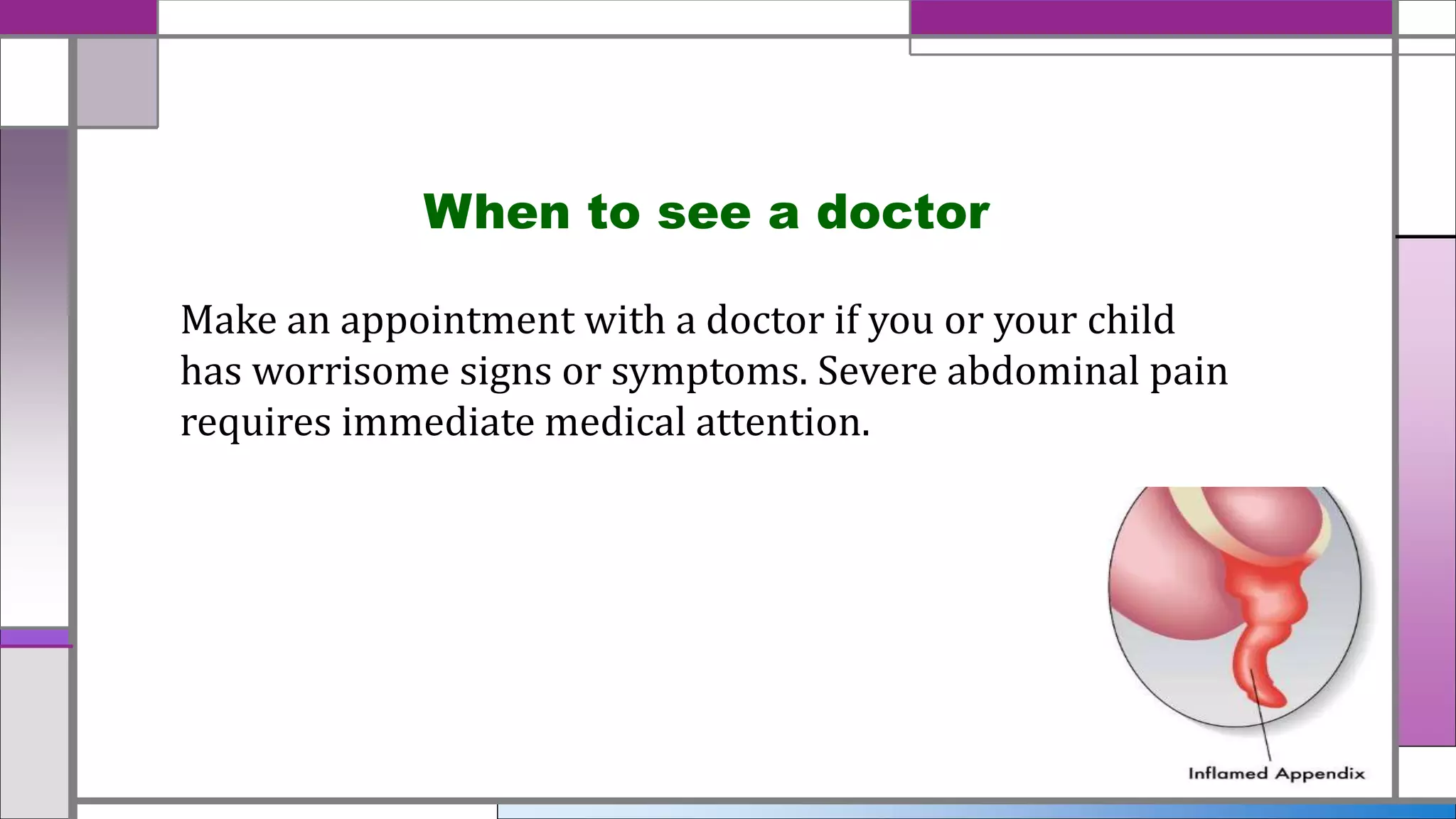
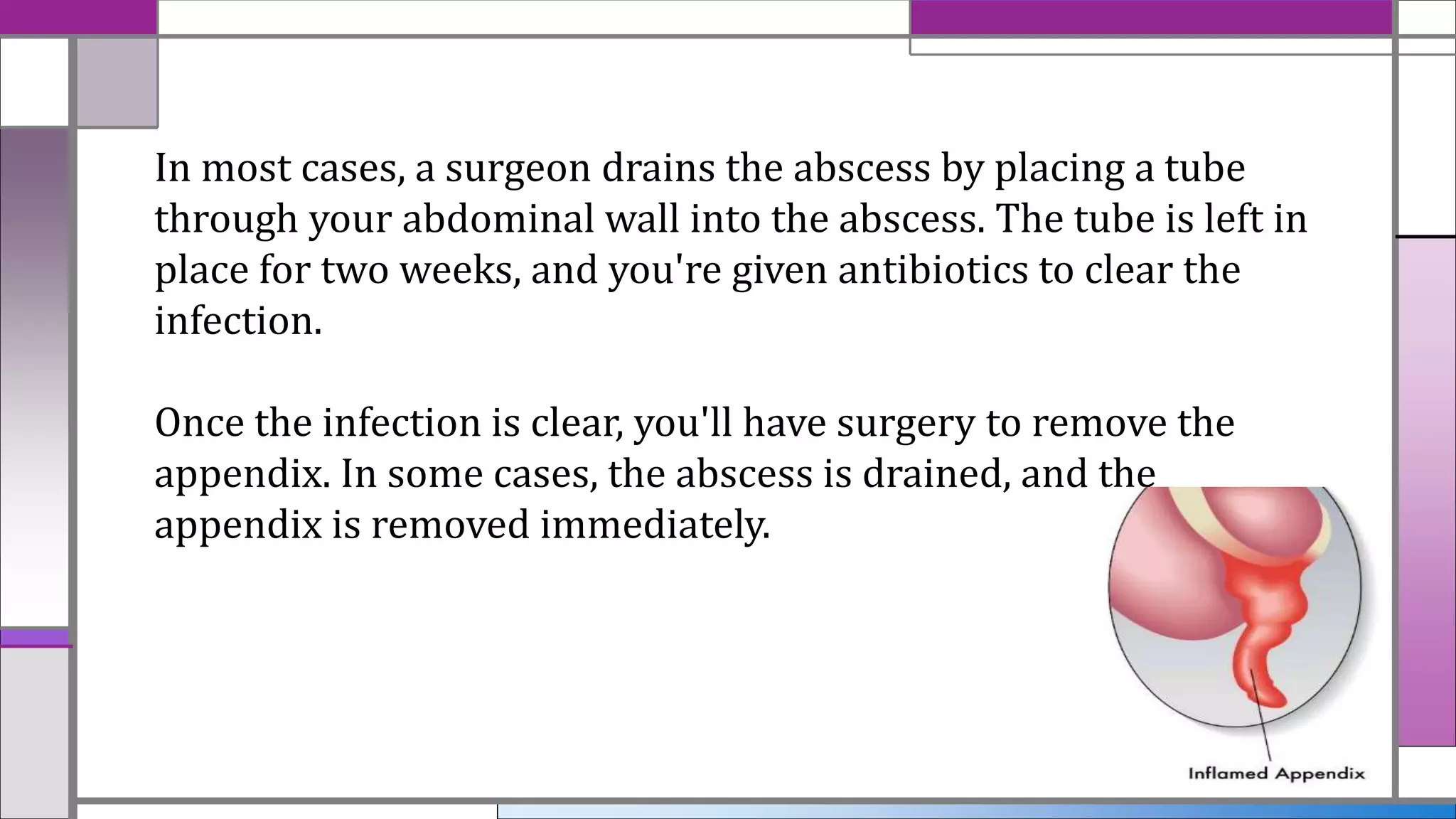
Appendicitis is an inflammation of the appendix, a finger-shaped
pouch that projects from your colon on the lower right side of your
abdomen. The appendix doesn't seem to have a specific purpose.
Appendicitis causes pain in your lower right abdomen. However, in
most people, pain begins around the navel and then moves. As
inflammation worsens, appendicitis pain typically increases and
eventually becomes severe.
Although anyone can develop appendicitis, most often it occurs in
people between the ages of 10 and 30. Standard treatment is surgical
removal of the appendix.
DEFINITION | INTRODUCTION
CAUSES
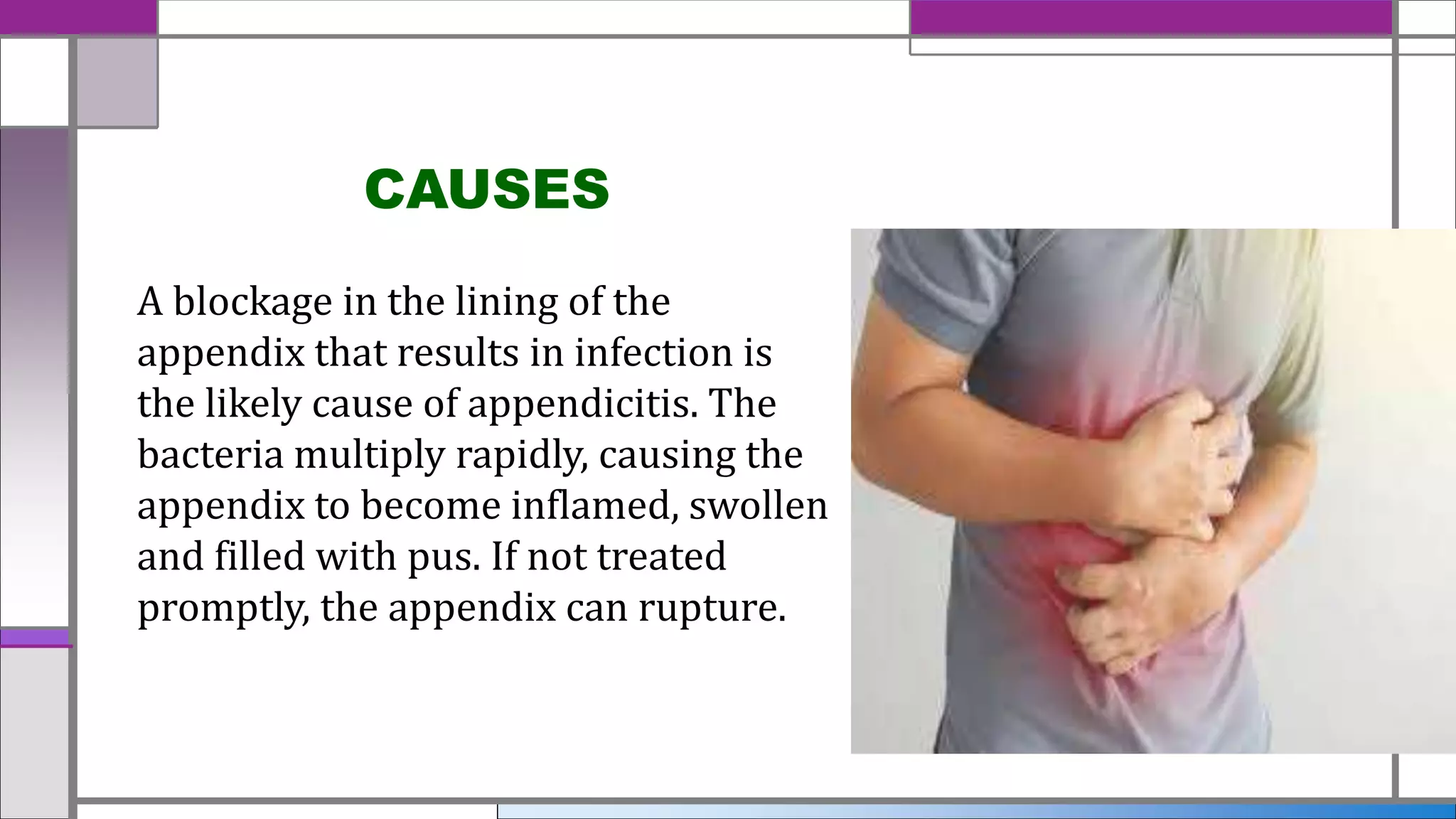
A blockage in the lining of the
appendix that results in infection is
the likely cause of appendicitis. The
bacteria multiply rapidly, causing the
appendix to become inflamed, swollen
and filled with pus. If not treated
promptly, the appendix can rupture.
Signs and symptoms of appendicitis may
include:
Sudden pain that begins on the right side of the lower abdomen
Sudden pain that begins around your navel and often shifts to your
lower right abdomen
Pain that worsens if you cough, walk or make other jarring
movements
Nausea and vomiting
Loss of appetite
Low-grade fever that may worsen as the illness progresses
Constipation or diarrhea
Abdominal bloating
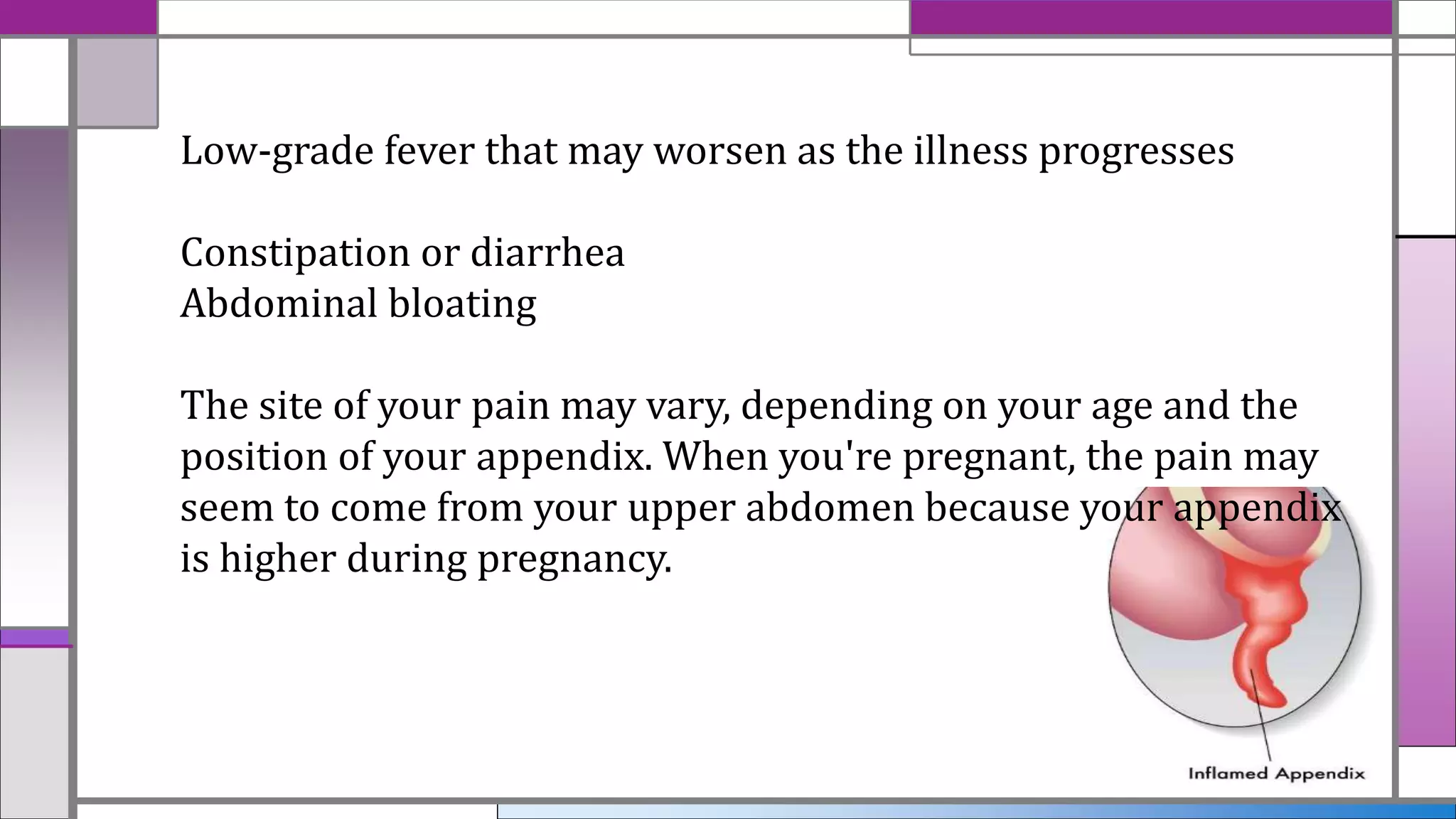
The site of your pain may vary, depending on your age and the
position of your appendix. When you're pregnant, the pain may
seem to come from your upper abdomen because your appendix
is higher during pregnancy.
When to see a doctor
Make an appointment with a doctor if you or your child
has worrisome signs or symptoms. Severe abdominal pain
requires immediate medical attention.
Appendicitis can cause serious complications,
such as:
A ruptured appendix. A rupture spreads infection throughout your
abdomen (peritonitis). Possibly life-threatening, this condition
requires immediate surgery to remove the appendix and clean your
abdominal cavity.
A pocket of pus that forms in the abdomen. If your appendix bursts,
you may develop a pocket of infection (abscess).
In most cases, a surgeon drains the abscess by placing a tube
through your abdominal wall into the abscess. The tube is left in
place for two weeks, and you're given antibiotics to clear the
infection.
Once the infection is clear, you'll have surgery to remove the
appendix. In some cases, the abscess is drained, and the
appendix is removed immediately.
TESTS AND DIAGNOSIS
To help diagnose appendicitis, your doctor will likely take a
history of your signs and symptoms and examine your abdomen.
Tests and procedures used to diagnose appendicitis include:
Physical exam to assess your pain. Your doctor may apply gentle
pressure on the painful area. When the pressure is suddenly
released, appendicitis pain will often feel worse, signaling that the
adjacent peritoneum is inflamed.
Your doctor also may look for abdominal rigidity and a tendency
for you to stiffen your abdominal muscles in response to pressure
over the inflamed appendix (guarding).
Your doctor may use a lubricated, gloved finger to examine
your lower rectum (digital rectal exam). Women of
childbearing age may be given a pelvic exam to check for
possible gynecological problems that could be causing the
pain.
Blood test. This allows your doctor to check for a high
white blood cell count, which may indicate an infection.
Urine test. Your doctor may want you to have a urinalysis to
make sure that a urinary tract infection or a kidney stone
isn't causing your pain.
Imaging tests. Your doctor may also recommend an
abdominal X-ray, an abdominal ultrasound or a
computerized tomography (CT) scan to help confirm
appendicitis or find other causes for your pain.
For a detailed medical discussions and recognition
of appendicitis , generally asked doubts and
medical aspects
• CLICK HERE
•
https://www.slideshare.net/martinshaji/appendi
x-appendicitis-medical-information
TREATMENTS AND DRUGS
Appendicitis treatment usually involves surgery to remove the inflamed
appendix. Before surgery you may be given a dose of antibiotics to
prevent infection.
Surgery to remove the appendix (appendectomy)
Appendectomy can be performed as open surgery using one abdominal
incision about 2 to 4 inches (5 to 10 centimeters) long (laparotomy). Or
the surgery can be done through a few small abdominal incisions
(laparoscopic surgery). During a laparoscopic appendectomy, the
surgeon inserts special surgical tools and a video camera into your
abdomen to remove your appendix.
In general, laparoscopic surgery allows you
to recover faster and heal with less pain
and scarring. It may be better for people
who are elderly or obese. But laparoscopic
surgery isn't appropriate for everyone. If
your appendix has ruptured and infection
has spread beyond the appendix or you
have an abscess, you may need an open
appendectomy, which allows your surgeon
to clean the abdominal cavity.
Expect to spend one or two days in the
hospital after your appendectomy.
Draining an abscess before appendix surgery
If your appendix has burst and an abscess has formed
around it, the abscess may be drained by placing a tube
through your skin into the abscess. Appendectomy can be
performed several weeks later after controlling the infection.
LIFESTYLE AND HOME REMEDIES
Expect a few weeks of recovery from an appendectomy, or longer if
your appendix burst. To help your body heal:
Avoid strenuous activity at first. If your appendectomy was done
laparoscopically, limit your activity for three to five days. If you had
an open appendectomy, limit your activity for 10 to 14 days. Always
ask your doctor about limitations on your activity and when you can
resume normal activities following surgery.
Support your abdomen when you cough. Place a pillow over your
abdomen and apply pressure before you cough, laugh or move to
help reduce pain.
Call your doctor if your pain medications aren't helping. Being in pain
puts extra stress on your body and slows the healing process. If
you're still in pain despite your pain medications, call your doctor.
Get up and move when you're ready. Start slowly and increase your
activity as you feel up to it. Start with short walks.
Sleep when tired. As your body heals, you may find you feel sleepier
than usual. Take it easy and rest when you need to.
ALTERNATIVE MEDICINE
Your doctor will prescribe medications to help you control your
pain after your appendectomy. Some complementary and
alternative treatments, when used with your medications, can help
control pain. Ask your doctor about safe options, such as:
Distracting activities, such as listening to music and talking with
friends, that take your mind off your pain. Distraction can be
especially effective with children.
Guided imagery, such as closing your eyes and thinking about a
favorite place.
Appendicitis - a detailed medical study

Appendicitis - a detailed medical study

  • 1.
    Appendicitis symptoms, causes, treatment,medicine ..| a brief medical study PREPARED BY MARTIN SHAJI PHARM D
  • 2.
    Appendicitis is aninflammation of the appendix, a finger-shaped pouch that projects from your colon on the lower right side of your abdomen. The appendix doesn't seem to have a specific purpose. Appendicitis causes pain in your lower right abdomen. However, in most people, pain begins around the navel and then moves. As inflammation worsens, appendicitis pain typically increases and eventually becomes severe. Although anyone can develop appendicitis, most often it occurs in people between the ages of 10 and 30. Standard treatment is surgical removal of the appendix. DEFINITION | INTRODUCTION
  • 3.
    CAUSES A blockage inthe lining of the appendix that results in infection is the likely cause of appendicitis. The bacteria multiply rapidly, causing the appendix to become inflamed, swollen and filled with pus. If not treated promptly, the appendix can rupture.
  • 4.
    Signs and symptomsof appendicitis may include: Sudden pain that begins on the right side of the lower abdomen Sudden pain that begins around your navel and often shifts to your lower right abdomen Pain that worsens if you cough, walk or make other jarring movements Nausea and vomiting Loss of appetite
  • 5.
    Low-grade fever thatmay worsen as the illness progresses Constipation or diarrhea Abdominal bloating The site of your pain may vary, depending on your age and the position of your appendix. When you're pregnant, the pain may seem to come from your upper abdomen because your appendix is higher during pregnancy.
  • 6.
    When to seea doctor Make an appointment with a doctor if you or your child has worrisome signs or symptoms. Severe abdominal pain requires immediate medical attention.
  • 7.
    Appendicitis can causeserious complications, such as: A ruptured appendix. A rupture spreads infection throughout your abdomen (peritonitis). Possibly life-threatening, this condition requires immediate surgery to remove the appendix and clean your abdominal cavity. A pocket of pus that forms in the abdomen. If your appendix bursts, you may develop a pocket of infection (abscess).
  • 8.
    In most cases,a surgeon drains the abscess by placing a tube through your abdominal wall into the abscess. The tube is left in place for two weeks, and you're given antibiotics to clear the infection. Once the infection is clear, you'll have surgery to remove the appendix. In some cases, the abscess is drained, and the appendix is removed immediately.
  • 9.
    TESTS AND DIAGNOSIS Tohelp diagnose appendicitis, your doctor will likely take a history of your signs and symptoms and examine your abdomen. Tests and procedures used to diagnose appendicitis include: Physical exam to assess your pain. Your doctor may apply gentle pressure on the painful area. When the pressure is suddenly released, appendicitis pain will often feel worse, signaling that the adjacent peritoneum is inflamed. Your doctor also may look for abdominal rigidity and a tendency for you to stiffen your abdominal muscles in response to pressure over the inflamed appendix (guarding).
  • 10.
    Your doctor mayuse a lubricated, gloved finger to examine your lower rectum (digital rectal exam). Women of childbearing age may be given a pelvic exam to check for possible gynecological problems that could be causing the pain. Blood test. This allows your doctor to check for a high white blood cell count, which may indicate an infection.
  • 11.
    Urine test. Yourdoctor may want you to have a urinalysis to make sure that a urinary tract infection or a kidney stone isn't causing your pain. Imaging tests. Your doctor may also recommend an abdominal X-ray, an abdominal ultrasound or a computerized tomography (CT) scan to help confirm appendicitis or find other causes for your pain.
  • 12.
    For a detailedmedical discussions and recognition of appendicitis , generally asked doubts and medical aspects • CLICK HERE • https://www.slideshare.net/martinshaji/appendi x-appendicitis-medical-information
  • 13.
    TREATMENTS AND DRUGS Appendicitistreatment usually involves surgery to remove the inflamed appendix. Before surgery you may be given a dose of antibiotics to prevent infection. Surgery to remove the appendix (appendectomy) Appendectomy can be performed as open surgery using one abdominal incision about 2 to 4 inches (5 to 10 centimeters) long (laparotomy). Or the surgery can be done through a few small abdominal incisions (laparoscopic surgery). During a laparoscopic appendectomy, the surgeon inserts special surgical tools and a video camera into your abdomen to remove your appendix.
  • 14.
    In general, laparoscopicsurgery allows you to recover faster and heal with less pain and scarring. It may be better for people who are elderly or obese. But laparoscopic surgery isn't appropriate for everyone. If your appendix has ruptured and infection has spread beyond the appendix or you have an abscess, you may need an open appendectomy, which allows your surgeon to clean the abdominal cavity. Expect to spend one or two days in the hospital after your appendectomy.
  • 15.
    Draining an abscessbefore appendix surgery If your appendix has burst and an abscess has formed around it, the abscess may be drained by placing a tube through your skin into the abscess. Appendectomy can be performed several weeks later after controlling the infection.
  • 16.
    LIFESTYLE AND HOMEREMEDIES Expect a few weeks of recovery from an appendectomy, or longer if your appendix burst. To help your body heal: Avoid strenuous activity at first. If your appendectomy was done laparoscopically, limit your activity for three to five days. If you had an open appendectomy, limit your activity for 10 to 14 days. Always ask your doctor about limitations on your activity and when you can resume normal activities following surgery. Support your abdomen when you cough. Place a pillow over your abdomen and apply pressure before you cough, laugh or move to help reduce pain.
  • 17.
    Call your doctorif your pain medications aren't helping. Being in pain puts extra stress on your body and slows the healing process. If you're still in pain despite your pain medications, call your doctor. Get up and move when you're ready. Start slowly and increase your activity as you feel up to it. Start with short walks. Sleep when tired. As your body heals, you may find you feel sleepier than usual. Take it easy and rest when you need to.
  • 18.
    ALTERNATIVE MEDICINE Your doctorwill prescribe medications to help you control your pain after your appendectomy. Some complementary and alternative treatments, when used with your medications, can help control pain. Ask your doctor about safe options, such as: Distracting activities, such as listening to music and talking with friends, that take your mind off your pain. Distraction can be especially effective with children. Guided imagery, such as closing your eyes and thinking about a favorite place.