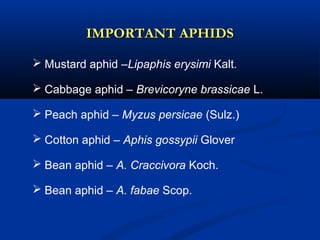
IMPORTANT APHIDSIMPORTANT APHIDS
 Mustard aphid –Lipaphis erysimi Kalt.
 Cabbage aphid – Brevicoryne brassicae L.
 Peach aphid – Myzus persicae (Sulz.)
 Cotton aphid – Aphis gossypii Glover
 Bean aphid – A. Craccivora Koch.
 Bean aphid – A. fabae Scop.
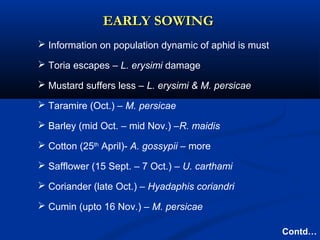
EARLY SOWINGEARLY SOWING
 Information on population dynamic of aphid is must
 Toria escapes – L. erysimi damage
 Mustard suffers less – L. erysimi & M. persicae
 Taramire (Oct.) – M. persicae
 Barley (mid Oct. – mid Nov.) –R. maidis
 Cotton (25th
April)- A. gossypii – more
 Safflower (15 Sept. – 7 Oct.) – U. carthami
 Coriander (late Oct.) – Hyadaphis coriandri
 Cumin (upto 16 Nov.) – M. persicae
Contd…
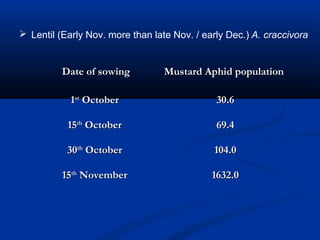
Date of sowingDate of sowing Mustard Aphid populationMustard Aphid population
11stst
OctoberOctober 30.630.6
1515thth
OctoberOctober 69.469.4
3030thth
OctoberOctober 104.0104.0
1515thth
NovemberNovember 1632.01632.0
 Lentil (Early Nov. more than late Nov. / early Dec.) A. craccivora
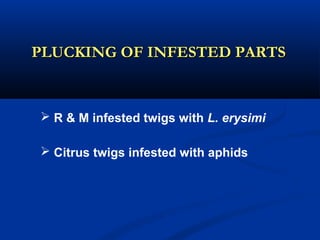
PLUCKING OF INFESTED PARTSPLUCKING OF INFESTED PARTS
 R & M infested twigs with L. erysimi
 Citrus twigs infested with aphids
PLANT SPACING AND DENSITY
 Wider spacing (60x20cm) / low plant
Population-high A. craccivora on Chickpea
 Close spacing in R & M due to broadcasting
– more L. erysimi
 Narrower row spacing of Maize- reduced aphid
colonization on bean
INTERCROPPING
To avoid risk of crop failure
Better utilization of farm recourses and labour
Protection from pest
 Cabbage + Mustard, Rai + Taramira
 Cotton + Lablab, Greengram, Blackgram,
Cowpea– A. gossypi
 Beans +Older/ densely planted Maize- A.fabae
• Reduce attraction of the pest to the host
• Adverse modification of the climatic factor
• Impeded dispersal
• Increase emigration
• Reduced survival of pest in intercrop
WATER MANAGEMENT
DROUGHT CONDITION
Loss of turgor
Decrease in sap pressure
Decrease in feeding, reproduction, survival
Increased dispersal
Reduced fecundity- L. erysimi
 Increases solute concentration in plant sap
• More availability of free N and carbohydrates
• Higher multiplication of A. craccivora on lentil
and higher dispersal
• In rape high reproduction in B.brassicae
• In mustard higher L. erysimi
• B.Carinata ,B.juncea suffer heavilu- L. erysimi
 No difference in A. craccivora and M. pisum
population under irrigated and unirrigated
condition in pea
IRRIGATEED CONDITION
 Increased L. erysimi population
 Two irrigation are best in mustard
FERTILITY MANAGEMENT
 N: Low supply
 Higher food consumption
 Prolong feeding
 Poor digestion
 Poor development of insect
 P: Lack – Affects uptake of nutrients
 K:
 Exert balancing effect on N and P
 Increased- better protein synthesis -reduced A.A and sugar in
sap
 Higher amount- higher silica content- hardening of epidermis,
sclerenchymatous tissue and cell wall of parenchyma
REMOVAL OF ALTERNATE HOSTS
• Destruction of volunteer GN plants and weeds-
A. craccivora
• Removal of weeds for Peach Leaf Curl Virus-
Brachicaudus helichrysi
• Yellow flowering weeds-M. persicae
TRAP CROP
• Indian mustard for the control of B. brassicae
and L. erysimi on Cabbage
• Cabbage (9 rows) + mustard (a paired
rows -1st
row 15D before planting and 2nd
row 25D after cabbage planting)
ROUGHING AND AVOIDANCE OF
RATOONING
• Virus affected plants-Banana, Aphid,
Pentalomia nigronervosa
• No ratooning
• No ratoon crop which facilitates banana aphid
DISTANCE FROM OTHER CROP
• Toria/sarson away from mustard and other
long duration crop
• Seed plot of potato should be away from
commercial ones
• Seed plot should be located upwind from
commercial potato.
APHID RESISTANCE/TOLERANT VARIETIES
• Myzus persicae on tabocco:
• Jamaica, Cuban, Fransons, Little rittendent,
Sumatra
• Lipaphis erysimi on rapeseed mustard
• None have TRUE resistance
• Aphis craccivora on cowpea
• P 1473, P 1476, MS 9369
CULTURAL PRACTICES & NATURAL ENEMIES
• SYSTEM PROVIDES
•Vital food
•Shelter
•Resting sites for natural enemies
• Black gram/ Sorghum intercropping – High
population of Coccinella septempunctata
• GN / Pearl millet intercropping – Increases
Ciccunella sp. Menochilus sexmaculatus
• GN / Maize – Increases natural enemies
FUTURE RESEARCH NEEDS
• Population dynamics under changing
environmental conditions
• Aphid monitoring for planning cultural methods.
• Nutrient profile in plant and soil.
• Role of water on population dynamics
CULUTRAL CONTROL SHOULD FORM AN
INTEGRAL PART OF IPM
BIOCONTROL IN APHIDSBIOCONTROL IN APHIDS
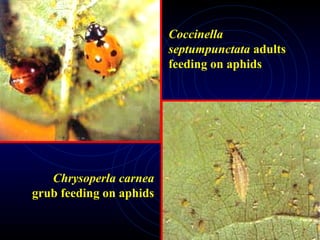
Chrysoperla carnea
grub feeding on aphids
Coccinella
septumpunctata adults
feeding on aphids
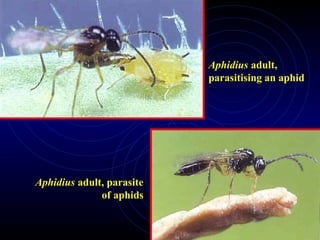
Aphidius adult, parasite
of aphids
Aphidius adult,
parasitising an aphid
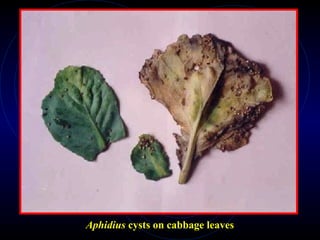
Aphidius cysts on cabbage leaves
Thanks

Aphids

  • 1.
    IMPORTANT APHIDSIMPORTANT APHIDS Mustard aphid –Lipaphis erysimi Kalt.  Cabbage aphid – Brevicoryne brassicae L.  Peach aphid – Myzus persicae (Sulz.)  Cotton aphid – Aphis gossypii Glover  Bean aphid – A. Craccivora Koch.  Bean aphid – A. fabae Scop.
  • 2.
    EARLY SOWINGEARLY SOWING Information on population dynamic of aphid is must  Toria escapes – L. erysimi damage  Mustard suffers less – L. erysimi & M. persicae  Taramire (Oct.) – M. persicae  Barley (mid Oct. – mid Nov.) –R. maidis  Cotton (25th April)- A. gossypii – more  Safflower (15 Sept. – 7 Oct.) – U. carthami  Coriander (late Oct.) – Hyadaphis coriandri  Cumin (upto 16 Nov.) – M. persicae Contd…
  • 3.
    Date of sowingDateof sowing Mustard Aphid populationMustard Aphid population 11stst OctoberOctober 30.630.6 1515thth OctoberOctober 69.469.4 3030thth OctoberOctober 104.0104.0 1515thth NovemberNovember 1632.01632.0  Lentil (Early Nov. more than late Nov. / early Dec.) A. craccivora
  • 4.
    PLUCKING OF INFESTEDPARTSPLUCKING OF INFESTED PARTS  R & M infested twigs with L. erysimi  Citrus twigs infested with aphids
  • 5.
    PLANT SPACING ANDDENSITY  Wider spacing (60x20cm) / low plant Population-high A. craccivora on Chickpea  Close spacing in R & M due to broadcasting – more L. erysimi  Narrower row spacing of Maize- reduced aphid colonization on bean
  • 6.
    INTERCROPPING To avoid riskof crop failure Better utilization of farm recourses and labour Protection from pest  Cabbage + Mustard, Rai + Taramira  Cotton + Lablab, Greengram, Blackgram, Cowpea– A. gossypi  Beans +Older/ densely planted Maize- A.fabae
  • 7.
    • Reduce attractionof the pest to the host • Adverse modification of the climatic factor • Impeded dispersal • Increase emigration • Reduced survival of pest in intercrop
  • 8.
    WATER MANAGEMENT DROUGHT CONDITION Lossof turgor Decrease in sap pressure Decrease in feeding, reproduction, survival Increased dispersal Reduced fecundity- L. erysimi
  • 9.
     Increases soluteconcentration in plant sap • More availability of free N and carbohydrates • Higher multiplication of A. craccivora on lentil and higher dispersal • In rape high reproduction in B.brassicae • In mustard higher L. erysimi • B.Carinata ,B.juncea suffer heavilu- L. erysimi
  • 10.
     No differencein A. craccivora and M. pisum population under irrigated and unirrigated condition in pea IRRIGATEED CONDITION  Increased L. erysimi population  Two irrigation are best in mustard
  • 11.
    FERTILITY MANAGEMENT  N:Low supply  Higher food consumption  Prolong feeding  Poor digestion  Poor development of insect  P: Lack – Affects uptake of nutrients  K:  Exert balancing effect on N and P  Increased- better protein synthesis -reduced A.A and sugar in sap  Higher amount- higher silica content- hardening of epidermis, sclerenchymatous tissue and cell wall of parenchyma
  • 12.
    REMOVAL OF ALTERNATEHOSTS • Destruction of volunteer GN plants and weeds- A. craccivora • Removal of weeds for Peach Leaf Curl Virus- Brachicaudus helichrysi • Yellow flowering weeds-M. persicae
  • 13.
    TRAP CROP • Indianmustard for the control of B. brassicae and L. erysimi on Cabbage • Cabbage (9 rows) + mustard (a paired rows -1st row 15D before planting and 2nd row 25D after cabbage planting)
  • 14.
    ROUGHING AND AVOIDANCEOF RATOONING • Virus affected plants-Banana, Aphid, Pentalomia nigronervosa • No ratooning • No ratoon crop which facilitates banana aphid
  • 15.
    DISTANCE FROM OTHERCROP • Toria/sarson away from mustard and other long duration crop • Seed plot of potato should be away from commercial ones • Seed plot should be located upwind from commercial potato.
  • 16.
    APHID RESISTANCE/TOLERANT VARIETIES •Myzus persicae on tabocco: • Jamaica, Cuban, Fransons, Little rittendent, Sumatra • Lipaphis erysimi on rapeseed mustard • None have TRUE resistance • Aphis craccivora on cowpea • P 1473, P 1476, MS 9369
  • 17.
    CULTURAL PRACTICES &NATURAL ENEMIES • SYSTEM PROVIDES •Vital food •Shelter •Resting sites for natural enemies • Black gram/ Sorghum intercropping – High population of Coccinella septempunctata • GN / Pearl millet intercropping – Increases Ciccunella sp. Menochilus sexmaculatus • GN / Maize – Increases natural enemies
  • 18.
    FUTURE RESEARCH NEEDS •Population dynamics under changing environmental conditions • Aphid monitoring for planning cultural methods. • Nutrient profile in plant and soil. • Role of water on population dynamics CULUTRAL CONTROL SHOULD FORM AN INTEGRAL PART OF IPM
  • 19.
  • 20.
    Chrysoperla carnea grub feedingon aphids Coccinella septumpunctata adults feeding on aphids
  • 21.
    Aphidius adult, parasite ofaphids Aphidius adult, parasitising an aphid
  • 22.
    Aphidius cysts oncabbage leaves
  • 23.