Download as PDF, PPTX

![WHAT IS ITS NUTRITION
The turnip's root is high in vitamin C. The green leaves of the turnip top ("turnip greens") are a
good source of vitamin A, folate, vitamin C, vitamin K and calcium. Turnip greens are high in
lutein (8.5 mg / 100 g).
One medium raw turnip (122 g) contains the following nutritional elements according to the
USDA:[2]
Calories : 34
Fat: 0.12
Carbohydrates: 7.84
Fibers: 2.2
Protein: 1.10
Cholesterol: 0](https://image.slidesharecdn.com/turnip-150731130326-lva1-app6892/85/Turnip-4-320.jpg)

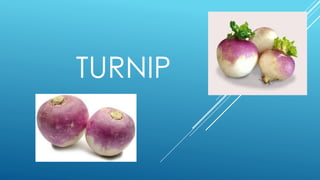
The turnip is a root vegetable commonly grown for its white, bulbus taproot. Small, tender varieties are eaten by humans, while larger varieties are used as livestock feed. The turnip root and greens provide various vitamins and minerals. Turnip greens in particular contain vitamins A, C, K, folate, and calcium. Turnip sprouts also contain glucosinolates, sulfur compounds that may help protect against cancer and provide antifungal, antibacterial, and antiparasitic benefits.


