Auditory Processing Disorder Max Serfaty Olivia Parent
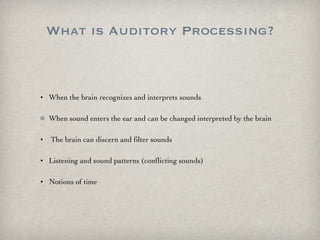
What is Auditory Processing? When the brain recognizes and interprets sounds When sound enters the ear and can be changed interpreted by the brain The brain can discern and filter sounds Listening and sound patterns (conflicting sounds) Notions of time
Prevalence Can affect both children and adults 2-3% of children 17-20% of adults Males are twice as likely to have APD than females
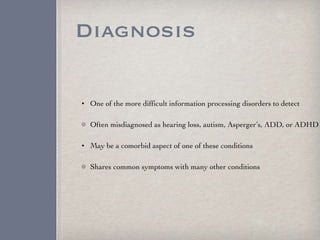
Diagnosis One of the more difficult information processing disorders to detect Often misdiagnosed as hearing loss, autism, Asperger’s, ADD, or ADHD  May be a comorbid aspect of one of these conditions Shares common symptoms with many other conditions
Etiology Head trauma, ear infection, lack of oxygen at birth Genetic mutation Other developmental delays (comorbidity) The causes of APD are largely unknown, and can be genetic or acquired.
Trouble paying attention Oral information is tougher to absorb Trouble with directions Poor listening skills Need more time to process information Have difficulty reading, spelling, etc. Characteristics
Implications Individuals with APD tend to be withdrawn, quiet, and shy Lack of understanding by peers (especially at young ages) School and social life may be affected, being unable to comprehend what is being taught or said In adults, this can lead to relationship (social, professional, and romantic) problems
What can be done Training with basic auditory tasks can be done to improve performance These tasks are incorporated into computer programs and are easy to use Occupational therapy

Apd

  • 1.
    Auditory Processing DisorderMax Serfaty Olivia Parent
  • 2.
    What is AuditoryProcessing? When the brain recognizes and interprets sounds When sound enters the ear and can be changed interpreted by the brain The brain can discern and filter sounds Listening and sound patterns (conflicting sounds) Notions of time
  • 3.
    Prevalence Can affectboth children and adults 2-3% of children 17-20% of adults Males are twice as likely to have APD than females
  • 4.
    Diagnosis One ofthe more difficult information processing disorders to detect Often misdiagnosed as hearing loss, autism, Asperger’s, ADD, or ADHD May be a comorbid aspect of one of these conditions Shares common symptoms with many other conditions
  • 5.
    Etiology Head trauma,ear infection, lack of oxygen at birth Genetic mutation Other developmental delays (comorbidity) The causes of APD are largely unknown, and can be genetic or acquired.
  • 6.
    Trouble paying attentionOral information is tougher to absorb Trouble with directions Poor listening skills Need more time to process information Have difficulty reading, spelling, etc. Characteristics
  • 7.
    Implications Individuals withAPD tend to be withdrawn, quiet, and shy Lack of understanding by peers (especially at young ages) School and social life may be affected, being unable to comprehend what is being taught or said In adults, this can lead to relationship (social, professional, and romantic) problems
  • 8.
    What can bedone Training with basic auditory tasks can be done to improve performance These tasks are incorporated into computer programs and are easy to use Occupational therapy