Speech
Impairment
Tricia Vaivao
Christina Finau
ED215
Intro. To Exceptional Children
Ms. Teresita Almendras
July 09, 2015
Bipolar Disorder
&
Introduction
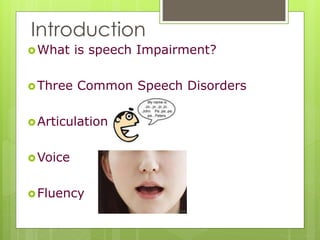
What is speech Impairment?
Three Common Speech Disorders
Articulation
Voice
Fluency
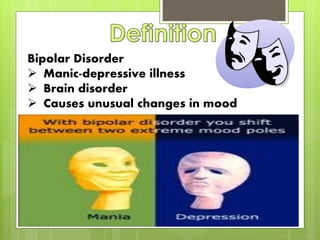
Bipolar Disorder
 Manic-depressive illness
 Brain disorder
 Causes unusual changes in mood
Definition
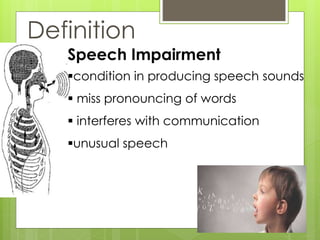
Speech Impairment
condition in producing speech sounds
 miss pronouncing of words
 interferes with communication
unusual speech
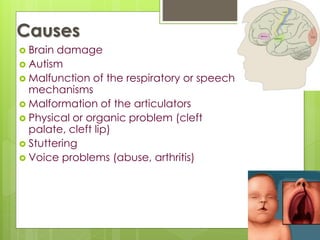
Causes
 Brain damage
 Autism
 Malfunction of the respiratory or speech
mechanisms
 Malformation of the articulators
 Physical or organic problem (cleft
palate, cleft lip)
 Stuttering
 Voice problems (abuse, arthritis)
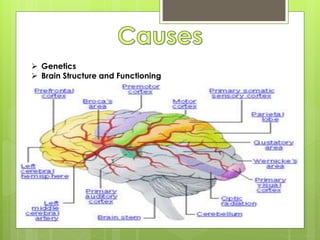
 Genetics
 Brain Structure and Functioning
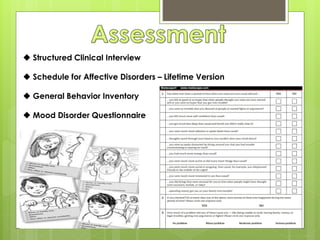
 Structured Clinical Interview
 Schedule for Affective Disorders – Lifetime Version
 General Behavior Inventory
 Mood Disorder Questionnaire
Assessments
Denver Articulation Screening
Exam
Denver II
Peabody Picture Vocabulary
Test Revised
Early Language Milestone Scale
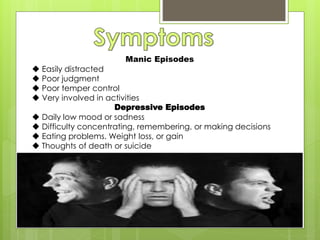
Manic Episodes
 Easily distracted
 Poor judgment
 Poor temper control
 Very involved in activities
Depressive Episodes
 Daily low mood or sadness
 Difficulty concentrating, remembering, or making decisions
 Eating problems. Weight loss, or gain
 Thoughts of death or suicide
Symptoms
repeating sounds
adding extra sounds and words
making jerky movements while talking
blinking several times while talking
visible frustration when trying to
communicate
taking frequent pauses when talking
Distorting sounds when talking
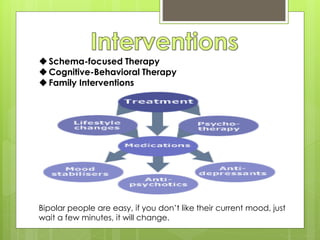
Schema-focused Therapy
Cognitive-Behavioral Therapy
Family Interventions
Bipolar people are easy, if you don’t like their current mood, just
wait a few minutes, it will change.
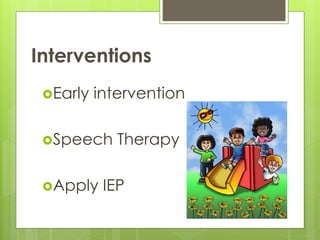
Interventions
Early intervention
Speech Therapy
Apply IEP
Caponigro, J,. Lee, E,. Johnson, S,. & Kring, A,. (2012). Bipolar Disorder:
A Guide for the Newly Diagnosed. Oakland, CA: New Harbinger
Publications, Inc.
Fink, C., & Kraynak, J., (2013), Bipolar Disorder for Dummies 2nd Edition.
Hoboken, NJ: John Wiley & Sons, Inc.
Youngstrom, E., (2012, October 23) Myths and Realities about Bipolar
Disorders. Retrieved from
http://www.apa.org/news/press/release/2012/10/bipolar-
disorder.,aspx
Kirk, Samuel A., et al. Education Exceptional Children, 11th Ed.
Houghton Mifflin. New York, 2006.
Costello, Janis M. Speech Disorders in Children. College-Hill
Press. California, 1984.
New York Times
http://health.nytimes.com/health/guides/disease/speech-
disorders/overview.html

Presentation1

  • 1.
    Speech Impairment Tricia Vaivao Christina Finau ED215 Intro.To Exceptional Children Ms. Teresita Almendras July 09, 2015 Bipolar Disorder &
  • 3.
    Introduction What is speechImpairment? Three Common Speech Disorders Articulation Voice Fluency
  • 4.
    Bipolar Disorder  Manic-depressiveillness  Brain disorder  Causes unusual changes in mood
  • 5.
    Definition Speech Impairment condition inproducing speech sounds  miss pronouncing of words  interferes with communication unusual speech
  • 6.
    Causes  Brain damage Autism  Malfunction of the respiratory or speech mechanisms  Malformation of the articulators  Physical or organic problem (cleft palate, cleft lip)  Stuttering  Voice problems (abuse, arthritis)
  • 7.
     Genetics  BrainStructure and Functioning
  • 8.
     Structured ClinicalInterview  Schedule for Affective Disorders – Lifetime Version  General Behavior Inventory  Mood Disorder Questionnaire
  • 9.
    Assessments Denver Articulation Screening Exam DenverII Peabody Picture Vocabulary Test Revised Early Language Milestone Scale
  • 10.
    Manic Episodes  Easilydistracted  Poor judgment  Poor temper control  Very involved in activities Depressive Episodes  Daily low mood or sadness  Difficulty concentrating, remembering, or making decisions  Eating problems. Weight loss, or gain  Thoughts of death or suicide
  • 11.
    Symptoms repeating sounds adding extrasounds and words making jerky movements while talking blinking several times while talking visible frustration when trying to communicate taking frequent pauses when talking Distorting sounds when talking
  • 12.
    Schema-focused Therapy Cognitive-Behavioral Therapy FamilyInterventions Bipolar people are easy, if you don’t like their current mood, just wait a few minutes, it will change.
  • 13.
  • 15.
    Caponigro, J,. Lee,E,. Johnson, S,. & Kring, A,. (2012). Bipolar Disorder: A Guide for the Newly Diagnosed. Oakland, CA: New Harbinger Publications, Inc. Fink, C., & Kraynak, J., (2013), Bipolar Disorder for Dummies 2nd Edition. Hoboken, NJ: John Wiley & Sons, Inc. Youngstrom, E., (2012, October 23) Myths and Realities about Bipolar Disorders. Retrieved from http://www.apa.org/news/press/release/2012/10/bipolar- disorder.,aspx Kirk, Samuel A., et al. Education Exceptional Children, 11th Ed. Houghton Mifflin. New York, 2006. Costello, Janis M. Speech Disorders in Children. College-Hill Press. California, 1984. New York Times http://health.nytimes.com/health/guides/disease/speech- disorders/overview.html

Editor's Notes

  • #3 Introduction slide. Introduce bipolar disorder, and elaborate on it. Stay on point, and don’t stray away from it.
  • #8 People or children with bipolar disorder has a s
  • #15 Conclude PowerPoint presentation with a very powerful message regarding bipolar disorder and speech impairment, before questions or comments.