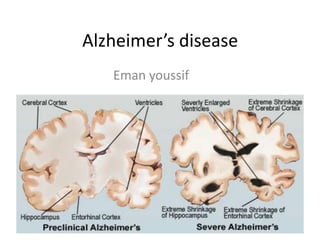

Alzheimer’s disease
Eman youssif
The content:
Introduction
definition
Causes of Alzheimer's disease
(proteins)
Symptoms and diagnosis
treatment
discussion
definition
a serious brain disorder that impacts daily living
through memory loss and cognitive changes.
Although not all memory loss indicates
Alzheimer’s disease, one in ten people over 65
years of age, and over half of those over 85 have
Alzheimer’s disease.
The problem in Alzheimer’s disease:
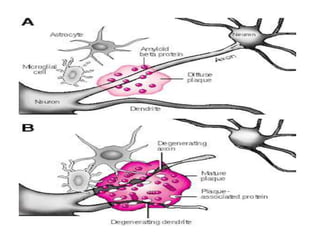
plaques and tangles accumulate in the brain
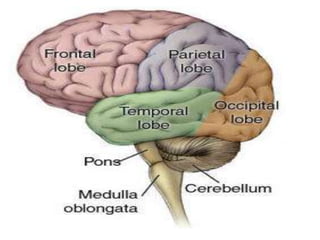
affect hippocampus that responsible for memory
levels of Alzheimer’s
defect in
language
text in reading
emotions
sense, hearing
family names
it take 10 years to reach to this part
risk of Alzheimer’s disease

The primary risk
factors of Alzheimer’s
are age, family
history, and genetics.
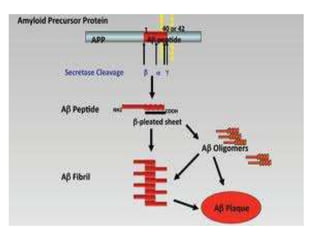
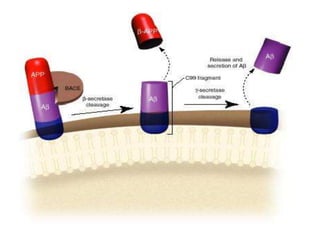
Amyloid precursor protein (APP) is
an integral membrane protein
expressed in many tissues and
concentrated in the synapses of
neurons.
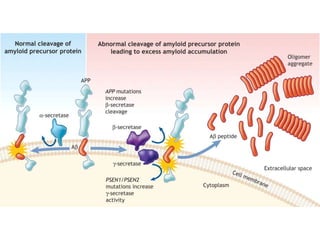
Mutations in critical regions of
Amyloid Precursor Protein, including
the region that generates amyloid beta
(Aβ), cause familial susceptibility to
Alzheimer's disease.For example,
several mutations outside the Aβ
region associated with familial
Alzheimer's have been found to
dramatically increase production of Aβ
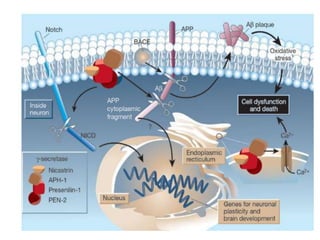
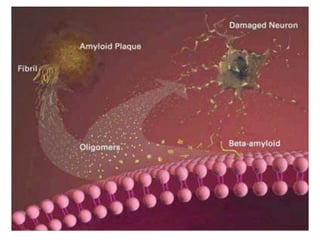
Many of the key pathological events of AD may also be directly related to the
intracellular accumulation of this insoluble amyloid. The aggregated,
intracellular amyloid induces the production of reactive oxygen species (ROS)
and lipid peroxidation products and ultimately results in the leakage of the
lysosomal membrane. The breakdown of the lysosomal membrane may be a
key pathogenic event, leading to the release of heparan sulfate and lysosomal
hydrolases into the cytosol.
Result of accumulation:
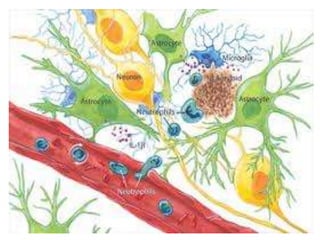
Aβ oligomers and plaques are
potent synaptotoxins, block
proteasome function, inhibit
mitochondrial activity, alter
intracellular Ca2+ levels and
stimulate inflammatory processes
Aβ interacts with the signalling
pathways that regulate the
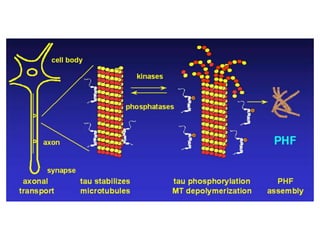
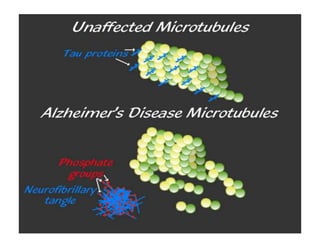
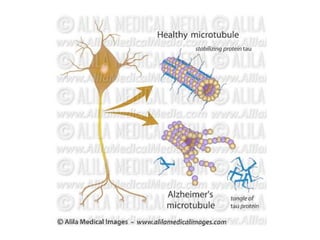
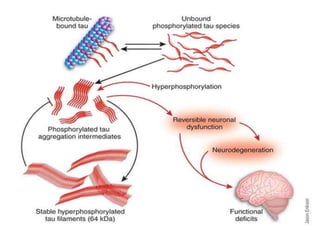
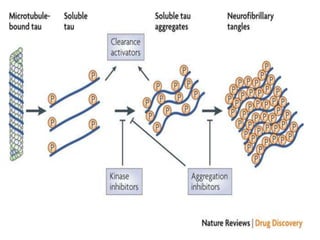
phosphorylation of the microtubuleassociated protein tau.
Hyperphosphorylation of tau disrupts
its normal function in regulating
axonal transport and leads to the
accumulation of neurofibrillary tangles
and toxic species of soluble tau.
Tau protein
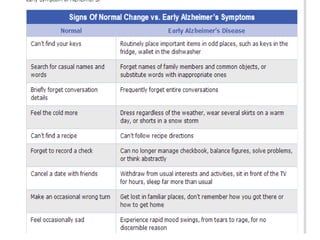
Symptoms:
It is normal for age-related brain shrinkage to
produce changes in processing speed,
attention, and short term memory, creating socalled “senior moments.”
Stages of Alzheimer’s disease
Stage 1 – No impairment. Memory and cognitive abilities appear normal.
Stage 2 – Minimal Impairment/Normal Forgetfulness. Memory lapses and
changes in thinking are rarely detected by friends, family, or medical
personnel, especially as about half of all people over 65 begin noticing
problems in concentration and word recall.
Stage 3 – Early Confusional/Mild Cognitive Impairment. While subtle
difficulties begin to impact function, the person may consciously or
subconsciously try to cover up his or her problems. Expect to experience
difficulty with retrieving words, planning, organization, misplacing
objects, and forgetting recent learning, which can affect life at home and
work. Depression and other changes in mood can also occur. Duration: 2
to 7 years.
Stage 4 – Late Confusional/Mild Alzheimer’s. Problems handling finances
result from mathematical challenges. Recent events and conversations are
increasingly forgotten, although most people in this stage still know
themselves and their family. Experience problems carrying out sequential
tasks, including cooking, driving, ordering food at restaurants, and shopping.
Often withdraw from social situations, become defensive, and deny problems.
Accurate diagnosis of Alzheimer’s disease is possible at this stage. Lasts
roughly 2 years.
Stage 5 – Early Dementia/Moderate Alzheimer’s disease. Decline is more severe and
requires assistance. No longer able to manage independently or unable to recall
personal history details and contact information. Frequently disoriented regarding
place and or time. People in this stage experience a severe decline in numerical
abilities and judgment skills, which can leave them vulnerable to scams and at risk
from safety issues. Basic daily living tasks like feeding and dressing require increased
supervision. Duration: an average of 1.5 years.
Stage 6 – Middle Dementia/Moderately Severe Alzheimer’s disease.
Total lack of awareness of present events and inability to accurately
remember the past. People in this stage progressively lose the ability
to take care of daily living activities like dressing, toileting, and eating
but are still able to respond to nonverbal stimuli, and communicate
pleasure and pain via behavior. Agitation and hallucinations often
show up in the late afternoon or evening. Dramatic personality
changes such as wandering or suspicion of family members are
common. Many can’t remember close family members, but know they
are familiar. Lasts approximately 2.5 years.
Stage 7 – Late or Severe Dementia and Failure to Thrive. In this final
stage, speech becomes severely limited, as well as the ability to walk
or sit. Total support around the clock is needed for all functions of daily
living and care. Duration is impacted by quality of care and average
length is 1 to 2.5 years
Treatment:
Cholinesterase inhibitors (donepezil (Aricept®),
rivastigmine (Exelon®), galantamine
(Razadyne®/Reminyl®)) can help manage
Alzheimer’s, but they do not cure or reverse the
course of AD.
Thank you

Meet up alzheimer's

  • 2.
  • 3.
    The content: Introduction definition Causes ofAlzheimer's disease (proteins) Symptoms and diagnosis treatment discussion
  • 5.
    definition a serious braindisorder that impacts daily living through memory loss and cognitive changes. Although not all memory loss indicates Alzheimer’s disease, one in ten people over 65 years of age, and over half of those over 85 have Alzheimer’s disease.
  • 6.
    The problem inAlzheimer’s disease: plaques and tangles accumulate in the brain affect hippocampus that responsible for memory levels of Alzheimer’s defect in language text in reading emotions sense, hearing family names it take 10 years to reach to this part
  • 7.
    risk of Alzheimer’sdisease The primary risk factors of Alzheimer’s are age, family history, and genetics.
  • 8.
    Amyloid precursor protein(APP) is an integral membrane protein expressed in many tissues and concentrated in the synapses of neurons.
  • 9.
    Mutations in criticalregions of Amyloid Precursor Protein, including the region that generates amyloid beta (Aβ), cause familial susceptibility to Alzheimer's disease.For example, several mutations outside the Aβ region associated with familial Alzheimer's have been found to dramatically increase production of Aβ
  • 10.
    Many of thekey pathological events of AD may also be directly related to the intracellular accumulation of this insoluble amyloid. The aggregated, intracellular amyloid induces the production of reactive oxygen species (ROS) and lipid peroxidation products and ultimately results in the leakage of the lysosomal membrane. The breakdown of the lysosomal membrane may be a key pathogenic event, leading to the release of heparan sulfate and lysosomal hydrolases into the cytosol.
  • 11.
    Result of accumulation: Aβoligomers and plaques are potent synaptotoxins, block proteasome function, inhibit mitochondrial activity, alter intracellular Ca2+ levels and stimulate inflammatory processes
  • 12.
    Aβ interacts withthe signalling pathways that regulate the phosphorylation of the microtubuleassociated protein tau. Hyperphosphorylation of tau disrupts its normal function in regulating axonal transport and leads to the accumulation of neurofibrillary tangles and toxic species of soluble tau.
  • 21.
  • 27.
    Symptoms: It is normalfor age-related brain shrinkage to produce changes in processing speed, attention, and short term memory, creating socalled “senior moments.”
  • 29.
    Stages of Alzheimer’sdisease Stage 1 – No impairment. Memory and cognitive abilities appear normal. Stage 2 – Minimal Impairment/Normal Forgetfulness. Memory lapses and changes in thinking are rarely detected by friends, family, or medical personnel, especially as about half of all people over 65 begin noticing problems in concentration and word recall. Stage 3 – Early Confusional/Mild Cognitive Impairment. While subtle difficulties begin to impact function, the person may consciously or subconsciously try to cover up his or her problems. Expect to experience difficulty with retrieving words, planning, organization, misplacing objects, and forgetting recent learning, which can affect life at home and work. Depression and other changes in mood can also occur. Duration: 2 to 7 years.
  • 30.
    Stage 4 –Late Confusional/Mild Alzheimer’s. Problems handling finances result from mathematical challenges. Recent events and conversations are increasingly forgotten, although most people in this stage still know themselves and their family. Experience problems carrying out sequential tasks, including cooking, driving, ordering food at restaurants, and shopping. Often withdraw from social situations, become defensive, and deny problems. Accurate diagnosis of Alzheimer’s disease is possible at this stage. Lasts roughly 2 years.
  • 31.
    Stage 5 –Early Dementia/Moderate Alzheimer’s disease. Decline is more severe and requires assistance. No longer able to manage independently or unable to recall personal history details and contact information. Frequently disoriented regarding place and or time. People in this stage experience a severe decline in numerical abilities and judgment skills, which can leave them vulnerable to scams and at risk from safety issues. Basic daily living tasks like feeding and dressing require increased supervision. Duration: an average of 1.5 years.
  • 32.
    Stage 6 –Middle Dementia/Moderately Severe Alzheimer’s disease. Total lack of awareness of present events and inability to accurately remember the past. People in this stage progressively lose the ability to take care of daily living activities like dressing, toileting, and eating but are still able to respond to nonverbal stimuli, and communicate pleasure and pain via behavior. Agitation and hallucinations often show up in the late afternoon or evening. Dramatic personality changes such as wandering or suspicion of family members are common. Many can’t remember close family members, but know they are familiar. Lasts approximately 2.5 years. Stage 7 – Late or Severe Dementia and Failure to Thrive. In this final stage, speech becomes severely limited, as well as the ability to walk or sit. Total support around the clock is needed for all functions of daily living and care. Duration is impacted by quality of care and average length is 1 to 2.5 years
  • 33.
    Treatment: Cholinesterase inhibitors (donepezil(Aricept®), rivastigmine (Exelon®), galantamine (Razadyne®/Reminyl®)) can help manage Alzheimer’s, but they do not cure or reverse the course of AD.
  • 34.