Apart and/or
Together
Combined – Meet – Side By Side Juxtaposed- Closely-
Jointly- United – En Masse- Collectively- In
Cooperation – As One – Separated – Disconnected -
Independent – Isolated – Alone – Individually – Free –
Excluded - Divorced
Assessment Objectives
• AO1: Develop ideas through sustained and focused
investigations informed by contextual and other sources,
demonstrating analytical and critical understanding.
• AO2: Experiment with and select appropriate resources,
media, materials, techniques and processes, reviewing
and refining ideas as work develops
• AO3: Record in visual and/or other forms ideas,
observations and insights relevant to their intentions,
demonstrating an ability to reflect on work and progress.
• AO4: Present a personal, informed and meaningful
response demonstrating critical understanding, realising
intentions and, where appropriate, making connections
between visual, oral or other elements.
People
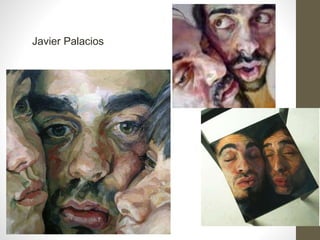
Javier Palacios
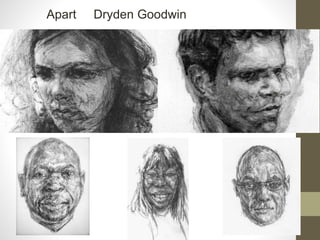
Apart Dryden Goodwin
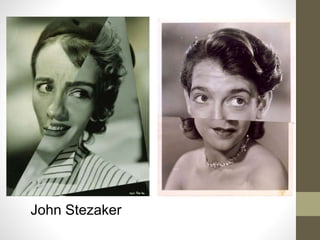
John Stezaker
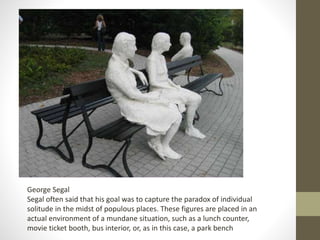
George Segal
Segal often said that his goal was to capture the paradox of individual
solitude in the midst of populous places. These figures are placed in an
actual environment of a mundane situation, such as a lunch counter,
movie ticket booth, bus interior, or, as in this case, a park bench
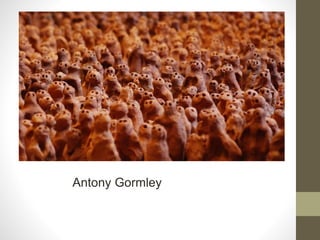
Antony Gormley
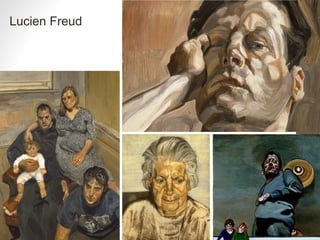
Lucien Freud
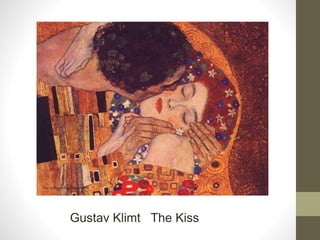
Gustav Klimt The Kiss
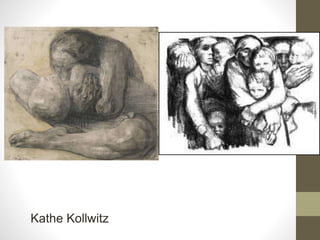
Kathe Kollwitz
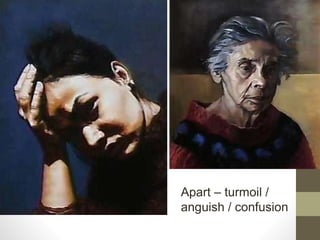
Apart – turmoil /
anguish / confusion
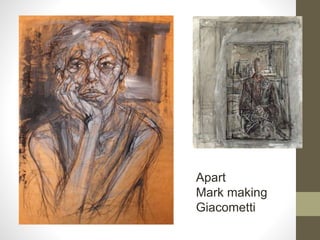
Apart
Mark making
Giacometti
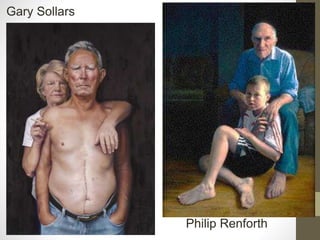
Gary Sollars
Philip Renforth
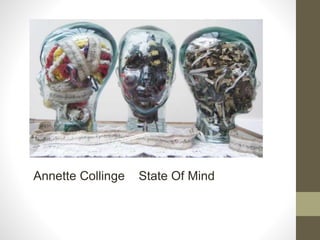
Annette Collinge State Of Mind
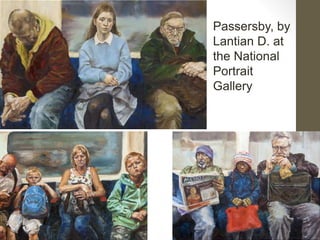
Passersby, by
Lantian D. at
the National
Portrait
Gallery
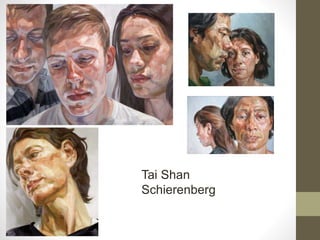
Tai Shan
Schierenberg
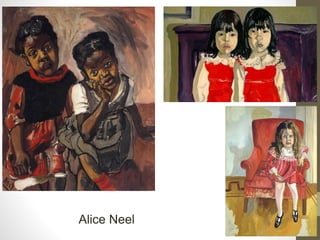
Alice Neel
Places
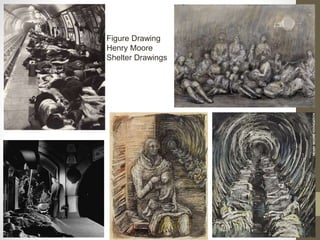
Figure Drawing
Henry Moore
Shelter Drawings
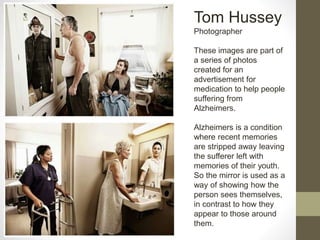
Tom Hussey
Photographer
These images are part of
a series of photos
created for an
advertisement for
medication to help people
suffering from
Alzheimers.
Alzheimers is a condition
where recent memories
are stripped away leaving
the sufferer left with
memories of their youth.
So the mirror is used as a
way of showing how the
person sees themselves,
in contrast to how they
appear to those around
them.
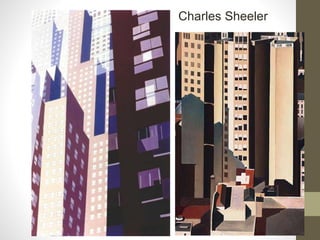
Charles Sheeler
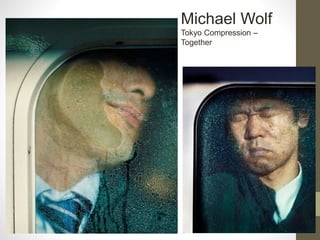
Michael Wolf
Tokyo Compression –
Together
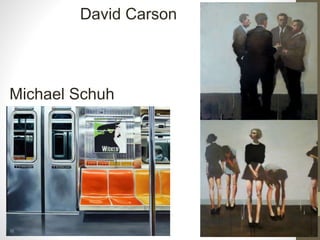
Michael Schuh
David Carson
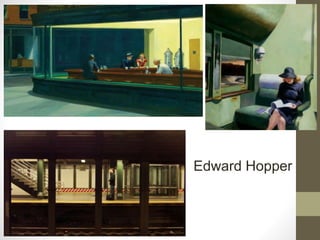
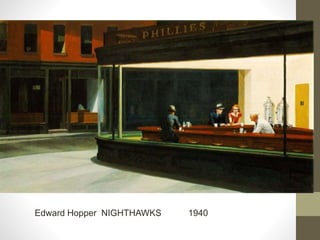
Edward Hopper
Edward Burra
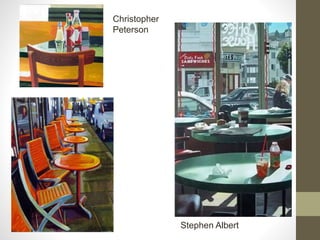
Christopher
Peterson
Stephen Albert
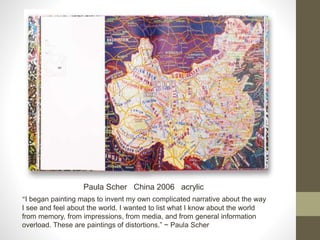
Paula Scher China 2006 acrylic
“I began painting maps to invent my own complicated narrative about the way
I see and feel about the world. I wanted to list what I know about the world
from memory, from impressions, from media, and from general information
overload. These are paintings of distortions.” ~ Paula Scher
Edward Hopper NIGHTHAWKS 1940
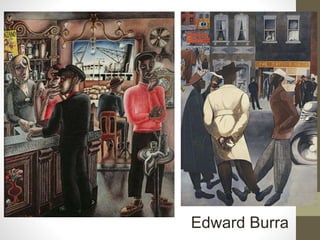
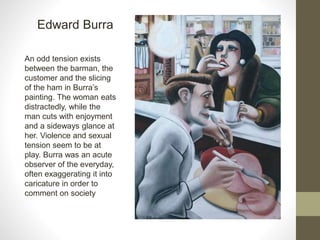
Edward Burra
An odd tension exists
between the barman, the
customer and the slicing
of the ham in Burra’s
painting. The woman eats
distractedly, while the
man cuts with enjoyment
and a sideways glance at
her. Violence and sexual
tension seem to be at
play. Burra was an acute
observer of the everyday,
often exaggerating it into
caricature in order to
comment on society
The Natural World
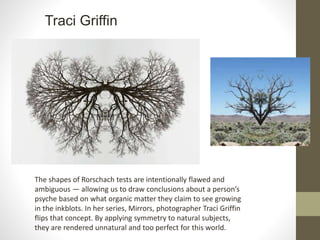
The shapes of Rorschach tests are intentionally flawed and
ambiguous — allowing us to draw conclusions about a person’s
psyche based on what organic matter they claim to see growing
in the inkblots. In her series, Mirrors, photographer Traci Griffin
flips that concept. By applying symmetry to natural subjects,
they are rendered unnatural and too perfect for this world.
Traci Griffin
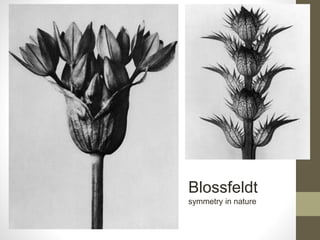
Blossfeldt
symmetry in nature
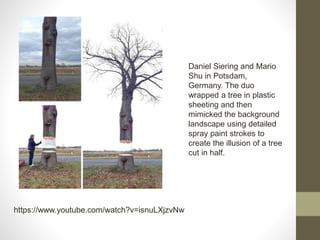
https://www.youtube.com/watch?v=isnuLXjzvNw
Daniel Siering and Mario
Shu in Potsdam,
Germany. The duo
wrapped a tree in plastic
sheeting and then
mimicked the background
landscape using detailed
spray paint strokes to
create the illusion of a tree
cut in half.
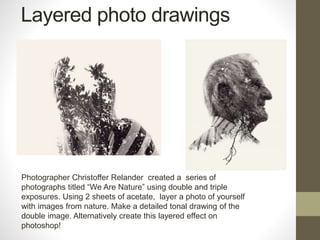
Layered photo drawings
Photographer Christoffer Relander created a series of
photographs titled “We Are Nature” using double and triple
exposures. Using 2 sheets of acetate, layer a photo of yourself
with images from nature. Make a detailed tonal drawing of the
double image. Alternatively create this layered effect on
photoshop!
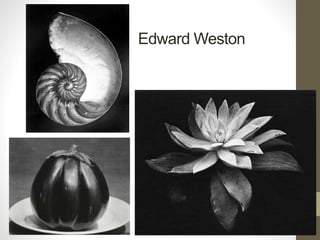
Edward Weston
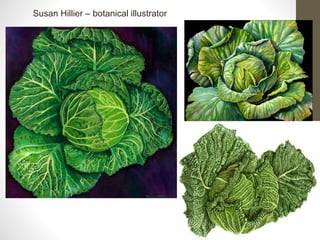
Susan Hillier – botanical illustrator
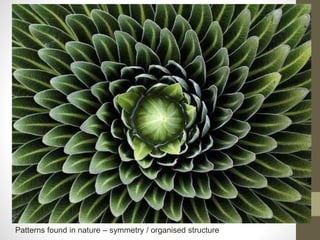
Patterns found in nature – symmetry / organised structure
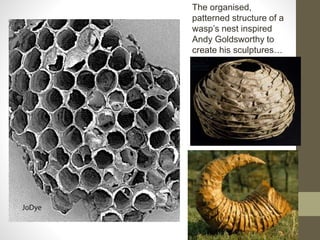
The organised,
patterned structure of a
wasp’s nest inspired
Andy Goldsworthy to
create his sculptures…
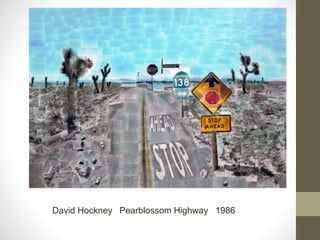
David Hockney Pearblossom Highway 1986
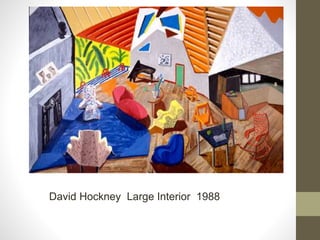
David Hockney Large Interior 1988
Objects
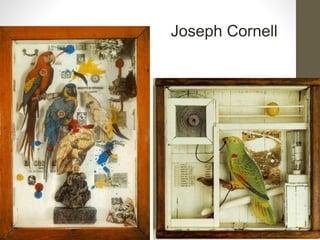
Joseph Cornell
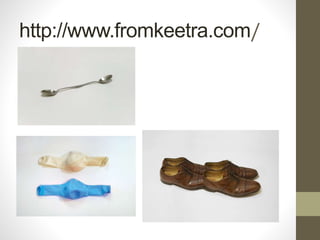
http://www.fromkeetra.com/
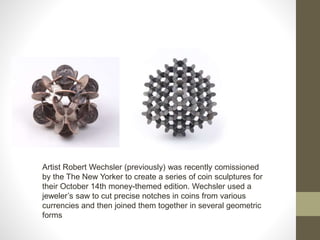
Artist Robert Wechsler (previously) was recently comissioned
by the The New Yorker to create a series of coin sculptures for
their October 14th money-themed edition. Wechsler used a
jeweler’s saw to cut precise notches in coins from various
currencies and then joined them together in several geometric
forms
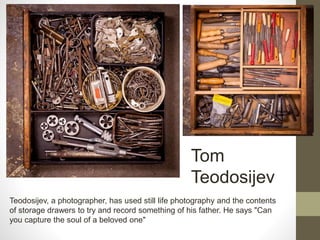
Teodosijev, a photographer, has used still life photography and the contents
of storage drawers to try and record something of his father. He says "Can
you capture the soul of a beloved one"
Tom
Teodosijev
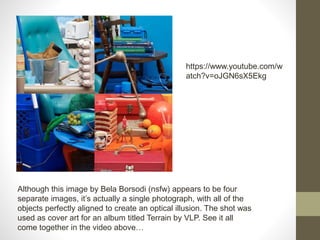
Although this image by Bela Borsodi (nsfw) appears to be four
separate images, it’s actually a single photograph, with all of the
objects perfectly aligned to create an optical illusion. The shot was
used as cover art for an album titled Terrain by VLP. See it all
come together in the video above…
https://www.youtube.com/w
atch?v=oJGN6sX5Ekg
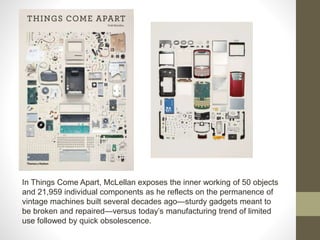
In Things Come Apart, McLellan exposes the inner working of 50 objects
and 21,959 individual components as he reflects on the permanence of
vintage machines built several decades ago—sturdy gadgets meant to
be broken and repaired—versus today’s manufacturing trend of limited
use followed by quick obsolescence.
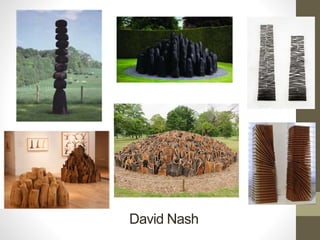
David Nash
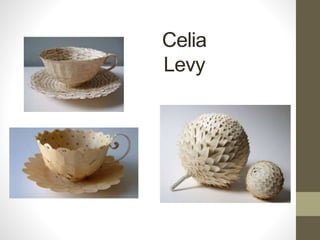
Celia
Levy
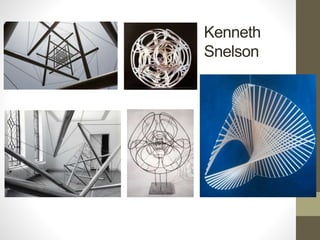
Kenneth
Snelson
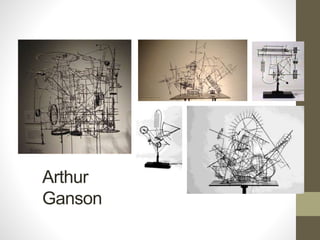
Arthur
Ganson
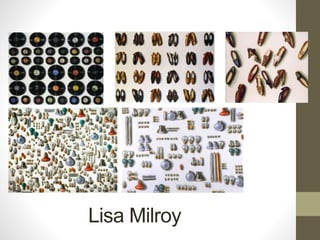
Lisa Milroy
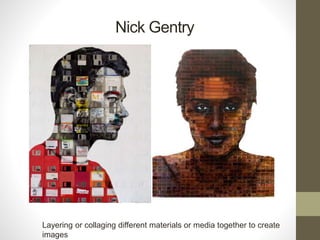
Nick Gentry
Layering or collaging different materials or media together to create
images
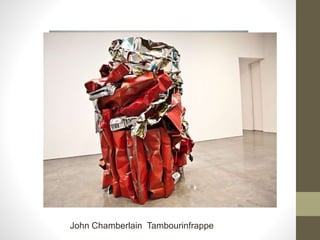
John Chamberlain Tambourinfrappe
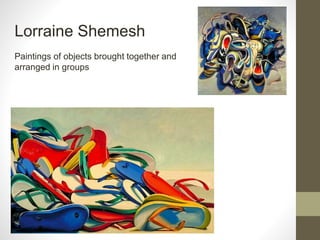
Lorraine Shemesh
Paintings of objects brought together and
arranged in groups
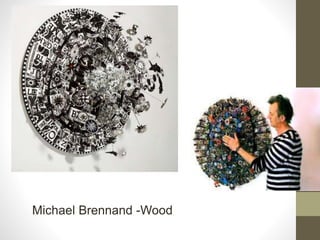
Michael Brennand -Wood
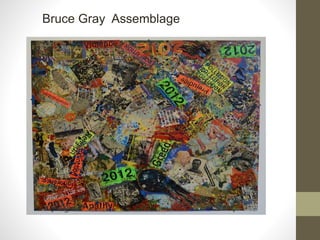
Bruce Gray Assemblage
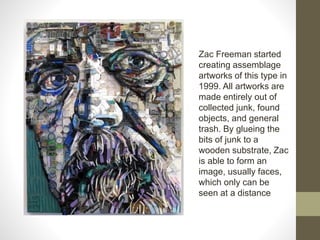
Zac Freeman started
creating assemblage
artworks of this type in
1999. All artworks are
made entirely out of
collected junk, found
objects, and general
trash. By glueing the
bits of junk to a
wooden substrate, Zac
is able to form an
image, usually faces,
which only can be
seen at a distance
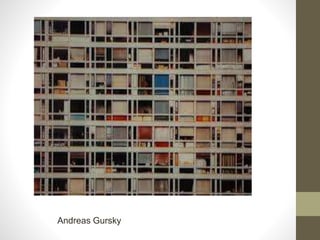
Andreas Gursky
Imagination
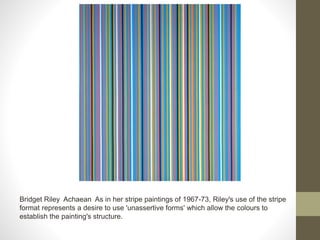
Bridget Riley Achaean As in her stripe paintings of 1967-73, Riley's use of the stripe
format represents a desire to use 'unassertive forms' which allow the colours to
establish the painting's structure.
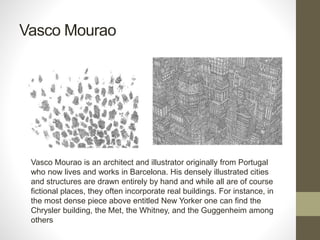
Vasco Mourao
Vasco Mourao is an architect and illustrator originally from Portugal
who now lives and works in Barcelona. His densely illustrated cities
and structures are drawn entirely by hand and while all are of course
fictional places, they often incorporate real buildings. For instance, in
the most dense piece above entitled New Yorker one can find the
Chrysler building, the Met, the Whitney, and the Guggenheim among
others
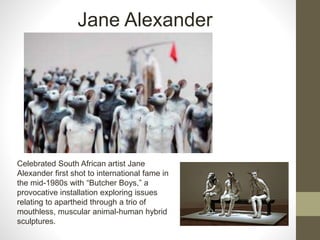
Celebrated South African artist Jane
Alexander first shot to international fame in
the mid-1980s with “Butcher Boys,” a
provocative installation exploring issues
relating to apartheid through a trio of
mouthless, muscular animal-human hybrid
sculptures.
Jane Alexander
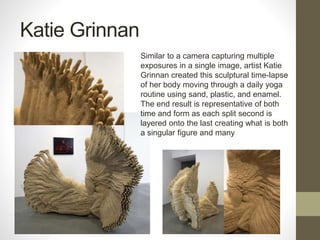
Katie Grinnan
Similar to a camera capturing multiple
exposures in a single image, artist Katie
Grinnan created this sculptural time-lapse
of her body moving through a daily yoga
routine using sand, plastic, and enamel.
The end result is representative of both
time and form as each split second is
layered onto the last creating what is both
a singular figure and many
https://www.youtube.com/watch?v=BWqH1oIWJJY
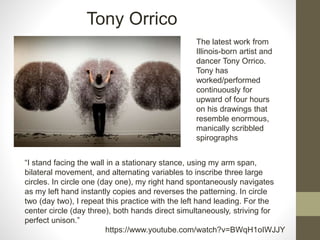
The latest work from
Illinois-born artist and
dancer Tony Orrico.
Tony has
worked/performed
continuously for
upward of four hours
on his drawings that
resemble enormous,
manically scribbled
spirographs
“I stand facing the wall in a stationary stance, using my arm span,
bilateral movement, and alternating variables to inscribe three large
circles. In circle one (day one), my right hand spontaneously navigates
as my left hand instantly copies and reverses the patterning. In circle
two (day two), I repeat this practice with the left hand leading. For the
center circle (day three), both hands direct simultaneously, striving for
perfect unison.”
Tony Orrico

Apart together

  • 1.
    Apart and/or Together Combined –Meet – Side By Side Juxtaposed- Closely- Jointly- United – En Masse- Collectively- In Cooperation – As One – Separated – Disconnected - Independent – Isolated – Alone – Individually – Free – Excluded - Divorced
  • 2.
    Assessment Objectives • AO1:Develop ideas through sustained and focused investigations informed by contextual and other sources, demonstrating analytical and critical understanding. • AO2: Experiment with and select appropriate resources, media, materials, techniques and processes, reviewing and refining ideas as work develops • AO3: Record in visual and/or other forms ideas, observations and insights relevant to their intentions, demonstrating an ability to reflect on work and progress. • AO4: Present a personal, informed and meaningful response demonstrating critical understanding, realising intentions and, where appropriate, making connections between visual, oral or other elements.
  • 3.
  • 4.
  • 5.
  • 6.
  • 7.
    George Segal Segal oftensaid that his goal was to capture the paradox of individual solitude in the midst of populous places. These figures are placed in an actual environment of a mundane situation, such as a lunch counter, movie ticket booth, bus interior, or, as in this case, a park bench
  • 8.
  • 9.
  • 10.
  • 11.
  • 12.
    Apart – turmoil/ anguish / confusion
  • 13.
  • 14.
  • 15.
  • 16.
    Passersby, by Lantian D.at the National Portrait Gallery
  • 17.
  • 18.
  • 19.
  • 20.
  • 21.
    Tom Hussey Photographer These imagesare part of a series of photos created for an advertisement for medication to help people suffering from Alzheimers. Alzheimers is a condition where recent memories are stripped away leaving the sufferer left with memories of their youth. So the mirror is used as a way of showing how the person sees themselves, in contrast to how they appear to those around them.
  • 22.
  • 23.
  • 24.
  • 25.
  • 26.
  • 27.
  • 28.
    Paula Scher China2006 acrylic “I began painting maps to invent my own complicated narrative about the way I see and feel about the world. I wanted to list what I know about the world from memory, from impressions, from media, and from general information overload. These are paintings of distortions.” ~ Paula Scher
  • 29.
  • 30.
    Edward Burra An oddtension exists between the barman, the customer and the slicing of the ham in Burra’s painting. The woman eats distractedly, while the man cuts with enjoyment and a sideways glance at her. Violence and sexual tension seem to be at play. Burra was an acute observer of the everyday, often exaggerating it into caricature in order to comment on society
  • 31.
  • 32.
    The shapes ofRorschach tests are intentionally flawed and ambiguous — allowing us to draw conclusions about a person’s psyche based on what organic matter they claim to see growing in the inkblots. In her series, Mirrors, photographer Traci Griffin flips that concept. By applying symmetry to natural subjects, they are rendered unnatural and too perfect for this world. Traci Griffin
  • 33.
  • 34.
    https://www.youtube.com/watch?v=isnuLXjzvNw Daniel Siering andMario Shu in Potsdam, Germany. The duo wrapped a tree in plastic sheeting and then mimicked the background landscape using detailed spray paint strokes to create the illusion of a tree cut in half.
  • 35.
    Layered photo drawings PhotographerChristoffer Relander created a series of photographs titled “We Are Nature” using double and triple exposures. Using 2 sheets of acetate, layer a photo of yourself with images from nature. Make a detailed tonal drawing of the double image. Alternatively create this layered effect on photoshop!
  • 36.
  • 37.
    Susan Hillier –botanical illustrator
  • 38.
    Patterns found innature – symmetry / organised structure
  • 39.
    The organised, patterned structureof a wasp’s nest inspired Andy Goldsworthy to create his sculptures…
  • 40.
  • 41.
    David Hockney LargeInterior 1988
  • 42.
  • 43.
  • 44.
  • 45.
    Artist Robert Wechsler(previously) was recently comissioned by the The New Yorker to create a series of coin sculptures for their October 14th money-themed edition. Wechsler used a jeweler’s saw to cut precise notches in coins from various currencies and then joined them together in several geometric forms
  • 46.
    Teodosijev, a photographer,has used still life photography and the contents of storage drawers to try and record something of his father. He says "Can you capture the soul of a beloved one" Tom Teodosijev
  • 47.
    Although this imageby Bela Borsodi (nsfw) appears to be four separate images, it’s actually a single photograph, with all of the objects perfectly aligned to create an optical illusion. The shot was used as cover art for an album titled Terrain by VLP. See it all come together in the video above… https://www.youtube.com/w atch?v=oJGN6sX5Ekg
  • 48.
    In Things ComeApart, McLellan exposes the inner working of 50 objects and 21,959 individual components as he reflects on the permanence of vintage machines built several decades ago—sturdy gadgets meant to be broken and repaired—versus today’s manufacturing trend of limited use followed by quick obsolescence.
  • 49.
  • 50.
  • 51.
  • 52.
  • 53.
  • 54.
    Nick Gentry Layering orcollaging different materials or media together to create images
  • 55.
  • 57.
    Lorraine Shemesh Paintings ofobjects brought together and arranged in groups
  • 58.
  • 59.
  • 60.
    Zac Freeman started creatingassemblage artworks of this type in 1999. All artworks are made entirely out of collected junk, found objects, and general trash. By glueing the bits of junk to a wooden substrate, Zac is able to form an image, usually faces, which only can be seen at a distance
  • 61.
  • 62.
  • 63.
    Bridget Riley AchaeanAs in her stripe paintings of 1967-73, Riley's use of the stripe format represents a desire to use 'unassertive forms' which allow the colours to establish the painting's structure.
  • 64.
    Vasco Mourao Vasco Mouraois an architect and illustrator originally from Portugal who now lives and works in Barcelona. His densely illustrated cities and structures are drawn entirely by hand and while all are of course fictional places, they often incorporate real buildings. For instance, in the most dense piece above entitled New Yorker one can find the Chrysler building, the Met, the Whitney, and the Guggenheim among others
  • 65.
    Celebrated South Africanartist Jane Alexander first shot to international fame in the mid-1980s with “Butcher Boys,” a provocative installation exploring issues relating to apartheid through a trio of mouthless, muscular animal-human hybrid sculptures. Jane Alexander
  • 66.
    Katie Grinnan Similar toa camera capturing multiple exposures in a single image, artist Katie Grinnan created this sculptural time-lapse of her body moving through a daily yoga routine using sand, plastic, and enamel. The end result is representative of both time and form as each split second is layered onto the last creating what is both a singular figure and many
  • 67.
    https://www.youtube.com/watch?v=BWqH1oIWJJY The latest workfrom Illinois-born artist and dancer Tony Orrico. Tony has worked/performed continuously for upward of four hours on his drawings that resemble enormous, manically scribbled spirographs “I stand facing the wall in a stationary stance, using my arm span, bilateral movement, and alternating variables to inscribe three large circles. In circle one (day one), my right hand spontaneously navigates as my left hand instantly copies and reverses the patterning. In circle two (day two), I repeat this practice with the left hand leading. For the center circle (day three), both hands direct simultaneously, striving for perfect unison.” Tony Orrico